
Qatar Steel Pipe Import
Steel Pipe Supplier in Qatar
For Qatar, pair the technical steel-pipe specification with the importer customs code, destination/port, product-specific approvals if applicable, invoice/origin/transport documents, Incoterm, packing, inspection records, quantity, and requested date. The customs guide informs readiness but does not pre-clear the commodity.
Price on request · confirmed against the standard/edition and the destination import process
Destination requirement map
Start with the destination, then the pipe
A steel-pipe enquiry for Qatar carries its destination inward: the city or port, the importer customs code, and the approvals, document and Incoterm set all change what a verifiable estimate looks like. Lead with the destination so nothing import-related is assumed later.

End condition, marking and measurement are part of the verifiable basis, not an afterthought.

Qatar
Primary destination · destination-first buying
Destination city, port or named place
Name Doha, Hamad Port or the actual delivery location so transport and documents can be priced to the route, not a default.
Importer / consignee inputs
The importer customs code and consignee details close the clearance loop; without them the quote and customs assumptions stay open.
Approvals / conformity evidence
Confirm which product-specific approvals, conformity evidence or certification the exact commodity requires for import — these are shipment-specific and never assumed.
Incoterm and named place
FOB, CIF, DAP or DDP with a named place fixes who carries packing, carriage and documentary obligations.
Document set
Invoice, origin, transport and any destination declaration inputs are confirmed against the commodity and import process, never assumed.
Clearance readiness is shipment-specific. The RFQ turns these destination inputs into explicit, auditable fields rather than assumptions inside a price.
Destination-first RFQ checker
Build the Qatar supply spec, then send it to the commercial desk
Work each field from the destination inward — the checker verifies the technical, importer, document and Incoterm basis together, then passes the complete spec to the Steel Pipes RFQ for confirmation on request.
Readiness checklist
Complete the required fields to verify the Qatar supply context.
- Product standard & gradeadd
- Manufacturing routeadd
- NPS / OD & wall / scheduleadd
- Quantityadd
- Destination city / portadd
- Importer / consigneeadd
- Incoterm + named placeadd
- Invoice / origin / approvals documentsadd
- Inspection / certificationadd
0 of 9 fields set.Still needed: Product standard & grade, Manufacturing route, NPS / OD & wall / schedule, Quantity, Destination city / port, Importer / consignee, Incoterm + named place, Invoice / origin / approvals documents, Inspection / certification.
Copy the spec
Copy the completed fields as a clean RFQ block for WhatsApp or email.
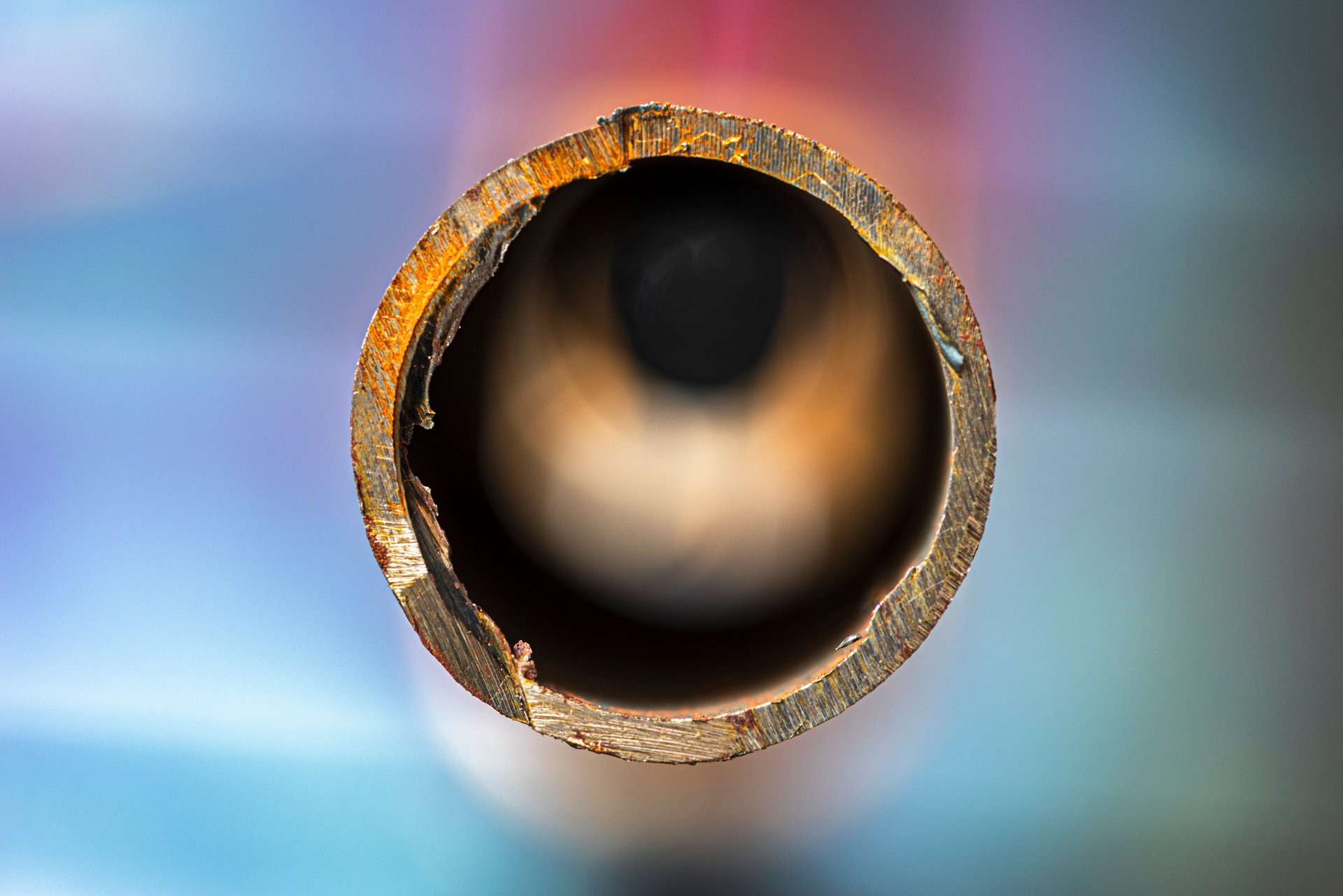
Pipe fit
Make the pipe the source of the decision
Route, material, size and standard come before any quantity. Confirm the dimensional basis and governing standard first so the RFQ carries a verifiable pipe, not a guess.
Manufacturing route
Seamless and welded routes change the specification, the checks and the RFQ line. Confirm the route with the size before commitment.
Material and grade
Carbon, stainless, alloy or galvanized pipe each carries its own grade/standard discipline and document obligation.
Size and wall
NPS/OD + schedule or wall thickness fixes the dimension and mass. Keep the unit system coherent and cite the edition.
Standard and edition
Match the grade to a governing standard and edition; verify the edition at quotation rather than assuming it.
Documents & verification
A spec that carries its own evidence
Every pipe requested for Qatar should be traceable to the governing standard, the mill certificate and the destination document set. Confirm the document expectation up front so the RFQ never hides a clearance or a certificate assumption.
The testimony of the pipe is in the certificate, the tolerance record and the packing reconciliation.
Product evidence
- Mill Test Certificate (chemistry + mechanical minimums)
- Dimensional / tolerance record against the standard
- Heat / lot traceability to the shipped consignment
Inspection records
- Dimensional, weld or coating inspection per the agreed route
- Third-party inspection where the RFQ calls for it
- Weight / count reconciliation to the packing list
Commercial documents
- Commercial invoice and packing list
- Origin / transport documents per the Incoterm
- Customs declaration inputs for the destination
These exact document lines are the ones listed in the RFQ document request, so nothing is left to a later assumption.
Commercial & logistics
Pack, route and hand off on explicit terms
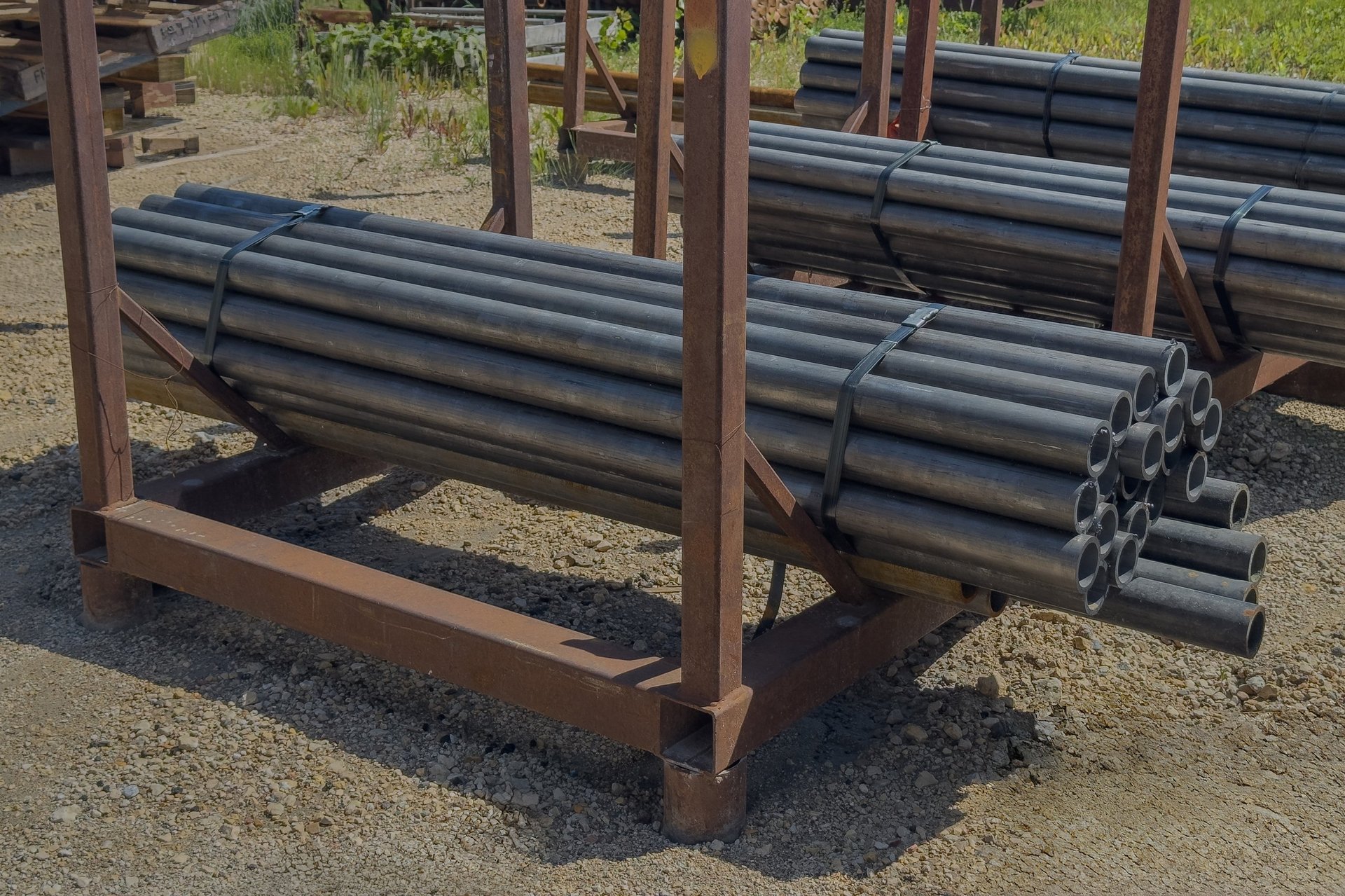
The commercial handoff turns the verified pipe into a shipment: packing that reconciles to the weigh report, a delivery route named to the port or city, and an Incoterm that fixes who carries what. For export-specific packing, Incoterm and document planning, hand the qualified spec to the steel-pipe exporter route.
Packing
Bundled, tagged and lashed by size, schedule, material and lot, matched to the declared route. Confirm bundling and tagging in the RFQ.
Delivery route
Name the destination city, port or delivery location — Doha or Hamad Port, or an inland named place. Delivery terms are matched to the route and stated on the quotation.
Incoterm
State the Incoterm and named place so packing, transport and document obligations are explicit and auditable.
Applications
Where a steel pipe serves, and where it does not
Each operating context is a distinct project decision. These are the pre-built service paths most relevant to Qatar supply — each carries its own fit boundaries.
Oil & Gas
Line-pipe and pressure context with explicit fit boundaries and project inputs.
Open applicationWater Pipeline
Water-transmission sizing and service suitability treated as a project decision.
Open applicationPetrochemical
Process-service scope confirmed against the governing standard and material.
Open applicationFurther reference
Verify the dimension before you buy
Below are the technical dimensions that sit underneath this page — the NPS/OD rows and the tolerances a Qatar buyer can re-run to confirm what was quoted.
Import insight · Qatar Customs
How Qatar imports are treated by the authority
A Noor Deira Steel coordinator reads the import picture alongside the specification. The summary below points to the authority guidance and is dated so a buyer can re-check current treatment.
Qatar General Authority of Customs
Unified import guide · commercial importation into Qatar
The Authority publishes a unified import guide covering importation procedures, customs-code prerequisites, approvals, document submission and record obligations into Qatar. The reference below is part of the picture a buyer confirms against the exact commodity, not a substitute for a goods-specific check.
Open the Qatar customs import pageInformation date: official Qatar Customs page reviewed 2026-09-04
Why authority updates matter to a steel-pipe RFQ
The customs guide informs readiness but does not pre-clear the commodity: it covers the importation procedure, not the steel product's HS classification, restricted-goods status, conformity requirements, tariff rate or project-specific documentation for a particular shipment. The practical move is to send a technically complete RFQ and an explicit importer/customs-document checklist together, holding tariff, permit, conformity and clearance outcomes subject to the exact commodity and destination process.
Date discipline
Insight carries an information date so a buyer knows when it reflects.
Commodity-specific
Duty, approvals and conformity are confirmed per goods, not per page.
RFQ-held
The destination, importer and document fields hold the inputs for that confirmation.
Why the destination-first approach
What an importer avoids when the basis is fixed
The value here is not a price. It is the discipline that every Qatar pipe order’s assumptions are pulled into the open before anything is quoted or shipped.
Uncertain standard or grade
The RFQ forces a named standard, edition, grade/PSL type and unit system before any value is shown.
A specifiable pipe that documents the governing standard for an auditable RFQ.
Clearance assumptions hidden in a price
Destination city/port, importer inputs and the required approvals/conformity evidence are separate explicit fields, so clearance assumptions are never buried in a quote.
A quotation that states import expectations rather than hiding them.
Wrong dimensions or false precision
NPS/OD and schedule or wall are carried together with one stated unit system, preventing a dimension being assumed from a schedule name.
A dimension another engineer or buyer can re-run and audit.
Unsupported stock or certificate claims
Every certificate, stock, lead-time or presence claim is either verified or left to the RFQ to confirm against the mill and destination process.
No surprise when the document set and availability are confirmed.
From requirement to follow-up
Runway a Qatar steel-pipe order follows
A six-step route-aware journey for delivering pipe into Qatar — each step names the owner, the input, the output and the risk it closes.
- Step 1
Requirement
- Owner
- Buyer
- Input
- NPS or OD, schedule/wall, standard, unit system.
- Output
- Dimensional basis stated; size and material identified.
- Risk
- No standard or edition named.
- Next
- Name the standard/edition.
- Step 2
Destination & importer
- Owner
- Buyer + commercial
- Input
- City / port or delivery location, importer/consignee details.
- Output
- Destination and clearance owner explicit.
- Risk
- Importer not confirmed.
- Next
- Add importer/consignee inputs.
- Step 3
Documents & Incoterm
- Owner
- Buyer + commercial
- Input
- Invoice/origin/transport-document needs, Incoterm + named place.
- Output
- Document set and delivery terms stated.
- Risk
- Customs assumptions unstated.
- Next
- Confirm document checklist.
- Step 4
Quotation
- Owner
- Commercial
- Input
- Quantity, Incoterm, destination, date.
- Output
- Availability and pricing on request.
- Risk
- Unknown lead time.
- Next
- Receive confirmed offer.
- Step 5
Inspection & documents
- Owner
- Technical / QA
- Input
- Dimensional, tolerance, test and weigh checks.
- Output
- OD, wall, length, mass reconciled to the mill ticket.
- Risk
- Missing weigh report.
- Next
- Approve document set.
- Step 6
Packing & shipping
- Owner
- Supplier / forwarder
- Input
- Bundling, tagging, Incoterm, port.
- Output
- Coordinated to destination.
- Risk
- Document delay.
- Next
- Track to site.
- Step 7
Delivery & follow-up
- Owner
- Commercial
- Input
- Site handover, closed-out docs.
- Output
- Handed to site with documents.
- Risk
- Open claims.
- Next
- Close out.
Frequently asked
What a buyer asks before the order
Persona-shaped answers for procurement and technical teams — each keeps a boundary between what this page can say and what the RFQ must confirm.
What technical fields should be fixed before requesting steel pipe for Qatar?
Fix the standard and edition, the grade/PSL type, the manufacturing route, and NPS/OD plus schedule or wall thickness with one stated unit system, together with the destination/port, importer customs code and requested date. Without these the pipe cannot be quoted or verified; the RFQ turns them into explicit fields rather than assumptions.
Which import and shipping documents should the buyer verify for a Qatar shipment?
Confirm the commercial invoice, packing list, origin and transport documents, and any product-specific approvals or import declaration inputs for the exact commodity and the Qatar General Authority of Customs import process. The customs guide informs readiness but does not pre-clear the commodity, so state the destination, port and importer in the RFQ and keep the required document list explicit.
How should the RFQ state the port, delivery location, and Incoterm?
Name the destination city, port or delivery location — for example Doha or Hamad Port, or an inland named place — and the Incoterm with its named place, so packing, transport and documentary obligations are clear. Never assume a clearance or delivery outcome; confirm the commodity-specific process for the stated destination.
Can the page confirm customs duty, conformity approval, stock, or lead time?
No — duty, conformity, approvals, stock and lead time are not published and are confirmed against the exact commodity, destination and mill process after the specification is complete. Price is always on request.
Which inspection and material documents should travel with the technical specification?
The Mill Test Certificate, a dimensional/tolerance record, and the packing/weigh reconciliation should be requested with the order so OD, wall, length and mass are traceable to the shipped heat. List these in the RFQ document request together with the origin evidence the destination requires.
Ready to fix the steel-pipe basis for Qatar?
Name the specification and destination, and the commercial desk confirms availability and pricing on request — with the document and import picture kept explicit rather than assumed.
Price on request · response within the working week · Dubai office
GCC markets
Steel-pipe supply across the region
Noor Deira Steel covers the whole GCC. Choose the destination that matches where the pipe actually lands and clears.
Qatar
You are on this page
The destination-first route for pipe that lands in or clears through Qatar — name the city, port (for example Hamad Port) and importer, and state the Incoterm and document set so the RFQ is verifiable.

UAE
GCC hub and re-export base.
Use the UAE route when the pipe is landed or re-exported through an emirate — Jebel Ali, Khalifa Port or Hamriyah — so the destination inputs match the actual delivery.
Open UAE page
Saudi Arabia
Project specification and import documentation.
Carry the pipe spec, importer inputs and destination into the RFQ so the quotation and document set match the Saudi requirement.
Open Saudi Arabia page
Oman
Energy and industrial project supply.
State the pipe standard, NPS/schedule/wall, quantity, documents and delivery base so the Oman quotation is fixed on a verified dimensional basis.
Open Oman page
Bahrain
Project-grade specification.
Confirm contract terms, standard/edition, NPS, schedule, wall and delivery base before quotation.
Open Bahrain page
Kuwait
Specification and import documentation.
Provide destination and Incoterm so the document and delivery plan can align with the verified wall basis.
Open Kuwait pageThe UAE route covers any pipe landed or re-exported through an emirate (Jebel Ali, Khalifa Port, Hamriyah) and is the hub for the remaining GCC destinations.
Specification handoff
The fields handed to the commercial desk
This is the exact basis the Steel Pipes RFQ asks you to fix before a quote is confirmed on request — technical, importer, document and Incoterm fields in one place.
| Step | Field | What to fix |
|---|---|---|
| 1 | Standard / grade / edition | Name the standard, the edition and the grade/PSL type with one unit system. |
| 2 | Manufacturing route & size | Seamless or welded; NPS/OD plus schedule or wall, dimensions verified. |
| 3 | Quantity & cadence | Single consignment, project lots, or bulk with the requested date window. |
| 4 | Destination & importer | City/port or named place, and the importer/consignee inputs including the customs code. |
| 5 | Incoterm & documents | Incoterm with named place; invoice, origin, transport and any approvals evidence. |
| 6 | Inspection & certification | Mill Test Certificate, third-party inspection or dimensional/weigh check as agreed. |
Source & review
Import procedure summarized from the Qatar General Authority of Customs unified import guide (official page reviewed 2026-09-04). Duty, approvals, conformity and declaration outcomes are shipment-specific and confirmed against the exact commodity and destination process at quotation time — never assumed on this page.
Open the Qatar customs import pageNoor Deira Steel Trading L.L.C. · Office 3303, Churchill Executive Tower, Business Bay, Dubai, United Arab Emirates