
Will my industry's standard be met?
Products cross-checked to the sector's governing standard — ASTM, EN, API or class rules — at enquiry.
→Traceable, standard-compliant material.
Global Industries Hub
Six sectors organise the industries Noor Deira Steel supplies across the GCC — construction, oil & gas, petrochemical, infrastructure, manufacturing and shipbuilding. Each sector maps its own product, standard and compliance path.
Free, no-obligation industry and product review
Information current as of
Industry Map & Selection Logic
Every sector is a different buyer problem — different product form, governing standard and compliance gate. The map is sector-first, then product, then compliance.

Six sectors, three decision levels
Sector first — construction, oil & gas, shipbuilding — then the product forms and standards that sector actually demands.
Construction, oil & gas, petrochemical and so on — sets the buyer's risk, budget and document demand.
Structural, plate, pipe, coil or rebar — the geometry that industry builds with.
ASTM, EN, API or class-society rules — the standard the project must satisfy.
The same steel form can serve several industries, but each sector reads it through a different standard and risk lens. A steel plate is structural in construction, pressure-rated in oil & gas, and class-certified in shipbuilding.
Industry Portfolio
Each sector card carries its product scope and governing standard so you can compare at a glance before you open one.
Structural frames, rebar and hollow sections for buildings and commercial developments across the GCC.
Line pipe, pressure plate and OCTG-grade steel for upstream, midstream and refinery duty.
Corrosion and pressure-rated steel for process plants, storage and transfer infrastructure.
Heavy sections, rebar and scaffolding pipe for bridges, transport and public works.
Sheet, coil and tube feedstock for fabricators, OEM parts and general industrial output.
Marine-grade plate, sheet and hollow sections for hulls, decks and offshore fabrication.
Products by Industry
The cross-product matrix maps each industry to the steel products and grades it actually consumes. Use it to land on both industry and form.
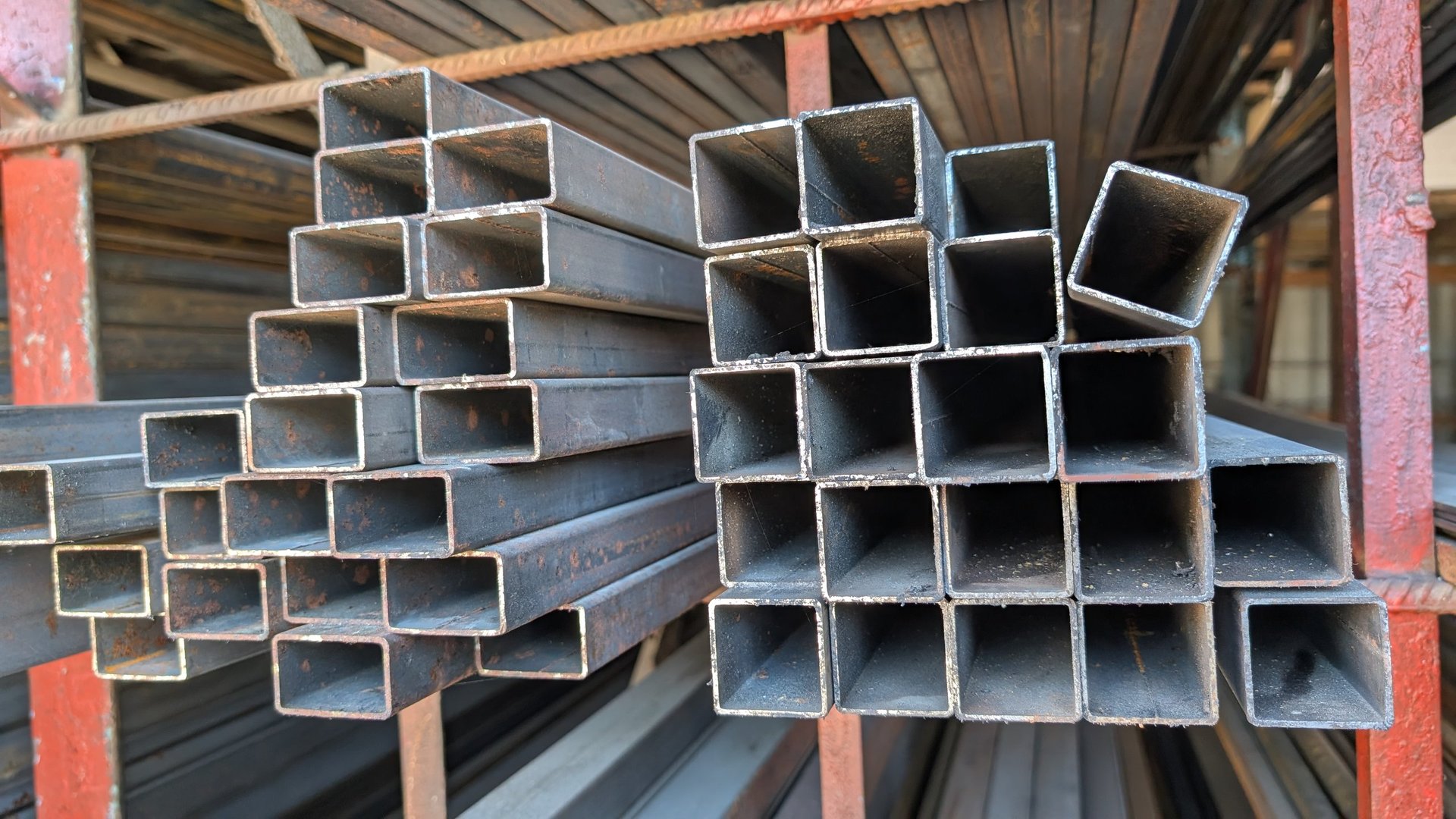
One industry, many forms
Construction alone draws on structural sections, rebar, plate and hollow sections — the matrix breaks out what each sector needs.
Pick the industry first, then the product family it consumes. The same carbon plate appears across construction, infrastructure and shipbuilding — the industry locks the compliance gate, the family locks the form.
Once the industry and form are fixed, complete the route with the governing standard and grade. Then confirm quantity and destination.
Compliance & QA Themes
Each sector is governed by a standard class and carries a clear compliance gate — stated together so the trade-off is explicit.
| Industry | Typical product | Governing standard | Compliance gate |
|---|---|---|---|
| Construction | Structural, rebar, hollow sections | ASTM A36 / EN 10025 | Section + grade verified |
| Oil & Gas | Line pipe, plate, billet | API 5L / 5CT | Pressure and weld tested |
| Petrochemical | Stainless pipe, plate, coil | ASTM A240 / EN 1.4404 | Corrosion resistance |
| Infrastructure | Heavy sections, rebar, scaffolding | ASTM A572 / A615 | Public-works certification |
| Manufacturing | Sheet, coil, tube | ASTM A1011 / A653 | Formability and tolerance |
| Shipbuilding | Marine plate, sheet, sections | ASTM A131 / class rules | Class-society survey |
Industry, standard and compliance gate are always read together — no sector is certified for every condition.
Why Noor Deira Steel
Each advantage is a buyer concern answered with a verifiable capability and a practical outcome — not a slogan.
Products cross-checked to the sector's governing standard — ASTM, EN, API or class rules — at enquiry.
→Traceable, standard-compliant material.
Ready-stock lines held in-region across the main product forms each sector consumes.
→A quoted form we can actually supply.
Mill Test Certificates and packing lists prepared as part of the order.
→No clearance or survey stalls.
Single Dubai hub handles multi-country Incoterms and documentation.
→Shipment delivered on agreed terms.
One named commercial manager carries the enquiry end-to-end.
→No hand-offs mid-order.
Full project, single category or cutting lists read from your requirement.
→Material arrives to your exact scope.
Partner & Client Proof
Partner logos and client quotations appear here only as independently approved. Noor Deira Steel never invents a company or review.
Commercial Partners
Partner logos appear here as independently approved — the layout is retained while final assets are added.
Buyer Testimonial
A buyer quotation from this page is published once it has been approved for release by the customer who gave it. Nothing is shown here until that approval exists.
Awaiting customer approval
Testimonial content awaits independent approval and is published only with permission.
Expert Insight
A transparent, dated method for reading an industry's compliance class so the right standard is committed before quotation.
Compliance-class method
The same steel form is often shared across industries, but the compliance class — structural, pressure or class-society — changes the governing standard, the documents and the lead behaviour. This table maps a compliance class to the industry the requirement resolves into.
| Compliance class | Governing standard | Resolves to industry |
|---|---|---|
| Structural | ASTM A36 / EN 10025 | Construction, infrastructure |
| Pressure / pipeline | API 5L / 5CT | Oil & gas |
| Corrosion-critical | ASTM A240 / EN 1.4404 | Petrochemical |
| Class society | ASTM A131 / ABS / LR | Shipbuilding |
| Forming / tolerance | ASTM A1011 / EN 10130 | Manufacturing |
Method: compliance-class cross-reference · Basis: commercial material selection practice · Last reviewed: 31 August 2026
What this means for you
Compliance class is a specification decision, made once and carried through quotation.
From Enquiry to Delivery
What happens after the industry is chosen — from first enquiry through after-delivery support.
Industry and requirement clarified.
Product, grade and standard locked.
Compliance and availability checked.
Price on request, terms confirmed.
Order and documents agreed.
Mill Test Certificates verified.
Loading and Incoterm coordinated.
Shipment tracked to destination.
Follow-up and claims resolved.
Industries FAQ
Concise answers to the questions that follow an industry decision.
Six core sectors — construction, oil & gas, petrochemical, infrastructure, manufacturing and shipbuilding — each mapped to its own product, standard and compliance path across the GCC.
Use the Industry Requirement Navigator above — industry, project scope, compliance and product need map you to a ranked sector route.
Yes — the same plate or pipe can serve construction, infrastructure and shipbuilding. The difference is the compliance class and governing standard the project demands.
Structural sectors follow ASTM or EN; oil & gas follows API; shipbuilding follows class-society rules like ABS or Lloyd's Register. We cross-reference your requirement to the right standard.
No — name the industry, product form and scope, and the commercial team cross-references the grade and standard for you.
Yes — a single enquiry can combine product forms for different sectors, supplied from one Dubai hub with one commercial manager accountable for the whole order.
Start Your Enquiry
Share the industry, product form, scope, quantity and destination — the commercial team responds with a clear next step.