
Export Enquiry
Steel Billet Exporter
A steel billet export enquiry becomes actionable when the technical line item and trade route are both complete: billet grade/specification, dimensions, quantity, inspection documents, origin requirement if any, destination/named place, Incoterm, shipment window and payment/document needs must be stated without assuming stock or lead time.
An export enquiry carries two halves. One is the technical line item; the other is the trade route. Either half missing makes the quotation incomparable — which is why both are built below before anything is released.
Standards and documentationWhat the export enquiry has to supply
- Grade, with the standard that defines it
- Section, length and tolerance basis
- Quantity, with its unit and basis
- The document set, named rather than assumed
- Destination and the named port or place
- The Incoterm 2020 rule, and separately the payment terms
- The shipment window you require
No stock position, price, lead time or availability is asserted anywhere on this page. Those are answered per enquiry.
Export requirement intake
What has to be settled before supply is discussed
Six criteria an export enquiry is qualified against. Each one states what it covers and the point at which it is closed — because a criterion left open is a quotation that cannot be compared.
Specification completeness
Grade with the standard that defines it, section, length and the tolerance basis each is held to.
Closes when the individual specification and its edition are named, not just a grade label.
Commercial frame
Quantity with its unit, currency, price unit, and the basis the tonnage is expressed on.
Closes when quantity and unit basis are stated the same way on every enquiry.
Trade route
Destination country, named port or inland place, and the Incoterm 2020 rule that applies to it.
Closes when the place is named exactly as the contract will read it.
Schedule
The shipment window you require, and whether it is driven by a production programme or a contractual date.
Closes when the required-by date is stated as your requirement, not as a supplier commitment.
Packing and handling
Bundle arrangement, marking convention, and any lifting or stowage constraint at the receiving end.
Closes when the marking convention is specified and what it must survive is stated.
Documents
The document set, the test scope, who issues each item, and any destination legalisation.
Closes when each document is named and confirmed rather than assumed standard.
Registered product routes this applies to
The intake criteria are written for the billet family. Where the grade is still open, the hierarchy and grade index narrow the field; neither asserts a composition or an equivalence between designations from different standards.
Where the intake stops being useful
- A grade named without the standard that defines it is ambiguous, and two suppliers may quote different materials under the same label.
- A tonnage stated without its unit basis cannot be compared against an offer quoted per piece or per heat.
- A destination given as a country without a named place leaves the delivery obligation undefined.
- A shipment window stated as a supplier promise rather than a buyer requirement removes the thing the supplier was meant to respond to.
Working technical tool
Export RFQ & Incoterm Readiness Builder
Record the technical line and the trade route together. The tool frames what the Incoterm you choose allocates, flags what is missing, and produces a copyable export enquiry.
The tool never chooses a term for you. Select the rule you intend to trade on and it describes how Incoterms 2020 allocates cost and risk under that rule. It does not recommend one, and it will not proceed without a named port or place.
6 item(s) still to state before the enquiry is actionable
- Billet specification and grade is not stated.
- Quantity and unit basis is not stated.
- Destination country is not stated.
- Named port or place is not stated.
- Requested Incoterm 2020 rule is not stated.
- Shipment window required is not stated.
Technical line
— awaiting specification and quantity
Trade route
— awaiting destination, rule and window
Still to settle
- Payment and documentary requirements are not stated. Name the instrument and its timing so offers can be compared on the same basis.
Document checklist
Requested explicitly rather than assumed. Each item is confirmed per order — none of these is claimed as a standing capability.
- Mill test certificate for the heat — request it against the grade you specified, not as a generic certificate
- Packing list matching the bundle and marking convention
- Commercial invoice aligned with the agreed Incoterm and unit basis
- Transport document matching the agreed rule and the named place
The enquiry states requirements only. No price, stock position, lead time or availability is calculated or implied, and the trade term responsibilities describe what the rule allocates rather than what anything costs.
Quality and export documents
What each document is evidence about
Documents are not a set to be assumed. Each one answers a different question, and a certificate that covers something other than your requirement is not evidence of it.
| Requirement | You must specify | Evidence to request | Accepted by | If it is missing |
|---|---|---|---|---|
| Heat analysis / MTC | The grade or agreed chemistry basis, and the elements the certificate is issued against. | Mill test certificate for the heat, from the issuing party you named. | Your technical reviewer, against the order specification. | A certificate arrives that describes material without evidencing the requirement behind it. |
| Dimensions | Section, length and the tolerance basis each is held to, with the controlling document cited. | Dimensional record for the delivered material against that basis. | Your intake function, before release to the process. | Nothing to measure against, so a dimensional dispute cannot be resolved either way. |
| Surface condition | The condition required, paired with the inspection method it will be judged by. | Condition records taken to the named method. | Your quality function, using the basis it was specified against. | A limit stated precisely and unenforceable at intake because no method was named. |
| Traceability | Whether heat identity must reach the delivered lot, and the marking that carries it. | Marking record plus the supplier's production record linking heat to lot. | You, on intake — marking is what attaches the certificate to physical material. | A document with no physical subject, and a lot whose origin cannot be established later. |
| Inspection and testing | Which tests, on which population, against which criteria, performed by whom. | Test results with the acceptance criteria they were judged against. | The party your order designates, per the scope you stated. | Results that can be filed but not accepted or rejected against anything. |
| Export and shipment documents | The full document set, the named place, and any destination legalisation or attestation. | Packing list, commercial invoice, transport document, origin certificate and any inspection certificate. | Importer or clearing agent at the named place. | Cargo held at port while paperwork is corrected, at the buyer's cost and to the buyer's schedule. |
What is requested, and what is never asserted
Requested per order, not claimed as held
Every document on the checklist is asked for and confirmed against the specific supply. Nothing on this page states that a certificate, approval or accreditation is currently held.
The certificate is evidence only of its own scope
A mill test certificate evidences chemistry. It does not evidence a dimensional tolerance, a surface condition or an inspection scope unless it says so explicitly.
Destination requirements sit with the importer
Classification, duty position and any destination-specific attestation depend on the importer's circumstances and are confirmed by them, because they are the party the authority will ask.

The technical record and the commercial documents have to line up. A certificate that cannot be attached to the lot it describes is a document about material nobody can point to.
GCC market routes
Destination-specific route inputs
Six destinations, and what most often changes the enquiry on each. Every card asks for the named place, the rule and the document position — none claims a served market or a stock position.
 United Arab EmiratesDomestic delivery and re-export consolidation.Name the receiving works or the re-export point, and the delivery basis. Domestic movement and consolidation in the UAE are arranged from Dubai against the agreed section, length and heat separation.steel billet supplier UAE
 Saudi ArabiaSubmittal approval and inland delivery.Saudi routes commonly require technical submittal approval before release, and inland destinations are usually named beyond the port. Settle the certificate scope and the inland place before comparing terms.steel billet supplier Saudi Arabia
 QatarApproval sequence and document scope led.Confirm the importer's document and classification position, the named port, and how long the approval sequence runs before the quotation can be finalised.steel billet supplier Qatar
 OmanPort-oriented supply for downstream rolling.Name the port or inland delivery place and the Incoterm rule. Section and length are harmonised with what the receiving works actually takes in.steel billet supplier Oman
 KuwaitSupply planned against a production hand-off.Tie the shipment window to the production programme, and agree the delivery against the named destination and the window that programme is working to.steel billet supplier Kuwait
 BahrainIndustrial supply and re-export documentation.Industrial routes live or die on accurate paperwork. Confirm the document set, the named place and the importer's requirements before dispatch, not after arrival.steel billet supplier Bahrain
What every route needs named. The port, terminal or inland place; the Incoterm 2020 rule that applies to it; the importer's document and classification position; and the delivery window the programme is working to. Given those, offers can be compared on identical terms rather than on headline figures that include different costs.
Incoterms, packing and logistics
Where responsibilities divide, and what has to be agreed
The Incoterm decides which costs and risks sit with whom. Packing, payment and documents are separate decisions that sit alongside it, and each one has to be stated rather than inferred.
| Decision | What it settles | Separate from |
|---|---|---|
| Incoterm 2020 rule | Where delivery happens and which costs and risks sit with which party. | Payment terms, quality and title — Incoterms address none of these. |
| Named port or place | The geographical point the rule attaches to. Without it the rule is not operable. | The country. A country is not a place, and quotes against one cannot be compared. |
| Payment terms | The instrument, its timing, and the documentary set it triggers. | The Incoterm. A delivery rule says nothing about how or when you pay. |
| Packing and handling | Bundle arrangement, marking, and the lifting points or stowage constraints. | The transport mode alone. Breakbulk and container handling impose different needs. |
| Documents | Which certificates and transport documents are issued, and by whom. | The price. Two offers covering different document sets are not comparable. |
| Inspection scope | Which tests, on which population, against which acceptance criteria. | The certificate itself. A certificate is only evidence of what it covers. |
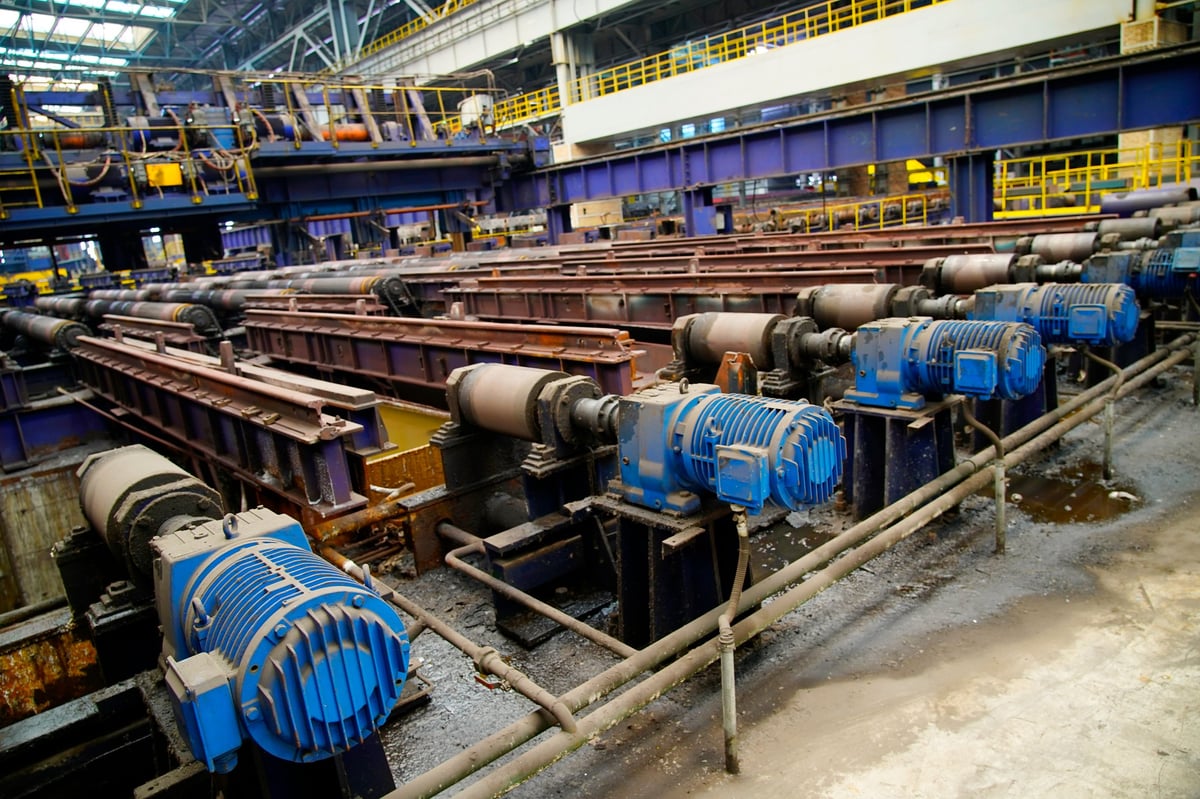
Port and delivery options
Breakbulk and container routes carry different handling, stowage and lifting needs, and they are quoted on different bases. Say which you are planning for, and name the port, terminal or inland place. Where a route needs consolidation or onward carriage, that is a separate leg to be agreed rather than assumed inside the term.
Price on request. Quantity and unit, currency, named place, the Incoterm 2020 rule, payment and documentary requirements, packing, inspection scope and your required timing are the inputs a quotation is built from. Supplier price, stock position and lead time are answered per enquiry — none is published or assumed here.
Product and end-use qualification
Where the export enquiry meets the end use
The export route and the technical scope have to agree with each other. These registered application paths test whether the specification you are exporting is the one the receiving process actually needs.
Steel billet for bar production
Where the finished bar specification, not a use label, sets the acceptance basis the feedstock has to satisfy.
Bar and wire-rod routes impose different feedstock expectations from the same billet family.
steel billet for bar productionSteel billet for rebar production
Where a reinforcement programme sets the acceptance basis, and the certificate follows a product standard rather than your drawing.
Reinforcement acceptance and general engineering acceptance are different controls.
steel billet for rebar productionSteel billet for wire rod production
Where downstream drawing, rather than the rolling pass, decides how much weight the feedstock condition carries.
A drawing route concentrates defects that a re-rolling pass might absorb, so the controls differ.
steel billet for wire rod productionAn export route is not a specification. Naming a destination and a trade term tells you how the material travels, not what it has to be. The end-use route is what confirms the feedstock requirements are the right ones for the process receiving them.
Registered product and technical paths
Where the export decision continues
Grouped by the task that follows the enquiry. Each path answers a question the export route raises but does not settle.
Export services
Billet hierarchy
Expert insight
What has to sit beside the specification to make terms comparable
A source-backed decision note. The question is why three quotations on the same grade can still not be compared against each other.
Why one trade term does not make two offers comparable
Incoterms 2020 is published by the International Chamber of Commerce and sets out the trade terms that allocate delivery tasks, costs and risks between a seller and a buyer. It is the reference that makes a term like FOB or CIF mean something precise — which is exactly why a term used loosely is worse than no term at all.
What the source establishes. That the named term and the named place together define where delivery occurs, when risk passes, and which costs each party carries — and that the same three-letter rule attaches to different obligations depending on the place named.
What it does not establish. Anything about steel quality, grade or chemistry. Nor payment terms, when title transfers, whether inspection is required, or whether an exporter can actually perform. Those are separate terms in the contract and each has to be written on its own.
That division is where the misleading comparison is made. A buyer receives three offers on the same billet grade, sees FOB, CFR and CIF, and treats the spread as a price difference between suppliers. It is not. Under CFR and CIF the seller is carrying freight that FOB excludes, and under both of them the risk passes at shipment rather than on arrival — so the figures are measuring different obligations, not different margins.
The same problem recurs at a smaller scale with the named place. Two offers both quoted FOB are still not comparable if one names a port with a shallow draft and the other a terminal with different handling terms, or if one names a port and the other an inland depot. The rule is identical; the obligation is not.
The practical position is that the technical line and the trade route have to be locked together, and both have to be dated. Grade, section and quantity sit on one side; the rule, the named place, freight and insurance inclusion, payment terms and the document set sit on the other. Compare only when both sides match, and state the payment terms separately, because the Incoterm will never tell you about them.
Buyer implication. Lock the named place or port and the trade-term responsibilities alongside the technical billet line, then compare quotations on the same basis.
Source and scope
- Primary source
- International Chamber of Commerce — Incoterms 2020
- Document reference
- iccwbo.org — Incoterms 2020
- Method
- The buyer decision is compared against the source scope, and what the source establishes is kept separate from what is order-specific.
- Information date
- 2026-10-03
- Scope and limitation
- Incoterms allocate delivery tasks, costs and risks. They do not define steel quality, payment terms, title transfer, or prove exporter capability.
- Evidence boundary
- The source does not prove inventory, price, lead time, origin, certification or market coverage. Those remain quotation- and evidence-dependent.
Buyer advantages
What a complete export enquiry changes
No claim here rests on being better than anyone. Each one is a buyer concern mapped to something checkable, and then to what it changes about the supply.
Offers arrive on a basis you can compare.
Evidence: The enquiry states the rule and the named place together, so every supplier quotes the same obligation.
Outcome: The spread between offers measures commercial difference rather than a difference in what each one includes.
The delivery point is unambiguous.
Evidence: Port, terminal or inland place named exactly as the contract will read it, with freight inclusion confirmed.
Outcome: No dispute later about where the seller's obligation ended.
Documents are requested, not assumed.
Evidence: A checklist built from the scope you selected, with each item and its issuer named.
Outcome: Cargo is not held at port for a certificate nobody asked for and nobody issued.
Delivery and payment stay separate.
Evidence: Payment terms stated alongside the Incoterm rather than read from it.
Outcome: You do not discover at contract stage that the rule says nothing about how you pay.
Timing is expressed as your requirement.
Evidence: A shipment window you state, rather than a lead time a supplier asserts.
Outcome: Suppliers respond to a defined need instead of quoting around an assumption.
Enquiry to delivery
From first enquiry to arrival
Six stages across the export route. Each names the input that has to exist before it can start, and the risk it closes when it does.
Qualify the requirement
Owner: Buyer, with the technical reviewer
Input needed: Grade with its defining standard, section and length with tolerance basis, quantity with unit basis.
Output
A technical line item complete enough to be quoted against.
Risk it closes
Suppliers quoting different materials under a label that looked specific.
Fix the trade route
Owner: Buyer, with the importer and clearing agent
Input needed: Destination country, named port or place, Incoterm 2020 rule, and freight and insurance inclusion.
Output
A delivery obligation both parties understand identically.
Risk it closes
A cost difference read as a commercial difference, and a dispute about where risk passed.
Agree the document set
Owner: Buyer and supplier, with the importer
Input needed: The certificates, inspections and destination attestations the route requires.
Output
A named document set with each issuer identified.
Risk it closes
Cargo held at port for paperwork that was assumed rather than requested.
Release the enquiry with both halves complete
Owner: Buyer to the commercial department
Input needed: Technical line, trade route, packing need, document scope and payment terms.
Output
Offers returned on an identical basis.
Risk it closes
Clarification rounds that cost time and delay the decision.
Agree the terms in the contract
Owner: Buyer and supplier, at contract stage
Input needed: The rule and named place, payment terms, inspection scope and documentary requirements.
Output
A written basis that settles any later difference before it arises.
Risk it closes
Terms that stayed in correspondence and cannot be enforced when they matter.
Verify at dispatch and on arrival
Owner: Supplier, then the importer at the named place
Input needed: The certificate set, marking records, packing list and transport document.
Output
Material released and reconciled against the stated requirements.
Risk it closes
A discrepancy with no agreed basis to measure it against.
Buyer FAQ
Questions that come up on an export enquiry
Commercial and documentary points an international buyer raises once the enquiry is under way — not definitions, which are settled above.
Which Incoterm details belong in a billet RFQ?
The rule itself, written with its edition, and the named place it applies to — both together, because neither means anything alone. Add whether freight and insurance sit inside the figure, and keep payment terms separate, since an Incoterm allocates delivery tasks, costs and risk rather than payment. An enquiry that names a rule but no place cannot be quoted on a comparable basis.
Why must the named port or place be specified?
Because the named place is what fixes where the seller's obligation ends and where cost and risk pass. FOB is not a price basis on its own; FOB Jebel Ali is. Two suppliers both quoting FCA could be quoting a works gate, a terminal or an inland depot, and the difference sits inside the figure without appearing in it. Name the port, terminal or inland place exactly as your contract will read it.
Do Incoterms define payment or steel quality?
No. Incoterms 2020 allocates delivery tasks, costs and risks between buyer and seller. They say nothing about the grade or chemistry of the steel, the inspection regime, the payment instrument, when title transfers, or whether the exporter can actually perform. Those are separate terms and each has to be written into the enquiry and the contract on its own.
Which export documents should be requested rather than assumed?
Name the set explicitly and ask each supplier to confirm it rather than treating it as standard: mill test certificate against the grade you specified, packing list, commercial invoice, certificate of origin where the destination requires it, and any pre-shipment inspection certificate. Where a destination needs legalisation or attestation, say so in the enquiry. A document that is assumed rather than requested is the one that holds the cargo at port.
How should shipment timing be expressed when live lead time is unknown?
As your requirement, not as a supplier commitment. State the window you need the material to arrive within, the latest acceptable date, and whether the timing is driven by a production programme or a contractual deadline. That gives suppliers something to respond to and quote against, without anyone asserting a lead time that has not been confirmed for the order.
Send both halves, and the enquiry can be quoted
The technical line item — grade with its standard, section and length, quantity with its unit basis — and the trade route — destination, named port or place, Incoterm 2020 rule, shipment window. Add the packing need, document scope and payment terms, and the commercial department can answer in one pass.
Or send the enquiry directly to sales@noordeirasteel.ae. Price on request — no price, stock or lead time is published.
What to attach
- Grade, with the standard that defines it
- Section, length and tolerance basis
- Quantity with its unit and basis
- Destination country and the named port or place
- The Incoterm 2020 rule you intend to trade on
- Packaging and handling requirements
- Document set and payment terms
- Your required shipment window
Commercial department
- Mobile
- +971 56 398 0860
- Office
- Office 1015, Churchill Executive Tower, Business Bay, Dubai, United Arab Emirates
- Hours
- Monday – Saturday: 8.00 AM – 6.00 PM · Sunday: Closed
Export data framework
What the export route has to pin down
Fields that decide whether an export enquiry can be quoted and performed. Each is stated as the requirement itself — no price, no stock position, no lead time.
| Field | What has to be stated | Governing reference | If left open |
|---|---|---|---|
| Technical line item | Grade designation with the standard that defines it, section and length with the tolerance basis, and quantity with its unit basis. | The product standard or drawing named in the enquiry | Suppliers quoting a different material under a designation that looked specific. |
| Trade term and named place | The Incoterm 2020 rule together with the exact port, terminal or inland place the contract will name. | International Chamber of Commerce — Incoterms 2020 | The same rule attaching to different obligations, and a later dispute about where risk passed. |
| Freight and insurance inclusion | Whether freight is carried by the seller under the selected rule, and whether insurance cover is required and at what scope. | International Chamber of Commerce — Incoterms 2020 | Offers that appear cheaper because they carry a smaller delivery obligation. |
| Payment terms | Instrument, timing and any documentary conditions, stated separately from the trade term. | Contract terms — not governed by the trade-term rules | The assumption that the Incoterm says something about how you pay, which it does not. |
| Document set and shipping window | Each certificate, inspection and destination attestation with its issuer, plus the shipment window you require. | Destination import requirements and the letter of credit | Cargo held at port for paperwork that was assumed rather than requested. |
Price on request. Commercial terms are answered against a specific enquiry — no price, stock, availability or lead time is published on this page, and none should be inferred from it.
Source register
Decision basis and references
What this page was built from, what the primary source does and does not establish, and where the enquiry stops being a documentation question.
International Chamber of Commerce — Incoterms 2020
- Publisher
- International Chamber of Commerce (ICC)
- Reference
- iccwbo.org — Incoterms 2020
- What it establishes
- Delivery tasks, cost allocation and risk transfer between seller and buyer, as a function of the selected rule and the named port or place.
- What it does not establish
- Steel quality, grade or chemistry; payment terms; title transfer; inspection requirements; or that any particular exporter can perform.
- Use on this page
- Defines the responsibilities, omissions and cautions attached to each trade term the readiness builder evaluates.
- Information date
- 2026-10-03
Incoterms 2020 — International Chamber of Commerce
The primary trade-term reference used for the responsibilities, omissions and cautions the readiness builder returns for each rule.
iccwbo.orgInternational trade in steel — World Steel Association
Industry-level context on how steel moves between producing and consuming regions, and why the export route carries commercial weight independent of the technical line.
worldsteel.orgSteel billet scope — Noor Deira Steel
The company's own billet scope, grade range and standards coverage, which sets the technical side of an export enquiry.
Internal — billet scopeBillet specification guidance — Noor Deira Steel
How a billet specification is completed, and where the boundary between billet and finished-product documents runs.
Internal — technicalPrice normalisation guidance — Noor Deira Steel
How quotations are compared on a common basis, which is what allows an export enquiry to be evaluated rather than merely collected.
Internal — commercialMethod and limitations
- The readiness builder evaluates the completeness of an enquiry against the trade term you select. It is a documentation and routing aid, not legal advice and not a contract.
- Nothing on this page states or implies a price, stock position, availability, lead time, origin or certification status. All are answered against a specific enquiry.
- The tool runs entirely in your browser. No enquiry detail is transmitted or stored, and nothing is submitted anywhere.
- Trade-term responsibilities follow Incoterms 2020. Your contract, your letter of credit and your importer's requirements may add obligations the source does not cover.