
Applications · Fabrication · Steel Sheet
The sheet is the input. Your processes are the specification.
In a fabrication shop the sheet is an input, not the product. What matters is not what the sheet is called but what your processes will do to it before it leaves as a part — how it is cut, how far it is bent, how it is welded, what finish it carries and how the pieces are nested from the blank. Each of those processes places its own demand on the material, and the demands do not always pull in the same direction. This page maps the processes you run to the fields a sheet enquiry has to declare, and flags the combinations that cannot be settled on paper.
Send the grade and thickness with the processes the part goes through. Pricing is on request, and no process capability is confirmed before those are named.
Four processes decide what the sheet has to be. Each places its own demand on the material, and they do not always agree.
Cutting
Bending
Welding
Finishing
What the Job Actually Requires
Four demands, and the reason they do not always agree
A fabrication enquiry is usually written from the drawing. The processes on the shop floor put demands on the material that the drawing does not state — and where two of them pull in opposite directions, the order has to record which one wins.
Cutting and profiling
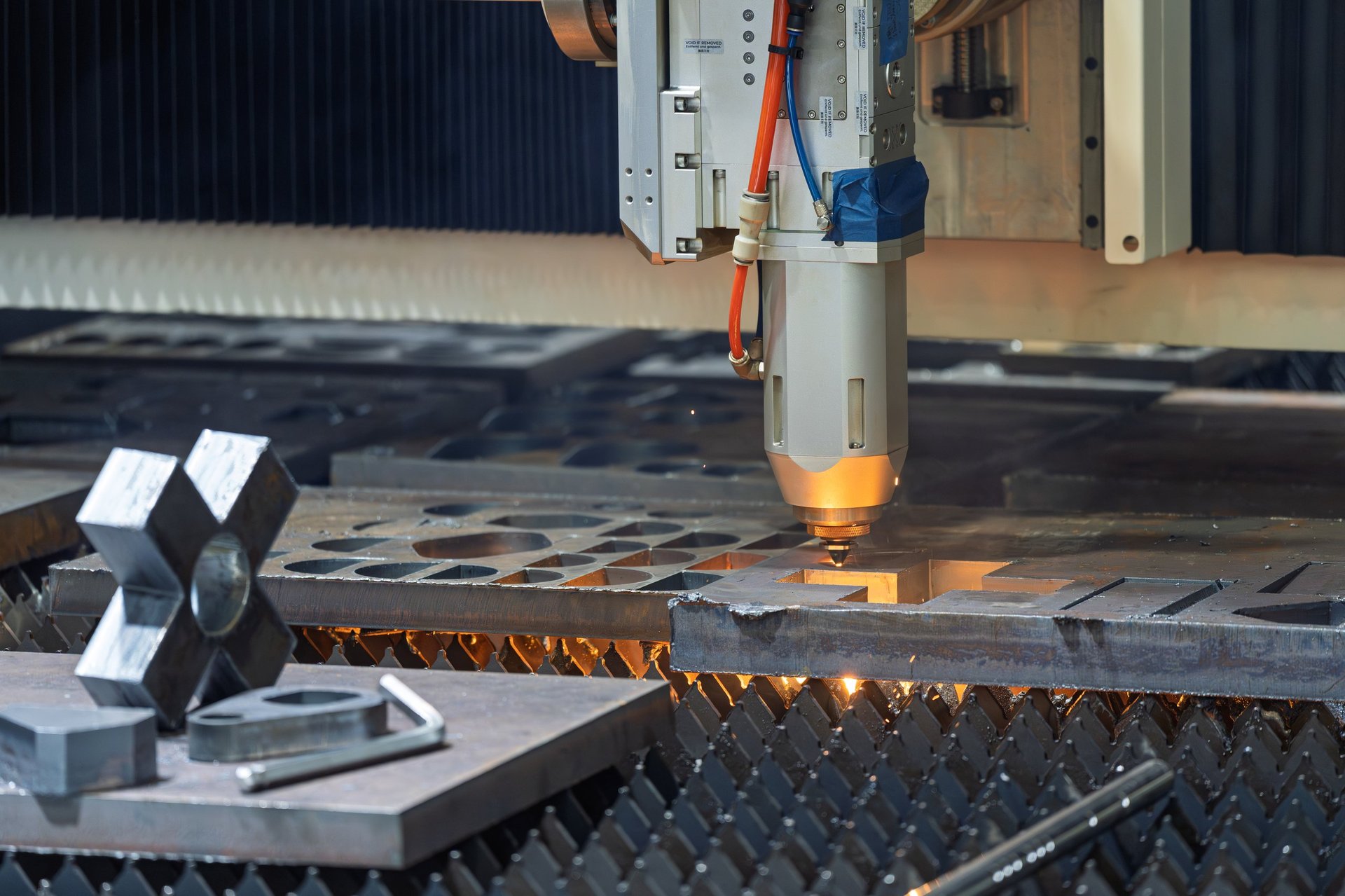
The cut decides the edge the part starts life with. Laser and plasma cut by melting or burning through the sheet; shear cuts by fracture along a blade. Each leaves a different edge — a heat-affected zone, a dross or taper on one process, a burr and a slight distortion on another — and each behaves differently on a coated or stainless surface.
A cut process is also a nesting decision: how the parts are arranged on the blank sets the yield, the offcut and how much of the sheet you actually pay for.
Bending and forming
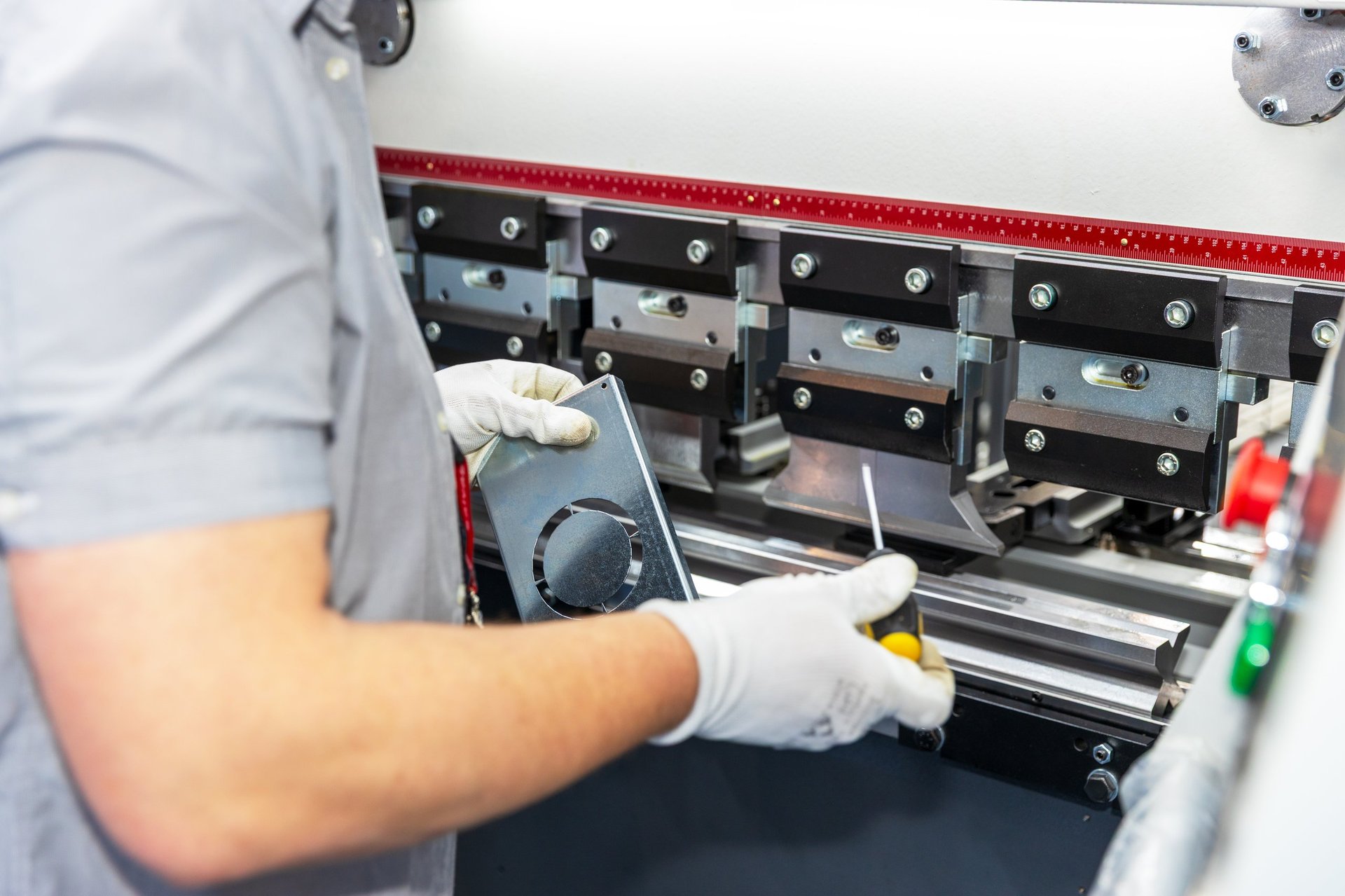
Bending asks the material to stretch on the outside of the radius and compress on the inside. How far it will go before it cracks or tears depends on the grade, the thickness and the bend direction relative to the rolling direction — not on the sheet's name.
The minimum inside radius that a given grade and thickness will accept is a property of the material and the process together. It is never a single number that travels with the sheet.
Welding and joining
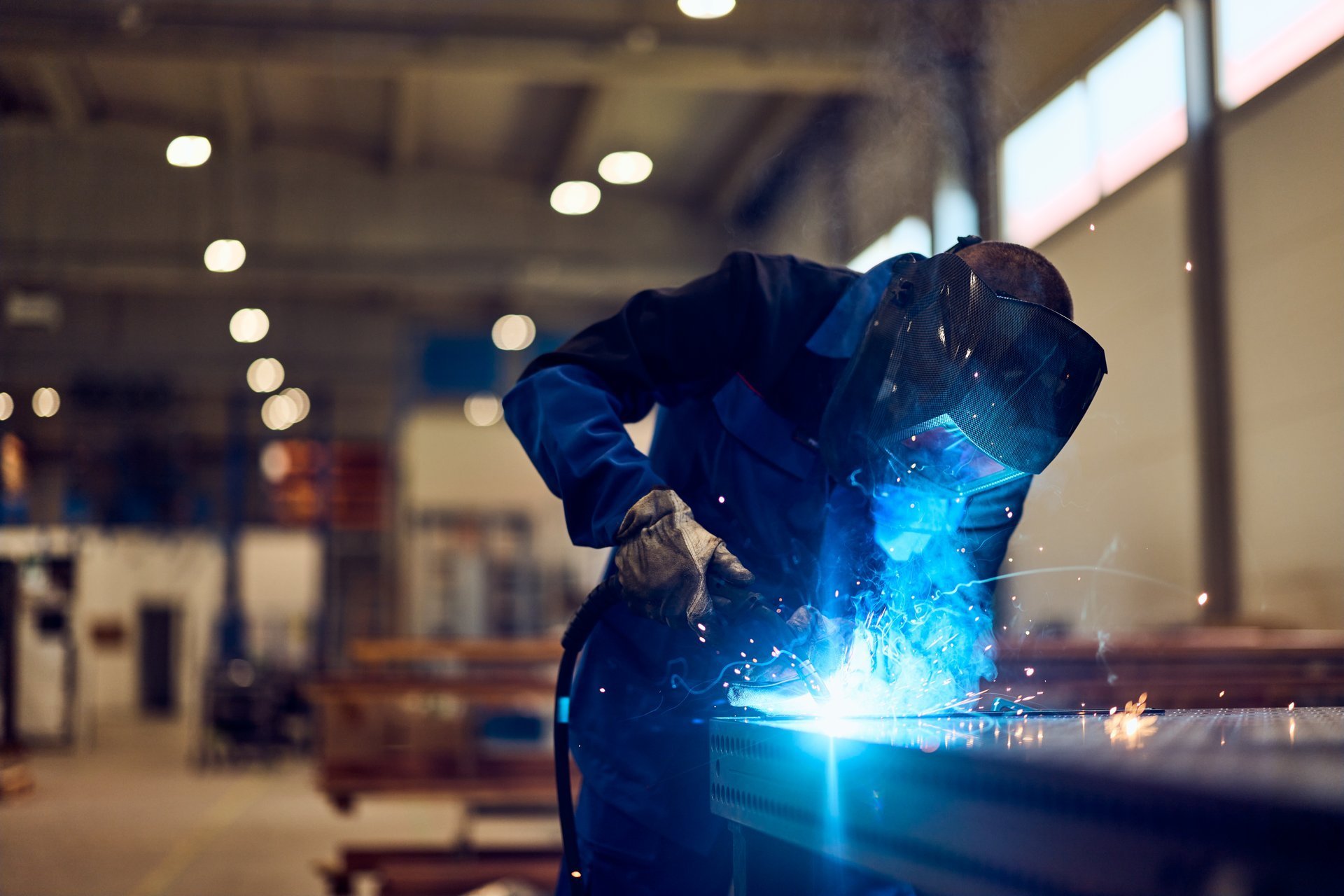
Welding changes the material it touches. The heat alters the grain structure near the weld, and how much that matters depends on the steel's chemistry — its carbon content, its alloying and, on coated sheet, what the coating does under the arc.
Weldability is a statement about a specific grade, a specific thickness and a specific process. It is not a property of steel sheet in general, and it cannot be promised from a product family alone.
Finishing and assembly
Finishing is where the sequence matters most. Whether a coating is applied before or after the part is fabricated changes which surface survives the process — a pre-coated sheet is cut, bent and welded with its coating already on, while an uncoated sheet takes its protection afterwards.
The order of operations is a shop-floor decision that has to be mirrored in what you buy. Buying a finished sheet for a process that will damage the finish is a mismatch that only shows up at assembly.
Where the demands conflict, the order has to say which one governs
The clearest conflict is between protection and fabrication. A coated sheet delivers its corrosion protection in the material you buy, and every cut and weld the shop makes interrupts that protection. An uncoated sheet is easier to work and leaves the whole finishing operation until after fabrication, where the coating can reach the edges. The two are not a better and a worse answer — they are two different sequences, and the one that suits you depends on where your line already sits and how exposed the finished part will be.
A second conflict sits between formability and strength. A harder, stronger steel holds more load and resists bending further. Stating which of those your part actually needs is what lets the rest of the specification be set — and it is the reason a fabrication enquiry is worth writing from the process backwards rather than from the product name forwards.
Process-to-Specification Map
Work the processes you run, and watch the enquiry build itself
Answer one question per process. Each answer sets a field on the enquiry and raises any combination that cannot be settled on paper. Nothing is calculated and no process is promised — the map assembles the questions your order has to answer.
How is the blank opened?
Sets the enquiry field: Cut process
The cutting process sets the edge condition and the heat the material sees. Naming it lets the edge requirement be confirmed against the material, and flags where a coated or stainless surface needs different handling.
Laser and plasma leave edges a shear does not, and a coated sheet cut by any of them has an unprotected edge whichever you choose. If the part will be exposed, that edge is a finishing question as well as a cutting one.
Your process map
- Cuttingnot set
- Bendingnot set
- Weldingnot set
- Finishingnot set
- Nesting & yieldnot set
Still to answer: Cutting, Bending, Welding, Finishing, Nesting & yield.
Choosing the Material Family
Three families, and what each one asks of your process
Most fabrication work starts from one of three sheet families. The choice is rarely about which is best — it is about which one your processes are set up to handle, and what the finished part has to survive.
Carbon and mild steel sheet
The default for general fabrication. It cuts, forms and welds with the least ceremony of the three, and the workshop practices around it are the most widely understood. Its limitation is corrosion: unprotected carbon steel rusts, so the finishing sequence carries the protection.
Best suited where the part will be painted or coated after fabrication, or where the service is dry and indoor.
Coated sheet
Sheet that arrives with its corrosion protection already applied. The advantage is that the shop does not have to provide it; the consequence is that the shop has to preserve it. Cutting and welding remove the coating locally, so the cut edges and weld zones need attention that a bare sheet would not.
Suited where the finished part will be exposed and much of its surface will survive the process intact.
Stainless steel sheet
Corrosion resistance comes from the steel itself rather than a coating, which removes the re-coating problem entirely. The trade is in the process: stainless work-hardens, behaves differently under heat, and demands its own tooling, consumables and cleanliness discipline to avoid contaminating or distorting the part.
Suited where the corrosion duty is continuous, or where a coating is not acceptable on the finished part.
Where the corrosion duty is continuous or hygiene is a factor, the stainless steel sheet range covers the families and the grades fabrication work most often calls for.
Where you want the protection supplied with the material, the galvanized steel sheet range sets out the coated product and the surface conditions that come with it.
A family is a starting point, not a specification. The grade within it is what carries the strength, the forming behaviour and the welding chemistry your processes will meet.
Writing the Specification
The fields a fabrication order carries, and what each one decides
A material order names the product. A fabrication-ready order names the product and the conditions the shop will put it through. These are the fields that bridge the two.
| Order field | What it decides on the shop floor |
|---|---|
| Material family and grade | The strength, the forming behaviour and the welding chemistry. This is the field the processes are assessed against. |
| Thickness, with unit | Scales everything — the bend the material will take, the weight, the cut speed and the price. A gauge number is not a universal millimetre value. |
| Dimensions or blank size | Whether you are buying a standard sheet or a cut blank, and how the parts nest from it. |
| Cut process and edge | The edge condition the part starts with, and whether the edge needs treating before it is finished. |
| Bend requirement and direction | How far the material is asked to form, and whether the bend runs with or across the rolling direction. |
| Weld method and extent | How much heat the part sees, and how much of the grade's chemistry ends up governing the joint. |
| Surface and coating sequence | Whether protection is bought with the sheet or applied after fabrication, and which edges the finish has to reach. |
| Flatness and edge condition | What the part has to sit like on assembly, separate from its nominal dimensions. |
| Quantity and yield basis | How the order is reconciled — by piece, by sheet, by area or by weight — and against which figure. |
No bend radius, weld procedure or tolerance value is stated here — each is read against the specific grade, thickness and process on your order.
Confirm which product form your fabrication input belongs to before the fields are set — the steel sheet supplier range sets out the forms a fabrication order can be drawn from.
Where the shop feeds a coil line rather than cutting flat sheets, the upstream form and its handling conditions are covered in the steel coil range.
What The Record Proves
A material certificate describes the sheet, not the part you make from it
The inspection document that arrives with the steel says something specific about the material. It does not say anything about whether your press can form it or your welder can join it — those are demonstrated on your floor, from your drawings.
What the certificate establishes
The grade the sheet was produced as and the test results that grade requires, read against the standard your order cites. That is a real and checkable statement about the material you received.
What it cannot establish
That the sheet will form to your radius, weld to your procedure or finish to your standard. Those depend on the tooling, the process and the drawing — none of which the mill certificate has seen.
Where the process evidence has to come from
From your own first-off. A trial bend on the actual material at the actual thickness, formed on the actual tooling, is the only thing that answers whether the part will form — and it is worth running before a full batch rather than during it. Where the process owner requires a documented procedure, such as for a structural weld, that procedure and its approval sit with the design side of the contract, not with the material supplier.
Request a Quote
Send the sheet and the processes together
A fabrication enquiry needs the material fields and the process fields. Name the grade, the thickness and what the shop will do to it, and anything left open comes back as a question rather than an assumption.
Cut process
The cutting process sets the edge condition and the heat the material sees. Naming it lets the edge requirement be confirmed against the material, and flags where a coated or stainless surface needs different handling.
Bend requirement and direction
A bend requirement is what turns a grade and thickness into a forming question. Stating how tight the bend is — and whether it runs across or along the rolling direction — is what allows the material to be assessed against it.
Weld method and extent
Naming the welding process and how much of the part is welded keeps the requirement attached to a real chemistry and thickness rather than to a general expectation that steel welds.
Commercial Basis
What is confirmed against your enquiry, not published in advance
A fabrication order turns on the material and the process together. Whether the grade you need is obtainable at the thickness the part requires, in the width the nesting wants, is confirmed per enquiry rather than assumed from a product list.
Grade, thickness and width together
Whether the combination your part needs is obtainable — the three are checked as one, because each constrains the others.
Full sheet or cut blank
Which form is being supplied, and what that means for edge condition, dimensional terms and offcut.
Yield and reconciliation basis
The figure the order is checked against — per piece, per sheet, per area or per weight — stated so quotations can be compared.
Documents and origin
The certificate type and the dimensional record, and the producing source, stated against the actual enquiry.
Pricing is on request. No rate, lead time or stock position is published before the material and the process requirements are confirmed.
Related Routes
Where the questions either side of this one are answered
Each of these settles something a fabrication enquiry raises. Open one only when it is the question in front of you.
GCC Supply
Fabrication input into the Gulf — quoted against your process schedule
Fabrication work across this region spans everything from small jobbing shops to line-fed production, and the material requirement differs accordingly. The destination is planned on its own route, alongside the handling the consignment needs.






A country link is a destination-planning page. None of them implies a local office, warehouse or stock position, and none of them changes the material or process requirements on your order.
Why the bend limit moves
A bend radius is a sentence with three subjects.
Ask how tight a sheet will bend and there is no single correct answer to give you, because the question has more than one variable in it. The grade sets how much the steel will stretch before it tears. The thickness sets how much strain a given radius imposes on the outer surface. And the direction of the bend relative to the sheet's rolling direction changes how the material behaves — a sheet will often take a tighter bend one way than the other, because the rolling operation has already given it a grain.
Move any one of those three and the answer changes. A radius that forms cleanly on a soft, thin sheet across the grain may crack on the same sheet at a heavier gauge, or on a harder grade at the same gauge, or on the same material bent the other way. That is why a figure quoted as a minimum radius for steel sheet as a category is not a figure you can build a part around — it is a number detached from the three things it depends on.
The useful way to hold it is as a boundary you test rather than a value you look up. Give the material supplier the grade, the thickness and the bend you intend, and the answer you get back is grounded in the actual combination. Better still, run a first-off: form one piece on the tooling that will run the job, at the thickness you will buy, and look at it. A trial costs a fraction of a scrapped batch, and it settles in ten minutes what an argument about minimum radii can run for a week.
The same structure applies to welding, which is the other place a general promise is tempting. Whether a joint will perform depends on the grade's chemistry, the thickness, the process and the procedure — four variables again. A supplier can tell you what the material is, and can confirm that it matches the grade you ordered. Whether your procedure suits it is established on your floor, by the party who owns the drawing, and the two answers are not substitutes for one another.
Why Write It From the Process
What a process-first enquiry buys the shop
Writing the order from the processes backwards takes a few more lines than naming a material. These are the honest terms of that exchange.
A quotation built against your shop
When the processes are on the enquiry, the offer is written around how the part will actually be made — cut, formed, joined and finished — rather than around a generic supply.
The conflicts surface before the order
Protection against formability, strength against radius, coating against welding. Naming them at enquiry is what keeps them from appearing as a scrapped batch.
The process answers still come from you
That is the cost. The supplier can confirm what the material is and how it behaves against a stated requirement, but only your floor can say what radius your press achieves and what procedure your welder will run.
How the Order Moves
From the drawing to a fabrication-ready delivery
Each step settles something the next one depends on. The processes are written down before the material is fixed, and the yield basis is agreed before the batch is released.
- 01
Read the processes off the drawing
Establish how the part is cut, whether and how tightly it bends, whether it is welded, and what finish it carries. These are the inputs the material is chosen against.
- 02
Set the material and thickness
Name the family, the grade and the thickness with units — the three together are what the forming, welding and strength questions are actually assessed against.
- 03
Resolve the conflicts on paper
Where protection and fabrication disagree, or strength and formability do, record which one governs. That decision belongs on the enquiry, not on the shop floor.
- 04
Fix the yield basis and documents
Agree whether the order is reconciled by piece, sheet, area or weight, and which certificate and dimensional record the receiving inspection will check against.
Availability at your grade and thickness, forming behaviour and producing origin are confirmed against the live enquiry — never inferred from a published list.
Request a QuoteCommon Questions
Questions a fabrication sheet enquiry usually raises
Can you quote a minimum bend radius for my part?
Not from the sheet's name, and not before the grade, the thickness and the direction of the bend are all stated. A minimum inside radius is a property of a particular material at a particular thickness being bent a particular way — change any one of the three and the answer moves. What this page can do is make sure your enquiry carries the grade, the thickness and the bend so that the question is answerable. If you have the radius from your own press data, send that; it is the most useful single input you can give.
Will the sheet weld?
Steel sheet as a category welds, but that is not the question a fabricator actually needs answered. Weldability depends on the specific grade, its chemistry, the thickness and the welding process being used — a statement about one grade says very little about another that merely shares the word steel. Name the grade and the process on the enquiry and the material can be assessed against the weld you intend. Where the joint is structural, the welding procedure is a design decision that sits with whoever owns the drawing.
Should I buy coated sheet or bare sheet and coat it afterwards?
That depends on your finishing sequence, and it is worth deciding before you order rather than after. A pre-coated sheet arrives with its protection on and keeps it only where the coating survives the process — every cut edge is bare metal and every weld disturbs the coating locally. Buying bare and coating after fabrication gives you coverage that includes the edges, at the cost of an extra process step. Which suits you depends on how exposed the finished part is and where your process line already sits.
How do I compare quotations when suppliers quote different blank sizes?
Convert each offer to the same basis before you compare it. A quotation for full sheets and one for pre-cut blanks are different orders — they carry different dimensional conditions, different edge terms and different offcut ownership — so the headline figures are not comparable as printed. Work out the parts you get per sheet or per blank for each offer, add the labour and the scrap, and compare the finished-part cost rather than the material cost. The cheapest sheet is regularly not the cheapest part.
What has to be on a fabrication sheet enquiry?
The material and grade, the thickness, the dimensions or the blank size, the cut process, whether and how tightly the part is bent and in which direction, the welding method and extent, the surface and coating sequence, the flatness and edge requirements, the quantity with the nesting or yield basis, the documents required and the destination. Add anything your inspection will check for. State the process fields even when they feel obvious — they are what turn a material order into a fabrication-ready one.
Write the sheet from the processes it has to survive
Send the grade and thickness, the dimensions or blank size, and how the part is cut, bent, welded and finished. The quotation comes back written against the work your shop actually does, with the open questions named rather than assumed.
sales@noordeirasteel.ae · +971 56 398 0860 · Business Bay, Dubai