
Steel Coil · HVAC Application
Steel Coil for HVAC — the duct and the casing are two different jobs
HVAC is a sector, not a specification. A rectangular duct section, an air handling unit casing and an outdoor condenser housing are all flat steel once, and they stop being the same problem the moment you ask what each one has to do. One has to be formed, joined and sealed into an air path. Another has to look right after handling. The third has to sit in the weather. This page sorts the coil requirement by where the component actually ends up.
The three questions that decide the coil
- Where does the component sit — inside the building, on the equipment, or outdoors?
- How is it fabricated, and will the surface be seen after it is made?
- What finish basis does the specification call for, and is it stated?
Buyer Fit
Sort the component before you sort the steel
An HVAC enquiry that arrives as steel for HVAC has answered the sector question and none of the product ones. The useful move is to split the package into what is actually being made, because the parts of an HVAC package that look identical on a materials list behave nothing alike once they are built and installed.
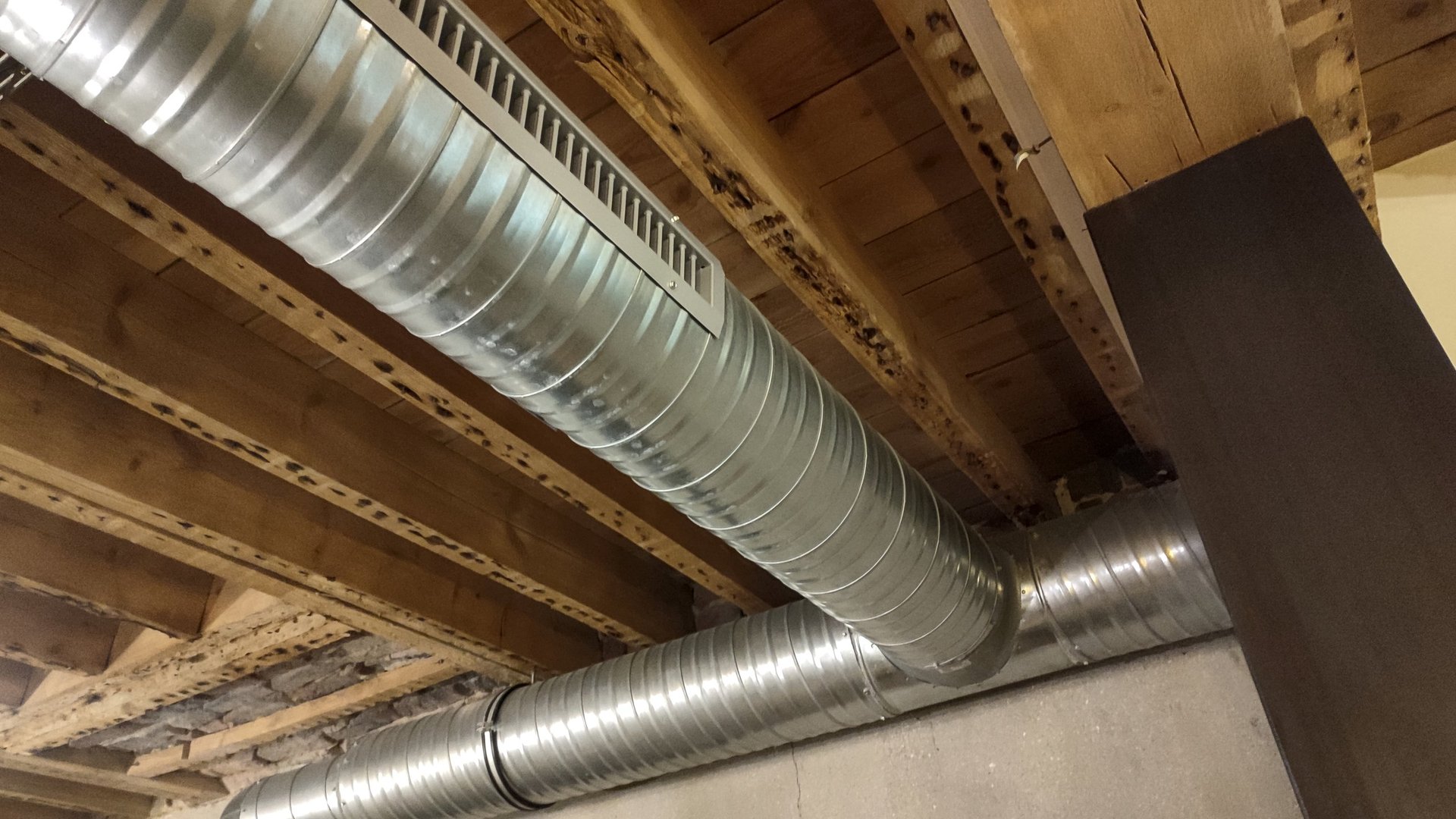
Take the ductwork first. A rectangular duct section is formed from flat coil, closed along a longitudinal seam, and then joined to its neighbours at intervals along the run. What the material has to do is hold a section through folding, take the seam without cracking, and stay dimensionally consistent enough that the sections line up when they are assembled on site. The surface matters less than the forming and the consistency, because once the system is installed nobody looks at it again — but the air inside it will.
Now take a casing. An air handling unit or fan casing is a fabricated enclosure, and it has a different set of demands. It may be visible in a plantroom or on a roof, it is handled repeatedly during manufacture and installation, and it frequently has to hold a finish that the client will inspect. A material chosen for ductwork and reused for casings will form perfectly well and may still disappoint on the two things the casing is actually judged on: how it looks after handling, and whether the finish survived the process.
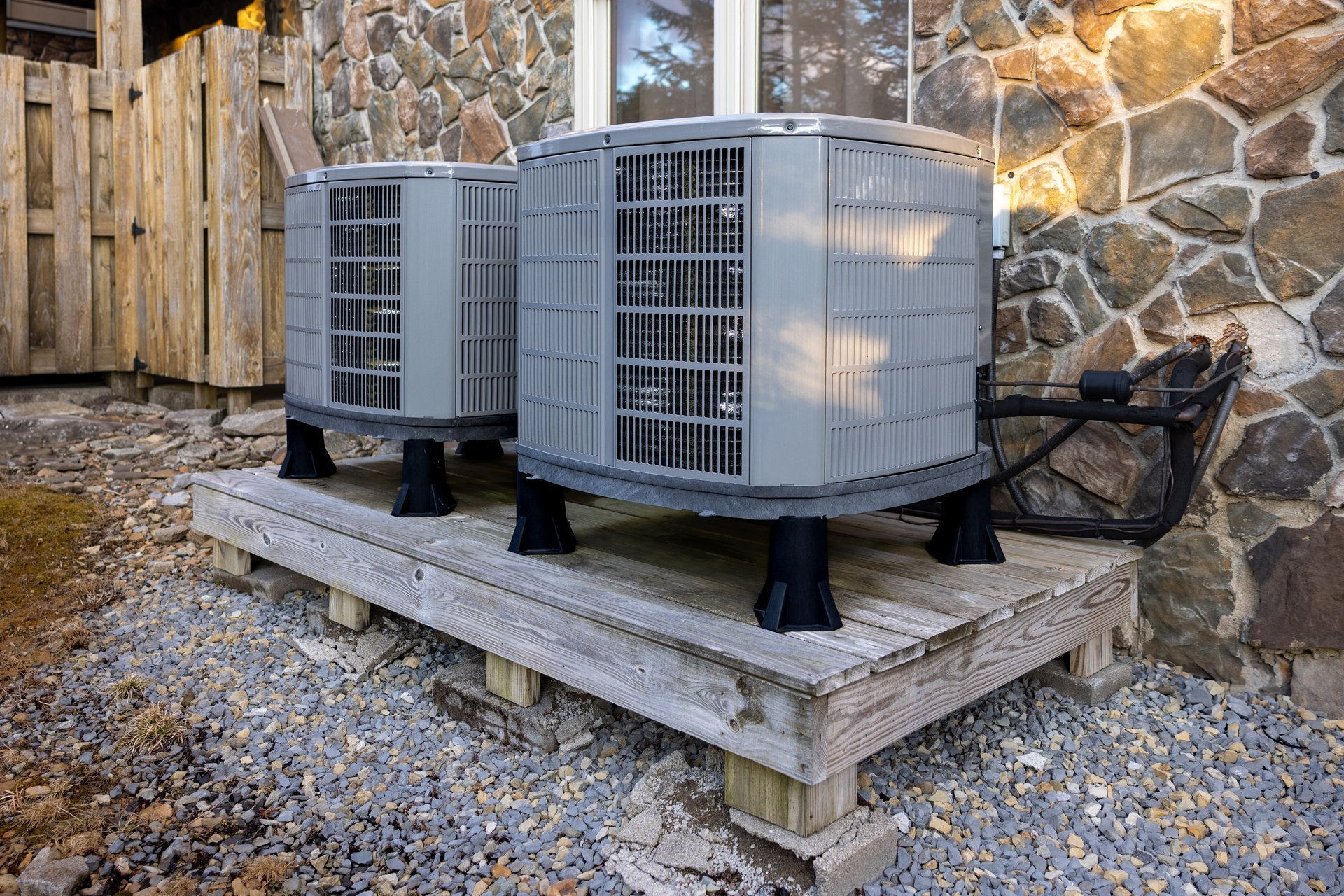
Then the third case, which is the one most often specified by analogy: anything that lives outdoors. An outdoor unit, a rooftop housing or a condenser enclosure meets sun, rain and, on Gulf sites, salt-laden air. It is usually specified as coated for exactly this reason, and the coating basis becomes the governing field rather than the substrate. Bringing an indoor assumption to an outdoor component is a decision that stays invisible until the unit has been in service for a season — which is the worst possible time to discover it.
Why the sector label will not carry a specification
When a purchase list says steel for HVAC, the parts it covers are separated by more than their names. Interior duct is judged on air integrity; a casing is judged on appearance and durability through handling; an outdoor housing is judged on how its coating holds up to weather. Those are three different acceptance questions, and a single material line offered against all three answers none of them precisely. Splitting the package by component and by location costs one conversation and removes the guesswork.
This route fits if…
- You know which component the coil becomes. Duct, casing, plenum, housing or a bracketed internal part. The component decides the fabrication route, and the fabrication route decides most of the specification.
- You know where that component sits in service. Interior ductwork, plantroom equipment and an outdoor unit see genuinely different conditions, and the finish basis follows from the one you are actually building.
- The fabrication and joining method is settled. Whether the section is folded, lock-formed, welded or flanged changes what the material has to tolerate, and it is a plant decision rather than a supplier one.
- You can state the finish basis your specification calls for. Bare, galvanized, pre-coated or painted at the works — naming it means the coating can be verified on arrival rather than discovered at installation.
Move to a different route if…
- You are still deciding whether the process route should be hot-rolled, cold-rolled or galvanized feedstock. Start from the steel coil range
- The material is a cold-rolled coil for general forming and you are checking that route. See the cold-rolled route
- The component will be galvanized and you want the coated route itself rather than the HVAC context. See the galvanized route
- The component is supplied as flat cut blanks or sheet rather than coiled. See the steel sheet range

Duty Selector
Name the component and its duty, and see which fields it leaves open
This selector takes the component, where it sits, how it is fabricated and the finish basis, and reports which specification fields the choice already settles, which it leaves open, and where a combination does not hold together. It names no grade and quotes no coating life.
Describe the component and its duty
Answer the five fields as they stand today. The selector separates the inputs that define what the component has to do from those that only supply it, and flags combinations that conflict.
This reviews a duty, not a product. It names no grade, no gauge and no coating life, and it makes no judgement about whether a given material suits a given component.
Duty findings
Answer the five fields above. The selector reports what the duty already settles, what it leaves open, and where two answers cannot both hold.
Nothing here selects a material or predicts how long a finish will last. It is a check that the enquiry describes what the component has to do.
Why the selector works from duty rather than from grade
There is a comfortable version of this tool that asks what the part is and returns a grade, and it would be misleading. Two duct fabricators running different folding and seam equipment on the same drawing can need different material, and an outdoor housing and an indoor one on the same unit need genuinely different finishes. What is deterministic is the mapping from duty to the fields that must be stated — the environment sets the finish basis, the component sets the fabrication demand, the fabrication sets the tolerances. So the selector does that part, and flags combinations that cannot both be assumed. The grade itself comes from your own fabrication data and is confirmed against the standard your specification cites.
Where It Stops
Four assumptions that leave an HVAC component under-specified
Each of these is a shortcut taken when an HVAC package is specified as one material line rather than as separate components with separate duties. Each one is invisible at the order stage and becomes visible in service or on site.
Indoor and outdoor components specified as one line
A purchase list that covers a rooftop unit and its interior ductwork on the same material line has almost certainly taken the finish basis from one of them and applied it to both. The two components meet different conditions, and whichever requirement was written will be wrong for the other.
Boundary: split the schedule by service location before the material is specified. The finish basis follows the exposure, not the project.
A coating expected to do a job it was never chosen for
Galvanized and pre-coated are descriptive answers, not performance promises. What a coating resists depends on the coating mass actually applied and the atmosphere it meets, and neither of those travels with the word on the drawing. A finish selected for appearance being relied on for salt exposure is the common form of this.
Boundary: choose the finish against the documented exposure, then verify the coating figure at goods-in rather than trusting the label.
A coating specified by name without its forming route
Any coating applied before fabrication is then formed, folded or welded along with the steel underneath it. Whether it survives that process depends on the coating system and the severity of the operation, and it is not something the coating's name tells you. This is the single most expensive assumption in coated HVAC fabrication.
Boundary: where the coil is pre-coated and the part is formed after coating, treat the coating's forming capability as its own stated requirement.
Duct performance assumed to come from the material
Air tightness, pressure class and acoustic behaviour are properties of the assembled system — the seams, the joints, the sealing and the support — not of the sheet they start from. Specifying a better material does not raise the performance of a system that was detailed for a lower duty.
Boundary: keep the system performance in the duct design and the material requirement in the material specification, and do not use one to cover the other.
All four share one cause: a sector-level assumption standing in for a component-level requirement. The remedy is not a longer specification — it is splitting the schedule by component and location, so the finish basis is chosen once per duty instead of once per project. That is a drafting change, and it costs far less than discovering in service that the outdoor unit was specified on an indoor assumption.
Order Conditions
What an HVAC coil order has to carry
These are the fields a duct or casing fabricator works to. Anything absent is decided by whoever quotes — which means the material may arrive meeting a requirement nobody at your plant wrote for that component.
| Order field | What it decides |
|---|---|
| The component being made | Duct, casing, housing or internal part. This is the field that sets every other requirement, because the component decides what the material has to do once it is built. |
| Service location and exposure | Where the component sits and what it meets in service. The finish basis is chosen against this, and it is the field most often left to the supplier to assume. |
| Fabrication and joining method | Folding and seaming, lock-forming, welding or flanging. Each puts a different demand on the coil and sets what the dimensional band has to deliver. |
| Finish basis | Bare, galvanized, pre-coated or painted at the works. This is a stated requirement with a coating figure behind it, not a description of how the material looks. |
| Governing specification and its edition | Which text the steel is ordered and verified against. A specification without an edition leaves more than one reading open on tolerances and test basis. |
| Grade as your fabrication requires it | The grade taken from your own forming and joining experience and confirmed against the specification. This page will not supply one, because formability is established at your line. |
| Thickness and tolerance, with the unit system | The band the folding or forming equipment will accept and goods-in will verify. Stating a bare figure without a tolerance invites each supplier to apply a different default. |
| Width and slit basis | Whether the coil is supplied at ordered width or slit to the line width, and the edge the fabrication expects — a duct line and a casing line often want different things here. |
| Surface condition and protection | What the surface is expected to be and how it is protected before fabrication. On a bare interior component this is the difference between material that forms cleanly and material that has marked in store. |
| Coil geometry, mass and quantity | Whether the coil suits your decoiler and line — inner diameter, outer diameter, coil mass range — and the tonnage or unit count for the programme. |
| Documents and destination | What is evidenced at dispatch and against which basis, plus the protection and document set the receiving end expects at goods-in. |
Related routes on this path
Releasing HVAC coil at goods-in
- Confirm the certificate cites the specification with the same edition your order invoked, not the designation alone.
- Check the coating figure on the documents against the finish basis your order stated — the word galvanized is not a figure.
- Verify the surface condition recorded matches what the fabrication and the finish require, particularly where the component will be seen or lined.
- Compare thickness and width against the stated band before releasing the coil, since a section that will not hold tolerance will not assemble cleanly on site.
- Record the banding, wrapping and any protective treatment on arrival, because bare or lightly protected material marks in store and the cause is impossible to trace once the coil is unbanded.
What the documents can and cannot carry
Each record answers one question and stops there. The table below separates what each document actually verifies from what it is often assumed to verify — and the second column is where HVAC coil disputes usually begin.
| Document | What it verifies | What it does not establish |
|---|---|---|
| Mill test certificate | The material in the lot it was tested from, read against the specification and edition your order names. | It does not evidence that the ducts will be air tight, or that the assembled system meets a pressure class. |
| Coating mass record | The coating figure actually applied, against the finish basis your order stated. | It records the coating, not how long it will last in the environment the component is going into. |
| Coating adhesion / forming result | That the coating is soundly bonded — the property that decides whether it survives being formed after coating. | It evidences the tested sample, not the behaviour of your specific fold, seam or weld. |
| Dimensional and flatness record | Thickness, width and flatness against the ordered band. | It records what was measured, not whether your folding equipment will accept it. |
| Packing and protection record | How the coil was protected for the journey and what treatment the surface carries. | It does not carry a storage or handling instruction for your yard, which is where bare material usually marks. |
GCC Supply
HVAC coil into Gulf fabrication and project supply
Gulf HVAC work puts two demands on the same coil that other regions rarely combine: a hot, humid and often coastal external environment, and a highly serviced indoor environment where duct cleanliness and sealing are examined closely. Both follow from the duty, not from the sector.

United Arab Emirates
Duct and equipment fabrication supply where the component, its location and the finish basis are settled together before the coil is committed.
Steel coil supply for United Arab Emirates
Saudi Arabia
Programme volumes for HVAC packages, where the finish basis has to align with the project's own specification before material is released.
Steel coil supply for Saudi Arabia
Qatar
Project supply with a technical submittal, so the finish basis and the component split are on the record before shipment is planned.
Steel coil supply for Qatar
Oman
Port-oriented routes where transit protection matters as much as the finish itself, because coastal handling is part of the journey.
Steel coil supply for Oman
Bahrain
Industrial supply where the document set carries weight, because the coating is evidenced by certificate as much as by inspection on arrival.
Steel coil supply for Bahrain
Kuwait
Fabrication supply where the coil feeds a duct or casing line, so the fabrication method and the dimensional band are fixed before the run.
Steel coil supply for KuwaitThese pages set out the enquiry handling for each destination. They do not claim local warehousing, stockholding, a branch presence or a delivery timescale — those are confirmed against your own order. For Gulf sites, state whether the installation is coastal: salt in the air is the single strongest influence on how a finish basis should be chosen, and a rooftop unit near the shore is a different specification from the same unit inland.
Reference Notes
Reading an HVAC coil requirement, and the limits of this page
A coated flat-rolled specification does several jobs at once: it defines the product, sets the coating basis, and establishes how both are tested and accepted. That is why the edition your project cites matters — and why this page states no figures of its own.
The coating is a specified quantity, not a description
On a coated product the coating itself is one of the things being bought, expressed as a figure the supplier works to and the buyer verifies. That is why galvanized stands on its own as an incomplete answer: it says which process was used and leaves the amount open. Two coils can be galvanized on the same line at different coating amounts and both be described as galvanized. The quantity is the requirement.
Duty and finish are chosen in one direction, not two
The component and its location set what the material has to survive, and the finish basis is chosen against that. Working the other way — picking a familiar finish and then reasoning about whether it will cope — is how an indoor specification ends up on a rooftop. The direction matters more than the individual choice, because it is the direction that keeps the exposure and the coating in the same conversation.
Fabrication after coating is its own requirement
Where the coil arrives coated and is then folded, seamed or welded, the coating goes through the operation with the steel. Whether it survives is a function of the coating system and the severity of the operation, and it is not implied by the coating's name or by its performance once installed. Treated as its own stated requirement, it is an easy conversation at enquiry; treated as an assumption, it is a rejected batch.
Material conformance and system performance are separate records
A duct system's air tightness, pressure class and acoustic behaviour are properties of how it was assembled — the seams, the joints, the sealing and the support — not of the sheet it was formed from. A certificate evidences the material. It does not evidence the system, and presenting material conformance as system compliance is a substitution neither document supports.
This page states no grade, no gauge, no coating mass figure, no composition and no test value, and it quotes no coating lifespan. Coated-product standards are maintained and revised, and coating performance depends on the figure actually applied and the atmosphere it meets — so the publisher's own catalogue and your project's controlling documents are the only sources that stay accurate. Read the specification your project cites, confirm its status there, and verify the coating figure on the certificate rather than on this page.
Which decision belongs to which stage
What the component has to do in service
Yours — from the component and where it sits, not from the sector the project belongs to.
How it will be fabricated and joined
Your plant, from the equipment and the method actually running on that line.
Which finish basis the exposure calls for
Chosen against the documented location, then written into the specification as a stated requirement.
Which specification and edition governs
Whoever controls the project's documents — the consultant or the fabricator's own engineering function.
What evidence has to arrive with the coil
Your quality function, set to what the project requires rather than to a supplier's default.
The grade, gauge and tolerance actually supplied
The supplier — read against the specification your documents name and verified at goods-in.
Where It Is Applied
Six enquiry situations where the duty decides, not the sector
These are the settings in which HVAC coil enquiries most often go out with the sector named and the component unsplit. In each of them the same two fields — the service location and the finish basis — are the ones that go missing.
A project schedule lists all HVAC steel as one line
Ductwork and rooftop housings share a material line because they share a trade package, so whichever finish basis suits one of them is quietly applied to both.
A duct fabricator switches folding equipment
The same section is now formed on different machinery, and the dimensional band and forming behaviour the original material was chosen for no longer match what the line does.
A pre-coated coil is ordered for a seamed duct section
The finish was chosen for appearance and was never assessed for what happens to it when the strip is folded and closed after coating rather than before.
An inland specification is applied to a coastal installation
The two units are the same model on the same drawing, and the site moves from one to the other, so the finish basis should move with it and does not.
Air tightness is expected from a better material
The system fails its leakage test on joints and seams, and the material was changed in an attempt to fix a detailing and sealing problem it was never responsible for.
A lined duct is specified on the mill finish alone
An internal lining goes onto a surface that was chosen for forming rather than for bonding, and the compatibility question is discovered during installation.
Where the component will be supplied as flat cut blanks or sheet rather than as coil for a forming line, the dimensional and handling questions change even though the duty does not. The steel sheet range covers that form.
FAQ
What an HVAC fabrication buyer asks before specifying coil
Written around the questions that decide whether a coil requirement actually describes the component — including the ones about what this page will not tell you.
Is there one steel coil grade for HVAC work?
No, and the search for one is usually the reason an HVAC enquiry goes wrong. Ducting, equipment casings, outdoor units and internal components are separate products that share a sector rather than a specification. What a rectangular duct section needs is governed by how it is formed and how it is joined; what an outdoor condenser casing needs is governed by the weather it sits in. Those requirements pull in different directions, so a single grade offered for all of them would be a compromise on each.
How long will a galvanized duct coating last?
That is not a figure this page can give, and any page that quoted one should be treated carefully. Coating life depends on the coating mass actually applied, the atmosphere the duct sits in, whether the system runs wet or dry, and how the material is handled and stored before installation. What can be done commercially is to specify the coating basis against the environment it will see and verify the coating mass on the certificate — which is a defensible position, where a quoted lifespan is not.
Should interior duct and equipment casings use the same material?
They often are specified together and they are not the same problem. Interior ducting is a formed, joined and often sealed envelope where air tightness and cleanliness matter more than surface appearance, and where the material is rarely seen once installed. A casing is a fabricated enclosure that may be visible, may be handled repeatedly during manufacture, and often has to hold a finish. Treating them as one line item is convenient and it leaves one of the two requirements unaddressed.
What fabrication information should the enquiry carry?
Enough for the material to be matched to the operation: how the section is formed and joined, whether the surface will be visible, the coating or finish basis the specification calls for, the thickness band, the coil or slit width the line needs, and what the finished system has to do. Where the duct will be sealed, insulated or lined, say so, because those steps sit on top of the material and can be compromised by a surface that was never specified for them.
Do outdoor HVAC units need a different specification from indoor ones?
They usually need a different conversation. An outdoor casing or housing is exposed to sun, rain, coastal salt where the site is near the sea, and temperature cycling — and it is frequently specified as galvanized or pre-coated for exactly that reason. What matters commercially is that the environment is stated rather than assumed, because an indoor-grade finish put on an outdoor unit is a decision that only becomes visible after a season of service. State the exposure and let the coating basis follow from it.
Request a Quote
Send the component and what it becomes, where it sits in service, the fabrication and joining method, the finish basis, whether the assembly is sealed, insulated or lined, the governing specification with its edition, the grade as your fabrication requires it, the thickness and width with tolerances, the coil geometry and quantity, the documents the project calls for, and your destination and whether the site is coastal. Price is on request.
Duct and casing enquiries on this route are handled through the steel coil desk — the main steel coil enquiry desk. The form here reaches the same team.
Office 3303, Churchill Executive Tower, Business Bay, Dubai, United Arab Emirates
Monday – Saturday: 8.00 AM – 6.00 PM · Sunday: Closed