
Steel Coil · Pre-Engineered Building Application
PEB Steel Coil — one building, several coil products wearing the same name
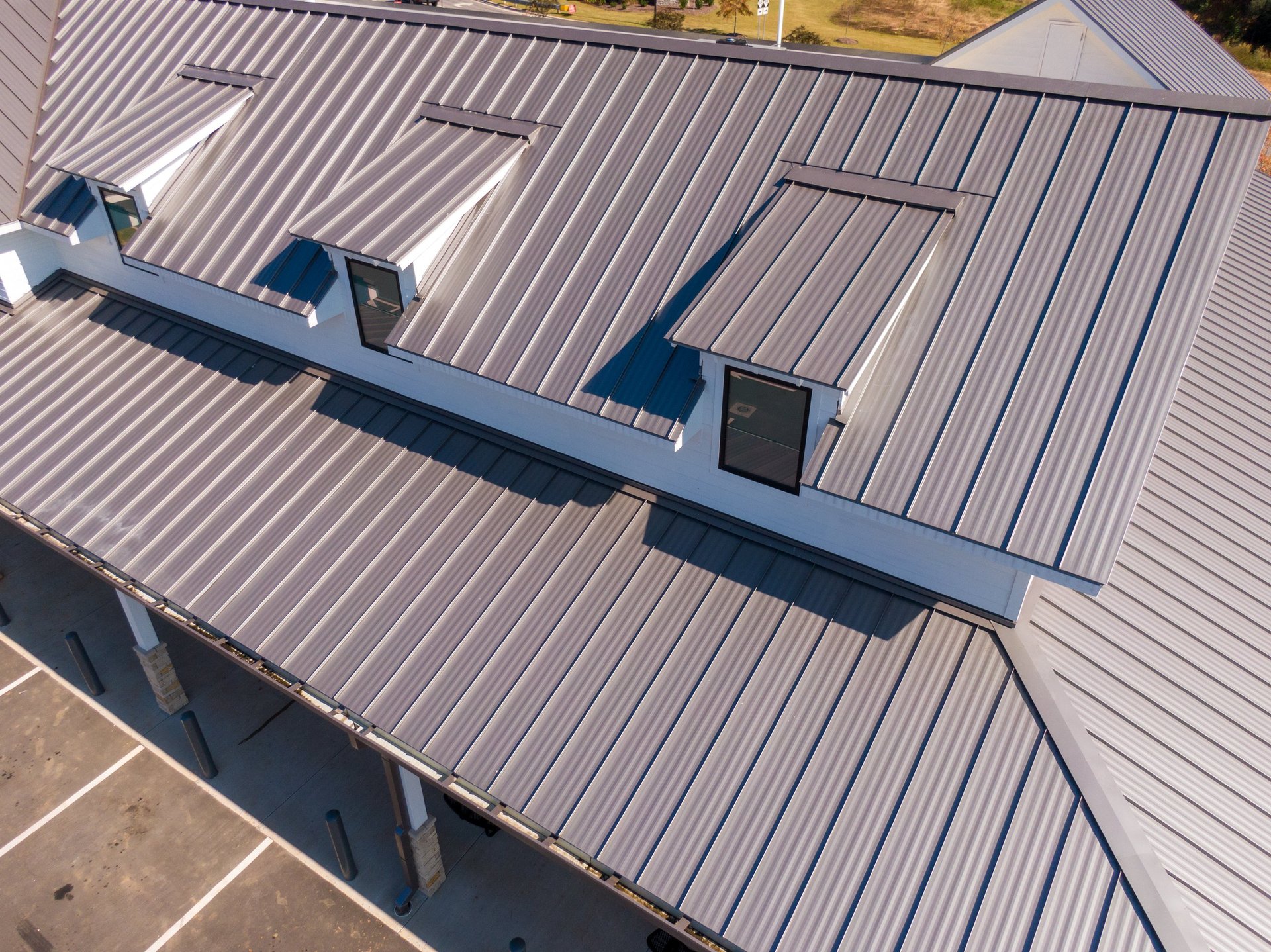
A pre-engineered building arrives on site as a set of subassemblies, and the steel coil behind them is bought to several different requirements. Roof and wall cladding form a weather envelope. Purlins and girts are cold-formed structural members carrying load. Ridge caps, flashings and trim are formed details that have to fit the building they close. Calling all of that PEB coil is a convenience on a purchase order and it is not a specification.
Three subassemblies, three requirements
- Cladding is a weather envelope — the finish and the profile carry the duty.
- Purlins and girts are structural — the section and its capacity carry the duty, and finish does not add to it.
- A coating specifies the surface, never the load a member can carry.
Buyer Fit
PEB is a package, and a package is not a product
Pre-engineered building is a method of construction — a way of delivering a building from factory-made subassemblies. It describes how the building is put together, not what any individual piece of steel in it has to do. That distinction is the whole of the problem on a PEB coil enquiry.
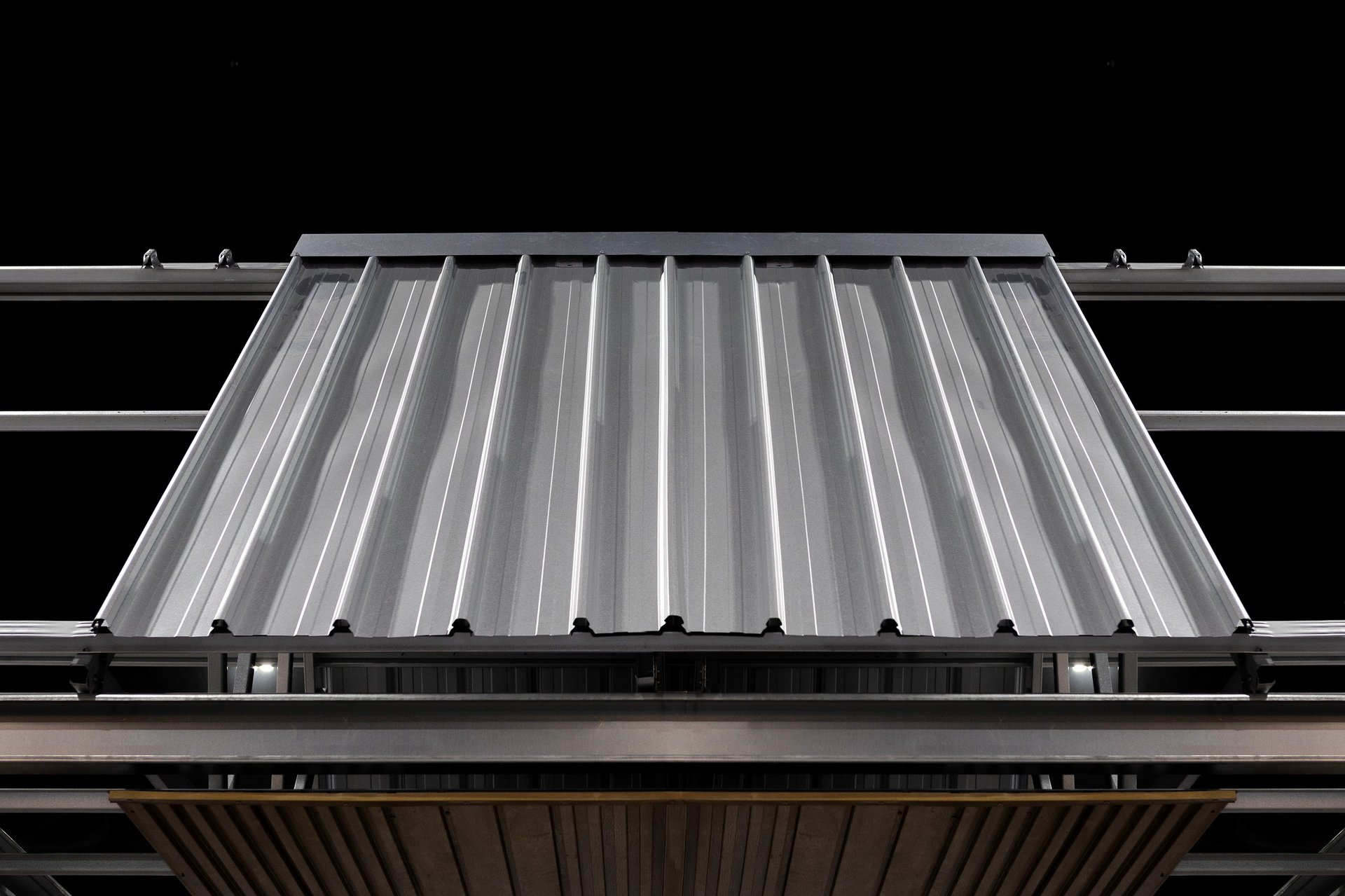
Start with the envelope. Roof and wall cladding is profiled from coil into a sheet that has to shed water, resist the atmosphere, and look acceptable on a building that a client will inspect. The coating is doing real work here and it is doing it on an exposed surface, so the finish basis is the governing field rather than a decorative one. What the cladding is not doing is carrying the building — its span performance comes from the profile and the section, not from the coating on it.
Now the supporting frame. Purlins and girts are cold-formed from coil into structural sections, and they carry load. The requirement here is set by the structural design — the span, the spacing, the loading the building is designed for — and it is expressed as a section capacity, not as a finish. This is where the most expensive category error on PEB packages happens: a heavier coating is specified in the belief that it improves the member. It does not. Coating governs how the surface resists its environment; it contributes nothing to the load a purlin can carry, and the two requirements live on different documents.
Then the formed accessories — ridge caps, flashings, barge trims, gutters and the closures that finish the envelope. These are small parts with a disproportionate effect, because they are where a weather envelope actually leaks when it leaks. They are formed from coated coil, they have to fit the building they close, and they are frequently bought from whatever coil was left over from the cladding run. A trim specified as an afterthought is a trim whose coating and forming behaviour were never chosen.
Why the subassembly is the right unit of specification
Requirements attach to what a part does, and in a PEB package the same coil can become parts that do entirely different things. Splitting the package by subassembly — envelope, structural sections, formed accessories — costs one pass through the bill of materials and it puts each part against the requirement that actually governs it. Bought as one line, the parts inherit whichever requirement was written first, and both the finish decision and at least one structural requirement end up being made by whoever quotes.
This route fits if…
- You are buying coil for a building envelope or its supports. Roof, wall, purlin, girt or formed trim — the material is going into a PEB package rather than into a general fabrication.
- You can name which subassembly each part belongs to. Whether a part is cladding, a structural section or a formed accessory. That answer decides which requirement applies to it.
- The exposure and the finish basis are on the specification. Coastal, industrial or inland, and whether the envelope is coated, pre-coated or left as supplied — stated rather than assumed.
- You know what evidence the project requires. The structural document for a load-bearing member and the coating or finish record for the envelope are separate requirements, and both need naming.
Move to a different route if…
- The coil is going into a cold-formed structural section and you want that route itself. See the steel coil range
- The cladding is formed from cold-rolled feedstock and you are checking that route. See the cold-rolled route
- The member is heavier hot-rolled feedstock rather than cold-formed coil. See the hot-rolled route
- The envelope is supplied as flat cut sheet rather than coiled. See the steel sheet range
Component Split
Name the subassembly, and see which requirement governs it
This split works from the part rather than from the package description. Name what the coil becomes, where it sits in the building and how it is formed, and it reports which requirement governs, which fields are still open, and where a stated input cannot hold. It names no section, no capacity and no grade.
Describe the part
Answer the five fields as they stand today. The split separates the requirement that governs this part from the ones that belong elsewhere in the building, and flags inputs that conflict.
This reviews a part, not a building. It names no section, no capacity and no grade, and it makes no structural claim of any kind about the building the part goes into.
What governs this part
Answer the five fields above. The split reports which requirement governs the part, which requirements belong on separate documents, and where two answers cannot both hold.
Nothing here sizes a member or approves a building. It is a check that the requirement matches what the part actually does.
Why the split refuses to speak for the structure
It would be easy to build this as a lookup that turns a building type into a section, and it would be unsafe. What a purlin can carry is established by the building's structural design — the span, the bay spacing, the loading and the design code the engineer worked to — and none of that is visible from a purchase order. A tool that named a section from a building description would be producing a confident number about a structure it has never seen the calculations for. So the split does the part that is genuinely deterministic: it decides which requirement governs each subassembly, holds the coating and the capacity apart as separate documents, and tells you which inputs your enquiry still owes.
Where It Stops
The four subassemblies, and what each one is actually for
Read this as the table to settle before the first enquiry goes out. Each row is a part of the same building, the duty it has, the requirement that governs it and the evidence it needs — because a package bought as one line inherits whichever of these was written first.
| Subassembly | What it is for | What governs it | Evidence it needs |
|---|---|---|---|
| Roof cladding | Weather envelope — sheds water and resists the atmosphere across the roof plane. | The coating basis and the profile. The exposure sets the coating, and the profile and section do the spanning. | A coating or finish record for the delivered coil, against the finish basis the specification states. |
| Wall cladding | Weather envelope on a vertical elevation, with appearance that a client will inspect. | The coating basis, plus colour and appearance where the specification sets them. The elevation is seen, so cosmetics carry weight the roof plane does not. | A coating or finish record, with any colour or appearance requirement written onto the order. |
| Purlin or girt | Structural member — carries the roof or wall load into the frame. | The structural design. Span, spacing and loading set the section, and the capacity is expressed on a structural document. | The structural evidence the design requires, as a separate record from any coating the frame carries. |
| Formed accessories | Closes the envelope — ridges, flashings, gutters and trims that finish the building's edges. | Fit and finish together. The trim has to close the detail it was drawn for and weather as well as the envelope it finishes. | A coating or finish record against a stated basis — not an inherited one, since these parts fail first. |
The pattern across all four is the same: a requirement written for one subassembly being carried onto another because the parts arrive together. The remedy is not more specification, it is putting each requirement against the part it belongs to — which is one pass through the bill of materials and a note on each line saying whether it is envelope, structure or detail.
Order Conditions
What a PEB coil order has to carry, part by part
These are the fields a profiling or cold-forming line works to. Anything absent is decided by whoever quotes — and on a PEB package that means one of the building's requirements is being set by a supplier looking at a product list.
| Order field | What it decides |
|---|---|
| Which subassembly the part belongs to | Whether this part is an envelope component, a structural member or a formed detail. It is the field that decides which of the requirements below applies at all. |
| Position in the building and the exposure | Whether the coating is doing real work against the atmosphere or only protecting the part through handling and installation. |
| Forming operation | Profiling, cold forming, folding or slitting. Each sets what the coil has to do and the width and dimensional band the line needs. |
| Finish basis | Metallic-coated, pre-coated or bare. On an envelope part this is a primary requirement; on an internal frame member it is a protection decision. |
| Governing specification and its edition | Which text the steel is ordered and verified against. The structural and coating requirements may sit on different documents, and each needs its edition settled. |
| Section or profile requirements | What the finished member or sheet has to be. On cladding it comes from the profile and the covering width; on a purlin from the structural design. |
| Thickness and tolerance, with the unit system | The band the roll-forming or profiling line will accept and goods-in will verify. Stating a bare figure invites each supplier to apply a different default. |
| Coil width and slit basis | Whether the coil is supplied at ordered width or slit to the line, and the edge the profiling or cold-forming line expects. |
| Coil geometry, mass and quantity | Whether the coil suits your decoiler — inner diameter, outer diameter, coil mass range — and the tonnage for the building programme. |
| Protection through forming, transit and site | How the coated surface is protected from the line to the roof. On an exposed envelope part most visible damage happens after the coil is made. |
| Documents, destination and required date | What is evidenced at dispatch and against which basis, plus the protection and document set the project expects on site. |
Related routes on this path
Releasing PEB coil at goods-in
- Confirm each certificate cites its own specification and edition, and that the structural and coating records are kept as separate documents rather than merged.
- Check the coating basis recorded on the envelope parts against the figure your order stated — the word coated is not a figure.
- Verify the section or profile against what the design and the detail drawings expect, before the coil is released to the line.
- Compare thickness and width against the stated band, since a member formed outside tolerance will not carry what it was designed to carry.
- Record the banding, wrapping and protective treatment on arrival and again at dispatch, because a coated envelope part marks in handling long before it is fixed.
What the documents can and cannot carry
Each record answers one question and stops there. The table below separates what each document actually verifies from what it is often assumed to verify — and on a PEB package the second column is where the substitution usually happens.
| Document | What it verifies | What it does not establish |
|---|---|---|
| Mill test certificate | The material in the lot it was tested from, read against the specification and edition your order names. | It does not evidence the building's structural capacity, nor that the envelope will not leak. |
| Structural / capacity document | The section's properties against the design basis the building was engineered to. | It applies only to the member it describes — it says nothing about the cladding or the trims. |
| Coating mass / finish record | The coating basis actually applied, against the finish basis written into the order. | It records the surface, and it contributes nothing to how much load a member can carry. |
| Dimensional and profile record | Thickness, width and the formed profile or section against the ordered band. | It records what was formed, not whether the fixing details on site will close correctly. |
| Packing and protection record | How the coil was protected for the journey and what treatment the surface carries. | It does not cover site storage, which on an exposed envelope is where coating damage usually begins. |
GCC Supply
PEB coil into Gulf building programmes
Gulf PEB work puts the envelope under a demanding combination — high solar load, humidity, and salt in the air at coastal and industrial sites — while the frame behind it carries a normal structural duty. The two requirements are set by the same building and they belong on different documents.

United Arab Emirates
PEB package supply where the subassemblies are split by requirement and the finish basis is settled before the coil is committed.
Steel coil supply for United Arab Emirates
Saudi Arabia
Large industrial and logistics building programmes, where the structural and envelope requirements have to align with the project's own documents before release.
Steel coil supply for Saudi Arabia
Qatar
Project supply with a technical submittal, so the finish basis and the structural evidence are on the record before shipment is planned.
Steel coil supply for Qatar
Oman
Port-oriented routes where transit and site protection matter as much as the coating itself, because a marked envelope part is visible for the life of the building.
Steel coil supply for Oman
Bahrain
Industrial supply where the document set carries weight, because the coating basis is evidenced by record as much as by inspection on arrival.
Steel coil supply for Bahrain
Kuwait
Manufacturing supply where the coil feeds a profiling or cold-forming line, so the forming operation and the dimensional band are fixed before the run.
Steel coil supply for KuwaitThese pages set out the enquiry handling for each destination. They do not claim local warehousing, stockholding, a branch presence or a delivery timescale — those are confirmed against your own order. For a coastal or industrial site, say so on the enquiry: the atmosphere where the building stands is the single strongest influence on the finish basis for the envelope, and the same building inland is a different specification.
Reference Notes
Reading a PEB coil requirement, and the limits of this page
A PEB building is delivered against a structural design, a detail drawing set and a finish specification, and those are three separate documents with three separate scopes. This page describes how a coil requirement maps onto them — and states no figures of its own from any of them.
A method of construction is not a product specification
Pre-engineered building describes how a building is delivered — designed in a factory, shipped as subassemblies, erected on site. It is a delivery method, and it applies equally to a portal frame shed and a large distribution centre with entirely different engineering. Because it names a process rather than a product, it cannot carry a material requirement, and an enquiry that leads with it has described the building without describing anything in it.
Finish and capacity are separate requirements on separate documents
A coating specification governs how a surface resists its environment. A structural document governs what a member can carry. They are produced against different inputs, verified by different tests, and held by different people — and in a PEB package they are frequently discussed as one thing. Keeping them apart on the record is what prevents a heavier coating being read as a stronger member, or a capacity figure being read as evidence about the envelope.
The accessories are the part of the envelope most likely to fail first
Ridge, flashing, gutter and trim details are small, numerous, and usually formed from whatever coated coil is left over from the cladding run. They sit at every junction where the envelope changes direction, which is where water actually gets in when it gets in. Specified as an afterthought, they inherit a coating chosen for the cladding's exposure rather than for the detail's — and the detail is often the more exposed of the two.
The building's performance is not a property of any one coil
Whether a PEB building stays watertight and performs as designed is settled by the structural design, the detailing, the fixings, the installation and the site — with the coil as one input among several. A certificate evidences the material against the specification; it does not evidence the building. Reading material conformance as building performance is the substitution most likely to matter at handover, and it is worth separating on the record from the outset.
This page states no section size, no capacity, no grade, no gauge, no coating mass figure and no span value, and it makes no claim about the structural performance of any building. What a member can carry is established by the building's structural design, and what an envelope will do is established by its detailing, fixings and workmanship — neither is a property of the coil alone. Take the section from your engineer and the finish from your specification, and confirm the current status of both documents before writing them onto an order.
Which requirement lives on which document
The structural design
What each member has to carry, expressed as a section and a capacity. The purlin and girt requirement comes from here.
The architectural and finish specification
What the envelope has to look like and what it must resist — the coating basis, the colour and the exposure it is chosen against.
The detail drawing set
How the envelope closes at every junction. This is what the formed accessories have to fit, and where a trim's shape actually comes from.
The coil order and its specification
Which coil is bought for each of those requirements, and the evidence that it was supplied to them. One order can serve three documents — but not with one specification.

Where It Is Applied
Six enquiry situations where the subassembly decides, not the package
These are the settings in which PEB coil enquiries most often go out with the building described and the parts combined. In each of them the same two fields — the subassembly and the finish basis — are the ones that go missing.
A PEB package is quoted as one steel line
Cladding, purlins and trims are combined because they come from one supplier, so whichever requirement was written for one of them is applied to all three.
Purlins are specified with a heavier coating for durability
The intention is to extend the frame's life, and the coating does not change what the member can carry — the two requirements have been treated as one.
Accessories are formed from leftover cladding coil
The trims inherit a coating chosen for the roof plane, and they sit at the junctions where the envelope is most likely to leak first.
A coastal site is specified from an inland precedent
The same building type is built at a site near the sea, and the finish basis is carried over without being re-chosen against the atmosphere it will now meet.
A pre-coated coil is ordered for a cold-formed purlin
The finish was selected for appearance, and no one asked what happens to it as the section is roll-formed after coating rather than before.
The envelope is blamed for a leak at handover
The coating met its specification, and the water is entering at a fixing or a trim detail — a performance question about the building, being argued as a material question about the coil.
Where the envelope is supplied as flat cut sheet for site forming rather than as coil for a profiling line, the width and handling questions change even though the finish requirement does not. The steel sheet range covers that form.
FAQ
What a PEB buyer asks before specifying coil
Written around the questions that decide whether a coil requirement matches the part — including the ones about what a coating can and cannot claim.
Is there a single PEB steel standard my coil should meet?
No, and the search for one is what makes a PEB coil enquiry go wrong. A pre-engineered building is a package of subassemblies — roof cladding, wall cladding, purlins and girts, and the formed accessories that finish the envelope — and each is governed by requirements set according to what it does. The cladding is a weather envelope; a purlin is a structural member carrying load; a ridge or flashing is a formed detail that has to fit. Those pull in different directions, and a single standard offered across all of them would be exact for none.
Does a heavier coating make my building structurally stronger?
No, and this is the substitution most worth avoiding on a PEB package. A coating specification governs how the surface resists its environment; it says nothing about the load a member can carry. A thicker coating on a purlin does not increase its capacity, and a premium finish on a roof sheet does not improve its span performance. Those are separate requirements on separate documents — the coating on the finish specification and the capacity on the structural one — and reading one as evidence of the other is a claim neither document supports.
Can the same coil be used for the roof and the purlins?
It can arrive on the same order and it should not be specified on the same line. A roof sheet is profiled, exposed, and judged on how it sheds water and how it looks; a purlin is cold-formed from coil into a structural section and judged on what it carries. They are both flat steel at the start and they are different products by the time they are installed, so the requirements — and the evidence behind them — are not interchangeable.
What does the coating figure on the certificate actually tell me?
That the delivered material carries the coating basis your order stated, in the terms the specification expresses it. That is a real and useful fact, and it is a fact about the surface. It does not tell you the building will not leak, that a fixing detail will not corrode first, or how long the envelope will last in a given atmosphere. Those outcomes depend on the detailing, the fixings, the workmanship and the site, and they are the building's performance rather than a property of the coil.
What should the enquiry carry for a PEB coil package?
The subassemblies, separated rather than combined — which parts are cladding, which are structural sections, and which are formed accessories. Then, for each of them, what it has to do: the exposure it meets, the finish basis the specification calls for, the forming operation, the dimensional band, and the evidence the project requires. A PEB coil order that arrives as one line has usually left the finish decision and at least one structural requirement unstated, and both get filled in by whoever quotes.
Request a Quote
Send the subassemblies separately rather than as one package line — which parts are cladding, which are structural members and which are formed accessories. For each, give the exposure and position in the building, the forming operation, the finish basis, the profile or section requirement, the specification and edition, the thickness and width with tolerances, the coil geometry and quantity, the protection through transit and storage, the documents the project requires, and your destination and required date. Price is on request.
PEB coil enquiries on this route are handled through the steel coil desk — the main steel coil enquiry desk. The form here reaches the same team.
Office 3303, Churchill Executive Tower, Business Bay, Dubai, United Arab Emirates
Monday – Saturday: 8.00 AM – 6.00 PM · Sunday: Closed