
Tunnel Rebar
Rebar for
Tunnels
Tunnel rebar procurement is planned around the construction sequence: split the lining into its stages and segments first, then fix the form, standard and grade, the fabrication and access constraints at each location, the water and corrosion exposure the specification applies, and the inspection and handoff records required at every stage.
How a tunnel package is won
- The lining is split into stages and segments first — reinforcement is called off against the programme, not one flat tonnage.
- Bar form, fabrication tolerances and access constraints are decided before the first bundle, because shaft lowering and possession windows change everything.
- Each stage carries its own approval and inspection hold points, with records keyed to the delivered lot.
Information current as of
Return to the steel rebar product familyWhat Actually Drives a Tunnel Rebar Package
The stages, forms and site conditions that decide how reinforcement is bought
A tunnel is not one reinforcement order. The lining is built in stages, each with its own geometry, access route and hold points, and the reinforcement package has to follow that structure. This section maps the drivers that change what is ordered and how it is called off — the design, ground conditions and loading requirements themselves stay with the design authority.
Lining stage and segment
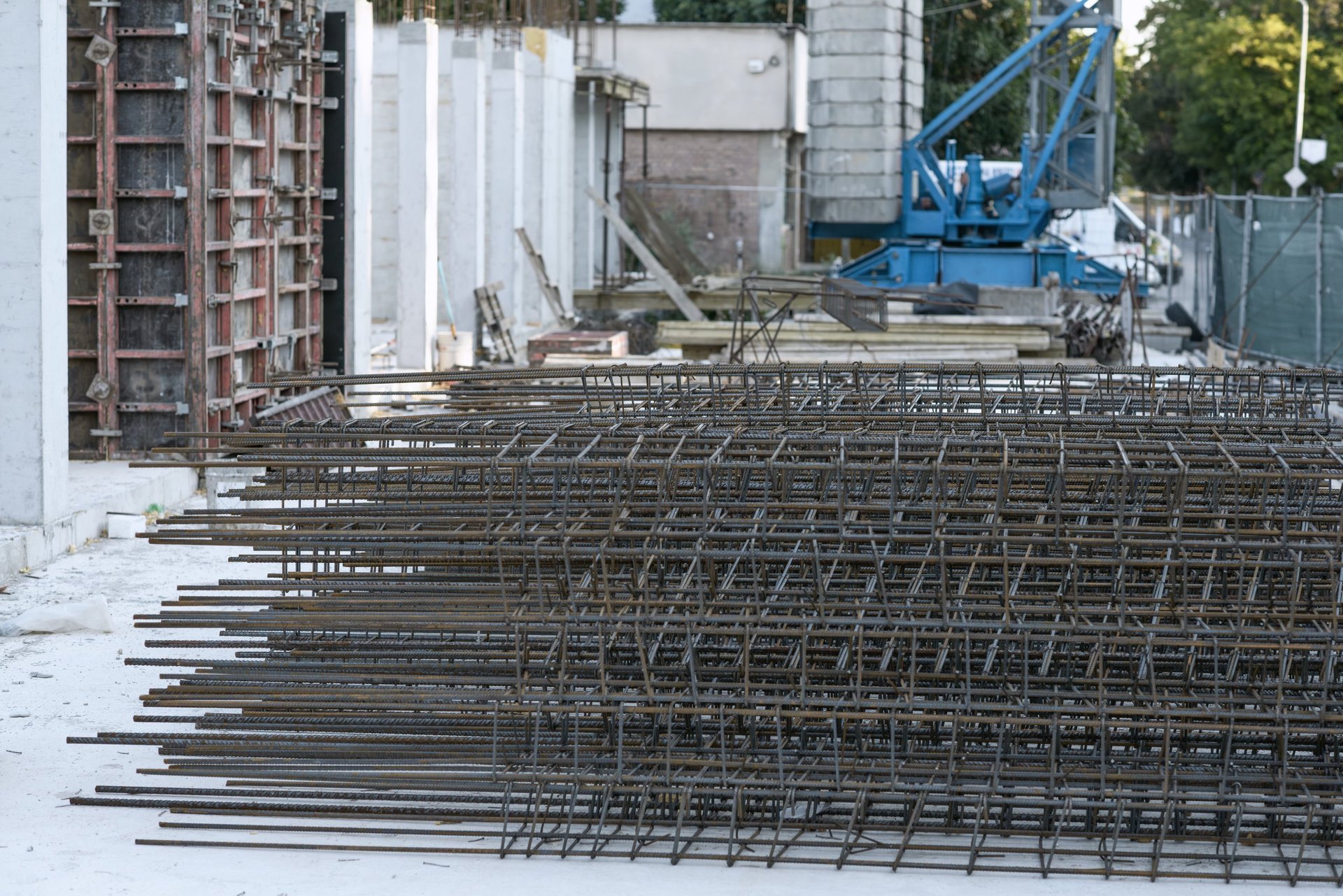
Portal, cut-and-cover box, segmental lining, cast in-situ lining, invert, cross passage and shaft are procured differently. Each has its own bar schedule, its own hold points and its own place in the programme.
Bar form and fabrication
Scheduled cut-and-bend shapes, straight lengths, prefabricated cages and precast-segment reinforcement carry different tolerances and handling rules. The same grade delivered in the wrong form stops the site.
Access and delivery route
Portal delivery, shaft lowering, segment-yard delivery and narrow possession windows impose different bundle sizes, weights and marking. Access is decided before the first call-off, not after.
Groundwater and exposure
Whether the lining is protected from groundwater, specified watertight, or exposed to aggressive ground conditions is a project decision that sets what protection is required. It is never inferred on site.
Approval and hold points
The design team, the tunnel contractor's QA/QC and any independent checker hold different review rights, and each stage releases against its own hold points. The enquiry has to state who approves what.
Call-off and phasing
Reinforcement is released in phase with the lining programme. Staging, marking and document handoff have to match the sequence or the material arrives when it cannot be placed.
What this page does not decide
Ground conditions, loading, fire and seismic requirements, watertightness criteria and their numerical values are set by the project's design and by the standards the project adopts. This page organises the procurement and inspection of reinforcement the design has already specified, and it does not invent or substitute a performance requirement.
Tunnel Location & Segment-Stage Planner
Set up one stage package against its form, access, exposure and approval route
Plan the element you are buying now — one stage, one form, one access route. The planner returns how that package should be staged and marked, the open items still blocking release, the records to request, and a copyable summary. It does not set loading, fire, seismic or watertightness requirements.
Stage package inputs
Required fields marked *One planner run per stage; repeat for each part of the lining.
Taken from the specification — not inferred from site observations.
Records to request with the consignment
The planner does not design reinforcement, does not set loading, fire, seismic or watertightness requirements, and does not estimate weights. Everything you enter is carried into the summary exactly as written for the commercial department to check against the project specification.
Stage package result
Start with the stage, the bar form and the project's exposure position
These three inputs decide everything downstream, including how the package is split and what evidence travels with it. Until they are stated the reinforcement requirement cannot be scoped in a way a tunnel package can be procured against.
Open items blocking release
- Construction stage not selected — each stage of the lining has its own reinforcement package and sequencing rules.
- Bar form not fixed — scheduled cut-and-bend, straight lengths, prefabricated cages and precast-segment reinforcement are not interchangeable.
- Access and delivery plan not stated — shaft lowering, restricted environments and possession windows change the bundle sizes and the schedule.
- Groundwater / exposure condition not confirmed by the project — this is taken from the specification, never assumed on site.
- Approval authority not named — the design team, the tunnel contractor's QA/QC and an independent checker hold different review rights.
- Governing standard / edition and grade not stated.
- Detailing and fabrication inputs not stated (shapes, laps, couplers, prefabrication, tolerances).
- Inspection regime and stage hold points not stated.
Nothing is transmitted yet. Carry the completed summary to the commercial department at the rebar RFQ page for a confirmed quotation.
Buying the Right Form and Standard
Bar form and standard basis — when each is the right buy, and when it is not
Green concrete, restricted access and staged call-off mean a tunnel package lives or dies on the form the bar arrives in, and on a standard basis that matches the design. Each route below states when it should be selected, the boundary that keeps it from being treated as a swap, and when it should be excluded.
Deformed bar, general reinforcement
Select it when
The default reinforcing form for lining reinforcement, where the project specifies deformed bar and the access plan allows straight or cut-and-bend delivery at the lining face.
Technical boundary
Deformed bar is the ribbed reinforcing form, not a grade or a coating. Choosing it does not settle the standard, the grade or the exposure protection.
Exclude it when
Exclude where the design specifies a different bar form or a coated or corrosion-resistant route for the stage.
Review the deformed bar typeASTM A615 basis
Select it when
Selected where the project's design names the ASTM A615 standard and grade for the lining reinforcement, and the marking and test framework that go with it.
Technical boundary
A615 is one standard with several grades; the standard name alone does not fix the grade, and a grade change is a design decision, not a supply choice.
Exclude it when
Exclude where the project specification names a different standard basis, and never state a grade the design did not name.
Compare the ASTM A615 basisBS 4449 basis
Select it when
Selected where the project specification names BS 4449 and its grade for the reinforcement, typically on projects adopting UK or Commonwealth practice, including for segmental and cast in-situ linings.
Technical boundary
BS 4449 and ASTM A615 are different standards with different designations and marking; they are not interchangeable on the strength of a comparable strength figure.
Exclude it when
Exclude where the design names another standard, and do not offer it as a substitute for a named standard without the design authority's approval.
Compare the BS 4449 basisFabricated and precast forms
Select it when
Selected where access, congestion or programme favours prefabricated cages, mats or precast-segment reinforcement over site-formed bar, and the project has approved that form.
Technical boundary
Fabrication introduces its own tolerances, lifting and handling rules and inspection points; it is a different deliverable from loose bar, not a convenience.
Exclude it when
Exclude where the approved schedule is for loose or cut-and-bend bar, or where site handling cannot safely take a prefabricated unit.
Review precast reinforcement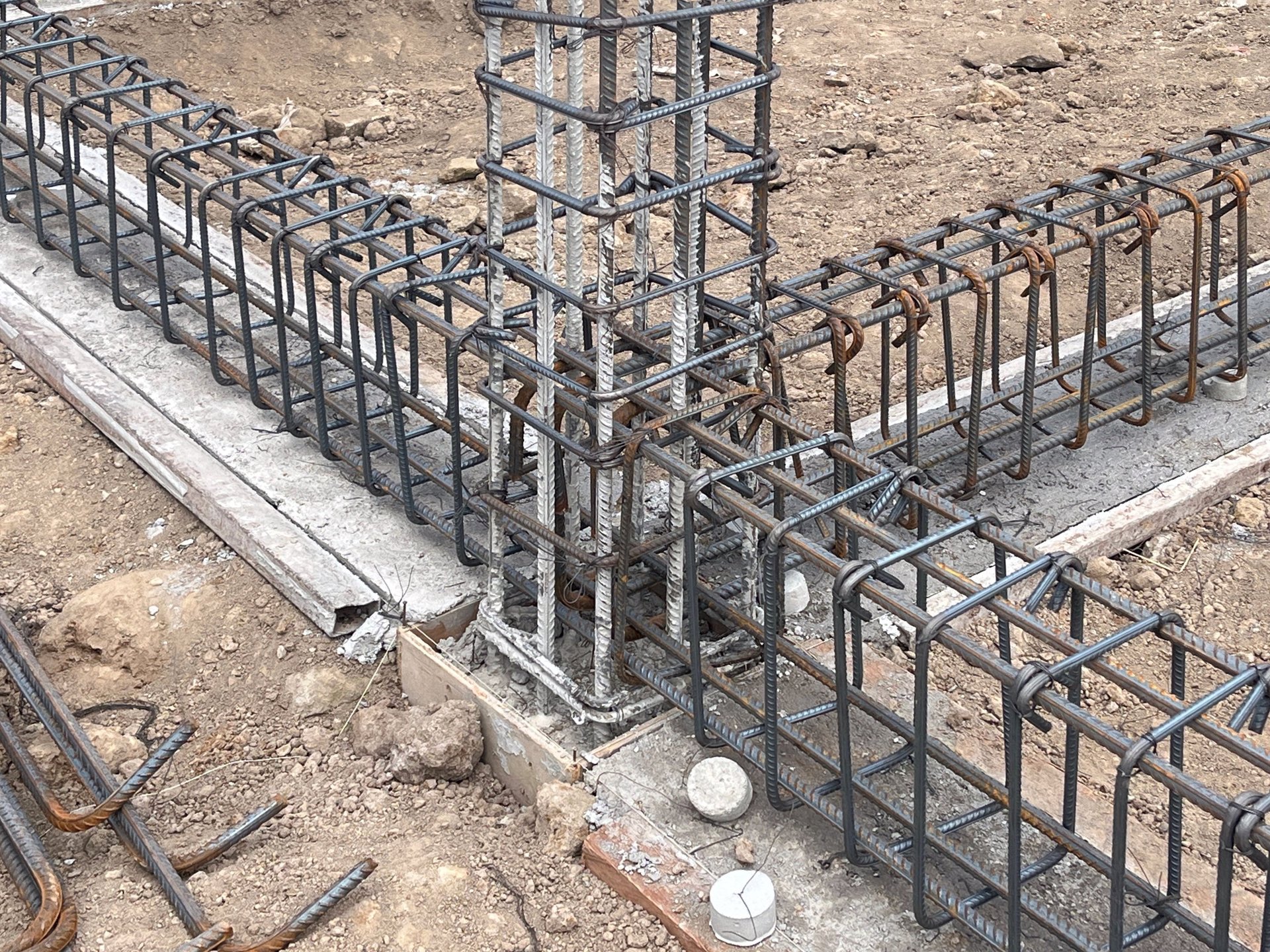
Form changes the whole package
The bar form decides the fabrication, handling and inspection, not just the price
A cage, a mat, a scheduled bend and a straight length are four different things to fabricate, lift, place and inspect. Because tunnels are congested, access is poor and programme is tight, the form has to be settled with the fabricator before the standard and grade are even quoted.
Prefabrication shifts work off the critical path but adds tolerance, lifting and inspection requirements. Straight and cut-and-bend bar is more flexible on site but needs space and time at the face. Whichever the project approves, the enquiring stage must state the form so the quotation, the tolerances and the evidence all line up with it.
Basis boundary
No form and no standard on this page is a substitute for another. A615 and BS 4449 are distinct standards, and fabricated and loose forms are distinct deliverables. Confirm the exact standard, edition, grade and form your design names before specifying — this section exists to help you identify the right basis, not to recommend a change.
Specification Basis
What a defensible tunnel rebar order has to state, and where each input comes from
A tunnel package is quotable once the stage breakdown, the standard and the evidence framework are unambiguous. Each row names the input, the authoritative source it must come from, and what goes wrong if it is left open. Values that vary by standard, edition and grade are confirmed from the governing document — they are not published here as fixed figures.
| Input | Authoritative source | If left open | Stage field |
|---|---|---|---|
| Stage & segment breakdown | Approved lining drawings and the reinforcement bar schedule, keyed to the construction sequence. | The package cannot be split for call-off, marked, or released against stage hold points. | Stage key — fixed. |
| Bar form & fabrication | Approved bending schedule and the project's fabrication and tolerance requirements. | Fabrication and inspection cannot be priced or checked against a defined deliverable. | Form — fixed. |
| Governing standard, edition & grade | The standard, edition and grade the design names for the reinforcement. | Mechanical properties, marking and acceptance criteria are all uncertain. | Standard / grade — fixed. |
| Dimensions & detailing | Bar schedule, lap and coupler requirements, and congestion or tolerance notes. | The bar cannot be fabricated or placed as designed. | Shapes / laps — fixed. |
| Access & handling plan | The construction method statement and site logistics plan. | Bundle size, weight and marking do not match how the material can be moved. | Access — fixed. |
| Water / exposure protection | The project's durability and watertightness specification for the stage. | Any protection requirement is assumed rather than specified. | Exposure — fixed. |
| Inspection & hold points | Project inspection and test plan for the reinforcement works. | The consignment cannot be released stage by stage. | ITP reference — required. |
| Quantity, destination & phasing | Bar schedule take-off and the lining programme with its call-off dates. | No quotation basis and no delivery plan exist. | Qty / programme — required. |
Values that vary by standard, edition, grade and ordered unit system are confirmed at quotation from the governing document and the actual delivered consignment — they are not published here as fixed numbers.
Standard basis
A615 and BS 4449 are separate standards with separate grade designations and marking. A comparable strength figure does not make one a substitute for the other. State the exact standard and edition for the reinforcement your design names.
Unit system
Where the project works in SI, use SI for procurement display and keep the governing standard's native unit system for acceptance values. Where it works in inch-pound, do the same in reverse. Never mix the two within one lot.
Evidence & Handoff
What to verify for the delivered consignment, and how it hands over stage by stage
A tunnel package hands over in stages, so the evidence has to travel with the stage. Each record below is verified against the governing standard, the approved schedule and the delivered lot, with the party who holds the check named. Design approval, material evidence, fabrication inspection and delivery documentation stay separate.
| Record | What it verifies | Who holds the check | Handoff point |
|---|---|---|---|
| Approved bar schedule & stage key | Grade, standard, shapes, laps and couplers for the stage or segment. | Design team / tunnel QA | Before fabrication |
| Mill test certificate (MTC / EN 10204 3.1) | Identity, chemistry and mechanical properties of the supplied lot. | Buyer requests; project defines the need | With each call-off |
| Tensile & yield results | Strength performance of the lot under the standard's test framework. | Buyer + inspector | With each call-off |
| Bend / rebend results | Bend acceptance of the lot under the standard. | Buyer + inspector | With each call-off |
| Coating / protection certification | Any specified protection system supporting the exposure position. | Buyer + engineer | Where specified |
| Bundle marking & lot traceability | Stage or segment key, bar size, grade and heat marking. | Buyer + site / yard | At delivery |
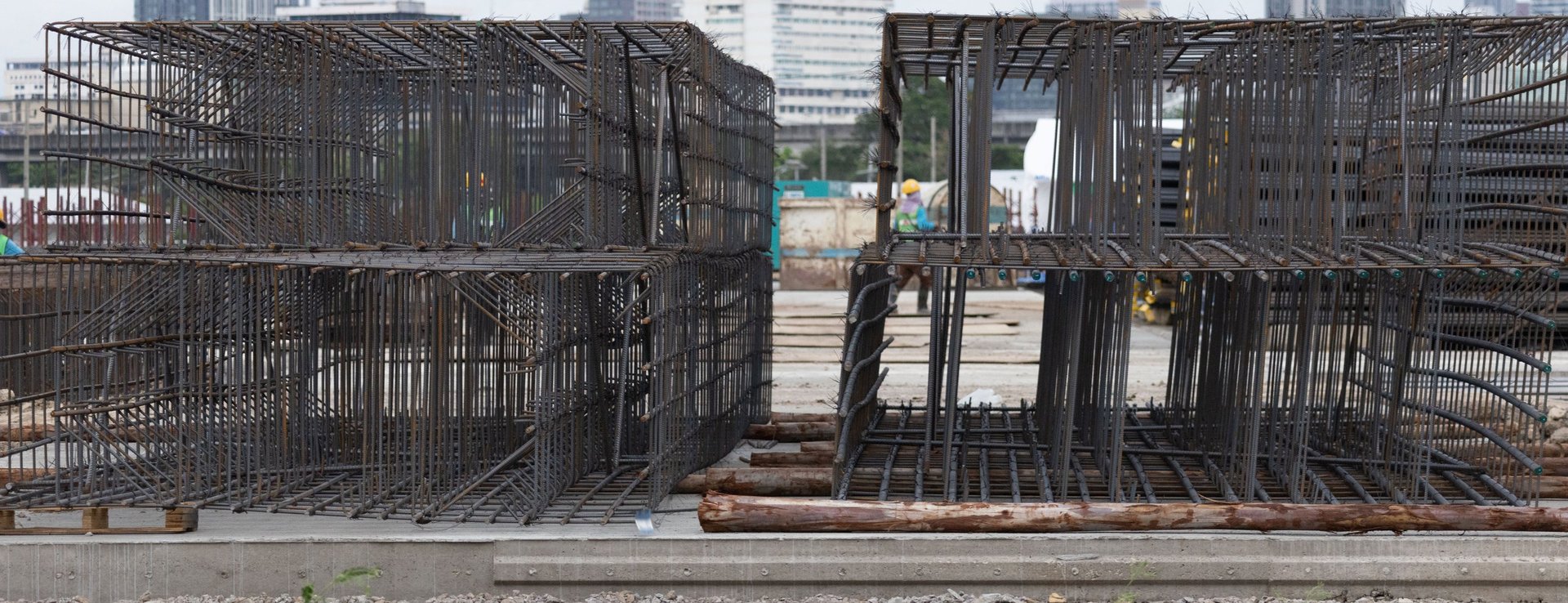
| Fabrication tolerance records | That prefabricated cages or mats meet the approved tolerances. | Fabricator + QA | Before placement |
| Document handoff & origin | Origin, mill, document set and any approval on file. | Buyer + commercial | At quotation |
Evidence, not assumption
Records are issued against the delivered lot. A named standard is a requirement, never proof that the delivered bar meets it.
Stage-keyed handoff
Marking and documents are keyed to the stage or segment so each call-off releases on its own hold points.
Approval kept separate
Material evidence does not replace the named authority's approval of the form or the detail.
GCC Destinations
Plan the destination, documents and delivery basis for a tunnel rebar order
For each GCC market the specification, documentation and delivery basis are aligned to the project at quotation. No served markets, local stock, local branches, customs clearance, project approval or delivery times are claimed in advance.

United Arab Emirates
Project specification and technical submittal review.
Add the delivery location, importer/customs inputs, Incoterm and document set before the tunnel rebar RFQ goes out.

Saudi Arabia
EPC quantities and cross-border documentation.
Confirm the delivery location, importer inputs, Incoterm and required documents for the staged tunnel package.

Qatar
Infrastructure technical approval readiness.
Add the technical submittal and document set the project requires for the tunnel rebar consignment.

Kuwait
Contractor and fabricator hand-off.
State the delivery location, Incoterm, documents and the required date for the tunnel rebar call-off.

Bahrain
Contractor procurement and industrial supply.
Provide the destination, importer/customs inputs, Incoterm and documents before the tunnel rebar is quoted.

Oman
Port-oriented project supply planning.
Confirm the destination, required documents and Incoterm so the quotation basis is fixed for the tunnel rebar.
Commercial department
The commercial desk checks each tunnel enquiry for a workable stage breakdown, a consistent standard and grade, a bar form that matches the access plan, a stated exposure position and a defined inspection regime before quoting. Destination, port or delivery line, Incoterm, document set and the call-off programme are fixed at quotation from your specification.
Office 3303, Churchill Executive Tower, Business Bay, Dubai, United Arab Emirates
Monday – Saturday: 8.00 AM – 6.00 PM · Sunday: Closed
Technical Reference
The authoritative framework behind the tunnel reinforcement decision
A source-backed reference for how the reinforcement and inspection decisions are framed — not a substitute for the project's own specification, and not an endorsement or approval of any product.
Concrete and tunnel design practice places the ground model, the loading, the fire and seismic criteria and the watertightness requirement with the project's design authority and the standards it adopts — for example EN 1992 for concrete structures, the EN 206 exposure framework, ASTM A615 or BS 4449 for the reinforcement, and the relevant national tunnel or underground-works guidance. Those documents, not a supplier, fix what the lining must resist and how it is protected.
The procurement consequence is narrow and practical: the supplier supplies the form, standard, grade and detailing the design names, delivers it in the sequence the programme requires, and provides lot evidence the project can verify. Anything more — an exposure class, a loading figure, a fire rating — is not the supplier's to assert.
Where to verify
Confirm the applicable standard, edition and national adoption against the project's specification and the authority having jurisdiction. Any project-specific amendment or designer's specification takes precedence over a general reference.
Standards and editions referenced generically · checked
What this page does and does not do
- It organises an approved tunnel reinforcement requirement into stage, form, standard, exposure and evidence fields.
- It keeps the standard, grade, bar form, detailing and inspection decisions distinct.
- It does not set loading, fire, seismic, ground-water or watertightness performance requirements.
- It does not approve a substitution, and does not claim capacity, stock, certification or delivery times.
FAQ
Tunnel rebar, answered directly
Post-decision technical and commercial questions from tunnel contractors, design teams and fabricators — answered straight.
Does this page design tunnel reinforcement or set loading requirements?
No. Ground conditions, loading, fire, seismic and watertightness requirements are set by the project's design and its specified standards, and remain with the design authority. This page organises the procurement and inspection of the reinforcement the design has specified.
How should tunnel rebar be split for procurement?
By construction stage and by segment or pour key from the approved bar schedule. A single undifferentiated tonnage cannot be released against stage hold points or matched to the lining sequence.
Why does the bar form matter on a tunnel?
Cut-and-bend scheduled shapes, straight lengths, prefabricated cages and precast-segment reinforcement have different fabrication tolerances, handling rules and inspection points. They are not interchangeable simply because the grade is the same.
How is groundwater exposure handled?
The project's specification sets whether protection is required and to what degree. It is taken from the specification and confirmed by the project — it is never inferred on site or selected by the supplier.
Who signs off the reinforcement package?
Whoever the project names — typically a combination of the design team, the tunnel contractor's QA/QC department and, on many projects, an independent checking engineer. The enquiry should state which holds approval at each stage.
What delivery sequence should a tunnel package use?
The one the lining programme requires. Access may be by road to a portal, by shaft lowering, to a segment yard or inside a narrow possession window; each changes bundle size, marking and call-off timing, and all of it is fixed at quotation.
Qualified RFQ
Request a quote for Tunnel Rebar
Copy the stage summary from the planner and send it with the approved bar schedule and the lining programme. The enquiry is ready for review once the stage breakdown, form, standard and grade, access plan, exposure position, inspection regime and call-off dates are complete.
Send to commercial departmentAll pricing is on request. Price, stock, origin and lead time remain quotation-dependent unless current verified evidence is present.
Office 3303, Churchill Executive Tower, Business Bay, Dubai, United Arab Emirates
Monday – Saturday: 8.00 AM – 6.00 PM · Sunday: Closed
Before you send
- Stage and segment breakdown from the approved lining drawings and bar schedule
- Bar form, with the fabrication and tolerance requirements that go with it
- Governing standard, edition and grade, exactly as the design names them
- Dimensions, laps, couplers and any congestion or prefabrication notes
- Access and handling plan — portal, shaft, segment yard or possession window
- The project's water / exposure protection position for this stage
- Inspection and test plan, with the hold points each call-off releases against
- Quantity, destination, Incoterm and the call-off dates from the lining programme
Add every open item — an unnamed approval authority, an unconfirmed exposure position, an unfixed call-off sequence — as an explicit field before sending.