
Supplier Qualification
Steel Supplier
A useful steel-supplier enquiry is specification-led: product form, standard/grade, dimensions, quantity, destination, Incoterm preference and required documents must be explicit before offers can be compared.
This page is the qualification gate, not a catalogue. It tells you which fields must be fixed before two supplier offers become comparable, which evidence has to be requested rather than assumed, and where the boundary of what this page can verify actually sits.
Price on request. Availability, lead time and terms are confirmed per enquiry — this page states none of them.
The fit question, answered first
- Does this route apply to your requirement?
- Yes if you are buying steel to a written specification and need offers you can compare line for line. No if you need a price without stating a product form, standard and unit — that enquiry cannot be answered comparably by anyone.
- What must be fixed before price means anything?
- Product form, governing standard and grade, dimensions with tolerance, quantity with its unit, delivery place, required documents, and the Incoterm you intend to buy on.
- What can this page not do?
- It cannot confirm stock, price, lead time, duty, certificate validity or conformity. Those come from a quotation and from document-level evidence, not from a web page.
Next action: run the matrix below and copy the brief it produces into your enquiry.
Working Tool — Supplier Qualification Matrix
Qualify the enquiry before you compare the offers
Enter what you already know. The matrix returns a completeness score, the comparison fields two supplier offers must match on, an evidence checklist, and a copyable RFQ brief. Nothing is inferred from a field you left empty.
Nothing entered yet
No result is shown and no route is recommended, because nothing has been stated. A recommendation built on empty fields would be a guess.
The smallest valid next step: choose a product form and enter the governing standard. With those two fields alone the matrix can tell you whether the standard actually covers the product form you selected, and which of the company pages is worth opening first.
Method and assumptions
- Deterministic rule-based branching from the fields you enter and the related pages of this site. Every result states why a route was included or excluded.
- This tool never estimates price, stock, lead time, duty, certificate validity or conformity outcome, and it never converts between unit systems without labelling the conversion.
- No grade, standard or product form is substituted on your behalf. Acceptable substitutions are always left as to be confirmed in writing.

Specification differences are not cosmetic. The same nominal size in a different product form carries a different tolerance regime, a different test method and a different packing rule — which is why two offers that name only a generic product cannot be compared.
Decision implication: hold the product form and standard fixed across every offer you compare, or the comparison measures scope rather than price.
Evidence & Limitations
What is known, what must be verified, and what this page will not claim
A supplier page is a claim surface. This section separates the three tiers explicitly, so you can see where a statement is a fact, where it is conditional on your own specification, and where it is simply blocked until document-level evidence exists.
Verified source facts
- This page is /company/steel-supplier/ with canonical https://www.noordeirasteel.ae/company/steel-supplier.
- The ASTM Committee A01 scope and portfolio referenced in the expert insight below are published by ASTM International at a primary source that you can open and read directly.
- The seven qualification fields used by the matrix above are the inputs an offer has to be built from. That is a property of how steel is specified and purchased, not a claim about this company.
Conditional facts
- Standard edition, grade scope, tolerances, testing and document requirements are conditional on the exact product form and purchase specification, and must be verified against the current normative source.
- Customs, conformity, origin, tariff and importer requirements are conditional on HS classification, destination and live authority rules.
- Availability, source or mill, delivery time, packing, inspection and commercial terms may be stated only from the specific quotation or from approved evidence.
Blocked claims
- No claim of stock quantity, ready availability, price, lead time, certificate ownership, branch, warehouse capacity, local market presence, clients, testimonials or projects is made on this page.
- No named expert or employee profile is published. No partner or client logo is shown, and no placeholder stands in for one.
- No fabricated phone number, email address, WhatsApp destination, address, legal entity detail or payment instruction appears anywhere on this page.
Risk control: these claims stay blocked until the corresponding evidence exists. Do not treat their absence as an omission — treat it as the boundary of what can be relied on from a web page.

Evidence checking happens at document level: which body issued it, what scope it covers, which order or heat it is tied to, and whether it is still within its validity.
Source hierarchy
- 01The purchased standard text and its current edition — the only authority on requirement.
- 02The order and its purchase specification — what you actually contracted for.
- 03The material and inspection documents issued against that order.
- 04The supplier's published description — indicative only.
Evidence requirement: when a claim matters to the purchase, ask for the item at level 02 or 03. Nothing at level 04 has to be accepted.
Reviewed . Information on this page is descriptive and is not a certificate, a quotation or a conformity statement.
Related Next Pages
Five routes that each solve a different next question
These are not a link list. Each destination answers a distinct question that remains open after the qualification matrix — open the one whose question is actually yours.
- About Noor Deira SteelEstablish who the counterparty is and what the company actually does before commercial detail is exchanged.Use when the due-diligence question is about the company itself.
- Quality & certificationsEstablish which quality-system, product or process evidence actually exists and what it covers.Use when the open question is evidence, scope or validity.
- Steel exporterEstablish how cross-border supply is structured when the requirement is delivered outside the UAE.Use when the material crosses a border and export handling is the open question.
- Steel trading companyEstablish the commercial model behind the offer — how material is sourced and contracted rather than held.Use when the open question is how supply is actually arranged.
- Warehouse & logisticsEstablish how handling, preparation and movement to destination are planned once material is ordered.Use when the open question is physical handling and delivery rather than the material itself.
Choosing between them
If nothing is fixed yet, start with the company itself. If your document requirement goes beyond a mill certificate, evidence scope outranks everything else. If you have bought on DAP with a named place, the handling route carries the obligation.
Decision implication: pick the single route whose open question is blocking you, open it, and resolve that one before moving on. Working the list in order is not the same as making progress.
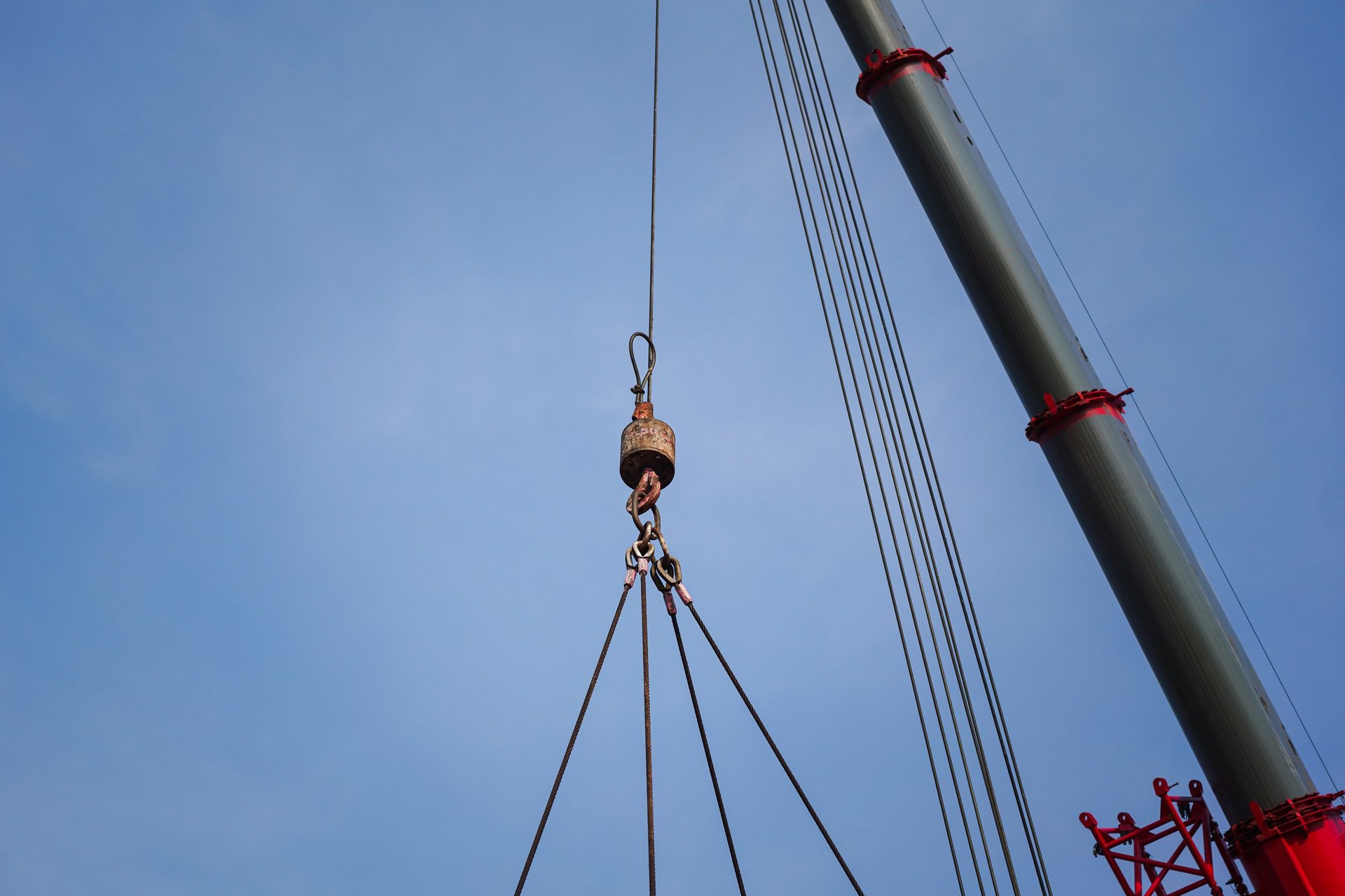
How material is handled, packed and moved belongs to the offer, not to the specification. Two suppliers can quote the same material and still deliver different obligations, because the handling and destination scope was never fixed.
Decision implication: fix the delivery place and the Incoterm before you compare handling scope, or you are comparing two different jobs.
GCC Country Hubs
Six destinations, six different sets of RFQ inputs
The country is not the destination. Each card below differentiates the delivery place, the importer and document checks, the port or inland input, and what that changes in the offer. These cards describe planning inputs — they make no claim of a branch, stock or local presence in any market.
 Bahrainsteel supplier in Bahrain
- Destination
- Kingdom of Bahrain, delivered to a nominated industrial or project address rather than a country-level default.
- Importer and document checks
- Importer registration and the certificate of origin route are destination-side checks; the mill certificate and inspection records travel with the material, not with the customs file.
- Delivery place or port input
- Name the port of entry or the inland delivery point — both change the delivery leg priced in the offer.
- RFQ implication
- Fixing the Bahrain delivery point lets the offer separate supply scope from the destination leg instead of blending them into one figure.
 Kuwaitsteel supplier in Kuwait
- Destination
- State of Kuwait, with the delivery place stated as a site, a yard or a named port rather than the country alone.
- Importer and document checks
- Importer-side registration and release paperwork are established by the consignee; material documents are issued against the order and referenced in the RFQ.
- Delivery place or port input
- State whether delivery is to the port, to a cleared inland point, or to site — the responsibility boundary moves with it.
- RFQ implication
- A named Kuwait delivery place converts an indicative figure into a comparable one, because the inland leg stops being an assumption.
 Omansteel supplier in Oman
- Destination
- Sultanate of Oman, with the receiving location named at the level the material is actually handed over.
- Importer and document checks
- Consignee registration and customs release are destination-side; the inspection and material documents must match the ordered specification exactly.
- Delivery place or port input
- Name the port or the inland delivery point so the delivery leg can be priced against a real destination.
- RFQ implication
- Naming the Omani delivery point lets the offer show the destination leg separately, so two suppliers can be compared line for line.
 Qatarsteel supplier in Qatar
- Destination
- State of Qatar, delivered to a nominated project or industrial address stated explicitly in the enquiry.
- Importer and document checks
- Importer and release requirements sit with the consignee; the order's inspection and conformity documents are defined by the purchase specification.
- Delivery place or port input
- Name the port of discharge or the inland delivery place — the two produce different delivery responsibilities.
- RFQ implication
- With a Qatar delivery place fixed, Incoterm choice becomes explicit instead of being inferred from a vague destination line.
 Saudi Arabiasteel supplier in Saudi Arabia
- Destination
- Kingdom of Saudi Arabia, with the delivery location named at the city, project or port level rather than the country.
- Importer and document checks
- Importer registration, conformity and release checks are destination-side and evolve with the product and the consignee; the RFQ should record which documents the buyer will require.
- Delivery place or port input
- State the port of entry or the inland delivery point, and whether clearance sits with the buyer or is requested in the offer.
- RFQ implication
- A named Saudi delivery point is what makes two offers comparable, because the inland and clearance legs stop being estimates.
 United Arab Emiratessteel supplier in UAE
- Destination
- United Arab Emirates, delivered to a nominated site, yard or free-zone address stated in the enquiry.
- Importer and document checks
- Document expectations are set by the buyer's own project or quality procedure; the material documents are issued against the order.
- Delivery place or port input
- Name the emirate and the delivery point — intra-UAE delivery legs differ enough that a country-level destination is not comparable.
- RFQ implication
- Fixing the UAE delivery point removes the largest single assumption behind an indicative supply figure.
What these hubs do not claim
No card asserts a branch, an office, a warehouse, a standing stock position or an established market presence in any of the six countries. They describe the destination-side inputs a buyer has to fix for an offer to be comparable, nothing more.
Verification requirement: confirm the destination country, the delivery place and the port of entry against your own purchase order, then open the matching hub to plan that leg before the enquiry goes out.
Expert Insight
What must be verified before this page is used to advance a steel decision
A source-backed decision note tied to this route, with the method, the information date, the scope and the limitations stated up front.
Decision question
What must a buyer verify before using Steel Supplier to make or advance a steel procurement decision?
Method
Use the committee scope and the active ASTM standard page relevant to the selected product form; verify edition and status before publishing or relying on any numeric requirement.
- Primary source
- ASTM International — Committee A01 on Steel, Stainless Steel and Related Alloys
- Information date
- Accessed 2026-09-12
Open the primary source — ASTM Committee A01
Scope
ASTM Committee A01 scope, standards portfolio, specifications and test-method governance for steel, stainless steel and related alloys.
Limitations
- The committee page is an authority map, not a substitute for the full purchased standard text.
- No supplier conformity, stock, mill certificate content or certification is implied without document-level evidence.
Buyer implication: use the source to verify scope and evidence for this route. If the ordered product, the legal fact, the customs rule or the company capability is not supported, block that claim and request the missing evidence through the RFQ workflow instead of accepting it.
Verification checklist
- Open the standard's own page for the product form you are buying, and confirm the edition and its current status.
- Confirm the grade you specified is in scope for that standard, rather than a grade from a neighbouring specification.
- Ask the supplier to state, in writing, which standard edition the offer is made to — an unstated edition is an open variable.
- Check that each document you require is issued by a body that can actually issue it, and that its scope covers your order.
Applicability boundary: this note applies to the qualification decision on this page. It does not certify Noor Deira Steel, and no claim of conformity, certification or approval should be read from it.
Where an edition problem lands
If the offer does not state a standard edition, the difference surfaces late — at inspection, at fabrication, or when a third party asks for the certificate. Each is more expensive than the question was at enquiry stage, so ask for the edition in the first response and record the answer in the RFQ brief.
Evidence-Led Buyer Advantages
Buyer concern, verifiable evidence, procurement outcome
Five concerns that decide a supplier comparison. Each is mapped to evidence you can actually request, and to the outcome that evidence produces. No superiority claim appears here that cannot be checked.
| Buyer concern | Verifiable evidence or capability | Procurement outcome |
|---|---|---|
| The offer will not match what I specified | The product form, governing standard and grade are restated in the offer exactly as issued in the enquiry, with any deviation raised explicitly rather than absorbed. | Offers from different suppliers can be compared field by field instead of being reconciled by email. |
| I cannot tell whether the material is compliant | The document you require is named up front, with its issuing body and its scope, and confirmed in writing before the order. | Compliance is evidenced by a document tied to your order, not asserted by a description on a page. |
| A substitution appears after the order is placed | Substitutions are controlled in writing: proposed grade, the standard it is made to, and the clauses where it differs, decided before production or release. | No material variation enters the order unchallenged, and the decision is on the record. |
| Two quotes are not comparable | Seven fields are held fixed across every offer — product form, standard and grade, dimensions, quantity with unit, delivery place, required documents and Incoterm. | The comparison measures price and terms, because scope has already been removed as a variable. |
| Delivery responsibility is unclear | The Incoterm is stated with its named place, the delivery point is named at port or inland level, and clearance responsibility is recorded in the RFQ. | The risk-transfer point and the cost boundary are both known before the order is placed. |
Decision implication: every advantage above is something you can request and check. None of them is a claim about scale, capacity or market position, because none of those would change what you can verify.
Run the matrixFrom Enquiry to Delivery
Five stages, each with an owner, an input and a risk
Stage ownership describes the role that has to act, not a named department or a promised turnaround. No service level is stated here, because none has been evidenced.
- 01
Enquiry issued
Owner: Buyer- Required input
- The seven qualification fields, or an explicit statement of which are still open.
- Output / evidence
- A written enquiry whose scope can be quoted without clarification.
- Risk
- An enquiry that names a product but not a standard produces offers that cannot be compared.
- Next action
- Complete the qualification matrix and copy the brief it produces.
- 02
Technical review
Owner: Supplier technical/commercial role- Required input
- Product form, governing standard and grade, dimensions with tolerance.
- Output / evidence
- Confirmation that the stated specification is in scope, or a written statement of the deviation.
- Risk
- A silent substitution here — a neighbouring grade or a different product form — is the most expensive failure in the chain.
- Next action
- Require any deviation to be raised in writing before price is discussed, never absorbed.
- 03
Evidence and document check
Owner: Buyer and supplier quality roles- Required input
- The named document set, its issuing body and its scope.
- Output / evidence
- A confirmed, written document list attached to the order.
- Risk
- Assuming a document is available and discovering at release that it is not — or that its scope does not cover your order.
- Next action
- Get the document list confirmed before the order, not after production.
- 04
Commercial and logistics alignment
Owner: Buyer and supplier commercial roles- Required input
- Quantity with unit, delivery place or port, Incoterm with its named place, clearance responsibility.
- Output / evidence
- An offer whose cost and risk boundaries are both explicit.
- Risk
- Two offers under the same Incoterm but different named places are not comparable, and the gap appears as a surprise later.
- Next action
- Fix the delivery place and the Incoterm before comparing offers, not after.
- 05
Order and next action
Owner: Buyer- Required input
- The agreed specification, document list and commercial terms.
- Output / evidence
- A placed order, or a deliberate decision not to place it.
- Risk
- Proceeding with an open field that nobody has closed, on the assumption the supplier will handle it.
- Next action
- Place the order only when no qualification field remains open, or accept each open field explicitly and in writing.
Risk control: the two stages where a steel purchase most often goes wrong are technical review and the document check. Closing both in writing before the order is placed is cheaper than resolving either after production.
Buyer FAQ
The questions that decide whether an offer is usable
These answers assume you have already resolved what a supplier is and what steel is. They deal with the specification and evidence decisions that remain.
What inputs are required before using Steel Supplier for a purchasing decision?
Seven inputs decide whether an offer can be compared: product form, governing standard and grade, dimensions and tolerances, quantity with its unit, destination place or port, the required mill test certificate or inspection documents, and the commercial term you intend to buy on. Until those are fixed, a supplier can only give an indicative figure, and two indicative figures from two suppliers are not comparable. The qualification matrix on this page scores exactly these fields and copies them into an RFQ brief.
Which specification details should be fixed before requesting a quote from this corporate commercial page?
The product form and the governing standard together determine grade, tolerances and test methods, so both must be stated before price is meaningful. Dimensions belong with their tolerance class and in one unit system. Quantity must carry its unit. Destination must name the delivery place rather than the country. Fixing these before requesting means the offer you receive can be placed against the offer from any other supplier without a follow-up round of clarification.
Which documents or evidence should be requested before acceptance?
Ask for the mill test certificate, any third-party inspection release, and the packing list and material identification that travel with the goods. Ask which body issues each document, what its scope covers, and whether it is issued against the order or against the heat. Request that the document list be confirmed in writing before the order, because what a supplier can issue is order-specific. No document is confirmed by this page, and none should be assumed from the offer alone.
How should equivalent grades or substitutions be controlled?
Never accept a substitution raised verbally. Ask for the proposed grade, the standard it is made to, and the specific clauses where it differs from the specification you issued. Then decide in writing whether the substitution is acceptable, on the record, before the material is produced or released. This page does not substitute a grade, standard or product form on your behalf, and the RFQ brief it produces carries the line 'acceptable substitutions: none assumed — to be confirmed in writing' for exactly that reason.
Which destination and delivery fields belong in the RFQ?
State the destination country, then the delivery place at the level the material is actually handed over: a port of entry, a free-zone address, a project site, or an inland point. State the Incoterm with its named place, because the term fixes the risk-transfer point while the named place fixes the cost boundary. Add whether the buyer or the supplier arranges clearance, and the required delivery window. A country-level destination with an unnamed Incoterm is the single most common reason two steel offers cannot be compared.
The three answers that carry into every steel supplier enquiry
- What is fixed
- Product form and governing standard. Without both, no other field can be compared, because the standard is what determines grade, tolerances and test methods.
- What is requested
- The document set, its issuing body and its scope, confirmed in writing before the order rather than assumed from the offer.
- What is recorded
- Delivery place, Incoterm with its named place, and any substitution decision — each written down, so nothing depends on what someone remembers agreeing.
Decision implication: if you can answer all three without looking anything up, the enquiry is ready to send. If not, the missing answer is the next thing to resolve.
Qualified RFQ
Hand the completed brief to the RFQ
The matrix produces a brief that is already in the shape an RFQ needs. Take it to the related RFQ page and the enquiry arrives with its open fields stated rather than assumed.
- product form
- governing standard and edition if known
- grade / class / type
- dimensions and tolerances
- quantity and unit
- application or service condition when material
- destination city, place or port
- Incoterm preference
- required inspection / material / conformity documents
- acceptable substitutions, or none
Next action: copy the brief from the matrix and carry it into the RFQ. Price is on request — no figure, availability or lead time is stated on this page, and none should be read from it.
Continue to the related RFQ page
The RFQ route is where the qualification work converts into a response. Everything the matrix collected travels with you, including the fields you left open — which is the point, because an open field the supplier can see is priced, while one nobody noticed is assumed.
Still deciding? The registered legal entity routes above each answer one open question — take the one that is actually blocking you.
Buying elsewhere in the GCC? Pick your destination hub above so the delivery leg and the document checks are planned on the same basis.