
Industry · Construction
Structural steel for construction, ordered from a released member schedule
Send the released beam, column, channel and angle schedule with the governing grades and drawing revisions. Define whether the order covers raw sections or fabricated members, then align inspection, protection and delivery lots with the construction sequence.
The construction route covers a range of structural forms and grades. It does not prescribe one grade for every building or imply that supply includes design, fabrication or erection unless agreed.
Three things the order must fix
- 1The released revisionWhich drawing revision the purchase order is built against.
- 2The supply boundaryRaw sections, or members fabricated to the approved details.
- 3The erection lotsHow the steel is grouped so it arrives in build order.
Leave any of the three open and supplier and buyer are working from different documents.
Form selection and order scope
Choose forms from the design, then compare the order scope
The member schedule decides which forms are needed. What still has to be fixed before an offer means anything is the boundary around them — what is supplied, what is fabricated, and who owns the interfaces between them.
The released member schedule defines form, grade and geometry.
Before you enquire: Send the current revision and material requirements.
Connections, coating, fire protection or fabrication responsibility remains open.
Before you enquire: Close the scope boundary before comparing offers.
A different section or grade is proposed to suit availability.
Before you enquire: Get design approval and update the controlled schedule.
| Decision | Why it matters here | Before you enquire |
|---|---|---|
| Fit | The released member schedule defines form, grade and geometry. | Send the current revision and material requirements. |
| Verify first | Connections, coating, fire protection or fabrication responsibility remains open. | Close the scope boundary before comparing offers. |
| Do not substitute silently | A different section or grade is proposed to suit availability. | Get design approval and update the controlled schedule. |
Explore the full structural-steel range— the parent range page, where each section family sits beside its own standard.
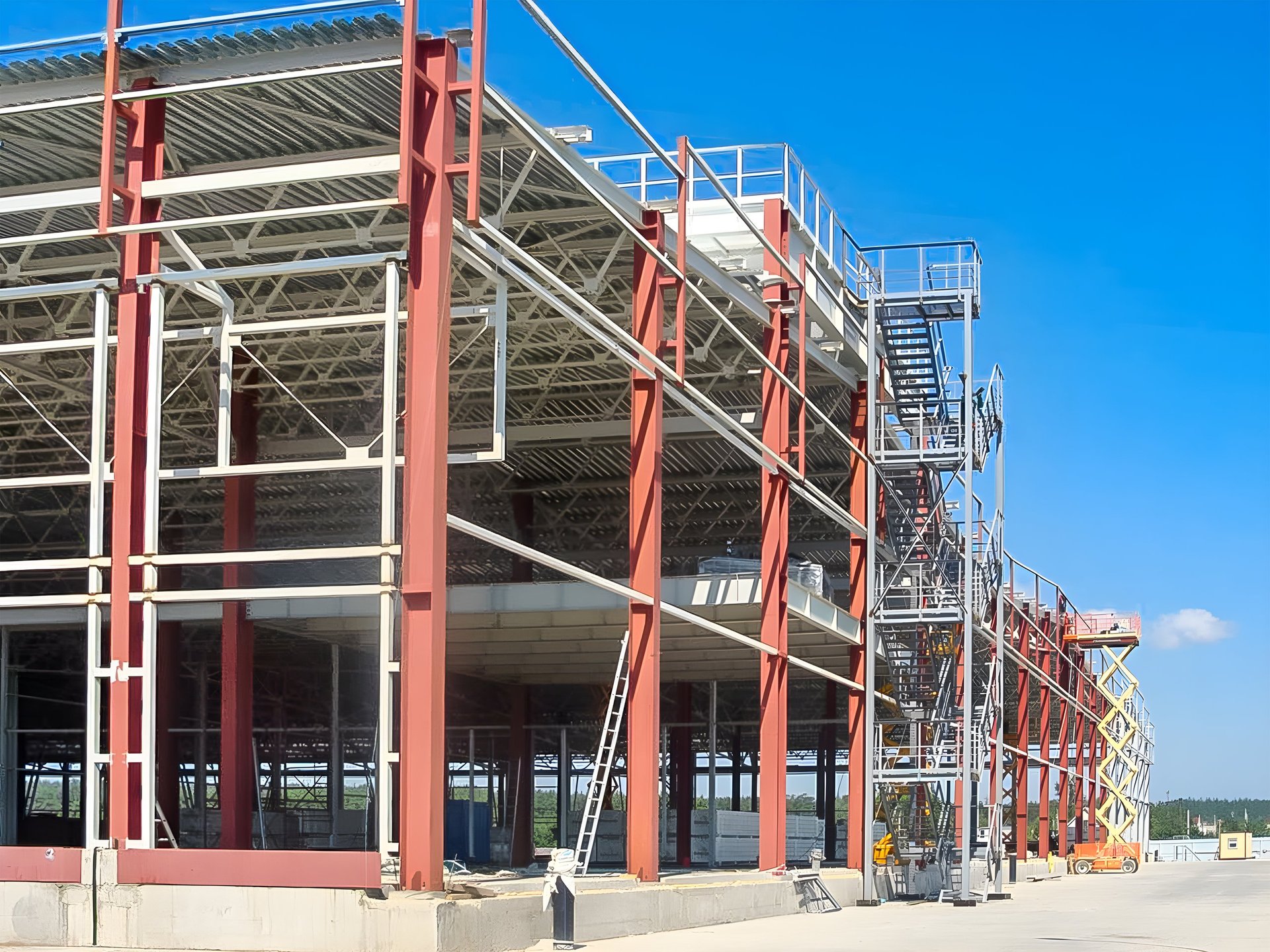
Design and construction interfaces
Resolve the design and construction interfaces first
Construction steel sits between a design release and an erection programme, and most order disputes live in the gap between them. Freeze the interfaces before the enquiry, not during the first delivery.
Identify permanent and temporary members separately, provide the engineer's loading and design references, and freeze connection responsibility. State fabrication, fire-protection, corrosion-protection and inspection requirements. Site access, crane handling, erection sequence and maintenance access affect how members are processed and grouped for delivery. Record approval owners and document hold points so procurement can distinguish a technical release from an optimistic programme date.
Design release and approval owner
- What to state
- The released drawing revision, member marks, governing grades, and who approves a change.
- Why it changes the offer
- The order has to name the revision it is built against, and the person who can authorise a change to it.
- What it costs if missed
- An unapproved substitution moves the purchase order away from the design basis while everyone still believes it matches.
Fabrication and protection boundary
- What to state
- Whether members are supplied raw or fabricated, plus weld inspection, coating and fire-protection scope.
- Why it changes the offer
- These are separate acceptance layers, each with its own specification and its own evidence.
- What it costs if missed
- A raw material certificate accepted as completed steelwork approval leaves the real acceptance unanswered.
Erection lotting and site handling
- What to state
- Receiving points, crane and lifting constraints, storage capacity, and the sequence the frame is built in.
- Why it changes the offer
- How steel is grouped for delivery decides whether it can be received, stored and erected without rehandling.
- What it costs if missed
- Correct steel arriving in the wrong grouping stalls the programme just as effectively as missing steel.
| Construction input | What it decides | Interface it resolves | What the enquiry must produce |
|---|---|---|---|
| Drawing revision and member marks | Which members, holes and quantities are current, and how each item is identified on site. | Design release to procurement hand-over. | Revision, member marks and approval owner. → Released drawing revision field |
| Permanent vs temporary members | Whether the item is part of the finished frame or a means of construction, with different acceptance. | Design scope to site operations. | Which members the order is actually for. → Raw or fabrication scope field |
| Loading and design references | The basis the member sizing was checked against, named by the engineer. | Analysis to the member schedule. | The design reference your approval rests on. → Application and service conditions field |
| Connection responsibility | Who designs, fabricates and inspects each connection — and therefore who accepts it. | Designer to fabricator interface. | The named responsible party. → Released drawing revision and connection responsibility field |
| Fabrication, coating and fire protection | What processing and protection the offer covers, and the inspection each requires. | Mill certificate to completed steelwork. | Processing, coating and fire-protection scope stated separately. → Surface or coating field |
| Erection sequence and site access | How members are grouped and marked so deliveries match build order and handling limits. | Supply to erection programme. | Receiving points, lifting constraints and lot dates. → Raw or fabrication scope and erection lots field |
This page maps interfaces to procurement inputs. It does not perform structural design, approve a connection, or accept a substitution — design releases and connection approvals remain with the project's design authority.
Local specification builder
Build a construction-steel release enquiry
Capture the drawing revision and supply boundary before requesting price. The builder organises the enquiry; it does not design members or take responsibility for connections.
Construction member release
Prepared in your browser. Nothing is sent from this page.
Complete the specification to prepare a review summary.
Confirm design release, grade/section compatibility and the agreed fabrication/protection boundary. All substitutions require the project approval process.
Item schedule and acceptance fields
Make the construction purchase order match the drawings
A construction purchase order is only as good as the item schedule behind it. Where the order and the drawing disagree — on revision, designation, grade or quantity basis — the disagreement is discovered on site.
Use one item schedule to reconcile design, fabrication and receiving requirements.
| Specification decision | Applicability and limit | Evidence to request | RFQ action |
|---|---|---|---|
| Design and item identity | Different revisions can change members, holes and quantities. | Released drawing and bill of materials. | State revision, member marks and approval owner. |
| Material and section | Grade and full designation are separate acceptance fields. | Governing material specification and producer section drawing. | List full grades, dimensions, lengths and tolerances. |
| Fabrication and protection | Raw material certification does not establish completed steelwork acceptance. | Approved fabrication, weld inspection and protection specifications. | Separate processing, coating and fire-protection scope. |
| Erection and delivery | Lots must fit site handling and sequence. | Agreed lot plan and inspection-release requirements. | Name receiving points, lifting constraints and required lot dates. |
Design and item identity
Different revisions can change members, holes and quantities. Naming the revision in the order is what makes the comparison against the drawing meaningful.
Material and section
Grade and full designation are separate acceptance fields. A correct grade does not describe the section, and a section designation does not imply the grade.
Fabrication and protection
Raw material certification does not establish completed steelwork acceptance. Coating and fire protection are their own specifications with their own inspection.
Evidence note. This page states no dimensional tolerance, weld acceptance level, coating thickness or mechanical value for any grade. Those come from the project-selected standard and the approved drawings at a stated revision, and are confirmed on the documents issued for the material actually supplied.
Verification and documentation plan
Documents that support construction member release
Reconcile material evidence, processed dimensions and protection records with the drawing revision. Keep unapproved substitutions visible until the design authority closes them.
| Control | What to examine | When and limits | Next action |
|---|---|---|---|
| Design and item identity | Released drawing and bill of materials. | Before material acceptance; confirm feasibility and cost at quotation. | State revision, member marks and approval owner. |
| Material and section | Governing material specification and producer section drawing. | Before material acceptance; confirm feasibility and cost at quotation. | List full grades, dimensions, lengths and tolerances. |
| Fabrication and protection | Approved fabrication, weld inspection and protection specifications. | Before material acceptance; confirm feasibility and cost at quotation. | Separate processing, coating and fire-protection scope. |
| Heat and item identity | Mill test certificate linked to heat markings and packing list. | Before release and again on receipt; a sample certificate is not evidence for the shipped heat. | Request traceability through cutting, bundling and delivery. |
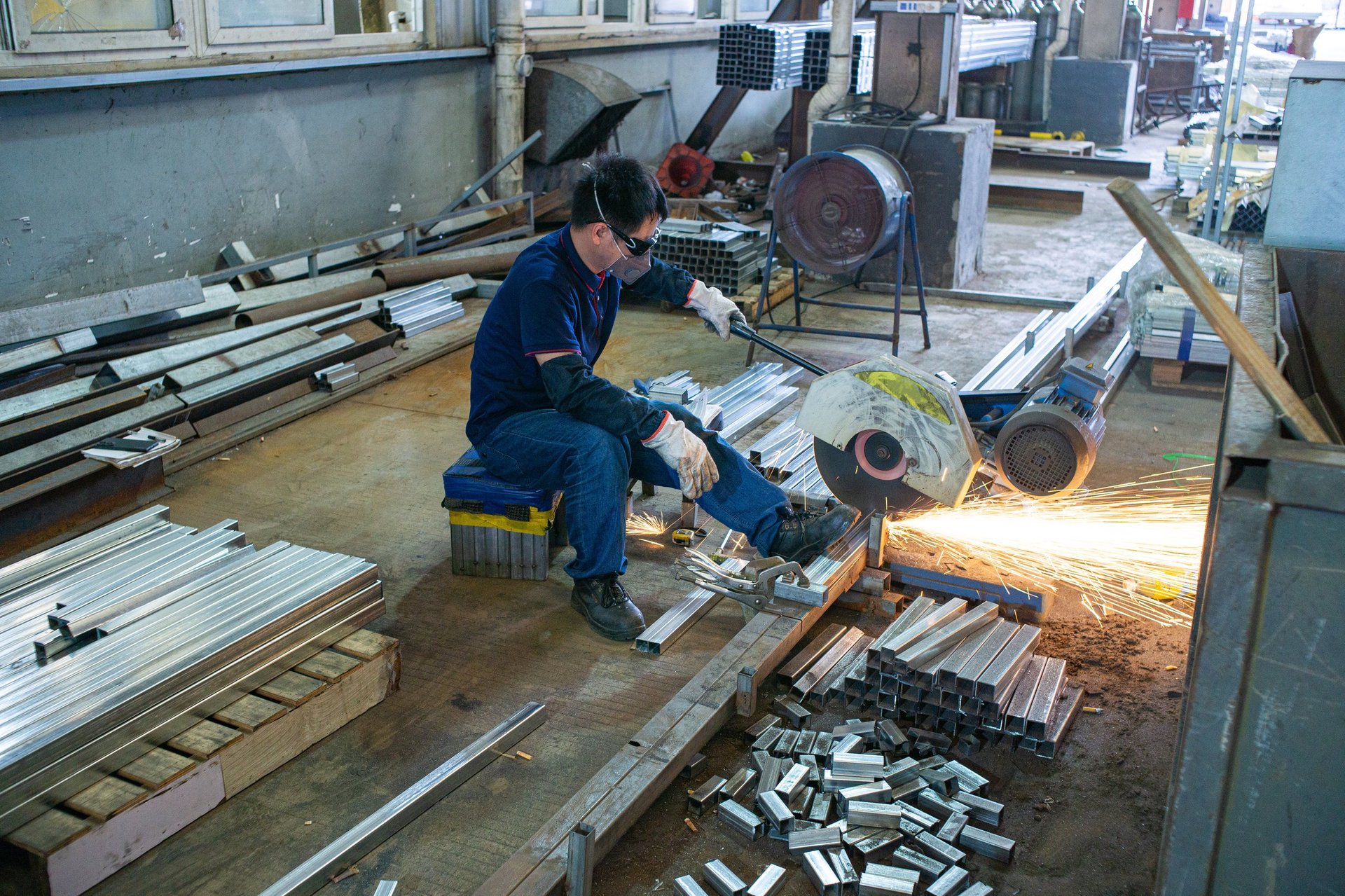
Construction package paths
Choose the construction path that matches the frame
Different building packages bring different connection, fabrication and delivery decisions.
Industrial-building frames
Include crane duty, structural connections and fabrication tolerances where relevant.
structural steel for industrial buildingsWarehouse steelwork
Group the approved member list into workable receiving and erection lots.
warehouse structural steel supplierPre-engineered building packages
Separate rolled sections from fabricated and cold-formed members with their own applicable specifications.
pre engineered building steel supplier
GCC destination planning
Plan the GCC destination around the construction release sequence
Identify whether the handover is at the fabricator, storage yard or site and who accepts each delivery. Country flags identify the destination; quotation must confirm the supply route, origin and availability for this order.
 United Arab Emirates
Carry drawing revisions and erection-lot references into the destination request. Identify the emirate, fabricator or site address and unloading restrictions; distinguish a domestic handover from an import leg.
structural steel supplier UAE Saudi Arabia
Carry drawing revisions and erection-lot references into the destination request. Name the consignee, importer and final site; ask who confirms product classification and border documentation before dispatch.
structural steel supplier Saudi Arabia Qatar
Carry drawing revisions and erection-lot references into the destination request. State the nominated receiving point and project document approver; align certificate review with the required arrival window.
structural steel supplier Qatar Oman
Carry drawing revisions and erection-lot references into the destination request. Specify the actual port, border point or inland site requested; separate the entry leg from onward transport and unloading.
structural steel supplier Oman Kuwait
Carry drawing revisions and erection-lot references into the destination request. Identify the contractor or fabrication yard receiving the sections; agree import-document responsibility and the named delivery place.
structural steel supplier Kuwait Bahrain
Carry drawing revisions and erection-lot references into the destination request. Confirm whether the order is for local consumption or onward shipment; name the consignee and agree who handles each transport leg.
structural steel supplier BahrainHandover point and acceptance
Fabricator, storage yard and site each accept differently. Name which one takes the delivery, and who signs it off against the item schedule.
Lot sequence against the programme
Lots should follow the erection sequence and the site's receiving capacity. A complete delivery of the wrong grouping still costs a rehandle.
Document approver and arrival window
Certificate review and any classification or border documentation should align with the arrival window the programme allows, not be raised once the steel has landed.
These routes describe destination planning inputs. They do not assert that any market is served by a local branch, that stock is held anywhere, or that any destination is currently reachable — supply route, origin, price and availability are confirmed at quotation.
Section detail and package coordination
Check section detail and the broader construction package
Use geometry resources for the member schedule and the construction pillar for cross-product coordination.
Beam size reference
Reconcile full beam designations with the member list before fixing quantities.
steel beam sizesAngle size reference
Check leg dimensions, thickness and orientation in bracing and connection schedules.
steel angle sizesApplicability boundary: the geometry references are dimensional aids for the member schedule. They do not establish project approval, and this page states no dimensional value — read it from the standard edition your project cites.
Commercial scope and comparison basis
Compare the complete construction supply boundary
Construction offers differ in what they include long before they differ in price. Itemise the boundary so the comparison is between scope lines, not headline figures.
Ask for itemised material, processing, connection items, protection, testing and packing. Resolve cutting waste, quantity measurement, drawing-change treatment and responsibility for unloading before accepting the commercial scope.
Ask for the offered mill and origin, section schedule, quantity basis, processing scope, packing, commercial validity and exclusions. State the Incoterm with its named place and edition, who unloads, and the requested delivery window. Price, availability, production allocation, transport feasibility and dates require written confirmation.
Coordinate an export enquiry— Match item marking, transport lengths and bundle grouping to the approved erection-lot schedule.
Scope lines every construction offer should show separately
- Raw section — mill, origin and section schedule
- Processing — cutting, drilling and fit-up
- Connection items — plates, cleats and their fasteners
- Welding — procedure and inspection level
- Protection — coating and fire protection
- Testing — document level and who validates it
- Packing and marking — bundle grouping and item marks
- Delivery — Incoterm, named place and who unloads
Price on request. Cutting waste, quantity measurement and drawing-change treatment are the three lines most often left unstated until they become a commercial argument.
Expert insight · Standards boundary
Can a material grade replace the structural design specification?
AISC describes its structural-steel specification as a design-and-construction requirements framework. A material-grade certificate addresses a different part of the project acceptance process.
Buyer implication: Keep the structural design basis, member drawing and material specification linked rather than treating one certificate as approval of the whole steelwork package.
Source review record
- Method
- Review AISC's public specification description and separate design requirements from material evidence.
- Applicability
- Construction procurement where the project adopts an applicable structural design framework.
- Limit
- The public description does not select the governing code for a GCC project or approve any member.
AISC 360 structural-steel specification overview · Information reviewed 2026-10-15.
Comparability
Evidence that keeps the order aligned with the build
The purpose of this evidence is not administration. It is that two offers built on the same stated acceptance can be compared line by line, and a delivery can be reconciled against the revision before it is built into the frame.
Design and item identity
Released drawing and bill of materials.
State revision, member marks and approval owner.
This makes competing offers easier to compare against the same acceptance requirement.
Material and section
Governing material specification and producer section drawing.
List full grades, dimensions, lengths and tolerances.
This makes competing offers easier to compare against the same acceptance requirement.
Fabrication and protection
Approved fabrication, weld inspection and protection specifications.
Separate processing, coating and fire-protection scope.
This makes competing offers easier to compare against the same acceptance requirement.
Release and hand-over map
Control construction steel through design and erection releases
Construction orders rarely fail at material selection. They fail at a release, where one party believed the next had already closed something. Each stage names its input, its output and the item that must be closed before it moves on.
| Stage and owner | Required input | Evidence or output | Risk and next action |
|---|---|---|---|
| Engineering release — Buyer's design authority | Freeze member marks, drawings, grades and connection responsibility. | Approved specification and drawing revision | Unapproved substitution can change the design basis. Close the item before proceeding. |
| Offer review — Buyer and quotation team | Resolve material, fabrication, protection and quantity-basis exceptions. | Written technical exceptions and commercial scope | An unlisted exception can survive into the purchase order. Close the item before proceeding. |
| Material release — Mill, inspector and buyer as agreed | Check heat identity and the agreed fabrication/inspection release for each lot. | Accepted documents linked to the order items | Missing heat identity can make an otherwise correct section unacceptable. Close the item before proceeding. |
| Receipt and reconciliation — Receiving team | Reconcile item marks, revision, damage and quantities before erection use. | Delivery record, item count and discrepancy record | Record any mismatch before the material is incorporated into work. Close the item before proceeding. |
Buyer FAQ
Construction-steel procurement questions
These are the questions that come up once the drawings are released but the supply boundary is still open — what has to be settled before a member schedule becomes a purchase order.
Does section supply include fabrication?
Only if the accepted scope explicitly includes it. State cutting, drilling, welding, connections and protection separately.
Can a heavier section replace the drawing member?
Only through engineering approval; interfaces, dead load, stability and connections may change.
Who approves connection design?
Identify the responsible designer and approval route in the enquiry and contract. Do not infer responsibility from material supply.
Can all grades be replaced by the strongest offered grade?
No. Full specification, fabrication, service and approval requirements still apply to each member.
What controls phased deliveries?
The released item list, inspection hold points, site receiving capacity and agreed commercial schedule.
How should drawing revisions be handled?
Use a controlled revision in the order and document affected items, approvals and commercial changes before processing.
Qualified RFQ
Request construction steel from a controlled schedule
Send the released drawings, full member list, grades, fabrication boundary and erection lots. Ask the offer to list technical and commercial exceptions clearly.
Prepare and copy the summary above, then open the structural-steel RFQ and paste it into Product Requirement. Add your name, company and reply email on that form. Supporting drawings can be shared through the destination's verified contact process.
This page prepares your enquiry locally. Opening the RFQ does not submit it. A submission is complete only when the receiving form returns a genuine acknowledgement.