
Marine & Ports
Rebar for
Marine & Ports
A port project is bought in packages, not in tonnes. Quay wall, deck slab, crane rail beam, bollard and fender plinth, access bridge and revetment each have their own drawings, exposure zone and sign-off owner — and each needs its bars on the quay in the sequence that package is built. The matrix on this page works one package at a time, across both the durability zone and the shipment.
Where a port project usually slips
- Bars that were correct but arrived in the wrong sequence, because the call-off was never tied to the pour programme.
- Bundles that cannot be landed by the crane actually available at the receiving point.
- Documentation that clears the material technically but does not connect it to the bar mark being fixed.
Information current as of
Works Packages
Six packages, six different receiving risks
Port reinforcement is procured package by package, because each is built to its own sequence and signed off by a different party. Grouping them into a single order is usually the right commercial move — but only after each package's constraints are understood, or the consolidation hides a delivery that was never going to work.
Quay wall & diaphragm wall
- Exposure
- Permanently submerged, tidal and splash zones in one vertical element.
- What actually constrains it
- The same wall passes through three exposure zones from toe to cope. A single protection system rarely covers the whole height, so the package splits into zone-based lines that share one delivery.
Sign-off owner
Marine works contractor, with the permanent works designer signing the reinforcement detailing.
Check against
Quay wall sections and the zone-by-zone durability schedule
Deck slab & suspended slab
- Exposure
- Exposed top surface with a protected soffit; run-off gathers at the cope.
- What actually constrains it
- Large repeated areas with a heavy bar schedule. Deck pours rarely stop for one delayed bar mark, so schedule completeness in a single delivery matters more here than anywhere else on the project.
Sign-off owner
Marine works contractor; reinforcement fixing inspected before each pour.
Check against
Deck reinforcement drawings and the pour sequence
Crane rail beam & rail plinth
- Exposure
- Fully exposed coastal atmosphere with continuous dynamic loading.
- What actually constrains it
- This package carries another supplier's tolerance. Rail fixing centres, cast-in plates and reinforcement all compete for the same cover zone, so the bar detail cannot be adjusted in isolation.
Sign-off owner
Marine works contractor working to the crane supplier's embedded-item requirements.
Check against
Crane rail beam drawings and the crane supplier's embedment schedule
Bollard & fender plinths
- Exposure
- Impact zone, wet and dry on every tide, frequently damaged.
- What actually constrains it
- Small, heavily localised packages with dense reinforcement around anchorages. They are routinely ordered late and are difficult to recover once a vessel is berthed alongside.
Sign-off owner
Marine works contractor; berthing equipment supplier sets the anchor positions.
Check against
Berthing furniture details and the equipment supplier's anchorage drawings
Access bridges & gangways
- Exposure
- Exposed coastal atmosphere, similar to the crane rail condition.
- What actually constrains it
- Smaller schedules that still carry the project's full documentation requirement. Consolidating them into the main reinforcement order usually costs less than raising three separate enquiries.
Sign-off owner
Marine works contractor, with a separate structural designer where the bridge is a discrete structure.
Check against
Access bridge general arrangement and reinforcement drawings
Revetment & slope protection
- Exposure
- Tidal range with scour, abrasion and cyclic wetting.
- What actually constrains it
- Widely spread, low-density reinforcement across a long frontage. Transport and handling to the working face, not the bar itself, is the practical constraint.
Sign-off owner
Marine works contractor; often executed as a discrete sub-package.
Check against
Revetment sections and the slope protection reinforcement details

A working quay is a shared interface: the same crane, the same berth and the same gate serve every package on the project. Reinforcement arriving without a call-off tied to a pour competes for all three.
The boundary this page works to
This page covers the port and marine procurement interfaces — how each works package is built, transported, landed and evidenced. Where the question is purely the reinforcement response to chloride exposure in a marine environment, that is a durability question answered by the exposure and protection system, and it is worked through separately. A package can be correctly specified for its zone and still fail at receiving, and the reverse is equally true.
Zone & Shipment Evidence Matrix
Stage one package at a time, across exposure and delivery
Most reinforcement tools ask only what the bars are. On a port project the exposure zone decides the material while the delivery route decides whether it can be landed, checked and released to the works. This matrix works both axes together for the package you are ready to buy for.
Step 1 — Choose the works package
Step 2 — Classify the zone and plan the shipment
Nothing is submitted. Clear the form at any time.
Not enough information yet
Choose a package and answer all four inputs. The matrix returns nothing before that — a port package has no default exposure zone, delivery route or acceptance package, and a guessed staging plan would be more dangerous than none.
Marine Logistics
The delivery is designed with the reinforcement, not after it
On a port project the reinforcement has to survive a journey and a landing as well as a specification. Bundle mass, marking, storage and the sequence the bars are called off in are all decided at enquiry stage — because after the bars are bundled and loaded, most of those options are gone.
Bundle mass against crane capacity
The crane available at the receiving point sets the heaviest bundle that can be landed safely in one lift. A bundle built for transport economy rather than for the quay crane is a problem discovered on arrival, when it is hardest to fix.
Call-off tied to the pour programme
Bars are only useful when the pour they serve is ready. Staged call-offs need the bar marks segregated and labelled to that pour, and the marking has to survive sea freight, transhipment or an extended stay in a laydown area.
Coastal storage conditions
A laydown area on an exposed quay is a corrosive environment in its own right. Where a coated or galvanized system applies, storage on padded supports above the tidal line and a defined repair route for damage are part of the supply, not the contractor's housekeeping.
Documentation that travels with the load
Decide at enquiry which certificates travel with the consignment and which are issued separately, so a shipment is not held at the receiving end waiting for paperwork that was never asked for.
Three staging patterns, three different risks
- One shipment for the whole project
- Lowest freight cost per tonne and the simplest documentation, but it requires laydown space for the full tonnage and puts the entire project's reinforcement at risk of a single handling incident. Coated bar sitting on a quay for months is the case that most often ends in repair claims.
- Staged against the pour programme
- Keeps tonnage on the water rather than on the quay, and matches spend to progress. It only works when bar marks are segregated and labelled to their pour, and when the call-off sequence is fixed well enough that a change in the programme does not strand a consignment mid-journey.
- Direct to the working face
- Removes the laydown area entirely on constrained sites. It demands that the receiving check happens at the transfer point, because once bars are at the face there is no longer a clear boundary between the supplier's handling and the contractor's.
One thing all three share: the moment bars leave the supplier's control is the moment the evidence chain needs to be complete. Decide where that point is before the order is placed.
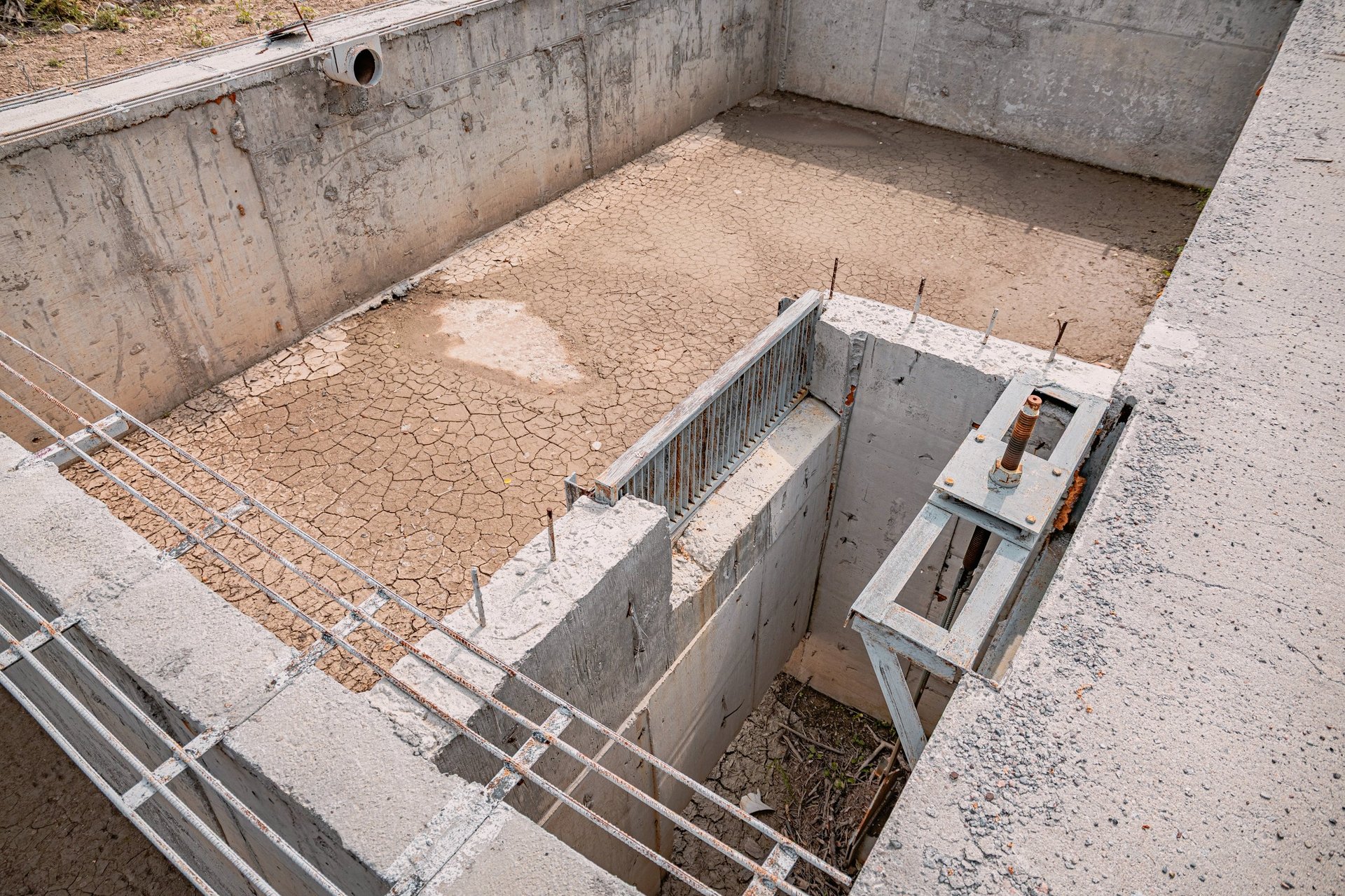
Receiving & Evidence
A port receiving point is the last place a discrepancy is cheap to fix
Once a consignment is landed, broken down and distributed across a working frontage, attributing a damaged bar or a missing certificate becomes an argument rather than a check. The receiving inspection is worth designing as carefully as the reinforcement it covers.
Before loading
Bundle tags, bar-mark segregation and the certificate set are confirmed at the supplier's yard, while a correction is still a paperwork change rather than a shipment.
Owner: Supplier
On landing
Count, condition and tag legibility are checked at the lift. Coated or galvanized bar is photographed as received, before it is moved off the quay.
Owner: Receiving inspection
Before distribution
The lot list is reconciled to the bar marks being issued to each package, so material is released to the works against a record rather than a memory.
Owner: Site QA and stores
At the pour
The certificate reference travels with the fixing inspection, closing the chain from mill heat to the element it was cast into.
Owner: Marine works contractor
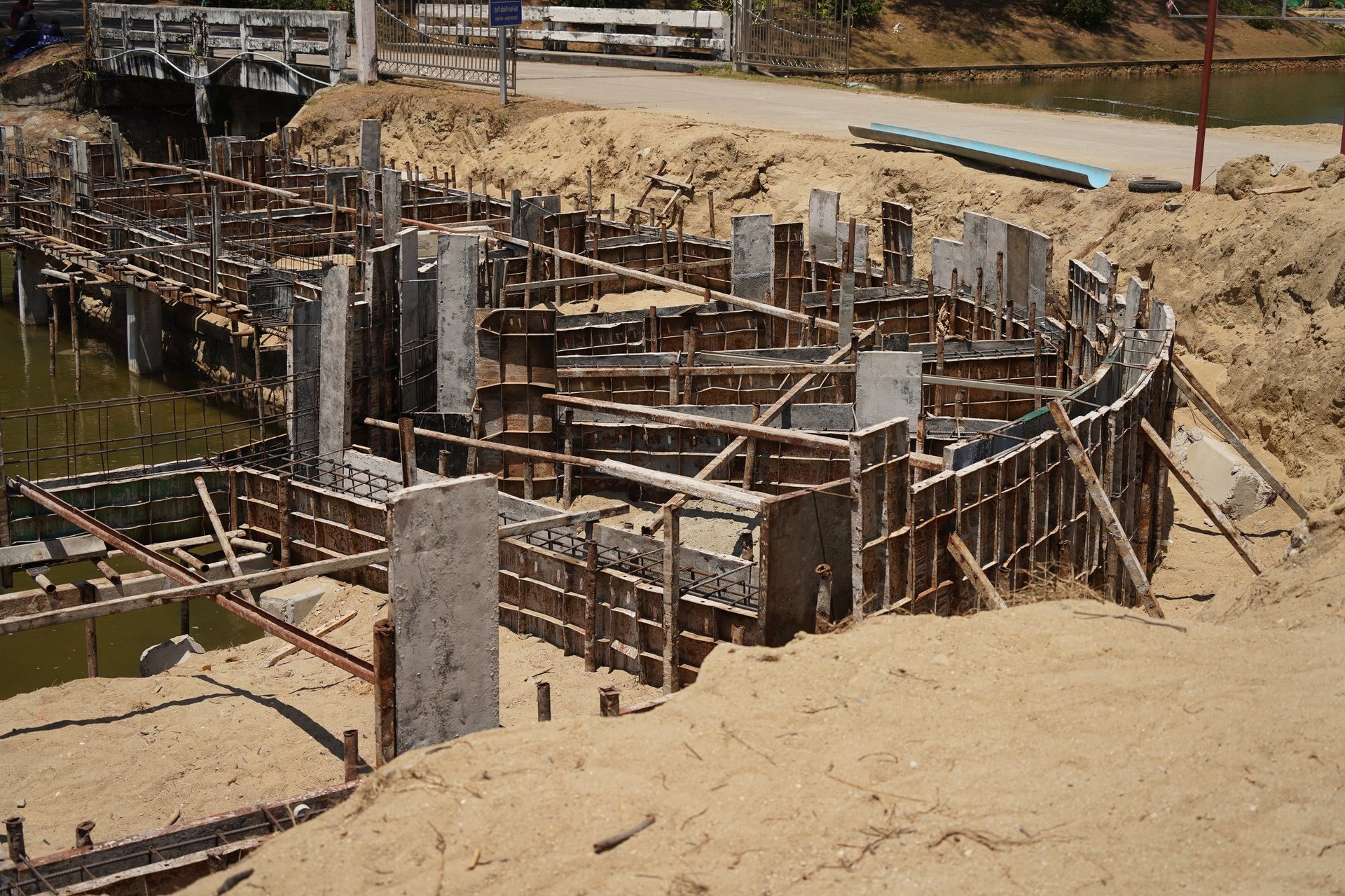
What to ask for in the enquiry
Stating these up front is what separates an enquiry that can be quoted from one that needs a second round:
- 1
The bar-mark and lot marking convention
How a bundle will be labelled, and how that label maps to the bar marks and the pour it serves. Agreeing this once at enquiry avoids renegotiating it after the bars are bundled.
- 2
Which certificates travel with the shipment
A mill certificate per heat is the baseline. Where third-party verification or coating certification is required, decide whether those are issued with the consignment or separately, and to whom.
- 3
The receiving check the supplier should expect
Whether the receiving inspection is a count and visual check at the lift, or a documented reconciliation before distribution. Knowing this shapes how the bundles are made up.
- 4
The point at which risk transfers
Ex works, delivered to berth, or delivered to the working face. This single choice determines who owns handling damage — and it is far easier to agree before the bars are made than after they are bent.
Technical reference
Reinforcement is specified and certified against published national and international standards — among them BS 4449 for UK and GCC practice, ASTM A615/A615M and A706/A706M, and EN 10080. Each sets its own grade designations, mechanical property requirements, rib geometry and test regime, and the editions are revised independently. Where a project names a standard and an edition, that edition governs the consignment. Because marine and port specifications frequently add their own durability requirements for cover, crack control and protection systems on top of the reinforcement standard, the standard alone is not a complete description of what is being bought — confirm both before the order is placed.
Bar Schedule & Order Scope
Consolidating six packages into one order — and what that costs
A single reinforcement order across every package usually beats six separate enquiries on price and on administration. The trade-off is that a consolidated order is only as good as its weakest package definition, so the schedule has to carry each package's constraints rather than averaging them.
What fixes the material
- Standard and edition
- As named on the drawings. Where the port specification adds durability requirements, those sit alongside the reinforcement standard rather than replacing it.
- Grade and designation
- The designation as written. Designations are not translated between standards by the supplier, and a substitution is a design decision.
- Diameter by package
- Quay wall, deck, crane rail and berthing plinths rarely share a diameter range once exposure zones are applied.
- Surface condition by zone
- Where one element passes through several zones, the schedule may carry more than one surface condition for the same diameter.
- Bar form and length
- Straight length, cut-and-bent, or pre-assembled cage — and whether pre-assembly travels to the quay or is done at the face.
- Mechanical splices
- Whether couplers replace laps anywhere, and who supplies and certifies them.
What fixes the supply
- Bundle make-up
- Maximum bundle mass, lifting points and length, agreed against the crane and the storage that will actually receive them.
- Call-off sequence
- Which package and which pour each consignment serves, and how a programme change is passed through to the supplier.
- Marking for survival
- The tag convention needs to stay legible through sea freight, transhipment and an extended stay in a laydown area.
- Documentation route
- Which certificates travel with the consignment, which are issued separately, and to whom at the receiving end.
- Receiving point
- Berth, laydown or working face — and the check that happens at each.
- Quantity basis
- Firm schedule or estimated tonnage, and which one the order will be placed against.
Weight, tonnage and the estimate nobody enjoys revisiting
Port reinforcement is bought against weight, and weight is derived from the bar schedule rather than read from stock. Diameter, unit mass and bar counts per mark are what a defensible figure is built from. A tonnage carried over from an earlier phase of the same project — or from a comparable berth — is a starting point for budgeting, not a basis for an order, because the exposure zones on a new frontage may not produce the same bar schedule at all.
Unit masses for standard diameters are published, so both sides can check the same reference and reconcile a difference before it becomes a commercial one.
Where a consolidated order goes wrong
- One package's late drawings hold the whole consolidated order, when separating that package would have let everything else proceed.
- A single surface condition is applied across packages that sit in different zones, because the schedule was summarised before the zones were mapped.
- Berthing and revetment bars are folded into the main order without checking that their transport to the working face is actually available.
GCC Supply
Marine and port reinforcement across the GCC
Each market has its own reinforcement standard, grade designation and receiving practice, and a port package is normally procured against the standard named on that country's drawings. Start from the destination so the enquiry is framed against the right one — and so the delivery route is planned to the right berth.

United Arab Emirates
Ports, jetties and marine works
Enquiries framed against the standard and grade named on the project drawings, with the receiving point and documentation route agreed at enquiry stage.
Reinforcement supply for United Arab Emirates
Saudi Arabia
Large port expansion programmes
Multi-package port works across a long programme, where staged call-offs and bundle marking carry as much weight as the material scope.
Reinforcement supply for Saudi Arabia
Qatar
Coastal and offshore-support works
Marine frontages where the durability schedule and the protection system are usually the deciding inputs.
Reinforcement supply for Qatar
Kuwait
Commercial ports and quays
Quay and deck packages with repeated bar schedules, suited to consolidated orders with clear per-package call-offs.
Reinforcement supply for Kuwait
Bahrain
Marine infrastructure and causeways
Marine works where exposure zone classification and protective-system certification drive the acceptance package.
Reinforcement supply for Bahrain
Oman
Ports, fisheries harbours and jetties
Coastal packages where transport to the working face is often the practical constraint on the supply.
Reinforcement supply for OmanRequest a Quote
Send the package, the zone and the receiving point
Marine reinforcement is quoted against the package, the exposure zone and the way the bars will be landed. An enquiry that carries those, plus the schedule and the documents you need, can be priced without a second round.
Include with your enquiry
- Works package and drawing reference
- Exposure zone classification
- Governing standard and edition
- Grade and surface condition
- Bar schedule with marks and diameters
- Call-off sequence and pour reference
- Receiving point and unloading method
- Certificates and inspection requirements
Prefer email? Send the schedule and the package reference to sales@noordeirasteel.ae.
Contact Commercial Department
- +971 56 398 0860
- Office 3303, Churchill Executive Tower, Business Bay, Dubai, United Arab Emirates
- Monday – Saturday: 8.00 AM – 6.00 PM · Sunday: Closed
All pricing is provided on request against a confirmed schedule and specification.
Where to go next
Application
precast concrete rebar supplierReinforcement for precast elements, including marine parapets and coping units
Still mapping the packages?
If the exposure classification or the delivery route is still moving, run the package through the matrix above before the enquiry goes out. It returns the checks that package actually needs, and you can send the enquiry with the open items marked so the quote states its assumptions rather than pricing a guess.