
Roads & Bridges
Rebar for
Roads & Bridges
A highway bridge is not one reinforcement package. Footings, piers, deck, parapets, approach slabs and drainage each carry their own drawing, exposure class and inspection hold point — so one diameter, grade and corrosion route rarely covers every element on the job. The compliance checklist on this page works element by element.
What this page helps you settle
- Which element packages on your bridge need separate rebar lines — and which genuinely share one.
- Where the durability specification, not the strength grade, is the constraint that decides the supply.
- What your enquiry must carry so the material cannot be refused at the inspection stage.
Information current as of
The Element Question
One bridge, several different rebar packages
Procurement failures on bridge work rarely come from choosing the wrong bar. They come from treating the whole structure as one package — ordering to a single diameter and grade, then discovering at the pour that the piers, the parapet and the drainage each answer to a different drawing and a different exposure clause.
Pile caps & foundations
Large-diameter bars with wider caging and lap spacing; concrete cover driven by the durability specification rather than by strength alone.
- Exposure
- Buried and permanently wet; chlorides from groundwater and soil.
- Check against
- Foundation drawings and buried-element durability clause
Piers, columns & pier caps
Congested cages where lap length, bend geometry and coupler positions compete for the same space as the cover requirement.
- Exposure
- Splash and tidal zone on water crossings; de-icing and airborne chloride on land crossings.
- Check against
- Pier reinforcement drawings and the zone-based exposure schedule
Deck slabs & voided decks
A dense, repetitive bar schedule where delivery sequence and bar mark discipline matter more than any single diameter choice.
- Exposure
- Top surface protected by waterproofing; soffit exposed to run-off and to salt-laden air.
- Check against
- Deck bar schedule and phased pour sequence drawings
Beams & girders
Transverse and shear reinforcement that has to be threaded through confined zones — cut-and-bent accuracy and pre-assembly decide whether the cage closes.
- Exposure
- Usually internal; the concern is congestion at anchorage and shear zones rather than surface exposure.
- Check against
- Girder reinforcement drawings and the fabricator's bar bending schedule
Abutments, wing walls & approach
High lap density and starter-bar tolerances that must line up with the deck reinforcement arriving later.
- Exposure
- Retained fill and drainage paths; wet/dry cycling at the movement joint.
- Check against
- Abutment and approach slab drawings; joint detail schedule
Parapets & barrier concrete
Cover, crack control and bar spacing in a thin, highly exposed section where a single millimetre of cover matters.
- Exposure
- Fully exposed, no waterproofing overhead, and often the first element to show surface distress.
- Check against
- Barrier reinforcement drawings and the exposed-element durability clause
Drainage, kerbs & utility ducts
Small-diameter bars and starter cages that are easy to omit from a bulk order and hard to source late without holding up a pour.
- Exposure
- Alternating wet and dry; the element most often reinstated after service penetration clashes.
- Check against
- Drainage and services drawings; reinstatement details
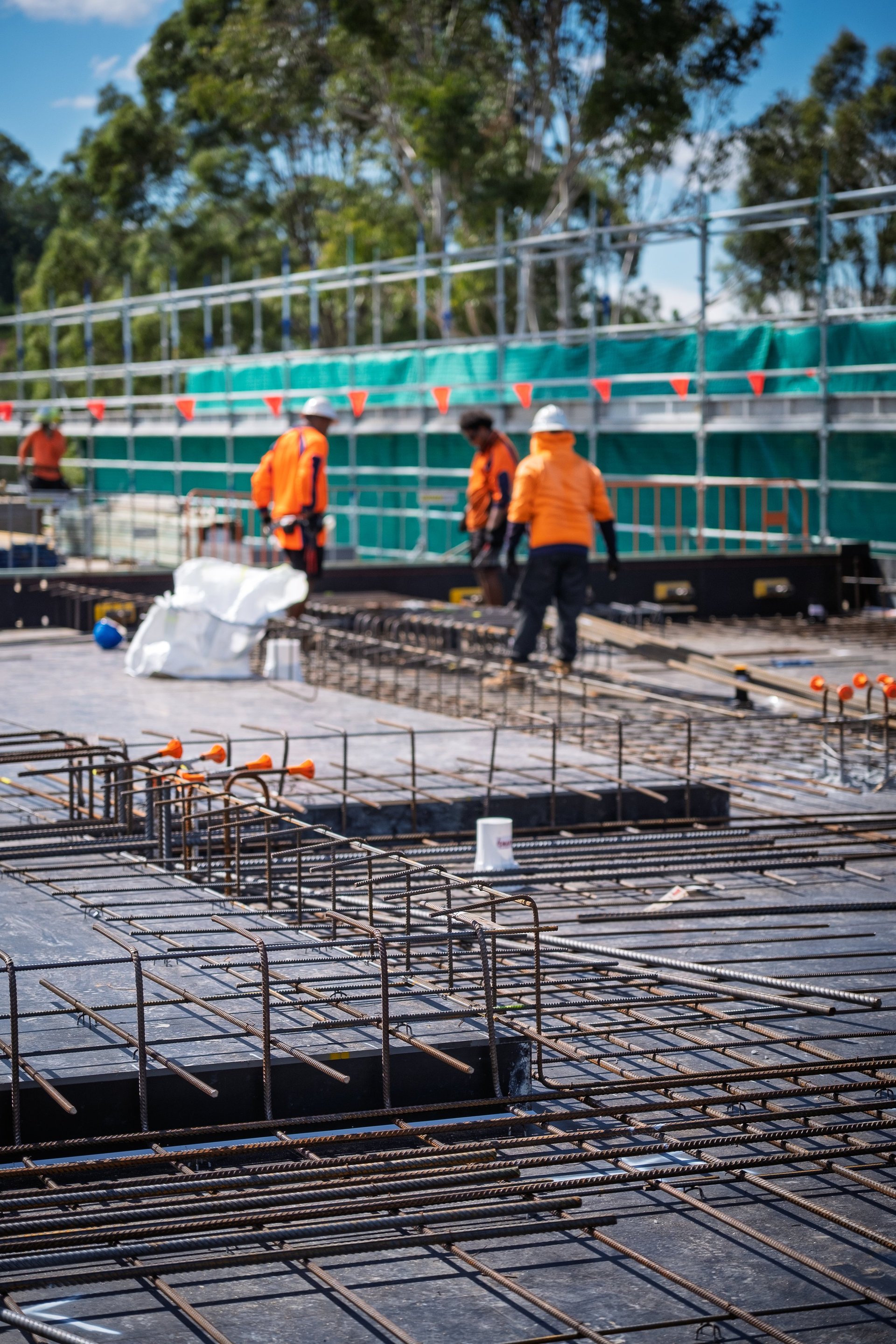
Reinforcement in a pier and deck section, photographed before the pour. The congestion visible here — laps, bent bars and starters competing with the cover zone — is what the element-by-element checklist below scores.
The applicability boundary
A diameter, grade or protection system approved for one element is not approved for the rest of the bridge. A footing cage and a parapet cage can share a mill, a delivery date and a supplier — and still differ in bar form, cover requirement, coating and acceptance evidence. Treat element approval as separate until the specification says otherwise.
Bridge Element-to-Rebar Compliance Checklist
Score one element at a time before you send the enquiry
Select the element you are ready to buy for, then state the four specification inputs that decide whether the enquiry can be priced. The checklist returns the checks that element actually needs — congestion, starters, coating handling, marking — rather than a generic rebar list.
Step 1 — Choose the element
Step 2 — State the specification inputs
Nothing is submitted. Clear the form at any time.
Not enough information yet
Choose an element and state all four inputs above. The checklist deliberately returns nothing before that — there is no sensible default for a bridge element's standard, protection system or acceptance evidence, and a guessed result would be worse than none.
Exposure & Durability
The exposure classes on one structure are not the same exposure class
Bridge durability specifications are written zone by zone, because a pier in a splash zone and a girder inside a protected envelope are not exposed to the same thing. Read the clause that applies to the face you are buying for — not the headline requirement for the project.
Splash and tidal zones
Where it applies
Piers and abutments on water crossings, and the lower metres of any element in a coastal corridor.
What it changes
This is normally where the specification departs furthest from plain black bar. Chloride ingress drives both the cover requirement and the protection system, and it is decided per element rather than for the bridge as a whole.
Ask your engineer: Whether the coating or stainless route applies to the whole element or only to the zone below a stated level.
De-icing and airborne chloride
Where it applies
Deck soffits, parapets, sign gantries and any element washed by road run-off.
What it changes
Even where de-icing is not routine, carriageway spray carries chloride onto soffits and barriers. The exposure clause in the specification — not the bar strength — decides the surface condition that will be supplied.
Ask your engineer: Which faces of the element are treated as exposed, and whether the soffit carries the same requirement as the deck top.
Buried and permanently wet
Where it applies
Pile caps, foundations, buried abutment faces and drainage reinstatement.
What it changes
Buried elements are governed by groundwater and soil chemistry rather than by atmosphere, and they are the hardest to inspect or repair afterwards — which is why the specification tends to be conservative here.
Ask your engineer: The specified protection for buried faces and whether it differs from the exposed faces of the same element.
Protected and internal
Where it applies
Girder reinforcement, internal deck bars under a waterproofing membrane.
What it changes
Where the element is genuinely protected, the specification commonly stays with uncoated bar and relies on cover and concrete quality — so this is the zone where an over-specified finish most easily adds cost without adding performance.
Ask your engineer: That the element really is inside the protected envelope for its whole service life, including at joints and penetrations.

Protective systems are not interchangeable
Epoxy coating, hot-dip galvanizing and stainless reinforcement are three different answers to chloride exposure, each with its own supply practice, handling requirement and repair routine. None of them is the automatic upgrade over black bar, and moving between them is a design decision — not a substitution a supplier should make to meet a date.
Where the specification does call for a coated system, the acceptance package widens: coating certification, a defined repair procedure for damaged bars, and a site routine for padded storage and lifting all become part of what you are buying. Prices are quoted against that scope, which is why the protection system has to be stated on the enquiry rather than settled afterwards.
Bar Schedule & Supply Scope
What a bridge enquiry has to state to be priced without a second round
A bridge bar schedule is long, and most of the delay on a reinforcement enquiry comes from scope that was never stated rather than from price. The list below separates what fixes the material from what fixes the supply — both belong on the enquiry.
Fixes the material
- Standard and edition
- Stated exactly as the specification names it. A standard's year matters where a project references a particular edition.
- Grade and designation
- The designation as written on the drawing. Designations are not translated between standards by the supplier.
- Nominal diameter, by bar mark
- Element by element. A parapet schedule and a footing schedule rarely share the same diameters.
- Bar form and length
- Straight length, cut-and-bent shape, or pre-assembled cage — three different supply scopes.
- Surface condition
- Black, coated, galvanized or stainless, as specified for that element's exposure class.
- Mechanical splices
- Whether couplers or mechanical joints replace laps anywhere, and who supplies them.
Fixes the supply
- Delivery sequence
- Which pour each bar mark serves. On a bridge this is the input that most often decides whether bars sit on site or arrive too late.
- Bundle marking convention
- How a bundle is labelled to the element and the pour, so receiving inspection can check it without opening every bundle.
- Documentation set
- Mill certificate per heat, third-party verification, coating certification and the traceability list to the schedule.
- Inspection hold points
- When the engineer's inspection happens — pre-delivery, on receipt, or after fixing — and what it covers.
- Destination and access
- The site, and any access restriction that changes how long a bundle can be.
- Quantity basis
- Whether you are pricing to a firm schedule or to an estimated tonnage, and which one the order will be placed against.
Length, weight and the tonnage question
Bridge reinforcement is commonly priced against weight, and weight is derived from the bar schedule rather than read from a supplier's stock. Diameter, unit mass and the count of bars per bar mark are what a defensible weight figure is built from — and a figure carried over from a previous phase of the same project is not a substitute for recalculating against the schedule you are actually buying.
Unit masses for standard diameters are published in the rebar weight chart, so both sides can check the same reference. Keep the calculation open until the schedule and the diameter-by-diameter quantities are both confirmed.
Where the schedule usually catches people out
- Small-diameter bars in drainage, kerbs and ducts are listed late in the schedule and ordered last — then hold up a reinstatement pour.
- Bent bars are shared between elements but cut to different shapes; the same diameter is not the same bar.
- Lap lengths scale with diameter and concrete class together, so a diameter change at the piers moves the cage geometry elsewhere.
Evidence & Sign-off
What proves the delivered bar is the bar that was specified
On bridge work the question at receiving inspection is not whether steel arrived — it is whether this bundle, carrying this heat number, can be shown to satisfy the drawing it was ordered against. Traceability is a chain, and it breaks at the point nobody planned for.
The specification
The drawing and durability clause that fixes standard, grade, surface condition and cover. Everything downstream is judged against this document.
Owner: Owner / design engineer
The bar schedule
Bar marks with diameter, shape, length and quantity, totalled per element. This is the document the mill and the fabricator both work from.
Owner: Detailing / contractor
The material evidence
A mill certificate per heat for the material supplied, plus coating or galvanizing certification where a coated system applies.
Owner: Mill and processor
The lot linkage
The list that ties each heat number to the bar marks and bundles it was delivered as — the step that connects the certificate to the cage.
Owner: Supplier and receiving inspection
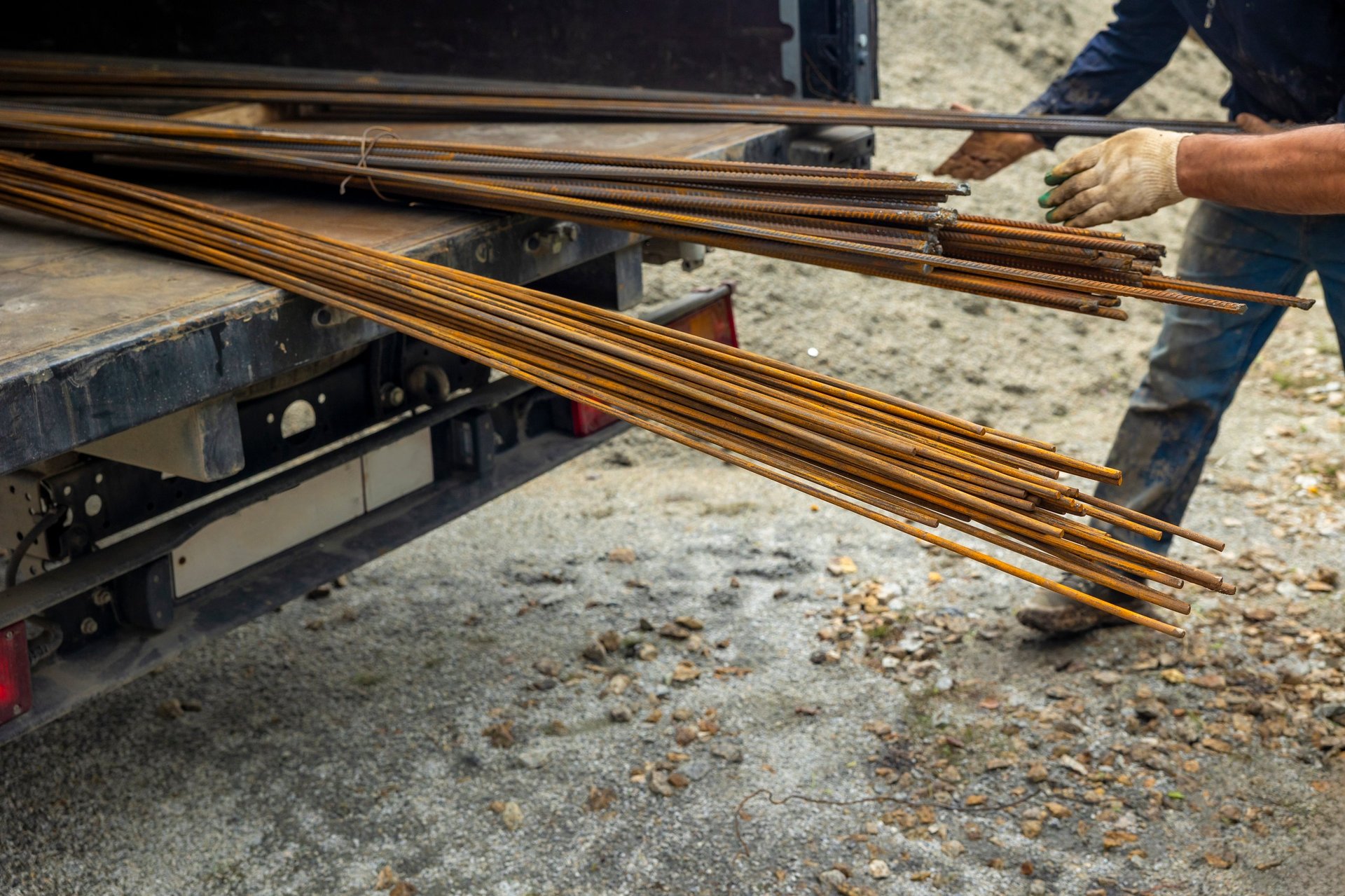
Three checks you can run yourself on delivery
- 1
Read the tag against the schedule
The bundle tag should name the heat or lot and the bar mark. Pick one bar mark at random and trace it back through the traceability list to its certificate — if that takes more than a few minutes, the chain is not usable for a bridge inspection.
- 2
Check the certificate covers the delivered lot
A certificate issued for a heat is evidence for that heat. Confirm the heat numbers on the certificate appear for the bundles actually delivered — not for a different consignment from the same mill.
- 3
Record coating condition at the unloading point
Where a coated system applies, note the condition of the bars as received and photograph any damage before the bundles are moved. This is the only point at which responsibility for coating damage is still unambiguous.
Technical reference
Reinforcement for concrete is specified and certified against published national and international standards — among them BS 4449 for UK and GCC practice, ASTM A615/A615M and A706/A706M, and EN 10080. Each fixes its own grade designations, mechanical property requirements, rib geometry and test regime, and the editions are revised independently. Where a project names a standard and an edition, that edition governs the consignment — a certificate to a later or earlier edition is a different document, and it is worth confirming before the order is placed rather than at inspection.
GCC Supply
Road and bridge reinforcement across the GCC
Each market below has its own reinforcement standard, grade designation and inspection practice, and a bridge package is normally procured against the standard named on that country's drawings. Start from the destination so the enquiry is framed against the right one.

United Arab Emirates
Bridge and highway works
Enquiries for bridge reinforcement are framed against the standard and grade named on the project drawings, with documentation set at enquiry stage.
Reinforcement supply for United Arab Emirates
Saudi Arabia
Large infrastructure programmes
Multi-element bridge packages across a phased programme, where delivery sequence and bundle marking carry as much weight as the material scope.
Reinforcement supply for Saudi Arabia
Qatar
Coastal and marine crossings
Crossings and coastal corridors bring the chloride-exposure clauses into the reinforcement scope earlier than on an inland crossing.
Reinforcement supply for Qatar
Kuwait
Highway and interchanges
Interchange structures with repeated pier and deck packages, suited to consolidated bar schedules per element.
Reinforcement supply for Kuwait
Bahrain
Marine and causeway works
Marine infrastructure where the durability specification and protective system are usually the deciding inputs.
Reinforcement supply for Bahrain
Oman
Wadi crossings and trunk roads
Bridge and wadi crossing packages for roads programmes, with element-level documentation requirements confirmed at enquiry.
Reinforcement supply for OmanRequest a Quote
Send the element, the schedule and the exposure clause
Bridge reinforcement is quoted against the schedule and the specification, not against a headline diameter and grade. If your enquiry carries the element, the governing standard and edition, the protection system and the documents you need, it can be priced without a second round.
Include with your enquiry
- Element and drawing reference
- Governing standard and edition
- Grade designation as specified
- Bar schedule with diameters and bar marks
- Straight length or cut-and-bent supply
- Protection system by element
- Delivery sequence and pour reference
- Required certificates and inspection points
Prefer email? Send the schedule and specification reference to sales@noordeirasteel.ae.
Commercial department
- +971 56 398 0860
- Office 3303, Churchill Executive Tower, Business Bay, Dubai, United Arab Emirates
- Monday – Saturday: 8.00 AM – 6.00 PM · Sunday: Closed
All pricing is provided on request against a confirmed schedule and specification.
Where to go next
Application
rebar for high rise buildingsVertical structures where the same trade carries different exposure
Not sure the element is settled yet?
If the drawings, the exposure clause or the protection system are still moving, run the element through the compliance checklist above first. It returns the specific items that element needs confirmed, and you can send the enquiry once they are closed out — or send it with the open items marked, so the quote states its assumptions.