
Steel Sheet · Qatar
Steel Sheet Supplier in Qatar
A Qatar-bound sheet enquiry is decided less by what the sheet is than by where it has to go. Two orders for identical cold-rolled sheet can differ entirely on the delivery point, the Incoterm and named place, the packing protection and the file the consignment travels with. Fix those four and the commercial answer becomes comparable; leave them open and every offer you collect is measuring something different.
Destination inputs caught before quotation Coated faces protected by stated packing Import file separated from material file
This page describes how a Qatar-bound sheet enquiry is prepared. It makes no claim about stock, a warehouse, a local branch, customs clearance, project approval or transit time — none of which can be committed to on a buyer's behalf. Review the steel sheet specifications to confirm which product form and coating condition your requirement falls under.
Destination requirement map
Six questions a Qatar-bound sheet order has to answer
Each of these changes the commercial answer, and none of them is a technical property of the sheet. They are the queries that separate an enquiry a commercial desk can price from one it has to send back.
Delivery point
Which named place does the sheet actually need to reach?
Hamad Port, an industrial port, a free-zone address and an inland project site are four different last-leg problems. A quotation against the wrong one is not comparable with the other offers on the table.
Incoterm and named place
Which delivery term, and against which exact place?
The term decides where the sheet's cost and risk stop being the seller's. It is incomplete without the named place — the same three-letter term against two different places is two different prices.
Importer of record
Who clears the consignment, and on what basis?
Customs treatment, classification and duty follow from the importer's own situation, not from the sheet specification. They are confirmed by the importer or their broker against the current official rules.
Document set
Which records does the consignment have to travel with?
The mill certificate describes the material; the invoice, packing list, origin document and transport papers describe the shipment. A complete technical file can still be an incomplete import file.
Weight basis
Is the order priced and declared on theoretical or actual weight?
Sheet is often quoted on one basis and documented on the other. The dimensions can match exactly while the quantity underneath them does not.
Transit protection
What does the sheet need to arrive undamaged?
Coated and prepainted sheet are the exposed faces of this product form. Edge protection, interleaving, moisture control and lift-point marking are packing decisions, and they belong in the enquiry rather than in a post-arrival claim.
Shipment scope builder
Assemble the Qatar inputs before the enquiry goes out
This builder captures the fields that change a Qatar-bound sheet offer. It reports what is still open and what that omission costs you at quotation stage — it does not estimate a price, a duty figure or a transit time, and it will not guess a weight basis on your behalf.
What is being shipped
Where it has to go
Nothing to report yet
Complete the fields on the left. The builder reports which inputs a Qatar-bound offer genuinely depends on, and which of them are still open.
Sheet selection
Four decisions that fix the product before the destination is priced
These come first because they determine which document governs the order. The destination questions only become answerable once the product itself is identified.
Rolling route
Cold-reduced and hot-rolled sheet are read against different thickness requirements. Naming the route first is what stops a defensible figure being applied to the wrong document.
Coating condition
Hot-dip coated and prepainted sheet carry an additional document layer beyond the base metal, and the coating designation travels as part of the product identification.
Sheet dimensions
Thickness, width and length, with the tolerance basis and the unit system they are ordered in. Keep one system throughout the enquiry.
Finish and temper
As-rolled, pickled and oiled, annealed, skin-passed and full hard are distinct product identifications, and the dimension schedule is read by that identification.
Sheet ordered for a Qatar project frequently arrives with a project specification attached rather than a mill description. Send the governing document with its edition — a grade name on its own does not tell the commercial desk which requirement to quote against.
The import file
Three layers of paperwork, and only one of them is the mill's
A complete technical file is not automatically a complete import file. Separating these three layers keeps the enquiry honest about what the supplier provides and what belongs to the importer.
Material evidence
Describes what the sheet is.
- Mill test certificate covering the ordered grade and any coating designation
- Dimensional record against the governing sheet standard and its edition
- Heat or lot traceability back to the consignment actually shipped
Shipment evidence
Describes what is moving.
- Commercial invoice and packing list, with the declared weight basis consistent between them
- Certificate of origin where the order or the destination calls for one
- Transport document issued against the named place in the Incoterm
Importer's own file
Belongs to the importer and their broker.
- Import declaration inputs and commodity classification
- Any destination-side conformity or approval evidence the consignment requires
- Duty and tax treatment applicable to that importer's situation
Where the file most often breaks
- A declaration whose commodity classification is confirmed on the strength of a grade name rather than the actual product and its condition.
- The declared weight basis differing between the quotation and the packing list, so the two documents describe different quantities.
- A coating designation recorded on the order but absent from the mill certificate, which describes a material the consignment does not match.
- Transport documents issued against a place other than the one named in the Incoterm, which breaks the chain the term depends on.
Customs treatment, classification, duty and any destination-side conformity requirement are the importer's own file. They are confirmed through the official Qatari customs authority and the importer's broker against the current rules — this page does not state them, and no supplier should.

The pre-shipment check reconciles the certificate, the dimensions and the count before the consignment is released.
Packing and transit handoff
Flat sheet exposes more surface than any other product form
Sheet is the product form where packing stops being an administrative line and becomes a condition of acceptance. The decisions below are made in the enquiry, because once the sheet is packed there is nothing left to decide.
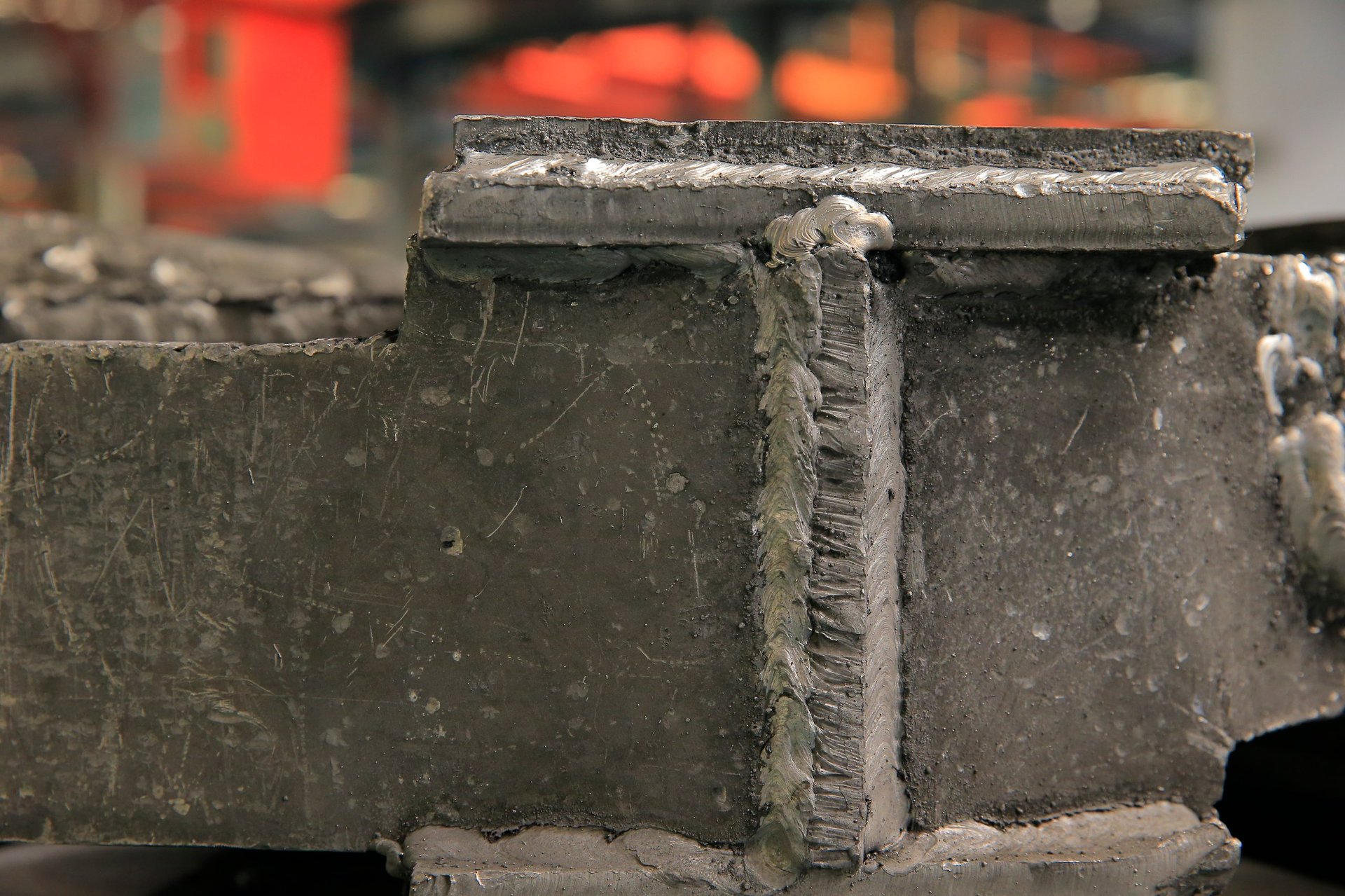
Banding, interleaving, edge protection and lift-point marking are stated requirements, not supplier defaults.
Packing and marking
Sheet is bundled, palletised or containerised and marked by size, grade and lot. Coated faces are the exposed side, so edge and surface protection is stated in the enquiry rather than assumed.
Delivery point
Name the destination city, port or delivery site. Sheet is a flat product with a large exposed area, so how it is handled at each transfer is more consequential than it is for heavier sections.
Incoterm and named place
State the term and the exact place together. Packing, transport and document obligations follow from that pair, and they are matched on the quotation rather than inferred afterwards.
Sheet arriving with a damaged coating or a bent edge is usually a handling outcome rather than a material defect, and it is settled by what the enquiry specified rather than after the consignment lands. Where the delivery point involves several transfers, say so — the packing requirement follows the number of times the sheet is handled.
Delivery-led cases
How the Qatar destination changes the sheet decision
These are the three patterns a Qatar-bound sheet order tends to fall into, and each of them shifts a different input in the enquiry. They are not product grades or service environments.
Project consignments
Sheet ordered against a project specification frequently carries coating, finish and inspection requirements that a generic mill description does not cover.
Send the project document, not a summary of it.
Container-load orders
Flat sheet packs efficiently, but the container fill decides how much protective packing is practical and how the bundles are lifted at each end.
Confirm the fill basis and the handling points.
Re-export and free-zone movements
Sheet that enters under one treatment and leaves under another carries a declaration trail that has to stay consistent with the physical movement.
Settle the declaration trail before the sheet ships.
GCC supply
Steel sheet across the Gulf
Qatar is the destination covered by this page. If the sheet is landing elsewhere in the GCC, move to the matching country route so the delivery inputs and document set follow the actual destination rather than the one assumed here.

Qatar
CurrentYou are here · this page
Qatar is the destination view covered here — sheet selection, delivery point, Incoterm, transit protection and the import file, with the RFQ fields that carry them.

United Arab Emirates
Sheet landing in the UAE frequently moves again from a free zone, so the delivery basis and the declaration trail are settled together rather than at the port.

Saudi Arabia
The conformity evidence set runs alongside the sheet specification, so a dimensionally complete order can still be commercially incomplete without it.

Bahrain
A shorter ocean leg makes the ordered quantity interact more tightly with how the sheet is packed and shipped, which is fixed with the schedule.

Kuwait
The declared weight basis sits underneath the sheet requirement and decides whether a quotation is genuinely comparable with another.

Oman
Sheet bound for Sohar, Muscat or a southern free zone travels a different inland leg, so the delivery point is named before the schedule is fixed.
Related reading
Pages buyers reach for alongside a Qatar sheet enquiry
Each of these closes a different part of the import picture this page is built around — the evidence chain, the dimensional basis, or the form the material is supplied in. None of them is a statement that two product forms can be substituted for one another.
Expert insight
Which parts of a Qatar sheet enquiry can a supplier actually commit to?
A buyer's most useful filter is knowing where a supplier's responsibility stops. The answer separates cleanly, and the honest version is worth more than an optimistic one.
A supplier can commit to the material and to the coordination of the shipment. The sheet will be supplied to the standard and edition named on the order, the mill certificate will describe that material, the packing will follow the stated requirement, and the consignment will be booked to the place named in the Incoterm. Those are commitments the commercial desk can stand behind because they follow from inputs the buyer controls.
What a supplier cannot commit to is the importer's side of the border. Commodity classification, duty and tax treatment, the conformity evidence a particular importer needs and the shipping line's schedule all depend on the importer of record, the commodity and the carrier. A quotation that quietly absorbs those into a single price is not making them more certain — it is making them harder to see.
The practical consequence for the enquiry is simple: put the material requirement and the delivery requirement in as separate, explicit fields. The first becomes a specification the supplier answers; the second becomes a logistics plan both parties can check against.
What the destination-first enquiry changes
The errors this ordering prevents
None of these are exotic. They are the ordinary ways a Qatar-bound sheet order becomes expensive after the fact rather than before it.
| The problem | What the enquiry does about it | What the buyer gets |
|---|---|---|
| The delivery point arrives as a place, not a country | The enquiry will not produce a comparable number from 'Qatar' alone, so the named port or site is captured before the offer is formed. | Offers that can actually be compared against each other. |
| Import assumptions are not buried in a price | Customs treatment, duty and classification are separated into the importer's own file rather than folded silently into a commercial figure. | A quotation that says what it covers. |
| Coating and transit protection are stated, not assumed | The coating designation and the packing protection travel as explicit enquiry fields because coated sheet is the exposed face of this product form. | Sheet that arrives in the condition it was ordered in. |
| Weight basis is declared on both sides | The basis is recorded so two quotations can be compared on the same footing rather than on two different quantities. | A comparison that survives scrutiny. |
From enquiry to delivery
Where a Qatar-bound sheet order actually stalls
Each step below names its owner and the input that moves it forward, together with the specific place this order type tends to lose time.
Requirement
Buyer
Form, rolling route, coating condition, thickness, width, length, quantity basis.
Result: Product identified; dimensional requirement anchored to a document.
Watch for: A specification that names a grade but not the document it is read against.
Destination and importer
Buyer and commercial
Named delivery place, importer of record, consignee details.
Result: Delivery point and clearance owner explicit.
Watch for: A delivery point left as a country rather than a place.
Documents and terms
Buyer and commercial
Incoterm with named place, document set, packing requirement.
Result: Terms and document obligations stated in writing.
Watch for: Import expectations assumed rather than confirmed with the broker.
Quotation
Commercial
Quantity, weight basis, Incoterm, delivery point, required date.
Result: Price on request, confirmed against the inputs supplied.
Watch for: Two offers compared on different weight bases.
Pre-shipment check
Technical and QA
Dimensional and coating checks, count reconciliation.
Result: Thickness, width, length and mass reconciled to the certificate.
Watch for: A dimensional reading taken to a different basis than the order cites.
Packing and shipping
Supplier and forwarder
Bundling, edge protection, marking, Incoterm, delivery point.
Result: Consignment coordinated to the named place.
Watch for: Packing protection decided after the sheet is already packed.
Delivery and close-out
Commercial
Site handover, document close-out.
Result: Delivered with the document set complete.
Watch for: An incomplete import file holding up release.
Questions buyers ask
Qatar steel sheet — the doubts that come up before an order is placed
Each answer depends on your own consignment and destination. Where a question can only be settled against your own documents or your broker, the answer says so rather than offering a general figure.
Do I need to name the exact delivery point before requesting a quotation for Qatar?
Yes, and it is the single input that most changes the answer. Hamad Port, an industrial port, a free-zone address and an inland project site are reached by different last legs, so a quotation issued against the wrong one cannot be compared with the others you are holding. If the exact site is not fixed yet, say which points are still in play — that is far more useful than naming the country alone.
Which Incoterm should a Qatar steel sheet order be written on?
There is no single correct term — it depends on where you want the seller's cost and risk to stop. What matters for the enquiry is that the term is named together with the exact place it applies to, because the same term against two different places produces two different commercial offers. The obligations that follow from that pair are matched on the quotation rather than inferred from the term alone.
Does ordering coated sheet change what the enquiry needs to state?
Yes. Once a hot-dip or prepainted coating is involved, the dimensional requirement is read from the coated-product document and its general requirements, and the coating designation becomes part of the product identification. The enquiry also has to say which thickness the tolerance describes — the base metal or the finished coated product — because the two are not interchangeable answers.
What documents should travel with a Qatar-bound sheet consignment?
The material evidence describes what the sheet is: a mill test certificate covering the grade and any coating designation, a dimensional record against the governing standard, and traceability back to the shipped lot. The shipment evidence describes what is moving: invoice, packing list, origin document where required, and the transport document issued against the named place. Anything specific to the importer's own declaration sits in their file and is confirmed with their broker.
Can you confirm duty, clearance or transit time for a Qatar delivery?
No, and any page that does should be treated with caution. Customs treatment, classification, duty and transit time depend on the importer of record, the commodity classification and the shipping line's schedule — none of which a supplier can commit to on a buyer's behalf. Those items are verified through the official Qatari customs authority and your own broker against the current rules.
Is a comparison between two sheet quotations affected by weight basis?
It can be, and this is a common source of a mistaken saving. Sheet is frequently quoted on theoretical weight and documented on actual weight, or the other way round. The dimensions on both documents can be identical while the quantity underneath them is not, so the enquiry declares the basis and any comparison is then made on the same footing.
Request a quote
Send the Qatar requirement for review
Give the sheet form, coating condition and dimensions with the thickness basis, then the delivery point, Incoterm with its named place, packing requirement, quantity basis and the documents you need. If something is genuinely undecided, say so — that is more useful than a filled-in assumption.
What happens after you send it
- 1The sheet requirement is read against the standard and edition you named.
- 2Any input still open — a delivery point, a weight basis, a coating basis — is raised back to you.
- 3Commercial terms are formed against your delivery point and Incoterm, not against a country name.
Price on request. Availability, origin, certification, lead time and freight are confirmed on quotation against current company data. Nothing on this page is a stock, price, clearance or certification statement.
Monday – Saturday, 8.00 AM – 6.00 PM · Sunday closed
Landing somewhere other than Qatar?
Move to the matching country route so the delivery point, Incoterm and document set follow the actual destination rather than the one assumed here.
Noor Deira Steel Trading L.L.C. · Office 3303, Churchill Executive Tower, Business Bay, Dubai, United Arab Emirates