
Hollow Sections · Product Types · Oval
Oval Hollow Section
An oval hollow section is an elliptical or flattened profile, and that is the whole point of ordering it — the form is doing design work that a round or flat-sided section cannot. Because of that, an oval is usually a made-to-requirement profile rather than a size you pick off a general chart: the major and minor axis, the wall, the length and the finish are all inputs the fabricator and the mill have to agree, and the joining method has to be settled at the same time as the geometry. What this page cannot give you is a table of standard oval sizes or structural properties, because none is stated here without a verified source — confirm the dimensional basis and the governing document for the actual supply.
Price on request · profile geometry and finish confirmed against the governing document
When an oval fits
Order an oval when the profile itself is the design, not a substitute for a round tube
An oval hollow section is rarely the cheapest way to carry a load — it is chosen because the shape is wanted. That usually means architectural metalwork: a handrail that reads lighter than a round tube at the same height, a balustrade with a flattened rail, a canopy member whose profile is meant to be seen. Two things follow from that. First, the geometry is a design input you own, so it has to be specified precisely rather than picked from a chart. Second, the joining and the finish have to be settled alongside the shape, because both are visible on the finished work. If the profile is not being seen, a round or flat-sided section is normally the more practical route.
The profile is on show
Where the member is read in elevation, the flattened form can be the reason for the design choice — and the finish becomes as important as the geometry.
A specific ellipse is wanted
The major-to-minor ratio is a deliberate proportion, not an approximation. It has to be stated, because it is what the fabricated result is judged against.
The joint can be detailed
An oval is practical when the fabricator can detail the connection — on the flat, on the curve or through a seat — and know the fit-up before the order is placed.
This page does not publish a table of standard oval sizes, and it does not give structural properties for an oval profile. Both would require a verified dimensional and technical source for the exact product and edition. Where an oval is a made-to-requirement geometry, the numbers come from your drawing and are confirmed for the actual supply.
Define the profile
Four numbers turn an oval into something a mill can make
Because an oval is normally made to requirement rather than chosen from a size list, the profile is only as precise as the inputs you give. These four are the ones that decide whether the fabricated result matches the drawing: the two axes, the wall, and how the ends are formed. Give them with units and a tolerance basis, because a bare number cannot be manufactured to.
Major axis (outside)
The long outside dimension across the widest point. It is the first number a fabricator needs, because it fixes how the profile sits in its opening and how it reads in elevation.
Minor axis (outside)
The short outside dimension across the narrowest point. Together with the major axis it defines the ratio that makes a profile read as a true ellipse rather than a squashed tube.
Wall thickness
The nominal wall. It relates to the forming route and the governing document, so state it with units and the tolerance basis rather than as a bare number.
Corner radius and end form
How the ends are closed off or capped, and the radius at the transition, are geometry decisions that change both appearance and how a joint is detailed.
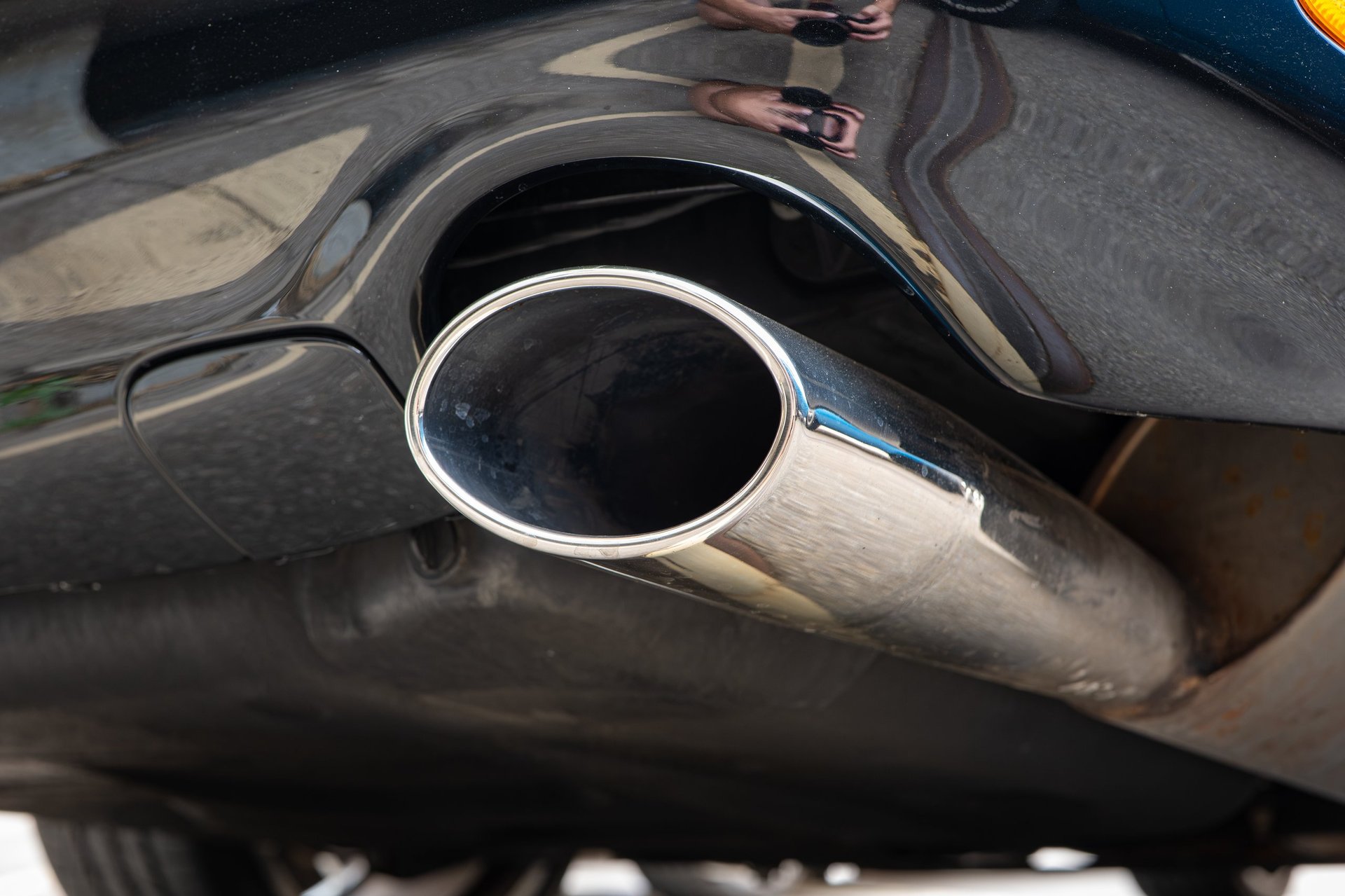
Dimension reference
Compare against a standard-form reference — as a comparison only
A dimension reference for standard hollow section forms helps you sanity-check a figure. Treat it as a comparison, not as a size list for ovals — an oval profile is a made-to-requirement geometry.
Profile request builder
Build the oval profile request from the drawing
Set the two axes, the wall and the length, then record the finish and how the profile is joined. The builder reports the proportion the axes describe and lists what is still open, so nothing is quietly assumed. It does not compute area, weight or structural capacity, and it does not offer standard sizes — those follow from your drawing and the governing document, confirmed for the actual supply.
Still open
- Major axis
- Minor axis
- Wall thickness
- Length / cut
- Material route
- Finish
- Joining method
- Quantity
- Destination
- Required date
Fields left open are carried into the summary as unresolved rather than filled with a default.
Profile summary
liveEnter a major and a minor axis to see the proportion they describe. Nothing else on this page depends on that figure — it is a check, not a calculation.
Oval Hollow Section — Profile RFQ
Profile: — x — mm major x minor · wall —
Length / cut: —
Material route: —
Finish: —
Joining: — · Ends: —
Quantity: —
Destination: — · Incoterm: —
Required date: —
Price on request. Profile geometry, dimensional basis, material and finish are confirmed against the governing document and the mill certificate — no standard oval sizes or structural properties are stated or implied.
What the builder does not do
- It does not offer standard oval sizes — an oval is normally made to requirement.
- It does not compute area, weight or structural capacity from the axes and wall.
- It does not decide the governing standard — that belongs to the project and the forming route.
Specify it
Write the oval specification so a mill can quote it and a fabricator can build it
A made-to-requirement profile is only as clear as the written requirement behind it. State the two axes with units and a tolerance basis, the wall, the length or cut requirement, the material family and grade, and the finish on its own line — then say whether the governing document is a named hollow-section standard or the project itself. Where an oval is a bespoke geometry, that statement is not a formality: it tells the supplier that the dimensional basis has to be agreed rather than read off a chart.
Geometry with a tolerance basis
Give the major and minor axis, the wall and the length, each with units, and name the tolerance regime that governs acceptance. A bare number cannot be manufactured or inspected against.
Document or project basis
Say whether a named hollow-section standard applies and which edition, or that the project governs. An oval may be a bespoke requirement, and the enquiry should make that explicit.
Material, grade and finish, separately
State the alloy family and grade, then the finish as its own line — mill, painted, galvanized or another system. Finish and geometry are separate decisions that happen to meet on the same part.
Reference route
Check the standard and the dimension basis before the RFQ
Confirm which document governs, and sanity-check a dimension against a reference, before either becomes an ordering basis for a made-to-requirement profile.
| Input | Why it matters | Applies to / limitation | Does not decide | RFQ field |
|---|---|---|---|---|
| Major & minor axis | Defines the ellipse the profile has to match | The proportion is a design decision. State both with units and a tolerance basis — no standard oval size list is published here. | Wall · material grade | Profile geometry |
| Wall thickness | Relates to the forming route and the document | Give the nominal wall with units. It interacts with the governing document and the tolerance regime rather than standing alone. | Structural capacity | Wall + document |
| Material & grade | What the section is made of | State the alloy family and the full grade. It is a separate line from both the geometry and the finish. | Coating · geometry | Material family + grade |
| Finish | How the visible surface is treated | A separate decision from the geometry, and a visible one on architectural work. Confirm whether it is applied before or after joining. | Alloy · capacity | Finish + fabrication sequence |
This table is a decision aid only. It carries no numerical technical value and states no standard oval sizes or structural properties; every dimension, grade and finish is confirmed against the governing document, its named edition and the mill certificate before quotation. Price on request.
Joining it
Settle the joint while you settle the shape
On a curved profile the joint is where most of the practical difficulty sits. A weld that meets a varying gap, a fixing that bears on a curve, or a cap that has to follow the ellipse all need the geometry and the wall known before the work is priced. That is why the joining method belongs on the same enquiry as the axes — not in a phone call after the material has been ordered. Below are the common routes and the point each one turns on.
Welded directly to a flat or curved member
The curved face meets the connecting member along a varying gap. That gap is a fit-up decision made at the bench, so the fabricator needs the geometry and the wall before pricing the weld.
State whether the joint is set on the flat of the profile or on the curve.
Capped or plated end connection
Where the profile is closed with a plate or cap, the cap follows the ellipse. Confirm whether the cap is supplied or made in the shop, since that changes the cut list.
Name the cap material and finish so it matches the section.
Mechanical fixing through or onto the profile
A through-fixing or a bracket onto a curved face needs a flat or a reinforced seat, because a bolt bearing on a curve is not the same as one on a flat face.
Note any reinforcement or insert the fixing needs.
Finished and joined after coating
If the assembly is coated before final joining, the joint and any cut edge become unprotected unless they are treated. Confirm the sequence before quoting.
State whether the finish is applied before or after the joint is made.
Documents & finish
Ask for two kinds of evidence, because there are two kinds of claim
A made-to-requirement profile and its finish are proven differently, and asking for the wrong document is how genuine material gets questioned at site. For the steel, the evidence is the mill certification tying the heat or lot to the grade and the mechanical results. For the finish, it relates to coverage, mass or thickness against the coating or paint specification the order names. Name both, and name who is expected to issue each — availability of any certificate is confirmed for the actual supply, not assumed from this page.
Material certification & traceability
Request certification against the governing standard and grade, with heat or lot traceability to the shipped consignment. The expected issuer is the producing mill or the supplier per the order terms.
Finish evidence
For a coated profile, the document relates to the coating or paint system — coverage, mass or thickness as the order names it. Coating a profile does not change the steel beneath, so finish evidence is not material certification.
Dimensional record
For a made-to-requirement geometry, the dimensional or gauge record is what shows the profile met the ordered axes. Name the record and the acceptable basis rather than assuming a default.
Shipment & origin documents
Commercial invoice, packing list, origin and transport documents belong to the consignment, agreed per the Incoterm and the destination rules for the actual goods.
Any certificate, finish record or approval is confirmed for the actual supply. Nothing on this page should be read as evidence that a specific document set is held for a specific order.
Operating duty
Where the visible profile is the reason for the choice
Most oval work sits where the member is seen — architectural and fabricated metalwork rather than hidden structure. That does not remove the engineering, it moves where the constraints sit: the finished appearance, the exposure the finish has to survive, and the joint detail all take on weight they would not carry on a concealed member. Where the profile is not visible and no other reason applies, a round or flat-sided section is usually the more practical choice.
Handrails & balustrades
A flattened rail reads lighter than a round tube at the same height, so the profile is doing aesthetic work the finish has to support.
Canopies & masts
Where the member is read in silhouette, the ellipse can be a deliberate proportion rather than an approximation of a round tube.
Framed glazing & screens
Flattened profiles can suit a sightline that a round tube would break, with the joint detailed to keep the line clean.
One-off fabrications
Bespoke work where the geometry comes from the designer's drawing and the shape is part of the brief, not a stock choice.
Refurbishment & matching
Where an existing profile has to be matched, the geometry is fixed by what is already on site and has to be reproduced precisely.
General fabrication
Where no visible-profile reason applies, state it honestly — a round or flat-sided section is normally the more practical route.
GCC destination
Plan the destination separately from the profile
Confirm consignee and importer details, the named port or inland delivery point, the Incoterms rule and named place, the shipment documents, any permit or conformity step required for the actual goods, and the party responsible for each action. None of the country cards below implies a local office, warehouse or stock position, and none of them changes the profile specification.

United Arab Emirates
Oval profile handling at destination
Confirm how the oval profile is handled, braced and stored at the receiving end, with the delivery point and documents named.
Destination inputs
Saudi Arabia
Oval conformity inputs
State any conformity step the project applies to an oval profile and name who is responsible for each action.
Destination inputs
Bahrain
Delivery of the oval profile
Agree the delivery point and documents for the oval profile, kept separate from the profile decision itself.
Destination inputs
Kuwait
Oval routing inputs
Separate the profile and forming decision from the destination plan, and confirm terms before quotation.
Destination inputs
Oman
Port inputs for the oval section
Name the port or inland point and the Incoterm so obligations are explicit for an oval-profile consignment.
Destination inputs
Qatar
Delivery & oval conformity
Confirm delivery place, date and any conformity step, with the oval profile held as a separate decision.
Destination inputsCountry cards plan the destination, not the supply position. None of them implies a local office, warehouse or stock position, and none of them changes the profile specification.
Enquiry quality
A made-to-requirement profile is only as quotable as its inputs
Because an oval is usually not a stock size, the enquiry is doing more work than it would for a catalogued section. Two enquiries can both read “oval tube” and still differ on the axes, the wall, the material, the finish and the joint — which is why offers are only comparable when every supplier is handed the same inputs. The four fields below are what make them explicit before anyone quotes.
Profile geometry
Major axis, minor axis, wall and length, each with units and the tolerance basis. The profile is a made-to-requirement form, so these are the numbers the mill works from.
Governing document
Name the standard and edition that applies, or state that the project governs it. An oval profile may fall under a named document or be a bespoke requirement — the enquiry should say which.
Material, grade and finish
Give the alloy family and grade, and the finish as a separate line: mill, painted, galvanized or another system. The finish is a separate decision from the geometry.
Joining and documents
Record how the profile is joined, the fabrication sequence, and the inspection and material documents you need by purpose and expected issuer.
Related routes
Open a related page only to resolve a specific decision
Adjacency is not proof of interchangeability. The routes below answer a different question from this one — open them when that question is the one blocking the enquiry.
Hollow section dimensions
A dimension reference for standard hollow section forms. Treat it as a comparison only — an oval profile is a made-to-requirement geometry, not a size read off a flat-sided chart.
Structural steel
Open sections covering beams, angles and channels. A different product family with its own material and connection logic — open it only to resolve a specific decision.
Technical reference
Why this page states no oval sizes and no properties
A product page can only publish a dimension or a property when it has a verified source for the exact product and edition. Where an oval is a made-to-requirement geometry, such a source does not exist in the abstract — the profile is defined by the drawing and the governing document for the actual supply.
What is not published here
- A table of standard oval or elliptical sizes.
- Structural properties, section capacity or weight figures for any profile.
- Any claim that an oval falls inside a named standard's scope.
Where the basis comes from instead
- The designer's drawing — the axes, wall and length as specified.
- The governing document named by the project, including its edition.
- The mill certificate and dimensional record for the actual supply.
Comparison note reviewed 2026-09-07. Nothing here proves Noor Deira Steel inventory, price, certification, local presence or project approval, and none of it replaces the contract documents.
From requirement to quotation
Every open input stays visibly open
Work the sequence in order — geometry before finish, joint before fabrication — and leave anything undecided marked open rather than filled with a default.
- 1
Fix the profile geometry
State the major and minor axis, the wall and the length with units and a tolerance basis — these come from the drawing for a made-to-requirement oval.
- 2
Confirm the governing basis
Say whether a named standard and edition applies, or the project governs, so the dimensional basis is agreed rather than assumed.
- 3
Set material and grade
Name the alloy family and the full grade per the governing document — a separate line from the geometry and the finish.
- 4
State the finish and the joint
Give the finish on its own line and name how the profile is joined, including whether the joint is on the flat or the curve.
- 5
Confirm the fabrication sequence
Record whether the finish is applied before or after the joint is made, since that decides whether cut edges need treatment.
- 6
Review unresolved inputs before quotation
Leave anything undecided marked open so the offer is qualified on a verified basis rather than a guess.
Questions to settle
Questions to settle before ordering
Five questions fabricators raise when an oval profile is being specified.
Are there standard oval hollow section sizes?
This page does not publish a table of oval sizes, because doing so would require a verified dimensional source for the exact product and edition. An oval or elliptical profile is commonly a made-to-requirement geometry, so the practical route is to state the major and minor axis, the wall and the length you need and have the dimensional basis confirmed for the actual supply.
Can I get structural properties for an oval profile from this page?
No. Structural properties depend on the exact geometry, the wall, the material and the governing standard, and they are not reproduced here without a verified source. Any capacity question belongs with the design calculation and the standard the project applies, not with a product page.
Which standard applies to an oval hollow section?
It depends on the route the profile is made by and what the project permits. An oval may fall under a named hollow-section standard or be specified as a bespoke requirement — either way, name the standard and edition that applies, or state that the project governs it, so the enquiry is priced against a known basis.
How should the joining method be specified?
State the joint type and whether it is set on the flat of the profile or on the curve, because the fit-up differs. Note the fabrication sequence too — if the assembly is coated before final joining, the joint and any cut edge need a treatment decision. None of that should be inferred at the supplier's end.
What should an oval profile enquiry include?
Major and minor axis, wall and length with units, the material family and grade, the finish on its own line, the governing document and edition, the joining method and fabrication sequence, the documents required, quantity and destination. Price and availability are confirmed against your exact specification rather than stated here.
Request a quotation
Request a qualified Oval Hollow Section quotation
Send the major and minor axis, the wall and the length with units, the material family and grade, the finish on its own line, the joining method and the fabrication sequence, the governing document or that the project governs, quantity and unit basis, and the destination. If an input is still undecided, mark it open rather than guessing.
The quotation will confirm availability, the dimensional basis, commercial terms and the document package for the actual supply.
- Geometry, material and finish quoted as separate lines
- Dimensional basis agreed for a made-to-requirement profile
- Joining and fabrication sequence carried into the offer
Price on request. Availability, origin and delivery timing are confirmed against your exact specification and destination.