
Steel Coil · DX52D Galvanized
DX52D Galvanized Coil — A Forming Designation, Not a Finished Specification
DX52D describes what the base steel is expected to do under forming. It does not describe the coating on it. A galvanized DX52D order that names no coating designation and no edition is only half specified — and the half that is missing is usually the one the finished part is judged against.
Price on request · Coating class, edition and forming intent agreed before quoting
Is This Your Route?
You are specifying a forming grade that will be coated
This page is for the engineer or buyer who has already decided the base steel needs to form further than a general-purpose grade comfortably allows, and who now has to write an order that a mill can make and a works can inspect.
The DX family is a set of designations for continuously hot-dip coated steel intended for forming. The letter sequence records what the base steel is qualified to withstand — the D denotes a flat product for cold forming, the X a designation without a defined delivery condition for structural use, and the final letters grade the forming severity the material is intended for. A higher forming grade exists because a deeper draw or a more awkward profile places demands a general-purpose grade is not qualified against.
What the DX designation does not record is the coating. And here is the part that catches buyers out: an enquiry reading "DX52D galvanized coil, 1.0 mm, quote please" has named the substrate and left the coating entirely open. Which coating class, what surface treatment, which face is treated, and how much coating is present are all separate fields — and they are the fields the finished component's corrosion performance actually rests on.
There is a third thing missing too, and it is quieter: the edition. A designation read against one edition of a standard is not automatically the same specification as the same designation read against another. If the order does not say which edition is meant, the supplier picks one, and any dispute about whether the material conforms starts from a disagreement about what it was meant to conform to.
What this page will not do
- It publishes no mechanical value, no yield or tensile figure, and no coating mass number for DX52D or any neighbouring designation.
- It does not treat DX51D and DX52D as interchangeable. They carry different forming intents, and substituting one for the other is a change to the requirement.
- It does not name a coating mass as "the" correct one. The coating is chosen against the exposure and the fabrication the part will see.
This is your route if…
- The component is formed from coated coil and the forming is more demanding than a general-purpose coated grade is qualified against.
- You need the corrosion resistance of a metallic coating without giving up the formability the part requires.
- The order will be placed against a recognised designation, so the coating has to be written into the same specification rather than left to the supplier.
- Your works presses, draws or roll-forms the coated material and needs the surface to survive that operation intact.
Look elsewhere if…
- The part is unstressed flat panelling or general enclosure work where no particular forming depth is required — a general-purpose coated grade is the right starting point. Compare the galvanized coil range
- You need cut-to-length flat product rather than a coil to feed a line. See the steel sheet range
- The requirement is heavy-gauge plate for a fabricated structure rather than coated forming stock. See the steel plate range

Designation & Coating
Three fields the designation alone does not carry
The forming grade is settled. What this gate checks is whether the coating, the surface treatment and the governing edition have been written down — and whether the combination holds together. It returns no coating mass and no mechanical value.
Complete the designation before it is quoted
Four fields. The first three are what the designation leaves open; the fourth is the basis the whole order is read against.
All four are required. The coating and the edition are the two this page exists to close — an enquiry that omits either is not yet a specification.
This gate checks whether an order is complete and coherent. It returns no coating mass, no mechanical value and no edition number, and it does not certify the material against any standard.
The order check appears here
Set the four fields. The result says whether the order is complete and names anything still to be settled before it can be quoted.
What It Is Not
Four substitutions that look reasonable and are not
Each of these is a change someone might make on a paperwork sheet to keep an order moving. Each one changes the requirement rather than the wording of it.
DX52D is not a higher-specification DX51D
The two designations carry different forming intents. They are siblings in one family, chosen against different forming demands — not a general-purpose grade and an upgraded version of it. Both are correct materials for the applications they were written for.
Substituting one for the other is changing the requirement. If the part's forming demand was the reason DX52D was selected, moving to a different designation re-opens that decision rather than simplifying the paperwork.
The grade does not contain the coating
A DX designation describes the base steel. The coating on top of it is specified by its own designation, its own coating class and its own surface treatment. None of that is implied by the forming grade.
Write the coating designation on the order. An enquiry naming only the forming grade asks the supplier to choose the coating, which means the corrosion performance of the finished part has been decided by someone who has not seen it.
A coating class is not a durability rating
Different coating classes describe different coating systems, not better and worse versions of one. A heavier coating mass is not automatically the safer choice either — it changes how the material forms and how it behaves in the press.
Specify the coating against the exposure, the fabrication and the intended service life. Reaching for a heavier coating as a margin is a change to the forming behaviour as well as to the cost.
The designation means nothing without its edition
The same designation read against different editions of a standard can describe different requirements. An order that names no edition leaves which one applies to the supplier's judgement.
Name the standard and the edition on the order. It costs one line and it is what makes the certificate checkable on arrival rather than arguable.
The designation and the coating are two specifications on one line
A coated coil order describes both a substrate and a coating, and the two are specified separately even though they are written on the same line. The forming designation says what the base steel is qualified to withstand. The coating designation says what metal is on it, on which face, in what amount, with what surface treatment. Reading the whole line as though it were one specification is what leaves the second half unsaid.

Specifying It
The fields a coated forming order has to carry
A DX52D order is two specifications written on one line — the substrate and the coating. These are the fields, and the evidence that travels with them.
| Order field | Why a coated forming order needs it |
|---|---|
| Forming designation and governing standard with edition | The substrate half of the order, and the basis it is read against. Without the edition, the designation has no fixed meaning. |
| Coating designation and coating class | The second specification on the same line. It is not implied by the forming grade, and it is what the finished part's corrosion performance rests on. |
| Coating mass and which face is coated | How much coating is present and where. Stated against the standard rather than assumed, because it also bears on how the material forms. |
| Surface treatment | Untreated, skin-passed, oiled or chemically treated. It affects handling, storage, press behaviour and whether a later painting step will adhere. |
| Nominal thickness, width, coil ID and coil mass | The coil as supplied and as handled. Coil geometry decides whether it suits your decoiler, and the forming grade does not describe any of it. |
| The forming operation the material will undergo | The reason the grade was chosen. Recording it keeps the forming intent on the order rather than only in the conversation that selected the grade. |
Which of these your order must carry, and any tolerance that applies, is set by the standard and edition your project names — not by this page.
Inspection and what has to be verified
A coated product carries two things that can be checked independently — the substrate and the coating. A receiving inspection that only confirms one of them has confirmed half the order.
- The substrate: that the base steel corresponds to the designation and the edition named on the order
- The coating: which class, the mass present, and which face carries it
- The surface treatment, confirmed as the state the order specified rather than the mill's default
- The coil dimensions and mass, compared against the same tolerance basis the order was placed on
Which tests apply, and what the acceptance limits are, come from the standard your project names — read in the edition stated on the order.
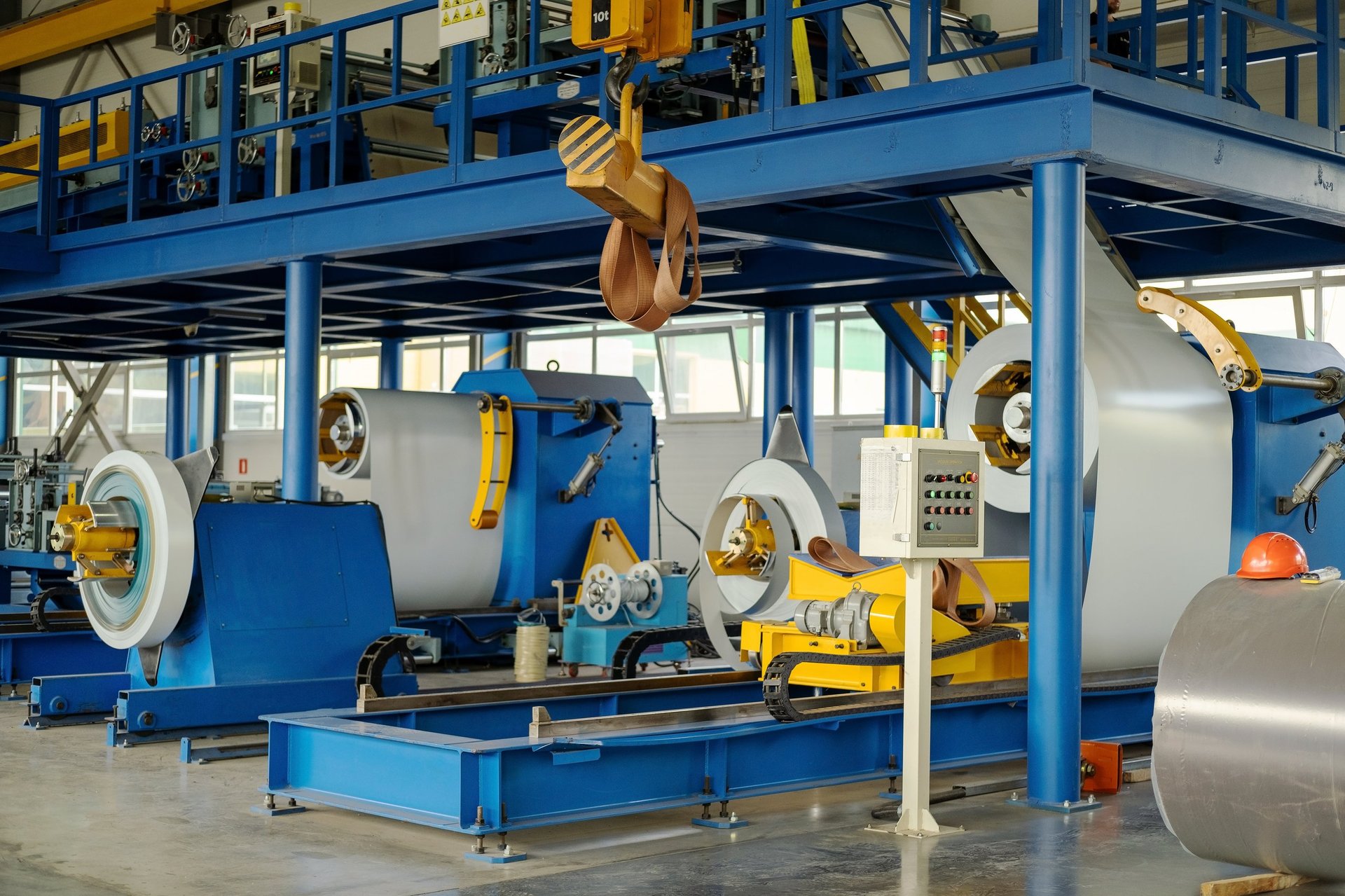
Three parts, three different coating questions
The forming grade fits all three. What separates them is which coating field had to be settled before the order could be placed.
A deep-drawn component in a mildly corrosive indoor environment
The forming demand is what justified the grade, so the coating question was not about heavy protection — it was about whether the coating would survive the draw intact. A heavier coating would not have helped and would have changed how the material formed.
Roll-formed cladding sections exposed to weather
Here the exposure drives the coating and the forming is continuous rather than deep. The two requirements pull in different directions, which is why both had to be written down rather than one being inferred from the other.
Appliance panels painted after forming
The coating is a substrate for paint rather than the finished surface, so its surface treatment mattered more than its mass. The passivated state and the paint system had to be compatible, and that was a field the forming designation never touched.
GCC Supply
Shipping a coated forming coil into the Gulf
A coated coil adds one planning constraint a bare coil does not have: the surface that arrives is the surface the works will form, so storage and handling form part of the specification rather than sitting outside it.

United Arab Emirates
Local and re-export enquiries, where the surface state on arrival is most likely to be examined by more than one party along the journey.
Steel coil supply for United Arab Emirates
Saudi Arabia
Industrial programme volumes where the coating specification and its evidence are reviewed before the material is released to the press line.
Steel coil supply for Saudi Arabia
Qatar
Project-driven demand where the coating specification and the documentation package are prepared in step.
Steel coil supply for Qatar
Oman
Port-led planning: for a coated coil the packing and the storage condition are part of the specification, so they are planned with the shipment.
Steel coil supply for Oman
Bahrain
Shorter sea legs, where handling and storage at both ends matter more than transit time for a coil whose surface is the deliverable.
Steel coil supply for Bahrain
Kuwait
Industrial and manufacturing demand, where the coating class and the surface treatment are agreed before the coil is run.
Steel coil supply for KuwaitThese pages set out the supply route and the enquiry handling for each destination. They do not claim local warehousing, stockholding, a branch presence or a delivery timescale — those are confirmed against your own order. The reason the surface matters here is specific: a coil delivered in a different surface state from the one specified has not met its specification, even if every dimension is correct.
Reference Notes
What the designation covers, and what sits outside it
A boundary note rather than a standards primer. It exists so that a forming designation is never read as a complete order.
The designation describes the substrate
A DX designation is written for the base steel and what it is qualified to withstand in forming. It is a forming grade before it is anything else.
The coating is a second specification
Which coating system, its class, its mass and which face carries it are all separate fields. They are written on the same order line but they are not described by the forming designation.
Surface treatment is a field in its own right
Untreated, skin-passed, oiled and chemically treated are different surfaces with different handling and press behaviour. It is a decision, not a default.
The edition is part of the specification
A designation read against one edition is not automatically the same requirement as the same designation read against another. Naming the edition is what gives the order a fixed basis.
The coating mass follows the application
How much coating is required depends on the exposure the part will see and the fabrication it will undergo. It is a decision made against the application, not a ranking of product quality.
What this page does not state
- No mechanical value, yield or tensile figure for DX52D or any neighbouring designation. Those belong to the standard the designation is read against, in the edition that applies.
- No coating mass number presented as the correct one. Coating is specified against exposure and fabrication, and the figure comes from the standard and the application.
- No equivalence between DX51D and DX52D, or between any two coating classes.
- No price, lead time, stock position or minimum quantity. Those are confirmed against the specific enquiry.
Related grade and coated routes
FAQ
Questions the designation does not settle
Is DX52D the same as DX51D?
No. They are siblings in one family, written for different forming intents rather than one being an upgraded version of the other. If the part's forming demand is the reason a particular grade was chosen, substituting the other re-opens that decision — it does not simplify the order.
If I order DX52D galvanized, isn't the coating already specified?
It is specified only in the sense of naming a coating type. Which coating class, what mass, which face is coated and what surface treatment are all separate fields, and those are what the finished part's corrosion performance rests on. Naming the forming grade asks the supplier to decide the rest.
Do I need to worry about the edition?
Yes, and it is the field most often left off. The same designation read against different editions of a standard can describe different requirements. If the order does not name one, the supplier reads it against an edition of their choosing, and any conformity question then starts from a disagreement about the basis.
What surface treatment should I ask for?
It depends on what happens to the coil next. An oiled surface suits storage and transit but has to be removed before some operations. A chemically treated surface is a different substrate if you are painting afterwards. An untreated surface is the most exposed in transit. State what your process needs rather than accepting a default.
Will a heavier coating protect the part better?
Not necessarily, and it is not a free upgrade. Coating is specified against the exposure and the fabrication the part will see, and a heavier coating also changes how the material forms. Reaching for the heaviest option as a margin is a change to the forming behaviour as well as to the cost.
My part is deep drawn. Is the coating a problem?
It is the field most likely to be questioned, because a deep draw takes the coated surface through considerably more strain than a light profile. That does not make it the wrong material — it means the forming operation has to be stated on the order so the coating choice is made against the operation rather than in ignorance of it.
Applications
Where a coated forming order leads next
This page covers one designation. If the requirement turns out to be a different decision, these are the routes it belongs on.
Steel sheet
Cut-to-length flat product, where the coil has already been decoiled and cut rather than fed to your forming line.
See steel sheetSteel plate
Heavy-gauge plate for fabricated structures, where the requirement is load-bearing rather than coated forming stock.
See steel plateSteel coil grades
The full set of designations, if the question is which forming grade rather than how the coating is specified.
Compare coil gradesThe commercial decision behind a coated forming order
On a coated order the commercial shape is driven by what has to be specified and evidenced, not by tonnage alone. The desk needs the forming designation with its standard and edition, the coating designation and class, the coating mass and coated face, the surface treatment, the thickness and width with the tolerance basis, the coil geometry, the quantity and the delivery point. Price is on request, and it is confirmed against the specification you send.
- The forming designation and the coating designation are two specifications on one order line — both are needed before a mill can make the material.
- The coating mass and the coated face are commercial fields as well as technical ones, because they change both the material and how it forms.
- The surface treatment is frequently supplied as a default unless it is specified, and a default supplied in place of a requirement is a mismatch found later.
- Any price, availability or delivery figure is confirmed on quotation — nothing on this page is a commercial commitment.
Before you send the enquiry
- Name the forming designation and the standard with its edition.
- Name the coating designation, coating class and the coated face.
- State the coating mass you require, or state that the exposure and fabrication are still to be assessed.
- State the surface treatment, rather than accepting the mill's default.
- State the forming operation, so the forming intent stays on the order.
| Document or check | What it settles — and what it does not |
|---|---|
| The material certificate for the consignment | That the material supplied corresponds to the designations and edition on the order. It does not by itself tell you how the coated surface will behave in your particular forming operation. |
| Coating mass and coating class as reported | What coating is present and in what amount, so it can be checked against the specification rather than accepted from a general conformity statement. |
| The surface treatment recorded on the document | Which surface state was supplied. Your receiving check and your process planning both start from this, and a default state supplied in place of a specified one is a mismatch that only appears later. |
| The standard and edition the order was placed against | Whether the documentation can be checked at all. Where no edition is named, both parties may be conforming to different requirements while both believing they agree. |
Request a Quote
Send the forming designation with its standard and edition, the coating designation and coating class, the coating mass and which face is coated, the surface treatment, the thickness and width with the tolerance basis, the coil geometry, the quantity and the destination. Or send it with the coating still open and say so. Price is on request.
Enquiries on this route are handled through the steel coil desk — the main steel coil enquiry desk. The form here reaches the same team.
Office 3303, Churchill Executive Tower, Business Bay, Dubai, United Arab Emirates
Monday – Saturday: 8.00 AM – 6.00 PM · Sunday: Closed