
Steel Coil · Materials
Steel Coil Materials, Where the Chemistry Stops and the Finish Begins
A chemical family tells you what the steel is made of. It does not tell you what surface it will arrive with, how it was rolled, or whether the document you are ordering against actually covers the coil you want. Those are three separate answers, and an RFQ that states only the first is the one that comes back with questions.
Price on request · Chemistry, form and standard recorded as separate order lines
Material Qualifier
Three questions decide whether you have a material problem at all
A materials enquiry is not the same as a grade enquiry. Before a chemical family is named, settle whether the requirement is really about chemistry — or about the surface, the forming route, or the document you are ordering against.
Most enquiries that arrive labelled "material" turn out to have one of three questions hiding inside them. The first is genuine: the service demands a chemistry that plain carbon steel cannot provide — resistance to a specific medium, a temperature, or a magnetic duty. The other two are not material questions at all.
The second is a surface question: the substrate is fine, but it will corrode or it will not take the finish, so what is wanted is a coating route on an ordinary base. The third is a document question: the chemistry is already adequate, but the standard being cited does not describe the product as delivered — a coil, at that thickness, in that condition.
Naming an alloy when the real problem is a coating, or citing a chemistry when the real problem is that the certificate will not cover the delivery form, both end the same way: a quotation that satisfies the words on the enquiry and not the job in the plant.
Genuine chemistry need
The service attacks or loads the steel in a way carbon alone cannot survive. This is the only case that changes the family.
Surface need in disguise
The base is adequate but exposure or finish demands protection. That is a coating route, not a different material.
Document need in disguise
Chemistry is fine; the cited standard does not cover the form or thickness being bought. That is an order-definition problem.
Start from the range this hub belongs to
This page routes a material decision. The coil range as a whole — its sizes, standards and supply routes — is on the parent page, and that is the better place to start if the question has not yet narrowed to chemistry.
Steel coil rangeThis page is not the right tool if…
- …you have not yet decided the process route. If the question is really about surface, forming duty or the downstream line, the family hub routes that decision and this page will only make you answer a chemistry question you never had.
- …you are buying cut sheet, not coil. A material family applies to both, but the purchasing unit and the evidence differ. The steel sheet range is the correct starting point for a flat cut product.
The three separate decisions
- Chemistry
- What the steel is made of.
- Form / finish
- How it was rolled and what surface it carries.
- Standard
- Which document describes the delivered product.
A chemical family answers only the first. It cannot be read across to the other two.
Material Decision Tree
Answer the service questions and this page names the family
This is a routing tool, not a chemistry calculator. It does not return an element range, a mechanical value or a price — it returns the chemical family your service conditions point to, what the chemistry cannot settle by itself, and what your RFQ still has to state.
Four service conditions
0 / 4 answeredAll four are required. The magnetic question is asked first for a reason — a magnetic duty overrides every other answer on this form.
The family appears here
Set the four service conditions and name the family. The result also tells you what the chemistry alone does not settle, and what the enquiry must still state.
Chemical Families
What each family is for, and what it is not
A family earns its place here by answering a chemistry question the others do not. Where two entries would look interchangeable, one of them does not belong.
Carbon steel
Base chemistry
The default family: iron with carbon as the principal alloying element and no deliberate additions for corrosion or elevated properties. Almost every ordinary flat product starts here.
Open this familyMild steel
Base chemistry
The low-carbon end of the carbon family — the most formable and weldable of the ordinary chemistries, and the one most general fabrication work assumes.
Open this familyAlloy steel
Deliberate additions
Chemistry changed on purpose to reach a strength, toughness or high-temperature behaviour that plain carbon does not deliver. The addition is the specification.
Open this familyStainless steel
Corrosion chemistry
Chromium-bearing chemistry that resists attack through the material itself rather than through a barrier applied on top of it — which is why it behaves differently at a cut edge.
Open this familyElectrical steel
Magnetic chemistry
Chemistry and processing controlled for magnetic performance. It is selected against an electrical requirement, not a corrosion or strength one.
Reached from the selector above
Coated base chemistries
Not a family
A coating is applied to a chemistry — it does not replace one. These are recorded as a surface requirement on whatever base family the forming duty selects.
Reached from the selector above
Why the process routes sit beside the material families
A chemistry answer is only half an order. The same carbon chemistry can arrive as hot-rolled coil, as cold-rolled strip, or with a zinc-aluminium coating applied to it — and those are process routes recorded in different fields, not different materials. Use the family hub when the question is which process or finish to buy, and this page when the question is what the steel has to be made of.
Chemistry vs Finish
Where a material answer stops being a material answer
These are the substitutions that look reasonable on a specification sheet and turn out not to be substitutions at all.
"Corrosion resistant" is not a chemistry
The phrase describes a requirement, not a material. An alloy family meets it through its own composition; a coated product meets it through a barrier on an ordinary base. Both can be described as corrosion resistant and they are not the same purchase.
Do not let a corrosion-resistance requirement become an automatic instruction to buy an alloy family. First establish whether a coating route is acceptable to the project.
Chemistry is not a delivery condition
Two coils of the same chemistry can be supplied in different conditions — as-rolled, descaled, annealed or otherwise treated — and the condition changes what the material will do in the plant. It is a separate order field from the chemistry.
Do not treat a property requirement and a delivery-condition requirement as one line on the enquiry. They are recorded separately and evidenced separately.
The standard must describe the delivered product
A standard written around one product form does not automatically cover another form of the same chemistry, and its scope clause is the authority on that. The chemistry can be perfectly correct while the document is wrong.
Confirm the scope of the standard against the form, thickness and condition you are actually buying — not against the chemistry alone.
Base chemistry survives the coating
Applying a coating does not remove the requirement on the steel underneath it. The forming duty, the structural requirement and the weldability question all still apply to the base, and they are unaffected by what has been sprayed or dipped onto it.
A coated product quotation is not an answer to the chemistry question. Name the base family separately even when the coating is already specified.
Alloying is not a synonym for better
An alloy family is selected because a specific requirement calls for it. Where no such requirement exists, the addition buys nothing the service asks for and it changes how the material behaves in fabrication.
Do not upgrade the family as a substitute for fixing the surface route, the standard or the delivery condition — those remain open either way.
The magnetic family is set by the electrical design
Magnetic performance is specified by the electrical engineer against a test method, and it is not inferred from chemistry, surface or strength.
No other answer on this page converts a general flat-steel chemistry into a magnetic one.
Does the standard cover your delivery form?
A product standard describes a product. The same chemistry bought as a different form, at a different thickness, or in a different delivery condition may fall outside the document that was cited — and the certificate will not cover it.
- The scope clause of the cited standard, read against the form actually being supplied
- Whether the thickness being ordered falls inside the range the standard describes
- Whether the delivery condition is one the standard covers or one it leaves to agreement
- Whether the coating or surface treatment, if any, is evidenced by the same document or a separate one
Check the scope clause of the standard you are citing, in the edition your project is bound to, against the product actually being delivered.

Order Conditions
What a materials enquiry has to state that a chemistry name does not
A chemistry is one field. These are the others, and they are where a materials enquiry most often comes back incomplete.
| Order field | Why the material route needs it |
|---|---|
| Chemical family and designation | The material identity, stated as the standard expresses it rather than as a trade name. This is the field buyers most often treat as the whole enquiry. |
| Product standard and edition | The document that describes the delivered product, and the edition the project is bound to. A chemistry name without a governing document is not an order line. |
| Delivery condition | How the coil is supplied — as-rolled, descaled, annealed or otherwise treated. It changes what the material will do and it is recorded separately from the chemistry. |
| Surface / coating requirement | Where a coating is specified, it sits here as its own requirement on top of the base chemistry — not inside the chemistry field. |
| Nominal thickness, width and coil mass | Properties of the coil as delivered. Whether the thickness falls inside the standard's scope matters here, and the mass and inner diameter have to suit your decoiler. |
| Certificate and test requirement | Which document the project requires, and whether it covers the chemistry, the delivery condition and any coating on one certificate or several. |
These are the fields this page can tell you matter. Which of them your order must carry, and any tolerance that applies, is set by the standard and edition your project names — not by this page.
Inspection, documents and verification
The certificate is tied to the product the standard describes. Where the chemistry and the document are misaligned, the certificate can be issued correctly and still not evidence the coil you ordered.
- The certificate type the project's standard calls for, applied to the product actually supplied
- Whether the delivery condition, once agreed, is evidenced on the same document as the chemistry
- Whether any coating is certified separately from the base steel underneath it
- Marking and traceability of the coil as delivered, where the standard requires it
Confirm which certificate and test your project's standard requires against the standard itself, in the edition the project is bound to. This page does not state those requirements.
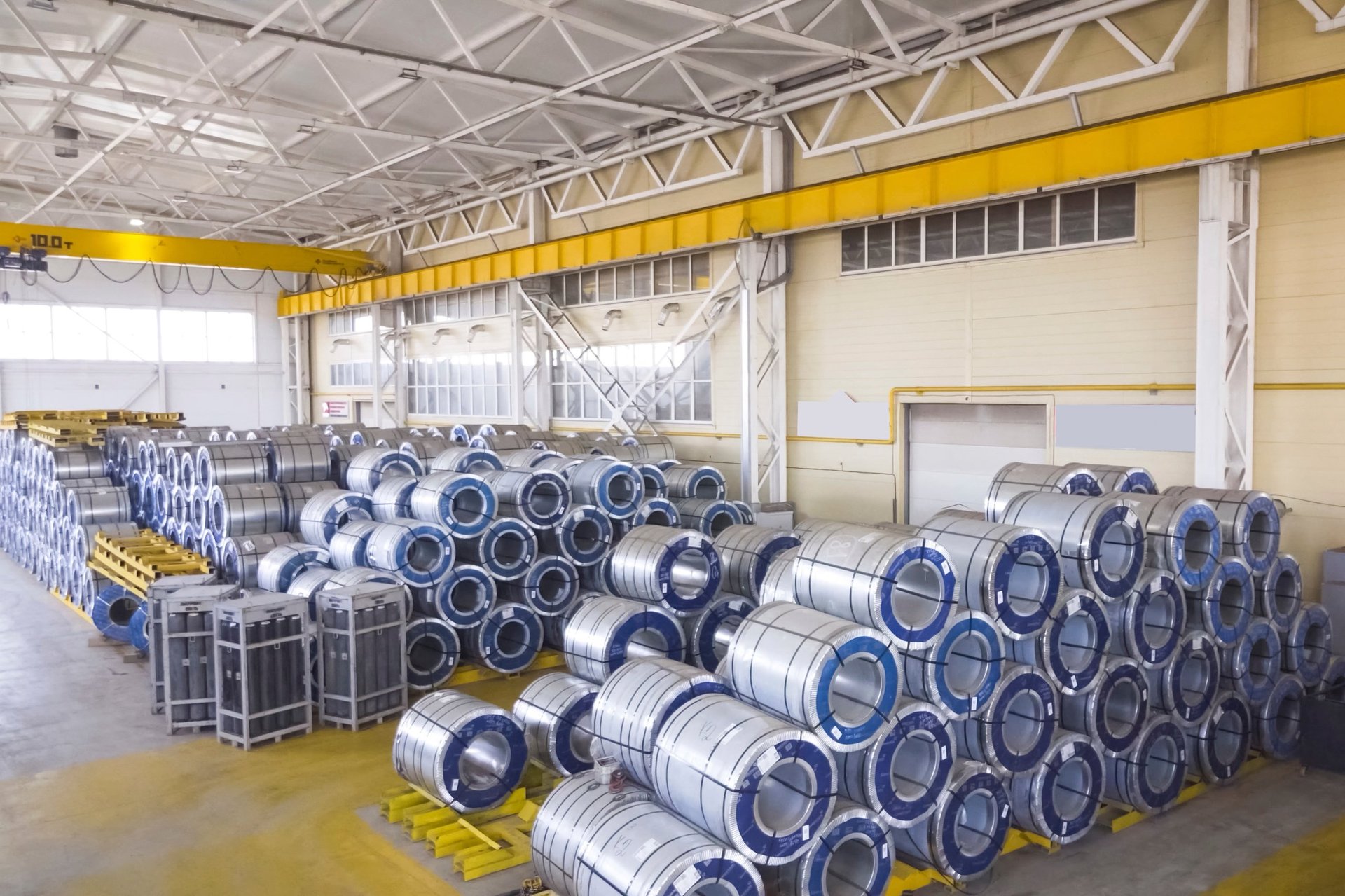
Three cases where the material answer was not the real question
"We need a corrosion-resistant coil" for a coastal installation
Read as a chemistry instruction this points at an alloy family. Read against the actual exposure — atmospheric coastal air, no immersion — it is more often a coating on an ordinary base, which is a different purchase entirely. The chemistry question was never really asked.
A forming-intensive part where the alloy was added too early
The formability requirement was real, but it was solved by specifying an alloy family rather than by selecting a suitable carbon chemistry and getting the delivery condition right. The addition changed how the material behaves in the press without addressing what the press was actually complaining about.
A certificate that arrived but did not evidence the order
The chemistry matched and the certificate was genuine, but the standard cited described a different product form from the coil supplied. The document was correct and useless at the same time — which is why the standard and the form have to be checked together.
GCC Supply
The chemistry means the same thing everywhere; the paperwork does not
A material family does not change with the destination port. What changes is the documentation pack, the discharge point and the planning the coil needs in transit — commercial questions, not metallurgical ones.

United Arab Emirates
Local and re-export enquiries, where the material documentation often has to travel with the coil through more than one jurisdiction.
Steel coil supply for United Arab Emirates
Saudi Arabia
Large project volumes where the material certificate package is reviewed before the coil is released, so the document set is planned early.
Steel coil supply for Saudi Arabia
Qatar
Project-driven demand where the material and the technical submittal are prepared together rather than in sequence.
Steel coil supply for Qatar
Oman
Port-led planning: confirm the discharge point, the document set and the Incoterm before the coil weights are fixed.
Steel coil supply for Oman
Bahrain
Shorter sea legs where the handling at both ends, rather than transit time, is usually the constraint to plan around.
Steel coil supply for Bahrain
Kuwait
Industrial and infrastructure demand, where the material route and the paperwork have to be agreed before the coil is rolled.
Steel coil supply for KuwaitThese pages set out the supply route and the enquiry handling for each destination. They do not claim local warehousing, stockholding, a branch presence or a delivery timescale — those are confirmed against your own order, not stated in advance.
Reference Notes
Which document actually defines your material
A boundary note, not a recommendation. It exists so that a chemistry and a product standard are not treated as the same kind of statement.
A chemical family describes composition
It says what the steel is made of and, at most, the broad band of properties that composition reaches. It does not describe a surface, a form or a delivery condition.
A product standard describes a product
A standard sets out the requirements for a defined product — its form, its dimensions, its condition and the material it may be made from. Two standards can describe different products made from the same chemistry.
A coating requirement is its own field
Where a metallic or painted coating is specified, it is recorded as a requirement on the surface, with whatever the project names as its class or system — alongside the base chemistry, not in place of it.
A delivery condition is its own field
How the coil is supplied is agreed and recorded separately from the chemistry, and it is what the fabricator works with in the plant.
Editions move
A designation copied from an older drawing may belong to an edition whose requirements have since changed. Check it against the edition the project names before it reaches an order.
What this page does not state
- No element range, composition limit, grade designation or mechanical value is quoted on this page. Those belong to the standard that defines them, read in the edition the project is bound to.
- No equivalence between a carbon, mild, alloy or stainless family. A similar-looking designation in another standard is a different designation.
- No guidance on whether a particular material is permitted in your structure or service. That is a design decision made by the design authority, not by a supplier's page.
Where a requirement has to be checked, check it with the publisher of the governing standard or the authority that issued your project specification — and record the edition you checked against.
FAQ
What the material answer does not settle
If the chemistry matches, is the material settled?
No. The chemistry is one field of the order. The delivery condition, the surface requirement and the standard the project names all sit alongside it, and any of the three can be wrong while the chemistry is perfectly correct.
Can a coated product be treated as a corrosion-resistant material?
Only in the sense that it meets the requirement — not in the sense that it is the same purchase. A coating protects an ordinary base by a barrier; an alloy family resists through its own composition. They behave differently wherever the protection is broken, such as a cut or welded edge.
My enquiry says corrosion resistant but the exposure is ordinary weather. Which is it?
That is a question for the project, and it usually resolves to a coating route on a carbon base rather than an alloy family. The selector above asks about the actual medium precisely because the phrase alone does not distinguish the two cases.
Does the alloy family guarantee better performance?
No. It is selected because a specific requirement calls for it. Where no such requirement exists, the addition buys nothing the service asks for and it changes how the material behaves in fabrication — so it is not a general upgrade.
Where do I find the mechanical properties?
On the family page the selector named, and from the standard the project is bound to. This hub deliberately stops before the values, because they are read from a governing document rather than from a chemistry name.
The certificate arrived but the customer rejected it. Why?
The most common cause is a mismatch of scope rather than of chemistry: the document cited describes a different product form, thickness range or delivery condition from the coil supplied. That is why the standard and the form are checked together on this page rather than separately.
Request a Quote
Send the chemical family and designation, the standard and edition, the delivery condition, the surface requirement, the nominal thickness and the destination — or send it with the family still open and say so. Price is always on request.
Office 3303, Churchill Executive Tower, Business Bay, Dubai, United Arab Emirates
Monday – Saturday: 8.00 AM – 6.00 PM · Sunday: Closed