
Steel Coil · Pickled & Oiled
Pickled & Oiled Coil — A Clean Surface, Not a Corrosion System
Pickling removes the mill scale; oiling keeps the clean surface from rusting before the part is made. Neither is corrosion protection in the sense a coating is, and treating the oil film as one is the most expensive misreading of this product.
Price on request · Surface state and oil requirement specified per order
Is This Your Route?
You need the scale gone, and you are not buying protection
This product exists for one reason: to hand the next process a clean, weldable, paintable face. If what you actually need is corrosion protection, you are shopping for a different product.
Hot-rolled strip arrives with a mill scale on its surface — an oxide layer formed during rolling. Under a heavy structural coating that scale is tolerable. Under a thin paint, an adhesive or a weld, it is not: it flakes, it interferes with the arc, and it prevents a finish from bonding to the steel underneath it. Pickling removes that layer chemically, and the coil is then supplied with an oil film applied to stop the freshly exposed surface from rusting in transit and storage.
The oil is the part shops misread. It is a temporary barrier, applied to protect the surface between the pickling line and your first operation. It is not a coating, it does not carry a corrosion class, and it is not specified by any standard the way a coated product's protection is. Indoor storage for a short period is one thing; an exposed structure for years is another entirely.
So the useful question is not "is pickled and oiled better?" — it is whether your next process wants a bare clean face, or whether it wants protection. Those two needs point at different products, and this page exists to separate them.
This page is not the right tool if…
- …what you need is corrosion protection. Oil is a transit barrier, not a coating. If the finished part is exposed, the route is a coated product — start from the coil type range and compare the coated families against your exposure.
- …you need a flat cut part, not a coil. The surface logic transfers but the purchasing unit does not — the steel sheet range is the right starting point, and the plate range covers heavier thicknesses.

What pickling and oiling actually do
- Pickling
- Removes the mill scale. Permanent.
- Oiling
- Slows rusting in transit. Temporary.
- Neither
- Provides a corrosion class or service life.
One decision is about the surface; the other is about the interval before you use it. Neither is a specification for the finished part.
Compatibility Check
Three conditions decide whether this surface suits your shop
This is a fitness check, not a calculator. It does not return a thickness, a grade or a price — it tells you whether pickled and oiled coil suits the process you are feeding, what the oil does and does not tolerate, and what the enquiry has to state.
Three fitness inputs
0 / 3 answeredAll three are required. The storage answer matters as much as the process — the oil's whole job is the interval between them.
The fitness result appears here
Set the three inputs and check the fit. The result gives a verdict, the conditions to settle, and what the enquiry has to state.
Surface Boundaries
Where this surface route stops and another begins
Four surface states get confused with each other on enquiries. Each does a different job, and none of them substitutes for another.
Pickled and oiled versus as-rolled
As-rolled hot-rolled coil keeps its mill scale. Pickling removes it. The difference only matters if something downstream cannot tolerate scale — a thin finish, an adhesive, a weld or a drawing operation.
Do not order the pickled route for a process that was happy with scale. You would be paying for a treatment the plant did not need.
Oil versus a metallic coating
Both sit on the surface and both slow corrosion, which is where the resemblance ends. A coating is a specified protection system with a class and a service expectation; the oil is a handling film applied to last until you use the coil.
Never substitute one for the other on an exposure argument. They are not the same purchase and they are not specified the same way.
Pickled versus cold-rolled
Both give a scale-free surface, and they get there differently. Cold rolling is a process route with its own thickness and tolerance characteristics; pickling is a surface treatment applied to a hot-rolled coil whose dimensions stay hot-rolled.
Choose on the dimensional and forming requirement first — the surface condition is a consequence of the route, not a substitute for choosing the right one.
Oil versus no oil at all
The same descaled coil can be supplied oiled or unoiled. The oil exists for the interval between the mill and your first operation; where that interval is short and the storage is dry, the film may be doing very little.
State the storage interval and condition. Whether oil is required is a question about your logistics, not about the steel.
Specifying It
How to put a surface state onto an order
A surface state is a field, not an adjective. These are the fields that carry it, and the evidence that travels with the coil.
| Order field | Why the surface route needs it |
|---|---|
| Surface condition required | Whether the coil is to be supplied descaled, and whether an oil film is required on it. This is a surface field, not a grade field. |
| Standard and edition | The product standard; the surface requirement sits inside it rather than replacing it. Confirm which edition the project is bound to. |
| Grade and mechanical requirement | The grade the project specifies, recorded separately from the surface treatment. Descaling does not change the grade. |
| Nominal thickness and width | Properties of the coil as supplied, and they remain those of the hot-rolled product. The treatment does not re-specify them. |
| Edge condition | Mill edge or trimmed, and whether the edge state matters to the next process. Scale removal and edge condition are separate requirements. |
| Oil requirement and storage interval | Whether a film is needed at all, and how long the coil will be held before use. This is the field buyers most often leave to assumption. |
Which of these your order must carry, and any tolerance that applies, is set by the standard and edition your project names — not by this page.
Verification and documents
A descaling treatment is verified at the mill, not at your goods-in. What the certificate evidences depends on the standard the coil was produced to, and the surface is one of the requirements inside it.
- The standard and edition the certificate is issued against, read against the ones the project specifies
- Whether the surface requirement is evidenced on the same document as the grade, or separately
- Whether the oil application is recorded as a handling condition rather than as a protection class
- Marking and traceability of the coil as delivered, where the standard requires it
Confirm with the publisher of the governing standard what surface requirements your project's document imposes. This page does not state those requirements.

Three shops, three different answers
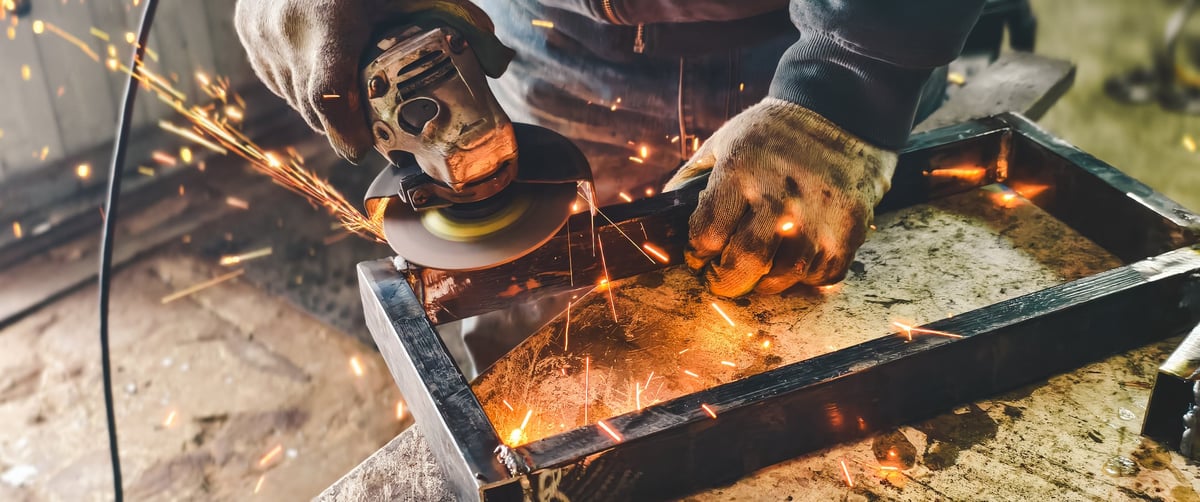
A fabrication shop welding unpainted frames
The scale had to go because it interferes with the arc and with the finished weld appearance. The oil was tolerated by the procedure and removed only where the assembly was later painted — which is why the shop states the welding process on the enquiry rather than assuming the surface is acceptable.
A workshop coating parts after forming
The descaled surface was the reason for choosing the route — the finish would not have bonded to scale. The oil was a preparation step removed before coating, not a contribution to the finish, and the enquiry named who performs that cleaning.
A trader holding coil for resale
No immediate process, a long indoor hold. This is where the oil's limits matter most: it is doing real work over the interval, but the hold length and storage condition had to be stated so the requirement could be matched to it rather than assumed.
Applications
Where a descaled surface is what the shop was asking for
These are the environments where the mill scale has to go before the first operation — and where the oil film is a handling detail rather than a specification.
Appliances
Parts where a finish has to bond to a clean surface, and where scale would show through the coating or mark the forming tooling.
Coil for AppliancesHVAC
Ducting and equipment where the surface condition affects both the forming operation and the finish applied afterwards.
Coil for HVACPre-engineered buildings
Profiled sections where the feedstock surface has to suit the roll forming and the subsequent coating step.
Coil for Pre-engineered buildingsThe commercial decision that goes with the surface decision
Pickling and oiling is an extra processing step between rolling and despatch, so it is priced as one. That changes the shape of the enquiry rather than the size of a number: the commercial desk needs the volume, the width and thickness range, and the delivery point before anything can be quoted, because the treatment is charged across the order and not per item. Price is always on request, and it is confirmed against the specification you send.
- The treatment is an extra processing step, so it is quoted against the order rather than as a fixed adder.
- Volume, thickness range and width matter to the enquiry because they determine how the coil is run.
- The delivery point determines what can be protected in transit and what the coil will look like on arrival.
- Any price, availability or delivery figure is confirmed on quotation — nothing on this page is a commercial commitment.
What this page does not quote
No price, no lead time, no stock position and no minimum quantity is stated here. Those are confirmed against your specific enquiry — the surface route determines what the coil costs to produce, not the number on a page.
Steel coil rangeGCC Supply
A descaled surface travels worse than a protected one
The commercial reality of this product is that the bare surface is more sensitive in transit and storage than a coated one, so the shipment plan and the storage at destination matter more, not less.

United Arab Emirates
Local and re-export enquiries, where short delivery distances suit this surface route well but the receiving storage still has to be dry.
Steel coil supply for United Arab Emirates
Saudi Arabia
Large project volumes where the transit interval and the receiving storage are planned together, because the bare surface is less forgiving than a coated one.
Steel coil supply for Saudi Arabia
Qatar
Project-driven demand where the surface requirement and the technical submittal are prepared in step rather than in sequence.
Steel coil supply for Qatar
Oman
Port-led planning: the discharge point and the storage at destination matter more on a descaled surface than on a protected one.
Steel coil supply for Oman
Bahrain
Shorter sea legs, where the handling and the covered storage at both ends are usually the constraint rather than transit time.
Steel coil supply for Bahrain
Kuwait
Industrial and infrastructure demand, where the surface requirement and the storage plan have to be agreed before the coil is run.
Steel coil supply for KuwaitThese pages set out the supply route and the enquiry handling for each destination. They do not claim local warehousing, stockholding, a branch presence or a delivery timescale — those are confirmed against your own order, not stated in advance.
Reference Notes
What this surface treatment is, and what it is not
A boundary note, not a recommendation. It exists so the oil film is never read as a protection system.
Pickling is a descaling treatment
It removes the oxide layer formed during hot rolling, chemically, so the steel underneath is exposed clean. It changes the surface, not the grade or the dimensions.
Oiling is a handling film
The oil slows rusting between pickling and first use. It is applied for an interval, and its value falls away once that interval ends.
Neither is a corrosion protection class
Coated products carry a specified protection system with a class and an expectation. This route does not, and it is not specified as though it did.
The surface requirement sits inside the standard
The descaled condition is a requirement of the product standard the coil is produced to, not a separate specification layered on top of it.
The surface route does not change the grade
A grade is a mechanical and chemical designation. Descaling the surface leaves it untouched, which is why grade and surface are two fields on the enquiry.
What this page does not state
- No tolerance, mechanical value, coating mass or corrosion class is quoted on this page. Those belong to the standard that defines them, read in the edition the project is bound to.
- No storage life for the oil film is stated. That depends on the film as applied, the storage condition and the handling, and it is agreed per enquiry.
- No price, lead time, stock position or minimum quantity. Those are confirmed against the specific order.
Where a requirement has to be checked, check it with the publisher of the governing standard or the authority that issued your project specification — and record the edition you checked against.
Related surface routes
FAQ
What the surface state still does not settle
Is the oil a substitute for a coating if the part is used outdoors?
No. The oil is a transit film applied for the interval between pickling and first use. It does not carry a corrosion class or a service expectation, and an exposed part needs a coating route rather than this surface treatment.
Will the oil interfere with painting?
Paint bonds to the descaled steel, not to the oil. The film is removed as part of the surface preparation the paint system specifies — so the useful question is not whether the oil is a problem, but who performs the cleaning and to what standard.
Can it be welded without removing the oil first?
That depends on the welding procedure. Removing the scale is what the welding operation benefits from; the oil film is a separate question the procedure answers. State the process on the enquiry and let the requirement be matched to it.
How long can the coil be stored before it rusts?
That is not stated as a fixed period, because it depends on the film as applied, the storage condition and the handling. What matters on the enquiry is the storage interval and whether it is under cover — those are what the requirement is matched against.
Is pickled and oiled the same as cold-rolled?
No. Both give a scale-free surface, but cold rolling is a process route that sets its own thickness and tolerance characteristics, while pickling treats a hot-rolled coil whose dimensions stay hot-rolled. Choose on the dimensional requirement first.
Does the surface treatment change the grade?
No. A grade is a mechanical and chemical designation and descaling leaves it untouched. That is why the grade and the surface condition are recorded as separate fields on the order.
Request a Quote
Send the standard and edition, the grade, the nominal thickness and width, the surface state you require, the coil mass, the storage interval and the destination — or send it with the fitness questions still open and say so. Price is always on request.
Office 3303, Churchill Executive Tower, Business Bay, Dubai, United Arab Emirates
Monday – Saturday: 8.00 AM – 6.00 PM · Sunday: Closed