
Steel Rebar — 32 mm Nominal
The Diameter Where Connection And Logistics Both Become Design
At 32 mm you have reached the diameter where a reinforcement package stops being something a supplier delivers and starts being something a project has to engineer — twice. Once as a structural decision, because the connection method is now a design input rather than a detail. And once as a logistics decision, because a bundle of this bar is a planned lifting operation and a single 12 m length is not something two people move by hand. Everything that follows on this page is about those two facts: which connection method your design has actually specified, whether the coherent lengths you can be supplied will suit the splice positions on the drawing, and what has to be documented so the consignment can be accepted. Nothing here assumes a handling limit, a bend diameter or a stock availability — those are yours to establish, and this page is built to ask you for them rather than invent them.
The two decisions that govern this order
- The connection method the design has specified — it decides the cut lengths.
- The handling route to the work face — it decides whether those lengths are deliverable.
- Neither is assumed here: no handling limit, bend diameter or stock position is claimed.
Mass basis checked as of
The Heavy End Of The Range
Where a diameter stops being a size and starts being a method
Bar sizes are chosen by the designer long before an enquiry is written, but the role the diameter plays is what tells a project engineer where the risk actually sits. At 32 mm two things change at once: the connection has to be designed rather than assumed, and the handling has to be planned rather than improvised. The cards below are grouped by the situation you are in, and each states what the size does not settle as well as what it does.
32 mm nominal
This sizeReach for it when
Where the schedule calls the heaviest main bars for piles, retaining walls and heavy load paths, and the connection method and the logistics are both project decisions rather than supply details.
What it does not settle
The size fixes geometry and the nominal mass. It says nothing about grade, standard, connection acceptability or whether the bar is adequate for the member.
25 mm nominal
Smaller adjacent sizeReach for it when
Where the schedule steps down and the enquiry spans both — common where a pile or wall carries a different bar size over part of its length.
What it does not settle
Not a substitute for 32 mm. A different diameter changes the area, the mass basis and every connection, lap and anchorage provision referenced to it.
Open this routeNominal mass by diameter
Mass basisReach for it when
When the lifting plan needs nominal mass per metre for the sizes actually on the schedule, on a basis you can state rather than assume.
What it does not settle
A mass reference, not a specification. It supplies no handling capacity, no lifting limit and no availability statement.
Open this routeRebar sizes index
Size rangeReach for it when
When the enquiry spans several diameters and the question is how the heavy end of the range relates rather than what one size requires.
What it does not settle
An index, not a specification. The properties of any size come from the governing standard and the grade your project selected.
Open this route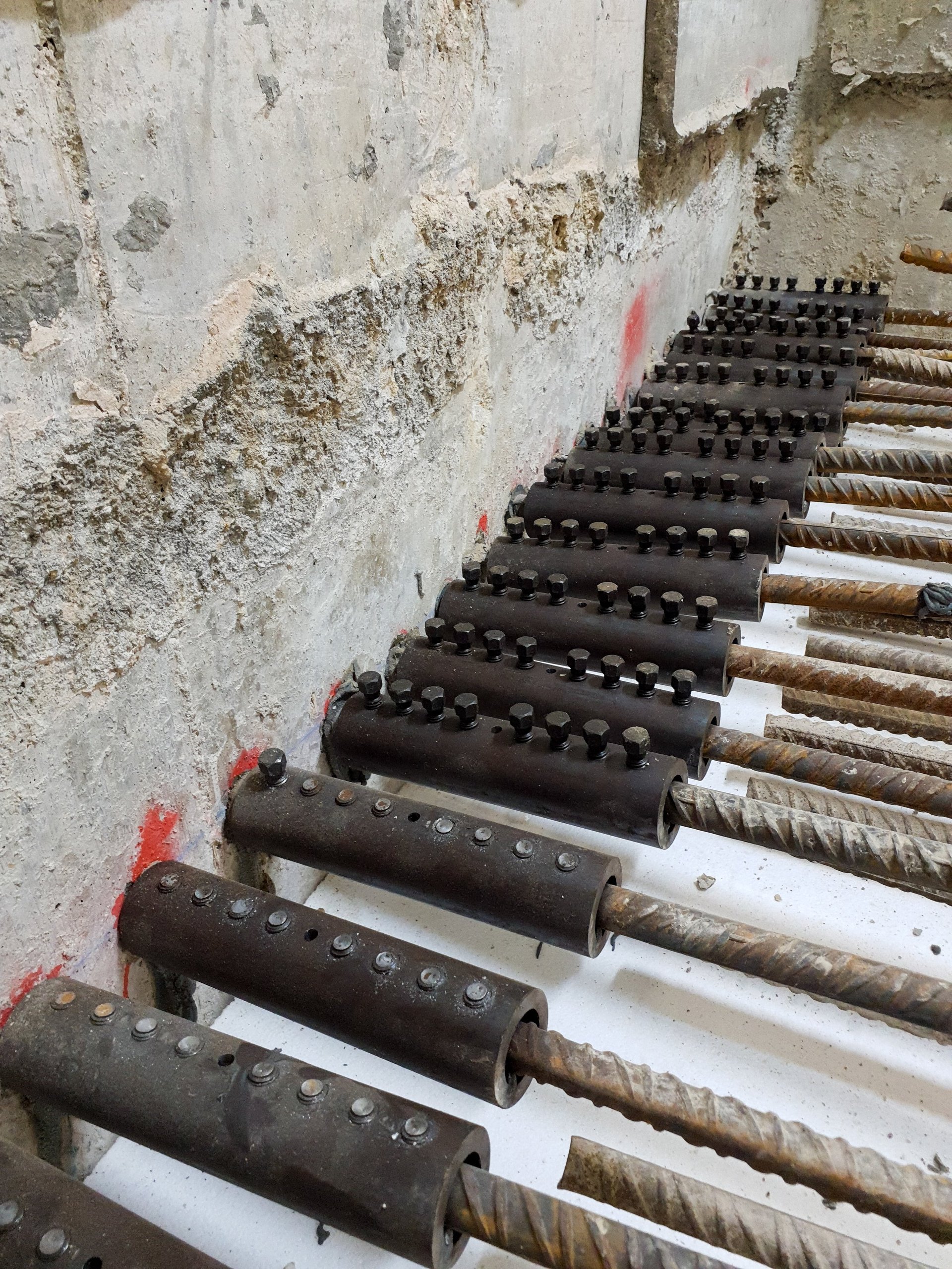
The connection is a design input
A lapped, coupled or welded bar is a different order from the same drawing. At this weight the method cannot be left to the fabricator's preference.
The lift is a planned operation
A bundle of this bar needs plant and a method. A single length is a real load, and the length is usually the harder constraint than the mass.
Availability is never assumed
Whether a mill can supply the lengths and quantities you need is a quotation question. No page can answer it, and none should imply an answer.
The planning rule
Close the design question before the supply question. The connection method determines what lengths are ordered; the handling route determines whether those lengths can be delivered; and the supply form determines what has to be documented. Where a schedule steps from 32 mm down to 25 mm, that is a design decision with its own connection and handling consequences rather than a procurement swap — the lighter bar does not inherit the heavier bar's plan, and it does not inherit its connection either.
32 mm Handling & Connection Planner
Close the two decisions that make this package orderable
Record the connection method the design has specified, what form the bar is delivered in, and how it reaches the work face. The planner reports whether the package is orderable, names any capability still sitting with the site, and derives a nominal mass figure your lifting plan can cite. It will not nominate a connection method, assert a handling limit, state a bend diameter or claim any stock position.
Connection, delivery & route
Required fields marked *Recorded as your project specifies it. This page nominates no method and no lap length.
What arrives decides what the receiving check actually is.
The length usually constrains access more than the mass does.
Quantities (optional — needed for the mass figure)
The mass formula, printed
area = π × (32 ÷ 2)² = 804 mm² → area in m² = 804 ÷ 1,000,000
nominal mass per metre = area (m²) × 7,850 kg/m³ = 6.313 kg/m
estimated mass = nominal mass per metre × cut length × piece count
Density basis: 7,850 kg/m³ (standard steel density convention). The area is geometry from the nominal diameter, stated so you can verify it. The per-piece weight follows from the same basis and is intended for your lifting plan — not as a capacity and not as a stock statement.
Documents to request with this consignment
This planner asserts no handling limit, lifting capacity, sling arrangement or bundle configuration, and supplies no connection method, lap length, bend or mandrel diameter. It makes no statement about stock or availability.
Planner status
Start with the connection method and the handling route
These are the two questions that make a 32 mm package a project problem rather than a supply problem, and both are frequently left unstated on an enquiry — which leaves a supplier to assume somebody else's design and somebody else's site. Select both and the planner will report what is settled, what is an assumption, and what the order still needs.
Basis of this figure
Nominal mass basis: cross-sectional area from the nominal 32 mm diameter (area = π × (d/2)²), multiplied by cut length and piece count, at 7,850 kg/m³ (standard steel density convention). Theoretical and nominal — not a weighbridge result, not a handling capacity, and not a stock statement.
Still to settle
- The connection method and type, recorded as the design has specified it.
- Confirmation that the cut lengths suit the connection — lapped bars and coupled bars are cut differently.
- The site's own lifting plan for the bundles and lengths being ordered.
- Whether the delivery form requires fabrication evidence from a third party.
- How the consignment is accepted, and against which documents.
Boundaries of this planner
- This planner asserts no universal handling limit, no lifting capacity, no sling arrangement and no bundle configuration. Every one of those depends on your site's own method and equipment, and none of them can be stated from a bar diameter.
- It supplies no bend diameter, no mandrel size, no lap length and no anchorage length. Those follow from the specified document, the grade, the concrete and the detailing provisions — and at this diameter they also depend on the connection method.
- It makes no statement about what is in stock, what is available, or what any mill supplies. Availability is a quotation matter and is never claimed here.
- The mass returned is theoretical and nominal. The commercial weighed mass and the permitted tolerance on the actual bar are separate records.
- It does not assess whether a proposed connection is qualified for the member, whether a coupler type is acceptable to the design, or whether the bar is structurally adequate.
Nothing is transmitted from this panel. Once the connection, the delivery form and the handling route are recorded, send the summary to the commercial department so the offer is built on a fixed basis.
Connection Methods & Who Owns Them
One drawing, three different orders — and only the design can choose
At 32 mm the connection stops being a fabrication preference and becomes a design input with commercial consequences. The table sets out what each method changes, what it depends on, and who has to make the call. No connection method, lap length, bend diameter or anchorage value is nominated here, because none of them follows from a bar size.
| Connection approach | What it changes in your order | What it depends on | Who decides |
|---|---|---|---|
| Lapped splice | Bars are cut long enough to develop the lap, and laps usually have to be staggered — so lengths and counts both move. | The grade, the concrete, the cover, the bar's position in the member and the detailing provisions adopted. | The design authority, from its detailing code. |
| Mechanical coupler | Bars are cut shorter than a lap requires and the ends are prepared to suit the coupler — a fabrication capability, not just a cutting one. | The coupler type and its qualification, the thread or swage preparation, and whether the specifying authority accepts it. | The design authority, with the coupler supplier's documentation. |
| Welded splice | Ends are prepared for welding and the joint carries its own acceptance route, separate from the bar's material evidence. | A qualified welding procedure, the bar's weldability as specified, and the fabricator's qualification. | The design authority and the fabricator, jointly. |
| Prefabricated unit | The connection is made off site, so the order becomes a fabrication package rather than a bar supply. | The fabricator's capability, the transport envelope, and the dimensional tolerance the assembly has to hold. | Procurement, with the fabricator and the design's approval. |
| Method not indicated | Nothing can be ordered defensibly, because the cut lengths have no basis. | A design deliverable that has not yet been produced. | Nobody has decided — which is the point. |
Rows describe what each approach changes, not how to design one. Confirm the connection, the lap or anchorage provision and the acceptable coupler type against the printed standard and your project's own design before ordering. No such value is published on this page.
Why it cannot be deferred
At this diameter a late connection decision replaces steel rather than revising it
On light bar a connection change usually costs a re-cut and an apology. At 32 mm the same change has already propagated through the order: into the cut lengths that were priced, into the bundle weights that went into a lifting plan, and often into a lead time the programme is now relying on. Bar that arrives cut for a lapped splice cannot be shortened into a coupled one without losing the thread preparation the coupler needs — and the replacement arrives on a site that is already waiting for it.
That is the whole reason this page treats an unindicated connection as a blocker rather than a note. A supplier can always guess; the problem is that a guess standing in for a design input is a decision nobody owns, and the party who pays for it is whichever one is holding the bar when it turns out to be wrong.
Lengths, Stock Form & Documentation
What has to be settled before a heavy consignment can be accepted
A 32 mm delivery is decided in the hour after it is offloaded, and the records that decide it were written weeks earlier. The table separates the commercial records from the site-side checks, states who holds each, and names the action that keeps the enquiry, the delivery and the acceptance on one basis. Nothing here asserts a stock position or a lead time.
| Record or check | What it actually establishes | Who holds it | Enquiry action |
|---|---|---|---|
| Cut lengths and schedule revision | That the bars were cut against the design's connection arrangement at a named revision, not a superseded one. | The approved bar bending schedule | State the revision and the connection on the enquiry. |
| Nominal mass per piece | A figure derived from nominal area and a stated density — the input a lifting plan needs. | The formula printed on this page | Cite the basis in the lifting plan rather than a remembered figure. |
| Commercial weighed mass | The mass the consignment is bought and invoiced on, by an agreed weighing method. | The commercial agreement | State the weighing basis and tolerance in the quotation. |
| Permitted dimensional tolerance | How far the actual bar may deviate from nominal dimension and mass. | The printed standard, in the edition your project cites | Read it before the receiving check, not after a query. |
| Mill test certificate for the heat | The material in the heat it was tested from, in the terms the ordered standard requires. | The delivering mill | Name the standard and edition it is read against. |
| Coupler or connection documentation | That the connection product is the specified type and carries its own qualification evidence. | The coupler supplier, via the fabricator | Request where a mechanical connection is specified. |
| Fabrication records | That cutting, bending or prefabrication was performed to a specified procedure. | The fabricator | Request where the supply form includes fabrication. |
| The site lifting plan | That the bundle and piece weights can be handled on this site, by this route, to this level. | The site manager | Raise it with the supplier; the site still owns the plan. |
| Dimensional verification at goods-in | What physically arrived, against the permitted deviation on the actual bar. | Your project's receiving inspection | Agree the basis before delivery, not after offloading. |
Nominal is not weighed
A figure derived from a density and a weighbridge result are different bases. The nominal one sizes a lift; the weighed one settles an invoice.
The plan is the site's
No supplier can state your lifting capacity, your access route or your method. A supplier can say what is packed and how — the lift remains yours.
Availability is a quote matter
What a mill can supply, in which lengths, against which date, changes constantly. It belongs in the quotation and nowhere else.
Rebar weight chart
Check the nominal mass basis your lifting plan was built on, and keep it consistent with the standard and edition your order names.
Open technical referenceRebar weight calculator
Run the mass figures across a schedule spanning several diameters, using an input basis you supply rather than one this page assumes.
Open technical reference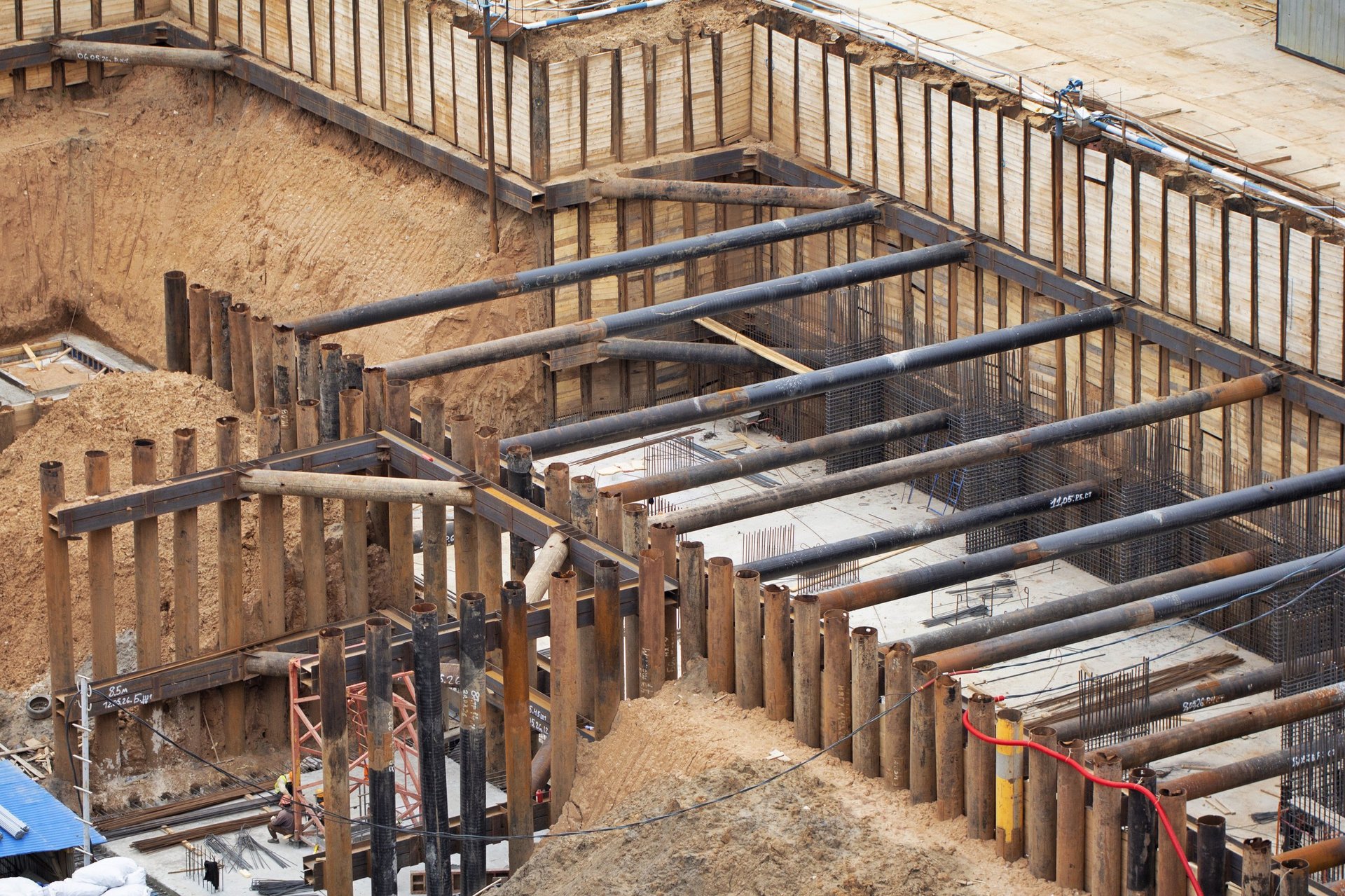
Where The Diameter Works
Three settings where the connection and the lift decide the order
These are the application settings where 32 mm is most often specified and where the planner above carries the most weight — not because the steel behaves differently, but because at this weight the connection and handling decisions change what should be ordered rather than merely how it is installed.
Rebar for foundations
Why the planning check matters here
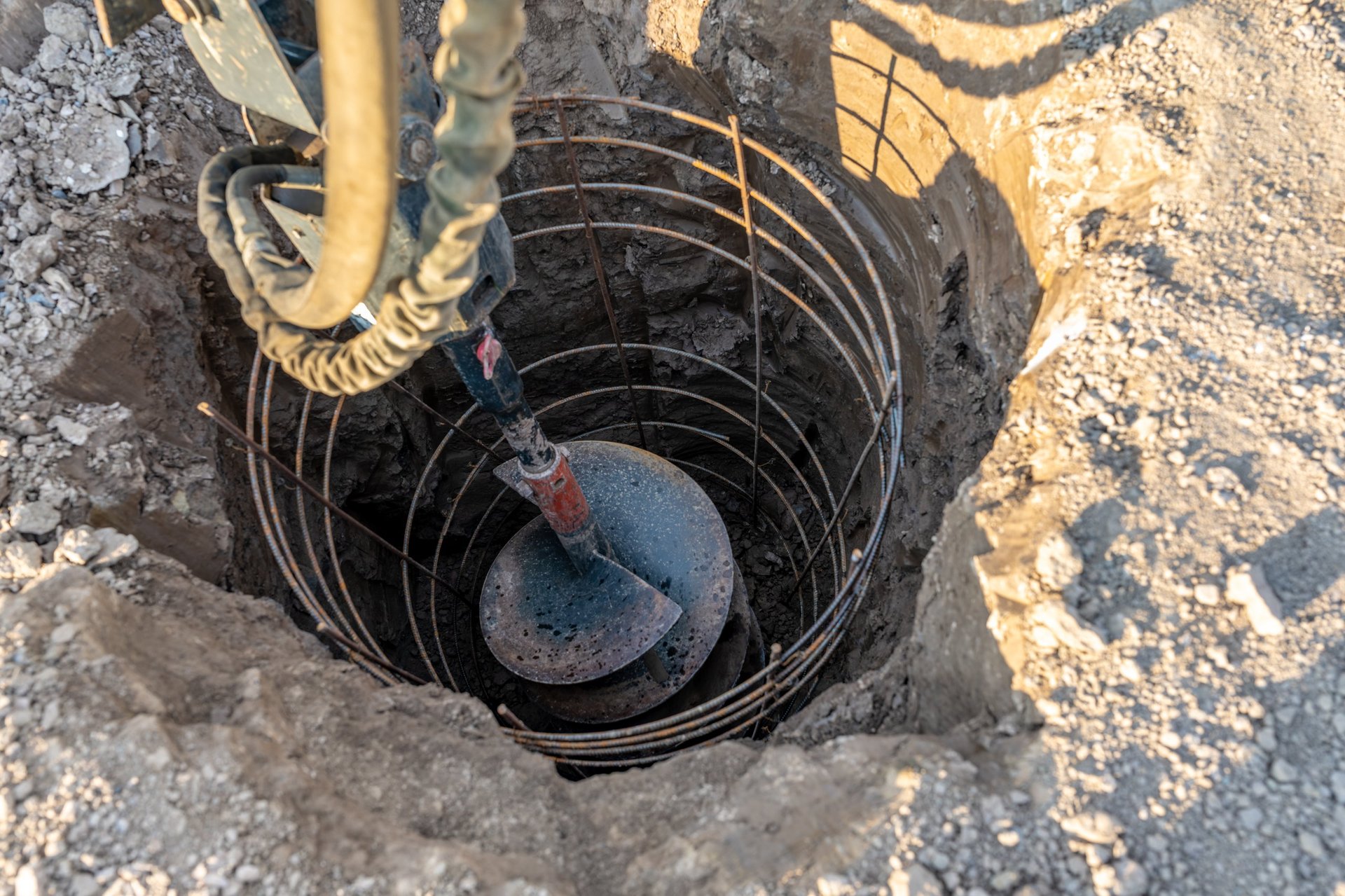
Piled and raft foundations are the setting where 32 mm bar does most of its work, in deep cages that are assembled at or near ground level — which makes the connection method and the lift of a finished cage practical questions.
Fit limit
Ground conditions, cover requirements and the foundation's design provisions come from your project's design authority, not from the bar size.
Open applicationRebar for high-rise buildings
Why the planning check matters here
Heavy columns and transfer structures are where a coupled connection earns its place, because a lapped splice at this diameter consumes length and congestion that a high-rise core does not have.
Fit limit
The structural system, the construction sequence and the design's connection arrangement come from the project and are confirmed against it.
Open applicationBridge rebar
Why the planning check matters here
Piers and heavy abutments combine the largest main bars with strict line-and-level control, and they frequently layer project-specific connection and detailing provisions over the standard your schedule cites.
Fit limit
The bridge's governing design code, fatigue requirements and exposure class are assessed against the project, not inferred from the bar size.
Open applicationApplication fit is confirmed against the standard and edition your project cites, the grade and delivery condition specified, and the project's own design rules when the enquiry is quoted. No generic or unsupported suitability claims are made on this page.
GCC Markets & Destination Planning
Fix the destination and delivery basis before the heavy bars are committed
For each GCC destination the specification, document set and commercial terms are aligned to your project basis at quotation. Because a 32 mm package is a fabrication and logistics scope as much as a material supply, aligning the delivery basis across sources is what makes the offers comparable rather than merely similar on price.

United Arab Emirates
Import documentation and certificate review.
Add the delivery location, importer and customs inputs, Incoterm and required document set before the 32 mm enquiry is issued.

Saudi Arabia
Large project packages and cross-border documentation.
Confirm destination, importer inputs, Incoterm and documents so a heavy-bar quantity is quoted on one consistent basis.

Qatar
Technical submittal readiness for infrastructure.
State the submittal and certificate package the project requires for the standard and edition your schedule names.

Kuwait
Contractor and fabricator hand-off.
Provide delivery location, Incoterm, documents and required date so the heavy-bar order can be planned against the programme.

Bahrain
Contractor procurement and industrial supply.
Provide destination, importer and customs inputs, Incoterm and documents before the 32 mm quotation is prepared.

Oman
Port-oriented project supply planning.
Confirm the destination, required documents and Incoterm so the quotation basis is fixed for the size and standard cited.
Destination, documents, port or delivery line, Incoterm and the required delivery date are fixed at quotation from your specification. No served markets, local stock, local branches or delivery times are claimed in advance.
Verifiable Outcomes
Each concern mapped to the check on this page, then to what you can rely on
No superiority claims. Each row names a specific risk on a heavy-bar package, the mechanism on this page that addresses it, and the practical outcome that follows.
| Buyer concern | Check on this page | Outcome you can rely on |
|---|---|---|
| A connection method assumed from the diameter | The connection is a required input, and an unindicated method blocks the planner rather than passing it. | The design owns the connection decision instead of the enquiry defaulting to one. |
| Lengths ordered before handling is assessed | The handling route is a required input, and an unassessed route returns a blocked result. | The order is tested against lift and access before the steel is committed. |
| A handling weight nobody can trace | The planner prints its formula, density and nominal area, and derives the per-piece weight beside the total. | A figure the lifting plan can cite and anyone can reproduce. |
| Cut lengths that do not suit the connection | Coupled and lapped connections each return their own caution about cutting and end preparation. | The lengths are reconciled with the connection before order. |
| A heavy quantity quietly rounded | A piece count or cut length that is not a positive number blocks the figure instead of being adjusted. | No mass is emitted that the schedule never supported. |
| Evidence holders left unassigned | Prefabricated routes return a specific prompt that the dimensional and connection evidence moves to the fabricator. | The receiving check is designed for what actually arrives. |
From enquiry to accepted delivery
- 1
Fix the connection method with the design
Establish whether the bars lap, couple or weld, because the method decides the cut lengths, the end preparation and the evidence — before any length is ordered.
- Owner:
- Design authority
- Input:
- Structural drawings, connection detail
- Output:
- Connection method on record
- Risk:
- A method assumed from the diameter
Next: Reconcile lengths with the connection
- 2
Reconcile the cut lengths with the connection
Check that the scheduled lengths carry the lap allowance, or suit the coupler, or suit the weld preparation — a length that ignores the connection is a length that will not fit.
- Owner:
- Detailer + project engineer
- Input:
- Approved bar bending schedule
- Output:
- Lengths that suit the connection
- Risk:
- Lengths cut for the wrong connection
Next: Test the lengths against handling
- 3
Test the lengths against handling
Run the bundle and piece weights and the plank lengths against the site's lifting plan and the route to the work face, not against a general rule of thumb.
- Owner:
- Site manager + logistics
- Input:
- Lift capacity, access route, nominal mass
- Output:
- Deliverable lengths and route confirmed
- Risk:
- A length the route cannot take
Next: Fix the supply form
- 4
Fix the supply form
Scheduled straight lengths, stock lengths cut on site, cut-and-bent, or a prefabricated unit — each changes the receiving check and who holds the evidence.
- Owner:
- Project engineer + procurement
- Input:
- Fabrication capability, programme
- Output:
- Supply form fixed
- Risk:
- The receiving check designed for the wrong delivery
Next: Agree the acceptance route
- 5
Agree the acceptance route
Decide who receives the consignment, against which documents, and how the weighed mass and permitted tolerances are established before anything is offloaded.
- Owner:
- QA + logistics
- Input:
- Inspection plan, certificate requirement
- Output:
- Acceptance route assigned
- Risk:
- A dispute after the steel has landed
Next: Issue the qualified RFQ
Technical reference note
The one figure this page will produce, and the four it refuses
A source-backed note on the nominal mass basis, stated with its formula, its density and its limits.
Geometry and a density — and nothing beyond them
A nominal round bar's cross-sectional area follows from its nominal diameter by geometry alone: area = π × (d/2)². At a nominal 32 mm that gives approximately 804 mm². Multiply that area, converted to square metres, by the standard steel density convention of 7,850 kg/m³ and you reach approximately 6.313 kg per metre. The derivation is reproducible on a calculator, which is what makes the per-piece weight usable — a lifting plan can cite a figure it can trace, rather than a number of unknown origin.
What the figure is not is any of the things a heavy-bar package most needs. It is not a handling capacity, a lifting limit or a sling arrangement — those belong to your site's equipment and method. It is not a bend or mandrel diameter, which comes from the specified document and the delivery condition. It is not a lap or anchorage length, which is a design provision. And it is not a statement of what is in stock, which is a quotation matter that changes by the day. Four refusals, deliberately, because a page that invented any of them would be substituting a plausible-looking number for a decision somebody actually owns.
Primary authority
The nominal-diameter geometry and the steel density convention of 7,850 kg/m³ are stated so the derivation can be reproduced. Connection provisions, lap and anchorage lengths, bend and mandrel requirements, and the permitted tolerances on dimension and mass are set by the standard your project cites and by its edition. Lifting, access and handling arrangements are set by your site's own plan and the carrier — consult the printed standard and your own plan rather than a nominal figure.
Mass basis checked · confirm connection, tolerance and handling provisions against the printed standard and your site plan before ordering
What this note does and does not cover
Covers: the nominal area of a round 32 mm bar from its nominal diameter, the density convention applied to it, and the resulting nominal mass per metre — with the derivation printed so it can be reproduced and used as a nominal input to a lifting plan.
Does not cover: connection methods and coupler acceptability, lap and anchorage lengths, bend and mandrel diameters, permitted tolerances, handling limits and lifting capacities, stock or availability, or the structural adequacy of the bar.
Limit: a nominal mass supports planning and comparison. It is not a handling capacity, not acceptance evidence, not a weighbridge result, and not a stock statement.
Practical consequence: close the connection with the design, reconcile the cut lengths against it, test those lengths against the site's own lifting plan, fix the supply form deliberately, and agree the acceptance route before the consignment is offloaded.
FAQ
What a project engineer asks about 32 mm bar
Written for the connection, handling and documentation decisions that have to be settled before a heavy-bar package is ordered.
What is the nominal mass of 32 mm rebar per metre?
A nominal 32 mm round bar has a nominal cross-sectional area of about 804 mm², and at the standard steel density convention of 7,850 kg/m³ that gives a nominal mass of approximately 6.313 kg/m. At this diameter the figure is not trivia — it is what a lifting plan is built from, and a single 12 m length is a genuine piece of plant work rather than a manual lift. That is why the planner above reports the per-piece weight alongside the total. It remains theoretical and nominal: derived from geometry and a stated density, not a weighbridge result, and not a handling capacity.
Should 32 mm bars be lapped or mechanically coupled?
That is a design decision and this page will not make it for you. The choice between a lap and a coupler depends on the member, the congestion, the cover available, the grade, the design's connection detail and whether a coupler type is acceptable to the specifying authority. What can be said is the consequence: a lapped bar is cut long and staggered, a coupled bar is cut shorter with prepared ends, and a welded splice brings its own procedure. Those are different orders from the same drawing, which is why the planner treats an unindicated method as a blocker rather than a note.
Can you tell me whether 32 mm bar is in stock?
No, and no page can. Availability is a quotation matter that depends on the mill, the quantity, the required date and the commercial basis — and a page claiming a stock position would be inventing a fact that changes by the day. What this page does instead is help you state the requirement clearly enough that availability can be answered properly: the connection method, the lengths, the supply form and the delivery basis. Availability, origin, price and lead time are all confirmed at quotation.
Is there a standard handling limit for bar this heavy?
There is no universal limit this page could state, and any figure it invented would be meaningless to your site. What a bar can be lifted by depends on the equipment you have, the access route, the length being handled, the sling arrangement and the site's own lifting plan — all of which are yours and none of which follow from a diameter. What the steel can contribute is the nominal mass per piece at your cut length, which the planner derives so the plan has a real number behind it. The capacity, the method and the limit are decisions for your site to make.
Why does the connection method change the cut lengths?
Because the connection is where the length is consumed or saved. A lapped splice needs the bar cut long enough to develop the lap, and the laps usually have to be staggered, which changes lengths again. A mechanical coupler needs the bar cut shorter and the ends prepared to suit the coupler — which is a fabrication capability, not merely a cutting one. A welded splice changes the end preparation differently again. Ordering lengths before the connection is fixed means ordering against an assumption, and at this diameter a wrong assumption is expensive bar that has to be replaced rather than simply re-cut.
What has to be documented for a 32 mm consignment to be accepted?
At minimum, evidence identifying the consignment and the requirement it is declared against — a mill test certificate for the heat and the conformity document for the delivered lot, in the terms the standard your order names requires. Beyond that, what is needed depends on the supply form: cut-and-bent supply brings fabrication records, a prefabricated unit brings dimensional evidence for the assembly, and a coupled connection may bring its own product documentation that the design will want to see. The document set should be agreed with the enquiry, not assembled after the steel has arrived.
Qualified RFQ
Request a quote for 32 mm Rebar
Copy the planner summary you have built, then send it to the commercial department. The enquiry is ready for review once the connection method, the delivery form, the handling route and the destination are recorded.
Price, stock, origin and lead time remain quotation-dependent unless current verified evidence is present. The mass figure above is theoretical and nominal, and is not a handling capacity or a weighed commercial mass.
Office 3303, Churchill Executive Tower, Business Bay, Dubai, United Arab Emirates
Monday – Saturday: 8.00 AM – 6.00 PM · Sunday: Closed
Copyable planner summary
- Connection
- Not stated
- Delivery form
- Not stated
- Handling route
- Not stated
- Schedule revision
- Not stated
- Pieces
- To be confirmed
- Cut length
- To be confirmed
- Destination
- To be confirmed
Add any remaining open items — the acceptance route, the weighing basis, availability, price or lead time — as explicit fields before sending.