Steel Rebar · Standards

Steel Rebar Standards — Find the Document That Governs Your Enquiry

A rebar specification is only enforceable through the document behind it — a national standard, an international one, or a project document that cites either. The same bar can be compliant under one and not another, and the two are not equivalent merely because both describe reinforcement.

Price on request · Seven document families, each in its own jurisdiction

Document Router

Which document actually governs your enquiry?

Answer the four things a specification has to state, and this returns the document family your enquiry belongs to — together with the edition question and the conformity route. Where a required input is missing it holds, rather than guessing at the closest available standard.

Four inputs

Select only what your specification states. Anything left as not stated is treated as absent, and the router will say so rather than assuming a practice.

1Which practice does the specification follow?

This is what identifies the document family — not the product and not the grade.

2What is being ordered?

The product narrows which part or scope of a document applies.

3Does the specification give an edition year?

A number without an edition is not yet a fixed requirement.

4What conformity evidence will be required?

Different documents expect different evidence, and projects add to it.

0 of 4 stated

Governing document

Insufficient information — no governing practice stated

A rebar enquiry cannot be routed to a document without knowing which practice the specification follows, and it cannot be routed from the product alone, because several documents cover the same product. State the practice your project works in.

Before the enquiry

  • Quote the document by number and edition year on the enquiry, not by a remembered name.
  • State which property your project is relying on the document to fix.
  • Name the conformity evidence the project will accept the consignment on.

Nothing is transmitted from this tool. It routes your enquiry to a document family; the enquiry itself is submitted once, from the steel rebar quote form.

Standards Families

Grouped by who publishes them, not by the grades inside them

Each of these is a document with a publisher, a jurisdiction and a scope. They are listed here the way a specification cites them — by the document — because that is the thing your enquiry has to name.

ASTM A615 / A615M

United States — ASTM International

Covers deformed and plain carbon-steel bars for concrete reinforcement, and publishes the familiar two-digit yield grade designations used across much of the Gulf.

How a specification cites it
Cited by the standard letter and number with its edition year; the grade is named separately within it.
Conformity route
Mill test evidence against the standard's own requirements, on the edition cited.

Open the ASTM A615 / A615M route

ASTM A706 / A706M

United States — ASTM International

Covers low-alloy steel deformed bars for concrete reinforcement, where controlled chemistry is directed at weldability and ductility. It is a separate standard, not a tier of the carbon-steel one.

How a specification cites it
Cited in the same form as the carbon-steel standard; the distinction sits in the scope, not in the number.
Conformity route
Chemistry evidence is central here, because the controlled chemistry is the reason the document exists.
Open the ASTM A706 / A706M route

BS 4449

United Kingdom — BSI

A British standard for steel bars for the reinforcement of concrete, naming grades by target yield strength in MPa with a ductility class attached to each.

How a specification cites it
Cited by its number and year; the grade and its ductility class are part of the specification, not optional descriptors.
Conformity route
Conformity is demonstrated against the standard's own grade and ductility class provisions.
Open the BS 4449 route

EN 10080

Europe — CEN

A European framework standard for steel for the reinforcement of concrete. It structures how reinforcing steel is specified rather than standing alone as a product specification.

How a specification cites it
Often cited alongside national provisions and amendments, which sit with it rather than instead of it.
Conformity route
Confirm which national provision or amendment applies on top of the framework before treating the specification as complete.
Open the EN 10080 route

DIN 488

Germany — DIN

A German standard series for reinforcing steel, organised across parts that address the different bar products and their requirements.

How a specification cites it
Cited by the standard number together with the specific part that applies to the product being ordered.
Conformity route
Confirm the part that governs your product, because the series addresses more than one reinforcing product.
Open the DIN 488 route

ISO 6935-2

International — ISO

An international standard addressing steel for the reinforcement of concrete, with this part covering ribbed bars specifically.

How a specification cites it
Cited with the part number, because the series addresses different reinforcing products across its parts.
Conformity route
Conformity is demonstrated against the part that applies to the ribbed product being supplied.
Open the ISO 6935-2 route

JIS G3112

Japan — JSA

A Japanese standard for deformed steel bars for concrete reinforcement, with its own grade naming convention and its own declaration format on the certificate.

How a specification cites it
Cited by its number and year; the grades are written in a convention that does not map onto the two-digit shorthand.
Conformity route
Certificate declarations follow this standard's own format, which differs from the other systems here.
Open the JIS G3112 route

Scope vs Grade Name

A grade name is not a document, and a document is not a grade

The most persistent error in a rebar standards enquiry is treating the two as the same thing. A document has a scope that says what it covers; a grade is one designation inside that scope. Neither substitutes for the other.

How a standards document and a grade designation differ in what they establish
AspectThe documentThe grade
What it establishesWhat the standard covers, which products and forms come within it, and what requirements apply across all of them.One designation within that coverage, carrying the specific property values attached to it.
What identifies itThe publisher, the number, and the edition year.The designation, read inside the document that publishes it.
Can it stand aloneYes as a citation, but it leaves the grade open until a designation is named.No. The same designation published by a different document carries that document's requirements instead.
What it cannot tell youWhich designation your project actually requires.Whether the document as a whole applies to the product you are ordering.

What this page will not do

It will not declare two documents officially equivalent, and it will not convert one document's grade into another's. Where a supplied document is not the one your specification cites, that is a substitution — and a substitution is a decision for the design authority, not something a supplier or a reference page can settle.

Steel mill operative holding inspection records beside steel products awaiting despatch

The record evidences conformity to a named document — not to a grade name alone.

Reading an enquiry correctly

An enquiry that names only a document leaves the grade open. An enquiry that names only a grade leaves the document open. Both are incomplete, and both will come back with a question before they come back with a price.

Complete citation

Document, edition, the specific part where the document has parts, and the grade named within it.

Where a project document sits

Above both. It names a document underneath it and may add to it or restrict it, so it has to be read with that document, not instead of it.

Blocking Gaps

Three gaps that stop a document being confirmed

Each of these leaves a requirement short of being enforceable. None can be closed by the supplier, and none is settled by naming a document that sounds close enough.

Steel reinforcement marked and stacked awaiting verification against a cited specification
A mark records what the mill declared; only the citation says what it had to meet.

Gap 1

The edition year is absent

A document is published at an edition, and requirements inside it can move between editions while the number stays the same. A citation without an edition is a document waiting for a version — and two editions can carry different values for the same designation.

What has to be supplied

  • The document number and the edition year the project intends
  • Whether a national foreword, annex or amendment applies on top of it
  • The specific part, where the document addresses more than one product

Material that satisfies one edition being assessed against another, which surfaces at inspection rather than at order.

Gap 2

The governing document and the grade are conflated

Naming a grade does not name a document, and naming a document does not name a grade. Where an enquiry supplies one and assumes the other, the requirement is not yet complete enough to quote against without a further exchange.

What has to be supplied

  • The document your specification cites, with its edition
  • The designation named within that document
  • Confirmation that the designation belongs to that document and not another

Material quoted against a document nobody cited, which looks correct until the two are read together.

Gap 3

The conformity evidence route is unspecified

Documents differ in what they expect by way of evidence, and a project can add its own requirements above that. Where the evidence route is not stated, the consignment may conform and still not be accepted, because acceptance depends on the record as much as on the steel.

What has to be supplied

  • The evidence the project will accept the consignment on
  • Whether third-party or project inspection applies beyond the mill's own record
  • Whether release depends on that inspection or runs in parallel with delivery

A compliant consignment held at receipt because the record supplied does not match the route the project assumed.

Conformity Evidence

How a document is evidenced — and how to check the record

Each of these records answers a different question about conformity. Supplying the wrong one is the quietest way for material that meets the document to be held at receipt anyway.

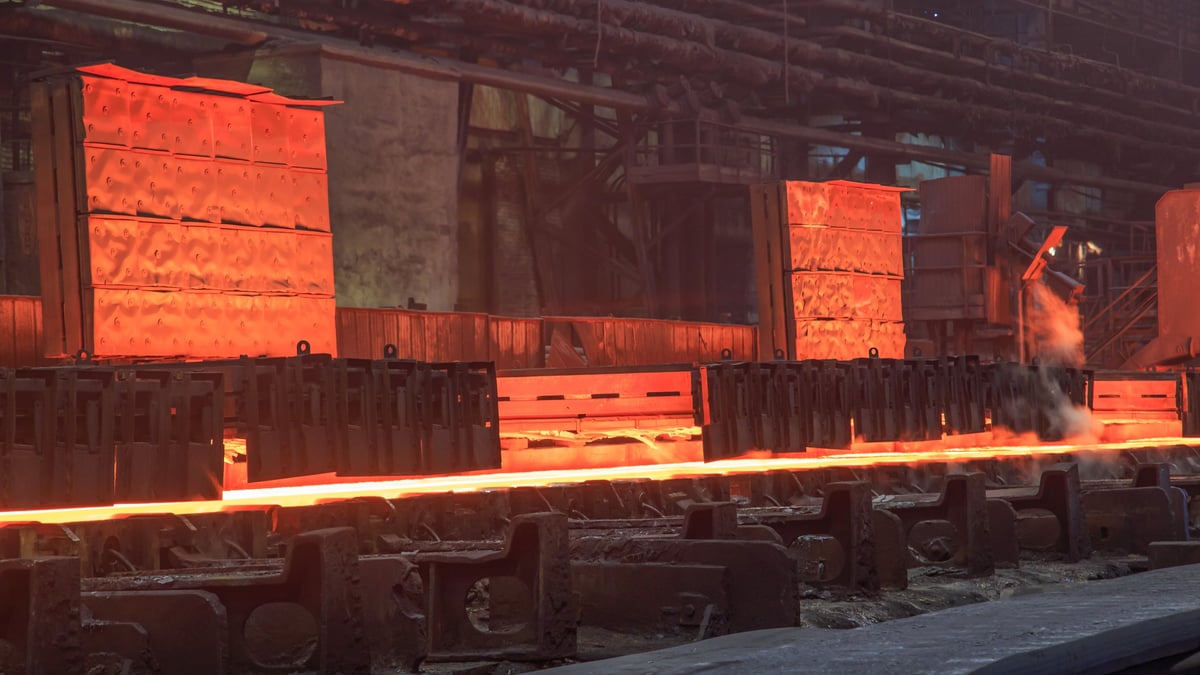
Steel production line where mill testing and conformity records originate
The mill record originates here; whether it evidences your document depends on the citation in it.

Mill test certificate

The results the mill obtained on the heat or lot, declared against the requirements of the document being cited.

Check it by: Read the certificate against the document and edition your specification names. A certificate against a different document evidences that document, not yours.

Chemistry declaration

Elemental analysis for the heat, including equivalent values where the document requires them to be reported.

Check it by: Where the document's requirements include a chemistry condition, this is the record that addresses it. A mechanical certificate alone does not.

Declaration of conformity

A manufacturer's statement that the material conforms to the document cited, issued under the manufacturer's own responsibility.

Check it by: Check which document the declaration names. A declaration is only as useful as the citation in it, and a vague one cannot be checked against anything.

Third-party or project inspection

Independent verification arranged by or on behalf of the project, above the manufacturer's own record.

Check it by: This is a project requirement layered over the document rather than produced by it, and it is arranged with the inspection body rather than evidenced by the mill.

Which of these applies is set by the document your specification cites and by any project requirement layered over it — not by this page. Treat the list as a prompt for what to specify rather than a standing pack attached to every order.

GCC Supply

Continue the same document decision for your market

Which document governs does not change by country, but the practice a specification follows and the conformity route it expects do. Each market page continues this decision rather than restarting it.

These pages describe supply routes and enquiry handling for each market. They do not claim local warehousing, stockholding or delivery timescales — those are confirmed against your specific order.

Reference Notes

What each document covers, and where its reach ends

These notes exist to make one boundary clear: a document has a scope, and a scope ends somewhere. Beyond it, a different document applies — and this page will not bridge the two on your behalf.

ASTM A615 / A615M and A706 / A706M

Separate US standard specifications, both addressing bars for concrete reinforcement. One covers carbon steel; the other covers low-alloy steel with controlled chemistry for weldability and ductility.

They are separate documents, not tiers of each other, and they publish similarly numbered grade designations that are not equivalent. Read the scope before reading the grade.

BS 4449 and EN 10080

A British standard for steel bars for the reinforcement of concrete, and a European framework standard that structures how reinforcing steel is specified rather than standing as a product specification alone.

Confirm which national provision or amendment applies alongside the framework, and read any ductility class as part of the designation rather than a descriptor.

ISO 6935-2 and JIS G3112

An international standard whose parts address different reinforcing products, and a Japanese standard for deformed bars with its own grade convention and certificate format.

For the international document, cite the part that covers your product. For the Japanese one, read the grades against the edition the mill declares rather than against another system's equivalent-looking label.

DIN 488

A German standard series for reinforcing steel, organised across parts that address the different reinforcing products and their requirements.

The series addresses more than one product, so cite the part that governs yours. The number alone does not identify the requirements that apply.

Where the grade inside a document is set out

A grade is one designation inside a document. Where your specification has already settled the designations, the grades route explains how each one is written and what it carries.

Where the substrate underneath the document is set out

Where controlled chemistry rather than a strength grade is what your project is relying on, the material route explains what that substrate commits you to.

Low-alloy steel rebar family

FAQ

Document questions that a standard number cannot answer

Are two standards for rebar officially equivalent to each other?

This page does not declare any two documents equivalent, because equivalence is a determination made by the bodies that publish them or by the project that cites them — not by a supplier or a reference page. A document has a scope, and a grade is a designation inside it. Where your specification cites one document and a supplier offers material to another, treat that as a substitution and escalate it.

What is the difference between naming a standard and naming a grade?

A standard is the document: it has a publisher, a scope and an edition, and it says what products it covers. A grade is one designation inside that document, carrying specific property values. Naming one does not name the other, and an enquiry that supplies only one of them is incomplete.

Does the latest edition always apply?

Not automatically. The edition that applies is the one your specification or project cites, and a specification can legitimately work to a superseded edition. This is why the edition year is asked for rather than assumed — a document number without an edition is not yet a fixed requirement.

Where does a project or employer document fit?

Above the published standard. It will normally name a standard underneath it and then add to, restrict or replace parts of it. That means the project document alone does not describe your requirement, and neither does the standard alone — both references have to travel with the enquiry.

What must an enquiry state to get a firm answer?

The governing document with its edition, the specific part where the document has parts, the designation named within it, the product and size, and the conformity evidence route. A document quoted without its edition is the single most common reason a rebar enquiry has to go back for clarification.

How is pricing handled for rebar?

Price on request. Quotations are prepared against a stated requirement — document, edition, designation, product, size, quantity and destination — rather than against a standard number alone.

Request a Quote

State the governing document and its edition, the part where it has parts, the designation named within it, and the conformity evidence route. Price is always on request.

sales@noordeirasteel.ae +971 56 398 0860 WhatsApp Us

Office 3303, Churchill Executive Tower, Business Bay, Dubai, United Arab Emirates

Monday – Saturday: 8.00 AM – 6.00 PM · Sunday: Closed

WhatsApp

Price on request · Mill Test Certificates supplied with each consignment · Delivery planned per order