Steel Rebar · Product Types

Steel Rebar Types, Matched to the Question You Are Actually Asking

Not every rebar purchasing question is a type question. Bar form, coating system, material grade, nominal size and exposure class are separate decisions with separate evidence — and only one of them is usually holding your enquiry at the moment.

Price on request · Seven bar families, each with its own acceptance evidence

Route Triage

Start with the question, not the bar family

Most rebar enquiries stall because two different questions are being answered at once. Answer the prompts that apply and this tool returns the single most specific next step — plus any second route that would have to be resolved before a quotation can be defended.

Your purchasing constraints

Answer only the prompts that apply. Skipped questions register as “not stated” and the tool will say so rather than assume an answer.

1Are you specifying a coated bar (galvanized or epoxy) on a member that is designed to yield in an earthquake?

Some seismic detailing practice restricts coated bar on members that must sustain plastic hinging, because the coating can affect bond and ductility assumptions. If your design authority has stated such a restriction, the answer governs the family before anything else.

2Is the requirement a coating SYSTEM (epoxy) rather than a metallic coating?

Epoxy, galvanized and stainless are three different corrosion strategies with three different acceptance tests. They are not substitutes for each other and are not priced against each other.

3Is the bar required to be PLAIN ROUND rather than deformed?

Plain round bar is a different form within the same product family. It is normally specified for a particular detailing or fabrication reason — never as a substitute for deformed bar where bond is required.

4Which standard family governs the bar?

The standard decides the grade designations that exist, the rib geometry, and the test set. Selecting a grade from a different family is a common source of rejected consignments.

5Will the bars be welded on site?

Weldability is governed by the bar's chemistry and the project's welding procedure — not by the rib pattern. A deformed bar is not automatically a weldable bar.

6Are mechanical couplers or threaded ends in the detail?

A threaded bar is a fabrication requirement applied to a bar, not a material family. Prep services are a separate sourcing question — a threaded bar page is a typing or prep reference, not an approval to substitute one rebar family for another.

7Is the exposure environment severe enough to push you toward stainless?

Stainless is a material change with a different price basis and a different chemistry declaration. It is not a coating upgrade, and it is not interchangeable with a coated carbon bar.

8Is the bar FORM itself still undecided, with no other constraint?

Use this only when nothing above applies. If a coating, welding or coupler requirement exists, that requirement — not the form question — is what routes you.

9Is your open item the grade or the nominal size rather than the bar family?

Grade and size are the most common reasons an otherwise correct family query stalls. If your family is already fixed, you do not need this page's tree — you need the grade or size decision.

0 of 9 stated

Most specific route

Answer at least one prompt to see a route

There is insufficient information to select a destination. Rather than send you to a family page that may not match your specification, this tool holds until at least one purchasing constraint is stated.

Nothing is transmitted from this tool. It routes you to the most specific page; the enquiry itself is submitted once, from the steel rebar quote form.

Type Families

Seven families, grouped by the moment you choose them

These are not seven interchangeable options on a shelf. The form decision changes what the bar is; the protection decision changes how it survives; the fabrication requirement is applied on top of both.

Step 1 · Bar form

Decide the form first — it changes what the bar is

Bar form is the first fork, because it changes how the bar holds and what the drawing is allowed to assume. Everything else is layered on top of this choice.

Deformed Steel Bar

When to select it
Select it when the specification calls for a ribbed bar — the default reinforcing form, where bond between steel and concrete is carried by the rib pattern.
What it is not
Do not treat a rib pattern as proof of compliance with any particular standard. Deformed is a form; the grade and tier come from the governing standard.
Judged on this evidence
Governing standard and edition, grade designation, nominal size, and the bar marking that must match the Mill Test Certificate.

Open the Deformed Steel Bar page

Plain Round Rebar

When to select it
Select it when the detailing itself requires a smooth bar — typically where the force is transferred by a hook, anchor or fabricated bracket rather than by bond.
What it is not
It is not a substitute for a deformed bar where the design relies on bond. Using it that way changes the structural assumption, not just the surface.
Judged on this evidence
The detailing reference that requires a smooth bar, the holding detail, the nominal size, and the surface-condition acceptance criteria.
Open the Plain Round Rebar page

Step 2 · Protection system

Decide how the steel is protected — three different strategies

Epoxy, galvanized and stainless are three separate corrosion strategies with three separate acceptance tests. They are not upgrades of one another and are not priced against one another.

Epoxy Coated Rebar

When to select it
Select it when a fused-bonded epoxy coating system is specified for a defined exposure class, and the project accepts the coating as the corrosion barrier.
What it is not
It is not interchangeable with a metallic coating. Coating continuity and site handling damage are their own acceptance risk, not a formality.
Judged on this evidence
Coating thickness and holiday-detection test records, cathodic disbondment results, and the patch material and permitted damage limits for cut and bent ends.
Open the Epoxy Coated Rebar page

Galvanized Rebar

When to select it
Select it when a metallic zinc coating is specified and the fabrication sequence allows coating after bending, so the protective layer is not destroyed by the forming operation.
What it is not
It is not a coating that can be assumed to survive bending and cutting untouched. Where the sequence does not allow it, the requirement and the family change together.
Judged on this evidence
Coating mass per unit area, coating continuity and adherence results, and the agreed fabrication sequence relative to the galvanizing operation.
Open the Galvanized Rebar page

Stainless Steel Rebar

When to select it
Select it when the exposure or service-life requirement pushes the decision from a coated carbon bar to a different material, and the specification names the stainless grade.
What it is not
It is a material change with a different price basis. It is not a coating upgrade, and it is not interchangeable with a coated carbon bar.
Judged on this evidence
Stainless grade or UNS designation, declared chemistry, and the design's stated service life and exposure assumption that justify the material.
Open the Stainless Steel Rebar page

Step 3 · Fabrication requirement

Then layer on the fabrication requirement, if the detail has one

These two are applied to a bar you have already selected. They are task requirements, not material families — and they never make one rebar family a substitute for another.

Weldable Rebar

When to select it
Select it when bars will be welded on site or in the fabrication yard and the project has a qualified welding procedure that the bar chemistry must satisfy.
What it is not
A deformed bar is not automatically a weldable bar. Weldability is governed by chemistry and by the qualified procedure, not by the rib pattern.
Judged on this evidence
Chemistry and carbon-equivalent limits, the qualified welding procedure specification, and the engineer's acceptance of the welded detail.
Open the Weldable Rebar page

Threaded Rebar

When to select it
Select it when mechanical couplers or threaded ends are detailed and the bars need the thread form and preparation that the approved coupler system requires.
What it is not
It is a preparation requirement applied to a bar, not a distinct material family. It is not a licence to swap the underlying bar type.
Judged on this evidence
Approved coupler system, thread specification and gauging method, and the tensile test regime applied to the coupled assembly.
Open the Threaded Rebar page

Evidence Matrix

What every consignment carries, and what only some do

A single Mill Test Certificate does not answer every question. Some evidence applies to any rebar purchase regardless of family; the rest is specific to the family you chose and has to be asked for explicitly.

Common to every rebar family

These are the items that should appear on the certificate for any rebar consignment, whichever of the seven families it belongs to.

  • Governing standard and the edition year that applies to the consignment
  • Grade designation exactly as written in the specification
  • Nominal size and the unit mass per metre the certificate declares
  • Heat number traceability from certificate to bundle marking
  • Bend and re-bend results as required by the governing standard

Specific to each family

The extra evidence that only applies once a family is fixed. If it is not requested in the enquiry, it is usually not supplied with the consignment.

Additional acceptance evidence required for each steel rebar family
FamilyAdditional evidence
Deformed barRib pattern geometry and bar marking matching the declared grade
Plain round barSurface condition and the holding detail that the design relies on
Epoxy coatedCoating thickness, holiday detection and cathodic disbondment records
GalvanizedCoating mass per unit area plus continuity and adherence results
StainlessGrade or UNS designation with declared chemistry
WeldableCarbon equivalent limits and a qualified welding procedure
ThreadedThread gauging records and coupled-assembly tensile results

Which certificate, class or test regime applies is set by your governing standard and its edition — not by this page. Confirm the edition before the enquiry is placed.

Before You Choose

Three requirements that override the family decision

These are the items that most often send an otherwise correct rebar enquiry back for rework. Each one changes which family is acceptable — none of them is a detail you can settle after the order is placed.

Bundles of bent steel reinforcement bars grouped by shape in a fabrication yard
Reinforcement detailing on site governs which bar families a member may use.

Override 1

A ductility-critical member can rule a coating out

Some seismic detailing practice restricts coated reinforcement on members that are designed to yield, because the coating can change the bond and ductility assumptions the design was checked against. When the design authority has stated that restriction, it decides the family before cost or availability is discussed at all.

What the receiving page needs

  • The design authority's ductility or bond note
  • The detailing clause it cites, with clause number
  • Whether the restriction is edition-specific

Where it goes wrong

Treating the coating as an aesthetic or durability upgrade and pricing it against a plain deformed bar, then discovering the member is excluded from coated reinforcement after the order is placed.

See the deformed bar family
Welder joining steel with a torch, sparks visible, wearing protective gear in a workshop
Fabrication requirements are applied on top of a bar family, not instead of one.

Override 2

Site welding is a separate compatibility decision

Weldability is governed by the bar's chemistry and by the project's qualified welding procedure — not by the profile of the bar. A ribbed bar and a weldable bar are not the same claim, and a mill certificate that satisfies one standard does not automatically satisfy a welding procedure.

What the receiving page needs

  • Carbon equivalent and chemistry limits the procedure assumes
  • The qualified welding procedure specification
  • The engineer's acceptance of the welded detail

Where it goes wrong

Specifying a general deformed bar and only raising weldability once fabrication has started, which forces a chemistry review mid-programme.

See the weldable rebar family
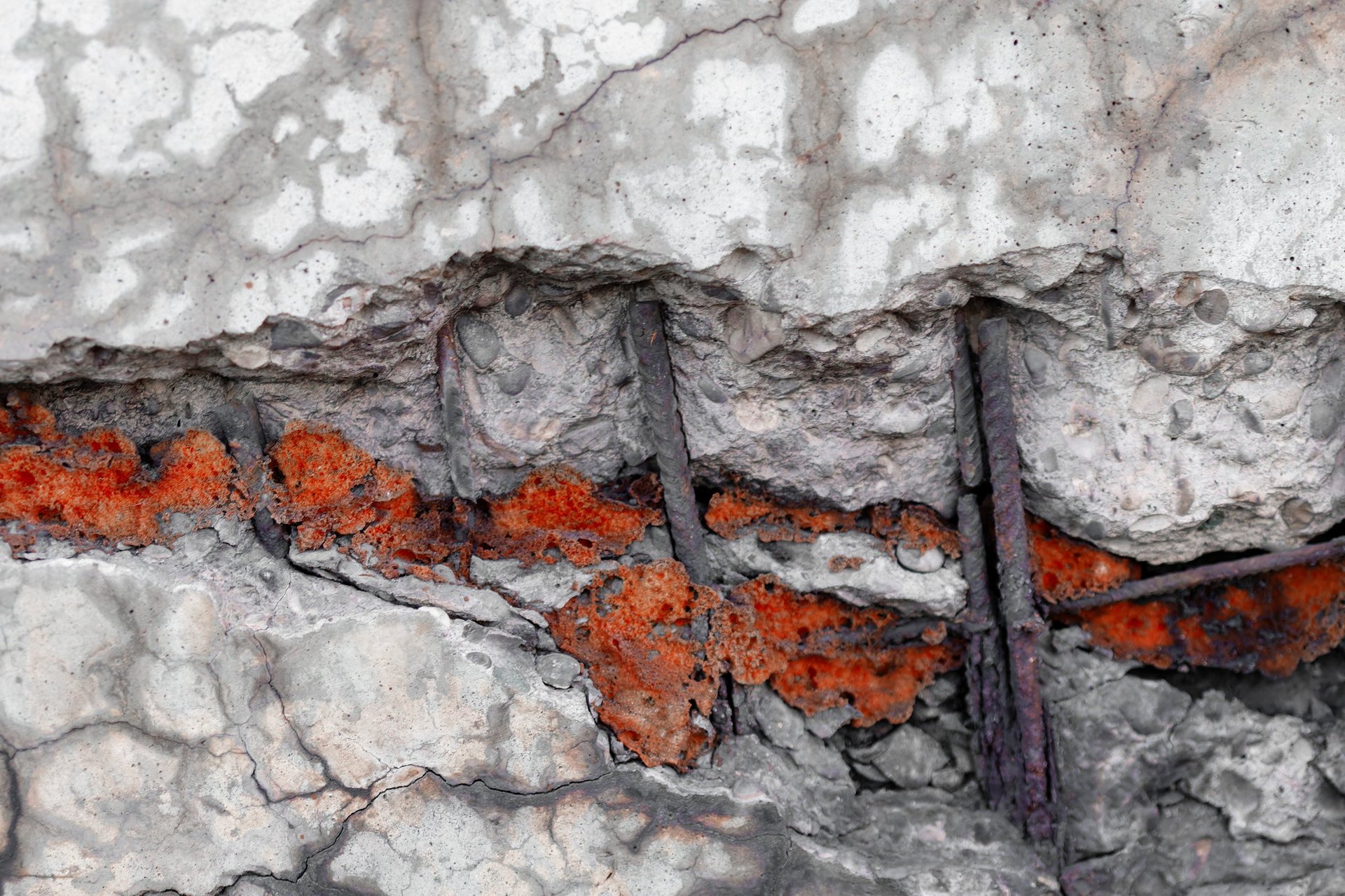
Deteriorated concrete edge exposing corroded reinforcement bars in a marine environment
Severe exposure is where the decision moves from a coating to a material.

Override 3

Exposure and service life move the decision between materials

Chloride, marine and other severe exposures are usually the point at which a project stops choosing a coating and starts choosing a different material. Stainless is a chemistry decision with its own price basis; a coating is a barrier applied to carbon steel. The two are not alternatives at the same decision point.

What the receiving page needs

  • Exposure class and the durability specification that sets it
  • The service life the design is checked against
  • The stainless grade or UNS designation, where specified

Where it goes wrong

Substituting one protection strategy for another without the design authority's agreement, because both were described as corrosion protection.

See the stainless steel rebar family

Compare & Hand Off

Two pages sit beside this one, not above it

The steel rebar range page is the parent; a single child cannot stand in for it, and this page cannot stand in for the parent. Use each for what it is actually for.

This page — Product Types

Use it to separate a purchasing question into one of the seven families, and to see the acceptance evidence each family is judged on.

Answers

  • Which family does my requirement actually name?
  • What evidence does that family require?
  • Which requirement overrides the family choice?

Range page — Steel Rebar

The parent page. Use it for the range as a whole, for the commercial route and for the enquiry form that every type page hands off to.

Answers

  • What does the full rebar range cover?
  • How is a rebar enquiry submitted?
  • What is the commercial route for export?
Open the steel rebar range page

Where the seven families connect to one another

A family page is written for its own specification. Where a neighbouring family is genuinely relevant, the link is offered as a comparison — never as a replacement for the family you named.

Hand-off checklist

What to carry into the enquiry

Whichever family you route to, the same unknowns determine whether a quotation can be issued without a second round of questions.

  • Which of the seven families your specification names, in its own wording
  • The governing standard with its edition year, not just the standard number
  • The grade designation exactly as written, including any suffix
  • Nominal size, bar schedule and the delivery form (mill lengths or cut and bent)
  • The test or inspection evidence your project will require with the consignment
  • Quantity basis and destination, so the commercial route can be scoped

Still open

If the governing standard edition, the grade designation or the nominal size is not yet fixed, say so in the enquiry instead of leaving the field blank. An enquiry that names its own open items is answered faster than one that looks complete but is not.

Request a Quote

Price on request. The steel rebar enquiry form is where every type page hands off.

GCC Supply

Route the same decision for your market

The family question does not change by country, but the documentation pack and the commercial route do. Each market page continues this decision rather than restarting it.

These pages describe supply routes and enquiry handling for each market. They do not claim local warehousing, stockholding or delivery timescales — those are confirmed against your specific order.

Reference Notes

What these standards cover, and where they stop

These notes exist for one purpose: to make clear that grade designations and ductility classes belong to the standard that defines them. They are a boundary note, not a recommendation.

ASTM A615 / A615M

A US standard specification covering deformed and plain carbon-steel bars for concrete reinforcement. Grade designations under it are defined within that standard — they are not carried across to another standard's grades.

The grade designation fixes the minimum properties the bar is tested against. A grade number stated without its standard and edition is not a complete specification.

BS 4449

A British standard for steel bars for the reinforcement of concrete, with its own ductility classes. The class is part of the specification, not an optional extra.

A ductility class designation travels with the standard it belongs to. It does not transfer as a general description of bar quality.

EN 10080

A European framework standard for steel for the reinforcement of concrete. It structures how bars are specified; individual national provisions and amendments sit alongside it.

Confirm which national provision applies to your project. The framework alone does not fix the grade properties a consignment will be tested against.

JIS G3112

A Japanese standard for deformed steel bars for concrete reinforcement, with its own grade and dimensional framework and its own declaration format on the certificate.

Grade and size designations follow JIS conventions. Read them against the JIS edition the mill declares, not against another standard's equivalent-looking label.

Standard numbers are reproduced here only to distinguish scope between families. Always confirm the current edition and any national amendment that applies to your project before the specification is issued for procurement.

FAQ

Questions this page does not answer on its own

Can I substitute one rebar type for another if my supplier is out of stock?

No — and this page is deliberately built so that it cannot be read as permission to do so. Rebar families differ in form, coating system or material chemistry, and each carries its own acceptance evidence. A substitution changes the specification. It is a design authority decision, not a procurement one.

Is a deformed bar automatically a weldable bar?

No. Deformed describes the bar's surface profile; weldability is governed by the bar's chemistry and by the project's qualified welding procedure specification. A bar can be a perfectly correct deformed bar and still not satisfy the welding procedure your fabricator intends to use.

Is epoxy coating the same as galvanizing?

No. Epoxy is a fused-bonded coating system judged on coating thickness, holiday detection and disbondment. Galvanizing is a metallic zinc coating judged on coating mass and continuity, and it is normally applied after bending. They are separate families with separate tests, and neither stands in for the other.

Which standard should my specification name?

The one your project is actually designed and submitted against. This page lists several standards only to explain that their grade designations and ductility classes do not transfer between them. It does not recommend one over another, and it cannot — that is set by your employer's requirement and your design authority.

How is pricing handled for rebar types?

Price on request. Quotations are prepared against a stated specification — family, standard and edition, grade, nominal size, quantity and destination — rather than against a family name alone. Sending those details with the enquiry is what allows a firm response.

What if I do not yet know which family applies?

State that in the enquiry rather than guessing at a family. An enquiry that names its own open items is answered faster than one that appears complete but is not, because the commercial team can see exactly which decision is still outstanding.

Request a Quote

Send the family, standard and edition, grade, nominal size, quantity and destination — or send it with your open items named. Price is always on request.

sales@noordeirasteel.ae +971 56 398 0860 WhatsApp Us

Office 3303, Churchill Executive Tower, Business Bay, Dubai, United Arab Emirates

Monday – Saturday: 8.00 AM – 6.00 PM · Sunday: Closed

WhatsApp

Price on request · Mill Test Certificates supplied with each consignment · Delivery planned per order