
Steel Rebar · Plain Round
Plain Round Rebar — A Bounded Duty, Not a Substitute Bar
A smooth bar transfers force differently from a ribbed one. That is the whole question: not whether plain round is available, but whether the detail you are building is one where a smooth surface is permitted — and what the drawing has to say about how the force gets in and out of it.
Price on request · Bond and anchorage consequences stated, never assumed
Fit Decision
The question is never “do you stock it” — it is “is it permitted here”
Plain round bar is a legitimate product with real uses. It is also the bar most often substituted in by mistake, because it is available, cheaper to draw, and looks like reinforcement. This page exists to keep those two facts apart.
What plain round bar does not do
A smooth bar does not develop the mechanical bond a deformed bar develops against concrete. It is a different surface, and the design's assumption about how force transfers is tied to that surface. Substituting a plain round bar where the drawing specifies deformed reinforcement changes a structural assumption — it is not a like-for-like swap, and no supplier can authorise it.
If your drawing specifies deformed bar, the answer to “can we use plain round instead” belongs to the design authority. Send the query there, not to procurement.
Where a smooth bar is the specified form
These are the conditions under which plain round bar is normally written into a detail rather than substituted into one. In each case a document — not a preference — is what makes it the correct form.
A fabricated fixing or bracket, not a bond
Where a smooth bar is used as a pin, a dowel, a hanger or part of a fabricated assembly, the force is carried by the fixing and the surrounding detail rather than by adhesion along the bar.
What the drawing has to show: The connection detail, the member the bar engages, and the restraint that stops it pulling out. A note saying “plain round permitted” without the detail does not establish the duty.
A hook or anchor where anchorage is explicit
Where the design deliberately uses a hook, bend or mechanical anchor to develop the force, the smooth surface is no longer the load path. The anchorage is the load path.
What the drawing has to show: The hook or anchor geometry, its dimensional call-out, and the design reference that sized it. This is a designed arrangement, not a default.
A non-structural or temporary purpose
Spacers, tie bars for formwork alignment, temporary works and similar duties where the bar is not contributing to the permanent reinforcement.
What the drawing has to show: A clear statement that the bar is non-structural, so nobody downstream reads it as permanent reinforcement. Ambiguity here is how a temporary bar ends up cast into a permanent element.
A product or standard that itself specifies a smooth bar
Some proprietary systems and some national provisions call for a plain bar of a defined form for a defined purpose.
What the drawing has to show: The system or provision that requires it, by name and edition, so the requirement can be verified rather than taken on description.
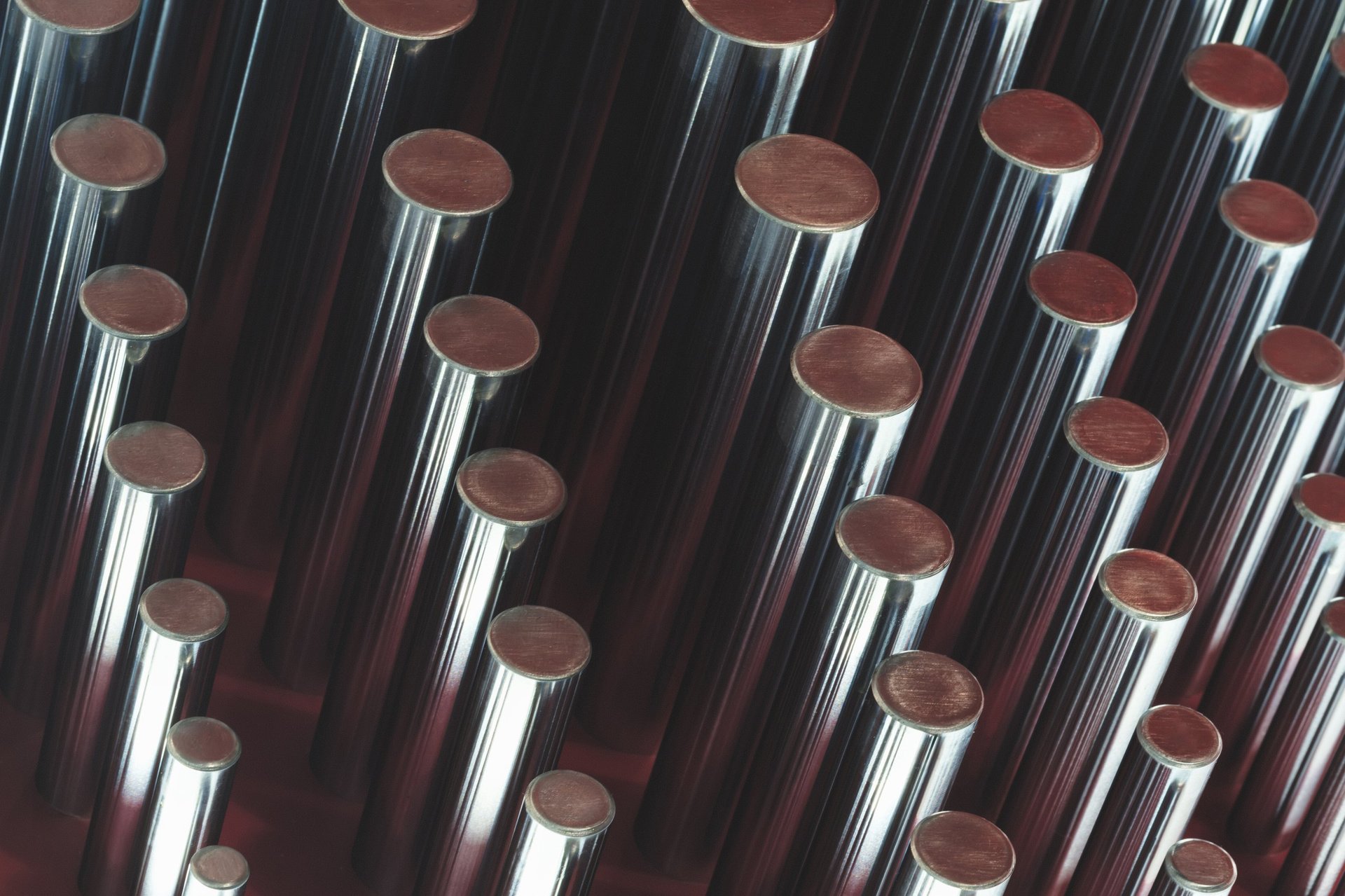
The smooth surface is the defining property — and the reason the duty has to be bounded.
The two questions to settle separately
1 · Is the form permitted?
Set by the design and the governing standard. A drawing is the evidence.
2 · How does force transfer?
Set by the detailing — a hook, an anchor, a fabricated fixing — because the surface will not do it.
A detail that answers one and assumes the other is not yet a specification.
Application Matrix
Check the duty before the form is ordered
Four inputs. The matrix reports whether a plain round bar is a plausible form for the duty you describe, whether the force-transfer mechanism has been stated, and whether the authorising document is present. Where the duty points away from a smooth bar, it says so plainly rather than finding an angle.
The duty as drawn
Select only what your documents state. Anything left as not stated is treated as absent, and the matrix will say so rather than assuming an answer.
Fit determination
Insufficient information — nothing stated yet
A plain round bar cannot be qualified from the product description alone. Whether the form is permitted depends on the duty it performs and on the document that authorises it, and neither can be inferred from the bar.
Before the enquiry
- Name the authorising document on the enquiry, not just the product.
- State the full designation, diameter and delivery form the fabrication needs.
- Say which items are still open rather than leaving them to be assumed.
Nothing is transmitted from this tool. It reports whether the duty you described is one a smooth bar can serve; the enquiry itself is submitted once, from the steel rebar quote form.
Bond & Anchorage
On a smooth bar, the anchorage is the load path
A deformed bar develops force along its length through the ribs. A plain bar does not, so wherever a smooth bar is genuinely intended, something else has to carry the force — and that something is a design decision, not a supply one.
What has to be present for the duty to work
A dimensioned anchorage
The hook, bend radius, embedment or mechanical anchor geometry, called out on a drawing with the design reference that sized it. Words are not dimensions.
A stated restraint against pull-out
How the bar is mechanically prevented from withdrawing — the fixing, the plate, the nut, the connection that holds it. On a smooth bar this is not optional detail.
The member it engages
What the bar bears against or is anchored into, and that member's capacity. The bar alone does not describe the load path; the connection does.
Design responsibility, named
Whose calculation the arrangement comes from. This matters because the anchorage is a structural element even when the bar looks like a simple round section.
None of this is something a supplier can add to your order. Every item above is a design output that has to exist before the bar is specified — and if the design has not produced them, the correct next step is the design authority, not a quotation.
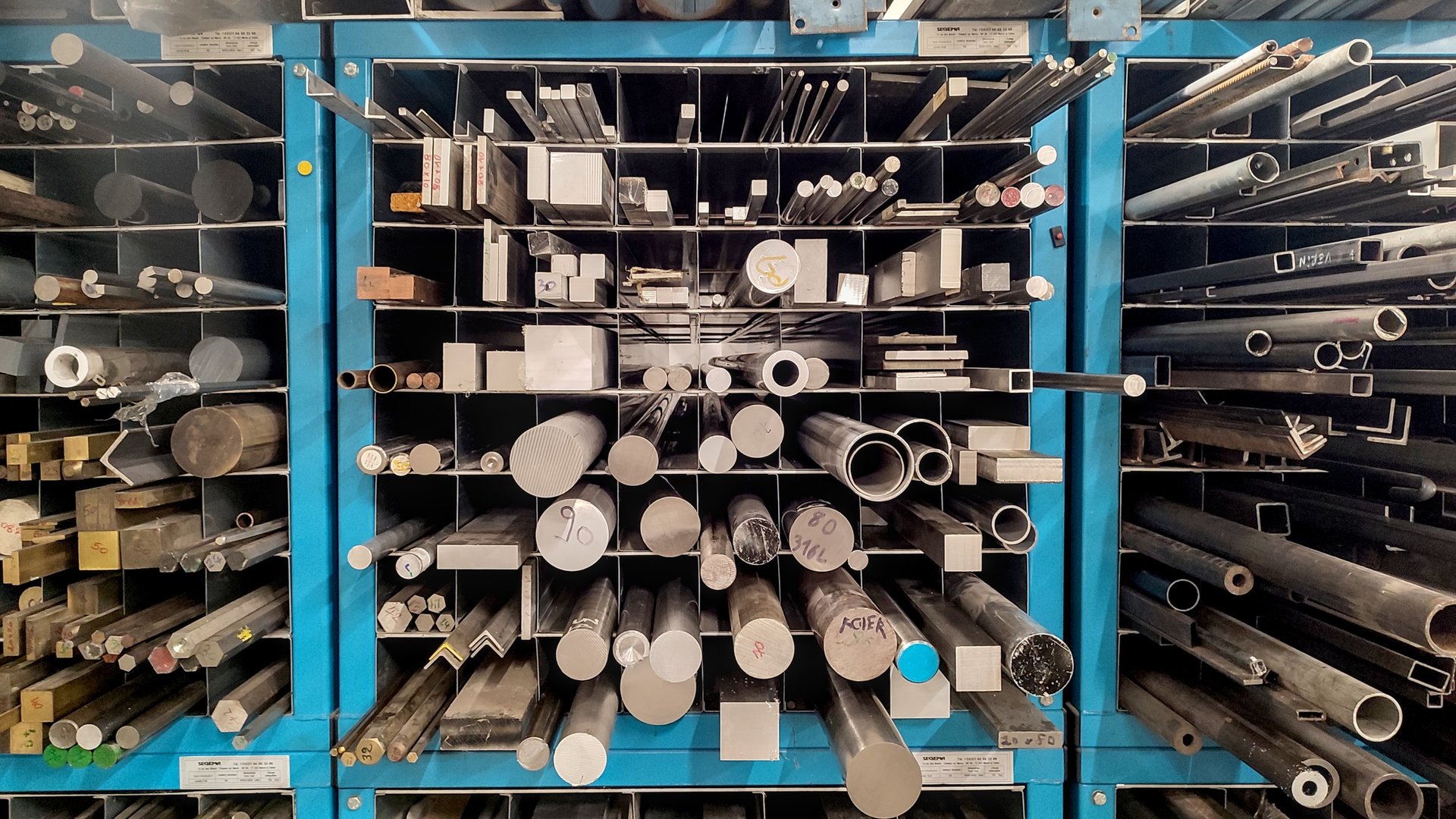
Bar profiles look interchangeable in storage. The drawings they satisfy are not.
Two surfaces, two behaviours
| Aspect | Ribbed | Plain |
|---|---|---|
| How force transfers | Mechanical interlock along the bar through the ribs. | Not along the bar. Must be carried by a hook, anchor or fixing. |
| What the surface does | Actively resists slip once embedded. | Provides no comparable resistance; slip is resisted elsewhere. |
| What the drawing must show | Lap and anchorage lengths sized for a deformed bar. | An explicit anchorage arrangement, dimensioned. |
| What it cannot do | Does not by itself make the bar weldable or ductile. | Does not substitute for a deformed bar wherever bond is assumed. |
Specifying the Order
What a plain round bar enquiry has to state
A product name and a diameter do not describe a requirement. These are the fields that turn an availability question into something a mill or fabricator can quote against without coming back to ask.
Governing standard and edition
The document that defines the bar you are ordering, with its edition year.
A grade or product name without its standard is not a specification.
Grade or designation
The designation as the standard writes it, including any units.
Where a smooth bar is used, the grade still comes from the standard.
Nominal diameter
The nominal size in the convention your project uses, taken from the standard.
Do not convert sizes approximately; quote them.
Length and delivery form
Mill lengths or cut and bent, with the bend schedule where applicable.
Bend geometry belongs to the detail, not to the yard.
Quantity
Tonnes or bar count, stated clearly enough to quote against.
State which basis you are giving.
The authorising document
The drawing, detail or provision that permits a smooth bar for this duty.
This is the field most often left out, and the one that matters most.
Required records
The evidence the project will accept the consignment on.
Records evidence the bar; they do not authorise the form.
Destination
Where the material is delivered, so the commercial route can be scoped.
Incoterm and delivery window are agreed per order.
Dimensions and mass
Nominal diameter and the unit mass per metre come from the standard that governs the bar, so they should be quoted from that document rather than converted approximately. Where your project works in a particular size convention, state it.
Delivery form
Whether the bar ships in mill lengths or as cut and bent material changes who does the fabrication and what the drawing has to show. Where the bar is bent, the bend geometry belongs to the detail — not to the yard's discretion.
Evidence & Documents
What arrives with the consignment, and what it proves
These are the records that evidence the bar you received. Each answers one question — and none of them is evidence that a smooth bar was permitted for your duty, because that authorisation lives in your drawings.
Mill test certificate
The results the mill obtained, declared against the requirements of the standard being cited.
Check it by: Read the certificate against the standard and edition your specification names — and note that it evidences the bar, not the permission to use a smooth form.
Chemistry declaration
Elemental analysis for the heat, including equivalent values where the standard requires them.
Check it by: Where the standard attaches a chemistry condition to the designation, this is the record that addresses it.
Dimensional verification
Confirmation that the bar meets the nominal diameter and mass the standard tabulates.
Check it by: Confirm the size against the standard's own table rather than a rounded figure, because dimensional tolerance is a standard requirement.
Cut-and-bend records
Where the bar is fabricated, the schedule it was bent to and the geometry achieved.
Check it by: Check the bends against the dimensioned detail. On a smooth bar the bend is often the anchorage, so its geometry is the requirement.
Which records apply is set by the standard your specification cites and by any project requirement over it — not by this page. Treat the list as a prompt for what to specify rather than a standing pack attached to every order.
GCC Supply
Same duty question, different project documents
Whether a smooth bar is permitted does not change by country, but the standard your project cites and the document that authorises the form do. Each market page continues this decision rather than restarting it.

United Arab Emirates
UAE projects commonly cite an international standard and add project requirements over it. If a smooth bar is being considered, confirm which document permits the form and keep that reference with the enquiry.
Steel rebar supply for United Arab Emirates
Saudi Arabia
Larger Saudi programmes tend to fix both the standard and the reinforcement detailing early. Where both are settled, the form question is already answered and the enquiry is a conformance one.
Steel rebar supply for Saudi Arabia
Qatar
Qatar enquiries sometimes describe a smooth-bar duty without naming the document that permits it. That reference is what makes the requirement quotable, so send it or state that it is open.
Steel rebar supply for Qatar
Kuwait
Where a Kuwait specification cites a standard but not its edition, the edition is what holds the enquiry. State it, or state that it is open, rather than leaving it to be assumed.
Steel rebar supply for Kuwait
Bahrain
Smaller packages in Bahrain frequently draw on more than one bar form in a single delivery. Mixed-form consignments need each form's authorising reference kept distinct through inspection.
Steel rebar supply for Bahrain
Oman
Oman enquiries commonly pair the form question with export routing. The duty and its authorising document come first; the commercial route is scoped afterwards on the same enquiry.
Steel rebar supply for OmanThese pages describe supply routes and enquiry handling for each market. They do not claim local warehousing, stockholding or delivery timescales — those are confirmed against your specific order.
Where This Form Appears
Applications that raise the smooth-bar question
Each of these is a context where a plain round bar is genuinely considered — and in each one the question is the same: what does the document say, and what carries the force.
Precast concrete
Precast work frequently uses smooth bar for lifting points, handling inserts and temporary fixing within the mould — duties where the bar is not the permanent reinforcement.
Rebar for precast concreteConcrete reinforcement generally
The general reinforcement case is where the deformed form is normally specified. Read this route to see what the bond assumption actually rests on before considering any other form.
Reinforcement bar for concreteFoundations
Foundation work involves starter bars, dowels and pile details where the bar's duty varies along its length. State which segment is which before the form is decided.
Rebar for foundations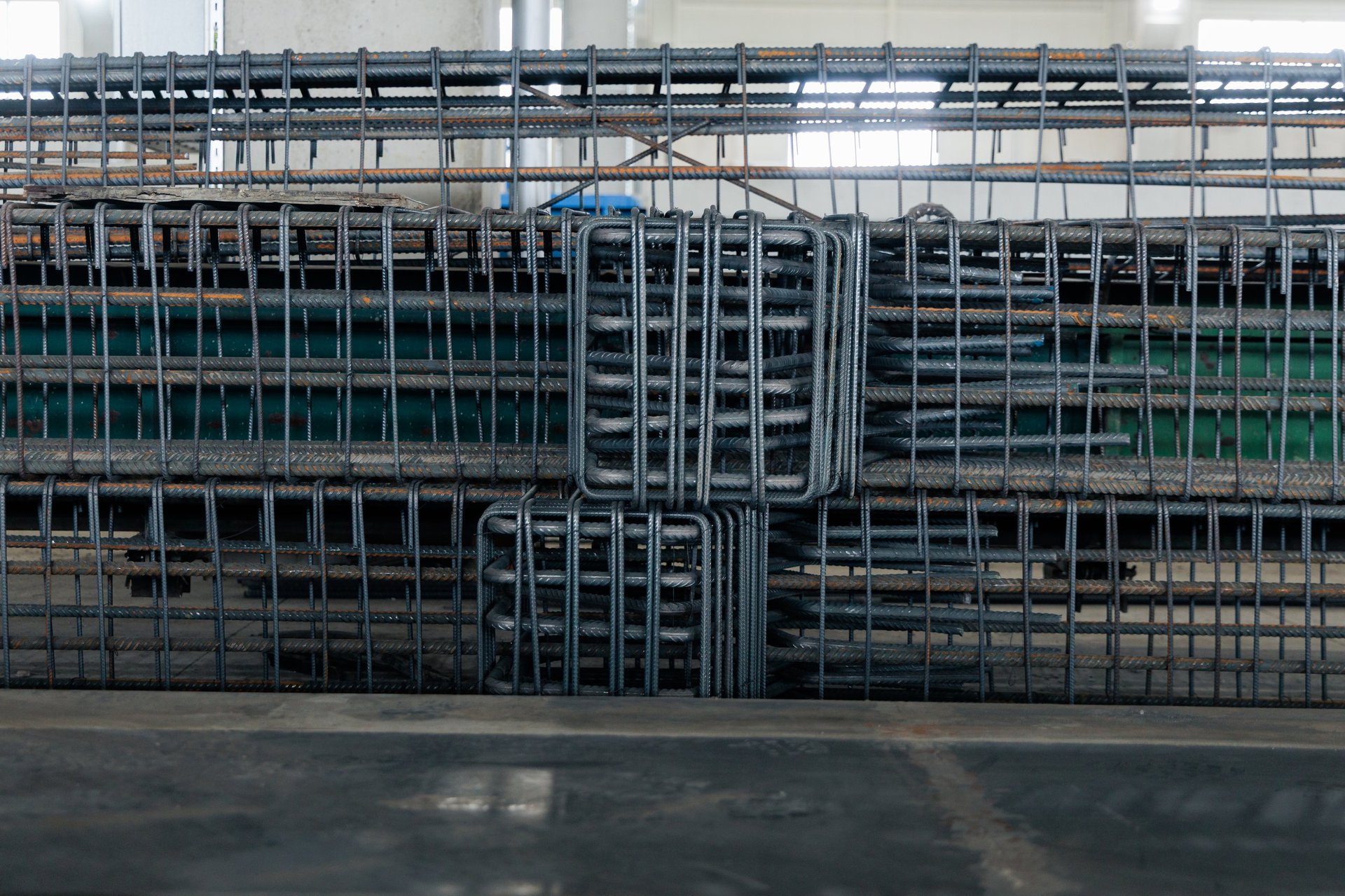
Once a bar is cast in, the form it was specified as is no longer visible.
If your duty is not on this list
Then the form question is open, and the honest next step is to establish which document governs rather than to select a bar and hope it satisfies one. An enquiry that names its open item is answered faster than one that appears complete but is not.
Reference Notes
Where the form is addressed, and where it is not
These notes make one boundary clear: a standard may define what a plain bar is without thereby authorising it for a bond-dependent duty. Scope and permission are different things.
EN 10080 and its national provisions
A European framework standard for steel for the reinforcement of concrete, which structures how reinforcing steel is specified and sits alongside national provisions and amendments.
The framework defines the product; it does not authorise a smooth bar for a bond-dependent duty. Confirm which national provision applies to your project before treating the form as settled.
DIN 488
A German standard series for reinforcing steel, organised across parts that address the different reinforcing products and their requirements.
The series addresses more than one product, so cite the part that governs yours. Where a project cites this series, confirm the part and the edition rather than the series alone.
Where the governing document is set out
Which standard governs your bar is a question in its own right. Where your project has already cited one, the standards route explains what each document covers and where its scope ends.
FAQ
Plain round bar questions that a stock answer cannot settle
Can plain round bar be substituted for deformed rebar if it is in stock?
No. Availability is not authorisation. A smooth bar does not develop the mechanical bond a deformed bar develops, and substituting one changes a structural assumption the design was checked against. That is a design authority decision, not a procurement one, and this page is deliberately built so it cannot be read as permission.
When is plain round bar the correct specification?
Where a drawing or a governing document requires it for a bounded duty — a fabricated fixing, a dimensioned anchorage, a temporary or non-structural purpose, or where a proprietary system specifies it. The common thread is that a document establishes the duty, and the force is carried by something other than adhesion along the bar.
Does a smooth bar need a longer embedment instead of an anchorage?
That is a design calculation, and this page will not produce a number for it. What can be said is that the answer comes from the design authority against the standard your project cites, and that it must be stated on a drawing — not worked out at the point of order or on site.
What if the drawing says plain bar but shows no anchorage detail?
Then the structural question has been left open rather than answered. A note permitting the form, without the arrangement that carries the force, does not establish the duty. Take the query back to the design authority before the bar is cut or ordered.
Does a mill certificate prove the bar was suitable for my application?
It proves the bar conforms to the standard it was made to. It says nothing about whether a smooth form was authorised for your duty, because that permission lives in your drawings and specification rather than in the mill's records.
How is pricing handled for plain round bar?
Price on request. Quotations are prepared against a stated requirement — governing standard and edition, designation, nominal diameter, delivery form, quantity, the authorising document and the destination — rather than against a product name alone.
Request a Quote
State the standard that governs the bar, the authorising drawing or detail, the diameter and delivery form, and the force-transfer arrangement. Price is always on request.
Office 3303, Churchill Executive Tower, Business Bay, Dubai, United Arab Emirates
Monday – Saturday: 8.00 AM – 6.00 PM · Sunday: Closed