
Review DOM and cold-drawn routes
Where a machined component needs closer dimensional control and a defined internal surface, the drawn-over-mandrel route is the one to compare.
Mechanical Steel Tube
Mechanical tube is tube bought to become a component, and the component decides the callout. Start from what the tube has to survive: the machining allowance, the dimensions that carry the function, the condition the forming or joining process needs, and the surface the finished part is judged on. Two parts cut from the same nominal tube can need different requirements, which is why a mechanical-tube order is written per component rather than per material.
Mechanical tube is a duty description, not a grade, a manufacturing route or a tolerance class. It does not by itself fix chemistry, delivery condition or dimensional controls.
Selection logic
The first question is not which tube to buy — it is what happens to the tube next. The operation that follows delivery decides which requirements the order has to carry.
| Decision | Why it matters here | Before you enquire |
|---|---|---|
| Machined component | The usable material envelope can matter more than the nominal size. | State the clean-up allowance and the finished dimensions. |
| Formed or joined part | The supplied condition must support the approved forming or joining process. | Identify the process and any trial or qualification requirement. |
| Machine fluid circuit | Connections and service conditions create a different specification entirely. | Use a hydraulic or instrumentation requirement, not a generic mechanical tube. |
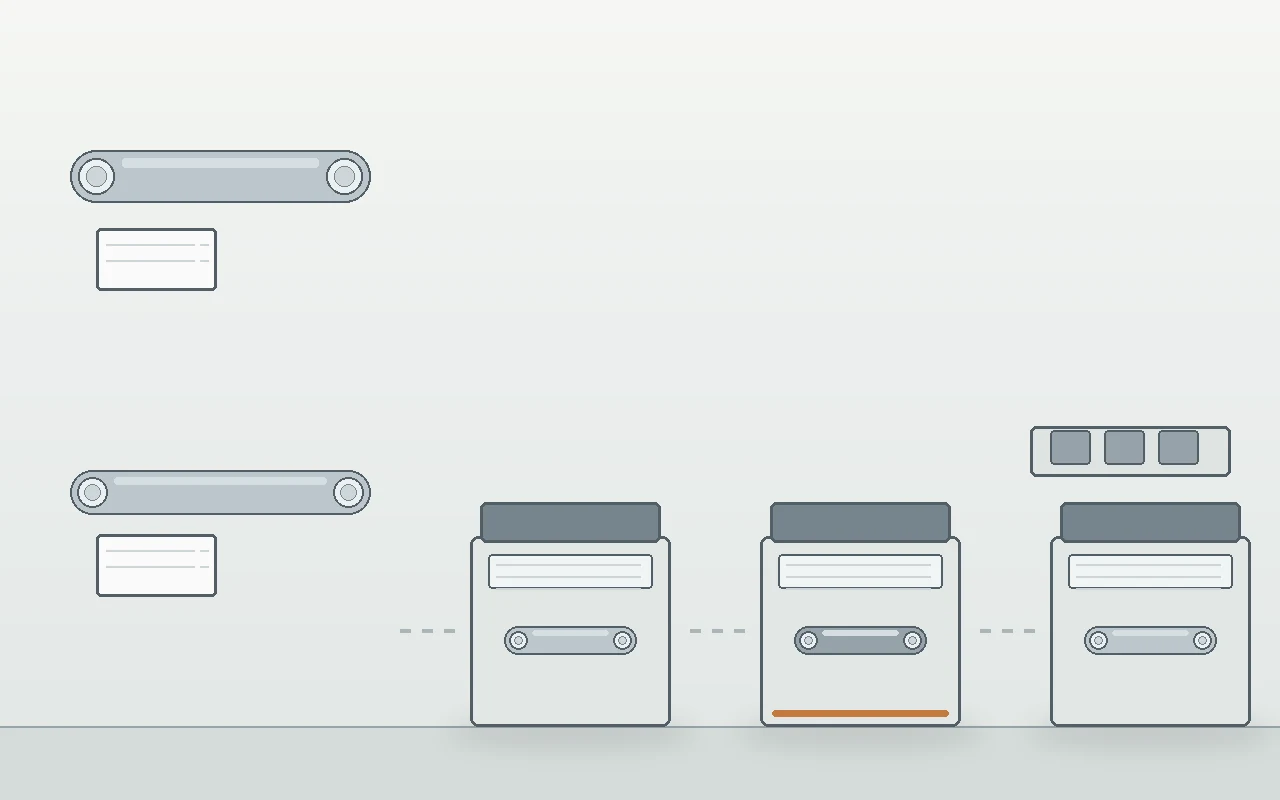
Where a machined component needs closer dimensional control and a defined internal surface, the drawn-over-mandrel route is the one to compare.
Controlled dimensions are worth specifying only where they solve a defined component requirement — not as a default.
Specification builder
Review each component against its own grade, route, condition and usable dimensions. Keep forecast demand separate from confirmed purchase quantity and obtain approval for changes to the accepted supply basis.
Acceptance basis
Each row names the decision, what limits it, the evidence that verifies it and the action it becomes on the enquiry. No grade, tolerance value or allowance figure is published here.
| Specification decision | Applicability and limit | Evidence to request | RFQ action |
|---|---|---|---|
| Component identity | One tube schedule can contain several different acceptance requirements. | Drawing revision and the item-specific material callout. | Use one clear line item per requirement. |
| Usable yield | Length and dimensional variation decide how many usable blanks a length yields. | Agreed length tolerance, cutting schedule and machining allowance. | State required piece lengths and offcut responsibility. |
| Condition and route | A grade name does not fix the condition the next process needs. | Mill route and treatment declaration with the required test evidence. | Specify grade, manufacturing route and delivery condition. |
| Repeat supply | Consistency across repeat orders requires a controlled acceptance basis. | Approved item record and change-notification requirements. | Identify who approves mill, process or condition changes. |
Yield warning. A per-tonne or per-metre figure is not the cost of a component. Usable yield depends on the delivered length, the cut pattern, the length tolerance and the allowance the operation needs — and those are agreed per order. No yield, allowance or scrap rate is published on this page.
Quality & documentation
Build the incoming inspection around component risk: the dimensions that drive scrap, the condition that affects processing, and the identity that has to survive cutting.
| Control | What to examine | When and limits | Next action |
|---|---|---|---|
| Component identity | Drawing revision and the item-specific material callout. | Before material acceptance; confirm feasibility and cost at quotation. | Use one clear line item per requirement. |
| Usable yield | Agreed length tolerance, cutting schedule and machining allowance. | Before material acceptance; confirm feasibility and cost at quotation. | State required piece lengths and offcut responsibility. |
| Condition and route | Mill route and treatment declaration with the required test evidence. | Before material acceptance; confirm feasibility and cost at quotation. | Specify grade, manufacturing route and delivery condition. |
| Heat and item identity | Mill test certificate linked to the heat markings and the packing list. | Before release and again on receipt; a sample certificate is not evidence for the shipped heat. | Request traceability through cutting, bundling and delivery. |

Applications
The drawing and the service envelope govern acceptance. These paths address different purchasing decisions; an application label does not approve a material.
Translate the finished drawing into the actual tube envelope and condition.
Separate incoming stock acceptance from final-bore and completed-cylinder acceptance.
Align tube receiving, processing and revision control for repeat batches.

GCC markets
Each destination is planned on its own route with its own import and documentation requirements. Country flags identify the destination only.
Retain component line-item identity and usable cut-length information through destination allocation. Identify the emirate, fabricator or site address and unloading restrictions; distinguish a domestic handover from an import leg.
Retain component line-item identity and usable cut-length information through destination allocation. Name the consignee, importer and final site; ask who confirms product classification and border documentation before dispatch.
Retain component line-item identity and usable cut-length information through destination allocation. State the nominated receiving point and project document approver; align certificate review with the required arrival window.
Retain component line-item identity and usable cut-length information through destination allocation. Specify the actual port, border point or inland site requested; separate the entry leg from onward transport and unloading.
Retain component line-item identity and usable cut-length information through destination allocation. Identify the contractor or fabrication yard receiving the tubes; agree import-document responsibility and the named delivery place.
Retain component line-item identity and usable cut-length information through destination allocation. Confirm whether the order is for local consumption or onward shipment; name the consignee and agree who handles each transport leg.
Commercial
Compare cost per accepted component, alongside the stated tube quantity basis. Separate cutting, machining allowance, offcut ownership, inspection and packing from the base tube price.
Whether the price applies to supplied length, to finished pieces, or to accepted pieces after inspection changes what you are actually comparing.
The cut pattern, the machining allowance and the length tolerance together decide how much of a delivered length becomes a usable component.
State whether cutting, end preparation, coating or packing is inside the offer or performed by others, and who carries the risk at each step.
Forecasts are planning inputs, not availability commitments. Keep confirmed quantities and release dates separate from planning demand.
Ask for the offered mill and origin, tube schedule, quantity basis, processing scope, packing, commercial validity and exclusions. State the Incoterm with its named place and edition, who unloads, and the requested delivery window. Price, availability, production allocation, transport feasibility and dates require written confirmation.
Coordinate an export enquiry — align tube identification, bundle protection and transport documents with the named delivery place before dispatch.
Adjacent decisions
Use mass for handling and dimensional acceptance for yield; neither should stand in for the other.
Use theoretical mass for planning and agree the invoicing basis independently.
Specify the limits that protect usable yield and assembly fit.
Do not mix machine line-tube acceptance with general mechanical blanks.
Expert insight
It does not. A family designation can cover more than one finished condition, and the condition is what the next operation meets.
A519 covers seamless mechanical tube in both hot-finished and cold-finished conditions. The family title alone therefore leaves the delivered route and condition unresolved — and those are exactly the attributes a machining, forming or joining operation reacts to. Two components could both be ordered as “A519 tube” and arrive with different mechanical condition, dimensional character and internal surface.
Buyer implication: put the production-relevant route and condition on each component line rather than relying on the family name to carry them.
Method: review the publisher’s route scope and apply it to a manufacturing item schedule. Applicability: illustrative A519 mechanical-tube procurement. Limit: no machining-yield, process-capability or property guarantee is made.
ASTM A519/A519M-24a route scope · Information reviewed 2026-10-16.
From specification to receipt
Every stage has an owner, and each item can be settled before the order is placed rather than after the material arrives.
| Stage and owner | Required input | Evidence or output | Risk and next action |
|---|---|---|---|
| Engineering release | The design authority releases the component and process requirements. | Approved specification and drawing revision | An unapproved substitution can change the design basis. Close the item before proceeding. |
| Offer review | The buyer compares usable yield, condition and scope exceptions. | Written technical exceptions and commercial scope | An unlisted exception can survive into the purchase order. Close the item before proceeding. |
| Material release | The receiver accepts the component-critical records and the heat identity. | Accepted documents linked to the order items | Missing heat identity can make an otherwise correct tube unacceptable. Close the item before proceeding. |
| Receipt and reconciliation | Production preserves identity through cutting and records discrepancies before use. | Delivery record, item count and discrepancy record | Record any mismatch before the material is incorporated into work. Close the item before proceeding. |
Procurement FAQs
Six questions from the buyer's side of the desk, covering the duty description, dimensions, mixed order lines, yield and documentation.
No. Mechanical tube describes the duty — tube bought to be machined, formed or joined into a component. The grade, the manufacturing route, the delivery condition and the dimensional controls all come from the component drawing and the operations performed on it, not from the phrase itself. Two mechanical-tube orders can legitimately invoke different standards and different acceptance evidence.
State the finished envelope first, then the dimensions that carry the function, then the allowance the machining operation needs on top of them. The controlling dimension decides acceptance, and OD, ID and wall tolerances can conflict — so naming which of them governs is more useful to a supplier than restating the nominal size.
Only if they genuinely share the same grade, route, condition and dimensional basis. Mixing them usually means the acceptance basis for one is wrong for the other, and the error is invisible until the material reaches the process it does not suit. One line per requirement keeps acceptance demonstrable.
Agree it before the order is placed. The questions are who owns the cut pattern, what length tolerance applies to the delivered pieces, how offcuts and unusable ends are treated, and whether the price is quoted on supplied length or on accepted finished pieces. These are the terms that decide what a length actually costs to use.
The component and its next operation, the drawing revision, the grade, manufacturing route and delivery condition, the dimensions and tolerances with the controlling dimension named, the required piece lengths and quantities with an explicit unit, the surface or coating requirement, the documents and inspection you need, the traceability depth, the destination, and the change-notification route for repeat supply.
No. It evidences that the tube was produced to the specification the order cites. Whether the component machines, forms or joins acceptably is established by your own process against your own drawing — a material certificate and a component acceptance are different claims made by different parties.
Enquiry handoff
Review each component against its own grade, route, condition and usable dimensions. Keep forecast demand separate from confirmed purchase quantity and obtain approval for changes to the accepted supply basis. Include the completed fields and the controlling drawing revision so exceptions can be returned against the right requirement.
Prepare and copy the summary above, then open the steel-tubes RFQ and paste it into the requirement field. Add your name, company and reply email on that form. Supporting drawings can be shared through the destination’s verified contact process.
This page prepares your enquiry locally. Opening the RFQ does not submit it. A submission is complete only when the receiving form returns a genuine acknowledgement.
Before you send it
sales@noordeirasteel.ae · +971 56 398 0860





