
Structural Steel · Product Types
Structural Steel Types, Sorted by Cross-Section and Duty
A beam, a column, an angle and a channel are not interchangeable members. Each one carries load differently, connects differently and is fabricated differently — and the cross-section is fixed long before the steel grade is. Settle the shape family here and the grade conversation becomes short.
Price on request · Shape family, standard and designation confirmed before quoting
Is This Your Question?
Shape, grade and material are three separate decisions — buyers often arrive with them fused
Most structural enquiries that stall in procurement are not short of a grade. They are missing a shape decision that was never written down, and no grade substitution repairs it.
A structural member is bought on three fields that live in different places. The cross-section is its shape and its dimensional standard — a beam, a column, an angle, a channel. The material is the steel the section is rolled from. The designation is the exact size and mass within that shape, and it is usually where a schedule is mis-transcribed.
Enquiries commonly arrive asking for "S355 beams" or "an A36 section". Those sentences fuse the material to the shape, and the two are chosen by different people for different reasons. The structural engineer sets the section geometry to carry the load; the specification sets the material to satisfy the design code and the exposure. When the shape family is settled first, the material list usually collapses to one or two candidates.
Start from the range this hub belongs to
This page routes a shape decision. Everything it sits inside — the whole structural range with its sections, grades, standards and supply routes — is on the parent page, and that is the better place to start if you have not yet narrowed to a section question.
The structural steel rangeThis page is the wrong tool if…
- …the shape is already fixed and you only need the material numbers. The material and standard pages carry those; this hub would only make you re-answer a settled question.
- …you are buying a closed hollow section, not an open profile. A square, rectangular or circular tube is a different product line with its own dimensional standards. Start from the hollow sections range instead.
- …your question is "which section is strongest". There is no answer to that in the abstract. Every family here is the correct answer to a different member role, and the chooser below is what turns your role into one of them.
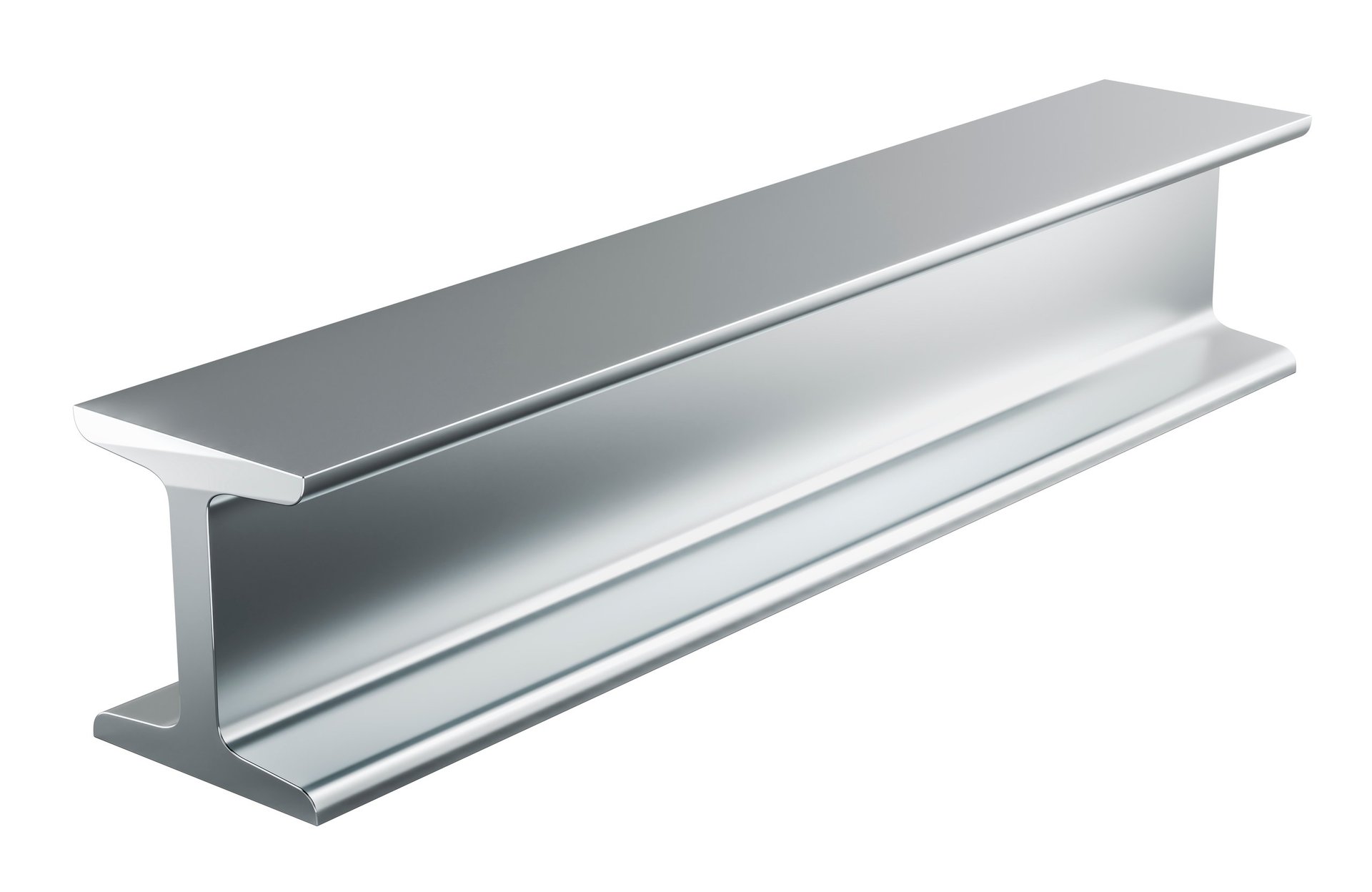
What the shape family actually fixes
- Load path
- Whether the member bends, carries axially or braces.
- Connection
- Which faces are available to weld or bolt to.
- Fabrication
- How the profile is cut, drilled, notched and fitted.
- Availability
- Which families and sizes are routinely rolled and traded.
Shape-Family Chooser
Answer six things and this page names the families worth comparing
This is a routing aid, not a structural calculator. It returns no size, no capacity and no price — it returns the registered families your member role points to, the overlap you still have to resolve, and the fields your RFQ has to state.
Six routing questions
0 / 5 answeredAll five are required. Each one changes the shortlist — leaving the member role open is the most common reason a section enquiry comes back with a question instead of a quotation.
Your shortlist appears here
Answer the five questions on the left and route the enquiry. The result names the families to compare, the overlap you still have to resolve, and the fields your RFQ must state.
The Shape Families
The families, and the member question each one answers
A family earns its place on this page by answering a question the others do not. If two entries looked fully interchangeable, one of them would not belong here.
Universal beams (UB)
Primary bending
The member spans and bends, and a parallel-flange profile is wanted so that the connections can be made to flat, square faces.
Compare this familyUniversal columns (UC)
Axial compression
The member carries load along its length and is stockier in both directions than a beam of similar depth would be.
Compare this familyH-beams
Bending / heavy framing
A wide-flange H section is specified, and the depth-to-width relationship of the flanges is part of the requirement rather than incidental to it.
Compare this familyI-beams
Bending / general framing
A narrower-flanged bending member is wanted, typically where depth is available but the connection faces are uncomplicated.
Compare this familySteel channels
Secondary / bracing
An open, three-sided profile suits the detail — bracing, edge members, secondary framing or a connection component.
Compare this familySteel angles
Bracing / connections
A two-legged section is needed for a brace, a cleat, a lintel or a fabricated truss, in equal or unequal legs.
Compare this familySteel flat bar
Ties / plate elements
A solid rectangular section is wanted as a rolled product in its own right, not as a strip cut from a wider plate.
Compare this familyT-sections
Special profiles
A T profile is called for by the detail — commonly a chord, a chord splice or a connection where a single projecting leg is required.
Compare this familyH-pile sections
Foundation / ground
The member is installed into the ground and carries permanent below-ground exposure, which makes it a foundation decision rather than a superstructure one.
Compare this familyOpen sections and closed sections are different product lines
Everything above is an open profile — its cross-section leaves at least one face exposed, which is what makes it convenient to weld and bolt to. A square, rectangular or circular tube encloses its section, is bought by its own wall thickness and dimensional standard, and is traded separately. A buyer comparing an angle against a small tube is comparing across two supply lines, not two sizes of the same product.
Hollow sections — the closed-section line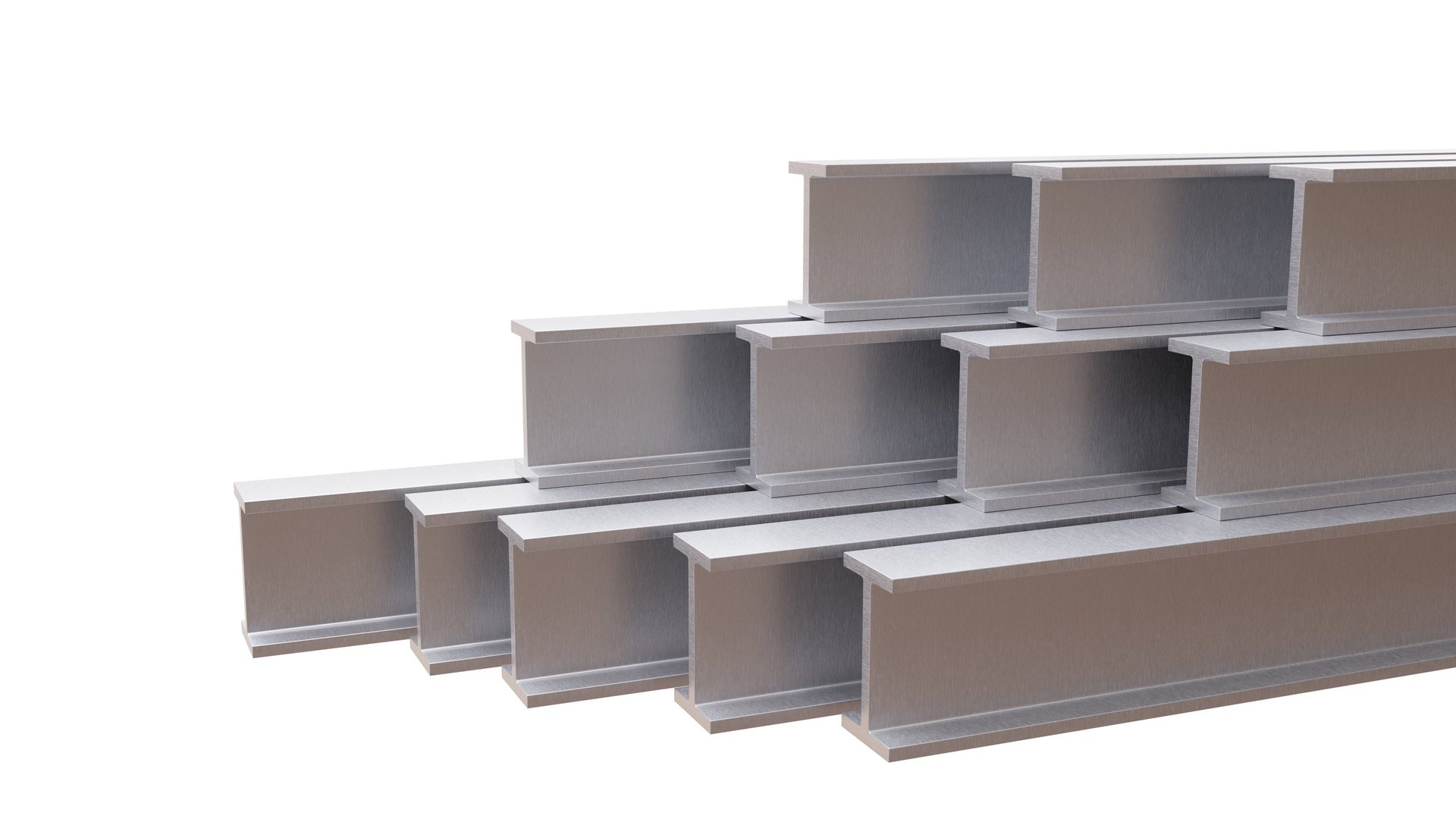
Where Families Overlap
What each family excludes — the part buyers find out late
A family is defined as much by what it rules out as by what it delivers. These are the overlaps and substitutions that most often surface after the steel has been ordered rather than before.
Universal beam and universal column
Both are parallel-flange hot-rolled families, which is why they are the most frequently swapped pair in a section schedule. The practical difference is proportion: the column family is stockier in both directions for the same depth, because its job is to resist compression rather than to span.
Depth alone does not tell you which family a schedule intends. Name the family and the mass, or the section identity is still open.
H-section and I-section
H and I are shorthand, not standards, and the two are used inconsistently across drawings, countries and fabricators. What actually separates them is the relationship between the flange width and the section depth, along with the rolling standard the section belongs to.
A drawing that names only a nominal depth has not specified a section. Confirm the full designation, including the mass, before the enquiry is priced.
Open section and closed section
An open profile leaves at least one face accessible for welding and bolting. A hollow section encloses its cross-section and is bought by wall thickness against its own dimensional standard. They are traded as separate product lines with separate tolerances.
An angle and a small square tube are not two sizes of the same thing, and a substitution between them is a change of product line, not of size.
Rolled T-section and a cut T
A T-section supplied as a rolled profile is its own product with its own tolerances and designation. A T cut from a beam or an H-section inherits the tolerances of the parent member and leaves a cut face with different edge condition.
A cut T is not an automatic substitute for a rolled T, and the connection geometry may not survive the swap even where the nominal dimensions match.
Flat bar and strip cut from plate
Flat bar is rolled to its own thickness and width tolerances as a discrete product. Strip cut from a plate carries the plate's thickness tolerance and its edge condition, which are set by a different standard.
The two can look identical on a drawing and behave differently in the shop. State which one the schedule requires rather than leaving it to be inferred.
Pile section and column section
Foundation members are selected for driving behaviour, installation tolerance and permanent ground exposure as well as for structural capacity. Those requirements are set out by the foundation specification, which is usually issued separately from the superstructure schedule.
A member role change does not convert a superstructure section into an acceptable pile, or the reverse, even when the profiles look related.
What the Order Must State
Five fields that describe different things — and are routinely merged
Section supply is decided by five separate statements. A buyer who treats them as one field is the buyer who receives the wrong steel, because no supplier can resolve a merged requirement into the right product.
| Field | What it actually fixes |
|---|---|
| Section standard | The dimensional standard that defines the family's profile, its size range and its tolerances. It is a different document from the material standard, and a section order needs both. |
| Material standard | The standard that defines the steel the section is rolled from, with its own grade designations and mechanical requirements. Naming a section does not name a material. |
| Grade designation | The specific grade within the material standard. This is what the structural design was checked against, and substitutions here are a design change rather than a commercial one. |
| Exact section designation | Depth, width and mass together. Within a single nominal depth there are usually several sections of different mass, and the mass drives capacity, connection geometry and price. |
| Condition of supply | Whether mill lengths or cut lengths are required, and whether the delivery is to the site, to a fabricator's yard or to a port. Length is usually the handling constraint on long product. |
These are the fields this page can tell you matter. Which of them your order must carry, and any tolerance that applies, is set by the section standard and the edition your project names — not by this page.
The designation is where schedules break
"A 305 beam" is not a designation. Within one nominal depth there are usually several sections of different mass, and the mass changes the capacity, the connection geometry and the price. A schedule that names a depth but not a mass has not yet specified a product — it has described a family.

Where the family decision lands in fabrication
The family decides what the shop can do with the member. Connection details, coping and notching, the direction of the webs and legs, and the sequence of assembly all follow from the profile — which is why changing the family after the shop drawings are issued is a redesign, not a substitution.
Evidence & Verification
What the material documents have to cover
An inspection document is only useful if it covers the exact product the standard describes. For a section, that means the rolled profile as supplied — not the material in the abstract.
What to ask to be evidenced
- The certificate type the project's standard calls for, and whether it is a product certificate or a test report
- That the document names the section designation as supplied, not only the material it was rolled from
- Heat or cast identity and the traceability marking carried on the delivered sections
- Which requirements are supplementary and therefore have to be ordered explicitly rather than assumed
- For a fabricated or cut member, what of the original section's evidence still applies to the delivered item
Confirm which certificate, test and marking your project's standard actually requires, against the standard itself and the edition the project is bound to. This page does not state those requirements.
A section standard and a material standard are two documents
One defines the shape — its profile, its size range and its dimensional tolerances. The other defines the steel. A section order that cites only one of them has left half the requirement unstated, and the supplier has to guess which half was meant.
The designation has to be complete to be evidenced
A certificate that names a family and a material but not the exact section identity does not evidence that the right profile was supplied. Match the designation on the document to the designation on the schedule, character for character.
Editions move
A designation copied from an older drawing may belong to an edition whose requirements have since changed, or to a standard that has been superseded. Check the designation against the edition the project names before it goes onto an order.
Material substitution is a design decision
Where a project permits an alternative grade, the permission comes from the design authority and is recorded, not inferred by the buyer at the point of order. A structurally equivalent grade is not automatically an approved one.
GCC Supply Routes
The family decision travels; the shipment planning does not
A universal beam means the same thing in Dubai as in Dammam. What changes by destination is the documentation pack, the discharge port and the handling the long product needs in transit — planning questions, not material ones.

United Arab Emirates
Local supply and re-export enquiries, where the designation schedule is usually the same document that fixes the delivery basis.
Structural steel for United Arab Emirates
Saudi Arabia
Large project packages where the documentation pack and the inland route shape the order as much as the section does.
Structural steel for Saudi Arabia
Qatar
Project-driven demand where the technical submittal is prepared alongside the section enquiry rather than after it.
Structural steel for Qatar
Oman
Port-led planning: confirm the discharge point, the documents required and the Incoterm before the tonnage is fixed.
Structural steel for Oman
Bahrain
Shorter sea legs where handling at both ends, rather than transit time, is usually the constraint to plan around.
Structural steel for Bahrain
Kuwait
Industrial and infrastructure demand, where the section schedule and the paperwork have to be agreed before the material is committed.
Structural steel for KuwaitLong product is a handling decision before it is a freight decision
Sections are shipped in mill lengths or cut lengths, and their length is usually the constraint rather than their weight. Whether the receiving end can take mill lengths off a flat rack, or needs them cut to suit a container, changes the packing, the documentation and the price — and it is worth settling before the tonnage is confirmed rather than after.
These market pages set out the supply route and enquiry handling for each destination. They do not claim local warehousing, stockholding, a branch presence or a delivery timescale — those are confirmed against your own order.
Questions Buyers Ask
What the chooser does not decide for you
Can I substitute a universal column for a universal beam if the depth matches?
Not on depth alone. The two families are proportioned differently — a column is stockier in both directions for the same nominal depth — so a swap changes the stiffness, the capacity and often the connection detail. If an alternative is permitted at all, the permission comes from the structural designer and is recorded with the substitution, not assumed at the point of order.
Is an H-beam just another name for an I-beam?
The two terms are used loosely and inconsistently across drawings and countries, which is exactly why relying on the shorthand causes problems. What separates the sections in practice is the relationship between flange width and section depth, along with the rolling standard the section belongs to. Ask for the full designation — depth, width and mass — rather than the letter.
Do I need the weight per metre if I have the depth?
Yes. Within one nominal depth there are usually several sections of different mass, and the mass is what carries the capacity, the connection geometry and the price. A schedule that names a depth but no mass has described a family, not a product, and it cannot be quoted accurately.
Which family should I use for bracing?
That follows from the connection detail rather than from a general rule. Angles and channels both serve bracing heavily and differ in how many faces they offer to weld or bolt to; T-sections appear where a single projecting leg is needed. The chooser above routes on the member role and then names the overlap you still have to settle.
Can this page tell me whether a section is strong enough?
No. Capacity is a structural design output that comes from the load path, the member role and the design code your project uses, not from a supplier's product page. This page routes a purchasing decision and deliberately stops before the engineering.
What if my member role does not point to one family?
Then the file is not yet ready to be quoted as a section enquiry, and the chooser says so rather than picking one for you. The usual cause is that the connection detail has not been fixed yet — and that is worth settling before the steel is ordered.
Request a Quote
Send the section family, the standard and edition, the exact designation, the quantities and the destination — or send it with the family still open and say so. Price is always on request.
Office 3303, Churchill Executive Tower, Business Bay, Dubai, United Arab Emirates
Monday – Saturday: 8.00 AM – 6.00 PM · Sunday: Closed
Drawn from the parent range
This page routes a section-family decision. The full range it belongs to — grades, standards and supply — sits one level up, and its enquiry desk handles the same package.
Structural steel range and RFQ