
Structural Steel · H Pile Section
Steel H Pile Sections, Ordered Against the Foundation Drawing
An H pile is bought against the design that put it in the ground, not against a driving intention. The geotechnical and structural work fixes the section, the depth and the capacity; procurement's job is to carry that across into a scope the mill and the site can both work to — splice, toe, head, grade and corrosion included.
Price on request · Section, grade, splice and corrosion strategy confirmed before quoting
Fit & Selection
An H pile is a design output — procurement's job is to carry it across
Six things decide whether a pile procurement scope is complete. Each one comes from the design or the installation plan, and each one is settled before the steel is rolled rather than discovered on site.
The direct answer
Order an H pile against the foundation drawing, not against a driving intention. The scope has to carry the section designation and its dimensional standard, the length schedule, the toe and head details, the splice arrangement, the material grade with its impact requirement, the corrosion strategy and the traceability level. Capacity and embedment depth come from the geotechnical and structural design — never from a supplier's page.
The design comes first, in two parts
An H pile sits between two design exercises that have to agree before anything is ordered. The geotechnical work establishes the ground, the required embedment and the resistance the pile has to develop. The structural work chooses the section and checks it against the loads the pile carries. Procurement receives the result of both, and orders the section the two of them produced together.
Capacity and embedment depth are design outputs. They are determined by the geotechnical investigation and the structural check, not by anything on this page or by a supplier's advice.
Driving method shapes the section demand
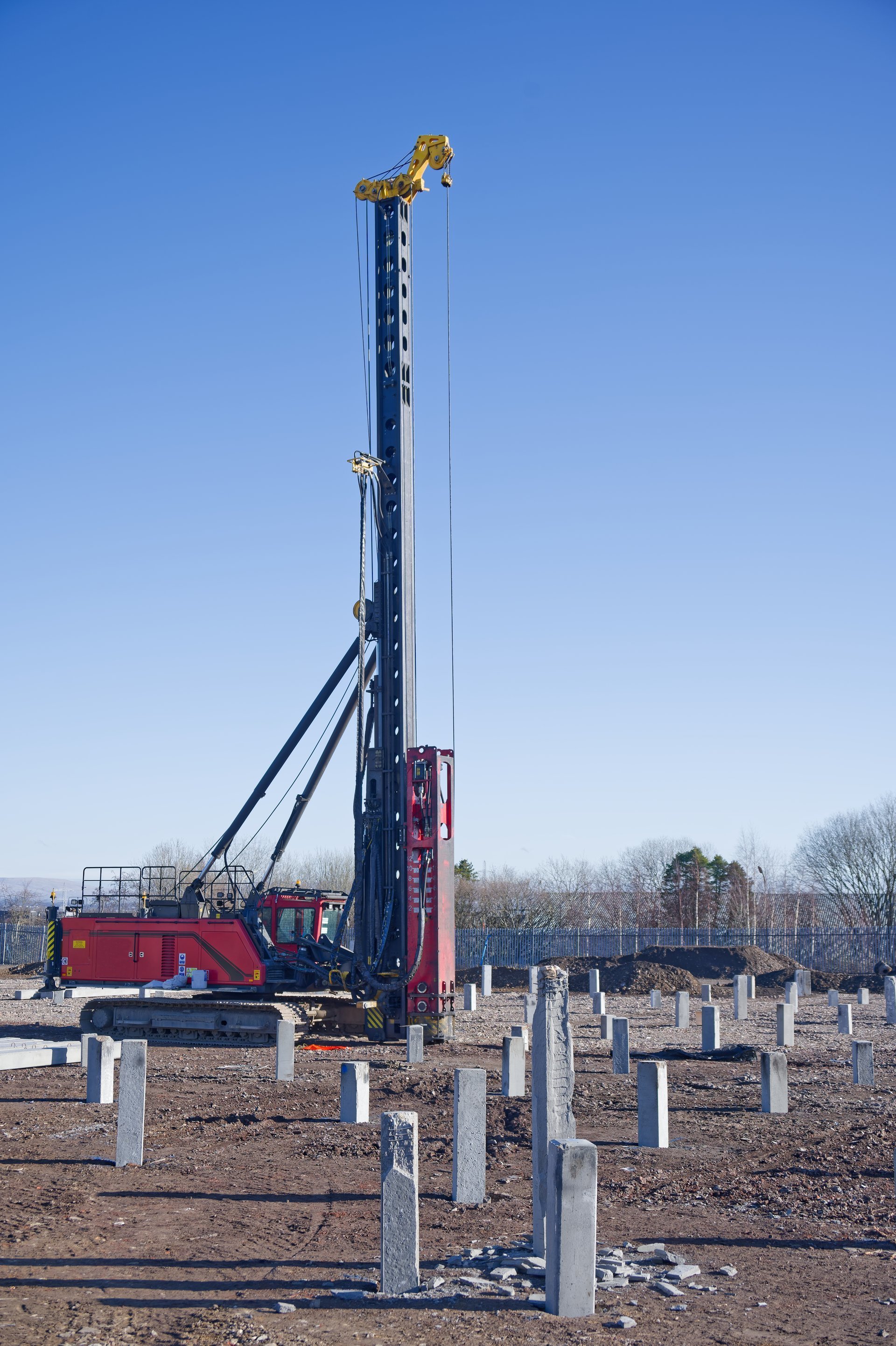
How a pile is installed determines what it has to survive on the way in. A driven pile takes repeated impact at the head and along its length; a bored or pre-augered pile is placed rather than hammered; a vibrated pile sees a different load pattern again. Each method puts a different demand on the section, and the installation method therefore belongs in the procurement scope rather than only in the site method statement.
The method is the designer's and the contractor's decision. What procurement does with it is make sure the section, the head detail and the toe are specified against the method that will actually be used.
Splices are a design and fabrication decision
Long piles are usually formed from more than one length, joined by welding or by a mechanical splice. Where the joint falls matters — it interacts with the bending moment profile and with where the pile has to carry its load — and the splice detail is part of the foundation design rather than a fabrication convenience.
The splice arrangement and location come from the foundation design. The scope has to state them so the lengths can be rolled or cut to suit the joint, not the other way round.
The toe and the head are specified items
A driven pile often requires a toe preparation to suit the ground it enters, and a head detail that suits the driving equipment and protects the section during installation. Both are specified items. A scope that gives only a section and a length has left the two details that most often stop a pile being driven properly.
Whether a toe preparation or a head detail is required, and what it should be, is set by the installation design and the contractor's equipment — not assumed by the supplier.
Corrosion is a service-life decision with its own inputs
Piles are exposed to conditions above ground that differ from those below it, and in marine or aggressive ground the strategy differs again. Some pile specifications rely on a sacrificial allowance, some on a coating, some on the section geometry itself; which applies is a durability decision taken with the geotechnical and corrosion inputs in hand.
This page states no corrosion allowance, no coating system and no exposure classification. The strategy is a design decision, and it has to reach procurement as one.
Traceability has to survive the process chain
A pile is cut to length, prepared at the toe, spliced, driven and often trimmed or cropped at the head. Each of those steps makes it harder to associate the finished pile back to the heat it came from. Where the project requires traceability, how it is carried through those steps has to be agreed before the work starts rather than reconstructed afterwards.
Where traceability is required, state the marking requirement and the stage at which it has to be legible. That is a scope item, not a shop default.
This page sits inside the whole section range
A pile section is one family among the open profiles. The full range of shapes — with the member question each one answers — is on the types hub, and the superstructure family most often compared with a pile section has its own page.
Settle these before the enquiry
- The foundation drawing and its revision
- Installation method, and the head and toe it needs
- Splice arrangement, and where the joints fall
- Material grade with its impact requirement
- Durability strategy and traceability level
Where the grade calls for an ordinary structural carbon steel, the carbon family is where that selection sits — and the strength class you cite is a separate field again.
Pile Procurement Handoff
State the design basis and this page assembles the scope
This is a completeness handoff, not a capacity calculation. It returns no pile capacity, no embedment depth, no driving resistance and no price — it returns the fields your scope still has to carry, the boundaries worth confirming, and a summary you can hand to the commercial desk.
Six scope fields
0 / 6 answeredAll six are required. The installation method and the splice arrangement are the two most often left to the site — and the two that set the head, toe and length details.
Your handoff appears here
Set the six fields on the left and build the handoff. The result reports what is still open, the boundaries worth confirming, and the fields to carry into the RFQ.
What the Scope Must Carry
Eight fields that make a pile scope orderable
A driving intention is not a specification. These are the fields that turn a foundation design into something a mill and a site can both work to — and the ones most often left to be resolved later.
| Field | What it fixes |
|---|---|
| Project drawing reference | The foundation drawing or pile schedule the scope is being ordered against. It is the document every other field is reconciled to, and the first thing a supplier will ask for. |
| Section designation and dimensional standard | The profile and its governing dimensional standard, stated together. The designation identifies the section; the standard defines its tolerances. |
| Length schedule | Which lengths are needed, in what quantities, and how the total pile length is made up — including where splices fall if the pile is formed from more than one piece. |
| Toe and head details | Whether a toe preparation is required and what it is, and whether the head needs a preparation or protection detail to suit the driving equipment. |
| Splice requirements | Whether splices are welded or mechanical, the detail that applies, and any qualification or inspection the joint requires. |
| Material grade and impact requirement | The material standard, the grade designation, and any impact-testing requirement with its temperature — stated separately from the section description. |
| Corrosion strategy | Whatever durability approach the design adopts, carried as its own item so it is ordered explicitly rather than assumed to be included. |
| Traceability and inspection scope | The certificate type, the marking requirement, any witnessing, and which inspection points the project holds. |
These are the fields this page can tell you matter. What any of them requires — the section, the grade, the splice detail, the durability approach — is set by the foundation design and the standard it cites, not by this page.
Why the installation method belongs on the scope and not only on the method statement
The method determines what the pile has to survive between arriving on site and reaching its design level. A driven pile takes repeated impact at the head and along its length, which is why head protection and toe preparation appear at all; a pre-bored pile is placed, so those requirements fall away and others take their place. Because the method changes what has to be supplied, it is a procurement input — a scope that omits it has left the supplier to assume, and the assumption is not always the safe one.
The grade and the section are separate documents
The section designation identifies the profile and is governed by a dimensional standard. The material grade is governed by a material standard, and is recorded with its own impact requirement where one applies. A scope that cites only the section has left the steel unstated.
How EN 10025 delivery conditions are organisedQuality & Traceability
What the evidence has to cover
For a pile the question is broader than for most sections, because much of what makes the pile arrives after the steel does — at the toe, at the splice and at the head.
The certificate follows the product form
A mill certificate describes the steel — its heat, its composition and the tests taken from it — against a named material standard. It does not describe the toe preparation, the splice or the head detail, because those are produced by processes the rolled product standard does not cover. Reconciling a pile delivery therefore means checking each of those separately.
Splices carry their own evidence
Where piles are welded, the joint is governed by a welding procedure and inspected against a stated acceptance level. That evidence is separate from the mill certificate for the steel, and asking for one does not produce the other. Where splices are mechanical, the joint has its own product documentation instead.
Geometry is verified by measurement
The section dimensions and their permitted tolerances sit in the dimensional standard, and they are confirmed by measuring the delivered pile. Straightness in particular matters on a driven pile, because a section that is not true is harder to drive to line and harder to splice on site.
Marking has to survive to the point it is needed
Heat identity is of no use at the end of a pile if the marking has been cut away or buried by a coating before the pile is checked. Where traceability matters, agree where the marking goes and at which stage it has to still be legible.
What to ask to be evidenced
- The material standard, edition and grade as supplied, with any impact test result and its temperature
- The heat or cast identity, and where it is marked on the pile as delivered
- How traceability is carried through cutting, toe preparation, splicing and any coating
- The dimensional standard the section series belongs to, so the profile can be checked against a permitted tolerance
- Where splices are welded, the welding procedure and the acceptance level the joint is inspected to
- Where splices are mechanical, the product documentation the joint system carries
- Any witnessing or hold point the project imposes on fabrication or installation
Confirm which certificate, test and marking your project's standard actually requires, against the standard itself and the edition the project is bound to. This page does not state those requirements.
Applications
Where a pile section carries the design into the ground
The application does not change the section decision — but it does change which durability, installation and documentation requirements arrive with it.
Building and industrial foundations
Where the ground cannot carry the structure on shallow foundations, piles transfer the load to a deeper stratum. The section is chosen in the structural design once the geotechnical report has established what is down there.
Structural steel for infrastructure projectsMarine, port and berth structures
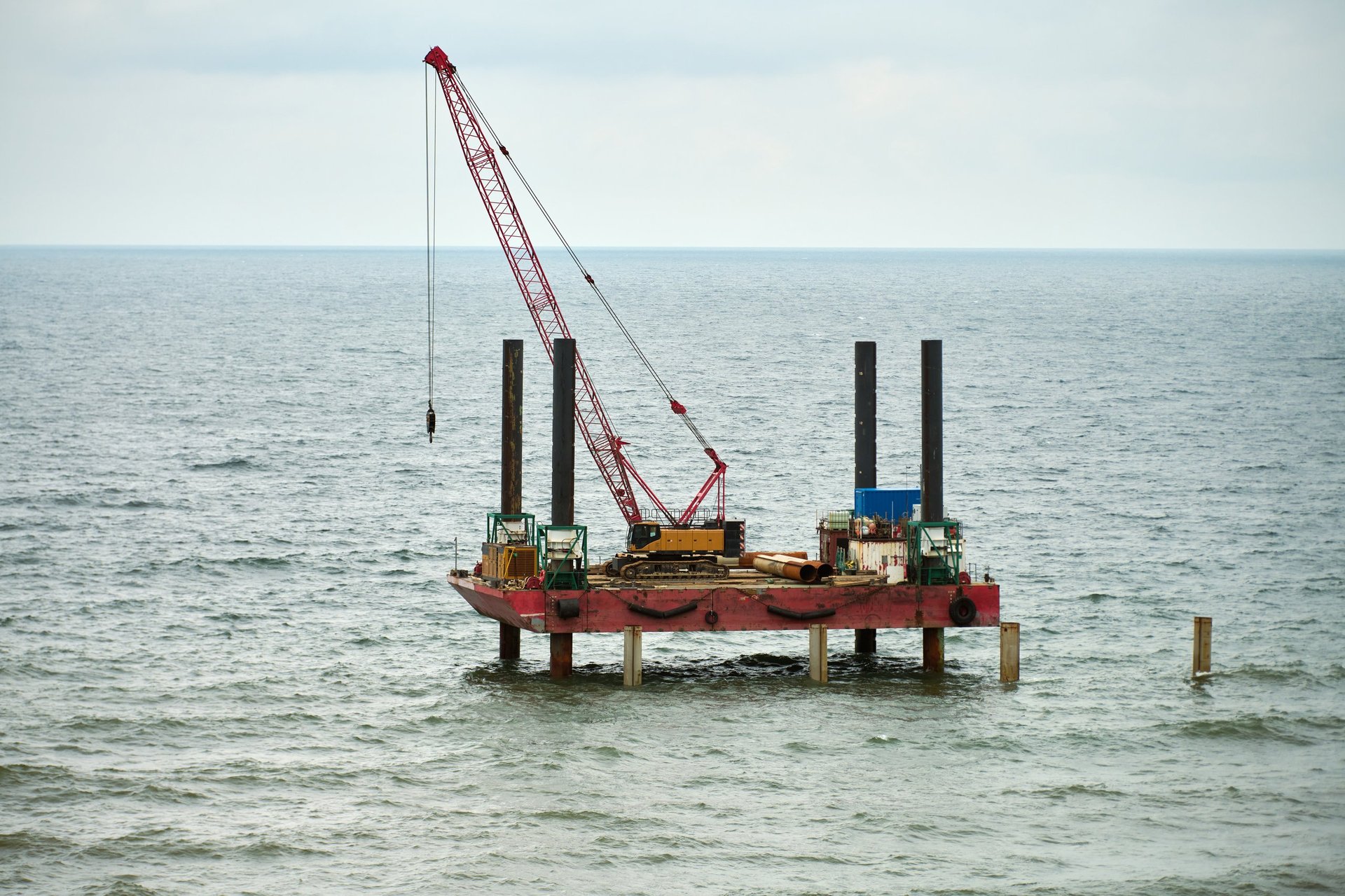
Marine piling combines the driven-pile demands of installation with a service environment that is aggressive and, importantly, not uniform along the pile's length. The durability strategy has to account for the different zones the pile passes through.
Retaining and ground-support schemes
Piles used as part of a retaining or ground-support arrangement carry bending as well as axial load, and the section choice reflects that. The pile schedule for these schemes is usually issued as part of the temporary or permanent works design.
Bridge and infrastructure foundations
Infrastructure foundations often involve large piles in long lengths with several splices, where the splice arrangement and the driving sequence interact and both have to be planned before the steel is committed.
Industrial plant and heavy equipment bases
Plant foundations frequently combine pile groups under equipment bases, where the pile layout and the base detail have to be coordinated so the head details align with what is built on top of them.
Temporary works and propping
Where piles serve a temporary role, the design life and the recovery or leaving-in-place decision change the durability strategy — and that decision belongs in the scope rather than being settled later on site.
GCC Supply
The pile schedule travels; the shipment planning does not
A section designation means the same thing in Dubai as in Dammam. What changes by destination is the documentation pack, the discharge port and the handling that long, heavy sections need in transit.

United Arab Emirates
Local supply and re-export enquiries, where the pile schedule and the certificate requirement are usually confirmed on the same document.
Structural steel for United Arab Emirates
Saudi Arabia
Large project packages where the documentation pack and the inland route shape the order as much as the section does.
Structural steel for Saudi Arabia
Qatar
Project-driven demand where the technical submittal is prepared alongside the pile enquiry rather than after it.
Structural steel for Qatar
Oman
Port-led planning: confirm the discharge point, the documents required and the Incoterm before the tonnage is fixed.
Structural steel for Oman
Bahrain
Shorter sea legs where handling at both ends, rather than transit time, is usually the constraint to plan around.
Structural steel for Bahrain
Kuwait
Industrial and infrastructure demand, where the pile schedule and the paperwork have to be agreed before the steel is committed.
Structural steel for KuwaitThese pages set out the supply route and the enquiry handling for each destination. They do not claim local warehousing, stockholding, a branch presence or a delivery timescale — those are confirmed against your own order, not stated in advance.
Commercial & Logistics
What a pile quotation is built from
A quotation is assembled from stated fields. Where one is missing, the figure returned rests on an assumption — and on a pile, assumptions are the ones that are hardest to correct once the steel is in the ground.
Where a field is unknown it is carried into the enquiry marked verify-before-quote rather than filled with an assumption. Capacity, embedment and driving resistance remain with the geotechnical and structural design.
Length is the constraint on heavy sections
Piles are long, and length is usually what governs how they can be shipped rather than weight. Whether a single length can be transported to the site, or the pile has to be delivered in pieces and spliced on site, is a planning decision that interacts directly with the splice arrangement in the design.
Adjacent Options
What each neighbouring option is actually for
Four comparisons come up repeatedly on pile enquiries. The one that matters most is not a section choice at all — it is the difference between carrying load and forming a barrier.
H piles and sheet piles
Choose it when: The requirement is to form a continuous retaining wall or cut-off rather than discrete load-bearing elements.
How it differs: An H pile is an individual section carrying load at its own position. A sheet pile is a profile with interlocking edges, chosen so adjacent pieces form a continuous barrier. They solve different problems, and a run of H piles is not a cut-off wall — which is a common confusion at the enquiry stage rather than at the design stage.
H piles and steel tubes
Choose it when: A closed-section pile is specified, and the section is bought by wall thickness against its own standard.
How it differs: A tubular pile encloses its section and belongs to a separate product line with its own dimensional standard, its own connection practice and its own driving considerations. Where a tube is specified, the section standard is a different document — and the two are not compared on the same axis.
hollow sections supplierH piles and universal columns
Choose it when: The member is a superstructure column carrying load above ground rather than a foundation element installed into it.
How it differs: A universal column is a superstructure section chosen by the structural designer for a member above ground. An H pile is a foundation element whose selection also depends on installation behaviour and permanent ground exposure. The profiles can look related; the selection basis is different, and a member role change does not convert one into the other.
universal column supplierH piles and cast-in-place or bored piles
Choose it when: The ground conditions or the installation constraints point away from a driven steel section entirely.
How it differs: Bored and cast-in-place piles are constructed rather than driven, so the installation demands and the durability basis differ fundamentally. That comparison is a foundation design decision made on the geotechnical report, long before procurement is involved.
H piles and pre-bored or pre-augered installation
Choose it when: The same steel section is being installed by a method other than driving, which changes what the section has to survive.
How it differs: This is not a different product — it is the same section installed differently, and it changes the head and toe requirements and the demands on the splice. It is worth stating which method applies, because the scope details follow from it.
These are descriptions of what each option is for, not a substitution guide. The pile type itself is a foundation design decision taken on the geotechnical report, and where an alternative is permitted it is approved by the design authority rather than inferred at the point of order.
Where the open question is a bracing or secondary-section dimension rather than the pile itself, the published size references for those sections carry the figures — this page deliberately states none.
Expert Insight
Why the capacity question cannot be answered here
The point that separates a pile enquiry from every other section enquiry: the most important number in it is not a property of the steel at all.
Pile capacity is developed by the ground, not by the section. The steel provides a structural member capable of carrying the load from the structure down to a chosen level; how much resistance the ground offers at that level depends on the soil or rock, on the installation method and on the length embedded. Those are established by a ground investigation and assessed in the geotechnical design — and the structural design then checks the section against the forces that result.
That is why a supplier cannot answer the capacity question, and why any supplier who does is answering a question outside their competence. What a supplier can do is supply the section the design calls for, to the standard and grade stated, with the dimensions, tolerances and evidence the project requires. The distinction matters because the two roles are easily conflated at the enquiry stage: a scope that asks the supplier to establish a depth or a capacity has misdirected the question.
There is a second boundary worth stating for the same reason. Whether an H pile is the right element for a given scheme — rather than a sheet pile forming a wall, a bored pile, or a tubular section — is a foundation design decision taken on the geotechnical report. Procurement's contribution is to order correctly what the design has chosen, and to flag clearly when a field it needs has not been decided rather than filling it in.
What this page does not state
- No pile capacity, axial resistance, driving resistance or set value — those are geotechnical and structural design outputs.
- No embedment depth, pile length or splice position as a recommendation — those come from the foundation design.
- No corrosion allowance, coating system or exposure classification — the durability strategy is a design decision.
- No section dimension, mass or tolerance value — those belong to the dimensional standard that governs the series.
- No pile stock, size range held or lead time — availability is confirmed against your own enquiry.
Where a requirement has to be checked, check it with the geotechnical and structural design, or with the publisher of the governing standard — and record the edition you checked against.
Buyer Advantages
What we do about the things that go wrong
Each item below starts from a real procurement concern on a pile order, states the practice that addresses it, and ends at the outcome it produces.
The scope is assembled, not reassembled
The handoff collects the drawing reference, the section, the length schedule, the toe and head details, the splice arrangement, the material, the corrosion strategy and the traceability requirement as separate fields — which is the difference between a scope a mill can work to and a scope that comes back with questions.
Design boundaries are stated, not blurred
Nothing here computes a capacity, an embedment depth or a driving resistance, and the page says so plainly rather than implying it through partial data. Those are geotechnical and structural outputs, and a scope that quietly fills them in is worse than one that flags them.
Installation method is treated as a scope input
Because the driving method changes what the section, head and toe have to be, the handoff asks for it as its own field. That keeps an installation decision from being rediscovered after the steel has been rolled.
Open items are marked rather than assumed
Where a field is unknown, the handoff carries it forward as verify-before-quote instead of inventing a value. A quoted assumption and a quoted specification look identical on a quotation and behave completely differently on site.
Splices and details are named as procurement items
Toe preparation, head detail and splice arrangement are frequently treated as site matters and then discovered to be procurement matters. The handoff names them where they belong, so the lengths and details can be ordered to suit the design rather than adapted to what arrived.
No stock claim is made
This page states no pile stock, no size range held and no lead time. Availability is confirmed against your own enquiry, because a product page cannot honestly assert an inventory position.
None of these rest on a claim about scale, stock, price or lead time. They describe how a scope is assembled and where the responsibility boundaries sit — which is what can be stated honestly before an order exists.
Enquiry to Delivery
Who owns what, from the ground investigation to the installed pile
A pile scope moves through six stages, and two of them happen before procurement is involved at all. Each stage names what comes out of it and who is responsible.
| Stage | Owner | Output |
|---|---|---|
| Geotechnical investigation | Geotechnical engineer | Ground parameters and the basis on which embedment and resistance are assessed. |
| Foundation design | Structural engineer | The pile schedule — section, length, splice arrangement, load cases and the durability basis. |
| Installation planning | Contractor with the designer | The driving or installation method, and the head and toe details it requires. |
| Scope assembly | Procurement, from the schedule | A procurement scope carrying every field the mill and the site both need. |
| Enquiry and reconciliation | Commercial desk and buyer | A quotation built on stated fields, with any open item marked verify-before-quote rather than assumed. |
| Delivery, driving and verification | Contractor and QA | Piles checked dimensionally and by document, installed to the design line and level, with the evidence pack complete. |
The stage that is most often skipped
Installation planning is the step that gets compressed most often, usually because the pile schedule is issued before the contractor has settled the driving method and the equipment. The section can be ordered without it — but the head and toe details cannot, and the splice arrangement interacts with both. Compressing this stage does not remove the requirement; it simply moves it to site, where it is more expensive to satisfy.
FAQ
Questions that come up once the foundation design is issued
Can you tell me what capacity an H pile will develop?
No, and no supplier should. Pile capacity is a design output from the geotechnical investigation — it depends on the ground, the embedment, the installation method and the structural check, none of which a steel supplier can determine. What we can do is supply the section the design calls for, to the standard and grade stated, with the evidence the project requires.
What is the difference between an H pile and a sheet pile?
An H pile is an individual section carrying load at its own position; a sheet pile has interlocking edges so a run of them forms a continuous wall or cut-off. They solve different problems. Where a cut-off or a retaining wall is needed, the profile is a sheet pile — and if the enquiry comes in as a run of H piles for that purpose, it is worth clarifying before the steel is committed.
How do I state the length when the pile is formed from more than one piece?
State the total pile length and the length schedule the drawing calls for, and say where the splices fall. The splice position interacts with the bending moment profile, so it comes from the foundation design rather than from a fabrication preference. Giving the lengths without the splice positions leaves the mill to guess at the joint, which is the wrong party to be making that decision.
Do I need to specify the toe and head details as well as the section?
Yes, where the installation method requires them. A driven pile often needs a toe preparation to suit the ground and a head detail to suit the driving equipment and protect the section during installation. They are specified items that sit alongside the section on the scope — a section and a length alone has left out the two details that most often stop a pile being driven properly.
How is corrosion handled on a steel pile?
It depends on the design's durability strategy. Different projects address it differently — through a sacrificial allowance, a coating system, the section geometry, or a combination that varies along the pile's length where it passes through different zones. This page states no allowance, no coating system and no exposure classification: the strategy is a design decision reached with the geotechnical and corrosion inputs, and it has to reach procurement as one.
What if some fields in my scope are not decided yet?
Then say which, and the handoff will carry them forward as verify-before-quote rather than choosing for you. That is genuinely more useful than a fully populated scope built on assumptions — a quoted assumption and a quoted specification look identical on a quotation, and the difference only becomes visible once the piles are on site.
Where to go next
If the pile scope is settled but you still need to place it, these pages cover the material side and the neighbouring shape families. If you are still choosing between section families, the hub is the better starting point.
Request a quote for H Pile Sections
Send the foundation drawing reference, the section and its dimensional standard, the length schedule with splice positions, the toe and head details, the material grade, the durability strategy and the destination — or send it with some of those still open and say which. Price is always on request.
Office 3303, Churchill Executive Tower, Business Bay, Dubai, United Arab Emirates
Monday – Saturday: 8.00 AM – 6.00 PM · Sunday: Closed
Drawn from the parent range
This page covers one section family. The full structural range — types, materials, grades and standards — sits one level up, and its enquiry desk handles the same package.
Structural steel range and RFQ