
Service route · Availability verification
Ready Stock Supply
Treat “ready stock” as a verification request, not a live inventory claim: define exact specification, dimensions, quantity, acceptable substitutions, destination and required date, then request a current availability confirmation.
This route exists to answer one buying question — can the material you actually need be supplied quickly enough to matter. It does not publish stock quantities, and it will not quote a lead time before the specification is resolved. What it does is show you exactly which inputs have to be fixed, which evidence has to be produced, and which related page or RFQ moves the decision forward.
No stock figure or lead time is published on this page. Availability is confirmed against a resolved specification, never against a browsing session.
What this route will and will not do
- Show you the exact minimum set of inputs an availability check requires.
- Flag where a standard, a product form or a substitute conflicts before you commit.
- Hand you a copyable RFQ summary that carries every field you entered.
- Publish a stock quantity, a mill source, or a delivery promise.
- Confirm price, duty, certificate validity or a conformity outcome.
Everything below is built around that boundary. If a fact is not supported by the specification you enter or by a current quotation, it is marked for verification rather than assumed.
Decision component
Urgent Availability Qualifier
Six fields decide whether an availability check can be answered at all. Fill in what you know; the qualifier returns a stock-check specification, the substitution boundaries that apply, and an RFQ summary you carry straight into a request.
Your requirement
Nothing entered here is transmitted or stored. The qualifier runs in your browser and produces a summary you carry into the RFQ yourself.
Add the missing fields to scope a check
An availability check cannot be scoped from a partial requirement. The fields below are the smallest set that can be answered.
Still missing
- Product form
- Dimensions
- Quantity
- Destination
Stock-check specification
- Product form
- Not stated
- Governing standard
- Not stated
- Grade / class
- Not stated
- Discriminator
- Not stated
- Dimensions and tolerance
- Not stated
- Quantity
- Not stated
- Quantity note
- Not stated
- Destination
- Not stated
- Required-by date
- Not stated
- Documents required
- Not stated
Substitution boundaries
Not yet stated. Until you declare whether substitutes are acceptable, any alternative offered has to be treated as unapproved.
Route fit
Select a product form to see which routes are technically open. Until then, only the RFQ fallback applies.
Urgent RFQ summary
RFQ — READY STOCK AVAILABILITY CHECK

Product form: (not stated)
Governing standard and edition: (not stated — confirm current edition)
Grade / class / type: (not stated)
Dimensions and tolerances: (not stated)
Quantity and unit: (not stated)
Acceptable substitutions: none — exact specification only
Destination: (not stated)
Required-by date: (not stated)
Inspection / conformity documents: (none specified)

FIELDS TO VERIFY BEFORE QUOTE
- Product form not yet stated
- Dimensions not yet stated
- Quantity not yet stated
- Destination not yet stated
- Required-by date missing: lead time cannot be committed without an on-site date.
- No inspection documents selected: acceptance terms are unverified.
- Availability, price, mill source, lead time, duty and conformity outcome are NOT confirmed by this summary and must come from a current quotation.

Reference: Noor Deira Steel — /services/ready-stock-supply/
Continue to the qualified RFQ
Evidence and limitations
What is verified, what is conditional, what is blocked
A ready-stock conversation fails in one of two ways: a buyer accepts an unverified claim, or a supplier quotes against an unresolved specification. Both are avoidable. Below is the exact status of every claim this route makes.
- Verified
This page is listed at /services/ready-stock-supply/ under the Noor Deira Steel domain.
The canonical address is verifiable from the URL itself.
- Verified
The decision framework on this page applies the cited primary source within the scope and limitations stated in the expert insight below.
Method, information date, scope and limitations are published with the source so you can audit the reasoning.
- Verified
Listed internal routes and GCC country routes are shown as live destinations.
Every continuation link on this page resolves to a listed internal route; none is a placeholder or a disabled state.
- Conditional
Standard edition, grade scope, dimensional tolerances, testing regime and document requirements.
Conditional on the exact product form and purchase specification. Must be verified against the current normative source for that standard, not against this page.
- Conditional
Customs, conformity, origin, tariff and importer requirements.
Conditional on HS classification, destination and the authority rules in force on the shipment date. These change without notice.
- Conditional
Availability, source or mill, delivery time, packing, inspection and commercial terms.
Stated only from a specific quotation or approved evidence. Nothing on this page substitutes for that quotation.
- Blocked
Stock quantities, ready availability, price, lead time and warehouse capacity are not published here.
Blocked until supported by current verified evidence. An unverified stock figure is worse than no figure, because it becomes a contract expectation.
- Blocked
Certificate ownership, company certifications, branches and local market presence are not claimed.
Blocked pending a valid certificate, issuing body, scope, validity period and site coverage. A standard is not a certificate.
- Blocked
No client, project or testimonial evidence is presented on this route.
Blocked pending approved URL-specific evidence for this service route.
Source hierarchy for this route
Your purchase specification
Governs everything. Where this page and your specification disagree, your specification — and the normative standard it cites — wins.
The normative standard
The governing standard and its current edition define grade, chemistry, mechanical properties, tolerances and test frequency.
The current quotation
The only place availability, source, price, lead time and commercial terms exist. A quotation is evidence; a page is not.
Inspection documentation
Heat traceability, mill certificates and third-party reports convert an offer into an accepted delivery.
Where a fact sits below your specification in that hierarchy, it is not evidence for a purchasing decision — it is a prompt to request the missing document.
Expert insight
What to verify before advancing this decision
A source-backed buying note with a verification checklist and an explicit applicability boundary. It exists so a procurement team can audit why this route asks for what it asks for.
Decision question
What must a buyer verify before using Ready Stock Supply to make or advance a steel procurement decision?
Ready-stock questions are answered or refused on evidence, not on enthusiasm. The useful discipline is to treat the supplier’s quality-management process as the object of due diligence: ask what is controlled, ask what is documented, and ask which document proves the specific claim you intend to rely on. The ISO 9001 framework is a reasonable structure for those questions — it defines what a controlled process must be able to demonstrate and what records must exist. What it does not do is certify anyone.
Verification checklist
- Confirm the governing standard and its current edition — not the grade shorthand commonly used in the trade.
- Confirm the product form the standard actually covers, because several grades are written for one form only.
- Fix the dimensional discriminator — bar size, wall thickness, plate thickness, or section designation — before asking about availability.
- Name the tolerance class and the inspection regime your application cannot relax.
- State the document you will accept as proof at handover: heat traceability, mill certificate type, or third-party inspection.
- Separate the destination question from the product question. Customs and conformity obligations attach to the consignment, not the specification.
- Record whether substitutes are permitted, and who is authorised to approve a deviation.
Source record
- Primary source
- ISO — ISO 9001 Quality management systems
- Information date
- 2026 revision status checked 2026-09-12
- Scope
- Quality-management-system requirements and the 2026 transition context.
- Method
- ISO 9001 used as a due-diligence framework for controlled processes and evidence. No company is presented as certified.
Limitations
- A standard describing a quality-management system does not prove Noor Deira Steel is certified.
- Certification scope, issuing body, validity and site coverage require separate evidence and are not asserted on this route.
Buyer implication
Use the source to verify scope and evidence for Ready Stock Supply. If the ordered product, a legal fact, a customs rule or a company capability is not supported, block that claim and request the missing evidence through the RFQ workflow rather than accepting a verbal assurance.
Related next pages
Where this decision continues
Each route below answers a different buying question. None of them is a general hub — take the one that matches what is still unresolved in your requirement.
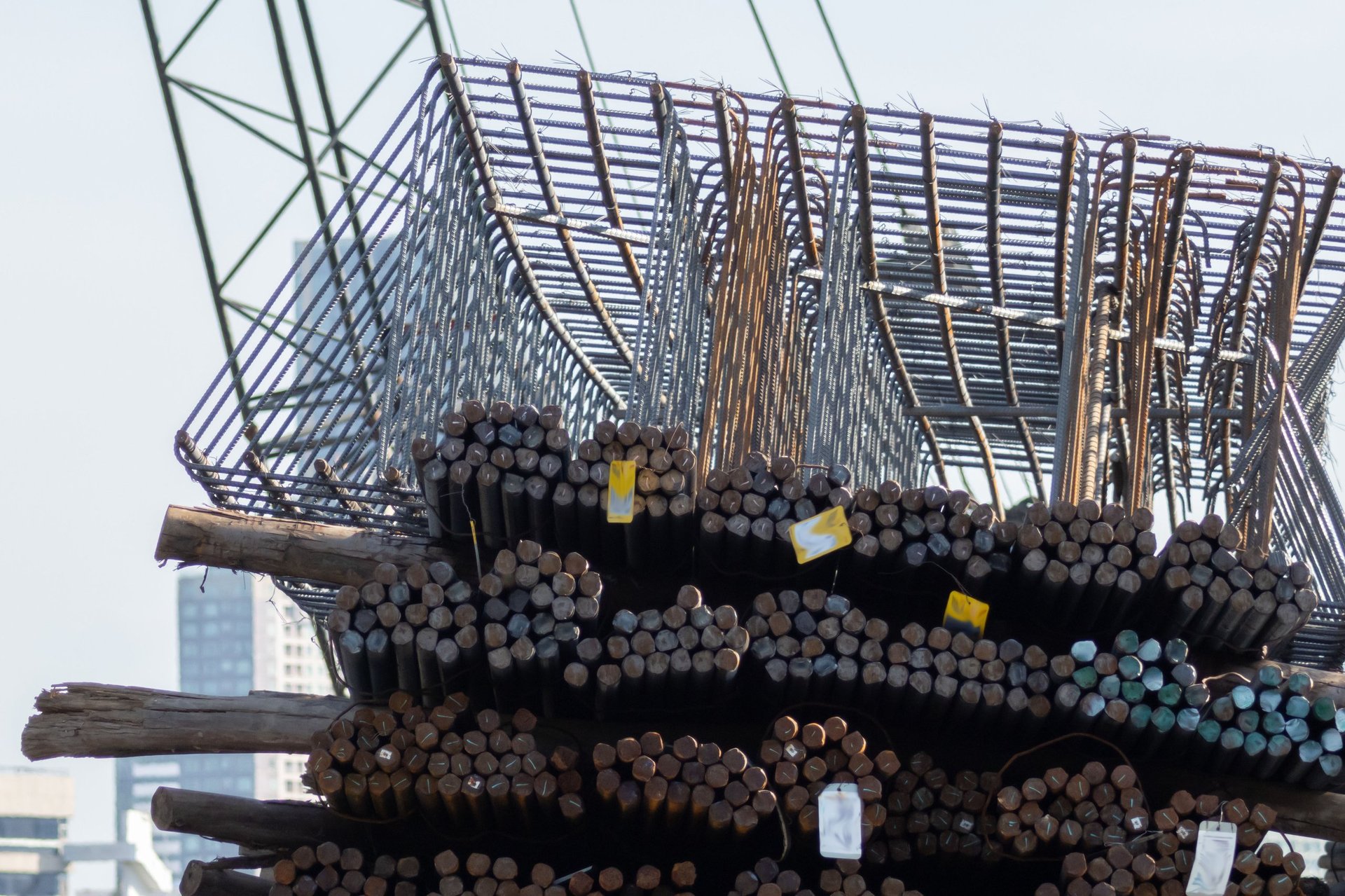
A ready-stock requirement rarely ends at the material. Once the specification is fixed, handling, packing and the delivery point become the variables that decide whether the consignment is actually usable on the date you need it.
- Volume against a programmeWhen the requirement is a scheduled call-off rather than a single urgent lot, the question shifts from availability to programme alignment.Continue to bulk steel supply
- Specification without a market matchWhen the grade, coating or dimensional combination is not held as a standard position, sourcing becomes a sourcing problem, not a stock problem.Continue to custom steel sourcing
- Movement beyond the GCCWhen the destination sits outside the Gulf, documentation, origin and route selection start to govern the commercial outcome.Continue to international steel export
- Getting it to the delivery pointWhen the material is agreed but the delivery place, mode or handling arrangement is unresolved, logistics is the open decision.Continue to logistics solutions
- Multiple requirements, one processWhen several product forms have to be consolidated under one procurement process with a single set of acceptance terms.Continue to steel procurement
GCC country hubs
Six destinations, six different requirement sets
Destination is not a shipping detail — it rewrites the document set, the inspection obligation and the RFQ basis. Choose the market that matches your consignee.

United Arab Emirates
- Destination
- The domestic clearing point. Materials entering Dubai or Abu Dhabi ports move under UAE federal import procedure before any onward delivery.
- Importer / document checks
- Confirm whether the receiving yard requires a UAE-conformity mark, Arabic labelling or a certificate of origin legalised for local customs.
- Delivery-place input
- Name the emirate, the free zone or mainland yard, and whether delivery is port, yard or site.
- RFQ implication
- State whether you collect ex-stock-holding point or require delivered-to-site pricing, since the two diverge sharply by emirate.

Saudi Arabia
- Destination
- The most document-intensive GCC destination. Consignments move through a conformity-assessment programme before customs release.
- Importer / document checks
- Verify whether your product form falls inside the scope of the conformity scheme in force, and whether a pre-shipment inspection certificate is required.
- Delivery-place input
- Name the port of entry (Dammam, Jeddah or Jubail), then the inland destination, as these change transit materially.
- RFQ implication
- Add the conformity route and inspection body to the RFQ, otherwise the quotation cannot be made landed.

Qatar
- Destination
- Project-driven destination where consignees are frequently EPC contractors working to a material approval schedule.
- Importer / document checks
- Confirm whether the project specification imposes additional third-party inspection beyond the product standard itself.
- Delivery-place input
- Name the port (Hamad) or the project laydown area, and whether the contractor or the owner is the consignee.
- RFQ implication
- Attach the project material approval submittal requirements so inspection scope can be quoted rather than assumed.

Kuwait
- Destination
- Commercial destination where consignees are often trading houses rather than end users, so the buyer of record differs from the user.
- Importer / document checks
- Confirm the importer of record and whether a legalised commercial invoice is required before release.
- Delivery-place input
- Name Shuaiba or Shuwaikh port and the inland delivery point.
- RFQ implication
- State who clears customs, since the importer of record changes both the document set and the quote basis.

Bahrain
- Destination
- Short-sea destination reached through Khalifa bin Salman port, with smaller consignments an economical option.
- Importer / document checks
- Confirm whether a certificate of origin is required in original, and the legalisation route it must follow.
- Delivery-place input
- Name the port and the Manama-area or industrial-zone delivery address.
- RFQ implication
- Confirm the consignment size, because smaller lots change the packing plan and the inland transport booking.

Oman
- Destination
- Reachable by land as well as sea, which makes the transport mode a genuine commercial variable rather than a fixed cost.
- Importer / document checks
- Confirm whether Sohar or Salalah is the entry point, since documentation and transit differ between them.
- Delivery-place input
- Name the port or the land border crossing, then the inland delivery point.
- RFQ implication
- State whether a road movement is acceptable, because it changes packaging, load configuration and transit commitment.
These pages plan the destination side of the requirement. They do not assert a local office, a local stock position or a branch in any market — nothing on this route does.
Buyer advantages
Four concerns, and what actually answers them
Each row pairs a concern you are entitled to raise with the evidence or capability that answers it, and the procurement outcome that follows. No claim here rests on being better than anyone — only on being specific.
| Buyer concern | Evidence or capability | Procurement outcome |
|---|---|---|
| “Can this actually be supplied in time?” | The required-by date is captured as a first-class field in the qualifier, and the RFQ carries it forward. Availability is answered against a resolved specification, not against a browsing session. | You receive a confirmation that addresses your date, or an explicit statement that it cannot be met — never an implied promise. |
| “Will what arrives match what I specified?” | The qualifier locks the product form, the governing standard and the dimensional discriminator, and it warns where a standard does not govern the selected product form. | Scope mismatches surface before the order, not at the inspection stage when the material is already on the water. |
| “What proves the material is what it claims to be?” | Required documents are selected up front and written into the RFQ summary, with the source hierarchy for this route published alongside. | Acceptance terms are agreed in the enquiry instead of being negotiated after delivery, which is where documentation disputes become expensive. |
| “What happens if a substitution is offered?” | Substitution boundaries are stated explicitly — exact specification only, equivalent standard, or nearest available grade subject to review — and carried into the summary. | Any deviation arrives as a declared, reviewable proposal rather than as a silent change discovered on a mill certificate. |
This table describes how the route works, not how the company performs against competitors. Where a performance claim would require evidence this route does not hold, it is left out rather than softened.
From enquiry to delivery
Five stages, and what each one needs from you
A ready-stock enquiry stalls for predictable reasons: a missing input, an unowned decision, or a document nobody agreed to accept. Each stage below names its input, its output, its risk and who owns it.
- 01
Enquiry
- Owner role
- Buyer's procurement contact
- Required input
- Product form, dimensions, quantity with unit, destination and required-by date.
- Evidence or output
- A stock-check specification that can be answered without a follow-up round trip.
- Risk if skipped
- An incomplete enquiry is answered with a generic response that wastes both parties' time.
- 02
Technical review
- Owner role
- Supplier's technical review — the role that checks specification against product form
- Required input
- Governing standard and edition, grade, tolerance class and any application condition.
- Evidence or output
- Confirmation that the specification is internally consistent, or a stated conflict.
- Risk if skipped
- A standard applied outside its product-form scope is the most common source of rejected material.
- 03
Evidence and document check
- Owner role
- Buyer's QA and the supplier's documentation role jointly
- Required input
- The list of certificates, inspection reports and traceability records you will accept.
- Evidence or output
- An agreed document set, with any third-party inspection scope named.
- Risk if skipped
- Acceptance criteria agreed after shipment cannot be enforced at the port.
- 04
Commercial and logistics alignment
- Owner role
- Buyer's commercial contact and the supplier's commercial desk
- Required input
- Incoterm preference, delivery place or port, packing requirement and consignment size.
- Evidence or output
- A quotation on a defined basis, so the price can be compared like for like.
- Risk if skipped
- Quotes on different delivery bases are not comparable, which is how a lower offer becomes the more expensive one.
- 05
RFQ and next action
- Owner role
- Buyer's procurement contact
- Required input
- The qualified RFQ summary produced by the qualifier above.
- Evidence or output
- An availability confirmation against the resolved specification, or a declared constraint.
- Risk if skipped
- Proceeding without a written confirmation of the specification leaves the order open to interpretation.
Owner roles are described by function rather than by department, because this route does not assert an internal organisational structure or a service level that has not been agreed in writing.
Buyer FAQ
The questions that decide whether this route works
These are the questions a procurement team asks after the route is understood — not the definitions already settled above.
What inputs are required before using Ready Stock Supply for a purchasing decision?
Five inputs decide whether an availability question can be answered at all: the product form, the dimensions that discriminate it, the quantity with its unit, the destination, and the date the material must be on site. The governing standard and grade sharpen the answer but a missing product form or dimension cannot be compensated for by any amount of commercial detail. The Urgent Availability Qualifier above will not name a technical route until the product form and at least one dimensional discriminator are both present; until then it returns the fields you are missing rather than a recommendation.
Which specification details should be fixed before requesting a quote from this service page?
Fix the product form, the governing standard and its current edition, the grade or class within that standard, the dimensional discriminator, and the tolerance class your application cannot relax. Where the product is ordered against a schedule or a project specification, that document governs and should be referenced directly. Availability and price follow from a resolved specification; requesting a quote against an unresolved one produces a number that cannot be compared with anything.
Which documents or evidence should be requested before acceptance?
At minimum, a mill test certificate at the EN 10204 type your acceptance process requires, heat or cast number traceability, and a certificate of origin where the destination requires it. Where third-party inspection is a project obligation, the inspection scope and the nominated body must be named in the enquiry — an inspection arranged after shipment cannot produce a certificate that governs the delivery. Select the documents you depend on in the qualifier and they are written into the RFQ summary automatically.
How should equivalent grades or substitutions be controlled?
Declare the position before the enquiry, not after an offer arrives. The qualifier records one of three positions: exact specification only, equivalent standard permitted where properties and tolerances are demonstrated, or nearest available grade subject to review. If you permit an equivalent, the offer must name the standard being substituted and the equivalence being claimed. If the governing standard and the selected product form do not match, the qualifier shows a scope conflict and does not substitute one for the other — that mismatch has to be corrected by you.
Which destination and delivery fields belong in the RFQ?
Name the country, then the port or border crossing, then the inland delivery place, and state whether the price is required on a delivered basis or collected. Add the Incoterm preference and the consignment size, because both change the packing plan and the transport booking. Customs, conformity, origin and importer obligations follow from these fields and cannot be quoted landed without them. Each of the six GCC country hubs above sets out the checks specific to that destination.
Qualified RFQ
Turn the qualified specification into an answer
The RFQ is the only place an availability question actually gets settled. Build the summary above, copy it, and carry it into the request — the fields are already in the order a commercial desk works through them.
RFQ handoff fields
- Product form
- Governing standard and edition if known
- Grade / class / type
- Dimensions and tolerances
- Quantity and unit
- Application or service condition, when these affect the grade
- Destination city, place or port
- Incoterm preference
- Required inspection, material or conformity documents
- Acceptable substitutions, or “none”
Build this list in the Urgent Availability Qualifier above and copy it directly. Anything you cannot state yet is listed as a field to verify rather than filled with an assumption.
Next action
Submit the requirement against a resolved specification
Availability, source, price and lead time are confirmed against the specification you submit — never against a page. Submit the requirement and the review begins with the exact fields above.
Request a Quote- A partially specified requirement is still worth submitting — missing fields are identified rather than assumed.
- No stock figure, mill source or lead time is published on this page; all three come from the response to your enquiry.
- Country-specific document and customs inputs are set out in the GCC country hubs above.
Continuing from services, or step back to the steel procurement route if several requirements are open at once.