Technical Resource

Scaffolding Pipe Weight Chart

A scaffold tube weight chart has two jobs, and they must not be confused. The first is arithmetic: from an outside diameter, a wall thickness, a length and a stated density, a theoretical mass per metre and per piece can be calculated exactly, and that number is genuinely useful for handling, bundling, freight and lifting planning. The second is compliance, and no weight figure answers it. Mass is not a dimension, not a tolerance, and not a standard. A calculated value cannot evidence that a tube meets any scaffold-tube specification, and it must never be used as though it could.

Free, no-obligation technical review

Information current as of

Send these inputs

  • Outside diameter + unit
  • Wall thickness + unit
  • Length + unit
  • Density assumption
  • Standard + revision
  • Finish / coating
  • Destination / named place
  • Quantity + unit basis

Working technical tool

Scaffold Tube Theoretical Weight Calculator

Enter the geometry, the density assumption and the quantity. The calculator produces a theoretical mass and shows every step of the working. It never asserts conformity — the governing standard sits in its own field, which the arithmetic cannot populate.

Step 1 — Geometry and assumptions

Outside diameter *

Wall thickness *

Length *

Values are recorded exactly as entered. Density is your assumption, not a constant this page imposes. No standard, grade or coating is assumed on your behalf.

Step 2 — Theoretical result

Not yet calculated

Add the required fields to calculate the theoretical mass.

Missing: Outside diameter, Outside diameter unit, Outside diameter basis, Wall thickness, Wall unit, Length, Length unit, Density assumption, Density source, Quantity, Governing standard + revision, Finish / coating. Nothing is defaulted in their place; the calculation runs only when the geometry and its assumptions are all present.

Mass per metre

—

Mass per piece

—

Cross-section

—

Total mass

—

Missing fields (12)

  • Outside diameter
  • Outside diameter unit
  • Outside diameter basis
  • Wall thickness
  • Wall unit
  • Length
  • Length unit
  • Density assumption
  • Density source
  • Quantity
  • Governing standard + revision
  • Finish / coating

Assumptions and method

  • The calculation is geometry only. Nothing about grade, standard or conformity enters the arithmetic.
  • Every value is used exactly as entered. Nominal figures produce a nominal result.
  • Density is the figure you supplied, not a value this page imposes.
  • Coating mass is not included unless you have stated that it is accounted for elsewhere.
  • The result is theoretical. It is not a certified mass and not evidence of conformity to any standard.

What this calculation does not establish

  • Mass does not evidence conformity. A matching mass per metre between two tubes does not mean they meet the same standard — mass follows from dimensions, and different specifications can share dimensions.
  • The governing standard and revision is an independent input. The calculation cannot populate it and cannot verify it.
  • Where BS EN 39 is referenced, preserve its status: BSI records BS EN 39:2001 as withdrawn from 21 May 2026, so a theoretical kg/m figure cannot stand as evidence of EN 39 conformity.
  • Conformity is established by a mill test certificate and inspection against the named standard, traceable to the supplied lot.
  • Where mass is a commercial term, agree it against a calibrated weighing record — not against a calculated figure.

Copyable RFQ line

SCAFFOLD TUBE THEORETICAL WEIGHT — RFQ LINE
Governing standard + revision: TO CONFIRM
Outside diameter: TO CONFIRM (basis TO CONFIRM)
Wall thickness: TO CONFIRM
Length: TO CONFIRM
Density assumption: TO CONFIRM
Quantity: TO CONFIRM
Finish / coating: TO CONFIRM
--- Theoretical result (geometry only) ---
Cross-sectional area: not calculated
Theoretical mass per metre: not calculated
Theoretical mass per piece: not calculated
Total theoretical mass: not calculated
Basis: theoretical, from stated geometry and density. Coating mass excluded unless stated.
Conformity: NOT established by this calculation — required independently via the governing standard and mill test certificate.
Status: planning aid only — not a certified mass and not an engineering approval.
Transfer this into the RFQ

The geometry, assumptions and theoretical result are carried into the enquiry form.

Method, formula and data conditions

Six rules that keep a weight figure honest

The method is arithmetic, and its limits come from what arithmetic can and cannot reach. Each rule below exists because breaking it produces a mass figure that looks authoritative and is being asked to answer a question it never touched.

Rule 01

The calculation is geometry, not metallurgy

The theoretical mass of a tube follows from its cross-sectional area and length. Nothing about the steel's grade, its standard or its conformity enters the arithmetic — which is precisely why the result cannot speak to any of them.

Rule 02

Mass is the annular area, not the full circle

A tube is a wall, not a solid rod. The area used is the ring between the outside diameter and the bore, so a small wall change moves the result substantially. That sensitivity is why wall is the field the calculator watches most closely.

Rule 03

Density is an assumption you state

The calculation needs a density figure. It is entered, not assumed silently, and it is carried into the result so anyone reading the number can see what produced it. A different density gives a different result from the same geometry.

Rule 04

Nominal versus actual geometry

The calculation uses the dimensions you enter. If those are nominal figures, the result is a nominal theoretical mass. Real tube varies within its tolerances, so actual mass will differ — sometimes meaningfully across a full consignment.

Rule 05

Coating is a separate addition

Where a coating applies, the bare-steel calculation does not account for it. Coating mass is additional, and it is stated separately rather than being folded into the theoretical figure as though it were part of the geometry.

Rule 06

The result is theoretical and stays labelled so

Results are labelled theoretical throughout. A theoretical mass is a planning input for handling and freight. It is not a certified mass, not a substitute for a mill test certificate, and not evidence of conformity to any standard.

The formula, and the two things it needs

The theoretical mass of a tube is its annular cross-sectional area multiplied by its length and by a density. The calculator works in millimetres and converts to metres internally; every conversion and every intermediate figure is shown in the working beneath the result so it can be reproduced and checked by anyone reading it.

QuantityIt is derived fromSource of the input
Annular cross-sectional areaπ/4 × (OD² − bore²), where bore = OD − 2 × wallYour entered geometry
Theoretical mass per metreArea (m²) × density (kg/m³)Your density assumption
Theoretical mass per pieceMass per metre × length (m)Your entered length
Total theoretical massMass per piece × quantityYour entered quantity

No published mass table is reproduced on this page, and no density value is imposed. Density is your input and its source is recorded with the result — published figures vary with the material and its treatment, so the assumption has to travel with the number.

Source hierarchy

Geometry from your own specification first, density from a stated and traceable figure second, and the governing standard held as an independent field that arithmetic cannot populate.

Applicability

A result applies to the geometry it was calculated from. Change the wall or the density and it is a different figure — so the assumptions are carried with the number wherever it is reused.

Limitations

No tolerance value, unit mass table, load capacity or dimensional limit is published here. The result is theoretical, excludes coating unless stated, and says nothing about conformity to any standard.

Procurement-grade worked examples

Three situations that recur on weight enquiries

Each example shows the input, the method applied, the result, what it means, what it changes and how to verify it. No company, project or supplier data is used or implied.

1

Using a calculated mass to argue conformity

Input

A quotation states a mass per metre for a scaffold tube. The buyer proposes to accept it as evidence that the tube meets the required scaffold-tube standard.

Method applied

The calculator separates the two questions. It computes the theoretical mass from the stated geometry and records the standard field as an independent input that the calculation cannot populate.

Result

Calculation status: theoretical mass produced. Compliance status: not addressed by the calculation at all.

Interpretation

Mass is a consequence of geometry. Two tubes made to entirely different standards can share a mass per metre if their dimensions agree — so a matching mass is not evidence of a matching specification, and a differing mass is not proof of non-conformity either.

Decision impact

Accepting a mass figure as conformity evidence can put non-conforming tube into a scaffold on the strength of an arithmetic identity.

Verification step

Require the governing standard and revision, plus a mill test certificate traceable to the supplied lot. Judge conformity against the standard, never against the weight.

2

A nominal calculation against a delivered consignment

Input

The theoretical mass is calculated from nominal dimensions as a freight planning figure. On arrival, the consignment weighs more than the calculation predicted.

Method applied

The calculator records the dimensions as nominal and flags the basis. Its result carries the label that the figure derives from nominal geometry, not measured geometry.

Result

Calculation status: nominal theoretical mass. Difference against delivery: outside the calculation's scope, and not treated as a deviation.

Interpretation

Dimensional tolerances permit real tube to sit above or below the nominal figure. Coating, if present, adds further mass. The difference is expected behaviour, not an error in the arithmetic.

Decision impact

A freight plan built on a nominal figure can under-estimate the load, which matters at the point the bundle is lifted.

Verification step

For a load-critical figure, work from measured dimensions on the actual consignment rather than nominal geometry, and confirm any coating addition.

3

The same tube in two unit systems

Input

One enquiry gives dimensions in millimetres and another in inches. Both are entered without a unit on the individual fields.

Method applied

The calculator requires a unit on every dimensional field and will not infer one from the other or from the size designation. A missing unit holds the row as incomplete.

Result

Calculation status: not run — units unresolved. No mass figure is produced.

Interpretation

A bare number is not a dimension, and converting it silently would hide both the factor and the rounding rule from everyone downstream. The arithmetic is only meaningful once each value states its unit.

Decision impact

A mass calculated across mixed units corresponds to no real quantity, and would be acted on as though it did.

Verification step

State the unit on every field, convert explicitly with the factor recorded, then re-run the calculation on the converted basis.

None of the examples states a density value, a unit mass or a tolerance figure. Those belong to the material and the governing standard, and each example shows the verification step that resolves it rather than a number this page cannot evidence.

Standards and tolerance context

Which input drives the figure, and which cannot touch it

Two of the inputs move the calculated mass directly, several shape what the result is allowed to claim, and one is deliberately outside the arithmetic altogether. The tables below separate them.

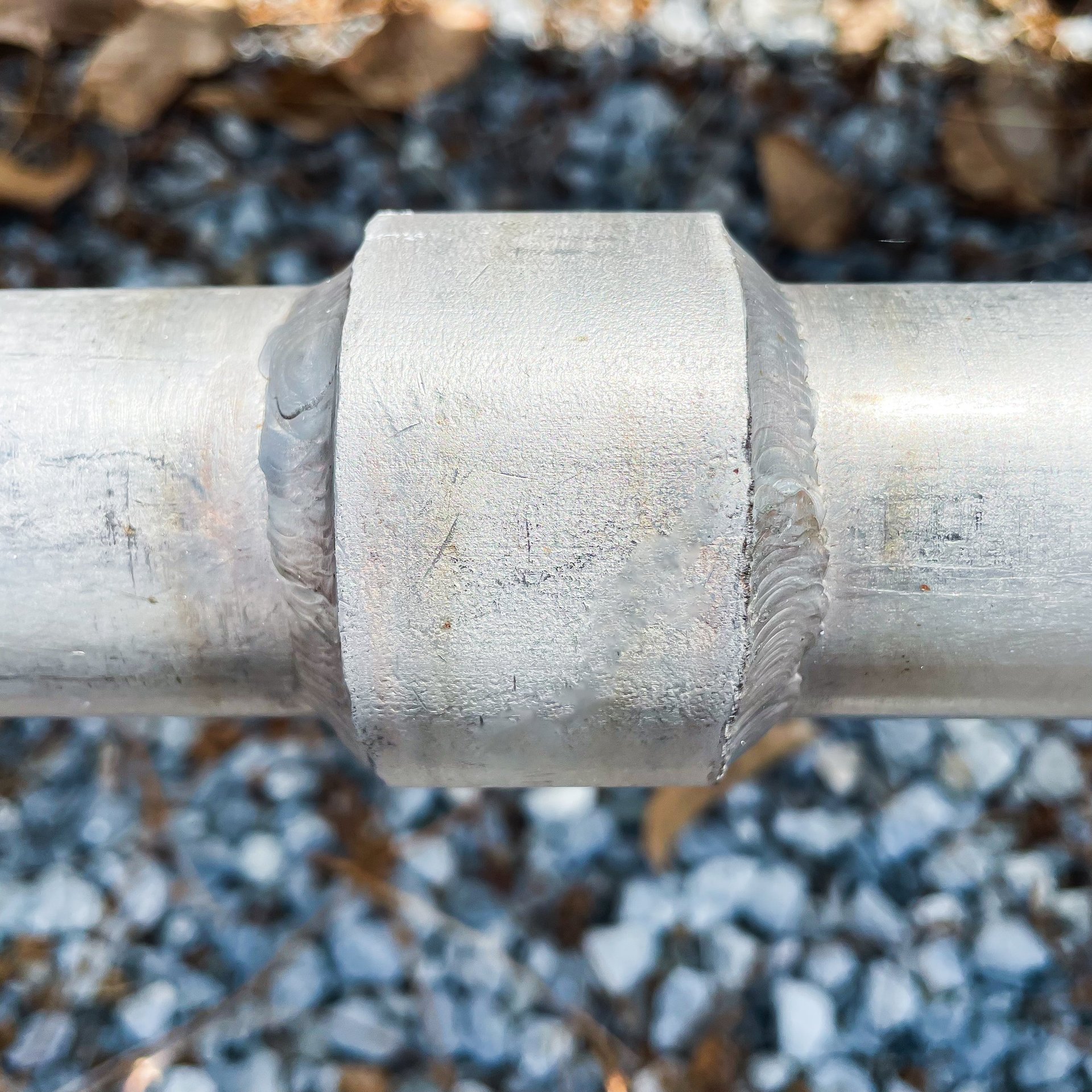
Scaffolding Pipe Weight Chart — dimensional inspection detail
The geometry the calculation depends on is the same geometry an inspection measures — which is why a dimensional record, not a mass figure, resolves a discrepancy.

What each input does to the result

Every row names its applicability and the verification requirement behind it.

InputWhat it does to the calculationVerification requirementRFQ field
Outside diameterThe outer boundary of the annular section the mass is calculated from.Buyer states the value, its unit and whether it is nominal or measured.OD field
Wall thicknessThe section depth. Small changes move the result substantially, so precision here matters most.Buyer states the value and its unit; never inferred from the size name.Wall field
LengthThe third dimension of the calculation, and the basis of a per-piece figure.Buyer states the value, unit and basis.Length field
Density assumptionThe figure the calculation divides by. It is a stated input, not a constant the page imposes.Buyer states the density used and where it came from.Density field
CoatingAdditional mass beyond the bare-steel calculation; not part of the geometry.Buyer states the finish and confirms whether coating mass is included or separate.Finish field
Governing standard + revisionThe document conformity is judged against. The calculation cannot populate it.Buyer cites the standard and edition independently of any weight figure.Standard / revision field
Grade designationThe strength basis. It does not change the calculated mass, because mass is geometry.Buyer states the grade in full with its edition.Grade field
Tolerance basisWhere the permissible dimensional variation is defined — the reason actual mass differs from theoretical.Buyer supplies the tolerance source from the accepted standard.Tolerance source field

Tolerance and value — where figures are deliberately absent

Suppressed values are replaced by the exact input needed to resolve them.

ParameterDecision implicationVerification requirementRFQ field
Outside diameter tolerancePermitted variation on the outer boundary, which changes the calculated mass.Not published here. Take from the tube standard governing the specific supply.Tolerance source field
Wall tolerancePermitted variation on wall — proportionally the largest source of mass difference.Not published here. Take from the same governing standard.Tolerance source field
Length tolerancePermitted variation on length, which scales a per-piece figure directly.Not published here. Take from the standard or the agreed cut schedule.Length field
Density valueThe figure used in the calculation. Published values vary with the material and its treatment.Not imposed by this page. State the density used and its source with the result.Density field
Unit mass basisThe mass figure a catalogue or quotation quotes, and what it is calculated from.Not published here. Require the geometry and density behind any quoted mass.Verification requirement
Coating massAdditional mass a coating contributes, which the bare-steel calculation omits.Not published here. Confirm against the coating standard and the coupler range.Finish field

Mass against conformity — the distinction the chart exists to preserve

Each figure below is a different kind of statement. Reading one as another is the single most consequential mistake made with a weight chart.

FigureWhat it isWhat it is not
Mass per metreA calculated quantity derived from outside diameter, wall and density.It describes geometry. It does not describe the material, its grade, its tolerances or the standard it was made to.
Piece massThe mass per metre multiplied by length.Useful for handling, bundling and load planning. It is not a certified mass and it is not evidence of conformity.
Total consignment massPiece mass multiplied by quantity.A planning figure. Actual consignment mass differs with tolerances and coating, so it should not be the basis of a weight-based commercial settlement.
Standard conformityWhether the tube meets a named standard and edition.Established by inspection and certification against that document — never by any mass figure, however carefully calculated.
Actual massThe measured mass of real tube on a calibrated scale.Exists only as a measurement. It still does not evidence conformity to a scaffold-tube standard.

Evidence warning

Numerical chemistry, mechanical properties, tolerances, coating mass, unit weight tables, load capacity and dimensional limits are not printed on this page. Each is published by the standard and edition governing your supply, and each has to be read from that document for the specific material. Where a figure is needed to proceed, the row above states the input to supply instead.

Verification and misuse controls

What has to be confirmed, and how a weight chart gets misused

The first table is the documentation a mass figure depends on — what it verifies, who issues it, when it is needed and what breaks without it. The second is the six ways a weight chart is most often read wrongly, and the control against each.

Document / recordWhat it verifiesSource / issuerWhen requiredDependency
Mill test certificateThe standard, edition and grade the tube was made and tested toCertificate naming the accepted document, traceable to the supplied lotBefore quotation is finalisedA calculated mass stands in for the evidence that actually resolves conformity.
Dimensional recordMeasured outside diameter and wall against their tolerance basesMeasured record taken against a stated instrumentBefore dispatchThe calculation is run on nominal figures that the delivered tube may not match.
Density sourceWhich figure was used in the calculation and where it came fromThe density value and its stated source, recorded with the resultWith the calculationA mass figure circulates with no traceable basis behind it.
Calibrated weighing recordThe actual mass of a consignment, where a weight-based term appliesWeighbridge or calibrated scale record from the carrier or siteBefore dispatch or on arrivalA theoretical figure is treated as though it were a measurement.
Coating documentationWhether a coating applies and what mass it contributesFinish record naming the standard and method where a coating appliesBefore dispatchCoating mass is silently folded into, or silently omitted from, the total.
Tolerance sourceWhere the permissible variation behind the mass difference is definedCitation of the standard, edition and clause in the accepted documentBefore the calculation is used commerciallyA discrepancy between calculated and actual mass is read as an error rather than as tolerance.
Scaffolding Pipe Weight Chart — document verification setup
Documents tie a mass figure back to the material it describes — and they are what resolves conformity. A calculated weight does not replace them, and is never offered in place of one.

Common input errors and the control against each

1

Treating a weight as conformity evidence

A calculated or quoted mass is accepted as proof that tube meets a scaffold-tube standard.

Keep the calculation and the standard field mutually independent. Conformity is evidenced by certification against the standard, never by mass.

2

Reading a nominal mass as a measured one

A figure calculated from nominal dimensions is used where an actual weighed mass is needed.

Label every result theoretical, and where the actual mass matters, work from measured dimensions or a calibrated weighing record.

3

Assuming density is a fixed constant

The calculation is run with a density nobody stated, and the result is quoted as though the figure were universal.

Enter the density as an explicit field, with its source, so the result carries the basis it was produced from.

4

Folding coating into bare-steel geometry

A coating's mass is added to, or omitted from, the theoretical figure without being stated.

Record coating mass separately and say plainly whether the figure in front of you includes it.

5

Settling commercially on a theoretical figure

A weight-based commercial term is agreed against a calculated mass rather than a measurement.

Where mass is a contractual basis, agree it against a calibrated weighing record and name the place it is taken.

6

Mixing unit systems in one calculation

Values in different units are combined without conversion, producing a figure that corresponds to nothing.

State the unit on every field. The calculator flags a mismatch rather than converting silently.

When engineering review is required

A theoretical mass answers a planning question about handling, bundling, freight and lifting. It does not answer whether a tube is suitable for the access it will support, whether a load class is met, or whether the material conforms to a named standard. Those are judgements belonging to the responsible engineer and to certification against the governing document — a weight figure, however carefully calculated, is not a substitute for either.

Product decision handoff

Where the weight chart hands over

A theoretical mass describes geometry. It does not choose the tube form. The listed route below carries that decision, with its own boundary stated.

Scaffolding Pipe Weight Chart — tube and coupler interface context
Where a coating applies, the mass the calculation produces and the diameter the coupler meets are both affected — the two consequences are separate and both have to be stated.
Type route

galvanized scaffolding pipe supplier

Use where: Use where the coated tube form is the open decision, and where coating mass has to be accounted for alongside the bare-steel calculation.

Boundary: The coated form does not settle the coupler family or the scaffold design — and the coating adds mass the bare-steel calculation does not include.

Open galvanized scaffolding pipe supplier

What this handoff cannot tell you

Neither the calculation nor the type route establishes conformity, load capacity or design adequacy. Those come from the governing standard, the certification for the lot and the responsible engineer — the page states the input to supply rather than asserting a value it cannot evidence.

Related related tools and pages

Continue by the next task, not by a link list

Two listed destinations, grouped by the question they resolve. Take the one matching what is still open.

GCC product × country routes

Destination input by market

Each market page sets out the commercial route for a scaffolding pipe enquiry into that country — destination, importer, documents, Incoterm and delivery point kept explicit rather than assumed. Ports, charges, transit times and delivery dates are quotation dependent and are not published here.

Delivery inputs

Named place, site access, offloading position and the window the project needs. Each is a field on the enquiry rather than an assumption made at quotation.

Document set

The documents each market requires are stated on the enquiry with their issuers, so the scope is quoted rather than negotiated after order.

Incoterms 2020

The rule is quoted with its named place and port. The Incoterm defines delivery obligations — it does not by itself settle title, payment terms, duty or customs clearance.

Expert insight

A calculation-versus-compliance separation

Decision question

How should a buyer use a scaffolding-tube weight chart when the legacy EN 39 reference is withdrawn?

Method
Verify standard status separately, then calculate theoretical mass only from declared geometry and assumptions.
Information date

Primary source

BSI Knowledge — BS EN 39:2001, Loose steel tubes for tube and coupler scaffolds

https://knowledge.bsigroup.com/products/loose-steel-tubes-for-tube-and-coupler-scaffolds-technical-delivery-conditions

Scope, as published

BSI records BS EN 39:2001 as withdrawn from 21 May 2026; a theoretical kg/m result is therefore not evidence that a tube meets EN 39 or any replacement or project standard.

Limitations

  • Actual mass varies with dimensional tolerances and coating.
  • The public BSI page is a status source, not a source for copying proprietary dimension tables.

Buyer implication

Label calculated weights as theoretical and require the governing standard/revision plus MTC/inspection evidence independently.

Evidence-led buyer advantages

Buyer concern → evidence → outcome

Four concerns that come up on almost every weight enquiry, and what actually resolves each one. No superiority claims — the resolution is a process, not a property of the steel.

01

A weight figure accepted as conformity evidence

The calculation and the standard field are held independently, and every result is labelled theoretical throughout.

Conformity decided by certification against the standard, with the mass figure used only for what it describes.

02

A nominal figure used where an actual mass is needed

The result states the basis it derives from, and a calibrated weighing record is the stated route where mass is load-critical.

Handling and freight planned on figures whose basis is visible to everyone reading them.

03

Density assumed rather than stated

Density is an explicit input carried into the result, so the figure always travels with the basis that produced it.

Calculations that can be reproduced and checked by the next person, not just trusted.

04

Coating mass silently included or omitted

Coating is recorded separately and the result says plainly whether it is inside the figure or additional to it.

Consignment mass understood in full, including what the finish contributes.

Concern/Evidence or capability required/Procurement outcome

From enquiry to delivery

Six stages, and who owns each

Each stage names the owner, the input it needs, the evidence it produces, the risk of skipping it and the next action. The conformity stage is deliberately separate from the calculation — they answer different questions and belong to different people.

Stage 01

Geometry entered

Owner: Buyer / technical reviewer

Required input

Outside diameter, wall and length with units, each marked nominal or measured.

Evidence / output

A documented geometry the calculation can be reproduced from.

Risk if missing

A bare number entered without a unit and combined with values in another system.

Next action

State the unit and the basis on every dimensional field.

Stage 02

Density stated

Owner: Buyer / technical reviewer

Required input

The density figure to be used, and where it came from.

Evidence / output

A calculation whose basis travels with its result.

Risk if missing

A mass figure quoted with no traceable assumption behind it.

Next action

Record the density and its source alongside the result.

Stage 03

Theoretical mass calculated

Owner: Buyer / technical reviewer

Required input

The geometry and the density, as entered.

Evidence / output

A theoretical mass per metre and per piece, clearly labelled.

Risk if missing

The figure is carried forward as though it were a certified mass.

Next action

Label the result theoretical wherever it is reused.

Stage 04

Coating accounted for

Owner: Buyer / technical reviewer

Required input

Whether a coating applies, and how its mass is to be treated.

Evidence / output

A clear statement of whether the figure includes coating or excludes it.

Risk if missing

Coating mass silently inside or outside the number depending on who reads it.

Next action

State the coating position explicitly with the consignment figure.

Stage 05

Conformity evidenced separately

Owner: Buyer / engineer

Required input

The governing standard and revision, and the mill test certificate for the lot.

Evidence / output

Conformity established against the standard — independent of any mass figure.

Risk if missing

A weight value is used to argue a specification point it cannot speak to.

Next action

Judge conformity against the standard and its certificate, never against mass.

Stage 06

Commercial enquiry

Owner: Commercial department

Required input

Quantity with its unit basis, destination, and the Incoterm 2020 rule with its named place.

Evidence / output

A quotation request on a stated basis — price on request.

Risk if missing

A cost difference read as a commercial difference when the offers carry different obligations.

Next action

Hand the copyable calculation line to the Scaffolding Pipes enquiry form.

Buyer FAQ

Post-decision questions

The questions that come up once the buyer has established that a calculated mass and a conformity statement are two different things.

1

Can a calculated weight prove a tube meets a scaffold-tube standard?

No. Mass follows from geometry — outside diameter, wall and length — and nothing about the steel's grade, tolerances or conformity enters the arithmetic. Two tubes made to entirely different standards can share a mass per metre if their dimensions agree. Conformity is established by certification and inspection against the named standard and revision, never by a weight figure.

2

Why does the delivered consignment weigh more than the calculation predicted?

Because the calculation runs on the dimensions entered, and real tube sits within its permitted tolerances rather than exactly on its nominal figures. Wall in particular moves the result substantially, since a small change in wall changes the annular area considerably. Any coating adds further mass on top. The difference is expected behaviour, not an error in the arithmetic.

3

Where does the density figure come from?

It is an input you state, not a constant this page imposes. Different published values and different material treatments give different results from identical geometry, so the density used is recorded with the result. That way the figure can be reproduced and checked by anyone reading it, rather than taken on trust.

4

Should a commercial weight term be settled on a calculated mass?

For a contractual mass basis, no. A theoretical figure is a planning input for handling, bundling, freight and lifting. Where mass is a commercial term, it should be agreed against a calibrated weighing record taken at a named place, with the tolerance basis and any coating addition understood in advance.

5

How does BS EN 39's withdrawal affect a weight chart?

It changes what a weight figure can be pointed at. BSI records BS EN 39:2001 as withdrawn from 21 May 2026, so a theoretical kg/m result cannot be presented as evidence of conformity to EN 39 or to any replacement or project standard. The status has to be checked separately against the governing document, and the calculation stays what it always was — geometry.

6

What should I send if I only need a rough handling figure?

Send the outside diameter, wall and length with their units, plus the density you want used and the coating position. That is enough for a theoretical mass to plan lifting and bundling. Mark it clearly as theoretical wherever it is used, and keep the standard and certification question on its own track — they are not answered by this calculation.

Qualified RFQ

Send the geometry with its assumptions

An enquiry that arrives with its dimensions, density assumption and governing standard stated separately can be reviewed technically before it is quoted commercially. The calculation line you built above is carried into this form automatically — nothing you entered is discarded.

  • Reviewed against the standard and dimensions you state, not against a quoted weight
  • Missing inputs reported back rather than silently assumed
  • Price, availability and lead time confirmed on quotation — never published here
WhatsApp +971 56 398 0860sales@noordeirasteel.ae

Contact the commercial department

Monday – Saturday: 8.00 AM – 6.00 PM · Sunday: Closed

Request a quote — scaffolding pipe weight

Price on request. No tolerance, unit mass, load capacity or dimensional limit is asserted on this page — each is confirmed against the governing standard on quotation.

Calculation inputs

What a weight figure has to carry before it can be used

A mass figure becomes usable only when the inputs that produced it travel with it. The table below states each attachment as the question it answers and what goes wrong when it is missing.

AttachmentThe question it answersIf it is absentRFQ field
Unit on every dimensionWhat quantity is this number expressing?Metric and imperial values are combined and produce a figure corresponding to no real quantity.Unit field per dimension
Basis (nominal or actual)Is this a designation or a measurement?A nominal result is used where an actual mass is needed, and the difference is read as an error.Basis field per dimension
Density figure and its sourceWhat assumption produced this number?The figure circulates with no traceable basis, and cannot be reproduced or checked.Density field
Coating positionIs coating mass inside this figure or additional to it?Coating mass is silently included by one reader and omitted by another.Finish field
Governing standard + revisionWhat document is conformity judged against?A weight value is used to argue a specification point it cannot speak to.Standard / revision field

Why the working is shown, not just the answer

A number on its own has to be taken on trust. The calculator displays the annular area, the unit conversions, the mass per metre and each multiplication behind the total, so anyone reading the result can reproduce it from the same inputs and see exactly where a differing figure would have come from. That is what makes a theoretical mass usable across an enquiry chain rather than confined to the person who calculated it.

Worked example patterns

The three patterns behind the examples above

The worked examples are instances of three recurring patterns. Recognising the pattern is what lets you spot the same problem on an enquiry this page has never seen.

The borrowed authority

Shape
A precisely calculated figure is carried into a question it was never designed to answer — typically conformity to a standard.
Where it breaks
Precision is read as authority, and the arithmetic's genuine rigour is mistaken for evidence about the material.
Control
Keep the calculation and the standard field mutually independent, and label every result theoretical wherever it is reused.

The unwitnessed assumption

Shape
A density value is used without being stated, so the result depends on a choice nobody can see or check.
Where it breaks
Two people reproduce different figures from identical dimensions and cannot establish why they disagree.
Control
Record the density and its source with the result, so the figure always travels with the basis that produced it.

The nominal-actual gap

Shape
A figure calculated from nominal dimensions is compared against a delivered consignment and treated as a deviation.
Where it breaks
Ordinary dimensional tolerance is read as a problem, and the real explanation never gets examined.
Control
State the basis with every result. Where mass is load-critical, work from measured dimensions or a calibrated weighing record.

Reference pack

Assemble the record before you rely on any figure

There is no downloadable weight table on this page, and deliberately so — a mass table detached from its density assumption and its dimensions is exactly the artefact this resource warns against. What you can assemble is the record behind the calculation, and the list below is what that record contains.

  1. 1

    The geometry, as specified

    Outside diameter, wall and length with units, and each marked nominal or measured.

  2. 2

    The density figure and its source

    The assumption the calculation used, recorded so the result can be reproduced and checked.

  3. 3

    The coating position

    Whether a coating applies, and whether its mass is additional to or included in the figure.

  4. 4

    The working

    Annular area, unit conversions and each multiplication, so a differing figure can be traced to its cause.

  5. 5

    The governing standard and revision

    The document conformity is judged against — held independently of the calculation.

  6. 6

    The mill test certificate

    The standard, edition and grade the tube was made and tested to, traceable to the supplied lot.

  7. 7

    The dimensional record

    Measured outside diameter and wall against their tolerance bases, taken with a stated instrument.

  8. 8

    A calibrated weighing record, where mass is contractual

    The actual mass of the consignment, taken at a named place on calibrated equipment.

Request the specification set

Send the standard and revision you intend to work to, and the commercial department will confirm what can be supplied against it, with the documents that evidence it. Price on request.

Noor Deira Steel Trading L.L.C. — Office 3303, Churchill Executive Tower, Business Bay, Dubai, United Arab Emirates.