
Steel Coil · Technical Reference
Steel Coil Width & Tolerance Guide
Width is the dimension most often argued about at goods-in, and the one most often quoted without its basis. What a coil is accepted to depends on the governing product specification, whether the edge is mill edge or slit edge, the ordered width and the measurement conditions — not on a figure carried across from a previous order.
Technical review before quotation Mill edge and slit edge kept separate Documents matched to the order
No width tolerance figure is published on this page. Coil width acceptance depends on the governing product specification, the mill-edge or slit-edge condition and the ordered size — all order-specific. Review the steel coil standards to see which specification governs your requirement.
Width fit check
Find out what still has to be fixed before the width can be agreed
Enter what you already know. The check is a completeness check, not a tolerance calculator — it reports which inputs are still open and which combinations need a decision, because coil width acceptance follows the governing product specification and the edge condition rather than a single number.
Nothing here is sent until you choose to send it. Leave a field blank rather than guessing — a requirement flagged as undecided is more useful to a technical review than a plausible value that turns out to be wrong.
Nothing entered yet
Enter the coil details to see which width inputs are still open. The check does not print a tolerance value — coil width acceptance follows the governing product specification and the mill-edge or slit-edge condition on the order, so the useful output is a list of what still has to be fixed.
Why this is not a calculator
Coil width tolerance is not a formula that can be applied to an ordered size. The governing product specification sets the tolerance and the measurement conditions, and a slit coil carries a different basis again. Printing a number here would imply an accuracy this page cannot support. Steel coil standards sets out which document applies to which requirement.
Terminology
Mill edge, slit edge and the widths in between
Most width disputes trace back to two words being used for different things. A mother coil leaves the mill at a rolled width with a mill edge. A slit coil is a secondary product made by shearing that coil lengthwise, and it carries its own width and edge allowances.
Rolled width
The width the strip is rolled to at the mill, produced with a mill edge. It is set by the rolling schedule and the mill's product range, not by the buyer's finished part width.
Mill edge
The as-rolled edge. It has not been trimmed, so the edge profile follows the rolling process and can vary slightly along the coil. Mill edge is a property of the rolled product.
Slit edge
Produced when a coil is sheared lengthwise into narrower coils. The cut edge is cleaner and the width is set by the slitting line's knife setup, with burr, camber and edge condition following the line and tooling.
Why the two must not be blended
A width figure taken from a mill-edge order does not transfer to a slit order of the same nominal size, and the reverse is equally true. The order has to say which it is, because the acceptance basis, the inspection point and the party responsible for the edge all change with it.
- Slit width quoted without a slitting specification
- Burr or camber assumed to be covered by width
- Mill width tolerance applied to a slit coil
- Coil mass limit left unstated for the uncoiler
- Edge condition changing the available width range
- Trimmed edge assumed to behave like mill edge
Acceptance basis
Where the width tolerance actually comes from
Four things have to be named before width can be checked against anything. This page does not reproduce a tolerance chart, because a figure lifted out of an unfamiliar specification and applied to a differently ordered coil is the most common source of a rejected delivery.
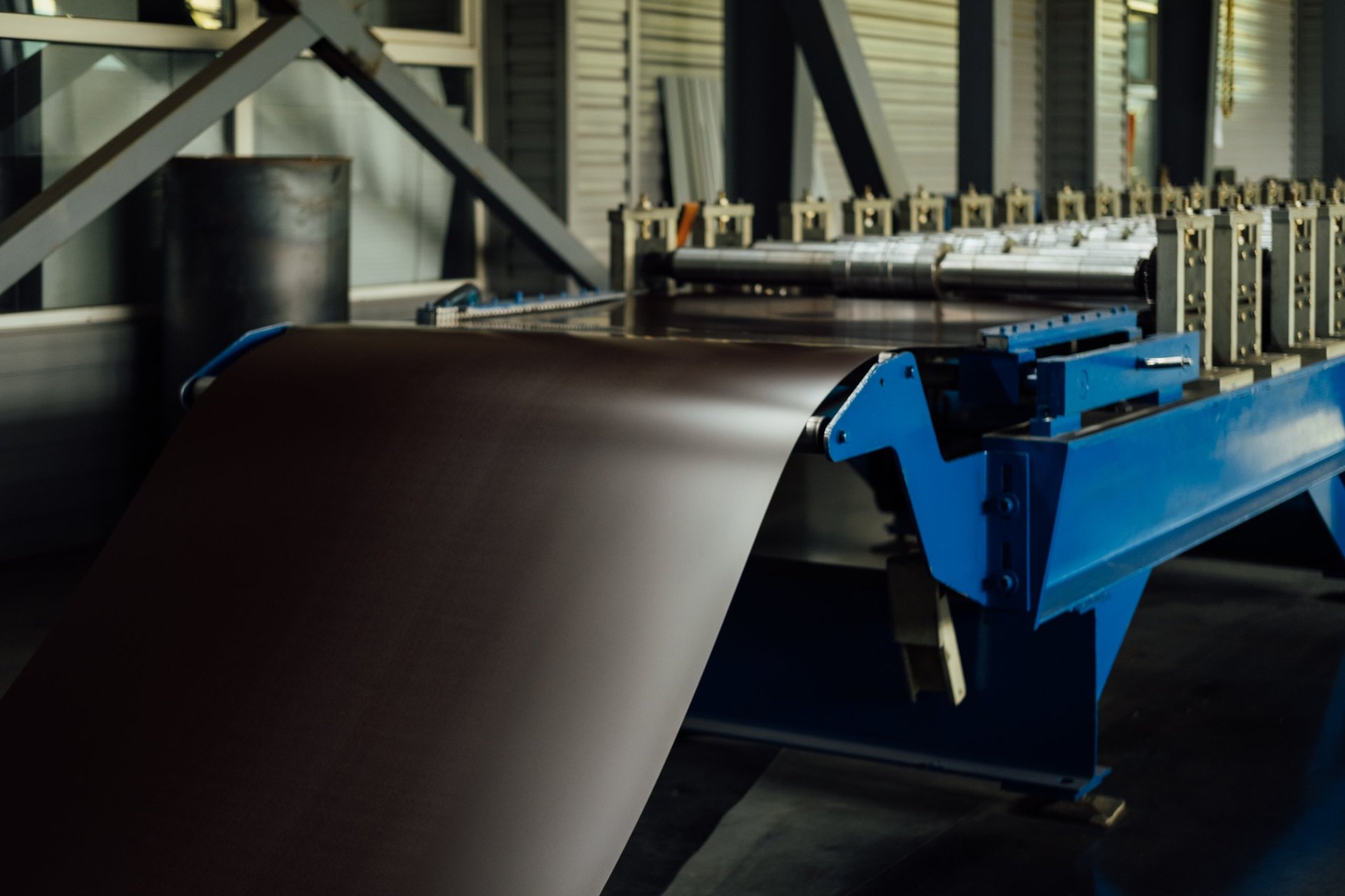
A worked interpretation
Two buyers order a 1250 mm wide, 1.2 mm thick coil. The first takes it mill edge at the rolled width and feeds it straight to a roll former. The second needs 1250 mm as a finished slit width and will run it through a tube mill. The nominal width is identical; the acceptance basis is not. The first is judged against the rolling specification's width provision for that product. The second is judged against the slitting agreement — knife setup, burr limit and camber — because the line, not the mill, produced the final width. Neither buyer can settle a delivery by quoting the other's figure.
The example is illustrative of how the basis changes. It is not a tolerance table, and no permitted departure is implied by it.
- 1The product specification and its editionCoil is ordered to a product standard, which in turn points to a dimensional or general-requirements document. That pointed-to document is what governs width, and it is edition-specific. An unqualified standard name is not enough for a width decision.
- 2The grade or designationCold-reduced, hot-rolled, hot-dip coated and organic-coated coil are judged on different dimensional provisions within the same nominal family. The designation tells you which set of provisions applies.
- 3The edge condition orderedMill edge and slit edge are separate products. Stating the edge fixes which acceptance basis is in play and who is responsible for the edge quality — the mill or the slitting line.
- 4The ordered width and thickness, with unitsTolerances are banded against the ordered size, so the ordered figure matters as much as the tolerance. Metric and imperial ordering are not interchangeable, and the unit system should be written into the enquiry.
- 5The measurement conditionsSpecifications state how and where a dimension is measured. Width measured under coil tension is not the same as width measured free; a figure without its measurement conditions cannot be verified by either party.
The governing document for your coil is published by its standards body, not by this page. Check the exact edition with the publisher or the specification your project names, and read the width provision in the context of the ordered condition. Steel coil standards sets out which document applies to which product family.
Measurement
How width is measured, and where the check goes wrong
The measurement method is part of the agreed basis. If the specification and the goods-in inspector measure in different places under different conditions, an accept/reject decision becomes a negotiation rather than a check.
| Stage | What the method requires |
|---|---|
| Instrument | A tape or steel rule suits routine width checks; a slitting-line gauge measures in line while the strip is running. The instrument should be readable to a fraction of the tolerance, not to the same order as it. |
| Position along the coil | Measure at more than one point along the length. A single reading near the leading end is the least representative place on the coil. |
| Angle of measurement | Measure across the strip at a right angle to its longitudinal axis. An oblique tape reads long — and an oblique reading is the classic false rejection. |
| Strip condition | Width is measured with the strip free of tension and reasonably flat, as the specification describes. Measuring under coil tension pulls the strip narrower. |
| Edge condition | Check burr, camber and edge cracking separately where they are specified. They are not covered by the width figure and are not visible from it. |
| Recording | Record the position, instrument and result, not only the verdict. A width rejection that cannot be traced back to a method is difficult to resolve with the supplier. |
Agree the conditions in the order
Two parties measuring to the same tolerance but in different conditions will disagree, and neither will be wrong. The measurement conditions — instrument class, position along the coil and strip tension — are cheapest to agree at enquiry, while the order can still be changed. Once the coil is on the floor, the only remaining options are acceptance under protest or a claim.

One check worth doing first
Measure the strip width at three or four points along the coil before you judge it. A coil that reads narrow only at the leading end is usually an edge handling artefact rather than a width non-conformance — and it is far easier to establish that before the coil is unbanded.
Put the basis in the enquirySpecifying it
Write the width requirement so acceptance is unambiguous
A coil enquiry is only as good as the detail behind it. Specify enough that a supplier, a slitter and an inspector would all read the same requirement — and never rely on a nominal width to carry the edge or coil-handling conditions for you.
| Input | What to state |
|---|---|
| Product specification & edition | The coil specification and, where the project pins one, its edition — plus the dimensional document it points to. |
| Grade / designation | The exact designation within that specification, including the coating designation where the coil is coated. |
| Width & thickness with units | Nominal width and thickness in the unit system ordered, so tolerances can be banded against the correct size. |
| Edge condition | Mill edge or slit edge. For slit coil, the finished slit width and who is responsible for the slitting. |
| Edge quality | Where the process is sensitive to it: burr height, camber and edge condition limits, stated separately from width. |
| Coil mass, ID and OD | The range the uncoiler mandrel and handling equipment accept — a constraint independent of the ordered width. |
| Surface & coating | Coating designation and mass, oiling or passivation, and any surface class the downstream process requires. |
| Quantity, destination, documents | Quantity basis, destination country with named place or port, and the certificates or records the project expects. |
Where the width requirement sits
Width is one line on an enquiry that starts with the material. Confirm the product family and the standard before writing the dimensions in, then check whether the coil form is the right one for the job at all.
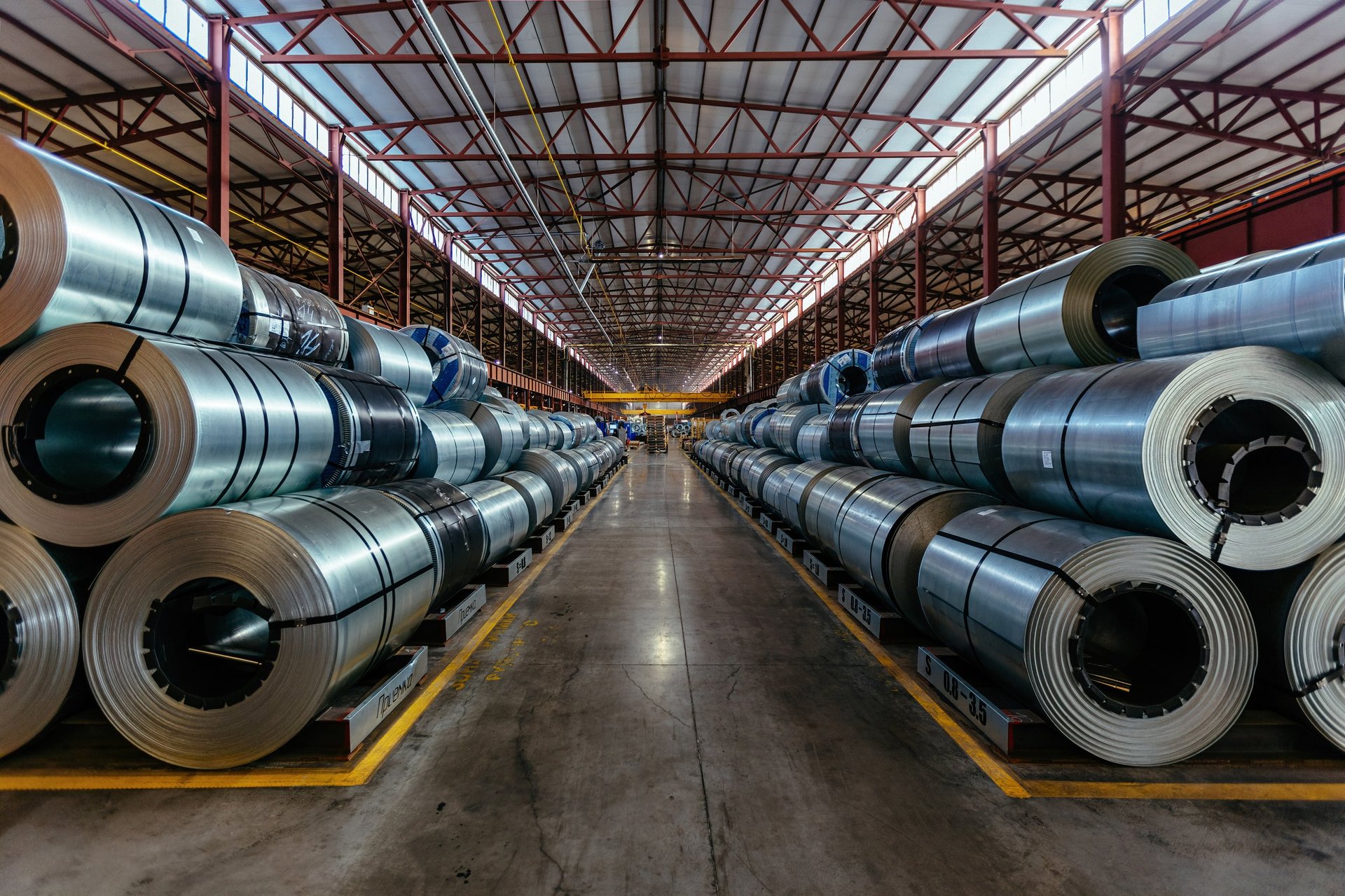
The decision most often deferred
Decide early whether the width on your drawing is a mill width you will live with, or a finished slit width you need supplied. It is rarely both, and the answer changes which specification governs acceptance.
Prepare the enquiryVerification
Check the coil against the width you actually ordered
Verification follows the purchase order, not the quotation description. Match identification, edge condition and measured width to what was ordered, and use the measurement conditions agreed at enquiry so the result is comparable.
- Confirm the edge condition firstEstablish whether the coil is mill edge or slit edge before measuring anything. It decides which acceptance basis applies, and it is the one attribute that cannot be inferred from the measured width.
- Match identification to the orderGrade or designation, heat or lot identification, coating designation and the ordered dimensions are checked together. A label naming a familiar grade but a different specification is not evidence of conformance.
- Measure width at the agreed positionsUse the instrument and positions set out in the order, with the strip free of tension. Record the readings, not just the verdict, so a borderline result can be discussed with the evidence in hand.
- Check edge quality separatelyBurr, camber and edge condition are inspected where the process is sensitive to them. They are not covered by the width figure and cannot be confirmed from it.
- Request the records the project requiresMill test certificates, coating mass records and any inspection or third-party reports are requested when the specification calls for them — never assumed to travel with the coil by default.
Fit to the process
The same coil width behaves differently downstream
Width tolerance only matters in relation to what the strip feeds. A roll former tolerates small width variation because the passes guide the strip; a tube mill forming a closed section does not, because the strip edges have to meet. The downstream process is therefore a real input to how tight the width requirement needs to be — and to whether slit edge or mill edge is the right starting condition.
Kept deliberately open. Certificates, coating mass declarations, origin statements and class approvals are not claimed here. They are confirmed for the actual supply when the enquiry is reviewed, so nothing on this page is mistaken for a statement of what a given delivery will carry.
Adjacent reading
Decisions coil buyers usually settle next
Use these when they answer a real specification question. A neighbouring page is context for a decision — it is not evidence that two product forms, widths or standards can be used interchangeably.
GCC procurement
The width requirement does not change with the destination
For regional procurement the technical basis stays the same — what changes is the import path, the consignee requirements and the shipment documentation. Continue with the market that matches where the coil is going.
 United Arab EmiratesSlit-to-width and roll formingUAE coil supply is usually coordinated from Dubai against a fabricator's finished strip width. The slitting basis, edge quality and coil handling limits are reconciled with the line before the width is fixed on the order.Coil supply for United Arab Emirates
 Saudi ArabiaProject-grade coil volumesSaudi project supply runs on an exact standard and grade. The width and edge basis, the coating designation and the certificate set are aligned to the project's hold points before a commercial offer is issued.Coil supply for Saudi Arabia
 QatarSubmittal approvalQatar infrastructure and EPC supply prioritises technical submittal approval, so the width tolerance basis and the measurement conditions are agreed in writing before a quotation basis is fixed.Coil supply for Qatar
 KuwaitLine setup and edge qualityKuwait coil buyers tie the ordered width to the slitting and roll-forming setup. Edge condition and coil mass limits are fixed early so the fabricator's line receives what was quoted.Coil supply for Kuwait
 BahrainCoated and light-gauge coilBahrain light-gauge and coated coil depends on accurate documentation. Coating designation, width basis and the inspection records are coordinated to the actual delivery rather than to a generic description.Coil supply for Bahrain
 OmanPort-oriented supplyOman coil movements route through port destinations. Coil mass, packing and the ordered width basis are harmonised to the fabrication requirement before shipment documents are prepared.Coil supply for Oman
Customs treatment, conformity requirements and duty are confirmed for the actual shipment. They are not inferred from the destination country alone, and nothing on this page is a statement about a branch, warehouse or stock position in any of these markets.
Questions buyers ask
Steel coil width and tolerance — common questions
Each answer depends on the product specification and the actual order conditions. Where a question can only be settled against your own requirement, the answer says so rather than offering a general figure.
What is the difference between mill edge and slit edge coil?
Mill edge is the as-rolled edge the strip carries when it leaves the rolling mill. It has not been trimmed, so its profile follows the rolling process and may vary a little along the coil length. Slit edge is produced when a wider coil or strip is sheared lengthwise into narrower coils on a slitting line; the cut edge is cleaner and the coil width is set by the knife setup rather than by the rolling schedule. The distinction matters because mill-edge condition is a property of the rolled product, while slit width is a secondary operation carrying its own width and edge-quality allowances.
Which tolerance applies to coil width, and where should it be measured?
Width tolerance is defined by the governing product specification and, for coated or cold-reduced coil, by the dimensional standard that specification points to. It is applied to the measured strip width under the conditions the specification states — normally with the strip free of tension and reasonably flat. Measure across the strip at right angles to its longitudinal axis, at more than one position along the coil, and away from the very start and end where handling can distort the edge. The measurement conditions come from the specification, not from what is convenient at goods-in.
Does slitting change the width tolerance of a coil?
Yes. Slitting introduces its own width and edge allowances that are separate from the mill's width tolerance on the mother coil. A slit coil's width follows the slitting line's knife setup, and its burr, camber and edge condition follow the line and the tooling rather than the original rolling schedule. When a requirement is stated as a finished slit width, acceptance rests on the slitting specification and the agreement with the slitter, not on the mill's original width tolerance.
How is coil width measured in practice?
By direct measurement across the strip with a tape or steel rule for routine checks, or with a line gauge while the coil is being slit. The measurement is taken at right angles to the strip axis at defined positions along the coil length and compared with the width and tolerance stated on the order. Where a burr or edge-quality requirement is also specified, that is inspected separately — it is not covered by the width figure.
Can a narrower coil be used where the ordered width is unavailable?
A narrower coil is a planning decision, not an automatic substitute. Changing the width alters the yield per tonne, the number of strips taken from the mother coil, the slitting setup and possibly the coating or surface condition at the new edge. It is only reasonable when the downstream process, the yield calculation and the applicable specification all still hold — and when the buyer confirms the change instead of having it applied silently.
What has to be settled before a coil width enquiry becomes a firm offer?
The governing product specification and its edition, the grade or designation, the ordered width and thickness with the unit system, whether the coil is mill edge or slit edge, the coil mass and inner and outer diameter limits the handling equipment accepts, the quantity basis, the destination and the inspection documents the project requires. Each of those changes either the product that can be offered or the commercial basis, so none of them is safely left to assumption.
Request a quote
Send the coil requirement for technical review
Provide the product standard and grade or the intended process, together with thickness, ordered width, edge condition, coil mass limits, quantity, destination and the documents the project requires. If something is still undecided, say so — that is more useful than a filled-in assumption.
What happens after you send it
- 1The specification and edge condition are checked against the intended process.
- 2Any requirement still open — measurement conditions, coil handling limits, edge quality — is identified and raised back to you.
- 3Commercial terms, quantity basis, delivery term and timing are formed on that basis.
Availability, origin, certification, lead time and freight are confirmed on quotation against current company data — nothing on this page should be read as a stock or price statement.
Monday – Saturday, 8.00 AM – 6.00 PM · Sunday closed
Not sure which edge condition your process needs?
Compare the coil standards and edge treatments, or send the requirement and let the technical review tell you what is still open.
Noor Deira Steel Trading L.L.C. · Office 3303, Churchill Executive Tower, Business Bay, Dubai, United Arab Emirates