
Hollow Sections for Handrails · Geometry, Finish & Code
Hollow Sections for Handrails
A handrail is judged by the person leaning on it, so geometry, grip, joint finish and corrosion resistance carry as much weight as the section's strength. The falling-protection and accessibility requirements come from the project's governing code — not from the finish chosen. State the profile and dimensions you intend, the rail height and post spacing the design fixes, how joints and fixings will be finished, the exposure the rail sits in, and which code governs acceptance; availability and timing are confirmed against the enquiry.
Price on request · availability, finish and document package confirmed against the live enquiry
Define the requirement before the profile
Specify handrail hollow sections around the job
A handrail order is settled by four things before a price means anything: the code that governs acceptance, the geometry the detailer has drawn, how the joints and fixings are made, and the exposure the finished rail will sit in. Price, finish availability and delivery timing are confirmed only against the live enquiry. Start with the requirement that decides fit, then supply the missing order inputs.
Profile & grip
Section shape and size decide how the rail sits in the hand and how it reads against the surrounding architecture. The profile the detailer has drawn, with its nominal dimensions and units, is stated on the enquiry rather than left to a supplier default.
Governing code & public-use performance
Rail height, post spacing and the load case a handrail must resist come from the project's falling-protection and accessibility code, not from the finish or the section alone. Name the governing document — a supplier cannot infer the acceptance basis from a profile.
Joint finish & fixing method
Whether the rail is welded, mechanically jointed or bent at corners, and how the posts fix to the structure, drive the fabrication route and the finish. Decide them with the section, because a joint a profile cannot accept changes the order.
Exposure, finish & corrosion
Interior, coastal or industrial exposure, and the coating or galvanizing the project specifies, decide how the rail must be protected. State the exposure so the finish and the steel route are chosen together rather than after.
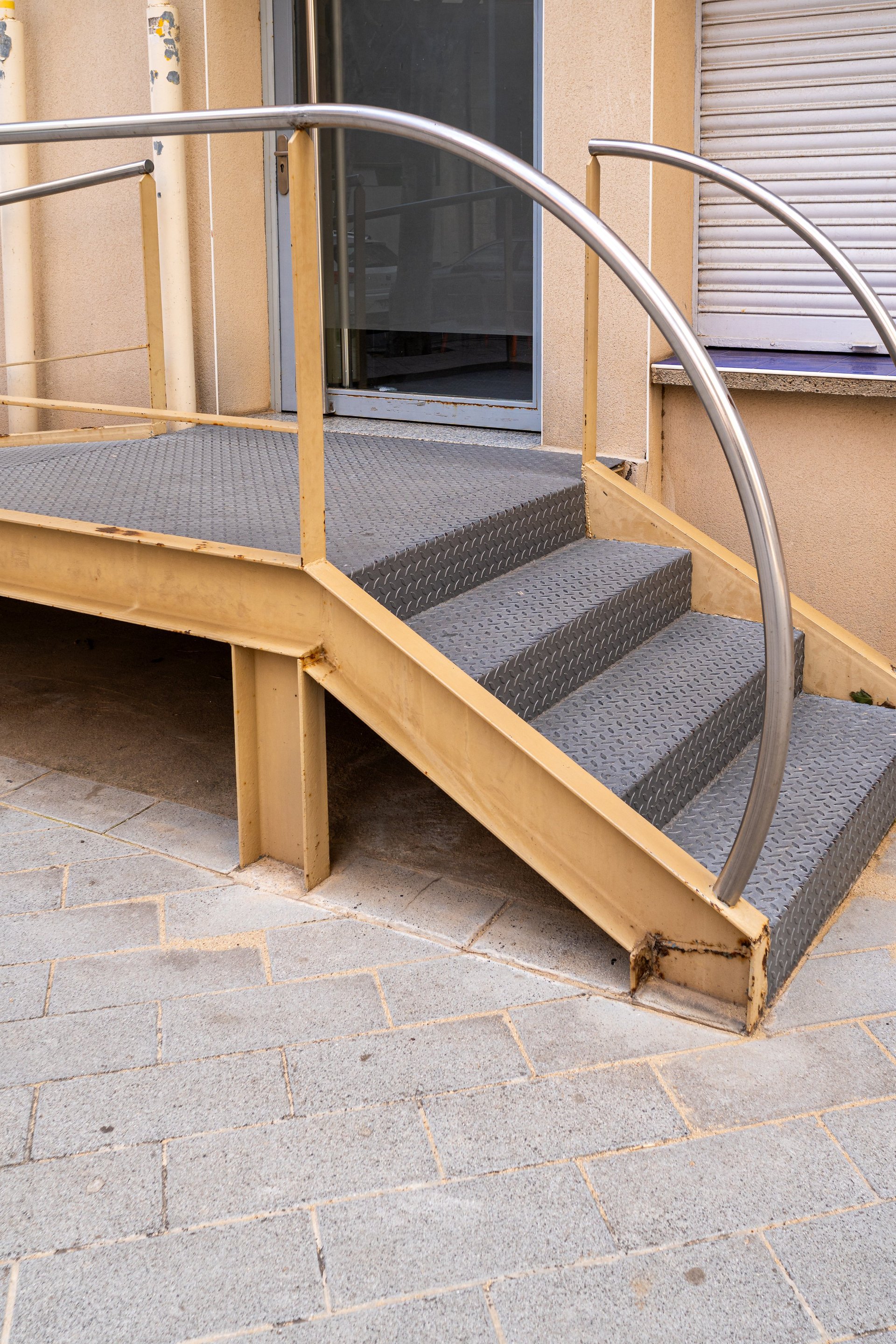
Finish is not the acceptance basis
Separate how the rail looks from what it has to do
A handrail carries two different sets of expectations that are easy to blur. One is the falling-protection and accessibility requirement, which comes from the project's governing code and is checked against the rail height, the post spacing and how the fixings are made. The other is the finish — a coating, a galvanized route or a bare treatment — which is an appearance and corrosion decision. A specified finish does not make a rail compliant, and a stronger section does not make a finish last longer in a coastal setting. Name both, and name which document governs acceptance, so the enquiry is priced against the right basis.
Handrail specification interview
Work through six questions before you ask for a price
A handrail enquiry goes wrong when the finish, the geometry and the governing code get tangled together. Answer the six questions below in order and mark each one answered, still unresolved, or genuinely not applicable. The panel keeps a running count so you can see at a glance what is settled and what still has to come from your detailer, the specifier or the engineer.
Stage
Governing code & duty
Everything downstream is measured against the document that governs acceptance on this project. Establish it first.
Governing code
Which falling-protection and accessibility document governs acceptance on this project?
Rail height, post spacing and the load case come from the governing code, not from the profile or the finish. A supplier cannot infer the acceptance basis, so it has to be named.
- Project structural specification / engineer of record
- National building code of the project location
- Accessibility standard referenced by the project
- Public realm / infrastructure authority standard
Decides: The acceptance basis the finished rail is checked against.
Duty & location
What duty does the rail serve at this location?
A guarding rail, an accessible route handrail and a decorative balustrade carry different performance expectations, and the answer changes the section and the fixing detail.
- Fall-protection guarding on a change of level
- Accessible-route handrail alongside a ramp or stair
- Balcony / walkway balustrade
- Decorative or boundary rail — non-primary duty
Decides: The performance expectation the section and fixings have to meet.
Stage
Geometry, joints & fixing
The rail's shape and how it is put together on site. These answers decide what can be delivered and how it is finished.
Geometry
What rail height, post spacing and corner treatment does the design fix?
The rail height, the post centres and whether corners are mitred, bent or meet in a fitting set the lengths and the fabrication route, so the detailer's dimensions travel with the order.
- Dimensions fixed by the setting-out drawings
- Standard height and post centres — to be confirmed
- Not yet set — design still open
Decides: The cut lengths, post layout and corner fabrication.
Joint & fixing
How do the rail joints and post fixings work?
A welded joint, a mechanical fitting and a bent corner are three different fabrication routes, and the base fixing decides whether the post end is prepared, drilled or plated. A profile that cannot accept the detail changes the order.
- Welded joints — procedure to be agreed
- Mechanical / bolted fittings
- Bent or rolled corners
- Base-plate or cast-in post fixings
Decides: The end preparation and the fabrication the section must accept.
Stage
Finish & corrosion exposure
What the rail looks like and how long it lasts in its setting. A finish is a protection and appearance decision — it is not the evidence that the rail performs.
Exposure
What exposure will the finished rail sit in?
Interior, coastal and industrial settings corrode a steel rail at very different rates, and the exposure decides whether a coating, a galvanized route or a plain painted finish is the right answer.
- Interior / sheltered
- Coastal or marine-influenced
- Industrial or chemically exposed
- Uncertain — to be confirmed
Decides: The protection route the finish has to provide.
Finish
What finish does the project specify?
The coating, galvanizing or bare-steel treatment named in the specification decides the surface preparation and the handling the rail needs, and it is a separate decision from the code the rail is checked against.
- Painted / powder-coated
- Hot-dip galvanized
- Galvanized and painted (duplex)
- Bare / mill finish with site finishing
Decides: The surface preparation and handling specification.
Interview progress
6
questions still unresolved of 6
- Answered
- 0
- Unresolved
- 6
- Not applicable
- 0
What a finish does not do: specifying a coating or a galvanized system describes how the rail is protected and how it looks. It is not the evidence that the rail meets the falling-protection or accessibility requirement of the project's code. Confirm both, and keep them on separate lines in the enquiry.
Carry the answers into the RFQNothing entered here is stored or submitted.
Specification builder
Build a checkable enquiry
The builder asks for the governing code, the duty the rail serves, the profile and dimensions, the rail height and post spacing, the joint and fixing method, the exposure and specified finish, the inspection documents and the destination. Answers unresolved in the interview stay flagged here rather than defaulting, because the governing code usually decides the rest.
RFQ summary
Profile, dimensions & specification
Write the specification so offers can be compared
State the profile and its nominal dimensions with units, the wall, the rail height and post spacing the setting-out fixes, the length or cut requirement, the surface and finish requirement, the applicable tolerance regime, the inspection scope and the required documents. Do not turn a nominal chart value into an acceptance tolerance unless the governing document says so.
Profile, dimensions & wall
State the profile family, the nominal dimensions with units and the wall together with the cut lengths or the rail runs, so the section is fixed rather than inferred from a familiar rail. A nominal chart value is not an acceptance tolerance.
Geometry the code governs
Rail height, post spacing and the duty the rail serves come from the project's falling-protection and accessibility code. Carry those dimensions on the enquiry and name the document, so the section is bought against the basis it will be checked on.
Finish and tolerance regime
The specified coating, galvanizing or bare treatment decides surface preparation and handling, and it is a separate decision from the code the rail is checked against. Name the tolerance regime the fabrication references too — a rail that has to line up site-wide is bought to that fit, not to a default.
Fix the product form as its own decision
Choose the rail and post profiles the detail assumes
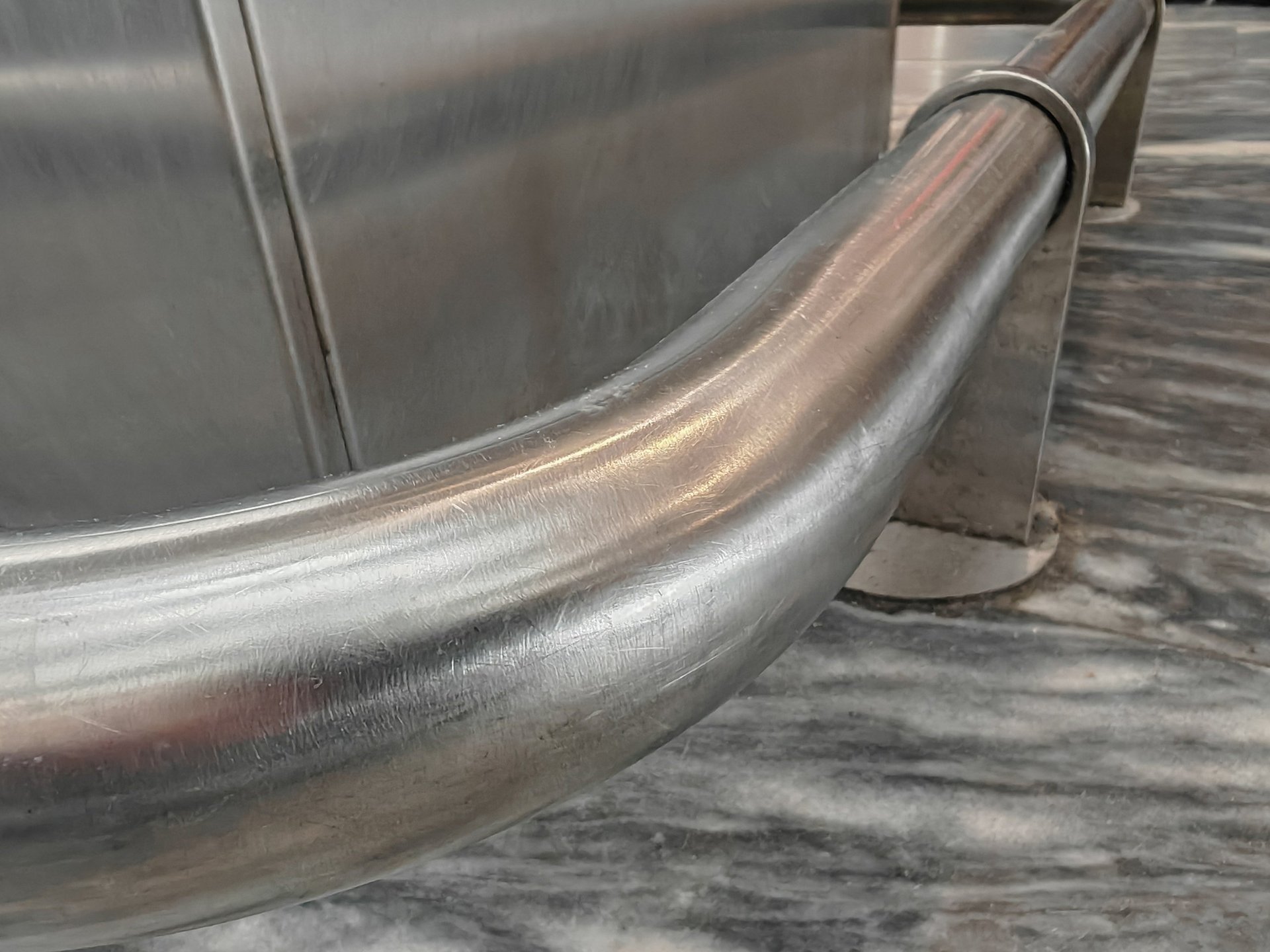
The profile is a separate decision from the grade and from the finish. A circular rail grips differently from a rectangular one, and a handrail profile that also acts as a post is a different route again. Compare the forms here, then confirm the one your setting-out actually calls for.
| Handrail requirement context | Governing basis | Applies to / limitation | Keep as a separate decision | RFQ field |
|---|---|---|---|---|
| Fall-protection guarding on a change of level | Governing falling-protection code / project specification | Applies where the governing document sets the rail height, post spacing and load case. Confirm the acceptance basis against the project requirement — the profile and dimensions alone do not complete the order. | Rail height, post spacing, fixing detail, finish | Governing code + geometry |
| Accessible-route handrail alongside a ramp or stair | Accessibility standard referenced by the project | An accessible-route handrail carries geometry and continuity expectations that a guarding rail may not, so confirm which parts of the route the rail serves and to which document. | Rail height, grip profile, continuity at landings | Governing code + duty |
| Coastal or industrial exposure | Governing code and the specified corrosion-protection route | Exposure decides the protection route, not the code the rail is checked against. Confirm the finish against the exposure for the actual site rather than a default. | Finish route, surface preparation, coating record | Exposure + finish |
| Project specification beyond the code | Governing project specification | Where a project specification imposes requirements beyond the referenced code, those requirements are ordered explicitly and confirmed against the actual supply. | Supplementary requirements, inspection scope, documents | Supplementary requirements |
This table is a decision aid only and carries no load value, accessibility figure or numerical technical value. Compliance with a falling-protection or accessibility requirement is confirmed against the governing code by the responsible engineer, never from the profile, the finish or this page. Price on request.
Documents & inspection
Match documents and inspection to the order
A handrail order often needs a coating or galvanizing record alongside the material certificate, because the finish is part of what was bought. Say whether the finish record is required, how it should reference the process applied, and whether the material certificate needs to cite the standard and edition your specification names. Confirmation is against the actual supply.
- Material certification and traceability for the steel supplied, per consignment
- Chemistry and mechanical test record against the governing standard, edition and grade designation
- Coating or galvanizing record where the specified finish requires it
- Dimensional and inspection records where the order requires them
- Surface and finish checks against the agreed route
- Heat / lot traceability to the shipped consignment
- Commercial invoice and packing list
- Shipment / origin documents only where applicable to the consignment
- Customs declaration inputs for the destination
What is evidenced, and what stays order-specific
- Material certification and traceability are requested for the steel supplied, against the governing standard, its edition and the full grade designation — never an assumed certificate.
- Coating and galvanizing records are ordered where the specified finish calls for them, and the record is named in the enquiry — the finish is documented as a process, not presented as proof of compliance.
- Availability of any certificate or approval is confirmed for the actual supply — not assumed from this page or from a nearby route.
Commercial inputs
Commercial inputs that remain quotation-dependent
A handrail carries requirements a plain section order does not, so state the governing code, the duty, the profiles and dimensions, the rail height and post spacing, the joint and fixing method, the exposure and finish, the inspection scope, the quantity and unit basis, the destination and the named Incoterms place. Any cutting or bending is quoted as its own line, and timing is checked against the live shipment.
Packing & protection
Sections bundled, strapped and tagged by profile, size, wall, finish and lot, with the surface protection a finished rail needs in transit. Packing expectations are confirmed in the enquiry.
Delivery point & schedule
Name the consignee or fabricator, the port or inland delivery point and the required-on-site date. Timing is checked for the live shipment and stated on the quotation.
Incoterms rule & named place
State the Incoterms rule and the named place so packing, transport and document obligations are explicit, and name the party responsible for each action.
Carry the enquiry into the commercial department
Turn the governing code, duty, profile, dimensions, geometry, joint and fixing method, exposure, finish, inspection scope, documents, quantity, destination and Incoterms named place into one copyable summary. The commercial department reviews the order against the governing code before quoting, so anything the code or the specification does not cover is raised rather than assumed.
Price on request — freight, duty, finish availability and delivery timing are confirmed with your quotation.
Related routes worth comparing
Open a related page to resolve one decision
This page is about rails that people lean on and are protected by, where the governing code sets the acceptance basis. Where a post or a guarding leg starts to act as a structure, or where the rail is primarily an architectural element, the sibling routes fit better; the structural steel family is a comparison path, not an equivalent.
Structural steel products
Where a rail post or a heavier guarding leg starts to act as a structural member rather than a rail, an open profile can be part of the design. Structural steel is offered for that comparison; it is a different family with its own standards and connection rules, so the substitution is a design decision rather than a purchasing one.
Compare the structural steel formGCC markets & destination planning
Plan the GCC destination separately from the steel specification
Keep product compliance separate from destination planning. Confirm consignee/importer details, named port or inland delivery point, Incoterms rule and named place, shipment documents, any permit/conformity steps required for the actual goods, and the party responsible for each action. No country card implies a local office, warehouse or stock position.

United Arab Emirates
Destination & importer inputs
Move from handrail section selection to the exact UAE procurement route: carry the profile, dimensions, finish, fixing method, quantity and destination emirate so the quotation and document set match the import.
United Arab Emirates hollow-section procurement
Saudi Arabia
Project specification & import inputs
Confirm the governing project code, profile, dimensions, finish, fixing method, quantity and required-on-site date so the estimate and logistics stay aligned to the governing project specification.
Saudi Arabia hollow-section procurement
Bahrain
Industrial supply inputs
Coordinate the profile, dimensions, finish, tolerance and inspection requirements, document list and delivery point to the Bahrain requirement so the railing section and its document set stay aligned.
Bahrain hollow-section procurement
Kuwait
Contractor procurement inputs
Link handrail selection and any cutting, bending or fabrication to the site fixing needs, with the delivery point and Incoterms named place agreed against the requirement.
Kuwait hollow-section procurement
Oman
Port-oriented supply inputs
Confirm the specification, profile, nominal dimensions, quantity, finish, document package, port and Incoterms rule so the Oman quotation and logistics stay aligned to the order.
Oman hollow-section procurement
Qatar
Specification & delivery inputs
State the governing code, profile, nominal dimensions, finish, fixing method, documents and delivery location so the Qatar quotation is fixed on a verified basis.
Qatar hollow-section procurementTechnical reference
Confirm the source scope, then compare it with the requirement
Use a published accessibility standard to frame the terminology — what a handrail height and a grip surface mean in that document's own scope — then confirm the requirements your project's code actually sets. A general reference cannot confirm compliance for your building.
United States Access Board — ADA accessibility standards
Published accessibility guidance · reviewed for scope and terminology
A published accessibility standard fixes the vocabulary around handrails — what a rail height, a grip surface and a continuous route mean within that document's own scope. Use it to confirm that terminology, then compare it with the code your project actually cites. Standards of this kind are jurisdiction-specific, so the document that governs acceptance on your building is the one the local authority references, not the one reproduced here.
What this means for your order: the reference helps fix the questions that must be answered in the RFQ — the governing code, the duty the rail serves, the rail height and post spacing, the profile and dimensions with units, the joint and fixing method and the exposure and finish. Conformity, certification and commercial outcomes remain separate, verification-dependent steps after the technical product description is complete.
What it does not cover: the reference does not prove Noor Deira Steel inventory, price, certification, local presence or project approval, and it does not replace the governing code or the contract documents for the actual order. Confirm the applicable code and its current edition, because a project specification can impose requirements beyond it.
What a complete enquiry improves
A complete enquiry settles the code and the finish separately
A handrail enquiry that names its governing code and its finish as two distinct decisions gives a supplier something to price against, and gives the site a record of what the rail was actually bought to satisfy. That is the practical benefit: fewer offers priced against a finish the code never asked for, and fewer arguments at handover about what the rail was meant to meet.
Buyer concern
Section chosen from a familiar profile
Evidence-led answer
Every value is forced against the governing code, the duty the rail serves, the setting-out geometry, the joint and fixing detail and the exposure — never assumed from a profile carried over from a previous job.
A rail section whose basis is an auditable, order-driving input set.
Buyer concern
Finish mistaken for performance
Evidence-led answer
The enquiry keeps the governing code and the finish as separate decisions, so a specified coating is never treated as the evidence that the rail meets the falling-protection or accessibility requirement.
A rail where appearance and acceptance are each decided on their own basis.
Buyer concern
Geometry and fixing ambiguity
Evidence-led answer
Rail height, post spacing, corner treatment, nominal dimensions with units and the base fixing detail are carried together, so the section can accept the detail the drawings assume.
A section a fabricator can cut, joint and fix without a redesign.
Buyer concern
Corrosion surprises after installation
Evidence-led answer
The exposure condition and the specified finish are stated explicitly, so the protection route is decided with the section rather than discovered once the rail is on site.
A finish matched to where the rail actually sits.
Buyer concern
Undocumented coating or traceability
Evidence-led answer
Material and coating records are named explicitly, with the expected issuer, before any value is quoted — and only where the specification and order require them.
An evidence set that matches the steel and finish actually supplied.
From requirement to quotation
Every step names its owner, input and open item
Seven steps take a handrail requirement to a delivered consignment, with the governing code fixed at the first and the finish held separate from it throughout — because one decides acceptance and the other decides protection.
Governing code
Buyer + engineer
In: The falling-protection and accessibility document the project is checked against, and the duty the rail serves.
Out: Acceptance basis defined.
No governing code named.
Next: Name the governing document.
Geometry & profile
Buyer + detailer
In: Rail height, post spacing, corner treatment, profile and nominal dimensions with units.
Out: Cut lengths and layout fixed.
Setting-out left open.
Next: Fix the setting-out dimensions.
Joints & fixings
Buyer + fabricator
In: Joint method, corner fabrication, base fixing detail and end preparation.
Out: Fabrication route stated.
Fixing detail left implicit.
Next: Confirm the fixing detail.
Exposure & finish
Buyer + specifier
In: Exposure condition and the coating, galvanizing or bare-steel treatment specified.
Out: Protection and finish basis stated.
Finish assumed from the code.
Next: Fix the finish route.
Tests & documents
Technical / inspection
In: Testing and inspection scope, coating record, required document list with expected issuer.
Out: Evidence and document package named.
Documents assumed, not requested.
Next: Confirm the document checklist.
Quotation
Commercial
In: Quantity and unit basis, cutting or bending scope, packing, documents and required-on-site date.
Out: Availability, commercial terms and document package confirmed for the live enquiry.
Open items carried into the offer.
Next: Receive the confirmed offer.
Delivery & follow-up
Supplier / forwarder
In: Strapping, protection, marking, Incoterms rule, port, site handover.
Out: Handed to the site or fabricator with the document set.
Surface damage or document delay.
Next: Close out.
Review unresolved items before quotation
The governing code, duty, profile, dimensions, geometry, joint and fixing method, exposure, finish, inspection and document inputs, quantity, destination and commercial terms enter the enquiry together so the acceptance basis, the protection route and the delivery terms stay aligned.
Request a QuoteBuyer FAQ
Questions to settle before ordering
Why a finish is not the same as compliance, why the supplier cannot size the rail, and what changes when the rail faces the coast.
Does a specified finish mean the rail complies?
Why can't the supplier just size the rail?
What changes with exposure?
What belongs in the RFQ?
Qualified RFQ
Request a qualified Hollow Sections for Handrails quotation
Send the governing code, the duty the rail serves, the profile and nominal dimensions with units, the rail height and post spacing, the joint and fixing methods, the exposure and specified finish, the inspection and document scope, the quantity and unit basis, the destination and the named delivery place. If an item is still undecided, mark it open rather than guessing. The quotation will confirm availability, commercial terms and the supply-specific document package.
Price on request · availability and commercial terms confirmed against the live enquiry