
Applications · HVAC Duct · Steel Sheet
The duct sets the sheet.
Ductwork is specified from the service it carries, not from the steel it is made of. The duct's pressure class and the air it moves set how strong and how thick the sheet has to be; the environment it runs through sets the coating; and the jointing system the shop uses sets the widths and edge conditions it needs. Buying a galvanized sheet and hoping it suits the run is working backwards. This page starts from the duct and works back to the sheet the order has to name.
Send the duct class and the coating with the thickness convention. Pricing is on request, and no thickness is quoted before the class and the unit are named.
Four things about the duct decide the sheet. None of them is the sheet's name.
Pressure class
Exposure
Jointing
Project spec
What the Duct Requires
Four things about the duct that decide the sheet
A duct drawing states the run's size and route. The values that actually choose the sheet sit one level up — in the service the duct provides and the standards the project applies to it.
The pressure class the duct runs at
Ductwork is banded by the static pressure it operates at — a low-pressure system and a higher-pressure one are not the same fabrication. The class sets how much the duct must resist before it deforms, and it is the first thing a duct specification settles.
The class is a property of the system, not the sheet. It translates into a required sheet thickness and stiffening arrangement, so the class has to be known before the sheet is chosen.
The air and the environment it moves
What the duct carries and where it runs decide the material. Supply air in a conditioned space, exhaust from a kitchen, air moved through a humid plant room and air carried on an external rooftop run are four different corrosion duties on the same sheet.
The exposure decides the coating far more than the duct's size does. Indoor and outdoor runs of the same duct are often two different sheet specifications.
The jointing and stiffening system
Ducts are joined by a system — a transverse joint, a flange or a proprietary connector — and stiffened along their length. The system the shop runs determines the sheet widths it can use and the edge conditions its machines produce.
The jointing method is a fabrication decision that reaches back into the material order: the widths you buy are the widths your line can form and join.
The project's own specification
Most ductwork is governed by a project specification, a building code or a client standard that names the required sheet, thickness, coating and construction. It is that document — not the supplier — that decides whether a given sheet is acceptable.
A supplier can confirm what a sheet is and how it behaves. Whether it satisfies a named code or project standard is a compliance question the design side of the contract owns.
Why the pressure class is the value to fix first
Every other duct decision hangs off the class. It is the number the project's specification uses to resolve how thick the sheet must be, how the duct is stiffened and how it is jointed — and those three answers arrive together, from one document. Fixing the class first is what turns "some galvanized sheet" into a specification that can be quoted, inspected and accepted.
It also protects you from the most expensive shortcut in duct procurement, which is ordering a heavier sheet than the class requires and treating that as compliance. A thicker sheet is stiffer, but the code the duct is built to asks about the whole construction — thickness, stiffening, jointing and, where relevant, fire performance. Weight bought instead of a resolved specification is cost without a defence.
Duct-Use Requirement Map
Describe the run, and watch the sheet scope assemble
One question per duct decision. Each answer sets a field on the enquiry and raises the combinations that cannot be settled on paper. Nothing is calculated and no thickness is produced — the map collects the values the sheet order has to carry.
What pressure class does the duct run at?
Sets the enquiry field: Duct pressure / service class
The class is what the duct's strength is checked against, and it converts into a thickness requirement through the project's own specification. Naming it lets the enquiry be written against the run rather than around it.
The class does not carry a thickness by itself — it becomes one through the code or project standard that governs the job. If the drawings do not state the class yet, that is the first thing to settle, because the sheet cannot be fixed until it is.
Your duct requirement map
- Pressure classnot set
- Service & locationnot set
- Jointing & widthsnot set
- Material & coatingnot set
- Gauge & thicknessnot set
Still to answer: Pressure class, Service & location, Jointing & widths, Material & coating, Gauge & thickness.
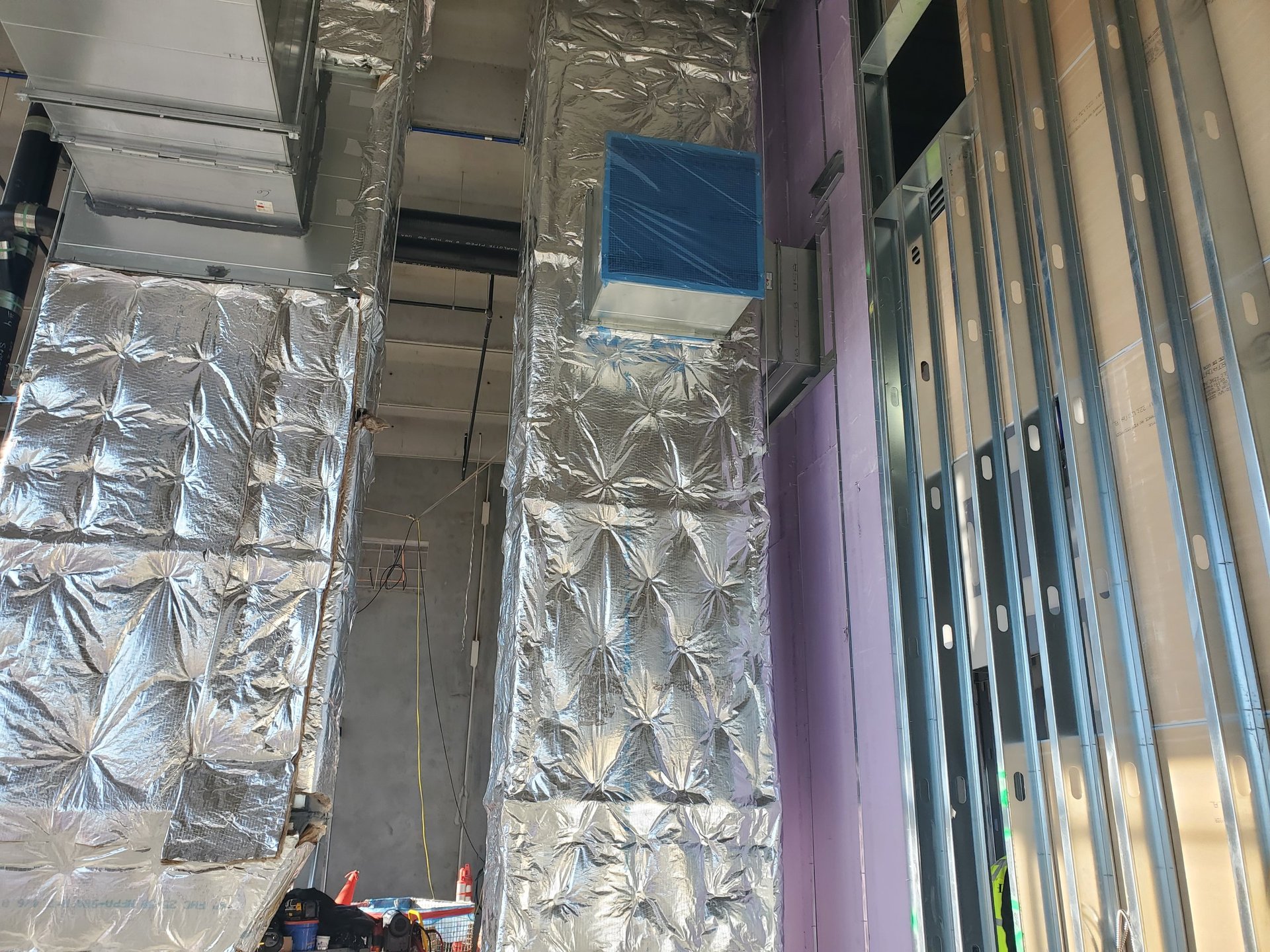
Choosing the Sheet
Three material routes, and the duct duty each one suits
Duct sheet is chosen for how it resists the run it serves. The three routes below differ in where the corrosion protection comes from — which is what decides which run each one belongs on.
Metallic-coated sheet
The common duct material. The steel carries a metallic coating that protects it sacrificially — where the surface is cut or the coating is broken, the surrounding coating continues to protect the exposed steel. That behaviour matters on ductwork more than on most products, because a duct is nothing but cut edges, seams and joints.
Suits general supply and return ductwork in conditioned and plant-room environments.
Prepainted sheet
A coated sheet carrying a paint system, which adds appearance and colour to the protection. Because the paint reaches only the surfaces it was applied to, the formed duct will show bare or differently finished metal at its cut edges and joints — a consequence worth weighing whenever the run will be seen.
Suits visible runs where the duct is a finished, colour-controlled building element.
Stainless steel sheet
Corrosion resistance comes from the steel itself rather than from anything applied to it, so the cut edges and joints are not a weak point in the same way. The trade is in fabrication: stainless behaves differently under forming and heat, and needs its own tooling and cleanliness discipline to avoid contaminating the finished duct.
Suits kitchen, process and hygienic exhaust duties where a coating is not the right strategy or not acceptable.
General ductwork usually starts from the galvanized steel sheet range, where the metallic coating and its surface conditions are set out.
Where the run will be visible and colour matters, the prepainted PPGI sheet route covers the coated-and-painted product.
Where the duty is hygienic or continuously damp, the stainless steel sheet range works on the basis that the steel itself is the protection.
Ductwork procurement at programme level — where the material is one line in a wider HVAC package — is covered from the industry angle in the sheet supply view of the HVAC industry, where ducting sits beside the other steel a project of that kind buys.
A material route is a starting point, not a specification. The coating designation, the thickness and the surface condition are what the duct order actually carries — and none of them is implied by the material's name.
Writing the Sheet Scope
The fields a duct sheet order carries, and what each one fixes
A material order names a product. A duct-ready order names the product and the duties the run puts on it. These are the fields that turn one into the other.
| Order field | What it fixes on the run |
|---|---|
| Pressure / service class | The strength the duct is resolved against, and through the project standard, the thickness band it sits in. |
| Material family and coating | Where the corrosion protection comes from — a metallic coating, a paint system, or the steel itself. |
| Thickness, with its convention | The value the class resolves to, ordered in a unit both the mill and the forming line read. |
| Sheet width | What the jointing and stiffening line can form and join. A width the line cannot use is scrap. |
| Service and exposure | Whether the run is indoor, plant-room, rooftop or exhaust — which is what the coating is chosen against. |
| Jointing system | How the duct is connected and stiffened, which reaches back into the widths and edge conditions ordered. |
| Flatness and edge condition | How the sheet feeds and forms, separate from its nominal dimensions. |
| Project specification / code | The document the duct is built to, and the basis the finished fabrication is accepted against. |
| Quantity and reconciliation basis | How the order is checked — by sheet, by area or by weight — against which figure. |
No gauge conversion, no thickness table and no pressure rating is published here — each is read from the gauge convention your drawings declare and the standard the project cites.
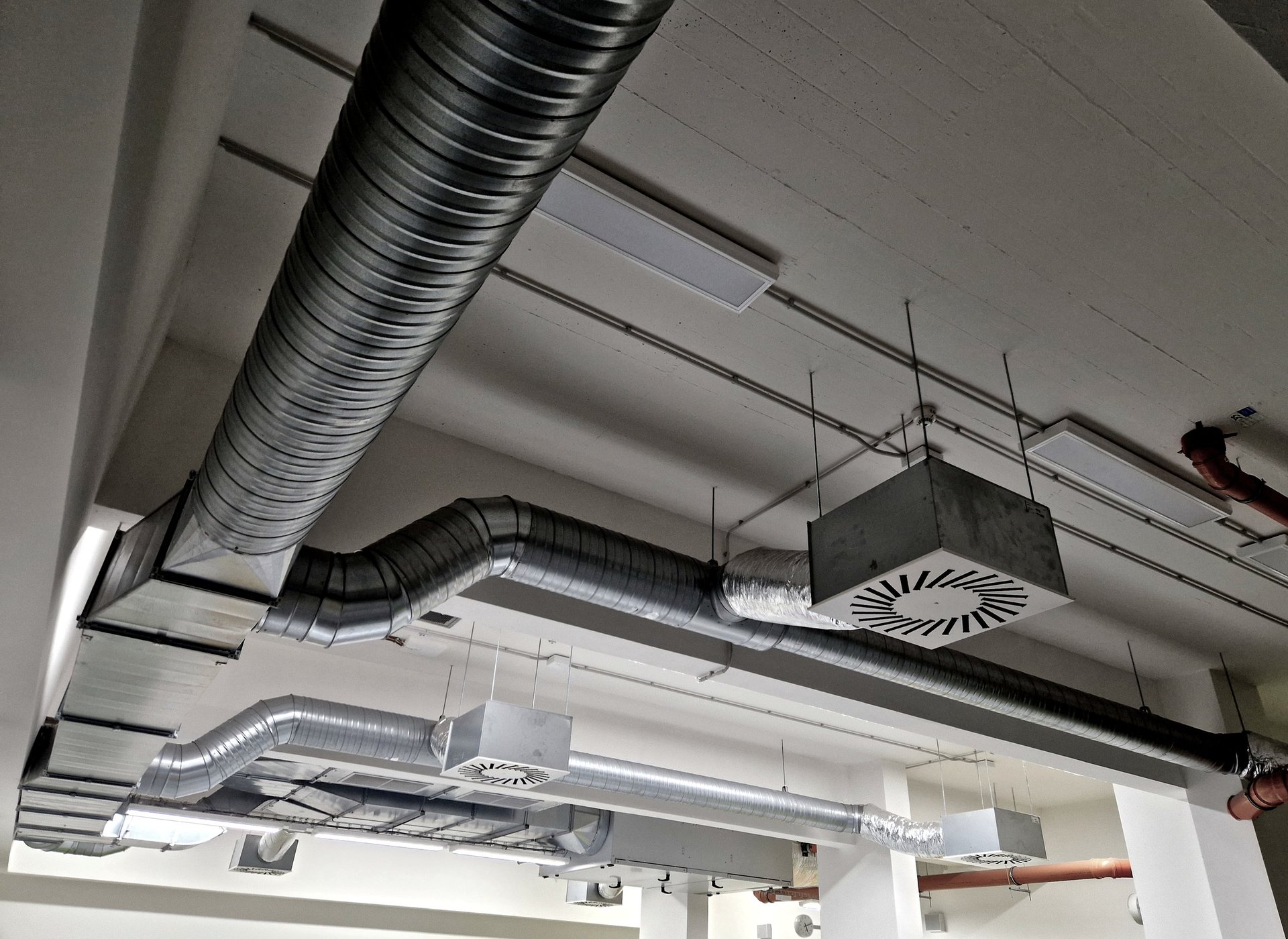
Confirm which product form the duct sheet belongs to before the scope is written — the steel sheet supplier range sets out the forms a duct order can be drawn from.
Where the duct line is fed from a coil rather than from cut sheets, the upstream form and its handling conditions are covered in the steel coil range.
What The Record Proves
The sheet certificate says nothing about whether the duct passes
A duct is accepted as a system — its thickness, its construction, its joints and its leakage all read together against the project standard. The mill certificate covers one line of that, and it is worth being clear about which.
What the sheet record establishes
The material the sheet was produced as, its thickness against the standard your order cites, and the coating it carries. That is a checkable statement about the material you received.
What it cannot establish
That the finished duct meets its pressure class, its leakage limit or the project's construction requirements. Those are properties of the fabricated system, tested as a system.
Where the duct evidence comes from
From the fabrication and the commissioning, not the material supply. Duct systems are verified by their own construction and, where the specification requires it, by leakage testing of the assembled run. A supplier can confirm what the sheet is and that it matches the order; whether the duct as built passes belongs to the fabricator and the commissioning stage. Keeping those two claims apart is what stops a material certificate from being read as a duct approval.
Request a Quote
Send the duct requirements with the sheet scope
A duct sheet enquiry needs the run's requirements and the sheet's fields. Name the class, the coating and the thickness convention, and anything left open comes back as a question rather than an assumption.
Duct pressure / service class
The class is what the duct's strength is checked against, and it converts into a thickness requirement through the project's own specification. Naming it lets the enquiry be written against the run rather than around it.
Service and exposure
Exposure is what the coating is chosen against. Declaring it keeps the coating decision attached to the run's real conditions rather than to whatever the last job used.
Jointing system and sheet widths
The jointing system is what the sheet widths and edge conditions have to suit. Declaring it lets the coil width or cut size be confirmed against the line that will form it.
Commercial Basis
What is confirmed against your enquiry, not published in advance
A duct sheet order turns on the coating and the thickness together, at the width the forming line needs. Whether that combination is obtainable is confirmed per enquiry rather than assumed from a product list.
Coating, thickness and width together
Whether the combination your duct needs is obtainable — the three are checked as one, because each constrains the others.
Surface condition
What the sheet's surface has to be for the duct's forming and joining, and whether the run will be seen.
Reconciliation basis
The figure the order is checked against — by sheet, by area or by weight — stated so quotations can be compared.
Documents and origin
The coating and dimensional record, and the producing source, stated against the actual enquiry.
Pricing is on request. No rate, lead time or stock position is published before the duct requirements and the sheet scope are confirmed.
Related Routes
Where the questions either side of this one are answered
Each of these settles something a duct sheet enquiry raises. Open one only when it is the question in front of you.
GCC Supply
Duct sheet into the Gulf — quoted against the project's own specification
Ductwork across this region is built to project specifications that differ in class, coating and construction, and coastal or rooftop runs add an exposure duty an indoor run does not. Each country is planned on its own route, against the specification the project actually cites.






A country link is a destination-planning page. None of them implies a local office, warehouse or stock position, and none of them changes the requirements on your duct order.
Why a gauge number is not a thickness
A gauge is a name for a thickness, in one particular system.
Duct drawings written in the imperial tradition often specify sheet by gauge — 24 gauge, 22, 20 — and the number is familiar enough that it feels like a value. It is not one. A gauge is a designation that belongs to a gauge system, and the same gauge number means different thicknesses in different systems. There is no authority that publishes one universal gauge table, because gauge was never designed as a universal unit; it was a shorthand local to a trade, a mill and a material.
The material matters as much as the system. A gauge table for one material family does not necessarily describe another, and a coated product presents a thickness question of its own — whether the figure you care about is the coated product or the steel beneath it. Those are different measurements of the same piece of metal, and an order that does not say which one it means can be satisfied and still be wrong.
So the conversion is not the problem — doing it before you have named the system is. The sequence that works is: state which gauge table and which material the drawing assumes, convert on that declared basis, and then order in millimetres or inches. Once the order is in a physical unit, the mill, the forming line and the inspection all read the same value without translating, and the tolerance the standard permits attaches to a real dimension rather than to a name.
That is why this page prints no gauge-to-millimetre table of its own. A table presented without its system would look authoritative and be unusable; it would invite exactly the silent conversion error it was meant to prevent. Name your system, and the conversion becomes a one-line step rather than a source of dispute.
Why Start From the Duct
What a duct-first sheet order buys the contractor
Writing the order from the run backwards takes a few more lines than naming a galvanized sheet. These are the honest terms of that exchange.
A sheet that suits the run
When the class, the exposure and the jointing are on the enquiry, the sheet offered is one the duct can actually be built from — not a material that happens to be galvanized.
Compliance stays where it belongs
The supplier confirms the material; the design side owns whether it satisfies the code. Separating the two claims stops a mill certificate being read as a duct approval.
The duct answers still come from you
That is the cost. No supplier can tell you the pressure class your system runs at or the widths your jointing line needs — those are settled on the drawings and the shop floor.
How the Order Moves
From the duct drawings to a fabrication-ready delivery
Each step settles something the next one depends on. The duct class is fixed before the thickness is chosen, and the thickness convention is agreed before the sheet is ordered.
- 01
Fix the duct class
Read the pressure or service class off the drawings. It is the value every other duct decision resolves against, so it comes first.
- 02
Set the exposure and coating
Establish where the duct runs and what it carries, then let that choose the material family and the coating rather than inheriting them from another job.
- 03
Resolve the thickness as a physical value
Take the thickness the specification requires, state the convention it came from, and put the order in millimetres or inches so mill and shop read one number.
- 04
Confirm the widths and documents
Match the sheet width to the jointing and stiffening line, and agree which coating and dimensional records the receiving inspection will check.
Coating availability, thickness-and-width pairing and producing origin are confirmed against the live enquiry — never inferred from a published list.
Request a QuoteCommon Questions
Questions a duct sheet enquiry usually raises
Can you give me a gauge-to-millimetre conversion for duct sheet?
Not as a universal answer, and a table that pretends to be one is worth less than it looks. A gauge is a designation that belongs to a particular gauge table and a particular material system — the same gauge number can denote different thicknesses in different conventions, and a coated product measures differently from an uncoated one. Convert only once you have named which table and which material your drawings assume, and then order in millimetres or inches. That is the value the mill and your forming line will both read without further translation.
Does a heavier gauge always mean a stronger duct?
Thicker sheet is stiffer, so it resists deformation better — but duct strength is not determined by thickness alone. The transverse joints, the stiffening, the seam type and the duct's aspect ratio all carry load within the system, and a duct specification accounts for all of them together. That is why the pressure class is the value to fix first: it is what the thickness, the stiffening and the jointing are all resolved against, through the code or project standard governing the job. Ordering a heavier sheet than the class needs buys weight, not compliance.
Can you confirm this sheet meets our building code?
We can confirm what the sheet is and how it behaves, which is what a material supplier is positioned to do. Whether a specific sheet satisfies a named building code, a project specification or a client standard is a compliance decision that belongs to whoever owns the design — and it depends on the document's own requirements for thickness, coating, construction and fire performance. Send the specification the project cites along with your enquiry, and the material can be offered against it; the acceptance itself is the design side's call to make.
Should the coating be galvanized or prepainted for a duct run?
That depends on where the duct runs and what it carries, which is why the exposure belongs on the enquiry. A metallic coating such as galvanized sheet is the common choice for general ductwork, and it protects the steel sacrificially at cut edges and seams where the coating is broken. A prepainted sheet adds a colour and an appearance requirement, which suits visible runs where the duct is on show. For a continuously damp or chemically loaded environment, the question becomes whether a coating is the right strategy at all — which is where a corrosion-resisting sheet is worth discussing.
What has to be on a duct sheet enquiry?
The pressure or service class, the material and coating, the thickness with the convention it is written in, the sheet width the jointing line needs, the flatness and edge condition, the surface finish, the quantity, the documents required and the destination. Add the project specification or code the duct is being built to, because that document governs the acceptance. State the thickness convention explicitly even when it feels obvious — it is the field where a whole order most often drifts.
Specify the duct first, then the sheet under it
Send the pressure class, the exposure, the coating and the thickness with the convention it is written in. The offer comes back as a sheet scope the duct can be built from, with the open questions named rather than assumed.
sales@noordeirasteel.ae · +971 56 398 0860 · Business Bay, Dubai