
Hollow Sections · Production Supply
Hollow Sections for Manufacturing
Manufacturing buys a hollow section differently from a construction or infrastructure project: it buys it repeatedly. What matters is not whether one length is right, but whether the thousandth one still fits the fixture, welds without pulling, and arrives with a record that ties it to the same specification as the first. That means the production drawing, the cut and fit requirements, the batch or lot identity and the inspection evidence all have to be settled before the first order — because changing any of them mid-production usually costs more than the steel. Price, availability, origin and timing are confirmed against the live enquiry.
Price on request · availability, origin, certification and delivery timing confirmed against the live enquiry
The same section, bought three different ways
Repeatability is the specification, not the size
A prototype proves a drawing; a batch tests a fixture; recurring production tests a supply chain. The steel may be nominally identical across all three, but what has to be held constant — and who holds it — changes at each stage. Treating them as one purchasing activity is how a production line ends up chasing a fit problem that was created by an unwritten input rather than by the section.
Prototype and first article
One or a few units, built to prove the design
At prototype stage the section is still a variable. Fit, weld access and distortion behaviour are being discovered rather than controlled, so it is worth treating the first article as a test of the drawing rather than a production order. Records from this stage are what let the production specification be written down afterwards.
Drawing revision + the fabrication questions the first build raised
Small batch and job lot
A defined run, often against a fixed delivery window
A small batch is where repeatability first becomes measurable. Cut length tolerance, straightness and fit-up start to interact with the fixture, and the batch is usually too small to absorb a rework loop comfortably. The useful question is what has to be identical across the run, and what the drawing does not yet pin down.
Batch quantity + the tolerances the fixture actually depends on
Recurring production
Repeat orders against a settled specification
Once a section runs in production, the risk moves from the drawing to the supply. A change of heat, lot or source can shift fit and weld behaviour even when the stated specification is unchanged, so the identity of what was supplied becomes part of the production record rather than a purchasing detail.
Repeat schedule + lot identity + the acceptance the line applies
This page does not state minimum order quantities, stock positions or lead times, and it does not describe any particular supplier's scheduling. Those are confirmed against the live enquiry for the actual material. What follows is the production information a supplier needs in order to quote a repeatable basis.
From the drawing to the shop floor
Five inputs a production drawing does not carry on its own
A drawing shows the finished part. It does not, by itself, tell a supplier what cut tolerance the fixture can absorb, how the section must be identified when it arrives, or which record the incoming inspection step will read. Those are the inputs that decide whether a run is repeatable, and they travel alongside the drawing rather than inside it.
| Handoff input | What it fixes on the line | Why a drawing alone is not enough | Carry into the enquiry as |
|---|---|---|---|
| Drawing revision and datum | Which revision is being built, and the reference the cut and fit dimensions are taken from | A section cut to the right length from the wrong datum is still wrong. Datum and revision have to travel with the order so the shop and the supplier are working to the same baseline. | Drawing number + revision + datum reference |
| Cut length and end preparation | Finished length, cut tolerance, and any end squareness or preparation the fit depends on | Nominal stock length is not a cut requirement. Two suppliers can both supply “6 metres” and still differ on cut tolerance and end condition, and the fixture notices. | Finished cut length + cut tolerance + end preparation |
| Fit-up and straightness | Whether the section can be located in the fixture and welded without forcing | Straightness and twist are dimensional conditions that affect assembly, not appearance. A section that needs pulling into position introduces stress and distortion into a welded assembly before any load is applied. | Straightness / twist requirement + the tolerance basis it references |
| Batch and lot identity | How a supplied length is traced back to the heat or lot it came from | On recurring production this is what makes a downstream problem investigable. If a weld defect appears on one run, lot identity is what allows the affected material to be isolated rather than the whole programme queried. | Lot / heat identification + how it is marked and recorded |
| Inspection evidence for the line | Which records the production inspection step will actually ask for | Production inspection is usually a repeatable check against a drawing, not a project acceptance. Naming the record the line uses — dimensional, material, or both — stops a paperwork mismatch becoming a production stoppage. | Required records + who holds them + the check they support |
Where consistency is lost
Most drift is unwritten, not unapproved
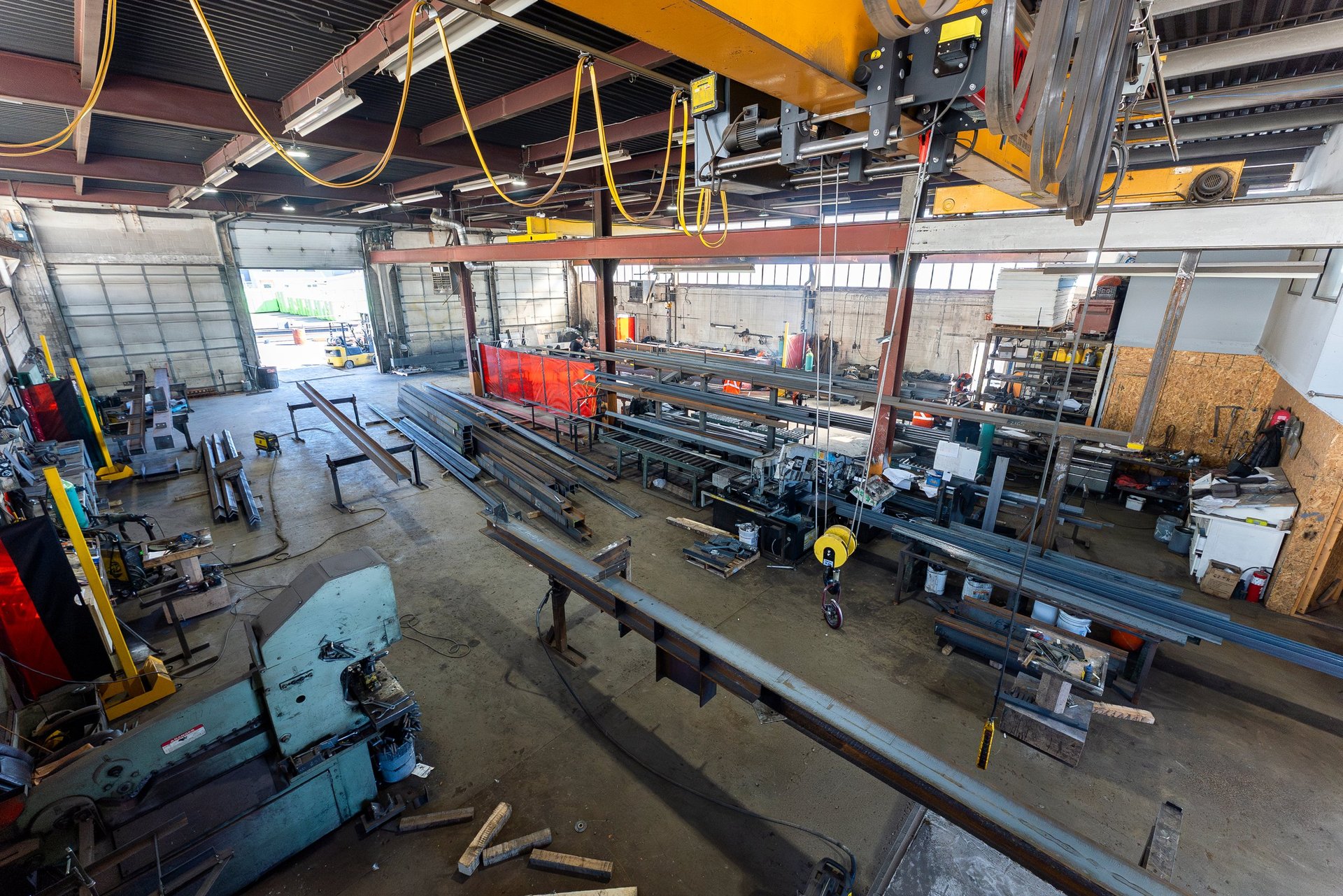
A production run rarely changes because someone decided to change it. It changes because something that was never written down was allowed to vary — a cut tolerance that was assumed, a lot that was different from last time, a straightness condition the fixture had been absorbing quietly. Writing the inputs down is what makes a variation visible while it can still be corrected, rather than at final assembly.
- Cut and fit tolerances named rather than inferred from a stock length
- Lot identity recorded so a batch can be isolated if a problem appears
- First-article results used to fix the production specification
- A defined change-control point, so a revision is raised rather than absorbed
Bill-of-materials intake
Read the line's bill of materials before you buy against it
A drawing shows the finished part; a bill of materials is what the buyer actually orders from. Work the five axes below and mark each as specified on the drawing, still to be specified, or not on this line. Each names what it fixes on the line and what the drawing has to state — so the size, cut, tolerance and finish are read off the BOM rather than inferred from a stock length. The intake does not assign a section to a line and does not treat a structural grade as a precision mechanical-tube performance claim; that distinction is the reason the tolerance axis is held separately.
Size & form
Nominal dimensions with units, wall thickness, and which hollow-section form the line part is made from.
The drawing has to state: The section call-out as it appears on the line drawing — size, wall and form — with its units.
Line entry: e.g. 80 x 80 mm SHS, wall 4 mm
Cut & end condition
Finished cut length, cut tolerance, end squareness and any deburr or end preparation the part needs.
The drawing has to state: The finished length and how the ends are to be left — not the stock length bought.
Line entry: e.g. cut 1 250 mm ±1 mm, square cut, deburred
Fit & straightness tolerance
Whether the part locates in the fixture and welds without forcing, referenced from a stated basis.
The drawing has to state: The fit or straightness condition the assembly relies on, against the standard or call-out it references.
Line entry: e.g. straightness per the governing standard · fixture absorbs 1 mm
Finish & surface condition
The surface condition the part leaves the shop in, and any preparation or treatment applied before or after fabrication.
The drawing has to state: Whether the part is supplied bare, prepared for a subsequent process, or coated — and where the treatment sits in the sequence.
Line entry: e.g. bare / oiled for machining · or prepared-then-welded
Repeat batch basis
Whether the same line is ordered again, how the batch is identified, and the point at which the basis may change.
The drawing has to state: The repeat schedule and the change-control point — the revision at which the drawing or basis alters.
Line entry: e.g. 500 pieces/month, lot-marked, basis fixed until a revision is raised
BOM read-out
5
axes still to specify of 5
- On the drawing
- 0
- Not specified
- 5
- Not on this line
- 0
What this does not do: it does not choose a section for a line, does not state a dimensional or tolerance value, and does not establish that a section meets a precision mechanical-tube requirement — a structural grade designation is not that evidence.
Carry the BOM into the enquiryNothing entered here is stored or submitted.
Input-to-fabrication handoff planner
Check the drawing, the cut and the batch before you buy
The planner works through what the drawing sets, what cutting and fit require, how the batch will be identified, and which record the incoming inspection reads. Anything not yet decided stays open rather than defaulted, because an assumed tolerance is exactly the input a production run discovers it needed later.
Handoff summary
Fabrication questions, framed as decisions
What the workshop has to plan for, and what this page will not predict
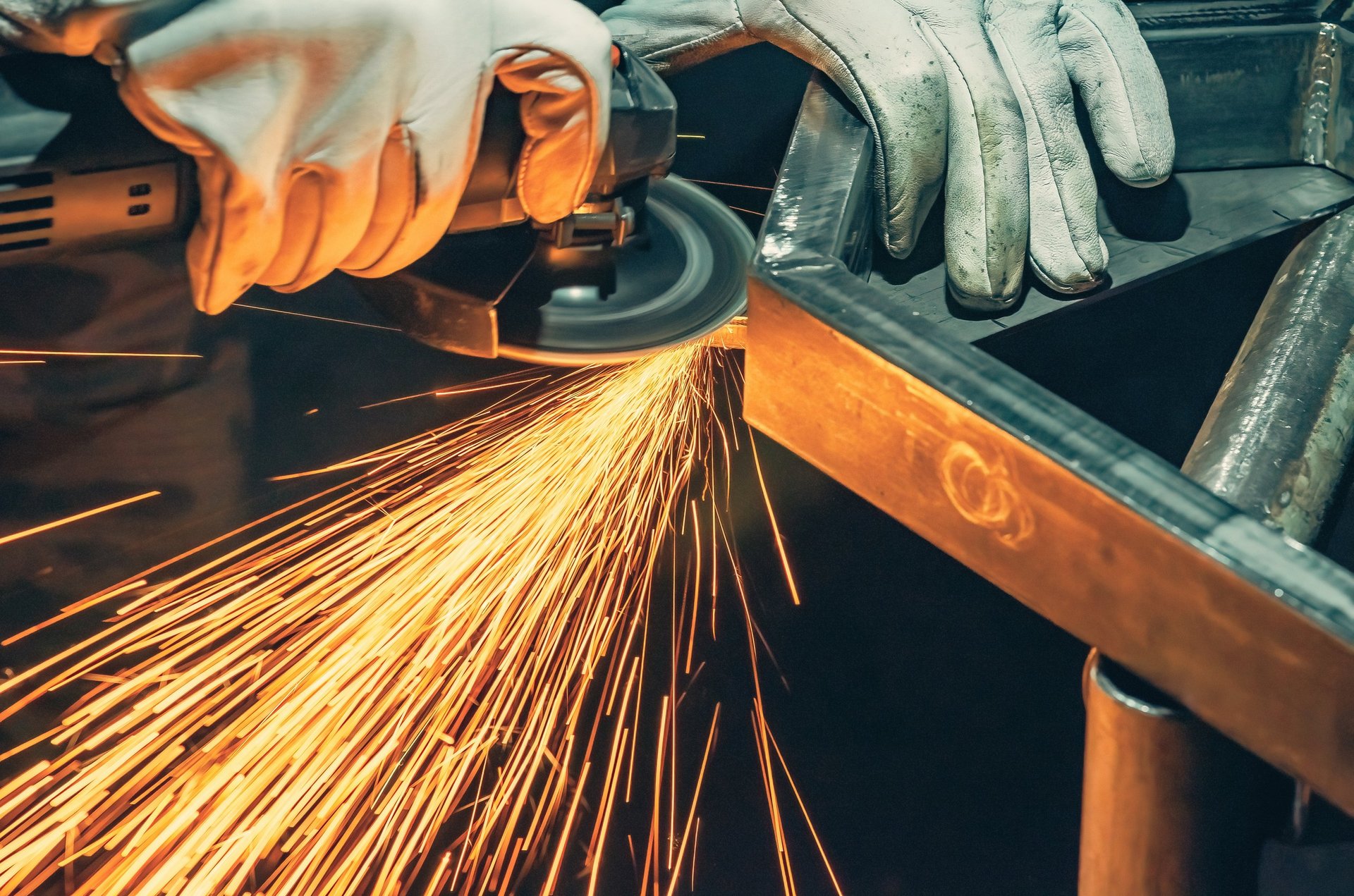
Welding, forming and surface preparation are the points where a section's behaviour shows up in production. Each is a decision the production engineer makes against the drawing and the fixture — and each is worth raising with the supplier because it can affect what has to be ordered and how it is supplied.
Weld sequence and access
Heat input moves a restrained assembly, and the sequence decides how much. Whether the joint is reachable, whether the part can be positioned before welding, and how much correction the fixture can absorb are all settled at planning stage — not at the bench.
Distortion and correction
Distortion is a function of the assembly and the sequence, not a property a supplier can promise away. Planning for it means deciding where allowance is built in, and what happens to a part that comes out beyond the fixture's capacity.
Surface preparation and treatment
Preparation affects weld quality and any subsequent coating. Deciding whether preparation happens before or after cutting and welding determines whether edges and heat-affected zones end up protected or exposed.
Forming and bending
Where the assembly includes a formed or bent operation, the tooling and the section's wall behave together. The forming requirement belongs on the enquiry because it can change what form and condition has to be supplied.
What this page will not do
- Predict how a specific assembly will distort under a given weld sequence
- State a weld procedure, a preheat condition or a heat input — those come from the qualified procedure the fabricator holds
- Recommend a surface preparation or coating system for a specific service
- Confirm that a section is suitable for a given production duty
Those belong to the production engineer, the welding coordinator and the design authority. This page exists to make sure the questions they answer are carried into the supply enquiry rather than discovered after it.
From production drawing to repeat supply
Six steps, and the point where consistency is won or lost
A production requirement runs from the drawing to a repeat order that behaves like the last one. Each step names its owner and the item that stays open until they close it — because on a production line the input that was never written down is the one that varies.
Production drawing
Design / production engineer
In: Drawing revision, datum, finished cut lengths, end preparation, and the tolerances the fixture depends on.
Out: A cut and fit requirement the shop can build to.
A stock length treated as a finished cut length.
Next: Name the revision, datum and cut tolerance.
Specification freeze
Design + purchasing
In: Standard and edition, grade, shape, nominal dimensions with units, tolerance basis and delivery condition.
Out: A section specification that can be quoted without interpretation.
A size-table value treated as an acceptance tolerance.
Next: Name the standard, edition and tolerance basis.
Fabrication planning
Production engineer
In: Weld sequence, fixture and access, expected distortion, surface preparation and any forming operation.
Out: A build sequence that accounts for how the section behaves.
Distortion discovered mid-run rather than planned for.
Next: Plan the sequence against the section behaviour.
Supply enquiry
Purchasing
In: Batch quantities and unit basis, cut or processing scope, packing, lot identification, records, destination and Incoterms place.
Out: One enquiry a supplier can price against the same basis.
Repeat orders placed on a different basis each time.
Next: Raise the enquiry as one repeatable package.
Incoming & in-process inspection
Quality / production
In: Lot identity, material records, dimensional checks, and the acceptance the line applies at goods-in.
Out: Material released to production with its record attached.
A lot that cannot be tied back when a defect appears.
Next: Agree the records against the line's check.
Repeat supply
Purchasing + supplier
In: The settled specification, lot identity and the change-control point at which the drawing or basis alters.
Out: Consistency across runs, with changes visible rather than silent.
A silent substitution that shifts fit or weld behaviour.
Next: Keep the basis fixed until a change is raised.
GCC markets & destination planning
Keep repeat supply and destination planning as separate questions
Where material comes from and what it costs to land are logistics questions, not production ones. Confirm the consignee or importer, the port or inland delivery point, the Incoterms rule and named place, the shipment documents, and any permit or conformity step the actual goods require — then name the party responsible for each. No country card here implies a local office, a warehouse or a stock position.

United Arab Emirates
Repeat supply and import documents
Carry the drawing revision, cut requirements, batch identity and the records the production line checks into the UAE enquiry so repeat orders stay aligned to the same specification.
United Arab Emirates hollow-section procurement
Saudi Arabia
Governing specification and delivery window
Confirm the standard and edition, grade, shape, nominal dimensions, cut basis and required-on-site date so the estimate and logistics stay aligned to the production schedule.
Saudi Arabia hollow-section procurement
Qatar
Specification and delivery inputs
State the standard and edition, grade, shape, dimensions, delivery condition, cut requirements, documents and delivery location so the Qatar quotation is fixed on a verified basis.
Qatar hollow-section procurement
Kuwait
Production supply and workshop hand-off
Link section selection and any cutting, drilling or forming to the fabrication and inspection needs, with the delivery point and the Incoterms named place agreed against the requirement.
Kuwait hollow-section procurement
Oman
Port-oriented production supply
Confirm the specification, nominal dimensions, batch quantities, document package, port and Incoterms rule so the Oman quotation and delivery sequencing stay aligned to the production run.
Oman hollow-section procurement
Bahrain
Industrial supply inputs
Coordinate the standard edition, grade, tolerance and inspection requirements, the document list and the delivery point to the Bahrain run so material and its records arrive together.
Bahrain hollow-section procurementRelated routes
Where the production question ends and another starts
This page is bounded to hollow sections supplied into manufacturing and the repeatability they have to hold. Where the open question is the product family, the wider industry or a specific load-bearing application, the routes below carry it more directly.
Hollow sections product range
The product family this page buys against — shapes, forms and the standards that govern them. Use it once the production inputs are settled and the open question is the section itself.
Open this routeManufacturing industry overview
The wider industry route, covering the steel families a manufacturing operation draws on. This page stays bounded to hollow sections and the repeatability they have to hold.
Open this routeStructural steel products
A comparison route, not a substitution. Where the assembly could reasonably use an open profile rather than a closed one, that is a design decision to weigh before the drawing is frozen — not a purchasing swap made at the bench.
Open this routeHollow sections for columns
Relevant where the assembly includes a load-bearing column. Column duty brings its own design and connection questions that a production standpoint does not resolve on its own.
Open this routeHollow sections for solar structures
A production-adjacent route where hollow sections are fabricated into repeated assemblies and the exposure and connection detail carry their own requirements.
Open this routeProduction FAQ
What a production engineer asks before the first order
The questions that decide whether a run repeats: what has to be held constant, which tolerances the fixture depends on, and where the prototype stops and production starts.
What makes a hollow section repeatable across production batches?
Which tolerances matter to a fixture?
Should prototype and production orders use the same specification?
How does weld sequencing interact with the section?
Can this page confirm minimum order quantities, stock or delivery dates?
Production supply
Send the handoff, not just the section
A production enquiry is most useful when the drawing revision and datum, the cut and end preparation, the fit tolerance, the standard and edition, the shape and dimensions, the lot identity and the inspection record travel together. Where something is still undecided, mark it open rather than guessing — so the quotation is priced against a basis the next order can be placed on unchanged.
Business Bay, Dubai · Office 3303, Churchill Executive Tower