
 Export supply · UAE to Ethiopia
Steel Rebar Supply from UAE to Ethiopia
Request a bulk or project rebar quotation for Ethiopia; specify the bar, quantity, destination and FOB, CFR or CIF basis.
For Ethiopia, verify the current compulsory standard and edition for the exact bar category, keep project acceptance evidence attached to the lot, and define the inland receiving basis separately from product conformity.
Material may be offered for export from UAE / Dubai / Jebel Ali only after availability and terms are confirmed. Nothing on this page is a statement that a particular size, grade, quantity or document is currently in stock or currently offerable.
Free to submit. No price, stock position or lead time is returned automatically — a reviewer responds on the basis you state.
What this page is quoted on
- Product
- Steel rebar / reinforcing bar, quoted per specification
- Export location
- UAE — dispatched through a UAE port on confirmation
- Destination
- Ethiopia, served as an inland destination
- Quote basis
- FOB named UAE port · CFR / CIF named seaport
- Price
- Price on request — no per-tonne figure is published here
- Standard
- Your tender's compulsory reference, verified at the IES catalogue
The flag identifies the destination market. No Ethiopia office, branch or local stock position is claimed.
RFQ readiness
What can the buyer request?
This page sells steel rebar — reinforcing bar — for export against a specification. Deformed (ribbed) bar is quoted where the requirement calls for it. The quotation is written against the exact bar you specify, not against a product description on a page.
“Iron rod” and how the quote is actually written
Local terminology varies, and an enquiry written as “iron rod” or “reinforcement rod” is understood as an enquiry for steel rebar. What governs the quotation is the precise steel specification, not the trade name — because two enquiries using the same local term can describe entirely different bars. Give us the bar category, diameter, grade and standard reference, and the terminology stops being a source of ambiguity.
We do not publish a standing list of available sizes and grades, because what can be offered changes with the lot, the origin and the time of enquiry. Instead, you state the requirement and we confirm what can be supplied against it.
Specify these on the RFQ; we confirm against the offer
None of the following is filled in on this page. They are the fields your enquiry has to carry, and they are checked against the offered lot rather than assumed from it.
- Diameters
- Every bar size the schedule calls for. A range on a schedule is not a substitute for the sizes listed on it.
- Stated by the buyer on the RFQ
- Grades
- The grade designation the structural design specifies, written exactly as the drawing or tender states it.
- Stated by the buyer on the RFQ
- Standards and editions
- The standard reference and its edition year. The edition is part of the specification, not a detail for later.
- Stated by the buyer on the RFQ
- Lengths
- Stock length or cut length, and whether the order is straight bar, coiled, or cut and bent.
- Stated by the buyer on the RFQ
- Minimum / project tonnage
- The tonnage you need, and whether it is ordered by theoretical mass or actual weighbridge / mill mass.
- Stated by the buyer on the RFQ
- Bundling and packing
- Bundle configuration, marking requirement, and how the mark must reconcile to the certificate at receiving.
- Stated by the buyer on the RFQ
No automatic grade conversion
Where a project specifies a grade under one system and an offer is available under a comparable one, the equivalence is not assumed. Any substitution is put to you explicitly, with the basis stated, for your engineer to accept or reject.
Before any supply claim
Standard and edition, grade, diameter, length, quantity, evidence, destination and Incoterm are established first. This page makes no supply claim until those are on the table.
Requirement versus offer
The left column is what your enquiry must carry. The right column is what the quotation does with it. The gap between them is where most rebar disputes originate, so it is set out rather than glossed over.
| Item | What the buyer states | How the offer treats it |
|---|---|---|
| Product / bar form | Deformed (ribbed) bar, plain round, coil, or cut and bent. | Confirmed against the offered lot, not assumed from the enquiry wording. |
| Standard / edition | The standard reference and edition the project requires. | Withdrawn or superseded editions are not silently substituted. |
| Grade | As written on the structural drawing or tender schedule. | No automatic grade conversion between systems. |
| Diameter / length | Every size on the schedule, with lengths. | Quoted per size; mixed-size lots are priced as such. |
| Tolerance / mass basis | State whether theoretical or actual mass governs the order. | The mass basis used is declared in the offer. |
| Quantity | Total tonnage or piece count, and whether partial bundles are acceptable. | Availability at the stated quantity is confirmed, not implied. |
| Marking / bundle ID | How bundles must be tagged for your receiving reconciliation. | Marking convention confirmed for the lot before loading. |
| Required evidence | What must exist before dispatch, and who accepts it. | Each document item confirmed as its own line in the offer. |
On narrow screens the table scrolls horizontally. Every row is labelled, so no column loses its meaning.
Standards & evidence
Compulsory-standard lookup gate
Ask for the exact bar type first, then the compulsory standard reference and edition confirmed by the buyer or the IES lookup, then the project documents and the inland receiving point. Transit and delivery responsibility stay separate from product conformity throughout.
Compulsory-standard & transit evidence
0 of 6 items known
Enter what your tender or importer states — not a default, and not a grade name standing in for a standard reference. Anything left open is carried into the RFQ as a question.
This page does not state that a particular standard applies to rebar countrywide, and it does not assert a compliance status for your shipment. Standard scope is bound to your project, the exact product category, the current edition and the responsible importer or authority.

Editorial illustration of an industry practice. It does not depict a Noor Deira Steel project, client, facility or certificate.
Export location
Where is export supply arranged?
Three phrases that sound interchangeable on an enquiry form and are not. Separating them is the difference between a quotation you can rely on and one that collapses at the loading point.
- This page’s basis
Material exported from UAE
Goods consolidated and dispatched through a UAE port under an export sale. This is the commercial basis this page is written for.
Availability for a specific lot is confirmed on enquiry, never assumed from the destination alone.
Material located as Dubai stock
Goods physically held in Dubai warehouses at the time of enquiry, potentially shorter lead time than a fresh consolidation.
A stock position is only stated where one has been verified for the size, grade and quantity in question.
Material manufactured in UAE
Goods produced by a UAE mill, which is a statement about production origin rather than about where the goods currently sit.
Mill origin is only claimed where proven for the offered lot. It is not inferred from the loading port.
Loading point
Confirmed, never assumed
Jebel Ali is a major UAE port and a common loading point for export consignments. This page does not state that every enquiry loads there.
The port a consignment actually loads from is a commercial decision taken against the lot, the vessel and the terms. For an FOB quotation it has to be named to be a complete term — so if you need the offer written against a specific UAE port, say so in the RFQ.
No confirmed export or load point is published on this page. Naming one before it is verified for your enquiry would misrepresent what is guaranteed — so it is established during the quotation instead.
The RFQ asks which of the three you are buying, so the offer is written to match.
Decision table
What must match before Ethiopia rebar is quote-ready
Four columns, used together. The fourth is the one that stalls most enquiries — an approval question nobody has asked yet, discovered after the specification looked settled.
| Buyer / tender requirement | Supplier offer | Evidence to attach | Open approval question |
|---|---|---|---|
| Standard reference and edition | The reference and edition the offer is written against | Specification statement naming standard and edition | Does your engineer accept this edition for this bar category? |
| Bar category | Ribbed, plain round, coil or cut and bent | Product description reconciled to the schedule | Is the offered category the one the drawings actually call for? |
| Grade | The grade designation as offered | MTC showing chemical and mechanical results | Is any grade substitution acceptable, and on what basis? |
| Diameter and length | Per size, against the schedule | Packing list with bundle marks | Do the supplied sizes map one-to-one to the schedule? |
| Quantity and mass basis | Tonnage or piece count, theoretical or actual | Weights per bundle on the packing list | Which mass basis governs payment and acceptance? |
| Bar marking / bundle ID | Marking convention confirmed for the lot | Marking photographs before dispatch | Can your receiving team reconcile marks to the certificate? |
| Mill certificate / test records | Confirmed for the offered lot | MTC and heat / lot traceability records | Does the project require a specific mill or heat scope? |
| Inspection | Scope you nominate, at the point you nominate | Third-party inspection report if engaged | Who appoints the inspector, and at which point in the chain? |
| Documents | Issued against the agreed terms | Packing list, invoice, origin and export documents | Which document set does your importer need at the border? |
| Destination | Named seaport, and inland point if separately agreed | Shipping documents naming the discharge point | Who clears the port and who receives inland? |
What actually blocks a quotation or a shipment release
A table of items is not a decision. In practice, two distinct things stall an Ethiopian rebar order, and they stall it at different points.
Quotation blocks on the commercial fields. A supplier cannot write a price against a specification with no named loading port, no named discharge port and no Incoterm. That is not caution — it is that the freight component, which for a landlocked destination is a large share of the delivered figure, is undefined until those places are fixed. Enquiries that name only “Ethiopia” as the destination usually return as questions rather than prices.
Shipment release blocks on the evidence. Separately, material does not leave the loading point until the evidence the project accepts for this lot is identified and confirmed against that lot. Discovering at dispatch that a heat-level record or a marking photograph was required is the failure this page’s gate exists to prevent — and it is avoidable entirely by naming the evidence set at enquiry stage.
Neither block is about willingness to supply. Both are about a field left unnamed.
The two blocks, side by side
Quotation block
Destination port · inland point · Incoterm · quantity and mass basis.
Release block
Standard edition · grade · marking · MTC scope · inspection point.
Transit continuity
Keeping the document chain intact to an inland point
Ethiopia is landlocked. The more handoffs a consignment passes through, the more chances the paperwork and the material part company. This is the sequence that keeps them together — and it separates technical acceptance from commercial responsibility at every step.
- 1
Specification fixed before dispatch
Product conformityStandard reference, edition, grade, diameter and marking agreed. Nothing here depends on the shipment.
- 2
Evidence confirmed against the lot
Product conformityMTC scope, heat or lot traceability and marking photographs confirmed for the actual material offered.
- 3
Documents issued at the loading point
CommercialPacking list, commercial invoice and export documents issued and matched to the shipped quantity.
- 4
Sea leg to the named discharge port
CommercialFreight to the port you nominated. CFR and CIF end here — they do not extend inland.
- 5
Port clearance and inland movement
Buyer / importerThe handoff where responsibility most often goes unstated. Who clears, who moves, who receives.
- 6
Receiving reconciliation
Buyer / importerBundle marks checked against the certificate at your receiving point, so a discrepancy surfaces immediately.

Editorial illustration of an industry practice. It does not depict a Noor Deira Steel shipment, facility or client.
Route and customs details
This page does not state a transit corridor, a customs procedure or an authority requirement for the inland leg. Where a route or border detail is not proven by the official source and your project documents, it is treated as a buyer and importer verification question rather than described as fact.
Expert insight · official-source method
What to verify before the PO is released
A method, not a compliance statement. Open the official source directly, identify the page or catalogue relevant to your exact product, current edition and importer or project scope, then cross-check it against your tender where the source leaves scope uncertain.
How to run the check
- 1Open the official source directlyOpen the catalogue itself rather than working from a summary of it, and check the page is current on the date you read it.
- 2Identify the relevant entryLocate the product-scope entry matching your exact bar category — ribbed bar and plain round bar are separate scopes.
- 3Confirm the current editionEstablish which edition applies now. An edition named on an older tender may since have been revised.
- 4Cross-check against your tenderWhere the catalogue leaves scope uncertain, put the question to your importer or the authority rather than resolving it yourself.
- 5Carry open items into the RFQAnything unresolved becomes an explicit RFQ question, so the quotation is written against a stated position.
Official source
2026 Ethiopian Standard (CES & ES) CatalogueInstitute of Ethiopian Standards · information date 27 September 2026
Verified reachable at build time: the page publishes the 2026 Ethiopian Standard (CES & ES) Catalogue as two downloadable documents — “2026 Compulsory Ethiopian standards Catalogue.pdf” and “IES ES Ethiopian standards 2026 Catalogue.pdf”. It distinguishes mandatory standards, which it states “have the force of law as do other technical regulations in Ethiopia”, from voluntary standards.
What that does and does not establish. The compulsory list itself sits inside the linked PDF catalogue; the page does not display the individual entries. We could not read the entry for steel reinforcement of concrete to confirm a current reference or edition, so this page does not assert one. Treat the catalogue as the place to verify scope yourself, then confirm applicability with your importer and engineer. This is not a supplier certificate, not proof that a specific mill, grade or shipment is approved, and not a substitute for your current project documents.
Who confirms what
Regulatory and conformity scope for the exact product and shipment is confirmed by the importer and the project engineer. The supplier states what the offered lot carries. This page does neither on their behalf.
Importer
Whether a conformity obligation applies to this consignment, and what the border requires.
Importer / project engineer
The standard, edition and acceptance criteria for the exact product, and the evidence required.
Supplier
The specification, marking, test evidence and document scope actually available for the offered lot.
No “compliant” badge is shown anywhere on this page. A compliance claim would require shipment-specific evidence to have actually been reviewed by the responsible party — which this page cannot assert.
Document and inspection matrix
What can be asked for, what it covers, and who confirms it. Nothing in this table is a statement that any item is currently available.
| Document / inspection item | Scope it covers | Confirmed by |
|---|---|---|
| MTC / mill test records | Heat-level chemical and mechanical results for the steel supplied. | Requested by the buyer; confirmed for the lot before dispatch.Subject to confirmation with the offered lot |
| Specification statement | The standard and grade the material is supplied against. | Requested by the buyer; confirmed against the offered lot.Subject to confirmation with the offered lot |
| Packing list | Bundle count, marks and the weights per bundle. | Confirmed by the supplier for the shipment loaded.Subject to confirmation with the offered lot |
| Commercial invoice | The commercial basis of the sale and the stated Incoterm. | Issued by the supplier against the agreed terms.Subject to confirmation with the offered lot |
| Origin documentation | Where applicable to the destination's import requirements. | Requested by the buyer; confirmed for the lot before dispatch.Subject to confirmation with the offered lot |
| Export documents | The documents required to move the consignment out of the loading point. | Requested by the buyer; confirmed for the shipment.Subject to confirmation with the offered lot |
| Third-party inspection | Inspection scope you nominate, and at what point in the chain it applies. | Requested by the buyer; confirmed for the offered lot.Subject to confirmation with the offered lot |
| Marking photographs | Bundle tags and bar marking as applied, for your receiving reconciliation. | Requested by the buyer; confirmed for the offered lot.Subject to confirmation with the offered lot |
Quantity & documents
Quantity, documents and inspection readiness
Three things the quotation needs from your side before it can be written against a real cost. None of them is technical — which is why they are the ones most often left until later.
How should the quantity be ordered?
The mass basis is a commercial decision, not a rounding detail. State which of these governs your order, and the quotation is written on that basis. This page never infers a weight — it asks.
- Theoretical massCalculated from nominal section and length. Standard for most schedule-based orders.
- Actual massDetermined by weighbridge or mill certificate. Ties payment to the physical delivery.
- Piece count / bundlesUsed where the requirement is expressed in bars or bundles rather than tonnes.
The RFQ accepts tonnes, kilograms or pieces. For a mass-basis conversion check, the weight reference listed in the related resources is available before you submit.
Evidence you can request
Select what your project or importer requires. Availability and document feasibility are confirmed during quotation — never promised on this page.
- MTC / test certificate
- Heat / lot traceability
- Bundle packing list
- Marking photographs
- Third-party inspection
- Certificate of origin
- Other buyer-requested documents
Six steps, in order
- 1Send the RFQPut the requirement in the form so it arrives with a specification attached, rather than as a request to be followed up.
- 2Specify size, grade and standardDiameter and length, grade, and the standard reference with its edition year. This is what the quotation is written against.
- 3Give the quantityTonnage or piece count, and whether theoretical or actual mass governs, so the mass basis is agreed before it matters.
- 4Name the port and final destinationThe seaport you clear through, and the inland city or site the material has to reach. Both need to be named places.
- 5Request FOB, CFR or CIFWith the named place and the document or inspection scope you need attached to the request.
- 6Receive the quotationIssued once feasibility and the evidence plan are confirmed. Only options that can actually be supported are quoted.
No response time is promised. Enquiries are reviewed by the commercial desk on the basis you state, and the completeness of your specification is what determines how quickly a usable answer comes back.
Inland receiving basis
Can delivery be quoted?
Ethiopia is landlocked. The sea leg ends at a coastal port and everything beyond that point is a separate movement with its own responsibility, cost and risk. Two questions sit underneath this section: which compulsory specification applies to the ordered product, and how the project acceptance documents travel with a transit shipment.
There is no “CIF Ethiopia.” CIF and CFR are seaport terms, and Ethiopia has no seaport. They are written against a named coastal port. An inland delivered price is a different agreement, naming the receiving place and the term, and it is quoted separately.
What the RFQ has to establish
Six things. None of them can be assumed on your behalf, because each one changes who is responsible when something goes wrong.
- Named overseas discharge port
- Ethiopia is landlocked, so the sea leg ends at a coastal port and the inland movement is a separate matter. Name the port you will clear through.
- Final receiving city or site
- The point the material has to reach inside Ethiopia. This is what an inland quote is written against, and it has to be a named place.
- Who handles each leg
- Who arranges the sea freight, who clears the port, and who moves the cargo inland. Each leg is quoted against a named responsible party.
- Incoterm and its named place
- FOB needs a UAE port. CFR and CIF need a named seaport. An inland delivered term needs a named inland place and a separately agreed term.
- Required date at the receiving point
- The date the material is needed on site, not the date it leaves the UAE. Transit and clearance sit between those two dates.
- Import documentation route
- Any conformity, permit or inspection obligation your importer carries, identified up front so it is not discovered at the border.
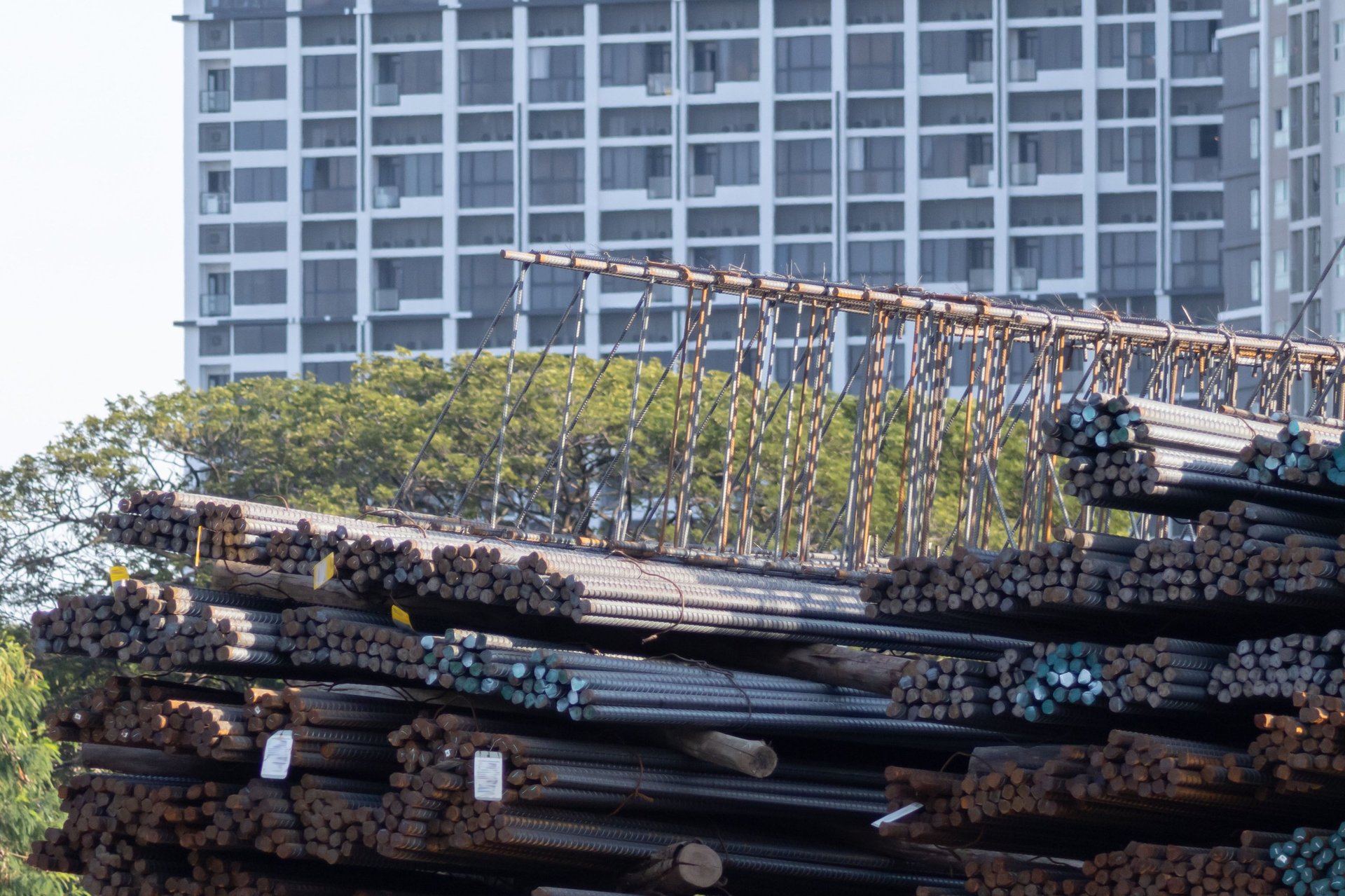
Editorial illustration of an industry practice. It does not depict a Noor Deira Steel project, client or site.
Terms, and the place each one needs
FOBNamed UAE port
The sea leg ends at a port you have named. FOB needs a named UAE loading point to be a complete term.
CFRNamed seaport
Freight is included to the seaport you name. It does not extend to an inland city, and it is not written as “CFR Ethiopia”.
CIFNamed seaport
Freight plus the agreed marine insurance cover to the seaport you name. The same naming requirement applies.
Inland deliveredNamed inland place
A separate agreement naming the receiving point, the term and the responsibility split. Quoted only where it is commercially feasible.
This page does not state a transit route, a corridor, a schedule or a fixed delivery time, and it does not claim a guaranteed UAE-to-Ethiopia service. Feasibility is checked against the actual consignment before any offer is issued.
Where your enquiry currently stands
Three outcomes, not a score. Each describes which fields are still open and what has to happen next.
Ready for technical review
The bar category, standard reference and edition are named, and the evidence set the project accepts is identified. The enquiry can be quoted against a stated requirement.
Needs buyer / authority confirmation
The standard reference or its edition is unresolved for the exact bar category, or acceptance criteria are not yet named. The enquiry proceeds as an open question rather than a settled specification.
Needs destination / commercial clarification
The discharge port, inland receiving point, Incoterm or responsibility split is not yet named. Pricing and feasibility cannot be written until those places are fixed.
These three outcomes are descriptive, not a compliance rating.
Request Rebar Quote
Send a qualified Ethiopia rebar RFQ
This collects a comparable specification and route. It does not return a price, a stock position or a delivery promise — a person reviews the enquiry and responds on the basis you state.
RFQ summary
This is exactly what your enquiry currently contains. Anything still open stays visibly open rather than being guessed at — missing optional fields read “Not specified”.
- Buyer
- NameNot specifiedCompanyNot specifiedCountryEthiopiaEmailNot specifiedPhone / WhatsAppNot specified
- Requirement
- Bar formDeformed (ribbed) barDiameter / lengthNot specifiedGrade / standardNot specifiedQuantityNot specifiedMarking requirementNot specified
- Route & basis
- DestinationNot specifiedIncotermNot specifiedLoad portNot specifiedDischarge portNot specifiedOnward locationNot specifiedRequested dateNot specified
- Evidence
- Documents requestedNot specifiedReferenceNot specified
The copy includes only what you have entered. Your enquiry is handled by our commercial desk under the site’s form policy. If you would rather raise it directly, send it to sales@noordeirasteel.ae.
Contact options
Reach the commercial department directly
Three direct routes, plus the RFQ above. The form remains the fastest way to get a comparable enquiry in front of a reviewer — the direct channels are for questions the form cannot carry.
Registered office: Office 3303, Churchill Executive Tower, Business Bay, Dubai, United Arab Emirates. No Ethiopia office or local stock position is claimed anywhere on this page. Material is offered for export from the UAE only once availability and terms are confirmed for the specific lot.
WhatsApp is shown against the published commercial mobile number. Confirm the number is still monitored for export enquiries before release.
Working hours are stated in Gulf Standard Time (UTC+4), which is one hour ahead of Ethiopia. A message sent late in the Ethiopian day reaches the desk the following morning.
FAQ
Questions buyers in Ethiopia ask before an RFQ
Short answers, in the condition they actually hold. Where a question can only be settled by your specification or your importer, the answer says so.
- Can you supply rebar to Ethiopia?
- We quote steel rebar for export from the UAE against a stated specification. Availability for a specific lot, and the shipping arrangement that would carry it, are confirmed after the enquiry rather than assumed from the destination. Ethiopia is served as an inland destination: the sea leg ends at a nominated port and the inland movement is agreed separately.
- Can I request CFR or CIF pricing?
- Yes, against a named seaport. CFR and CIF both require a specific discharge port to be named — they cannot be written against the country as a whole, because Ethiopia has no seaport. Once you name the port, freight feasibility for that route is checked before an offer is issued.
- What sizes, grades and standards are available?
- Tell us the sizes, grades and standard reference your project specifies and we confirm what can be offered against that requirement. We do not publish a standing size or grade list, because what is offerable changes with the lot and with origin.
- Can I order bulk or project quantities?
- Yes — bulk and project quantities are the normal basis for this route. State the tonnage or piece count and whether the requirement is a single delivery or phased across a programme, and capacity is confirmed against that.
- Can you provide MTC or third-party inspection?
- You can request mill test records, a specification statement, marking photographs and third-party inspection as part of the enquiry. Each is confirmed for the offered lot before dispatch rather than promised on the page. Where inspection is required, nominate the scope and the point in the chain at which it applies.
- How do I request a price per ton?
- Send the diameter, grade, standard reference and edition, the quantity with its mass basis, the named discharge port or inland destination, and the Incoterm you want. A price per MT is issued against those fields. No indicative or “from” price is shown on this page, because it would not be a number you could transact.
- Can I buy from Dubai or the UAE for Ethiopia?
- Yes, and it is worth separating three things the phrase can mean. Material exported from the UAE is dispatched through a UAE port. Dubai stock is material physically held in Dubai. UAE-manufactured means produced by a UAE mill. These are different commercial facts, and where the goods were made is not inferred from where they load.
- What do you need for a quote?
- Technical: bar form, diameter and length, grade, and the standard reference with its edition. Commercial: quantity and mass basis, the named UAE loading point and discharge port, the Incoterm, the required date, and the document or inspection scope. A project or tender reference helps if the enquiry belongs to one.
- Can you deliver to an inland site in Ethiopia?
- Request the named receiving point and tell us who is responsible for each leg — sea freight, port clearance, and the inland movement. Any onward service beyond the discharge port is confirmed against a named place and a specific term in the quotation. We do not imply a guaranteed route, a transit service, or a fixed delivery time.
- Which port will the material discharge at?
- You nominate it. Because Ethiopia is landlocked, the discharge port is a commercial choice that depends on your clearing arrangements and the inland leg that follows. Name the port you intend to clear through and freight feasibility to it is checked in the quote.
What a quote needs from you
- 1Bar category, diameter and length, listing every size on the schedule.
- 2Grade and the standard reference with its edition year.
- 3Quantity with the mass basis — theoretical or actual.
- 4The seaport you clear through, and the inland point to be reached.
- 5The Incoterm you want, with its named place attached.
- 6The evidence the project accepts, and who accepts it.
- 7A project or tender reference, if the enquiry belongs to one.
Related resources
- Africa steel rebar supplier hubThe continental route covering every destination market we publish.
- East & Horn Africa rebar regionThe regional grouping Ethiopia sits inside.
- KenyaThe neighbouring destination route carrying the coastal port leg.
- RwandaThe adjacent landlocked destination route sharing the same inland pattern.
- Steel rebar product specificationsCore product scope before narrowing to a form, size or evidence route.
- Steel rebar export decision guideHow the export process works rather than what the product is.
- Rebar sizes referenceCheck a size schedule against a stated basis before writing it into the enquiry.
- Rebar weight chartCheck the mass basis against the schedule before it is written into the enquiry.
- Rebar for concrete reinforcementThe general reinforcement application route.
- Send a qualified rebar RFQThe full quotation desk route on this same domain.