
B500C Rebar
B500C: Three Pieces Of Information
B500C is not one piece of information, it is three, and reading it wrongly is the most common mistake on this grade. In the BS 4449 family the symbol breaks down as B for the reinforcement type, 500 for the specified characteristic yield strength in megapascals, and C for the ductility class — the highest of the three classes that family defines. So B500C tells you the strength and the ductility class, and it does not by itself tell you the edition in force, the bar size, the surface form, or whether your project has adopted the standard unchanged or with national variations. Confirm all of those against the controlling specification, and require documentary proof per consignment rather than assuming the designation carries it.
What the symbol actually says
- B — the reinforcement type.
- 500 — the characteristic yield strength, not the class.
- C — the ductility class, the part most often lost.
Information current as of
Reading The Designation Before Anything Else
The C is a ductility class. It is not the strength, and it is not decoration.
Most procurement problems on this designation start with an abbreviation: B500C becomes B500 on a purchase order, the class quietly disappears, and what is delivered technically conforms to something the design did not ask for. The options below are grouped by what each answer actually tells you, so the class and the edition are established before the strength is discussed.
B500C rebar
Current designationChoose it when
When the controlling specification is the BS 4449 family and the project requires the highest of its defined ductility classes at a 500 MPa characteristic yield strength.
Before you commit
The designation states strength and ductility class only. The edition, any national adoption variations, the bar size and the surface form all have to be confirmed separately from the project specification.
B500A / B500B rebar
Same strength, lower ductility classChoose it when
Where the project specifies a lower ductility class from the same family — a common and legitimate choice where the detailing does not demand class C.
Before you commit
The classes are not interchangeable by preference. The strength figure is shared, the ductility requirement differs, and any change of class is a specification change the design must confirm.
16 mm rebar
Size routeChoose it when
Where the schedule calls for a 16 mm nominal diameter and you need the size-specific information alongside the designation.
Before you commit
The designation does not state a size. Confirm the size against the detailing and check what the controlling standard permits for the class.
Open this routeReinforcement bar
Application contextChoose it when
Orient the designation decision against general concrete reinforcement requirements before comparing across standard families.
Before you commit
The application context is orientation, not acceptance. The controlling standard and the class the project specifies still govern what may be supplied.
Open this routeWhat the designation does state
The reinforcement type, the characteristic yield strength and the ductility class — three defined pieces of information inside the controlling standard family.
What it does not state
The edition in force, any national adoption variations, the nominal bar size, and the surface form. Every one of those has to come from the project specification and the detailing.
Why the class carries the weight
The A, B and C classes share the strength figure and differ in ductility. Because ductility sits behind detailing and test requirements, losing the class changes what the design gets.
The designation rule
Transcribe the designation in full wherever it is used — on the enquiry, the purchase order and the delivery documents — and confirm the class separately rather than trusting the shorthand to survive. Do not assume B500C is interchangeable with an ASTM grade or another designation system: different families define their strengths, ductility and test regimes independently, and none of the detailing or evidence requirements travel between them. The controlling edition and any national variations are the project specification's to state, not the bar mark's to imply.
B500C Designation & Class Verification Checklist
Verify the designation, the edition and the proof the consignment needs
This checklist decodes the symbol before it accepts it. It requires the edition as a field in its own right, will not resolve while the ductility class is unconfirmed, and holds until the size, surface form and documentary proof are stated. An ASTM designation entered against this route returns a conflict, because the families are not interchangeable.
Designation & verification inputs
Required fields marked *Use the edition the project specification requires.
Transcribe it in full — including the class letter.
The designation does not state the form — confirm it from the detailing.
State what proves the delivered consignment — the checklist will not clear without it.
Required documentary proof
Nominal mass refers to the base bar and is either supplied by you or confirmed against the controlling standard and the supplied documents. This checklist does not estimate weight, does not certify a class, and does not provide bend diameters or lap lengths.
Designation check
Add the controlling edition
The designation is recorded; the edition determines the class definitions, the test framework and any national variations that apply. State the edition the project specification requires.
Still to confirm
- The controlling standard and edition your project is bound to.
- Whether the project adopts the standard unchanged or with national variations.
- The bar size and surface form the design and detailing require.
- The conformity or test documentation required per consignment.
- Any additional inspection or certification the project or authority imposes.
Boundaries of this check
- B500C is a designation, not a specification. It names a strength and a ductility class inside the BS 4449 family and does not by itself state the edition, size, surface form or any national variation.
- Do not assume B500C is interchangeable with an ASTM grade or another EN designation. Different families define their strengths, ductility and test regimes independently.
- The ductility class is a separate requirement from the strength number — B500A, B500B and B500C share a strength figure and differ in class.
- The controlling edition and any national adoption variations must come from the project specification, not be inferred from the bar mark.
- A declaration of conformity is not per-consignment evidence. The documents that prove the delivered lot are separate from the standard's requirements.
Nothing is transmitted yet, and this checklist does not approve a substitution or certify a class. When the designation and proof requirements are settled, send the summary to the commercial department for a confirmed quotation.
Standard, Designation & Class
What the designation fixes, and what the project has to state
The controlling standard defines the designation system, the strength figure and the ductility classes. It does not tell you which edition your project is bound to, whether national variations have been adopted, what bar size you need, or what proof accompanies the consignment. Read the tables in that order.
Decoding the symbol
Each part of B500C, and what it commits you to
| Part | What it denotes | What it means for your enquiry | Enquiry field / next action |
|---|---|---|---|
| B | The reinforcement type within the controlling standard's designation system. | Identifies the product family the rest of the symbol belongs to; a different letter is a different designation. | State the designation in full. |
| 500 | The characteristic yield strength in megapascals. | This is the strength figure — the part people recognise. It is not the ductility requirement. | State strength as part of the designation. |
| C | The ductility class — the highest of the classes the family defines. | This is the requirement that drives detailing and test consequences. It is the part most often lost in abbreviation. | Confirm the class separately. |
| — (edition) | Not contained in the designation at all. | The edition defines the classes themselves and any national variations. It must come from the project specification. | State the controlling edition. |
| — (size & form) | Not contained in the designation at all. | Nominal size and surface form are physical attributes your detailing sets, and size-dependent provisions follow from them. | State size and surface form. |
This table explains how the designation is structured. Confirm the exact class definitions, edition and any national variations against the current standard documents and your project specification — no numeric performance values are published here.
Across standard families
Why a similar strength number is not a shared designation
| Designation family | How it is structured | What it means for your assessment | Enquiry field / next action |
|---|---|---|---|
| BS 4449 family (this page) | A characteristic strength figure with a separate ductility class letter — the structure B500C belongs to. | Class and strength are distinct requirements. Losing the class letter changes what the design receives. | State the full designation and edition. |
| ASTM specifications | Grade designations with their own mechanical and chemistry frameworks, defined independently of the BS 4449 system. | Not interchangeable with a BS 4449 designation. Similar strength figures do not create equivalence. | Confirm the governing standard family. |
| Other regional designation systems | Each defines its own strength, ductility and test regime, sometimes with national amendments. | No equivalence follows from a similar-looking label; the governing standard must be re-stated. | State the governing standard and designation. |
This is a non-equivalence reference intended to prevent cross-family substitution on the strength figure alone. It does not establish that any designation is achievable, stocked or approved for a given project.
Bounded comparison
The adjacent routes worth opening before you commit
Each route answers a specific neighbouring question — the size the schedule calls for, and the application context the reinforcement serves. Neither is interchangeable with your requirement unless the design authority approves the change.
16 mm size route
Open referenceConcrete reinforcement
Open referenceBend diameter guidance
Open referenceMechanical properties
Open referenceComparison is bounded to the stated standard, designation, class and size basis. Do not substitute a designation, class or size without an approved design change.
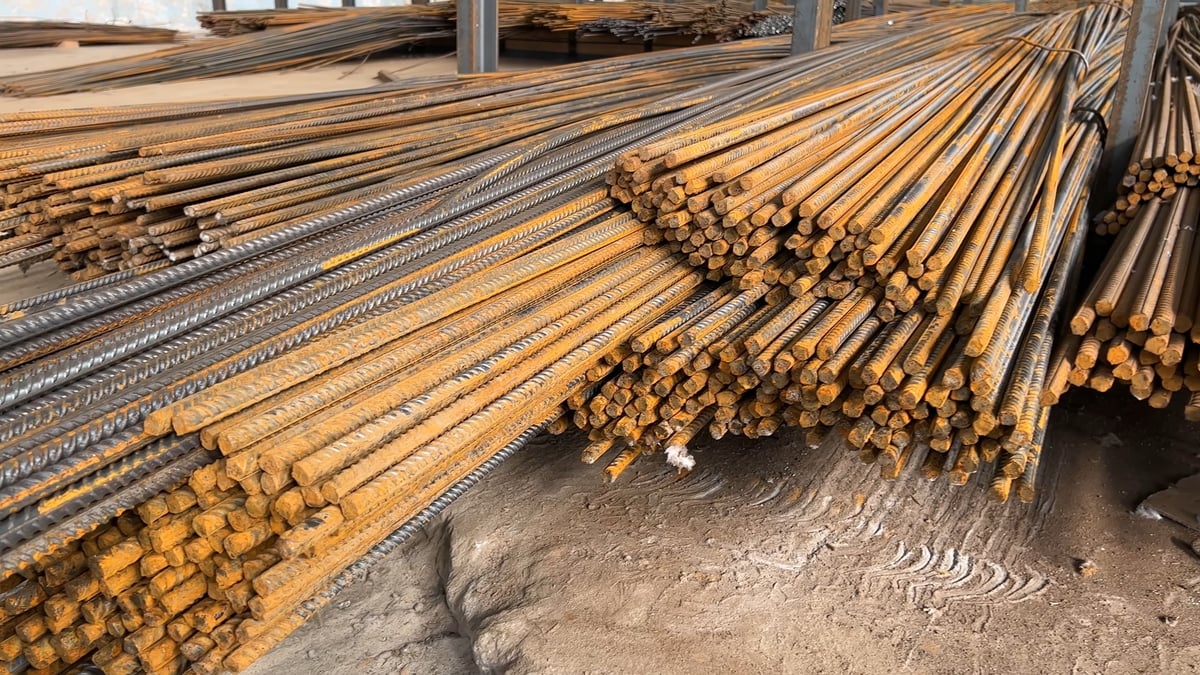
Consignment identity
The designation on the drawing and the material in the bundle have to meet in the documents
What a designation cannot do is travel by itself. The requirement on a drawing becomes an order, the order becomes a consignment, and the only thing connecting the last of those to the first is the documentation and marking that accompany the delivery. That is why the class letter deserves the same care as the strength figure: if it is dropped at any step, the bundle that arrives may conform to the standard without conforming to your design, and nothing on site will reveal it until someone checks the paperwork. The imagery here illustrates the storage and dispatch stage; it is not a representation of a specific consignment.
Documentary Proof & Verification
What proves the consignment, and how to check it on receipt
A designation describes a requirement. Proof describes what was actually delivered — and on this page those are treated as two different things, because the gap between them is where most disputes live. State the document set identically to every source so the quotes you compare are comparable.

| Proof / record | What it verifies | When it is required | Enquiry action |
|---|---|---|---|
| Consignment conformity / test documentation | That the material delivered conforms to the requirement, evidenced for that consignment rather than for the product generally. | Where the project requires certified material — the normal case for a specified class. | Request at enquiry; confirm it references the delivered consignment. |
| Mechanical results including ductility evidence | The measured performance of the consignment, including the properties that separate one ductility class from another. | Where the class requirement carries the design, rather than strength alone. | Request class-relevant results. |
| Chemistry information | The composition of the material where the project or the application requires it. | Where the specification, a coating system or a fabrication requirement depends on chemistry. | Request where applicable; not universal. |
| Bar marking & traceability records | The marking that ties a bundle to its documentation and to the requirement on the drawing. | For dimensional checks, schedule control and site traceability. | Confirm marking and traceability requirements. |
| Bundle weight, size & identification tags | Bundle weight, nominal size and the tags naming the consignment. | For schedule control, quantity verification and handling. | Confirm tag content and size identification. |
| Dimensional verification on receipt | That nominal size and form match what was ordered and what the detailing assumed. | On receipt, as part of goods-in inspection. | Agree what is measured and recorded. |
Requirement vs consignment
The standard and the designation state the requirement; the consignment documents state what was delivered. Both are needed, and neither replaces the other.
Issued against the delivery
Documentation is meaningful when it references the consignment actually received, not the product range in general.
Comparable enquiries
Stating an identical document set to every source is what makes two quotes assessable against each other rather than merely against a price.
Rebar chemical & mechanical properties
See how strength, ductility and chemistry requirements are framed for a designated class, and what your conformity documentation must evidence.
Open technical referenceRebar bend diameter guide
Resolve the minimum bend diameter question against the class and size the detailing uses, before bars are scheduled for fabrication.
Open technical referenceWhere The Class Does Real Work
The applications where a specified ductility class is not a formality
On many jobs the class distinction never comes up, which is exactly why it gets treated as administrative. In the settings below, the ductility the class describes interacts with how the element behaves and how it is handled — so a class dropped in procurement is a design change nobody authorised.

Rebar for road construction
Why the class matters here
Pavements, barriers and drainage structures bring repeated loading and joint detailing, where the specified ductility class is doing real work rather than being a formality on the drawing.
Fit limit
The pavement or structure type and its governing specification come from the design and are confirmed against it.
Open applicationPrecast concrete rebar
Why the class matters here
Precast adds controlled casting, form-release timing and lifting stresses, so the ductility class the project specifies interacts with how the element is handled.
Fit limit
The element type and its lifting design are confirmed against the project; the designation does not override them.
Open applicationApplication fit is confirmed against the controlling standard, the designation and class specified, and the project's own requirements when the enquiry is quoted. No generic or unsupported suitability claims are made on this page.
GCC Markets & Destination Planning
Plan the destination, documents and delivery basis for a B500C enquiry
Because this standard family is adopted with local variations in some markets, the destination is not only a logistics question — it is a specification question. For each GCC destination the requirements are aligned to your project basis at quotation, never assumed.

United Arab Emirates
Designation and document review.
Add the delivery location, importer/customs inputs, Incoterm and document set before the B500C enquiry is issued.

Saudi Arabia
Large project quantities and cross-border documentation.
Confirm the delivery location, importer inputs, Incoterm and documents so a designated-class requirement is quoted on one consistent basis.

Qatar
Infrastructure technical-approval readiness.
Add the technical submittal and conformity document package the project requires for the specified class.

Kuwait
Contractor and fabricator hand-off.
State the delivery location, Incoterm, documents and required date so the order can be planned against the specification basis.

Bahrain
Contractor procurement and industrial supply.
Provide destination, importer/customs inputs, Incoterm and documents before quotation of the B500C rebar.

Oman
Port-oriented project supply planning.
Confirm the destination, required documents and Incoterm so the quotation basis is fixed for the specified designation.
Destination, documents, port or delivery line, Incoterm and the required delivery date are fixed at quotation from your specification. No served markets, local stock, local branches, delivery times or local adoption positions are claimed in advance.
Commercial & Availability Inputs
What turns a B500C requirement into a comparable offer
Availability, packing, documents, Incoterm and delivery are agreed from your full specification. Price is always on request — no live stock, lead-time or pricing claims are made before quotation.
| Quotation input | What it fixes | Status |
|---|---|---|
| Controlling standard & edition | Which edition the offer is made against, and whether national variations apply. | Required before quotation. |
| Designation & ductility class | The full designation, including the class letter the design specifies. | Required before quotation. |
| Bar size & surface form | The nominal size and form the detailing requires — neither is stated by the designation. | Required before quotation. |
| Documentary proof set | The conformity, test and marking documents required per consignment. | Required before the enquiry is issued. |
| Quantity & unit | Total tonnes or bar count for the schedule. | Required for quotation. |
| Packing & bundle marking | Bundled, strapped and tagged with the designation and consignment identification. | Confirmed from the order. |
| Inspection requirements | Any additional inspection, witnessing or certification the project or authority imposes. | Fixed at quotation per the project. |
| Availability (stock / mill) | Whether the enquiry is met from current availability or scheduled production. | Confirmed at quotation — never claimed in advance. |
| Incoterm & named place/port | The commercial and delivery basis for the consignment. | Fixed with the destination. |
| Required date | The delivery window the programme depends on. | Confirmed against availability. |
Price, stock, lead time, mill/origin and routing are quotation-dependent unless current verified evidence is present.
Commercial department
The commercial desk checks each B500C enquiry for the controlling edition, the full designation including its ductility class, bar size and surface form, the documentary proof set and the delivery basis before quoting. Continue to the exporter route when packing, named place, Incoterm, export-document and shipment-planning fields are needed.
Steel rebar exporterOffice 3303, Churchill Executive Tower, Business Bay, Dubai, United Arab Emirates
Monday – Saturday: 8.00 AM – 6.00 PM · Sunday: Closed
Verifiable Outcomes
What each concern is checked against, and what you can rely on
Each risk on this page is mapped to the check that actually addresses it, then to a practical outcome. No superiority claims and no interchangeability claims are made.
| Buyer concern | Check on this page | Outcome you can rely on |
|---|---|---|
| Reading B500C as strength only and losing the ductility class | The checklist decodes the designation into its three parts and separately confirms that the class reads as C. | The class requirement reaches the enquiry instead of being dropped between drawing and purchase order. |
| Assuming the designation states the edition | The edition is a required field in its own right, and the checklist will not resolve without it. | The controlling edition is on the enquiry rather than inferred from the bar mark. |
| Treating B500C as interchangeable with an ASTM grade | An ASTM reference entered against this designation returns a conflict with the family difference set out. | A cross-family mix-up is caught at specification stage, not at inspection. |
| Missing national adoption variations | The checklist treats the adoption position — unchanged standard or local variations — as an explicit item to confirm. | Local requirements are established from the specification rather than assumed away. |
| Accepting a declaration in place of per-consignment documents | The evidence matrix separates the standard's requirements from the documents that prove the delivered lot. | Conformity is demonstrated on the consignment actually received. |
| Losing the size and surface form between design and order | Size and surface form are collected separately, because the designation states neither. | The order carries the physical attributes the detailing depends on. |
From designation to delivery
- 1
Read the designation correctly
Decode the symbol into its parts — reinforcement type, characteristic strength and ductility class — rather than treating it as a strength figure alone.
- Owner:
- Engineer + buyer
- Input:
- Designation as specified
- Output:
- Decoded requirement
- Risk:
- Ductility class lost
Next: Confirm the controlling edition
- 2
Confirm the controlling edition
Establish which edition of the controlling standard the project is bound to, and whether it adopts the standard unchanged or with national variations.
- Owner:
- Engineer
- Input:
- Project specification
- Output:
- Edition and adoption position
- Risk:
- Edition assumed from the bar mark
Next: Fix size and surface form
- 3
Fix the bar size and surface form
State the nominal size and the surface form the detailing requires, since the designation states neither.
- Owner:
- Designer + detailer
- Input:
- Bar schedule, form
- Output:
- Physical requirements fixed
- Risk:
- Size or form mismatched at order
Next: Apply the class-dependent detailing
- 4
Apply class-dependent detailing
Detail bends, laps and anchorage to the provisions that attach to the specified class, size and concrete.
- Owner:
- Designer + detailer
- Input:
- Class, size, congestion
- Output:
- Compliant detailing
- Risk:
- Provisions assumed from another class
Next: Agree the conformity documents
- 5
Agree the per-consignment documents
State the conformity, test and marking documentation the project requires against the delivered lot.
- Owner:
- QA + buyer
- Input:
- Required documents
- Output:
- Documentary proof requirement
- Risk:
- Declaration substituted for lot evidence
Next: Fix destination and delivery basis
- 6
Fix destination, Incoterm and date
Confirm the delivery location, Incoterm rule and required date so the enquiry is complete and comparable.
- Owner:
- Buyer + commercial
- Input:
- Destination, Incoterm, date
- Output:
- Qualified enquiry ready to issue
- Risk:
- Unstated documents or port
Next: Issue the qualified RFQ
Technical reference note
Which authoritative requirement most changes a B500C decision
A source-backed note on the requirement this page is built around — stated with its source, its checked date and its limits.
The requirement that changes the decision
The defining feature of this designation system is that strength and ductility are expressed as two separate requirements rather than one. The strength figure sits in the number, and the ductility class sits in the letter — which is why the family defines more than one class at the same strength. That structure is what makes the class worth protecting through procurement: it is the part of the requirement that speaks to how the reinforcement behaves rather than how strong it is, and it is the part most easily lost when a designation is abbreviated or a substitute is chosen on the strength figure alone.
The second consequence concerns the standard itself. A designation does not identify which edition is in force, and the same standard may be adopted in different markets with national variations or a local foreword. That means the controlling document — and therefore the class definitions and evidence requirements that apply — has to be established from the project specification rather than inferred from the bar mark. The material standard defines the requirement; the project defines which version of it you are building to.
Primary authority
BSI — BS 4449, Steel for the reinforcement of concrete — the standard that defines the B500 designation system and its ductility classes. Consult the current edition and any national adoption at the publisher or your project specification.
Designation structure checked · confirm the edition in force and any national variations before specifying
What this note does and does not cover
Covers: how the designation is structured, why strength and ductility class are separate requirements, and why the edition and any national variations must come from the project specification.
Does not cover: your project's controlling edition or adoption position, other designation systems, or the numerical performance values required by any class — each must be taken from the standard and the project directly.
Limit: a standards publisher's public page is a scope reference, not a substitute for the purchased standard. Nothing here certifies a class, approves a substitute, or supplies a bend diameter or lap length.
Practical consequence: transcribe the designation in full, confirm the edition and adoption position from the project, and require consignment-specific documentation rather than a general conformity claim.
FAQ
What engineers and buyers ask before a B500C order is placed
Written for the person who has to make the designation mean the same thing on the drawing, the order and the delivery note.
What do the letters and numbers in B500C actually mean?
In the BS 4449 family the symbol carries three pieces of information: the reinforcement type, a characteristic yield strength of 500 megapascals, and a ductility class — in this case C, the highest class the family defines. Read as a whole it describes strength and ductility class, which is why treating it as a strength figure alone loses the requirement that most affects detailing.
Is B500C the same as an ASTM grade or another EN designation?
No. ASTM specifications and other standard families define their own strengths, ductility frameworks and test regimes. A similar-looking strength number does not make two designations equivalent, and the detailing and evidence requirements do not carry across. If your project governs a different standard family, the enquiry should be assessed against that family's own designation system.
Does the C in B500C refer to the strength?
No — the strength is the 500. The C is the ductility class, and it is the part most often lost when a designation gets abbreviated between the drawing and the purchase order. B500A, B500B and B500C all share the 500 strength figure; what separates them is the ductility class and the detailing and test requirements that follow from it.
What documentary proof should I require for a B500C consignment?
Ask for the conformity or test documentation the controlling standard and your project require, tied to the specific consignment delivered rather than to the product generally, together with bar marking and traceability that connects the material to those records. State the document set identically to every prospective source so the quotes you compare are comparable.
Can I assume the standard edition applies unchanged?
Not without checking. Some markets adopt the standard with local variations or a national foreword, and the designation does not tell you which apply. Confirm the edition and the adoption position from the project specification, since that is what governs what may be supplied and what evidence must accompany it.
Does the designation tell me the bar size?
No. Neither the size nor the surface form is contained in the B500C designation, so both have to be confirmed separately from the detailing. They matter because the standard's size-related provisions and the minimum bend diameters that apply depend on the size as well as the class, so a size change early in procurement can reopen detailing.
Qualified RFQ
Request a quote for B500C Rebar
Copy the RFQ summary you have built, then send it to the commercial department. The enquiry is ready for review once the controlling edition, the full designation including its class, the bar size, surface form, documentary proof requirement, quantity and destination are complete.
Price, stock, origin and lead time remain quotation-dependent unless current verified evidence is present. This page does not approve a substitution or certify a ductility class.
Office 3303, Churchill Executive Tower, Business Bay, Dubai, United Arab Emirates
Monday – Saturday: 8.00 AM – 6.00 PM · Sunday: Closed
Copyable RFQ summary
- Standard / edition
- To be confirmed
- Designation
- B500C
- Bar size
- To be confirmed
- Surface form
- To be confirmed
- Documentary proof
- Not stated
- Quantity
- To be confirmed
- Destination
- To be confirmed
- Nominal mass (kg/m)
- Confirm per standard / documents
Add any remaining open items — the edition and adoption position, class confirmation, per-consignment documents, availability, price, origin or lead time — as explicit fields before sending.