
Compare uncoated carbon tube
Use when the approved corrosion-protection system is applied later in fabrication.
Galvanized Steel Tube
Order galvanized tube with two clear acceptance requirements: the underlying steel tube and the zinc coating. Identify the exposure, fabrication sequence and dimensions after coating. This prevents a coating description from concealing an unsuitable base grade or a fit problem at the finished interface.
Galvanized describes a protective finish, not a base-metal grade or a pressure specification. Confirm the coating process, applicable coating standard and internal coverage separately.
Selection logic
Galvanizing is a protection decision. Whether it is the right one follows from the exposure, the fit and the duty — not from the fact that a coated tube is available.
| Decision | Why it matters here | Before you enquire |
|---|---|---|
| Atmospheric exposure | A suitable coating may protect an approved tube substrate. | Define the exposure and coating acceptance without promising a service life. |
| Close-fitting component | Added coating and local variation can affect assembly. | State whether fit limits apply before or after coating. |
| Fluid, food or high-temperature duty | A generic galvanized finish does not establish compatibility. | Obtain the application approval and specific material requirements first. |
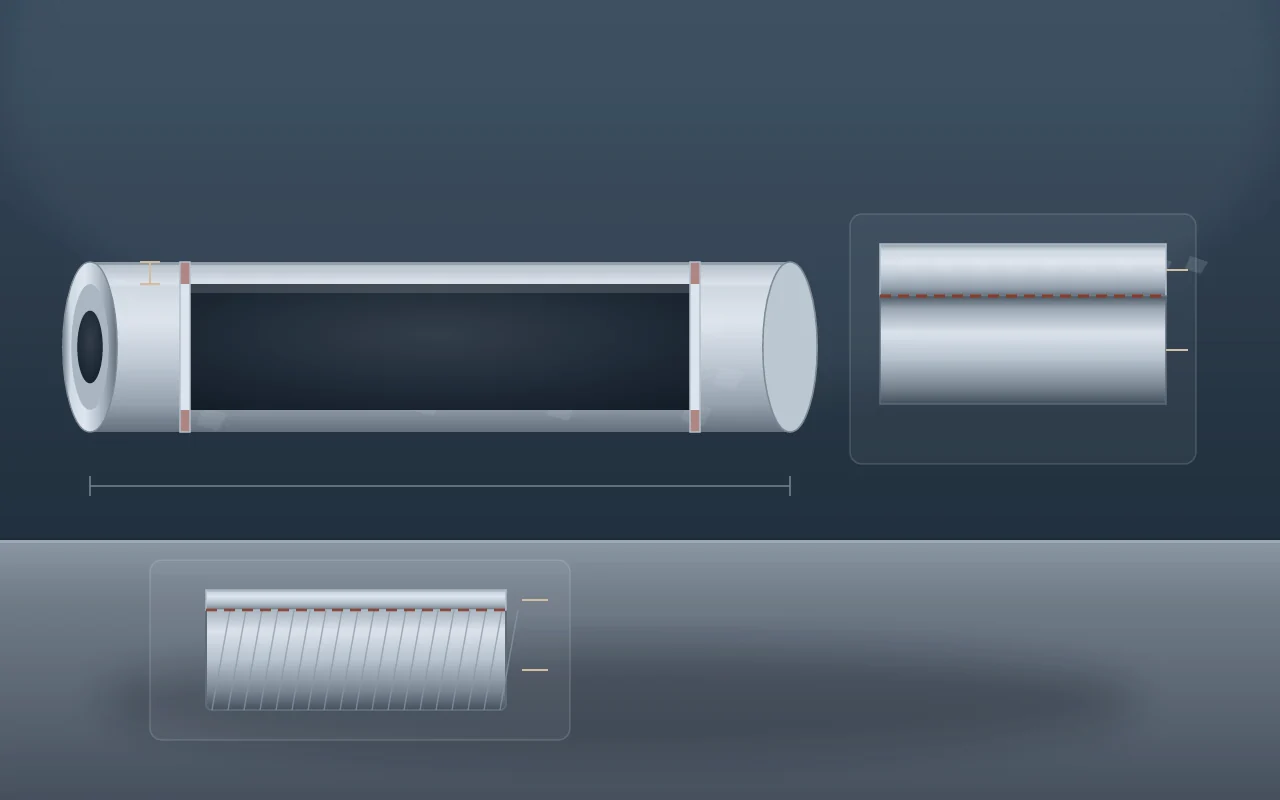
Use when the approved corrosion-protection system is applied later in fabrication.
Compare the complete exposure and fabrication requirement rather than assuming a coating and an alloy are equivalent.
Keep the tube coating and adjacent galvanized components aligned under their own product specifications.
Specification builder
Capture the decisions below, prepare a review summary and copy it to the tube RFQ. Review the substrate and coating as separate requirements. Confirm post-coating fit, fabrication sequence, repair criteria and storage protection before accepting an offer.
Acceptance basis
Each row names the decision, what limits it, the evidence that verifies it and the action it becomes on the enquiry. No coating thickness, tolerance value or service life is published here.
| Specification decision | Applicability and limit | Evidence to request | RFQ action |
|---|---|---|---|
| Substrate | The coating does not establish strength or tube conformity. | Base-metal certificate with grade, route and dimensions. | Order the tube standard independently of the finish. |
| Coating route | Pre-coated strip and after-fabrication galvanizing have different scope. | Coating specification, coverage and inspection record. | Name process, surfaces covered and acceptance criteria. |
| Fabrication sequence | Cutting, welding or drilling can expose steel or affect the finish. | Approved fabrication/repair procedure and inspection responsibility. | State operations before and after coating. |
| Storage and transport | Trapped moisture between tightly packed surfaces can cause storage staining. | Ventilated packing and storage instructions. | Agree drying, separation and receipt checks. |
Substrate warning. A coating description can conceal an unsuitable base grade. It says nothing about strength, pressure capability or fluid compatibility, and it does not remove the need for the tube itself to meet its own standard.
Quality & documentation
Review base-tube conformity and coating conformity as separate records. Agree the inspection locations, treatment of damaged areas and the point at which final dimensional acceptance occurs.
| Control | What to examine | When and limits | Next action |
|---|---|---|---|
| Substrate | Base-metal certificate with grade, route and dimensions. | Before material acceptance; confirm feasibility and cost at quotation. | Order the tube standard independently of the finish. |
| Coating route | Coating specification, coverage and inspection record. | Before material acceptance; confirm feasibility and cost at quotation. | Name process, surfaces covered and acceptance criteria. |
| Fabrication sequence | Approved fabrication/repair procedure and inspection responsibility. | Before material acceptance; confirm feasibility and cost at quotation. | State operations before and after coating. |
| Heat and item identity | Mill test certificate linked to heat markings and packing list. | Before release and again on receipt; a sample certificate is not evidence for the shipped heat. | Request traceability through cutting, bundling and delivery. |
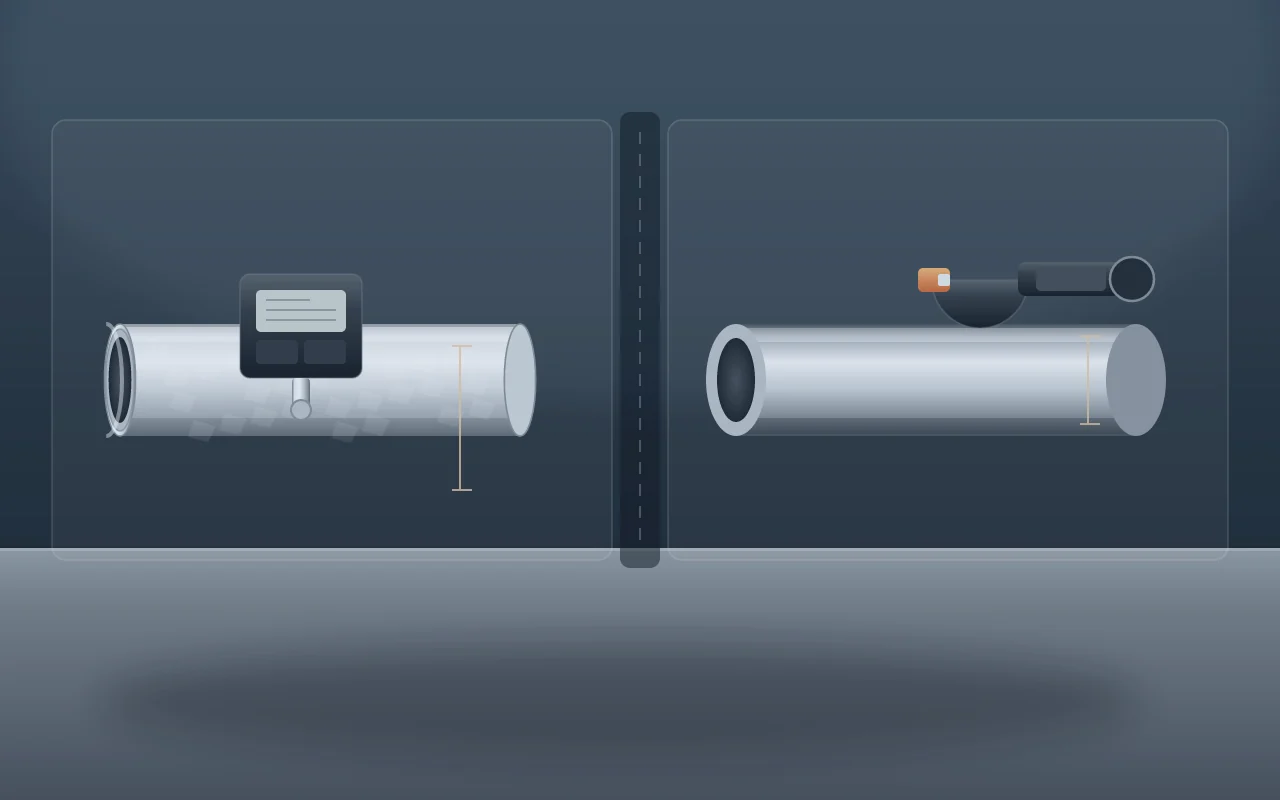
The base-metal certificate answers “what steel is this?” The coating record answers “what finish was applied, where, and how was it checked?” Keep them as separate acceptance items.
Cutting after coating leaves bare steel. Identify where cutting happens and agree the repair method and acceptance rather than assuming the end is protected.
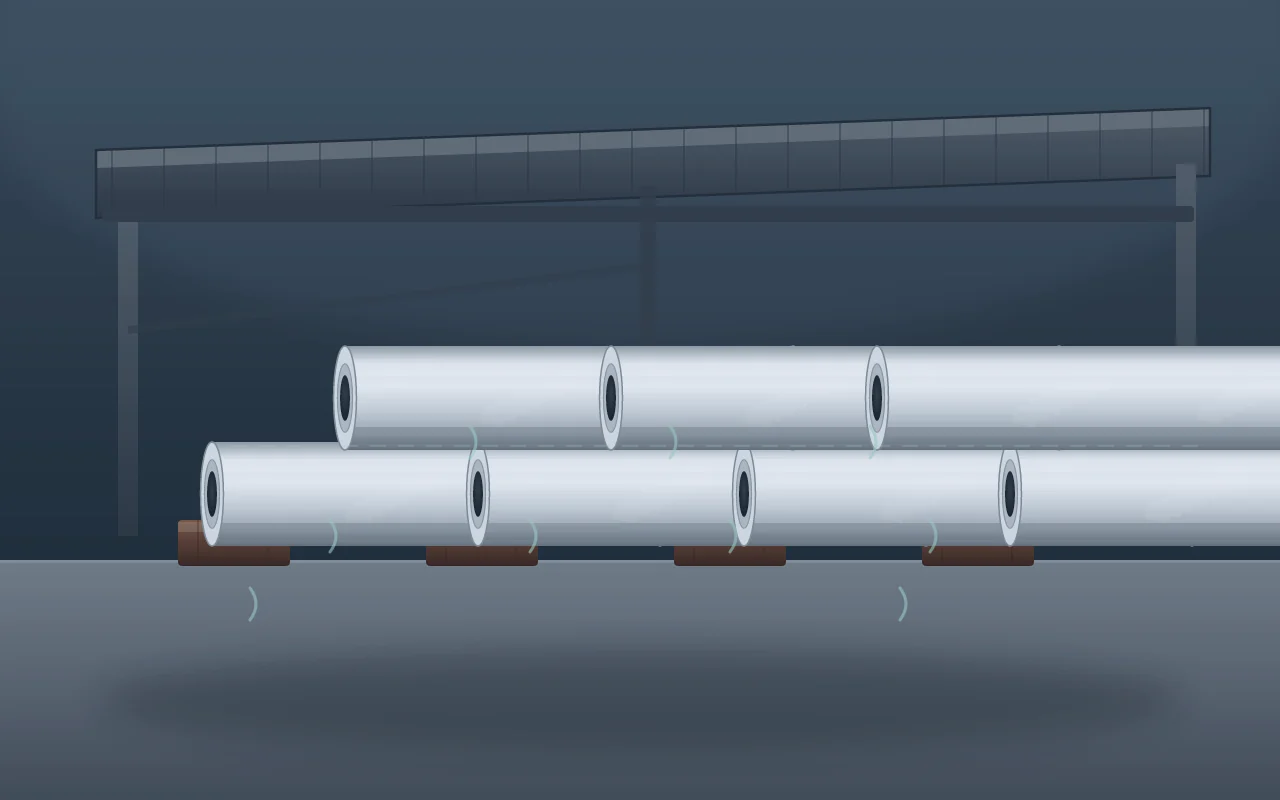
Tightly wrapped bundles can retain moisture between surfaces. Ventilated packing and separation are inspection-relevant, not cosmetic.
Applications
The drawing and service envelope govern acceptance. These paths address different purchasing decisions; an application label does not approve a material.
Use only a drawing-approved coated mechanical component; do not infer fluid-service suitability.
Check post-coating assembly clearances and any later cutting.
Use an explicitly approved coated-part drawing and customer qualification for the component.
GCC markets
Use the destination to close the quotation scope, then confirm feasibility and commercial terms in writing. Country flags identify the destination; quotation must confirm the supply route, origin and availability for this order.
 United Arab Emirates
Define ventilated tube packing and the storage period expected after arrival. Identify the emirate, fabricator or site address and unloading restrictions; distinguish a domestic handover from an import leg.
 Saudi Arabia
Define ventilated tube packing and the storage period expected after arrival. Name the consignee, importer and final site; ask who confirms product classification and border documentation before dispatch.
 Qatar
Define ventilated tube packing and the storage period expected after arrival. State the nominated receiving point and project document approver; align certificate review with the required arrival window.
 Oman
Define ventilated tube packing and the storage period expected after arrival. Specify the actual port, border point or inland site requested; separate the entry leg from onward transport and unloading.
 Kuwait
Define ventilated tube packing and the storage period expected after arrival. Identify the contractor or fabrication yard receiving the tubes; agree import-document responsibility and the named delivery place.
 Bahrain
Define ventilated tube packing and the storage period expected after arrival. Confirm whether the order is for local consumption or onward shipment; name the consignee and agree who handles each transport leg.
Commercial comparison
Separate the tube price, coating work, repairs, masking and packing on the quotation. A low tube price can exclude preparation the assembly needs.
State whether the product arrives at final assembly dimensions, and who handles coating damage caused by later fabrication. Those two questions account for most of the difference between two apparently comparable galvanized offers.
Ask for the offered mill and origin, tube schedule, quantity basis, processing scope, packing, commercial validity and exclusions. State the Incoterm with its named place and edition, who unloads, and the requested delivery window. Price, availability, production allocation, transport feasibility and dates require written confirmation.
Pricing. Galvanized tube is quoted against the ordered scope — substrate, coating, repairs, masking and packing. Price on request.
Availability, allocation, transport feasibility and dates are confirmed in writing on quotation.
Adjacent decisions
A finish requirement and a dimensional requirement must describe the same delivered condition.
Separate coating coverage from substrate roughness and cosmetic appearance.
Clarify the inspection stage and mating fit before releasing production.
Expert insight
The American Galvanizers Association identifies restricted air circulation and retained moisture as storage-stain factors. Transport protection therefore needs more than a tightly wrapped bundle.
Buyer implication: Ask for a packing and storage plan that addresses moisture, separation and inspection on receipt.
American Galvanizers Association — Storage · Information reviewed .
Review support
Three decisions recur on nearly every galvanized tube enquiry. Each one is closed with a document, not an assurance.
Base-metal certificate with grade, route and dimensions.
Order the tube standard independently of the finish.
Coating specification, coverage and inspection record.
Name process, surfaces covered and acceptance criteria.
Approved fabrication/repair procedure and inspection responsibility.
State operations before and after coating.
Responsibilities
Galvanized tube acceptance is a chain of documented decisions. Each stage below names who owns it, what they must supply and what happens if it is left open.
| Stage and owner | Required input | Evidence or output | Risk and next action |
|---|---|---|---|
| Engineering release — Buyer’s design authority | Approve substrate, coating route and the fabrication sequence. | Approved specification and drawing revision | Unapproved substitution can change the design basis. Close the item before proceeding. |
| Offer review — Buyer and quotation team | Reconcile coating coverage, masking, repairs and packing exclusions. | Written technical exceptions and commercial scope | An unlisted exception can survive into the purchase order. Close the item before proceeding. |
| Material release — Mill, inspector and buyer as agreed | Accept base-metal and coating records at the agreed inspection stage. | Accepted documents linked to the order items | Missing heat identity can make an otherwise correct tube unacceptable. Close the item before proceeding. |
| Receipt and reconciliation — Receiving team | Inspect for damage and moisture; store according to the agreed handling plan. | Delivery record, item count and discrepancy record | Record any mismatch before the material is incorporated into work. Close the item before proceeding. |
Procurement FAQs
Six questions from the buyer’s side of the desk, covering grades, tolerance stages, cut ends, storage staining and fluid service.
No. Specify the underlying grade and tube standard in addition to the coating requirement.
State the stage explicitly. A fit-sensitive assembly usually needs a delivered-condition requirement reviewed with the coating process.
Do not assume so. Identify where cutting occurs and agree the cut-end repair method and acceptance.
The fabricator and galvanizer must review suitability, venting, drainage, distortion and coverage before committing to that route.
Use the agreed coating inspection and assessment method. Appearance alone should not replace a documented review of coating condition.
Only if the responsible engineer approves the substrate, coating and fluid-service requirements. A generic commercial description is insufficient.
Enquiry handoff
Review the substrate and coating as separate requirements. Confirm post-coating fit, fabrication sequence, repair criteria and storage protection before accepting an offer. Include the completed fields and the controlling drawing revision so exceptions can be returned against the right requirement.
Prepare and copy the summary above, then open the steel-tubes RFQ and paste it into the requirement field. Add your name, company and reply email on that form. Supporting drawings can be shared through the destination’s verified contact process.
This page prepares your enquiry locally. Opening the RFQ does not submit it. A submission is complete only when the receiving form returns a genuine acknowledgement.