
ASTM Structural Steel · Standard Family
ASTM Structural Steel
An ASTM structural-steel RFQ must name the product specification and the dimensional/general requirements that govern the ordered form. “ASTM steel” is not a purchase specification — this page helps you resolve A36, A572, A992 or another project-specified route without inventing equivalence. Pair the resolved specification with product form, dimensions, length, quantity and the inspection-document requirements before requesting a quote.
Evidence limit: chemistry, mechanical and dimensional values are not reproduced from memory here — they must be verified against the applicable current ASTM standard or a verified mill test report. What stays open until technical review: the exact specification and dimensional standard, tolerance and mechanical confirmation, documentation set, destination and Incoterm. We do not publish live stock, price or lead-time figures.
What to send now
- Product form and member designation
- Project-specified ASTM designation
- Dimensions, thickness where relevant, length
- Quantity and unit
- Inspection/document requirements
- Destination and Incoterm named place
Fit · Alternatives · Selection
When ASTM Structural Steel Fits — and When it Does Not
Assume nothing from the family name. Fit is decided by the project-specified product specification, the ordered form, and the dimensional/general-requirements standard that governs it. Route a generic ASTM request to an actual product specification before you compare.
Fits when the specification is named
A project drawing or specification names the exact product specification and the dimensional/general-requirements standard. Fit is decided on that designated basis, not on a nominal similarity.
Does not fit when “ASTM steel” is all there is
“ASTM steel” is not a purchase specification. Without the product specification, form, dimensional standard and dimensions, the order is unbuildable and cannot be a request for a specific route.
Verify-first when the counterparty proposes an equivalent
A proposed equivalent grade or standard is only acceptable when it is reviewed against the project design basis and the governing documents. Never treat similar strength or a nominal depth as engineering equivalence.
Available product range, resolved against the standard
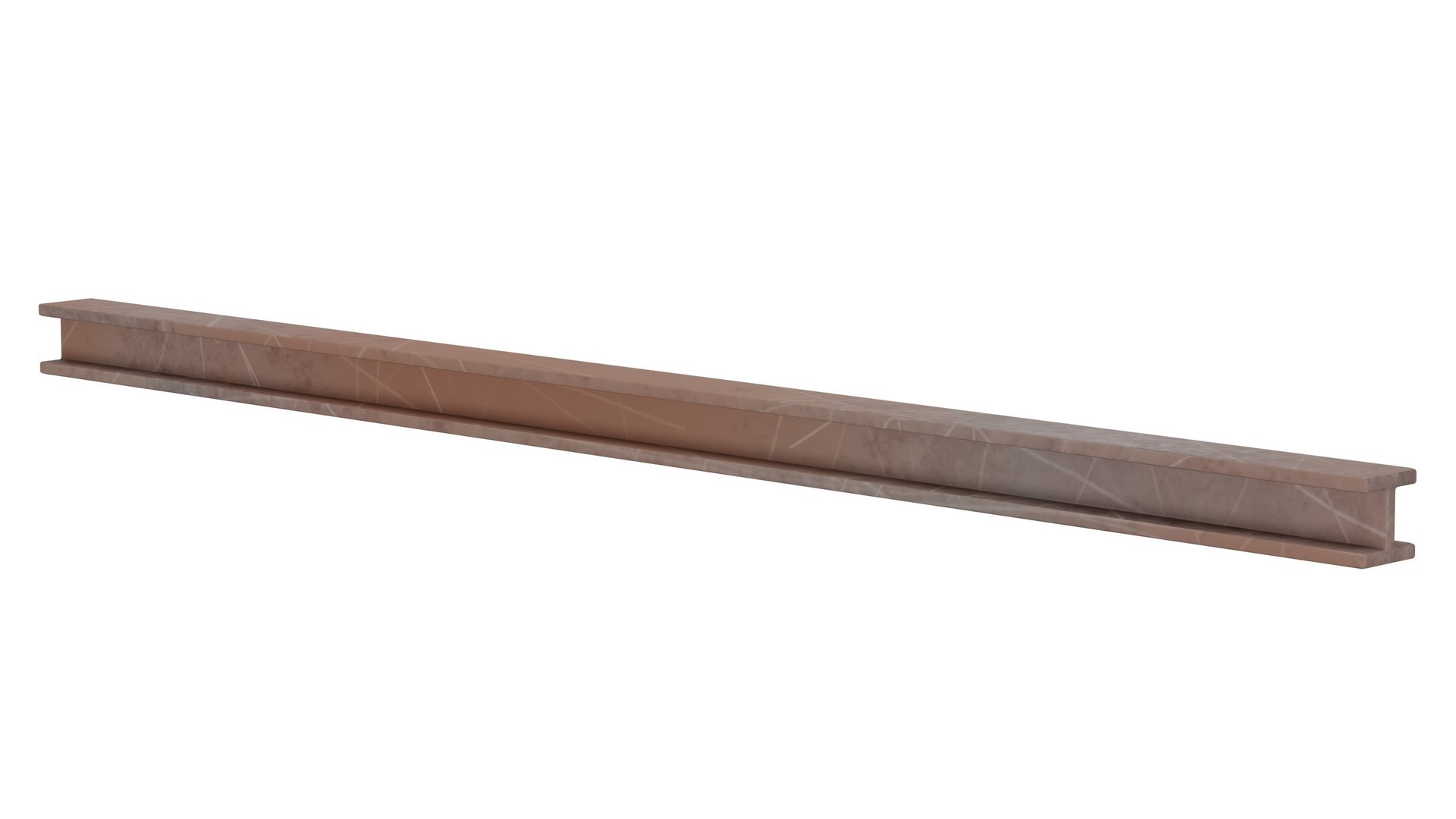
ASTM structural steel is procured across the typical structural product forms — plate, bar, angle, channel, beam / I-section, column, hollow section and structural tube. Each form is covered by a product specification plus the dimensional/general-requirements context that defines size and tolerances. Choose the route that matches the exact form on your project drawing; do not substitute a nominal shape for the designated member.
Boundary: the same nominal depth across two product specifications does not make them interchangeable. Compare only on a project-specified designation with verified dimensions, tolerances and inspection requirements.
Working Tool
ASTM Structural Specification Router
Validate the project-specified ASTM route, explain what is missing and what stays to verify, build a copyable RFQ summary, and transfer the resolved fields to the RFQ. This router never invents a default grade, standard, size, quantity, stock, origin, Incoterm or destination.
Router inputs
Router result
No fields entered yet. Add a product form, the project-specified ASTM designation, the dimensional/general-requirements standard, dimensions/length and quantity to route the request.
Method note: this router validates completeness of the project-specified ASTM route. It does not perform structural design, load-rating or equivalence approval — those require the applicable current standard and the project design basis. Values shown as “unknown / verify” must be confirmed before technical review.
How does the router decide?
Standards · Grades · Dimensions
Standards, Grades, Dimensions and Service Conditions
Separate the material specification, the dimensional/product standard, the designation, units, tolerances and project conditions. Every numeric property requires authoritative evidence with explicit units and conditions; any value without direct verified evidence is omitted or listed as verify.
Standard scope — governing the ordered form
ASTM structural steel is covered by a product specification that sets the material route, paired with a dimensional/general-requirements context (for example the A6/A6M dimensional and general requirements) that defines the size, thickness, mass and tolerances of rolled structural steel bars, plates, shapes and sheet piling. Scope is decided by the product specification named on the project drawing, not by the family label.
Evidence warning: numerical grade, dimensional and tolerance values are not published from memory on this page. Confirm each value against the applicable current standard or a verified mill test record before contracting.
Covered grades — route, not invent
Which product specification applies depends on the ordered form and the project's designated route. Common building routes include A36/A36M for general structural applications and higher-strength reduces-section routes such as A572 or A992 where the design basis designates them. Grade selection is a project-designate decision; this page routes you to the related grade context rather than substituting one route for another.

| Field | What it decides | Evidence / source | Resulting RFQ field |
|---|---|---|---|
| Product specification | Sets the material route for the ordered form | Verify against current standard | Designation field |
| Dimensional / general-requirements standard | Governs size, thickness, mass, tolerances | Verify against current standard | Dimensional standard field |
| Dimensions / length | Nominal member dimensions and length with units | Verify nominal dims from drawing | Dimensions / length field |
| Quantity and unit | Order volume basis | Buyer-defined | Quantity field |
| Service conditions | Operating / fabrication conditions that affect selection | Verify against project documents | Conditions / application field |
| Grade / standard route | Applicability / limitation | Buyer implication | Evidence / next action |
|---|---|---|---|
| A36 / A36M | General structural route for designated forms | Name the order form + dimensional standard | Verify designation + dims for RFQ |
| A572 Grade 50 | Higher-strength route where designated | Confirm design basis designates it | Verify designation + dims for RFQ |
| A992 / A992M | W-shape route where the project designates it | Confirm design basis designates it | Verify designation + dims for RFQ |
| Other project route | Project-specified; never substituted | Name the exact designation | Resolve before contracting |
Publication blocker: numeric chemistry, mechanical properties, tolerances, dimensions, section masses and capacities are not published from memory. Each value must be verified against the applicable current standard or verified mill test documentation with explicit units and conditions.
Quality · Testing · Documentation
Quality, Testing and Documentation Matrix
What you request, what it verifies, when it is required and what remains quotation-dependent. Documents confirm compliance only when they reference the exact designated specification and are supported by verified test records — this page never invents an MTC, certificate, heat number or approval.
| Requested document / evidence | What it proves | Who verifies it | When required | Limitation | RFQ field |
|---|---|---|---|---|---|
| Mill test certificate(s) | Product traceability | Mill / third-party | Before dispatch | Verify exact designation | Test-report field |
| Chemical + mechanical test report | Grade properties | Mill / third-party | Before dispatch | Verify units/conditions | Test-report field |
| Third-party inspection (TPI) | Independent conformance | Third-party | When project requires | Confirm scope | Inspection field |
| Heat-lot traceability | Lot to mill test linkage | Mill records | When project requires | Confirm availability | Traceability field |

What remains quotation-dependent
Which document set is deliverable, the inspection scope and the supporting test records are quotation- and project-dependent. They are confirmed against the exact designated specification rather than assumed. No certificate, heat number or approval is presented as available without verified evidence.
Evidence gate: confirmation of compliance requires a document that references the exact designated specification, the ordered form, and verified test data with units and conditions. Where that is not yet verified, the field stays “unknown / verify” in the RFQ rather than being auto-filled.
Applications
Application and Industry Decision Paths
Connect the operating requirement to the product, grade and standard with rationale, fit limits and use conditions. These routes map the application consequence of an ASTM structural-steel specification; they do not claim a served application.
Offshore structural platforms
Operating condition: corrosive marine service with fabrication and inspection controls. Resulting risk: a wrong or unverified specification undermines the project basis. Field to verify: the exact designated product specification and dimensional standard.
offshore structural steel supplierIndustrial buildings
Operating condition: framing and fabrication by the EPC/contractor. Resulting risk: an ambiguous “ASTM” order prevents a buildable spec. Field to verify: product form, designation and dimensional standard from the project drawing.
structural steel for industrial buildingsOil and gas structures
Operating condition: demanding procurement control with inspection documents. Resulting risk: an unverified substitution fails the project basis. Field to verify: exact designation plus documentation set and any designated tougher route.
structural steel for oil and gasGCC Markets
GCC Markets and Destination Planning
Destination, documents, port or delivery-location inputs, logistics, Incoterm questions and the RFQ consequence for ASTM structural steel. Each card names the exact Structural Steel destination route for the country. Routes do not claim a branch, warehouse, live stock or guaranteed service presence.

structural steel supplier UAE
Confirm the delivery emirate, importer of record and customs-verification input, the document set, and the Incoterm plus named place for the Structural Steel route into the UAE.
View destination route
structural steel supplier Saudi Arabia
Confirm the delivery location, importer and clearance input, the document set, and the Incoterm plus named place for the Structural Steel route into Saudi Arabia.
View destination route
structural steel supplier Qatar
Confirm the delivery location, importer and clearance input, the document set, and the Incoterm plus named place for the Structural Steel route into Qatar.
View destination route
structural steel supplier Oman
Confirm the delivery location, importer and clearance input, the document set, and the Incoterm plus named place for the Structural Steel route into Oman.
View destination route
structural steel supplier Bahrain
Confirm the delivery location, importer and clearance input, the document set, and the Incoterm plus named place for the Structural Steel route into Bahrain.
View destination route
structural steel supplier Kuwait
Confirm the delivery location, importer and clearance input, the document set, and the Incoterm plus named place for the Structural Steel route into Kuwait.
View destination routeCommercial · Logistics · Availability
Commercial, Logistics and Availability Inputs
Explain the quotation inputs, packaging, documents, delivery variables, Incoterms and unknowns. We do not publish live stock, price, lead time or guaranteed origin. Every commercial value below remains quotation-dependent.
Ordered quantity
Weight or piece basis with unit — quotation-dependent.
Cut lengths / dimensions
Nominal member dimensions and length required to spec.
Packing
Bundling, strapping and protection for the form.
Inspection / documents
MTC, test report, TPI and traceability set.
Destination & Incoterm
Named place plus delivery point and Incoterm.
Requested delivery date
Date drives availability and freight planning.
Availability and documentation matrix
| Input | Applicability / limitation | Buyer implication | RFQ field / next action |
|---|---|---|---|
| Quantity | Basis of the offer | Define weight or piece with unit | Quantity field |
| Cut lengths | Affects unit mass & logistics | Confirm nominal lengths | Dimensions / length field |
| Packing | Form-specific | Confirm bundling/protection | Commercial notes |
| Inspection / documents | Project-dependent | Confirm document set | Test-report / inspection field |
| Destination & Incoterm | Named place required | Confirm delivery point | Destination / Incoterm field |
| Requested date | Availability dependent | State requested delivery date | Delivery-date field |
No stock, price, lead time or origin figure is shown. Confirmed values are quotation-dependent and verified at the RFQ stage.
Related Products & Technical Resources
Decision-useful Standards and Resources
Grouped by buyer decision, not a link directory. Each anchor explains why to follow it — to resolve the specification, check dimensions/unit mass or review the standard.
Resolve the member specification
Before contracting, confirm the exact designation, the dimensional/general-requirements standard, and the nominal member dimensions and tolerance context against the project drawing.
Check section sizes and unit weight
Use the listed charts to verify nominal dimensions and unit mass against the same designation and units, not from memory.
Expert Insight
Source-backed Procurement Decision Note
An authoritative primary source that should change how you route a generic ASTM request to an actual product specification. This is a methodology / decision note, not a named-person biography.
Decision question
What authoritative source should change the buyer decision about routing generic ASTM requests to an actual product specification?
Primary source
ASTM International — ASTM A6/A6M-26a, General Requirements for Rolled Structural Steel Bars, Plates, Shapes, and Sheet Piling.
View the sourceInformation date: 2026; active status verified 10 September 2026.
Method & scope
Read the cited primary standard's published scope/status and use it to determine which product forms, designation fields and purchase-order conditions require explicit confirmation.
Limitations & buyer implication
- Public source page is an authoritative scope/status reference but may not expose every normative table or project-specific supplementary requirement.
- Dimensions, mechanical values, chemistry, toughness, tolerances and equivalence decisions must be verified against the applicable current standard and project documents.
- Buyer implication: use the source to prevent incomplete or wrong-standard RFQs; make unverified numeric properties publication blockers rather than filling them from memory.
Scope: specification-boundary and procurement-completeness guidance for ASTM Structural Steel; not a replacement for the purchased standard, project design basis or mill test report.
Evidence-led Advantages
Designation Accuracy to Destination Readiness
Real buyer concerns mapped to verifiable evidence and a practical procurement outcome. No “best”, “premium” or unsupported superiority language.
| Buyer concern | Evidence required | Procurement outcome |
|---|---|---|
| Designation accuracy | Exact name of product specification + dimensional standard | Buildable, RFQ-complete specification |
| Grade traceability | Designation verified against project basis | Correct route agreed, no false substitution |
| Dimension verification | Verified nominal dims + tolerance context | Orderable section, correct unit basis |
| Document completeness | MTC / test report / TPI set confirmed | Conformance requirement met at dispatch |
| Destination readiness | Destination + Incoterm named place + documents | Delivery variables resolved before order |
From Enquiry to Delivery
Route-aware Procurement Workflow
Each stage names the buyer input, the verification output, the risk if missing, and the next action. No timing is promised.
Enquiry
Buyer input
Product form + project-specified designation
Verification output
Route identified
Risk if missing
Ambiguous “ASTM” order
Next action
Name the specification
Technical clarification
Buyer input
Dimensional standard + dimensions + length
Verification output
Dimension-complete spec
Risk if missing
Wrong standard
Next action
Confirm dims & tolerance
Evidence check
Buyer input
Designation + document set + test records
Verification output
Conformance basis agreed
Risk if missing
Unverified properties
Next action
Verify current standard
Commercial review
Buyer input
Quantity, packing, destination, Incoterm, date
Verification output
Quotation inputs resolved
Risk if missing
Unconfirmed variables
Next action
Lock commercial terms
Order / document handoff
Buyer input
Final spec + inspection docs
Verification output
Orderable, dispatch-ready
Risk if missing
Missing documents
Next action
Hand resolved summary to RFQ
Buyer FAQ
Post-decision Technical and Commercial Questions
Route-specific answers that preserve the verification boundaries — not re-definitions of the product.
Why is the standard family name not enough for an RFQ?
ASTM is a standard family, not a purchase specification. An RFQ must name the product specification that covers the ordered form plus the dimensional/general-requirements standard. The family name alone cannot be priced or built.
Which part or product specification applies to the ordered form?
The applicable specification is the one designated on the project drawing or specification for the exact form — for example A36/A36M, A572 or A992. Confirm it against the project basis; never substitute a nominal route.
How should dimensional standards be separated from material standards?
The material (product) specification sets grade and material route; the dimensional/product standard governs size, thickness, mass and tolerances. Keep them separate in the RFQ so the numeric basis is unambiguous.
What document should confirm compliance?
A document set referenced to the exact designated specification — such as a mill test certificate and chemical/mechanical test report — with verified units and conditions. Confirmation of compliance is quotation-dependent.
How should proposed equivalents be reviewed?
A proposed equivalent is only acceptable when reviewed against the applicable current standard and project design basis, with verified dimensions and properties. Similar strength or nominal depth is not engineering equivalence.
Qualified RFQ Handoff
Hand the Resolved ASTM Specification to the RFQ
Request a quote for ASTM Structural Steel — send standard, grade, size, quantity, destination and required delivery date. The summary below preserves “unknown / verify” states rather than auto-filling.
Copyable RFQ summary
ASTM structural-steel specification not yet entered. Add product form, project-specified ASTM designation, dimensional standard, dimensions/length, quantity and document requirements to build the RFQ summary.
Standard & grade
Project-specified designation
Dimensions
Nominal dims + length + unit basis
Quantity
Weight or piece with unit
Destination & date
Delivery point, Incoterm, requested date
No contact person, email or phone is invented on this page. All “unknown / verify” fields must be confirmed before technical review. Price on request.