
Grades & Standards
ASTM Steel Grades
ASTM steel grades are not interchangeable labels. The correct designation depends first on the product form and service condition, followed by the applicable specification, grade, edition and testing requirements.
This page helps QA/QC engineers, procurement engineers and technical buyers identify the right ASTM specification for a product or application, and hand a structured requirement to Noor Deira Steel for sourcing support.
Information current as of
ASTM Mapper
Identify the ASTM specification for your requirement
Four inputs narrow the decision to a specification family. The mapper never invents a match — where the signal is insufficient, it returns 'Technical review required' rather than a guess.
What the mapper does and does not do
- Narrows to a specification family from product form and service condition.
- Flags what is still unconfirmed before it becomes a quoting error.
- Does not select a final grade, edition or test plan — that is confirmed in technical review.
Guides are indicators only. Final material selection follows the applicable project specification and current standard edition.
Cross-product matrix
Common ASTM specifications, by product form
A decision matrix across the specifications most frequently named by GCC buyers. Confirm the full designation and current edition before ordering.
| ASTM designation | Specification scope | Common product form | Typical decision context | Buyer must confirm | Route |
|---|---|---|---|---|---|
| ASTM A36/A36M | Carbon structural steel for general construction. | Structural shapes, plates and bars. | Standard carbon structural members where no higher strength or toughness is required. | Grade, dimensions, tolerances and applicable edition. | Structural Steel |
| ASTM A572/A572M | High-strength low-alloy (HSLA) columbium-vanadium structural steel. | Shapes, plates, sheet piling and bars. | Lighter, stronger members at higher yield (e.g. Grade 50) where the design allows substitution for A36. | Required grade (yield class) and edition. | Structural Steel |
| ASTM A500/A500M | Cold-formed welded and seamless carbon structural tubing. | Round, square and rectangular hollow sections. | Structural tubing, columns and truss members in hollow-section form. | Section shape, wall thickness and grade (B/C). | Hollow Sections |
| ASTM A53/A53M | Seamless and welded black and hot-dipped galvanized steel pipe. | Steel pipe (Type E, F, S). | Pressure and mechanical piping where galvanizing or black finish is specified. | Pipe type, grade (A/B), finish and whether galvanized. | Steel Pipes |
| ASTM A106/A106M | Seamless carbon steel pipe for high-temperature service. | Seamless steel pipe. | High-temperature process piping requiring seamless construction. | Grade (A/B/C), schedule and service temperature. | Steel Pipes |
| ASTM A240/A240M | Chromium and chromium-nickel stainless steel plate, sheet and strip. | Stainless plate, sheet and strip (flat products). | Corrosion-resistant flat products for pressure vessels and general service. | Alloy designation (e.g. 304/316), finish and heat treatment. | Steel Plate |
| ASTM A516/A516M | Carbon steel plate for pressure vessels at moderate and lower-temperature service. | Carbon steel plate (pressure-vessel quality). | Pressure-vessel quality plate requiring notch toughness at low temperature. | Grade (55/60/65/70) and impact-temperature class. | Steel Plate |
A6/A6M — general requirements
A6/A6M sets the general requirements for rolled structural steel bars, plates, shapes and sheet piling. It is a supporting document, not a standalone grade.
A370 — test methods
A370 defines the mechanical test methods and definitions. It tells you how properties are measured, not which grade to order.
Scope summaries are drawn from official ASTM documentation and are for classification only — not a reproduction of the standards. Sources: ASTM Steel Standards, A36/A36M, A500/A500M, A53/A53M, A240/A240M, A106/A106M, A516/A516M, A370. Confirm the current applicable edition before publication.
Selection criteria
The procurement checklist that prevents a wrong order
A complete ASTM enquiry names more than a grade. Confirm each line before it becomes a quotation.
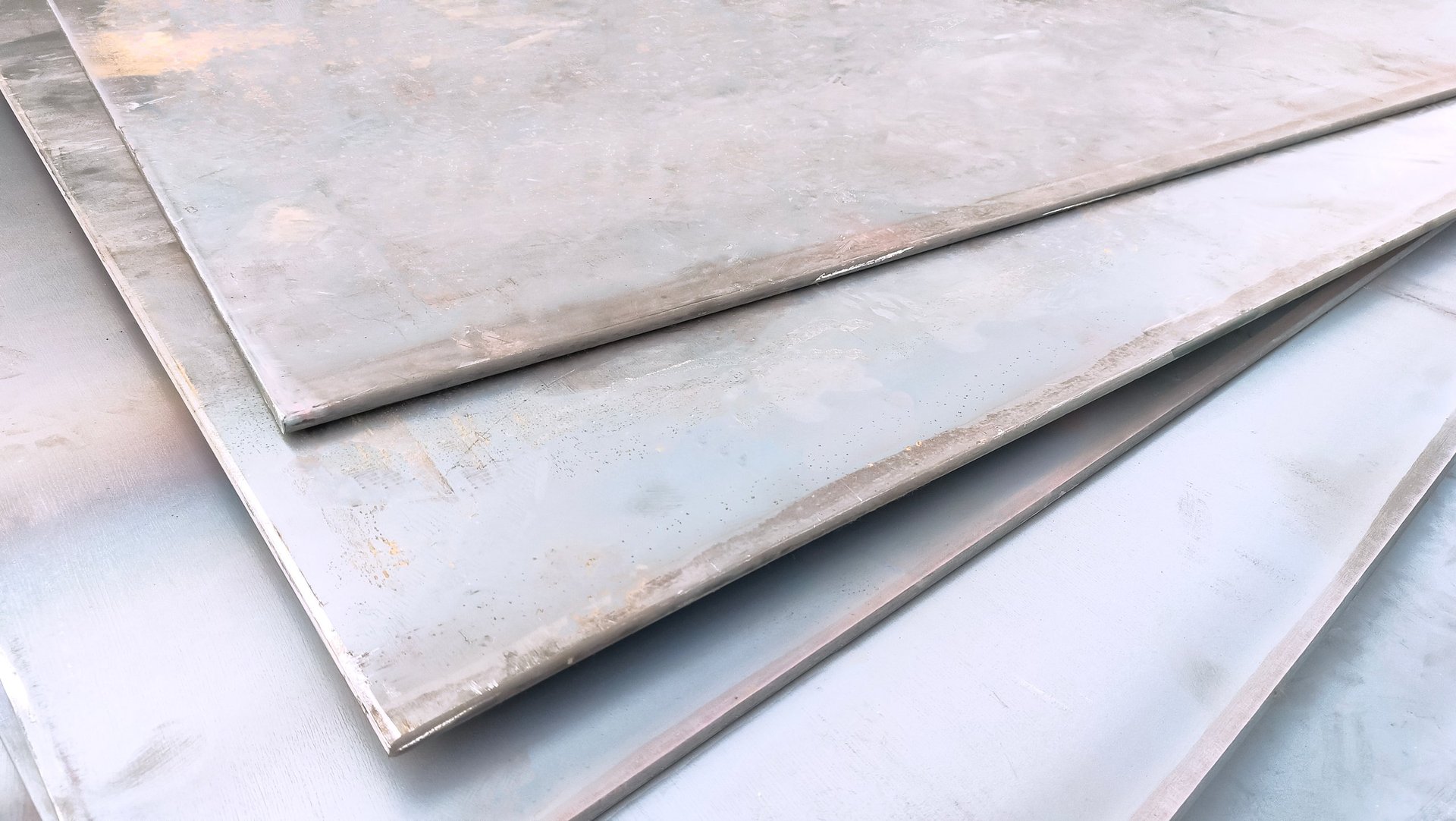
- 01
Product form
Shape, plate, sheet, pipe, tube or rebar — determines the specification family.
- 02
ASTM designation and grade
The full designation including the grade (for example A572 Grade 50).
- 03
Required edition
The year suffix that fixes the governing revision (for example A36/A36M-19).
- 04
Dimensions and tolerances
Sections, thickness, diameter and the tolerance class.
- 05
Service temperature and environment
Informs toughness, high-temperature and corrosion requirements.
- 06
Finish, coating or heat treatment
Black, galvanized, painted or a specified heat-treatment condition.
- 07
Mechanical and chemical tests
Which tests the specification calls for, and any additional requirements.
- 08
Inspection and documentation
Mill test certificates, inspection levels and the paper trail required.
- 09
Quantity and delivery destination
Volume, unit of measure and the GCC delivery destination.
Materials & related standards
Routes from a grade to a material or a standard
Move from a designation toward the material family or the equivalent standard system that governs it.
Material routes
Carbon Steel
The A36/A572/A516/A53 carbon family.
ViewStainless Steel
The A240 chromium-nickel family.
ViewHot-Rolled
Forming route for most structural shapes and plate.
ViewCold-Rolled
Close-tolerance sheet and strip for precision flat products.
ViewGalvanized
The coated form of A53 pipe and other products.
ViewAlloy Steel
HSLA and quenched-and-tempered alloy grades (A572/A514).
ViewTechnical insight
Specification, grade, general requirements and test method
Four terms are routinely conflated on a steel order. They are distinct, and each governs a different part of the final requirement.

| Term | What it governs |
|---|---|
| ASTM specification | The numbered document (e.g. A572) that sets chemistry, mechanical properties, tolerances and tests for a product class. |
| Grade | The designation inside a specification (e.g. Grade 50) that fixes a specific strength and chemistry level. |
| General requirements | A supporting document (e.g. A6/A6M) that lays down common delivery requirements across multiple product specifications. |
| Test method | A document (e.g. A370) that defines how a property is measured — not what value must be met. |
| Project-specific requirement | Any additional demand from the governing project specification that sits above the ASTM standard itself. |
The governing project specification always sits above the standard. Final material selection must follow the applicable project specification and the current standard edition, confirmed during technical review — the references on this page are a working aid, not a substitute for that check.
Related standards
Equivalent standards and reference systems
Move from an ASTM designation toward the equivalent material grade and the standard system that governs it.
EN Steel Grades
The European equivalent grades side by side.
ViewAPI Steel Grades
Line-pipe grades under API 5L.
ViewCarbon Steel Grades
Carbon grades organised by chemistry and strength.
ViewStainless Steel Grades
Stainless alloys and their designations.
ViewSteel Specifications
How specifications are read and applied.
ViewHow Noor Deira Steel works
Concern, evidence and outcome
Capabilities tied to a verifiable step in the process, not a generic claim. Stock, price, certification and lead time are never stated without approved evidence.
Which ASTM specification governs this requirement?
Every enquiry is reconciled against the specific ASTM specification and grade it names, rather than a family-level assumption.
A brief that names the correct specification before quotation.
Is the current edition confirmed?
Edition is confirmed against each standard at technical review, not assumed from a past order.
No mismatch between the order and the governing edition.
Will the mechanical and chemical testing match?
Required tests are identified from the specification before release, not added after the fact.
Material released against the tests the specification actually calls for.
Where does documentation sit?
Mill test certificates and inspection documentation are supplied as part of the order.
A closed-out delivery with the paper trail a QA/QC team needs.
Procurement process
From enquiry to delivery
A concise route from requirement through to after-sales support — each step maps to a real output, not a generic stage.
Requirement
Specification review
Technical confirmation
Quotation
Order
Docs & quality checks
Packing
Dispatch
Delivery
After-sales support
FAQ
ASTM steel grades, answered directly
What is an ASTM steel grade, and how is it different from a specification?
A grade is a material designation inside a specification (for example Grade 50 within A572). The specification (A572) is the governing document that sets chemistry, mechanical properties, tolerances and tests; the grade fixes the strength and chemistry within it.
Which ASTM specification replaces A36 for structural beams?
For rolled wide-flange beam and column shapes, A992/A992M is the common governing specification, while A36 and A572 cover plates, bars and general structural shapes. The correct designation depends on the product form and the engineering design.
What is the difference between A53 and A106 pipe?
A53 covers seamless and welded black or galvanized carbon steel pipe; A106 covers seamless carbon steel pipe intended for high-temperature service. A106 is seamless only, so the choice turns on construction and service temperature.
Are A6/A6M and A370 steel grades?
No. A6/A6M sets general requirements for rolled structural products, and A370 defines mechanical test methods. Neither is a material grade — they are supporting documents that sit alongside a product specification rather than replacing one.
Are there equivalent grades between ASTM and EN or other standards?
Grades are frequently compared across standards (for example ASTM A36 and a comparable EN structural grade), but equivalences are design-level comparisons, not exact matches. Substitution must be confirmed against the governing project specification.
How do I confirm the correct edition of an ASTM specification?
Quote the full designation including the year (for example A36/A36M-19). The current applicable edition is confirmed during technical review, and the order is held to that edition.
What do I need to request a quote for an ASTM grade?
Name the ASTM designation and grade, product form, dimensions, quantity, destination and any required tests or documentation. The mapper on this page gathers the same inputs before you are handed to the RFQ form.
Request a Quote for an ASTM Grade
Name the ASTM designation and grade, product form, dimensions, quantity and destination. Our commercial and technical teams reconcile the requirement against the current edition.
Office 3303, Churchill Executive Tower, Business Bay, Dubai, United Arab Emirates
Monday – Saturday: 8.00 AM – 6.00 PM · Sunday: Closed