
The product record
Standard and revision, full grade designation, outside diameter, wall thickness, length and finish — each with its unit and each kept in its own field.
Export Resource
An export-ready scaffolding pipe enquiry has two halves, and both have to be complete before anything can be quoted. The first is technical: standard and revision, grade, outside diameter, wall, length and finish, each with its unit and basis. The second is trade execution: quantity with its unit basis, packing requirement, destination, the Incoterms 2020 rule with its named place or port, the documents the importer needs, and the date the project needs it. Neither half substitutes for the other — a complete specification with an undefined delivery term cannot be quoted comparably against another offer, and a defined delivery term with an incomplete specification cannot be priced at all. Stock, origin, lead time and clearance are not asserted before quotation.
Free, no-obligation technical review
Information current as of
Send these inputs
What this page settles
Scaffolding pipe is a widely traded product with a small number of familiar trade shorthands attached to it. Those shorthands are the problem: they describe a nominal size and nothing else. An export enquiry that reads only as a size cannot be reviewed technically, priced commercially or documented for a destination — because the size alone does not state the standard it was made to, the grade, the wall, the tolerance basis, the finish, the quantity basis, or where delivery is actually required.
This page defines what an export-ready scaffolding pipe enquiry contains, how to establish it, and what each input changes downstream. It is a specification and trade-execution resource. It does not publish stock availability, origin, pricing, lead time or a delivery promise — those are confirmed on quotation, against the specification and terms you supply.
Standard and revision, full grade designation, outside diameter, wall thickness, length and finish — each with its unit and each kept in its own field.
Quantity and its unit basis, packing and bundle limits, marking convention, lifting arrangement and any transit protection the route demands.
Destination and named place or port, Incoterms 2020 rule with its named place, required documents with issuers, target date and acceptance conditions.
What this page does not claim
It makes no statement about stock on hand, price, mill or origin, lead time, packing quantity, customs classification, duty, permit or delivery timing, and it carries no certificate number, project reference, client or testimonial. Where a decision depends on one of those, this page states the input or verification that resolves it rather than substituting a figure.
Export requirement intake
Twelve items across three groups. The first two decide what the material is and how it travels; the third decides the commercial structure. An enquiry that arrives with all three complete can be reviewed once rather than across several rounds.
Product form
Which scaffold tube form the design assumes — bare, coated, or a specific finish.
Standard + revision
The document the order is made and certified against, cited with its edition.
Grade / designation
Stated in full. A grade label does not establish a product standard.
Dimensions + units
OD, wall and length, each with its unit and its tolerance basis.
Finish
Whether a coating applies, and which coating standard governs it.
Quantity + unit basis
Pieces, bundles, tonnes or aggregate length — the basis is quoted with the figure.
Length basis
Stock lengths as supplied, or cut to the design geometry.
Packing requirement
Bundle arrangement, bundle weight limit, lifting points and marking convention.
Load-out sequence
What has to be loaded first for the site to unload in usable order.
Destination + named place
Port, terminal or inland place — the place the Incoterm rule operates at.
Incoterms 2020 rule
The exact three-letter rule, stated with its version and named place.
Importer-side conditions
Any requirement the receiving party imposes on documents or marking.
Required documents
Each document named, with the issuer expected to produce it.
Target date
The window the project needs the material in, not a preference.
Why an incomplete half stops the offer
A complete specification with an undefined delivery term cannot be compared against another supplier’s offer, because the two may not be answering the same question. A defined delivery term with an incomplete specification cannot be priced, because the material is not yet described. Stock, origin, price, freight and delivery dates are all confirmed against a specific enquiry — none of them are published in advance.
Working technical tool
Enter the technical specification and the trade-execution inputs. The builder reports what is missing on each side, assembles the document checklist, flags what the delivery rule does and does not settle, and produces a copyable export enquiry.
Technical specification
Outside diameter *
Wall thickness *
Length *
Trade execution
Values are recorded exactly as entered. No standard, grade, coating, Incoterm, destination or unit basis is assumed on your behalf. Availability, origin, price, freight and dates are confirmed on quotation.
Enquiry result
Not yet shipment-ready
The enquiry is not yet shipment-ready.
Missing: Standard + revision, Grade / designation, Outside diameter, Outside diameter unit, Wall thickness, Wall unit, Length, Length unit, Finish / coating, Quantity, Quantity unit basis, Packing requirement, Destination / named place, Incoterm 2020 rule, Named place / port, Required documents, Target date. 4 technical and 7 trade-execution items need attention. Nothing is filled in on your behalf.
Missing fields (17)
Technical completeness (4)
Trade-execution completeness (7)
Document checklist
What the delivery rule settles — and what it does not
Assumptions and method
Copyable export enquiry
SCAFFOLDING PIPE EXPORT ENQUIRY
--- Technical specification ---
Standard + revision: TO CONFIRM
Grade / designation: TO CONFIRM
Outside diameter: TO CONFIRM
Wall thickness: TO CONFIRM
Length: TO CONFIRM
Finish / coating: TO CONFIRM
--- Trade execution ---
Quantity: TO CONFIRM (unit basis TO CONFIRM)
Packing requirement: TO CONFIRM
Destination / named place: TO CONFIRM
Incoterms 2020 rule: TO CONFIRM
Named place / port for the rule: TO CONFIRM
Required documents: TO CONFIRM
Target date: TO CONFIRM
--- Notes ---
The delivery rule allocates tasks, costs and risk to the named place only. Title transfer, payment terms, duty and clearance are separate terms.
Availability, origin, price, freight and delivery dates are confirmed on quotation, not asserted in advance.
Status: enquiry assembly only — not a commercial offer and not an engineering approval.
Transfer this into the RFQ
The specification, trade terms and document scope are carried into the enquiry form.
Quality and export documents
Every row names what the document verifies, the party expected to issue it, when it is needed and what fails without it. Nothing here is asserted as available — the availability of any item is confirmed against a specific enquiry, and some depend on authorities outside the supplier’s control.
| Document | What it verifies | Source / issuer | When required | Dependency |
|---|---|---|---|---|
| Mill test certificate | The standard, edition and grade the tube was made and tested to, traceable to the lot | Issued by the producing mill for the specific heat and lot | Before quotation is finalised | The specification on the enquiry cannot be tied to the material actually offered. |
| Dimensional record | Measured outside diameter and wall against their tolerance bases, plus length against its basis | Measured record from the supplier, taken against a stated instrument | Before dispatch | The interface cannot be confirmed from nominal figures alone. |
| Finish or coating record | The finish applied and, where coated, the coating standard and method | Issued with the coating process where a coating applies | Before dispatch | Corrosion control over the installation period is assumed and never evidenced. |
| Packing list | What is in each bundle, its markings and how the consignment reconciles to the order | Issued by the supplier against the load-out | Before shipment | The consignment cannot be reconciled on arrival, and the importer handles a discrepancy. |
| Commercial invoice | Value, terms and parties for the transaction | Issued by the seller; customs and banking content is the importer-side responsibility | With shipment documents | Clearance and payment cannot proceed on the documents as they stand. |
| Certificate of origin | Where the goods are deemed to originate, as the destination requires | Issued through the competent authority for the origin claimed | As required by the destination | Preferential treatment or admissibility may be refused at destination. |
| Bill of lading or sea waybill | Receipt of the goods and the contract of carriage | Issued by the carrier or its agent after loading | After loading, before release | The consignment cannot be released to the importer. |
| Inspection certificate, where the project requires one | That a stated inspection was carried out against a stated scope | Issued by whichever party the project nominates to inspect | Before dispatch, if the project requires it | The project's own acceptance gate is not satisfied, however complete the other documents are. |
| Any destination-specific certificate or pre-shipment approval | That a requirement imposed by the importing market has been met | Issued by the body the destination recognises for that requirement | Before shipment — lead times vary by authority | Goods arrive that cannot clear, or clearance is delayed beyond the project window. |

What the supplier controls
The mill test certificate for the lot supplied, the dimensional record, the finish record where a coating applies, the packing list and the commercial invoice. These are produced against the order and can be scoped on the enquiry.
What depends on others
The certificate of origin, the bill of lading and any destination-specific certificate or pre-shipment approval. These involve authorities and carriers, so their lead times have to be stated on the enquiry rather than assumed to fit the shipment.
No certificate is presented as ready
This page does not state that any particular certificate, inspection or approval is held, obtainable or ready. Each depends on the specific material, the lot, the destination and the bodies involved, and each is confirmed against a live enquiry. Where the project or the destination imposes its own acceptance gate, that requirement belongs on the enquiry with its expected issuer named.
GCC market routes
Each market page sets out the commercial route for a scaffolding pipe enquiry into that country — destination, importer, documents, Incoterm and delivery point kept explicit rather than assumed. Ports, charges, transit times and delivery dates are quotation dependent and are not published here.
 United Arab EmiratesCurrent
 Saudi Arabia
 Qatar
Qatar Kuwait
 Bahrain
 Oman
OmanWhat these routes are, and are not
Each market page sets out the inputs a destination-specific enquiry has to carry — importer, documents, the Incoterm place and the delivery point. They are planning routes, not statements of presence. No office, stockholding, warehouse or established market position is claimed in any of these countries.
Incoterms, packing and logistics decisions
The trade term is the most commonly mis-read element of an export enquiry — often quoted by shorthand, and often assumed to cover more than it does. The tables below separate what the rule allocates from what has to be agreed separately, then do the same for packing.
A rule, a version and a named place. Missing any one of them leaves the obligations undefined.
| Element | What it decides | Verification requirement | RFQ field |
|---|---|---|---|
| Rule | The exact three-letter term, for example a named sea or multi-modal rule. | Buyer states the rule; do not leave it to be inferred at quotation. | Incoterm rule field |
| Version | Which edition of the rules applies. Terms have changed between editions. | Buyer states Incoterms 2020 — the version is part of the term. | Incoterm version field |
| Named place or port | Makes the rule operational. Without it, obligations have no location attached. | Buyer names the port, terminal or inland place the rule operates at. | Named place field |
| Delivery tasks | Which party performs each task up to the named place — the rule allocates these. | Buyer confirms the split is the one the contract intends. | Terms confirmation |
| Cost allocation | Which costs each party carries to the named place. | Buyer confirms the cost split matches the commercial expectation. | Terms confirmation |
| Risk transfer point | Where risk passes from seller to buyer under the chosen rule. | Buyer confirms the risk point, and that insurance covers from it where insurance is required. | Terms confirmation |
| Out of scope | Title transfer, payment terms and every customs and legal obligation are not set by the rule. | Buyer states these separately — the rule does not settle them. | Separate contract terms |
Each row is a constraint the destination imposes, not a supplier preference.
| Element | Why it changes the outcome | Verification requirement | RFQ field |
|---|---|---|---|
| Bundle arrangement | How the tube is bundled changes the handling method at both ends of the voyage. | Buyer states the arrangement the site can receive. | Packing field |
| Bundle weight limit | Crane and forklift capacity at the destination set the maximum liftable unit. | Buyer states the limit imposed by the receiving equipment. | Packing field |
| Lifting points | Where the bundle can be slung without damage to the tube or the coating. | Buyer confirms slinging arrangement acceptable for the coating. | Packing field |
| Marking convention | How bundles are identified against the packing list on arrival. | Buyer states the marking the importer expects to read. | Marking field |
| Load-out sequence | The order in which bundles are loaded decides what can be taken off first. | Buyer states the unloading order the site requires. | Packing field |
| Protection in transit | Whether coating or end protection is needed for the route and duration. | Buyer states the protection requirement for the voyage. | Packing field |
Named place, not a shorthand
An enquiry asking for a term without a place cannot be answered comparably. Two suppliers may respond to the same shorthand with different places, and the offers will look comparable while covering different obligations.
What the rule never covers
Title transfer, payment terms, and every customs and legal obligation. These have to be stated in the contract separately — a delivery rule is not a substitute for them.
Quotation-dependent by nature
Freight, insurance, duties and clearance costs depend on the route and the contract. They are confirmed against the specific enquiry rather than published as rates.
Product and end-use qualification
Three registered end-use routes. Each is shown with the condition that makes it different, the risk that condition creates for an export order specifically, and the input it adds to the enquiry.
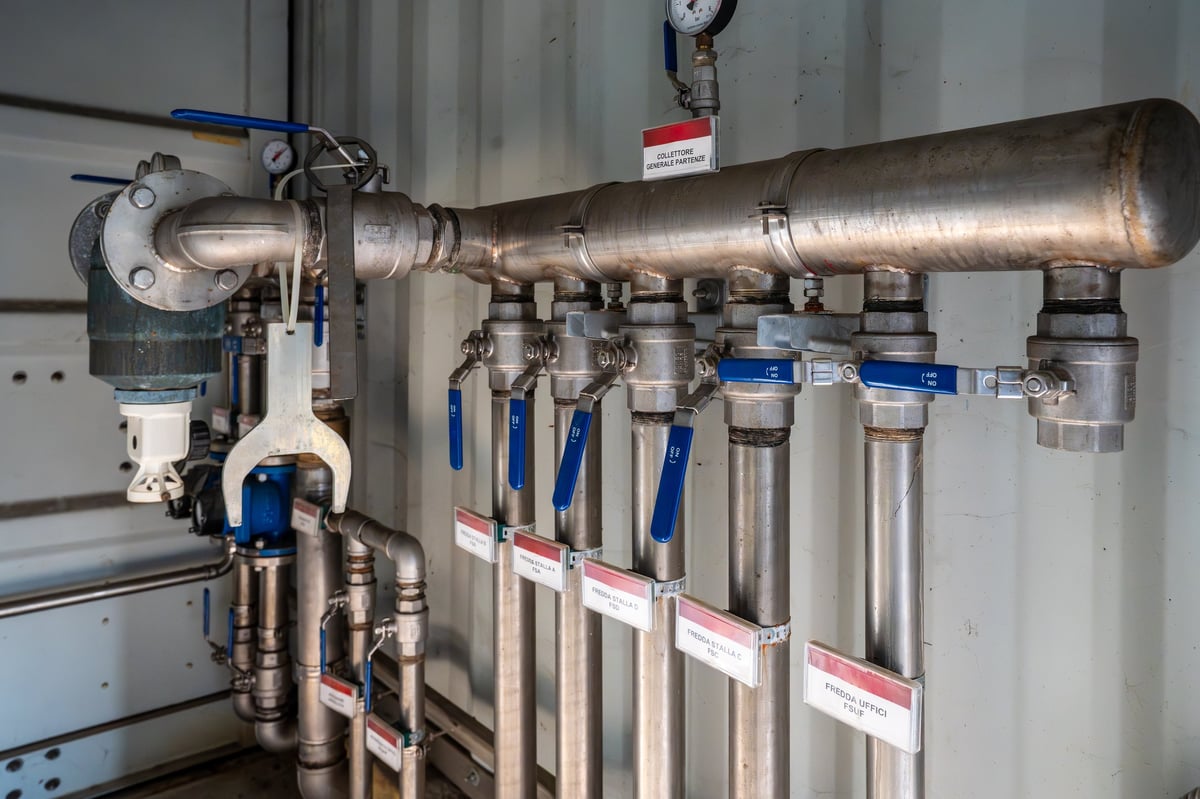
Each route applies only where the condition stated above actually holds at your installation point. None of them changes the tube’s product standard, and none substitutes for the scaffold design or the responsible engineer.
Registered product and technical paths
Five registered destinations, grouped by what they resolve rather than listed as a directory. Take the one matching the question still outstanding.
Compare against the export pillar
Product form and specification
Expert insight
Decision question
Why must an export RFQ state both an Incoterms rule and a named place/port?
Primary source
International Chamber of Commerce — Incoterms rules
https://iccwbo.org/business-solutions/incoterms-rules/Scope, as published
ICC identifies Incoterms 2020 as the most recent version and explains that the rules allocate delivery tasks, costs and risks between seller and buyer.
Limitations
Buyer implication
Capture the exact rule, version and named place or port in the RFQ instead of asking for an undefined trade-term price.
Evidence-led buyer advantages
Four concerns that come up on almost every export enquiry, and what actually resolves each one. No superiority claims — the resolution is a process, not a property of the business.
Offers that cannot be compared because the terms differ
The Incoterms rule, version and named place are captured as one term on the enquiry, so every response answers the same question.
Quotations that can be compared line for line rather than reconciled after the fact.
A specification that turns out to be incomplete at order stage
The technical and trade-execution fields are both required, and the builder reports what is missing rather than defaulting it.
An enquiry complete enough to be priced on first review.
A consignment that cannot clear because a document was assumed
Every document is named with the issuer expected to produce it, and the set is checked against the destination before shipment.
Documentation scope agreed before dispatch rather than discovered at destination.
Packing that does not match what the destination can actually handle
Bundle arrangement, weight limit, lifting points and marking are captured from the receiving end of the route.
Material that can be unloaded and put to work on arrival.
Concern/Evidence or capability required/Procurement outcome
From enquiry to delivery
Each stage names the owner, the input it needs, the evidence it produces, the risk of skipping it and the next action. The early stages belong to the buyer and the designer, not to the supplier.
Owner: Buyer / technical reviewer
Required input
Standard and revision, grade, dimensions with units and tolerance bases, and finish.
Evidence / output
A technical requirement that can be quoted and certified against.
Risk if missing
Tube quoted against an assumed standard, then re-negotiated at order stage.
Next action
Cite the standard and edition before any dimension is entered.
Owner: Buyer / site planner
Required input
Quantity with its unit basis, bundle arrangement, weight limit, lifting points and marking.
Evidence / output
A physical consignment specification the destination can handle.
Risk if missing
Bundles that exceed the receiving equipment, or markings the importer cannot read.
Next action
State the receiving end's constraints on the enquiry, not after order.
Owner: Buyer / commercial
Required input
The Incoterms 2020 rule and its named place or port.
Evidence / output
A term that allocates tasks, costs and risk to a known point.
Risk if missing
Offers quoted on undefined terms and compared as though they were equivalent.
Next action
State the rule and named place as a single term.
Owner: Buyer / importer
Required input
Each document required, with the issuer expected to produce it.
Evidence / output
An agreed documentation scope before dispatch.
Risk if missing
Goods arriving that cannot clear, or clearing later than the project window.
Next action
Confirm the set against the destination's requirements before shipment.
Owner: Supplier / nominated inspector
Required input
The certificate and inspection scope the order is to be evidenced by.
Evidence / output
Documents traceable to the specific lot supplied.
Risk if missing
A specification that cannot be evidenced by the paperwork that arrives with it.
Next action
Reconcile the certificates against the order specification on issue.
Owner: Carrier / supplier / buyer
Required input
Confirmed named place, loading window, and the carrier's documentation.
Evidence / output
Material and its documentation handed over at the point the rule defines.
Risk if missing
A consignment in transit whose paperwork and physical goods do not reconcile.
Next action
Reconcile the packing list against the bill of lading before release.
Buyer FAQ
The questions that come up once the buyer has established that an export enquiry needs both a complete specification and a defined delivery term.
Because a rule without a named place is not an operational term. A sea rule names a destination port; without it, the point at which obligations, costs and risk transfer is undefined, and two responses to the same request can answer different questions. State the exact rule, the version and the named place or port together — then every quote is answering the same thing and can be compared.
No. Incoterms allocate delivery tasks, costs and risks between seller and buyer up to a named point. They do not determine title transfer, payment terms, or every customs and legal obligation. Those are separate contract terms and have to be stated separately — treating the trade term as though it covered them is a common and expensive assumption.
Two complete halves. Technically: standard and revision, grade, outside diameter, wall, length and finish, each with its unit and basis. Commercially: quantity with its unit basis, packing requirement, destination with its named place, the Incoterms 2020 rule, the documents the importer needs, and the date the project needs the material. An incomplete half stops the offer rather than delaying a line on it.
No, and this page does not. Availability, origin, price, freight and delivery dates are all confirmed against a specific enquiry rather than published in advance. What the enquiry can do is arrive complete enough that those answers are produced on first review instead of after several rounds of clarification.
Name each one and the issuer you expect to produce it. A mill test certificate, a dimensional record and the finish record evidence the material; a packing list, commercial invoice, certificate of origin and bill of lading carry the consignment. Where the project or the destination imposes its own certificate or pre-shipment approval, that has to be named too — its lead time is usually longer than the shipment itself.
Through the finish, the documentation and the packing. Exposure at the receiving site decides the corrosion-control requirement; the destination's own requirements decide which certificates are needed and how long they take to obtain; and the receiving equipment decides the maximum bundle weight and the lifting arrangement. All three belong on the enquiry rather than emerging after order.
Qualified RFQ
An enquiry that arrives with its specification complete and its delivery term defined to a named place can be reviewed technically and quoted commercially in one pass. The enquiry you built above is carried into this form automatically — nothing you entered is discarded.
Office 1015, Churchill Executive Tower, Business Bay, Dubai, United Arab Emirates.
Monday – Saturday: 8.00 AM – 6.00 PM · Sunday: Closed
Standards and documentation
Every line names what it governs, the verification requirement behind it and the field it becomes on the enquiry. Values that belong to the governing standard are deliberately absent — the row states the input to supply instead.
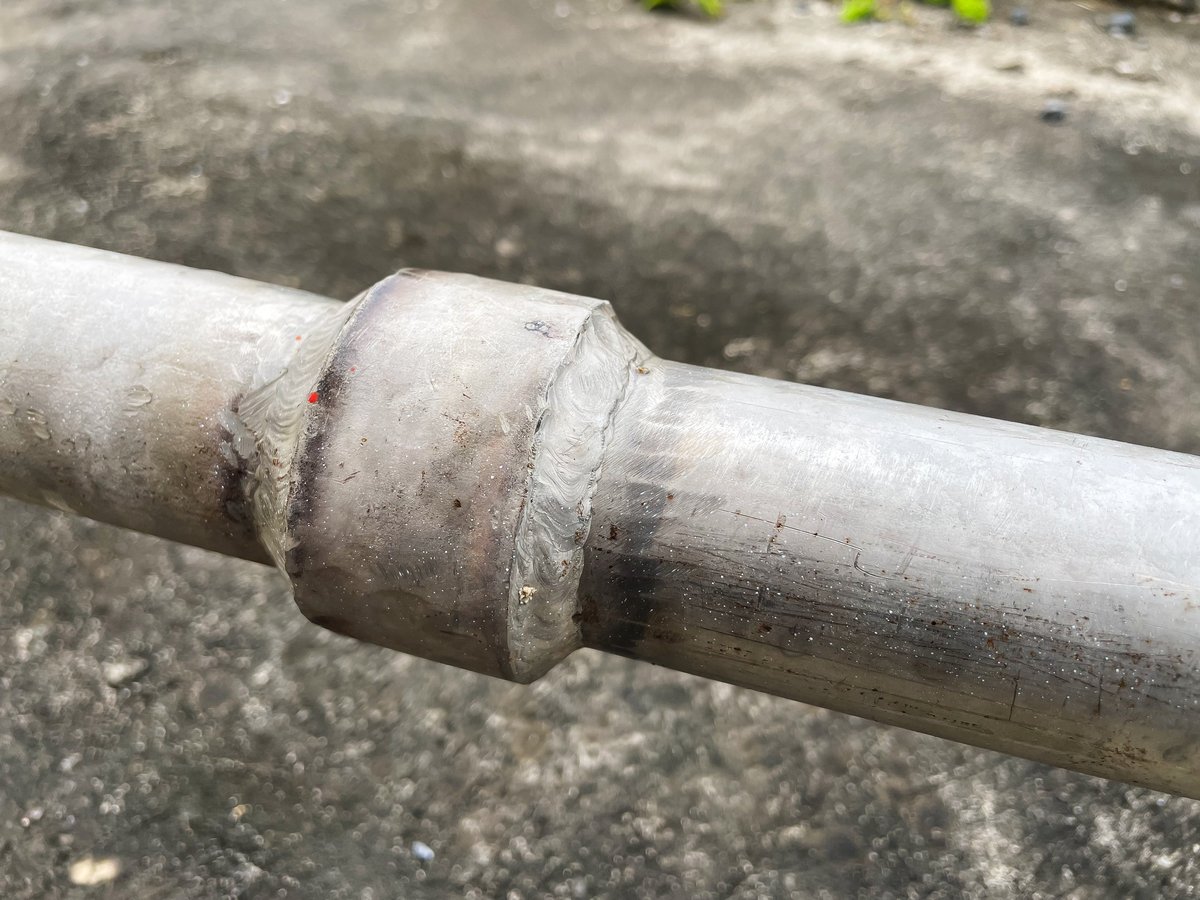
Each row names its applicability and the verification requirement behind it.
| Input | What it governs | Verification requirement | RFQ field |
|---|---|---|---|
| Tube product standard | The document the tube is made and certified against — the anchor of the whole enquiry. | Buyer cites the standard and edition on the enquiry. | Standard / revision field |
| Grade designation | The strength basis. It does not establish the product standard or the dimensions. | Buyer states the grade in full. | Grade field |
| Dimensions + tolerance basis | OD, wall and length, each with its own permissible variation from the governing standard. | Buyer states each value with its unit and tolerance basis. | Dimension fields |
| Finish and coating standard | Whether a coating applies, and the standard that governs it where one does. | Buyer states the finish and the coating standard that applies. | Finish field |
| Unit weight / mass basis | A calculated or quoted mass figure, and the assumptions behind it. | Buyer requires the geometry and density behind any quoted mass. | Verification requirement |
| Load capacity and design values | Properties that belong to the scaffold design, not to the tube product. | Buyer supplies these from the responsible engineer. | Design input field |
Evidence warning
Numerical chemistry, mechanical properties, tolerances, coating thickness or mass, unit weight, load capacity and dimensional limits are not printed on this page. Each is published by the standard and edition governing your supply, and each has to be read from that document for the specific material. Where a figure is needed to proceed, the row above states the input to supply instead.
The product form that changes the finish record
A pre-galvanized tube has its coating applied before forming, which changes what the finish record has to state and often what packing protection the voyage needs. It is a registered product form rather than a finish option on a bare tube, and the distinction belongs on the export enquiry.
pre galvanized scaffolding tube supplierPacking and load-out
Packing is the part of an export enquiry most often left to the supplier, and it is the part where the destination has the most to say. Six decisions, each of which changes what the consignment can actually be used for on arrival.
How tube is bundled decides the handling method at both ends. A configuration that loads efficiently may be the one that cannot be broken down at a constrained site.
Set by the crane or forklift at the receiving end, not by the supplier. Exceeding it means the bundle has to be broken before it can be lifted — usually with the coating at risk.
Where the bundle can be slung without damaging the tube or its coating. This follows from the arrangement, so the two are decided together.
How each bundle is identified against the packing list. A marking the importer cannot read turns a reconcilable consignment into a disputed one.
The order bundles are loaded decides what can be taken off first. Get it wrong and the site unloads the whole consignment to reach what it needed on day one.
Whether coating or end protection is needed for the route and duration. This depends on the finish chosen and how long the consignment is in transit.
Why these belong on the enquiry, not after order
Every decision above is cheaper to make before the consignment is built than after it has been bundled and loaded. Bundle weight and lifting arrangement in particular have to be settled with the receiving equipment in mind — they cannot be corrected at sea, and breaking a bundle at destination risks the coating on every piece in it.