
Commercial decision route
Steel Distributor
Noor Deira Steel presents Steel Distributor as a verified decision route with explicit scope, evidence limits, and a clear RFQ handoff.
This route helps a buyer decide three things before contacting us: what product form, grade and standard they actually need; whether that need is a stockist, product, supplier, trading-company or exporter situation; and what information makes the enquiry quotable in a single pass. It does not display live stock, prices, lead times or facility claims — it routes you to where the answer is verifiable.
- Match product form, grade and standard to a route
- Flag missing or unverified inputs before quoting
- Hand a completed summary to Request Quote
Information date:
Definition & boundaries
The commercial role, and what this page does not claim
A distributor routes steel from mills and supply lines to the buyer who needs it in the right form, grade, standard and quantity — coordinated, not guessed.
What this page covers
How to decide whether a requirement is a distribution, product, stockist, supplier, trading-company or exporter situation, and how to assemble a quotable enquiry for it.
What it does not cover
Live stock levels, prices, lead times, facility tours or inventory claims. Those are verified against the order, not displayed as marketing numbers here.
When to continue elsewhere
Continue to a product, exporter, stockist, supplier or trading-company route when your need matches that intent.
Specification Builder
Assemble a quotable specification, step by step
Six inputs return the supplied requirements, the missing details, what needs verification, and the related page to continue. Nothing is inferred — an unknown stays unknown.
Not sure of the grade or standard? Send it for review.
Request Quote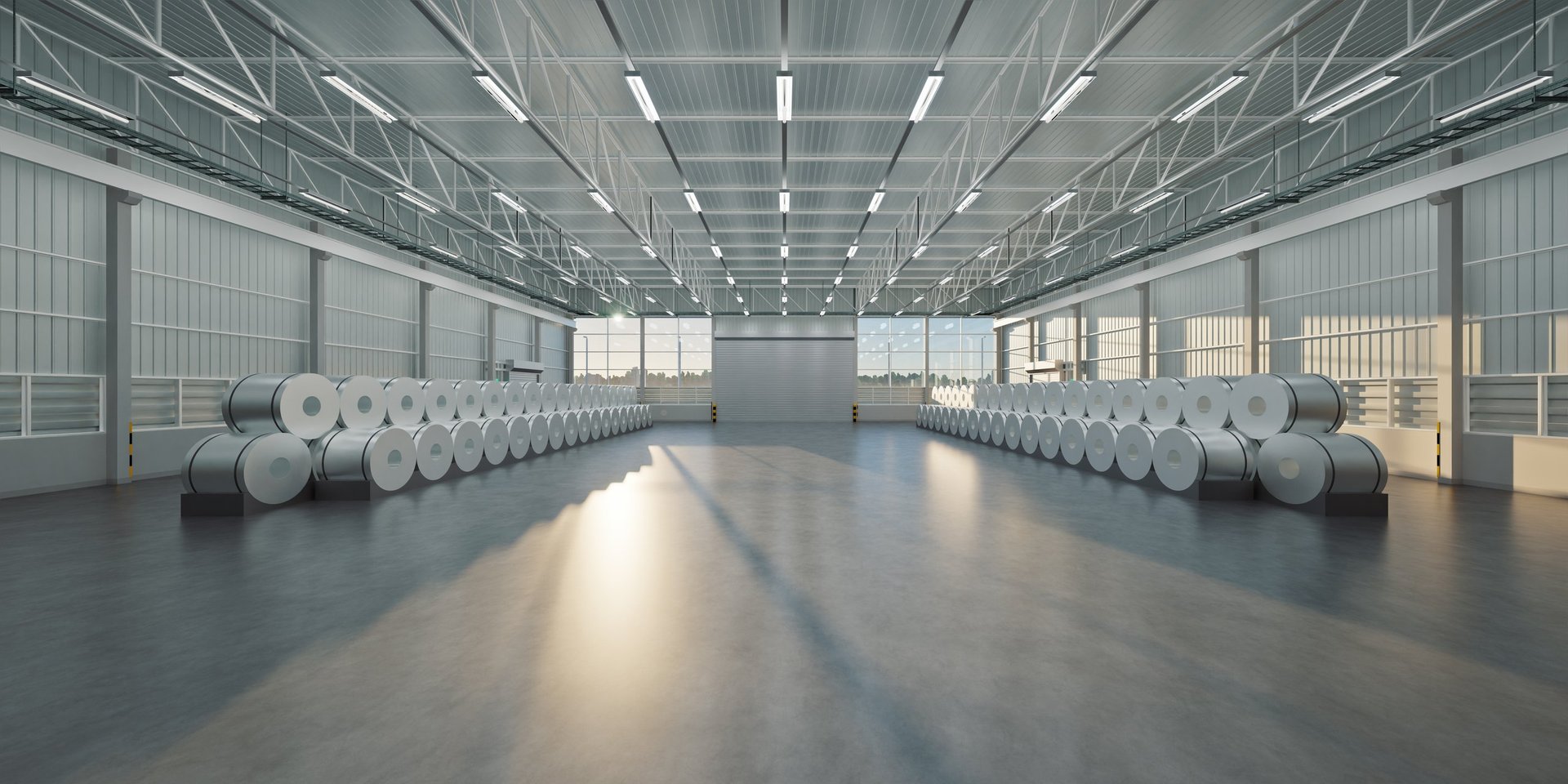
Distribution starts from a hold that keeps grade and heat traceable.
What the builder does and does not do
- Validates that each required input is present.
- Flags every missing or unknown value separately.
- Recommends a route only from what you supplied.
- Never infers a grade, tolerance, quantity or destination.
- Shows no live stock, price, freight or lead time.
Primary decision route
Continue to the product catalogue when the form is known
When the product form, grade and standard are already fixed, the fastest next step is the product catalogue, not a general enquiry.
The product catalogue groups the full range by form — structural, flat, long and tubular — so a buyer who knows what they need can match it directly. Continue there when the specification is set; use the builder above when it is still open.
Decision criteria
The checklist a quote is built on
Nine fields. Only verified company, product, market and capability information is used — no invented tolerances, stock, lead times or prices.
| Criterion | What it establishes |
|---|---|
| Required product form | Beam, plate, coil, rebar, pipe, hollow section — determines the correct product route. |
| Material or grade | Carbon, stainless, alloy, galvanised; the grade must be stated or sent for review rather than assumed. |
| Governing standard | ASTM, EN, API, JIS or equivalent — stated explicitly so conformity can be checked against the right document. |
| Dimensions | Size, thickness and length (or the requested tolerance) so the enquiry is quotable. |
| Quantity | Weight, piece count or container count — moves the route toward product, stockist or exporter intent. |
| Destination | GCC country or export destination — determines delivery and, where relevant, the exporter route. |
| Required documentation | MTC, certificate of origin, packing list, inspection record — named up front. |
| Commercial or delivery constraints | Incoterm, delivery schedule, site access — stated so scope is not guessed. |
| Items requiring confirmation | Anything the buyer has not yet fixed — flagged, never inferred. |
Use and limits
When this page is right — and when it is not
Distribution discovery, product specification, export planning, stockist intent and general research are different tasks. Route to the one you are actually doing.
Use this route when
- — You are still deciding what product form, grade and standard you need.
- — You want a single route that matches your need and hands to RFQ.
- — You are a GCC buyer with an open specification and a destination in mind.
Choose another route when
- — The product form is fixed — continue to Products Index.
- — It is a cross-border export — see Steel Exporter.
- — You want ready stock on hand — see Ready Stock.
Verify before enquiry
- — Confirm the governing standard is the exact one you need (ASTM, EN, API, JIS).
- — Resolve any grade still marked "not determined" before quoting.
- — Fix quantity and Incoterm, or expect the review to ask for them.
Evidence-led advantages
Buyer concern → verified capability → outcome
Four cards, each resting on a capability this route actually demonstrates — not on a scale, speed or stock claim.
Wrong grade delivered
The grade and governing standard are tied to the heat number and its mill test certificate, released with the material.
A QA lockup that can match certificate to stock before it ships.
Hidden scope gaps
The specification builder flags missing inputs instead of inferring them, so an enquiry is reviewed against what it actually says.
Fewer quotes built on an assumed grade or quantity.
Split or partial delivery
Packing and delivery notes itemise each lot, so a partial delivery stays traceable and accounted for.
No unaccounted short- or over-shipment at the dock.
Route chosen for the wrong intent
The decision route distinguishes distribution discovery from product, stockist, exporter and supplier intent.
A buyer lands on the route that matches how they actually buy.
Expert insight
Grade and standard are the two fixed points a quote cannot invent
A sourced standards note: the matching of a grade to its governing standard is what separates a quotable specification from a guess.
Method & source
This note is a reading of the steel product classification and specification guidance published by the World Steel Association (worldsteel), which describes how steel is characterised by grade and the standard its properties are tested against. The method is a reading of that guidance, not a reproduction of it.
Information date:
Why the grade and standard anchor the enquiry
A grade states the chemistry and structural properties a part of steel is expected to meet; the standard states how those properties are tested and certified. When both are fixed, the requirement becomes checkable against a certificate. When either is left open, no one downstream can verify what was actually ordered.
State the grade and standard first; the rest of the route follows from what those two fix in place.

Product form sits alongside grade and standard as the third fixed point.
GCC markets
The destination changes the offer
A distributor routes material to a place, not to a country name. Each market below is a different set of inputs on the same enquiry — the country hub sets out the delivery and document terms for that destination.

Saudi Arabia
The inland delivery city behind the port, so the distribution leg is quoted separately from the ocean leg.
Market terms
Qatar
The project or free-zone consignee, and whether the offer must be matched line-for-line to a main contractor's bill of quantities.
Market terms
Kuwait
The re-export or trading intent, because a Kuwaiti trading house resells onward and needs the document set issued in its own name.
Market terms
Bahrain
The causeway or port routing, since a small island drop changes the economical quantity and the part-load decision.
Market terms
Oman
The port or free-zone entry point, and whether the receiving yard can accept mixed bundles rather than a single uniform size.
Market terms
United Arab Emirates
Which emirate is the delivery point, and whether the receiving site can take a full trailer or needs a phased call-off.
Market termsThese cards describe planning inputs for each destination. They make no claim of a branch, office, warehouse or standing inventory in any market.
From enquiry to delivery
A distribution route, stage by stage
Each stage names its owner, the input it requires, the verification risk, its output and the next action. Contextual links sit where they belong.
Requirement or need
Owner: BuyerInputProduct form, size, quantity, destination
Verification riskVague or incomplete scope
OutputA concrete enquiry brief
Next: Send to specification intake
Specification intake
Owner: Commercial teamInputStandard, grade and dimensions
Verification riskMissing standard or grade
OutputRequirement captured against a standard
Next: Hand to technical review
Technical review
Owner: Technical reviewInputSpecification against a standard
Verification riskUnverifiable claim or grade mismatch
OutputConfirmed specification and scope
Next: Move to quotation
Quotation
Owner: Commercial teamInputScope and terms
Verification riskUnfixed quantity or Incoterm
OutputPrice on request and terms
Next: Await confirmation
Order or contract
Owner: Buyer + commercialInputConfirmed order and documents
Verification riskUndocumented verbal change
OutputOrder and document list
Next: Trigger quality checks
Quality and document checks
Owner: Warehouse / QAInputCertificate and material conformity
Verification riskCertificate not tied to heat
OutputConformity confirmed
Next: Pack order
Packing
Owner: WarehouseInputPick list and packing method
Verification riskCoated vs uncoated mismatch
OutputBundled, banded, edge-protected
Next: ShipWarehouse & Logistics
Shipping
Owner: LogisticsInputDocument pack and route
Verification riskIncomplete document pack
OutputLoad released with documents
Next: DeliverMarkets Hub · Steel Exporter
Delivery
Owner: LogisticsInputDestination and access
Verification riskUnconfirmed site access
OutputDelivery note countersigned
Next: Close out
After-sales
Owner: Commercial teamInputDiscrepancy record
Verification riskLate-reported discrepancy
OutputResolution with carrier and buyer
Next: Resolve any open item
Buying & technical resource
Verify the grade and standard before you quote
The knowledge center holds the reference a buyer uses to fix a grade, check a size chart, or compare two standards before making the enquiry.
- Size charts for structural, flat and tubular forms.
- Grade and standard comparisons for carbon, stainless and alloy.
- Buying guides that walk a first-time buyer through the enquiry.
FAQ
Steel distribution, answered directly
What does a steel distributor do?
A distributor connects steel from mills and supply lines to buyers who need it in the right form, grade, standard and quantity — coordinating specification, documentation and delivery, without claiming to own specific inventory or run specific facilities.
How is a distributor different from a supplier, stockist or trading company?
A supplier is the broader role of sourcing and providing steel; a stockist holds ready stock you can order from; a trading company intermediates across the supply chain. Distribution is the routing and coordination role — deciding which route applies starts from how the buyer actually needs to buy.
What information do I need for a qualified enquiry?
Product form, material or grade, governing standard, dimensions, quantity and destination — plus any required documentation and Incoterm. The more of these you can state, the more precise the review.
How are grades and standards handled?
The grade is tied to its mill test certificate and the governing standard, so conformity can be checked against the right document rather than assumed.
What documentation can I expect with an order?
Depending on the order: the mill test certificate, packing list, inspection record, certificate of origin where customs require it, and the delivery note. The document pack is compiled before dispatch.
What destination and delivery details do you need?
The destination country, the Incoterm, the delivery schedule and any site access or unload constraint. Cross-border and export orders add certificate-of-origin and customs steps.
When is the exporter route more appropriate?
When the requirement is a cross-border or multi-country export, rather than a domestic GCC distribution order. That route carries its own document and freight scope.
Request a Quote
Send the selected product, grade or standard, dimensions, quantity, destination, and Incoterm for review.
Serving GCC buyers and export destinations