
Hot-rolled coil
The mill-scaled base substrate behind framing and heavier construction forming — where the section and load decide the requirement, not the finish.
hot rolled steel coil supplierSteel Coil for Construction
A construction package never buys a single coil. It buys coil for the roof and wall envelope, for framing and purlins, for fabrication and service work, and for the architectural components the client will see. Each of those carries a different exposure, a different structural role and a different acceptance basis — so the procurement lead's real job is routing the requirement to the right component before a specification is written.
A construction package does not buy one coil — it buys coil for several components, and each component carries its own exposure, fabrication and project-standard requirement. Route the enquiry by component and service condition first: coil for enclosure differs from coil for structure differs from coil for architectural finish.
Free, no-obligation component routing review
Information current as of
Who This Page Is For
Use this page when a construction project needs coil for several components and you have to decide which requirement belongs to which. If you already know the single application, the application page for it will be more direct than an industry routing page.
The right fit if you
Look elsewhere if you
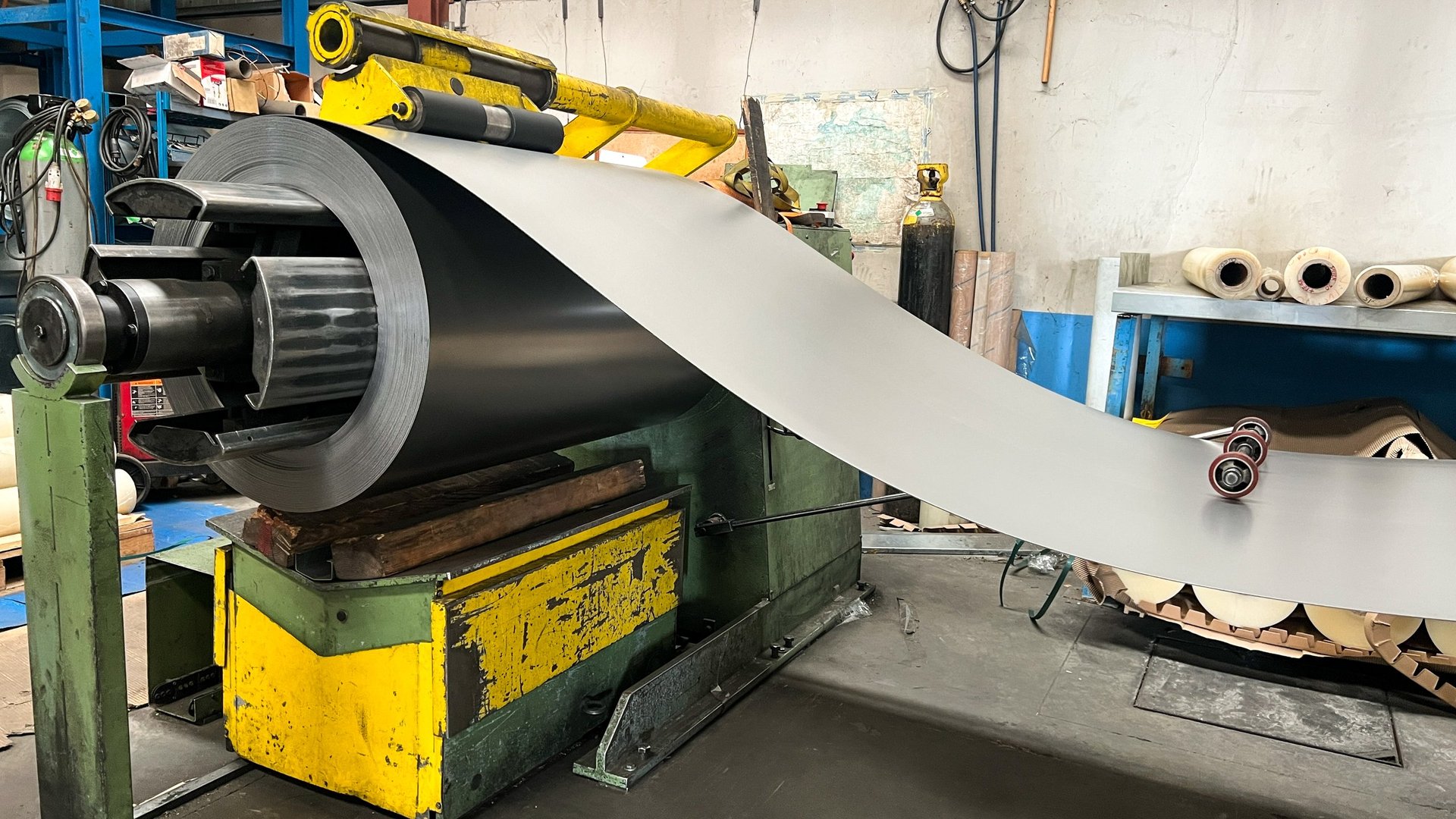
One package, several coil decisions. The component — not the project name — is what decides the exposure, the substrate and the acceptance basis.
Roof and wall coil is an exposure and appearance question before it is a dimensional one.
Structural and framing coil is a substrate and load question, set by the section it forms.
Visible components are a finish and flatness question — the eye is the acceptance test.
Construction Procurement Router
Enter the component the coil is for, its exposure, its structural role and the finish it must hold. The router returns component-specific guidance, a derived strip mass from your dimensions, and refuses to name a route until all four are present.
Package inputs
Reference: steel sheet supplier · steel coil weight calculator
Routing verdict
A construction package contains several coil components, and each routes differently. Name the component, its exposure, its structural role and the finish it must hold to see the routing guidance, the derived strip mass and a copyable specification summary.
Derived check — strip mass
Enter the thickness and width to derive the strip's mass per running metre.
Copyable routing summary
Construction coil routing — component specification summary
Component: —
Exposure: —
Structural role: —
Finish requirement: —
Project standard / edition: —
Thickness (mm): —
Width (mm): —
Coil basis (ID/OD/weight): —
Quantity (tonnes): —
Destination / site: —
Document set: —
The router derives only from figures you supply and states the component boundary rather than recommending a coil from the project name. Price, availability and lead time are always confirmed against a complete specification.
Component Specification Matrix
The matrix routes the requirement by component. Read the row for the part you are buying: the exposure, the attribute that decides it, the boundary where the route stops being valid, and the document that proves it.
| Component | Service condition | Deciding attribute | Boundary / limitation | Evidence → RFQ field |
|---|---|---|---|---|
| Roof & wall enclosure | External, weather-exposed, appearance-critical | Surface / coating system and colour; substrate follows | Defined by the enclosure's exposure and finish — the profiling behaviour belongs to the profiler's scope | surface system / colour |
| Framing & purlins | Sheltered to semi-exposed; load-bearing | Base designation and mechanical basis for the section formed | Set by the section and load, not by the building's external exposure alone | designation / mechanical basis |
| Architectural & fascia | Visible, client-facing, finish-critical | Finish durability and appearance acceptance, plus flatness | A visually rejected surface cannot be recovered downstream — acceptance must be set at order | finish system / acceptance |
| Fabrication & service | Internal or sheltered; fabricated on site or off | Forming severity the fabricator applies and the real service environment | Do not inherit an external specification for an internal component — exposure drives the cost | forming severity / environment |
| Site sheet & flashing | External, small components, exposed edges | Cut-edge protection and matching the parent surface system | Where sheet rather than coil is the right purchasing form — check the form before ordering coil | surface match / form |
The matrix states what decides each component and where the route stops, not numeric limits. Coatings, tolerances and property values carry the edition of the governing standard — verify them there rather than in a general guide.
This page is an industry hub, so it points at the substrate routes rather than duplicating them. Follow the one your component routing has identified.
The mill-scaled base substrate behind framing and heavier construction forming — where the section and load decide the requirement, not the finish.
hot rolled steel coil supplierWhere the enclosure or architectural component needs a metallic or prepainted surface — the coating route is chosen with the exposure, not after it.
galvanized steel coil supplierThe finish-critical route for visible architectural components — confirm the paint system and colour acceptance with the project before the substrate.
ppgi prepainted steel coil supplier
Exposure is the routing key. Two components in the same package, with identical dimensions, can need entirely different surface protection because of where the finished building puts them.
Choice Boundaries
The costliest construction procurement error is not choosing the wrong coil — it is carrying a correct choice into the wrong place. These are the boundaries where a route must be re-examined.
A coating answers corrosion and appearance. It says nothing about the mechanical basis a load-bearing framing component needs — those are two separate decisions that happen to be made together.
The coil that profiled well into the roof sheet is not automatically the coil for the purlin carrying it. Forming behaviour and load capacity are qualified separately, even when both sit on the same elevation.
An internal duct or partition does not need the exterior specification. Defaulting to the external system "to be safe" adds cost and can complicate the fabricator's process without improving anything the client will ever see.
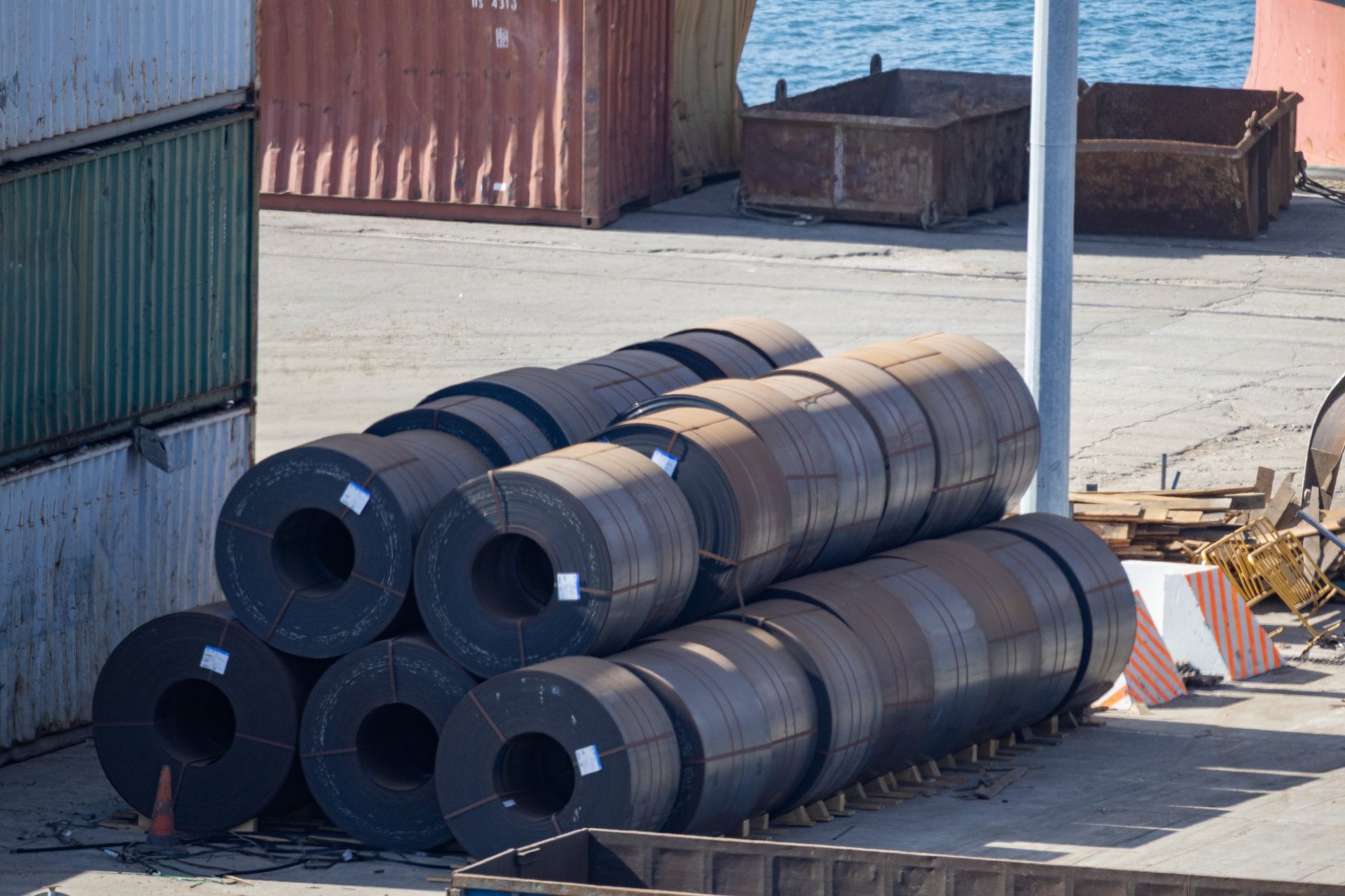
One question that prevents most rework
For each line in the package, ask: which component does this coil become, and where does that component sit when the building is finished? The answer routes the exposure, and the exposure routes everything else.
Inspection & Documentation
Construction verification is a chain: the coil is tested at source, the documents travel with the consignment, and the site checks what arrived. A gap at any link turns into a hold on the programme.
| Document | What it establishes | Who asks for it | Released how |
|---|---|---|---|
| Mill Test Certificate (MTC) | The coil is the designation and grade the order named | Procurement and the consultant's submittal file | On order fulfilment |
| Coating / surface certificate | The surface system meets the class the project specified | Where the enclosure or architectural finish is specified | Confirm scope before RFQ |
| Dimensional record | Thickness, width and coil mass against the ordered basis | Where site yield and handling depend on it | Project-dependent |
| Packing & consignment list | What was shipped, in what condition, under what marks | Site receiving and the logistics partner | With the shipment |
| Third-party inspection | An independent check of the coil against the order | When the client or their engineer specifies it | On buyer request |
No document is described here as already existing for any given order. The set is assembled against the actual quoted material, and the scope is agreed before the enquiry is priced.
Decide which documents the project actually requires before the enquiry is priced — a scope added after award delays the release.
A coating certificate proves a surface system, not a structural basis. Ask for the document that establishes the attribute the component actually depends on.
Site verification is the last link in the chain — the consignment list and the coil marks have to let the store keeper check what arrived against what was ordered.
Commercial & Delivery Sequence
Construction buying is programme-driven. The technical routing is only useful if the quantities, the release sequence and the site's handling capacity all line up with when the building actually needs the material.
Order per component, not as one aggregate. That keeps the coated and uncoated lines separate and makes each release traceable to the part it is for.
Align deliveries with the construction programme — material for the phase being built first, rather than one bulk arrival the site has nowhere to store.
Coil weight and packing have to suit the unloading equipment and covered storage the site actually has — a constraint worth stating before the basis is fixed.
Confirmed against the complete routed specification. Nothing is published in advance as fixed stock, a fixed price or a fixed delivery date.
GCC Delivery Planning
The routed specification travels with the material. What changes by market is the approval gate, the receiving port and how the site handles what arrives — plan those alongside the technical basis.

Multi-component packages
UAE construction packages often bundle several coil components — plan the release sequence so enclosure, framing and architectural material arrive against the programme, not in one bulk drop.
View United Arab Emirates steel coil supply
Project volume staging
Saudi project volumes are staged against programme milestones — align the quantities per component and the delivery windows agreed at order rather than a single published date.
View Saudi Arabia steel coil supply
Approved submittals
Qatar projects gate material behind an approved technical submittal — confirm the surface system, dimensions and document set that the submittal names before shipment is planned.
View Qatar steel coil supply
Site handling
Kuwait site access and storage shape the coil basis — confirm the coil weight and packing against the unloading and covered-storage the site actually has.
View Kuwait steel coil supply
Coastal exposure
Bahrain's coastal atmosphere puts the surface system under more pressure — name the exposure of the finished component so the protection is specified for it, not for a generic outdoor condition.
View Bahrain steel coil supply
Port-to-site routing
Oman consignments route through Sohar or Salalah — align packing and coil orientation with the receiving site's handling between the port and the construction store.
View Oman steel coil supplyDelivery planning is confirmed against the routed specification, the named site and the commercial terms — never published in advance as a fixed programme or as company presence in every destination.
Procurement Path
A construction coil order succeeds or fails on the decisions taken before the enquiry is priced. This path keeps the routing ahead of the commercial commitment.
01
Name each component in the package and the exposure it sits in when the building is finished.
02
Decide coated or uncoated, and which coating or paint system, against the exposure — not against habit.
03
Confirm dimensions, tolerance basis, coil ID/OD and weight against the project standard and the forming scope.
04
Split quantities by component and align the release sequence with the construction programme and the site's storage.
05
Settle the MTC, coating certificate and inspection scope before award so the submittal file closes without a chase.
Steps one to three are the fields in the component router above. Run it per component, then send the summaries as one package enquiry.
Source-Backed Reference
A surface system is only enforceable if it is written against a published standard rather than described in words. Read the primary source yourself before the specification goes into the enquiry.
The standard behind a coated enclosure requirement
Continuous hot-dip zinc-coated steel sheet and strip orders in the EU framework are commonly written against EN 10346:2015 — Continuously hot-dip coated steel flat products for cold forming. It sets how the steel and coating designations are named, the coating mass and finish classes, and the mechanical and coating tests a supplier works to. Its scope is continuously hot-dip coated flat product — it is not a construction code, so it does not by itself establish that a coating is appropriate for a given building exposure.
What the source does — and does not — settle
Reading the source in the right order
Information current as of . Verify the current edition and its scope with the publisher before relying on any figure.
FAQ
Direct answers on how a construction package's coil requirements are separated, verified and quoted — and where this page's scope ends.
Send the routed component specification for each line in the package and the commercial department responds with availability and pricing. Price is always on request.
Office 3303, Churchill Executive Tower, Business Bay, Dubai, United Arab Emirates
Monday – Saturday: 8.00 AM – 6.00 PM · Sunday: Closed
Not sure where to start?
Send one line per component with its exposure, structural role and finish. If a component is still unconfirmed, say so — it is better routed as an open question than specified by default.