
B2B Steel Coil Export
Steel Coil Exporter
Export readiness means the technical specification and trade terms are both complete. The enquiry must identify product / standard / grade, dimensions, quantity, destination, named place / port, Incoterm, required documents, packing expectations and target delivery requirement — without promising live availability.
Free, no-obligation export specification review
Information current as of
Export Requirement Intake
Define the Steel Coil specification and product range before the trade terms
Qualify the product, specification, quantity, destination, schedule, packing, documents and commercial constraints before discussing supply. The regulated product range is compared against the export requirement so the RFQ stays defensible.
Specification
Manufacturing route, material, standard and edition, grade / designation, thickness, width, coil ID/OD or weight/length basis, coating / finish. Every value ties to an authoritative source and edition.
Quantity & packing
Quantity and unit (tonnage, length, coil count) and required packing and handling so the quotation matches the logistics plan.
Destination & Incoterm
Destination country, city / port / named place, Incoterm candidate and delivery window. The named place is required before a trade term is applied.
Documents
Document set: product MTC, dimensional / weigh report, inspection and test records, commercial invoice, packing list, certificate of origin — each confirmed at quote stage.
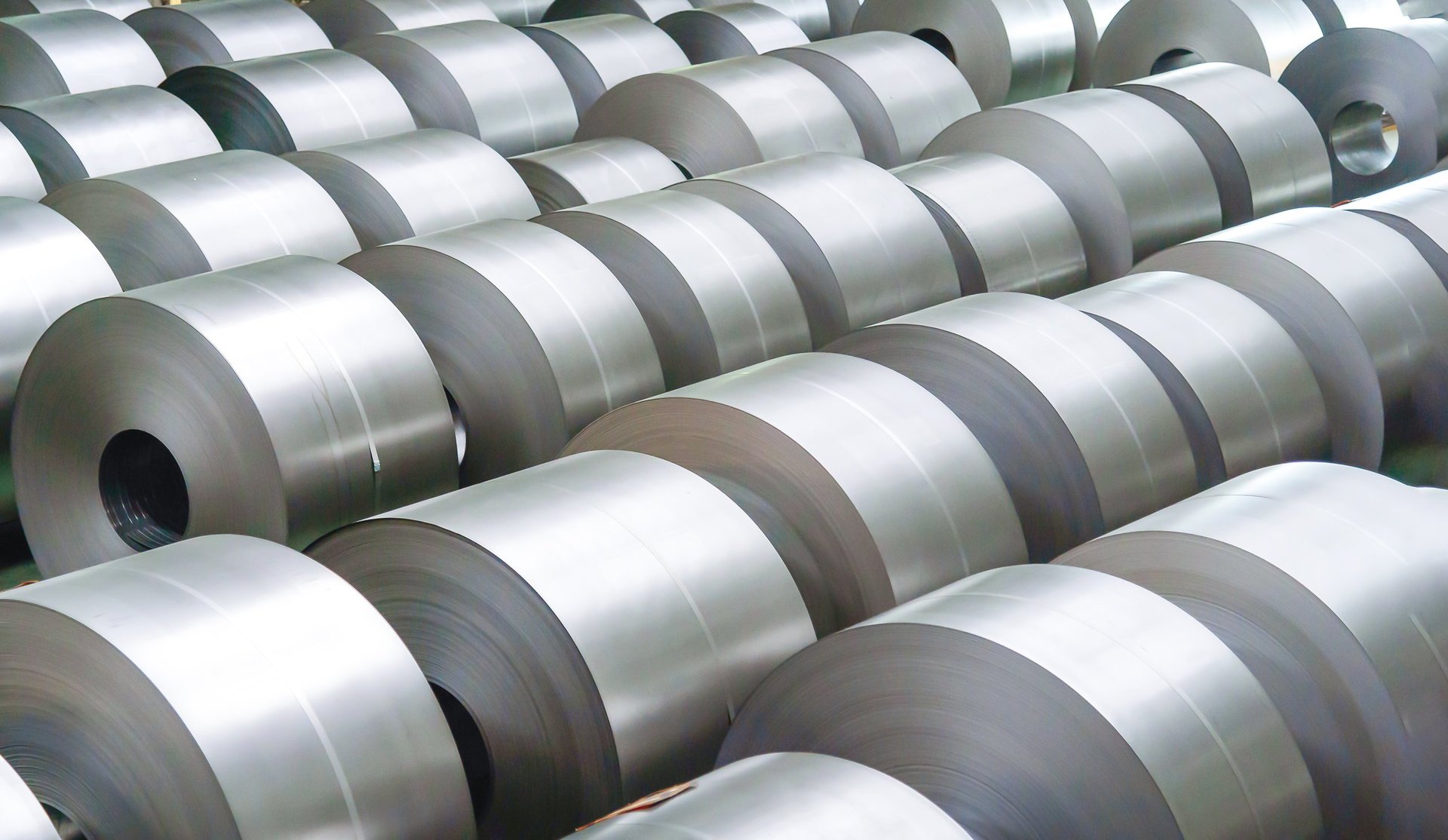
Qualify the requirement, then route it
The export requirement intake captures the specification and the commercial handoff together. The regulated coil range is compared against the stated requirement so the RFQ stays defensible and the document set matches the order — without promising live availability of any line.
Route, material, standard and edition, grade / designation, dimensions, quantity, destination, named place, Incoterm, packing, documents and timing are each confirmed at quote stage rather than assumed.
Stainless steel coil
Compare route, coating/material and fabrication fit when a corrosion-resisting basis is required.
stainless steel coil supplierCold-rolled coil
Confirm surface, tolerance and formability against the downstream finish before quoting.
cold rolled steel coil supplierCarbon steel coil
Verify chemistry, strength and surface together under the governing standard and edition.
carbon steel coil supplierCompare this export path with the approved cross-product reference:international steel export
Export Enquiry Planner
Steel Coil export enquiry and Incoterm handoff builder
Enter the specification and trade handoff inputs. The planner flags missing input, runs an Incoterm sanity check, and produces a copyable RFQ summary with its method and assumptions.
The planner never promises freight, customs clearance, duty, stock, lead time, certificate availability or port handling without verified quotation data. Live commercial facts are confirmed at quote stage. Incoterms allocate tasks, costs and risks; they do not set payment terms, duty, title transfer, customs tariff classification, sanctions compliance or product technical acceptance — those are listed separately.
Planner result
Export enquiry not started
Build the enquiry by adding the specification and trade handoff inputs first: the exact coil specification (standard, grade, dimensions), the quantity and unit, the destination country, the Incoterm candidate.
Document checklist
- Coil specification: manufacturing route, standard / edition, grade / designation, thickness, width, coil ID/OD or weight/length basis, coating / finish / paint system
- Quantity and unit (tonnage, length, coil count) and required packing
- Destination: country, city / port / named place
- Incoterm candidate with its named place
- Document set: product MTC, dimensional / weigh report, inspection and test records, commercial invoice / packing list / certificate of origin
- Consignee / importer requirements and requested delivery date
Method & assumptions
Enquiry built from the ICC Incoterms framework and the steel coil exporter requirement. Trade, customs, duty, payment, title and compliance responsibilities are kept separate from the Incoterm. No live commercial value is fabricated.
Quality & Export Documents
Map the document set to the export requirement
Required product, inspection, commercial, origin, packing and shipment documents are shown without claiming that any document is available until verified at quote stage.
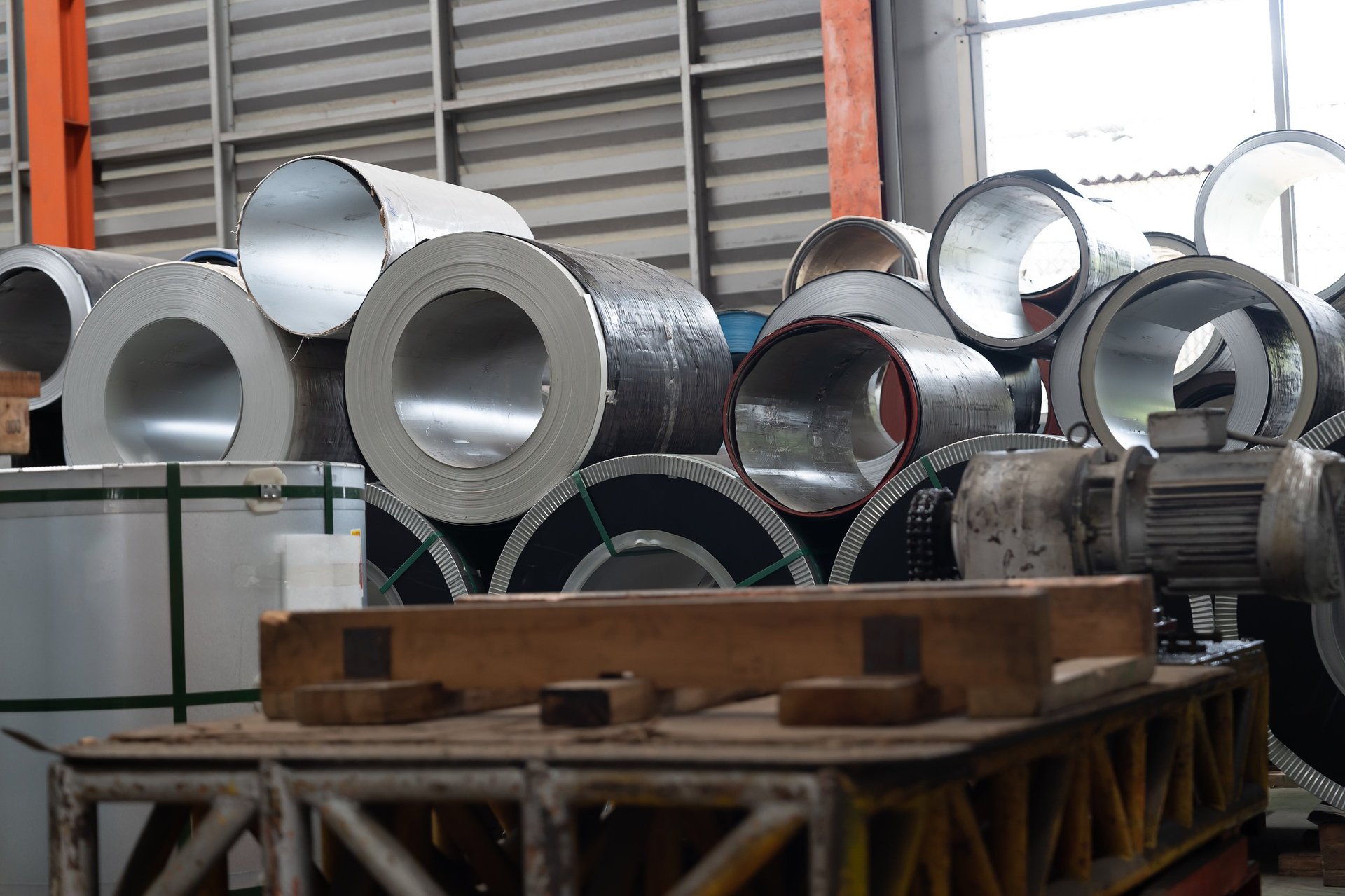
Verification gates
Inspect the physical attributes that must match the specification before accepting a coil line: coil geometry (ID/OD, width, thickness), coating / surface state, edge / oiling condition and any dimensional tolerance. Each becomes a document field confirmed at quote stage — never assumed.
| Document | Purpose | Verification / source | RFQ field |
|---|---|---|---|
| Mill test certificate (MTC) | Chemical / mechanical traceability to the standard and edition | Confirm edition and values against the stated standard | standard and edition; grade; chemistry; mechanical properties |
| Dimensional / weigh report | Thickness, width, coil ID/OD, unit weight and tolerance check | Confirm measurement method, units and tolerance clause | thickness; width; coil ID/OD; weight/length basis |
| Inspection & test records | Tensile, yield, coating, paint and dimensional test scope if specified | Confirm the test clause and governing edition | coating / finish / paint system; testing |
| Commercial invoice | Quantity, unit, price basis and Incoterm | Match the named place and Incoterm to the contract | quantity / unit; Incoterm; destination |
| Packing list | Coil marks, handling and strapping | Match packing plan to the order | packing |
| Certificate of origin | Origin statement for the destination | Confirm origin requirements for the destination | origin / destination |
No certificate availability is claimed until it is verified and present in the RFQ. The document set and any certificate, inspection or test requirement must be stated explicitly in the export enquiry.
GCC Market Routes
Destination routes for steel coil export
Each country route carries independent, destination-specific decision cues for the export enquiry: quote, documents, delivery location and logistics. Flags are orientation cues only and do not imply current market presence.

United Arab Emirates
GCC quote, document and delivery-location inputs
Name the destination city, port or named place and the consignee/importer requirements so the coil document and delivery plan match the order without changing the specification.
steel coil supplier United Arab Emirates
Saudi Arabia
GCC quote, document and delivery-location inputs
State the destination city, port or named place, Incoterm and coil standard/grade so import documentation and logistics stay aligned to the specification.
steel coil supplier Saudi Arabia
Qatar
GCC quote, document and delivery-location inputs
Confirm destination, named place and required documents so quotation and importer handoff match the stated requirement.
steel coil supplier Qatar
Kuwait
GCC quote, document and delivery-location inputs
Provide destination, Incoterm and document set so the coil delivery plan can be aligned to the order.
steel coil supplier Kuwait
Bahrain
GCC quote, document and delivery-location inputs
Confirm contract terms, documents and the delivery base before quotation.
steel coil supplier Bahrain
Oman
GCC quote, document and delivery-location inputs
Specify the destination port or named place and document set so the quotation matches the importer handoff.
steel coil supplier OmanIncoterms, Packing & Logistics
Decide the trade term, packing plan and handoff point
Responsibilities, inputs, risks, quotation dependencies and handoff points are explained without live claims. The named place, packing and transport context are decided before an Incoterm is applied.
FCA — Free Carrier
Buyer and seller allocate risk and cost at the named place. The buyer states the delivery point for the term to apply.
FOB / CIF
Named port basis allocates risk then freight and insurance under CIF. State the port and Incoterm exactly.
DAP — Delivered at Place
Seller bears risk to the named place. Customs, duty, payment, title and technical acceptance remain separate obligations.
EXW — Ex Works
Buyer arranges collection from the named premises. Transport, insurance and export formalities are the buyer's to plan.
Packing & handling
Coil orientation (eye to wall / eye to sky), strapping, edge protection and marks are quotation dependencies, not assumptions. Confirm each in the RFQ field so the logistics plan matches the order.
Customs duty and HS classification depend on the exact goods description and current customs rules and transaction facts. The page does not promise duty values or customs clearance for any shipment — require importer or customs verification.
Product & End-use
Link the export requirement to the listed coil paths
Each application and industry route is presented only where the visible decision text explains why it applies or what must be verified first. Service suitability is a separate step from the commercial enquiry.
Construction
Translate operating conditions into a defensible coil specification; verify service / design conditions before quoting.
steel coil for constructionRoofing
Coating, finish and profile requirements must be verified against the panel application before the RFQ line is accepted.
roofing steel coil supplierPipe Manufacturing
Confirm material, grade, thickness and forming fit against the manufacturing process before quoting.
steel coil for pipe manufacturingRelated Technical Pages
Validate the specification before it is transferred to the RFQ
Decision-useful technical resources grouped by purpose. Each is presented where it explains why it applies or what must be verified first.
Steel Coil Price Guide
Understand how a coil quotation is formed and separate benchmark context from the RFQ before comparing totals.
steel coil priceSteel Coil Thickness
Verify thickness, width, tolerance and coil basis against the governing standard before accepting an RFQ line.
steel coil thicknessWhen coil is not the correct purchasing form, the adjacent product route is offered only as a bounded comparison — not an automatic substitute.
Source-Backed Decision Aid
Which Incoterm details change delivery, risk and cost responsibilities in an export RFQ?
Apply the ICC Incoterms guidance to the named-place, delivery point, risk transfer, carriage, insurance and import/export questions in the enquiry. Do not select an Incoterm for the buyer.
Expert Insight — Incoterms Rules
Use the ICC Incoterms allocation framework to build a responsibility checklist for named place/port, delivery point, risk transfer, carriage, insurance where applicable, and import/export obligations. The buyer supplies the contract, named place and logistics context before a term is applied.
Applicability boundary: Incoterms allocate tasks, costs, risks and delivery responsibilities. They do not set product quality, customs tariff classification, payment terms, title transfer, sanctions compliance or destination-specific import permits.
Buyer implication: require a named place/port and Incoterm in the commercial handoff so risk and cost responsibilities are not left ambiguous.
Verify in RFQ
Primary source and method are carried into the RFQ handoff so the trade-term basis and its named place are auditable by the buyer's own engineer or logistics team.
The cited source does not establish Noor Deira Steel inventory, price, origin, lead time, certificates, market presence or project suitability. Exact acceptance values, editions, supplementary requirements or commercial outcomes must be verified against the buyer's governing documents and current transaction data.
Incoterms RulesEvidence-led Buyer Advantages
Turn buyer concerns into verifiable export outcomes
Each buyer concern is mapped to evidence or capability and then to a practical procurement outcome — no unsupported superiority claims.
No invalid substitutions
Every value ties to an authoritative source and edition, so a technically invalid coil substitute is avoided before the RFQ goes out.
Document readiness
The document and inspection set is mapped to the standard, so missing test and certificate obligations are exposed early.
Destination accuracy
Country, named place, packing and Incoterm are stated together, preserving GCC destination detail in the quotation.
Auditable enquiry
The copyable specification lets another engineer or buyer audit the commercial and technical handoff without rework.
From Enquiry to Delivery
Route-aware workflow with the buyer in control
Each stage names the buyer concern, owner, required input, evidence or output, risk and next action.
1 · Specify
Buyer- Input:
- Route, standard, grade, dimensions, coating, quantity
- Output:
- Qualified coil specification
- Risk:
- No dimension claim without the standard
- Next:
- State the specification, edition and coating
2 · Handoff
Buyer + supplier- Input:
- Destination, named place, Incoterm, documents
- Output:
- Complete export enquiry
- Risk:
- Incoterm without named place is incomplete
- Next:
- Apply the ICC allocation framework
3 · Quote
Supplier- Input:
- Verified spec, quantity, packing, logistics plan
- Output:
- Defensible quotation
- Risk:
- Stock / price / lead time are quote-stage facts
- Next:
- Confirm live commercial facts in the RFQ
4 · Document & Pack
Supplier- Input:
- Document set, packing plan
- Output:
- Traceable, matchable shipment
- Risk:
- Unverified certificate claimed
- Next:
- Confirm each document at quote stage
5 · Deliver
Buyer + supplier- Input:
- Named place, transport, Incoterm obligations
- Output:
- Handoff at the named delivery point
- Risk:
- Trade-term shorthand hides an obligation
- Next:
- List customs, duty, payment, title separately
6 · Accept
Buyer- Input:
- Inspection against the spec
- Output:
- Acceptance or rejection decision
- Risk:
- Service suitability assumed
- Next:
- Verify service / design conditions
Buyer FAQ
Post-decision questions for the export enquiry
What should a complete Steel Coil Exporter enquiry include?
Can this page confirm customs duty or HS code for every steel coil shipment?
Which Incoterm should I choose?
Can certificates or country-of-origin documents be promised in advance?
Can the page claim live delivery times or market availability?
Qualified RFQ
Request a quote for Steel Coil Exporter
Send route, standard, grade, dimensions, quantity, destination, packing and required delivery date. The completed summary flows into the Steel Coil hub RFQ.
Copyable export enquiry summary
Product / entity: Steel Coil (Export Enquiry)
Manufacturing route: to confirm (hot-rolled / cold-rolled / galvanized / PPGI / stainless)
Material: to confirm (carbon / stainless coated)
Standard and edition: to confirm on RFQ (ASTM / JIS / EN / ISO edition)
Grade / designation: —
Thickness: to confirm on RFQ
Width: to confirm on RFQ
Coil ID/OD or weight/length basis: to confirm on RFQ
Coating / finish / paint system: to confirm on RFQ
Processing / fabrication requirement: as required (state slitting / profiling / forming)
Testing / inspection: dimensional / tolerance / weigh check + MTC
Document / MTC requirements: MTC + dimensional / weigh report + inspection records
Quantity / unit: —
Packing: as quoted (state packing)
Destination country / city / port or named place: —
Incoterm: —
Requested delivery date: —
Unresolved verify-first notes: Trade, customs, payment, duty, title and compliance responsibilities listed separately from Incoterm.
Standards & Documentation
Decision-grade Incoterm and delivery matrix
Each row states applicability, the buyer-decision implication, the authoritative verification / source requirement and the resulting RFQ field or next action. Values are tied to the cited source, edition, conditions and units.
| Decision | Applicability | Buyer implication | Source / verification | RFQ field / next action |
|---|---|---|---|---|
| Incoterm & named place | Trade contracts under the ICC Incoterms rules | State the delivery point; the term is incomplete without it | ICC Incoterms Rules primary source | Incoterm; destination country / city / port / named place |
| Destination & port | Export logistics planning | Named place drives quote, document and logistics accuracy | Buyer-stated destination in the RFQ | Destination country / port / named place |
| Packing plan | Coil handling, transport and damage protection | Packing is a quotation dependency | Stated packing plan in the RFQ | Packing |
| Document & certificate set | Product, commercial, origin and shipment traceability | Never assume a certificate until verified | Confirmed document set at quote stage | Document / MTC requirements |
| Service suitability | Product and end-use qualification | Technical acceptance is separate from the commercial term | Verified against the governing standard | Service / design conditions |
| Duty / customs classification | Destination-specific import clearance | Duty and HS code depend on exact goods description and current rules | Importer or customs verification | HS code / duty — verify separately |
Specification and application context
Standard, grade, dimensions, coating and end-use fit are carried as RFQ fields so the documented requirement stays anchored to the governing source, edition, condition and units — never mixed into false precision.
The visible decision matrix applies to the exporter context and is verified against the buyer's own governing documents at quote stage.

No numerical technical value is populated unless it is tied to an authoritative source, edition / condition, units and method. Inch-pound and SI systems are kept coherent; values are not mixed in a way that creates false precision.
Packing
State the coil packing plan as a quotation dependency
Packing, handling and marks are decided with the order so the logistics and document plan match the specification. Each is confirmed in the RFQ rather than assumed.
Coil orientation
Eye-to-wall or eye-to-sky orientation, strapping and handling are stated with the quantity so the shipping plan matches the order.
Edge & surface protection
Edge protection, end caps or skin-wrap are confirmed against the transport and handling plan.
Marks & identification
Coil and lot marks tie the physical goods to the packing list and the certificate set.
Handling & loading
Lifting and transport method is aligned to the packing plan and the destination named place.