
Scaffolding Pipes · Type
Scaffolding Tube Supplier
Steel scaffolding tube describes a product form, not a specification. Before an enquiry can be reviewed you still need the governing scaffold-tube standard and its revision, the grade or designation, the outside diameter and wall with their tolerance bases, the length, the finish, the coupler family the tube must interface with, the service conditions, and the inspection documents the project will accept.
A grade is not a scaffold specification. What decides whether the tube is right is the product standard that governs it, the dimensions the coupler meets, and the finish the service conditions require.
Standards & dimension evidenceSend these inputs before fit can be confirmed
- Project specificationThe project's own tube requirement, if it states one, ahead of a generic size.
- Tube standard & revisionThe scaffold-tube product standard and the exact revision that governs the tube.
- Grade / designationThe designation the standard uses, stated in full — one input, not the proof.
- OD, wall & lengthOutside diameter, wall and length, each with its own tolerance basis.
- FinishBare or coated, and where coated, the coating standard and method that apply.
- Coupler familyThe coupler system the tube interfaces with, and its stated size range.
- Testing & documentsThe certificate, dimensional record and test evidence the project will accept.
Selection logic
When steel scaffolding tube fits — and when it does not
Steel scaffolding tube is a product form, not a specification. Decide on the product standard that governs the tube first, then set the dimensions, finish and coupler interface against it; a material grade settles none of them.
Fits when
- The scaffold-tube product standard and revision are stated, so the tube requirement rests on a document you can cite rather than on the words steel scaffolding tube.
- Outside diameter, wall and length are given with their tolerance bases, because the coupler interfaces with the toleranced tube, not with the nominal size.
- The coupler family is named, so interface compatibility can be confirmed against the system that will actually be used.
- Tube compliance and scaffold design are held as two separate acceptance gates, each with its own document and its own reviewer.
Does not fit when
- The enquiry fixes a material grade and a size, and treats that as the whole specification for scaffold use.
- The scaffold-tube standard is implied by the product name rather than cited, leaving the requirement resting on a label.
- Tolerances are left out, so the tube can meet a nominal dimension and still not interface correctly with the coupler.
- A scaffold design standard is cited as if it evidenced the loose tube, conflating a system obligation with a product obligation.
Closest related alternatives
Standard route
EN 39 scaffolding tube
Use where the project still cites this standard and the requirements have to be read against its current status.
Boundary: Carries a 2026 withdrawal status that is material — confirm the current position rather than treating it as in force.
Compare this routeGrade route
stk400 scaffolding tube supplier
Use where the strength designation is the fixed point the project is working to, rather than a product standard.
Boundary: A grade label does not prove a scaffold-tube product standard, and the two are set separately.
Compare this routeSize route
48.3mm scaffolding tube
Use where the nominal outside diameter is already fixed by the coupler system in use and the rest follows from it.
Boundary: A nominal size establishes neither the wall thickness nor the tolerance basis nor interface compatibility.
Compare this routeMaterial route
carbon steel scaffold tube supplier
Use where the carbon steel material route is the fixed point and the scaffold-tube requirements have to be resolved against it.
Boundary: A material description settles neither the product standard nor the dimensions the coupler needs.
Compare this routeDecision tool
Steel Scaffold Tube Compliance Gate
Detect when a generic steel-tube enquiry is missing the product-specific data scaffold use depends on. The gate checks the scaffold-tube standard, the dimensions and their tolerance bases, the finish and the coupler interface, keeps unknown inputs visible rather than defaulted, and transfers your entries straight into the RFQ.
Required fields are marked *. Unknown is treated as unknown, never defaulted — revise any input without losing your other entries. The gate runs entirely in your browser; nothing is transmitted until you choose to send it.
Specification completeness
Add the required specification fields to qualify this enquiry.
Missing: Tube standard and revision, Grade / designation, Outside diameter and tolerance basis, Wall thickness and tolerance basis, Length and tolerance basis, Finish, Coupler family, Testing / documents, Quantity and unit basis, Destination. Enter them to complete the compliance check — your other entries are kept.
Still needed: Tube standard and revision, Grade / designation, Outside diameter and tolerance basis, Wall thickness and tolerance basis, Length and tolerance basis, Finish, Coupler family, Testing / documents, Quantity and unit basis, Destination
Alerts, cautions & assumptions
No product-form alerts or cautions are recorded for this combination. Tube compliance is qualified as a product question; scaffold design remains a separate gate.
Method. The gate checks the scaffold-specific inputs a generic steel-tube enquiry usually omits, and tests the dimensions for a stated tolerance basis. Results are a qualification aid, not an engineering approval.
Document list to request
- Certificate naming the product standard, revision and grade, traceable to the lot
- Dimensional record for outside diameter, wall and length against their tolerance bases
- Coupler size range confirmation against the toleranced tube dimensions
Two acceptance gates. Tube compliance and scaffold design are two separate acceptance gates. This tool qualifies the loose tube as a product; it does not approve a scaffold design, and it takes no view on site acceptance. Those remain project- and jurisdiction-specific and are handled against the scaffold design standard.
Copyable RFQ summary
Product / entity: Steel Scaffolding Tube
Project specification: not supplied — confirm on RFQ
Standard + revision: to confirm on RFQ
Grade / designation: to confirm on RFQ
Outside diameter + tolerance: to confirm on RFQ
Wall thickness + tolerance: to confirm on RFQ
Length + tolerance: to confirm on RFQ
Finish / coating: to confirm on RFQ
Coupler family: to confirm on RFQ
Testing / inspection documents: to confirm on RFQ
Quantity + unit basis: to confirm on RFQ
Destination / named place: to confirm on RFQ
Incoterm + version: Incoterms 2020 — named place to be stated by buyer
Required date: to be stated by buyer
Acceptance notes: Tube compliance and scaffold-system design are separate acceptance gates. No scaffold design, load capacity, price, stock or lead time is asserted by this page.
This summary states requirements only. No stock position, price, lead time, scaffold design approval or load value is asserted.
Standards, grades & dimensions
The evidence that closes the specification
Each table names its source basis, the condition the value depends on, the buyer decision it changes and the RFQ field it lands in. Values that cannot be evidenced are replaced by the verification step required to resolve them.
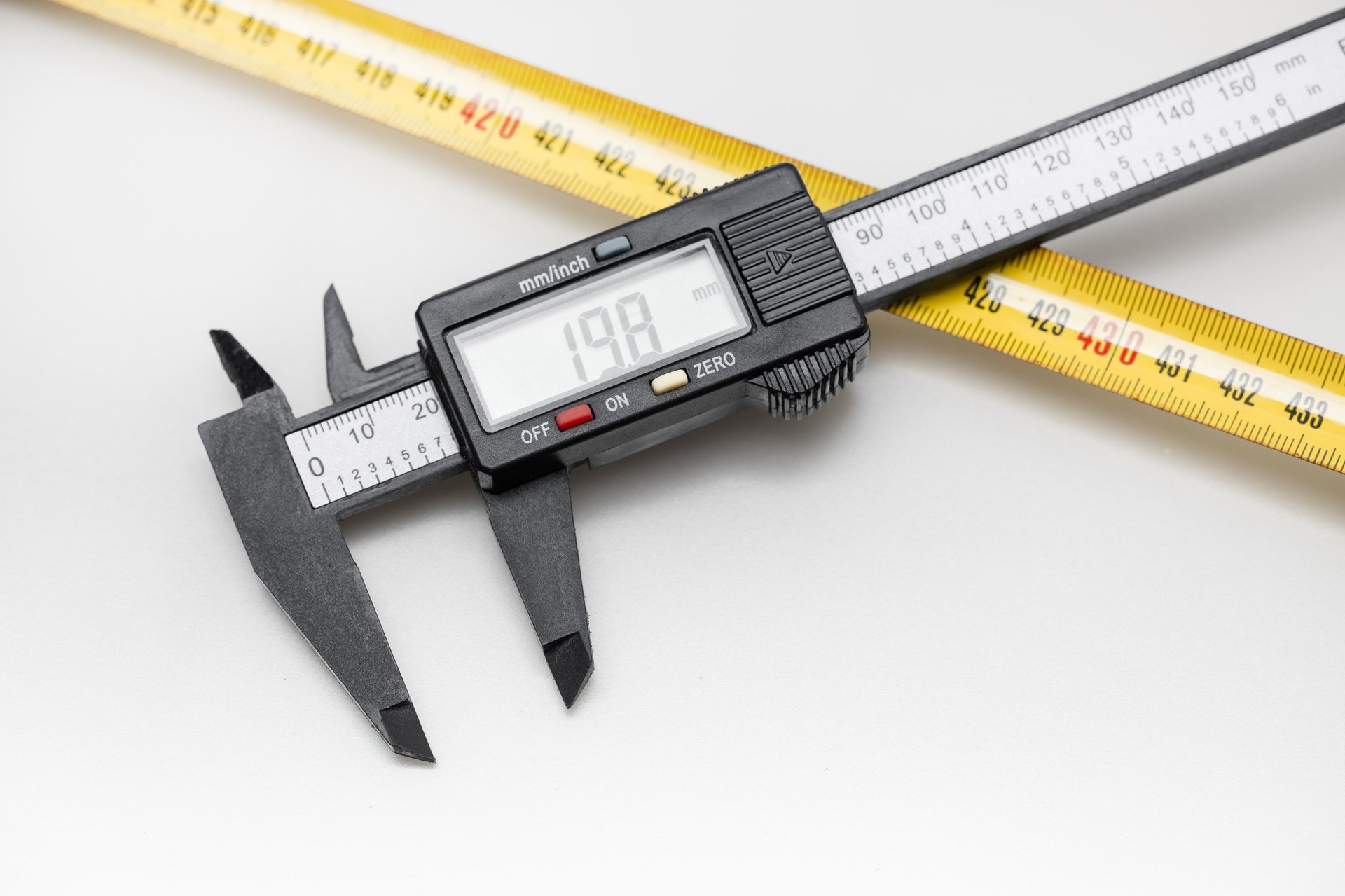
Standard, revision and grade basis
| Input / option | Source basis / condition | Buyer decision implication | RFQ field / next action |
|---|---|---|---|
| Scaffold-tube product standard | The document that governs the tube itself — material, dimensions and tolerances — cited with its revision. | Buyer cites the product standard and revision. | Standard / revision field |
| EN 39 — 2026 withdrawal status | Where the project cites this standard, its current status is material to the decision and must be confirmed. | Buyer confirms whether it still governs and what applies in its place. | Standard / revision field |
| Scaffold system design standard | A separate gate: it sets performance and general design requirements for the erected scaffold, not for the loose tube. | Buyer separates this from the tube requirement on the submittal. | Submittal note field |
| Grade / designation | Identifies a strength basis within a standard; it is one input and does not prove the product standard. | Buyer states the designation in full with its edition. | Grade field |
| Finish requirement | Bare or coated — and where coated, the coating standard and method are separate from the tube standard. | Buyer states the finish and, if coated, the standard that applies. | Finish field |
| Standard and edition | Every value carries source, revision, units and condition — an unversioned reference is not a specification. | Buyer cites the governing document and revision. | Standard / revision field |
Dimensional input table
| Input / option | Source basis / condition | Buyer decision implication | RFQ field / next action |
|---|---|---|---|
| Outside diameter | Nominal OD is a label; the tolerance basis attached to it is what the coupler actually meets. | Buyer states nominal OD and its tolerance basis. | OD / tolerance field |
| Wall thickness | Wall drives mass, stiffness and load behaviour, and carries its own tolerance basis. | Buyer states wall and its tolerance basis. | Wall field |
| Length | Cut length with a stated length tolerance; standard stock lengths and cut lengths are different statements. | Buyer states length and length tolerance basis. | Length field |
| Mass per unit length | Derived from OD, wall and a stated density — a calculation, not a standard value. | Buyer confirms the density basis or accepts the stated assumption. | Mass field with stated basis |
| End condition | Whether ends are plain, and whether any end treatment is required by the project or the coupler system. | Buyer states the end condition required. | End condition field |
| Coupler interface | The coupler grips the tube, so the interface depends on the toleranced tube and the system's stated size range. | Buyer names the coupler family and confirms its size range. | Coupler compatibility field |
Service condition and finish table
| Input / option | Source basis / condition | Buyer decision implication | RFQ field / next action |
|---|---|---|---|
| Service environment | Atmospheric, marine or industrial exposure changes what the tube and any coating have to withstand. | Buyer describes the exposure and the intended service period. | Environment field |
| Finish requirement | Where coated, the coating system and its acceptance basis are separate from the tube product standard. | Buyer states the finish and the coating standard if coated. | Finish field |
| Loading context | The scaffold design standard governs the erected system; no load value for the loose tube is published here. | Buyer confirms the design gate is being handled separately. | Design gate note |
| Handling and re-use | Tube intended for repeated assembly and dismantling is inspected and maintained against a stated regime. | Buyer states any handling or re-use requirement. | Notes field |
| Inspection regime | The inspection that applies on receipt and in service is a project decision, not a property of the tube. | Buyer names the inspection basis required. | Inspection field |
| Service life expectation | No service life is asserted here — it follows from the tube, the finish, the environment and the maintenance regime. | Buyer states the service expectation the project requires. | Verification requirement |
Compare across related tube pages
Test the current requirement against a bounded related page. Never present one as interchangeable with another unless the governing document for your order explicitly approves the alternative.
Evidence warning: product-specific compliance always requires evidence from the actually supplied tube. No chemistry, mechanical property, tolerance, coating value, unit weight or load capacity is published here, because those depend on the governing standard, the dimensions and the conditions for your order. SI is the page-default display; the governing standard's native unit system is never mixed with inch-pound acceptance values.
Quality & documentation
Evidence gates before the tube is released
Separate the product evidence from the commercial documents. Each row names what the buyer must specify, what it verifies, who accepts it, and the risk that follows if it is missing.
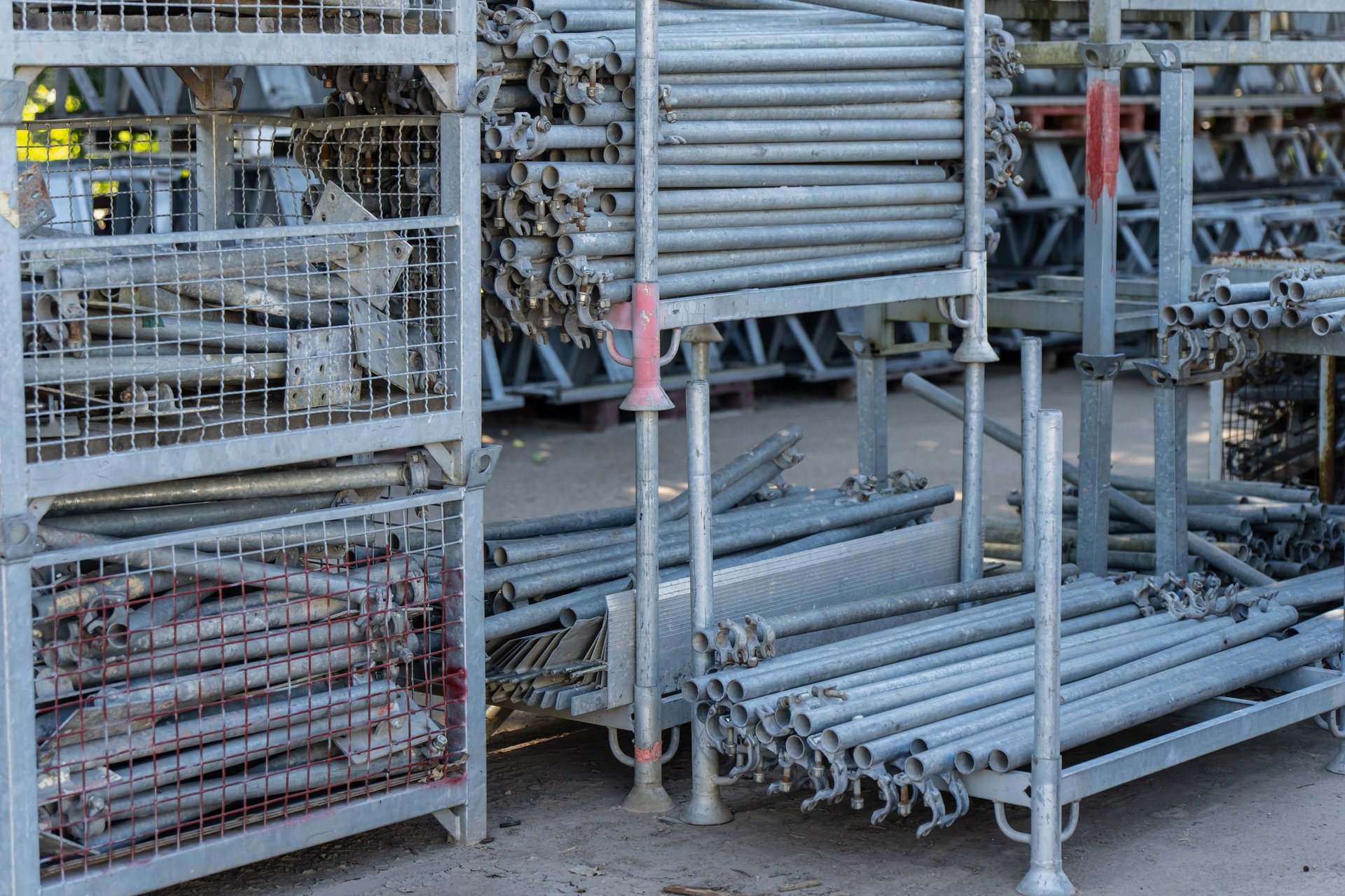
No certificate is implied by this page
Nothing here states that a particular certificate, inspection, test or approval exists for any consignment. Each row is a requirement to be requested and evidenced per order. Where a row names a supplier as the holder, it means the document is ordinarily issued on the supply side — not that it has been issued for your enquiry.
| Requested document / test | What the buyer must specify | What it verifies | Acceptance owner | Risk if missing |
|---|---|---|---|---|
| Mill test certificate / inspection certificate | The product standard and revision, and the grade, that the certificate must state | Certificate naming the standard, revision and grade, traceable to the supplied lot | Buyer / project | The certificate and the enquiry describe different tubes. |
| Dimensional record | Outside diameter, wall and length, each with the tolerance basis | Measured record for OD, wall and length against the stated bases | Buyer / project | Coupler fit cannot be confirmed against a nominal size alone. |
| Product standard conformance | The scaffold-tube product standard the tube is made to, with its revision | Certificate or declaration citing the product standard and revision | Buyer / project | Scaffold suitability rests on a product name rather than a document. |
| Finish documentation | The finish required, and if coated, the coating standard and method | Finish record naming the standard and method where a coating applies | Buyer / project | A finish claim with no standard cannot be accepted or rejected. |
| Independent inspection | Whether inspection is independent, and at what scope and stage | Named body, scope and stage, agreed before release | Buyer, with the named body | Inspection performed later than agreed, at a stage that cannot change the outcome. |
| Coupler interface confirmation | The coupler family and its stated size range against the tube dimensions | Confirmation that the system's size range suits the toleranced tube | Buyer / system supplier | Interface is presumed from the nominal size and fails on assembly. |
| Packing list and marking | The bundle, tagging and marking convention required | Packing list and marking that reconcile against the supplied lot | Commercial | The consignment cannot be reconciled against the documents on arrival. |
Application & industry paths
Where the operating condition changes the decision
Each path starts from the condition the tube works in, names the compatibility or performance risk it creates, and states the specification implication — so the route is used only where it genuinely changes what you specify.
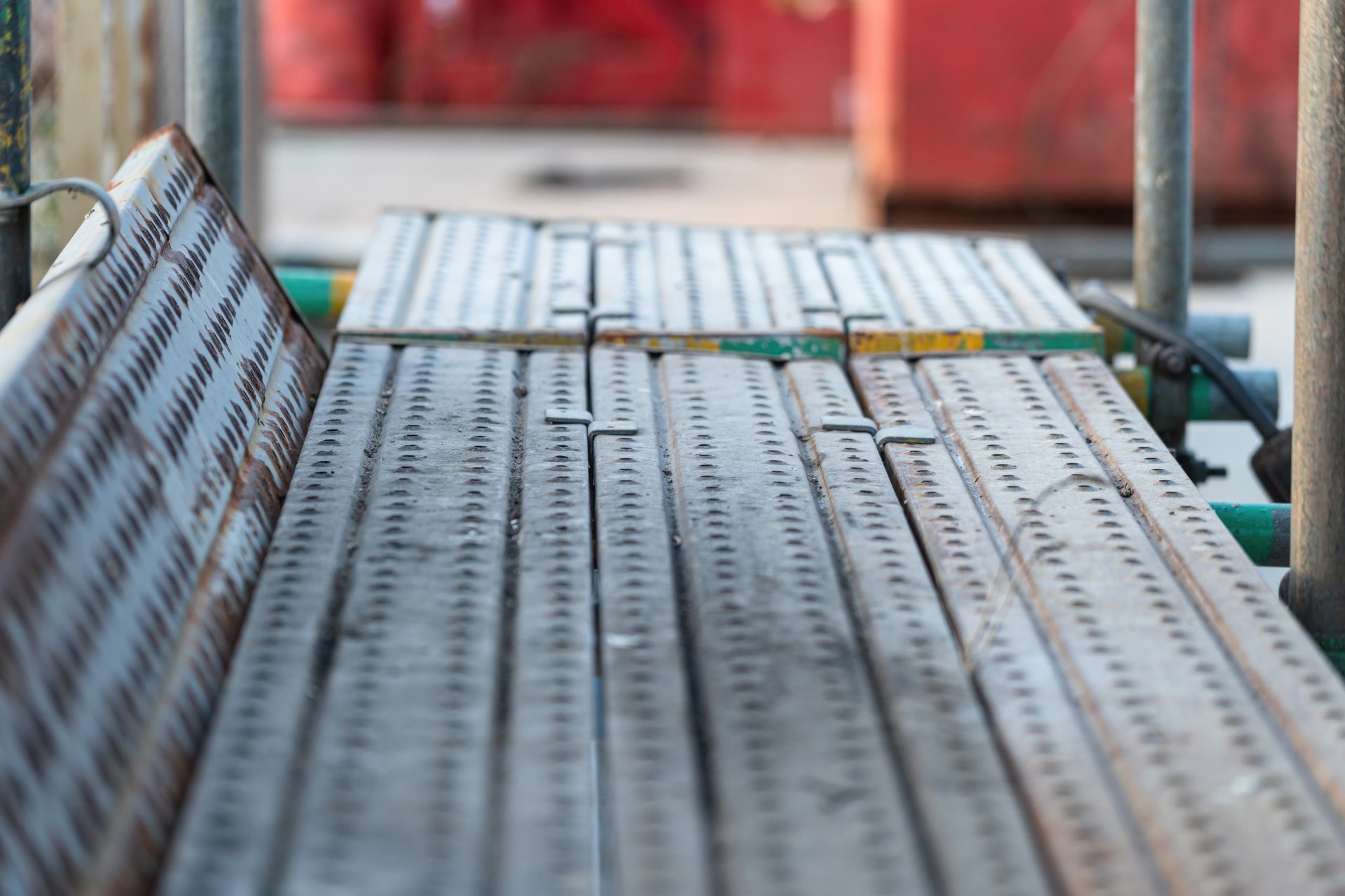
Construction
scaffolding pipe for construction
- Operating condition:
- General access scaffolding on new-build sites, with repeated assembly, dismantling and re-use across phases.
- Risk:
- Tube re-used across phases is inspected and maintained against a regime, and a tube whose product standard was never fixed cannot be judged against one.
- Specification implication:
- Fix the product standard and dimensions at enquiry, so the tube can be checked consistently each time it returns to the rack.
Applies where: Applies where the construction operating pattern genuinely changes the tube decision — not merely because the site is a construction site.
Open the application routeOil & gas shutdown
oil and gas scaffolding tube supplier
- Operating condition:
- Short, intensive shutdown windows in a controlled industrial atmosphere, with inspection and access constraints.
- Risk:
- Tube arriving without the agreed document set delays access work that has no slack in the schedule.
- Specification implication:
- Agree the certificate, dimensional record and finish evidence before dispatch, because there is no time to resolve them on site.
Applies where: Applies where the shutdown's document and inspection regime changes what has to be evidenced.
Open the application routeShipyard
shipyard scaffolding tube supplier
- Operating condition:
- Marine atmosphere with high chloride exposure, and re-use across build stages in confined spaces.
- Risk:
- Corrosion performance in a marine environment is decided by the tube's finish and the maintenance regime, not by the product name.
- Specification implication:
- State the exposure and service expectation so the finish requirement can be set and evidenced against it.
Applies where: Applies where marine exposure materially changes the finish requirement.
Open the application routeGCC destination planning
Scaffolding pipe routes across the GCC
One card per Scaffolding Pipes market page. Each asks for the destination, the importer and document context, the trade term and the verification the route needs. No office, stock, clearance capability or delivery time is claimed anywhere on this page.

United Arab Emirates
scaffolding pipe supplier UAE
Domestic supply with Dubai-based coordination.
Name the delivery emirate or port and the coupler system in use. Domestic routes are coordinated from the Dubai base against the agreed tube specification and finish.
Plan the destination inputs
Saudi Arabia
scaffolding pipe supplier Saudi Arabia
Technical submittal and document scope led.
Agree the tube standard and revision, the finish requirement and the document set before release, and name the port or inland destination on the enquiry.
Plan the destination inputs
Qatar
scaffolding pipe supplier Qatar
Approval sequence and importer context.
Confirm the importer's document and classification context, the named port, and the approval sequence before the quotation is finalised.
Plan the destination inputs
Kuwait
scaffolding pipe supplier Kuwait
Project-based supply with defined delivery windows.
State the tube specification, finish requirement and quantity basis, and tie the shipment to the named destination and required window.
Plan the destination inputs
Bahrain
scaffolding pipe supplier Bahrain
Industrial supply and re-export documentation.
Confirm the document set, the named place and the importer's requirements before dispatch, since industrial routes depend on accurate paperwork.
Plan the destination inputs
Oman
scaffolding pipe supplier Oman
Port-oriented supply with onward delivery planning.
State the port or inland delivery place and the Incoterm rule with its named place, and align the finish requirement with the exposure at the destination.
Plan the destination inputsCommercial inputs
What changes the offer
Every row below is an input that moves the quotation. Price, stock, origin, lead time, freight and delivery date all remain quotation-dependent — this section explains which buyer inputs change the offer rather than inventing live commercial data.
| Quotation input | Why it changes the offer | Buyer decision | RFQ field |
|---|---|---|---|
| Tube standard & revision | The governing document, not a product name | Buyer cites the standard and revision | Standard field |
| Grade / designation | One input, set independently of the standard | Buyer states the designation in full | Grade field |
| OD, wall & tolerance basis | Drives mass, stiffness and coupler fit | Buyer names OD, wall and tolerance bases | Dimension field |
| Length & end condition | Cut length and end treatment change handling and packing | Buyer states length, tolerance and end condition | Length field |
| Finish | Bare or coated, with the standard that applies | Buyer states the finish requirement | Finish field |
| Coupler family | The interface the tube has to suit | Buyer names the coupler system | Coupler field |
| Quantity & unit basis | Pieces, lengths or tonnes — the basis is stated with the figure | Buyer confirms the unit basis | Quantity field |
| Packing & bundle arrangement | Bundle weight and lifting points change the handling operation | Buyer confirms bundle weight and marking | Packing field |
| Named port or place | Routing and vessel schedule are quotation-dependent | Buyer names the port, terminal or inland place | Destination field |
| Incoterm 2020 rule | The rule and its named place are one term, not two | Buyer chooses the rule and named place | Incoterm field |
| Payment & documentary terms | Incoterms allocate delivery cost and risk, not payment | Buyer states instrument and timing separately | Payment field |
| Requested delivery window | Lead time is quotation-dependent and never asserted here | Buyer states the window required | Date field |
| Inspection & document scope | Destination and project requirements decide the paper set | Buyer lists each document and its issuer | Document matrix |
Incoterms note: the rule and its named place are one term, not two. An Incoterm allocates delivery cost and risk between the parties; it does not allocate payment terms, and it does not decide duty or clearance. State the rule with its named port or place, and keep payment terms in their own field.
Related technical resources
Where this decision continues
The two dimension references this specification decision actually uses — how nominal sizes are read, and how outside diameter, wall and length resolve together. These are verification resources, not a link directory.
scaffolding tube sizes
The size reference for confirming which nominal diameters the coupler systems are built around.
Open the referencescaffolding pipe dimensions
How outside diameter, wall and length are read together, and why the tolerance basis travels with each.
Open the referenceExpert insight
Does selecting a steel tube grade by itself prove suitability for a working scaffold?
A system-versus-component scope comparison: use the public scope of the scaffold performance standard to separate design obligations from a material description.
Two different documents are often treated as one on a scaffold tube enquiry. The first describes the tube you buy. The second describes the scaffold you build with it. Choosing a grade answers the first and says nothing about the second.
Method. Use the public scope of BS EN 12811-1 to separate scaffold performance and design obligations from component material descriptions.
What the source establishes. BS EN 12811-1 sets performance and general design requirements for access and working scaffolds. That subject matter is a whole system — its configuration, performance and general design — and is therefore materially broader than choosing a steel tube grade.
What it does not establish. It does not replace the product standard for the loose tube. Final scaffold design and site acceptance also remain project- and jurisdiction-specific, so nothing here approves a design or pre-empts a site decision.
The practical consequence is that a tube grade cannot carry the scaffold question on its own. A grade establishes a strength basis within a product standard; it does not show that the tube was made to a scaffold-tube standard, at the dimensions the coupler needs, with the finish the exposure requires. Those are product questions, and they are answered by the product standard, the dimensions and the finish — not by the grade.
The reverse confusion costs more. Where a scaffold performance standard is cited as if it evidenced the loose tube, an enquiry can look thoroughly specified while the actual tube requirement is still open. Keeping the two as separate gates — one for the tube as a product, one for the scaffold as a system — is what prevents either document being used to prove the other.
Buyer implication. Keep tube compliance and scaffold-system design as two separate acceptance gates in the RFQ and the submittal workflow.
BSI Knowledge — BS EN 12811-1:2003, Scaffolds — Performance requirements and general design
- Authority
- BSI Knowledge — British Standards Institution
- Reference
- bsigroup.com — BS EN 12811-1:2003
- Scope
- BS EN 12811-1 sets performance and general design requirements for access and working scaffolds and is materially broader than choosing a steel tube grade.
- Limitations
- It does not replace the product standard for the loose tube. Final scaffold design and site acceptance remain project- and jurisdiction-specific.
- Information date
- 27 September 2026
Buyer advantages
What separating tube compliance from design approval changes
Each row is a real failure mode from a scaffold tube purchase, mapped to the control that closes it and the procurement outcome that follows.
A grade mistaken for a scaffold-tube specification
Evidence: The product standard and revision are held as their own field, separate from the grade, so the enquiry rests on a document rather than on a designation.
Outcome: A tube requirement that can be cited and quoted against.
A generic steel-tube enquiry treated as complete
Evidence: The compliance gate checks the scaffold-specific inputs — standard, dimensions, tolerance bases, finish and coupler family — and flags each one that is missing.
Outcome: Enquiries that reach review already carrying what the tube decision needs.
The product standard and the scaffold design standard run together
Evidence: The two are named as separate acceptance gates, each with its own document and reviewer, so neither is used to evidence the other.
Outcome: A submittal workflow where tube compliance and design approval do not cancel each other out.
Coupler interface presumed from the nominal size
Evidence: The coupler family and its stated size range are brought together with the toleranced tube dimensions as an explicit check.
Outcome: Interface compatibility confirmed instead of discovered on assembly.
Documents requested without a decided scope
Evidence: The certificate, dimensional record, finish record and inspection evidence are listed separately with their issuer and stage.
Outcome: A document set agreed before release rather than reconstructed at delivery.
From enquiry to delivery
Route-aware workflow for a scaffold tube order
Seven stages. Each states the buyer input it needs, the role that owns it, the evidence it produces, the risk it closes and the next action. No timing is promised at any stage, and no named individual is invented.
- Stage 01
Enquiry
Owner: Buyer / procurement
- Buyer input
- Project specification, tube standard and revision, grade, OD, wall and length with their tolerance bases.
- Evidence / output
- A tube specification complete enough to be quoted against.
- Risk it closes
- Suppliers quoting different tubes under a reference that looked specific.
- Next action
- Name the standard, revision and dimensions before anything else.
- Stage 02
Compliance gate check
Owner: Technical reviewer
- Buyer input
- The scaffold-specific inputs the enquiry must carry: dimensions, tolerance bases, finish and coupler family.
- Evidence / output
- A completeness position that separates unknown inputs from invalid ones.
- Risk it closes
- A generic steel-tube enquiry treated as sufficient for scaffold use.
- Next action
- Close every flagged field before the enquiry is released.
- Stage 03
Interface and finish check
Owner: Technical reviewer / system supplier
- Buyer input
- The coupler family and its size range against the toleranced tube; the finish against the service conditions.
- Evidence / output
- An interface and finish position that is confirmed rather than presumed.
- Risk it closes
- A coupler assumed to suit the nominal size, and a finish assumed to suit the exposure.
- Next action
- Confirm the coupler size range and state the finish requirement.
- Stage 04
Evidence and inspection
Owner: Buyer, with the named body
- Buyer input
- The certificate, dimensional record, finish record and inspection evidence the project requires.
- Evidence / output
- A named document set with each issuer and each stage identified.
- Risk it closes
- A certificate assumed rather than requested, discovered when it is needed.
- Next action
- List each document against the party who issues it and the stage it is due.
- Stage 05
Commercial quotation
Owner: Commercial department
- Buyer input
- Incoterm 2020 rule with its named place, quantity basis, packing and destination.
- Evidence / output
- A quotation request on a stated basis — price on request.
- Risk it closes
- A cost difference read as a commercial difference when the offers carry different obligations.
- Next action
- Hand the qualified RFQ to the Scaffolding Pipes enquiry form.
- Stage 06
Packing and dispatch
Owner: Supplier / carrier
- Buyer input
- Bundle arrangement, lifting points, marking convention and load-out sequence.
- Evidence / output
- Packing and handling captured so they can be quoted rather than assumed.
- Risk it closes
- Tube bundled without a handling basis, then disputed on site.
- Next action
- Confirm packing and marking against the destination requirement.
- Stage 07
Delivery and document handoff
Owner: Buyer / importer
- Buyer input
- Confirmed named place, delivery window and the destination papers.
- Evidence / output
- A document handoff at the buyer's end, reconciled against the requirement.
- Risk it closes
- Clearance obligation assumed to sit with the supplier when it does not.
- Next action
- Confirm the named place and the document set with the importer before dispatch.
Buyer FAQ
Post-decision questions on steel scaffolding tube
Procurement-specific answers for this product type. Definitions already settled above are not repeated here, and the visible answers match the FAQ schema exactly.
Does choosing a tube grade prove the tube is suitable for a scaffold?
No. A grade designates a strength basis within a product standard; it says nothing about whether the tube is made to a scaffold-tube standard, at the right dimensions, with the right end condition and finish. Scaffold suitability is settled by the governing scaffold-tube standard and its revision, the dimensions, and the coupler interface — with the grade as one input among them, not as the proof.
What is the difference between the tube standard and the scaffold design standard?
They are two separate acceptance gates. The product standard governs the loose tube you buy — its material, dimensions and tolerances. A scaffold design standard sets performance and general design requirements for the erected access and working scaffold. Meeting one does not demonstrate the other, so the submittal workflow should carry both: tube compliance as a product question, scaffold design and site acceptance as a project question.
Can a generic steel-tube enquiry be used for scaffold tube?
Not without adding the product-specific data. A generic enquiry usually fixes a material grade and a size, and stops there. Scaffold use also depends on the scaffold-tube standard and revision, the outside diameter and wall with their tolerance bases, the length, the finish, and the coupler family the tube has to interface with. The compliance gate on this page flags exactly which of those are missing before the enquiry is treated as complete.
Which documents should a scaffold tube order carry?
The mill test certificate or inspection certificate naming the product standard, revision and grade; a dimensional record for outside diameter, wall and length against their tolerance bases; and the inspection or test evidence the project requires, with the body, scope and stage named where independent inspection applies. These evidence the tube as a product. They do not evidence the scaffold design, which is a separate submittal.
How does the coupler interface affect what I specify?
The coupler grips the tube, so the interface depends on the tube's outside diameter and wall — and on the coupler's own stated size range. Where the project uses a proprietary system, that system decides the interface. Confirm the coupler family and its size range against the tube dimensions rather than assuming a nominal size covers the fit, and state the coupler family on the enquiry.
How do I make two scaffold tube offers comparable?
Put them on one line item. State the product standard and revision, the grade, the outside diameter and wall with their tolerance bases, the length, the finish, the coupler family, the inspection and document scope, the quantity with its unit basis, the named destination and the Incoterm with its named place. Offers that differ on any of those are not price differences — they are different products, and the comparison only holds once the line item is identical.
Qualified RFQ
Send a reviewable scaffold tube RFQ
Your enquiry is ready for review when the tube standard and revision, grade, dimensions, finish, coupler family, testing scope, quantity and destination carry values. Copy the payload or complete the form — either way the brief travels with it.
Your RFQ payload
Built from the fields above. Copy it to your records, or send it and the brief is attached automatically.
Product / entity: Steel Scaffolding Tube
Project specification: not supplied — confirm on RFQ
Standard + revision: to confirm on RFQ
Grade / designation: to confirm on RFQ
Outside diameter + tolerance: to confirm on RFQ
Wall thickness + tolerance: to confirm on RFQ
Length + tolerance: to confirm on RFQ
Finish / coating: to confirm on RFQ
Coupler family: to confirm on RFQ
Testing / inspection documents: to confirm on RFQ
Quantity + unit basis: to confirm on RFQ
Destination / named place: to confirm on RFQ
Incoterm + version: Incoterms 2020 — named place to be stated by buyer
Required date: to be stated by buyer
Acceptance notes: Tube compliance and scaffold-system design are separate acceptance gates. No scaffold design, load capacity, price, stock or lead time is asserted by this page.
Send it to the Scaffolding Pipes team
The commercial department reviews a complete enquiry. No field is inferred on your behalf, and no price, stock position, lead time or design approval is stated by this page.