
LSAW Steel Pipe
LSAW Steel Pipe Supplier
LSAW Steel Pipe is a manufacturing-route choice, not a complete specification. Confirm the governing standard permits the route, then state grade/material, size and wall, service, testing, documents, quantity and destination before requesting a quote.
Free, no-obligation specification review — route, grade and document fit
Information current as of
Fit, Alternatives & Selection Logic
When the LSAW route fits, when it does not, and what to compare
LSAW Steel Pipe is a manufacturing-route choice, not a complete specification. Confirm the governing standard permits the longitudinal SAW seam, then compare the route against the service and the closest related alternatives before requesting a quote.
Seamless Steel Pipe
When it fits
Pressure-critical duty where the design code presumes a seamless-route standard (e.g. A106) or where seamless is mandated for the service class.
Trade-off
No longitudinal or spiral seam to inspect, but typically a smaller OD envelope and a different governing-standard and size basis than LSAW.
ERW Steel Pipe
When it fits
A governing standard that permits electric-resistance welding (A53 Type E, A135, API 5L HFW) and where the size and wall fit the ERW envelope.
Trade-off
A specific welded sub-route with a different seam-forming process — if the buyer only needs 'welded', selecting between LSAW and ERW is a process decision that must still fit service, standard and size.
Steel Pipes Hub
When it fits
Broader comparison across seamless, ERW, LSAW/SAW, welded and hollow sections by standards, grades and sizes.
Trade-off
The owning hub for all pipe routes — return here when the specification decision widens.
Fit Comparator + RFQ Summary
Check whether the LSAW route is permitted, then prepare the RFQ
Test the requested manufacturing route against your governing standard and service, compare the closest alternatives, and produce a copyable RFQ summary — all without leaving this page.
Route inputs
Route fit
Governing standard required
Select the governing standard and edition — the LSAW route cannot be validated against a project or design basis without it.
Nothing is transmitted yet. When ready, send this summary to the commercial department for a confirmed quotation.
Standards, Grades, Dimensions & Service Conditions
Decision-grade inputs for an LSAW pipe specification
The tables below state what each input governs, the source to verify it against, the condition it applies under, and the RFQ field it feeds. Numeric values are confirmed against the governing standard at quotation — none are invented here.
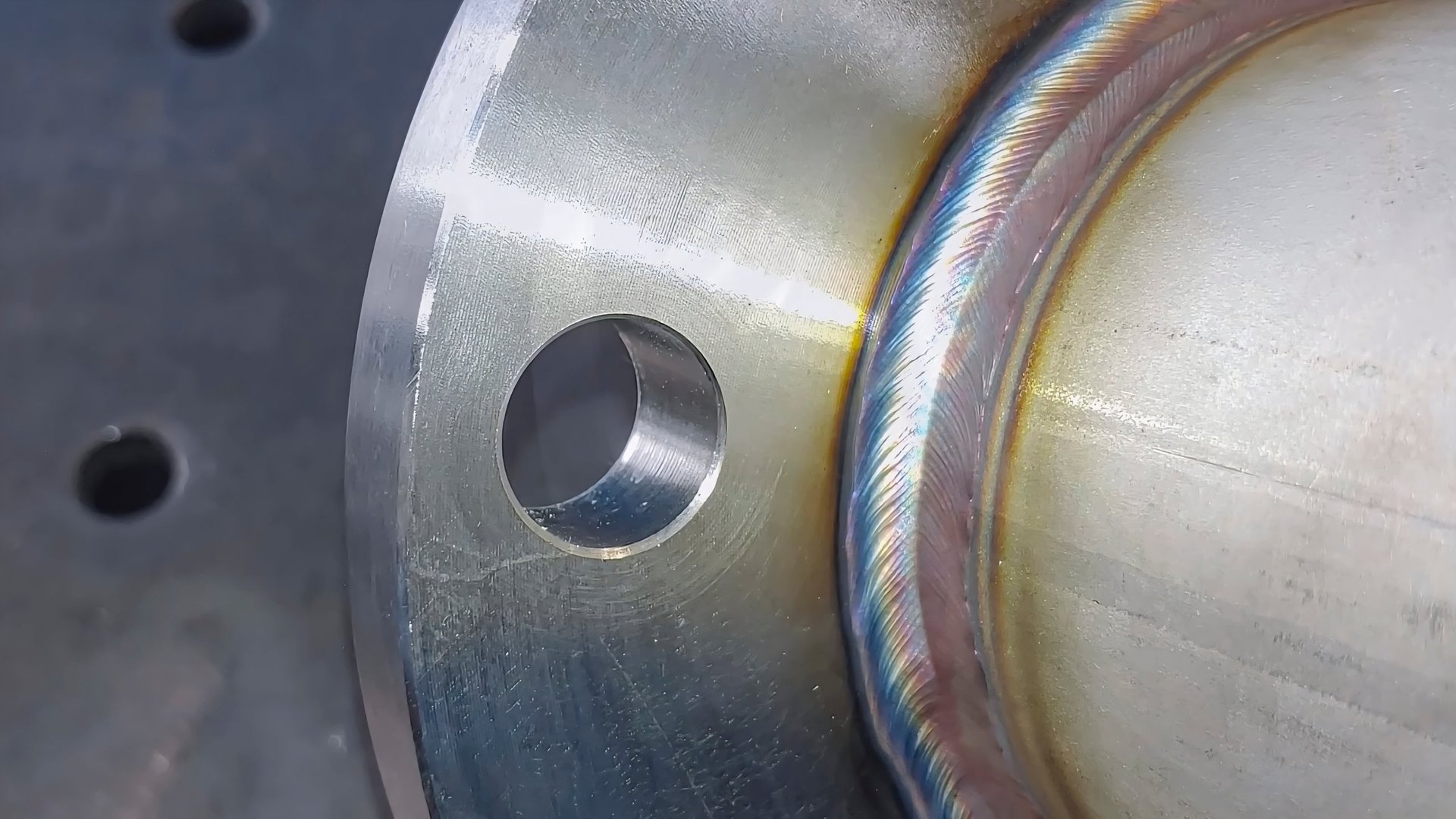
Grade / standard decision matrix
| Standard / basis | Applicability / limitation | Verify against | RFQ field / next action |
|---|---|---|---|
| API 5L (PSL1 / PSL2) | Line-pipe service; a longitudinal SAW seam is permitted subject to PSL and process controls. | API Spec 5L, 47th edition — verify PSL, grade and seam. | State PSL, grade and seam type. |
| ISO 3183 | Petroleum pipeline transportation systems — line-pipe service parallel to API 5L. | ISO 3183 current edition — confirm class and grade mapping. | Confirm grade and class. |
| CSA Z245.1 | Steel pipe for oil and gas transmission — coverage of longitudinal SAW pipe. | CSA Z245.1 class and edition — verify LSAW coverage and class. | State class and grade. |
| Structural / pressure standards | Large-diameter welded pipe for structural or general pressure duty where a longitudinal SAW seam is permitted. | The governing structural or pressure standard and the project design code. | State the governing standard and design code. |
| ASTM A106 / A53 | Not a valid LSAW governing basis — A106 is seamless-only; A53 permits ERW/furnace-butt, not LSAW. | Route per the actual standard; carry LSAW under a standard that permits it. | Correct the governing standard. |
Evidence warning: grade, chemistry and mechanical values are confirmed against the governing standard/edition at quotation. No unsupported numeric value is published here.
Size & wall decision matrix
| Dimension input | What it governs | Verify against | RFQ field / next action |
|---|---|---|---|
| NPS / DN or OD | The nominal pipe size or actual outside diameter for the LSAW envelope. | The governing standard and the project drawings. | State NPS/DN or OD in declared units. |
| Wall / schedule | Wall thickness and resulting pressure-holding and unit-weight basis. | The governing standard's schedule/wall table — confirm at quotation. | State schedule or wall thickness with units. |
| Length & end finish | Fixed, random or single random length, and plain or beveled ends. | The order and the project erection requirements. | State length and end finish. |
| Unit weight | Per-metre or per-total tonnage basis for logistics and commercial planning. | Calculated from declared OD, wall and length using the governing standard. | State quantity by length and implied tonnage. |
Evidence warning: dimensions, wall and unit weight are confirmed against the governing standard/edition at quotation. Published values require an authoritative current source with stated conditions.
Manufacturing route
LSAW is a longitudinal submerged-arc weld — the route must be permitted under the governing standard, not assumed from the process name.
Service & design code
Grade, wall and inspection follow the service class and project design code, which remain controlling over any route label.
Properties & traceability
Chemistry and mechanical properties come from the governing standard and the mill certificate against the delivered lot — confirmed at quotation.
Quality, Testing & Documentation
The document and inspection matrix for an LSAW pipe order
State what you request, what it verifies, when it is required, and what remains quotation- or design-code-dependent. No unsupported certificate, stock, lead-time or mill claim is made here.
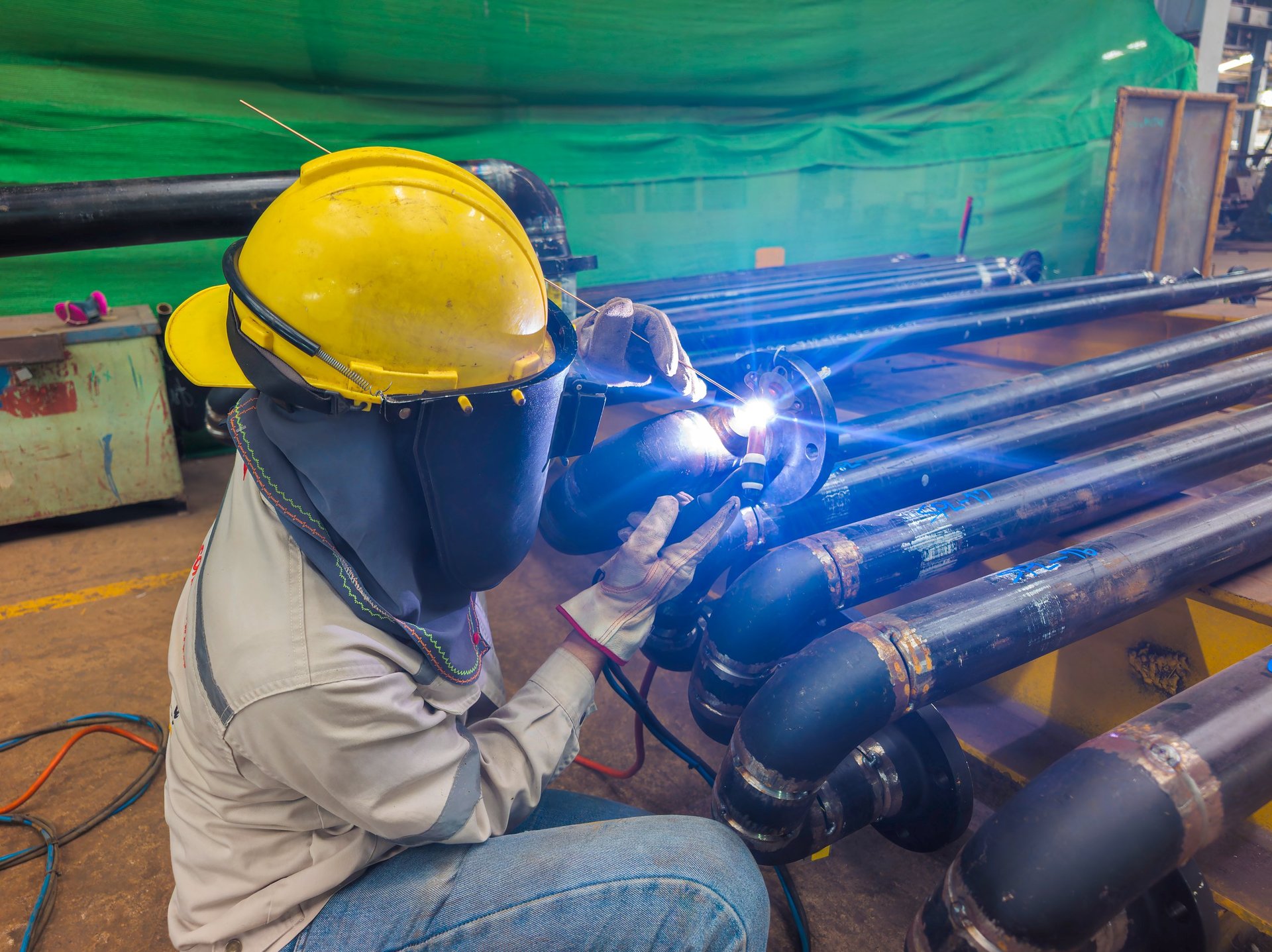
| Item | What it verifies | When required | Status / next action |
|---|---|---|---|
| Mill Test Certificate (MTC / EN 10204 3.1) | Heat identity, chemical composition and mechanical properties of the delivered lot. | Usually for pipeline, line, and project-certified LSAW pipe. | Request MTC at RFQ; content confirmed against the delivered lot. |
| Hydrostatic test certificate | Pipe body and the longitudinal SAW seam meet the standard's pressure-test requirement. | When the standard or design code requires a hydrostatic test. | State the test requirement; certificate issued on test. |
| Seam weld NDE / inspection reports | Integrity of the longitudinal SAW seam by the required NDE/NDT method and acceptance level. | When the standard, PSL/class or project code requires seam inspection. | State the NDE method and acceptance level. |
| Type / process-route confirmation | That the pipe is produced by the declared longitudinal submerged-arc-welded route permitted under the standard. | Always — LSAW is a route claim that must match the standard's permitted seams. | Confirm route and PSL/class at RFQ. |
| Inspection & third-party witness | Third-party or purchaser inspection hold points. | When the project specification requires witnessed inspection. | Confirm the hold points and witness party. |
Evidence gate
Certificates are issued against the actual delivered lot and test, not claimed in advance.
Quotation-dependent
Test scope and document requirements are fixed at quotation from the governing standard and your service.
No invented certificates
No mill, grade or certification claim is made without URL-specific approved evidence.
Applications & Industry Paths
Connect the operating requirement to the LSAW-pipe specification
Each application below maps the operating condition to product, grade and standard with the rationales, fit limits and use conditions that change the specification decision.
Oil & Gas / Line Pipe
Operating concern
Longitudinal submerged-arc-welded line pipe under API 5L or ISO 3183 subject to PSL and seam inspection.
Fit limit
Confirm the PSL, seam, grade and inspection hold points against the line class and design code.
Water Transmission
Operating concern
Large-diameter welded pipe for water transmission and general pressure service.
Fit limit
Confirm the governing standard, internal/external coating and wall for the design pressure.
Construction & Infrastructure
Operating concern
Structural large-diameter welded pipe in frames, piling and infrastructure duty.
Fit limit
Confirm structural service, governing standard and any seam inspection required by the design code.
Energy & Utilities
Operating concern
Utility and welded transmission lines in energy infrastructure.
Fit limit
Confirm the standard, PSL/class and inspection hold points.
Pipeline Projects
Operating concern
Transmission and gathering pipeline duty where a longitudinal SAW seam is specified.
Fit limit
Confirm the line-pipe standard/edition, grade, seam type and NDE/NDT scope with the pipeline engineer.
GCC Markets & Destination Planning
Plan the destination and documents for an LSAW pipe order
Destination, documents, port or delivery-location inputs, Incoterm questions and RFQ implications for each GCC market. No served-market, branch or guaranteed-delivery claim is made without approved evidence.

United Arab Emirates
HubDomestic project coordination and documentation from our Dubai base.
Reconcile LSAW pipe NPS, wall and standard against drawings and plan domestic delivery to site or fabricator. Confirm the commercial terms and destination in the RFQ.
Plan destination
Saudi Arabia
Cross-border project quantities and documentation.
Align LSAW certificates and line schedules to project hold points and plan shipment of project quantities. Confirm destination port or delivery line.
Plan destination
Qatar
Project specification and delivery planning.
Confirm the governing standard, inspection scope and delivery base so the quotation and export documents match the project requirement.
Plan destination
Kuwait
Specification and import documentation planning.
State the destination and Incoterm so the document and delivery plan can be aligned to the order.
Plan destination
Bahrain
Project-grade specification and logistics coordination.
Confirm contract terms, certificates and delivery base before quotation to keep the specification and logistics aligned.
Plan destination
Oman
Infrastructure and project supply planning.
Provide the destination, required documents and delivery date so the quotation can be fixed against the project basis.
Plan destinationCommercial, Logistics & Availability Inputs
Fix the quotation inputs for LSAW pipe
Packaging, documents, delivery variables, Incoterms and unknowns for a large-diameter LSAW pipe order. No price, stock, lead-time, origin, port or delivery claim is made in advance.
Specification lock
Standard, grade, size, wall/schedule and quantity confirmed against the order.
Document set
MTC and inspection reports matched to the shipment before loading.
Bundling & coating
End finish, coating and bundling stated up front for large-diameter pipe.
Delivery & Incoterm
Incoterm, port or delivery line and window agreed per order.
Contact commercial department
Send your LSAW pipe enquiry to the commercial team for availability and pricing confirmation from your full specification.
Availability, pricing, origin and lead time are confirmed only at quotation from your full specification.
Request a quote for LSAW Steel PipeAlternatives & Technical Resources
Related pages and resources for the LSAW decision
Decision-useful alternatives and resources arranged by what they resolve. Where a specific technical chart or route is not yet listed, it is noted as pending rather than linked to an inactive destination.
Steel Pipes
All pipe routes compared — seamless, ERW, LSAW, welded, hollow and line.
Seamless Steel Pipe
The closest manufacturing-route alternative for pressure-critical duty.
ERW Steel Pipe
A specific electric-resistance-welded sub-route compared with LSAW.
Welded Steel Pipe
The wider welded-route family that includes LSAW among its permitted seams.
Dimension & schedule verification
Steel-pipe dimensional and schedule charts are listed on the steel-pipe hub. These charts will be surfaced here once their destination routes are published.
Expert Insight
What to verify when specifying LSAW / SAWL line pipe
A source-backed decision aid grounded in the governing line-pipe standard. This is a decision aid, not a profile or endorsement.
Decision question — what should a buyer verify when considering LSAW/SAWL pipe for line-pipe service?
Use the governing line-pipe standard as the scope checkpoint: require the RFQ to state the product specification level, grade, dimensions, manufacturing route, inspection/testing, marking and traceability requirements where applicable. LSAW/SAWL suitability cannot be inferred from the process name alone — the project design code, service category and purchaser supplementary requirements remain controlling.
Primary source: API Specification 5L, 47th Edition — Line Pipe
api.org — API Spec 5L, 47th edition
Information date: published 2026-06; checked
Limitation: no claim of API licensing, monogram or stock; restricted standards tables are not reproduced here.
Buyer implication: for LSAW procurement, tie the process to the exact line-pipe standard/edition, grade/PSL, dimensions, tests and traceability requirements before quotation.
Advantages
Why buyers choose longitudinal seam-welded pipe
The position of LSAW within the welded-tubular family — stated as capability, not as a claim over other products.
Selecting by the route name alone
The comparator ties the LSAW route to the governing standard and permits/excludes by what the standard allows.
An RFQ that names the governing standard and seam, not just the word 'LSAW'.
Assuming pressure capability from the process name
The comparator flags standards that do not permit the LSAW route and keeps pressure statements quotation- and design-code-dependent.
No unsupported pressure claim is carried into the quotation.
Omitting weld / seam inspection needs
The inspection section surfaces MTC, hydrostatic test and seam NDE as explicit inputs for the longitudinal SAW seam.
A complete inspection and document set in the RFQ.
Accepting unverified stock, mill or certification claims
Availability, certification and lead time are confirmed only at quotation from your full spec.
An evidence-aware handoff to technical/commercial review.
Mechanical properties vary with grade, wall thickness, size and manufacturing route — confirm the applicable standard and requirement against your project in the .
Procurement journey
From empty requirement to a qualified LSAW RFQ
A route-aware five-step path for the buyer and their engineer — each step states the decision, the input and the risk it de-risks.
Choose the governing standard & PSL/class
Owner: Buyer + engineerConfirm the line-pipe or structural standard permits a longitudinal SAW seam and the PSL/class you require.
Input: Standard/edition, PSL/class, seam type, service
Output: Route-conflict flag or permitted route
Risk it de-risks: Choosing by process name alone
Next: Move to grade, size, wall
Specify grade, size, wall & quantity
Owner: BuyerState the grade, NPS/DN, wall/schedule, length and quantity against the governing standard.
Input: Grade, NPS/OD, schedule/wall, quantity
Output: Dimensional and grade basis
Risk it de-risks: Missing wall or grade
Next: Add inspection and documents
Add inspection, testing & documents
Owner: Buyer + inspectorState the MTC, hydrostatic test and longitudinal seam NDE the service or design code requires.
Input: Test and document requirements
Output: Inspection and document set
Risk it de-risks: Omitting seam NDE
Next: Set commercial terms
Confirm destination, Incoterm & delivery
Owner: Buyer + commercialFix destination, Incoterm 2020 rule, and required delivery date.
Input: Destination, Incoterm, date
Output: Commercial and logistics basis
Risk it de-risks: Unstated Incoterm or port
Next: Send the qualified RFQ
Request the quote
Owner: Commercial departmentSend the complete RFQ summary to the commercial department for availability and pricing confirmation.
Input: Qualified RFQ summary
Output: Confirmed availability and pricing
Risk it de-risks: Unverified stock claim
Next: Technical review
FAQs
LSAW Steel Pipe — buyer questions, answered
Straightforward answers for procurement and engineering. Each answer is duplicated in the page's FAQ structured data.
When is LSAW Steel Pipe an appropriate manufacturing route for the specified service?
The LSAW (longitudinal submerged-arc-welded) route is appropriate when the governing standard and the project design code permit a longitudinal SAW seam for the service, the size and wall fit the large-diameter envelope, and the seam, grade, PSL/class and inspection scope are specified. Whether it is permitted is a standard- and engineering-dependent decision; state the standard and seam and confirm the design code before committing.
Which standards can govern LSAW Steel Pipe, and how do I avoid assuming compatibility?
LSAW/SAWL pipe is commonly governed by API 5L or ISO 3183 for line-pipe service, and by structural/pressure standards where a longitudinal SAW seam is permitted. ASTM A106 governs the seamless route and A53 permits welded construction by ERW/furnace-butt rather than LSAW. Compatibility is not implied by the word 'LSAW' — confirm the exact standard and edition and check that the grade and seam are valid under that standard.
What inspection or test information should be stated for LSAW Steel Pipe?
State the required documents and tests explicitly: the mill test certificate (MTC), hydrostatic test, and seam-weld inspection such as NDE/NDT of the longitudinal SAW seam. The inspection holds and test scope are driven by the governing standard, the PSL/class and the project design code — so the exact requirement is quotation- and project-dependent rather than assumed.
How should I compare LSAW Steel Pipe with the closest seamless or welded alternative?
Compare on the inputs the standard controls: governing standard and edition, permitted seam/process, grade, NPS/OD and wall/schedule, service and design-code fit, inspection and document set, and the size envelope. The closest alternatives here are the seamless route (for pressure-critical duty without a welded seam) and the ERW route (a different welded seam-forming process). Compare against a defined service, not generic strength language.
What information is still required before requesting a quote for LSAW Steel Pipe?
A complete RFQ requires: governing standard and edition, grade/material, type/manufacturing route (LSAW), NPS/DN or OD, schedule or wall, length and end finish/coating, quantity, service/application, inspection/testing and documents, destination, Incoterm 2020 rule and required delivery date. Availability and pricing are confirmed at quotation from the full specification.
Request a quote for LSAW Steel Pipe
Send standard, grade, seam, size, quantity, destination and required delivery date — our commercial department confirms availability, delivery and pricing. Price is always on request.
Office 3303, Churchill Executive Tower, Business Bay, Dubai, United Arab Emirates
Monday – Saturday: 8.00 AM – 6.00 PM · Sunday: Closed
Qualified RFQ summary
- Pipe form
- LSAW (longitudinal submerged-arc-welded)
- Standard
- —
- Seam / process
- —
- Grade / material
- —
- Size / NPS
- —
- Schedule / wall
- —
- Service / application
- —
- Quantity
- —
- Destination
- —
- Required delivery
- —
Price, stock, lead time and certification are confirmed only at quotation from your full specification. No unsupported claims are made in advance.
Request a Quote
Send your LSAW Steel Pipe requirement, stay on this page
The Request a Quote buttons above scroll to this form — nothing takes you off the page. Fill in your full specification and our commercial department confirms availability, delivery and pricing.
Office 3303, Churchill Executive Tower, Business Bay, Dubai, United Arab Emirates
Monday – Saturday: 8.00 AM – 6.00 PM · Sunday: Closed
Price is always on request. Availability, delivery and certification are confirmed at quotation from your full specification.