
Steel Plate · Grade
ASTM A283 Grade C Plate
A Grade C plate enquiry is settled by the standard scope, the grade, the delivery condition, the dimensions, the service conditions, the testing and the documents — not by the grade name on its own.
Send the governing designation with its edition, Grade C, the thickness, width and length, the required delivery condition, any separate toughness or impact-testing requirement, the quantity, the destination and the inspection documents the project requires, so the enquiry can be checked against the intended service before anything is quoted.
This is a structural-quality plate specification. Where the design duty is pressure-retaining, confirm the governing standard before the enquiry is placed — the grade name alone will not tell you.
Price on request · Availability confirmed against the live enquiry
Selection
Checking Grade C against the actual requirement
Work from the governing specification inward. This standard covers structural-quality carbon-steel plate in more than one grade, and Grade C is one point within that set.
Establish which standard actually governs the plate
A283 is a structural-quality carbon-steel plate specification, and it is not the specification a pressure-retaining design calls for. Before the grade is compared on anything else, confirm the design code names this standard rather than a pressure-vessel or structural steelwork specification.
Fix the grade inside the specification
The specification covers more than one grade, and each grade carries its own strength basis. Grade C has to be named explicitly — it does not follow from the plate being ordered to the standard, and the neighbouring grades in the same document are not interchangeable with it.
Settle dimensions, condition and testing separately
Thickness, width, length and tolerance basis are one set of inputs. The delivery or heat-treatment condition is another. Any impact or toughness requirement — which for a structural-quality plate is typically a project addition rather than something the base specification provides — is a third. Each is stated on its own line.
Neighbouring grades inside the same document, and plates bought to a different standard altogether, are comparison paths — not automatic substitutes. A higher-strength structural plate or a pressure-vessel plate is only comparable once the strength basis, the condition and the test requirement have been checked against the service.
 Specification and dimension review
First check the specification, then the grade
The most expensive mistake with a structural-quality plate is ordering it correctly and specifying it for the wrong duty. Establish that the design names this standard — and not a pressure-vessel or structural steelwork specification — before comparing grades, dimensions or prices.
Once the specification is confirmed, the grade, the delivery condition and the testing requirements become the inputs that make two offers comparable.
Specification
What to state so acceptance is unambiguous
Each input below is a separate ordering decision. Leaving one open is the usual reason two quotations turn out not to be the same plate.
| Input | What it fixes |
|---|---|
| Designation and edition | The specification the project names, with the edition where the design or the purchaser requires one. This is the document the order will be certified against. |
| Grade | Grade C named explicitly. Its place in the specification fixes the strength basis applied at the ordered thickness — it does not follow from the standard alone, and it is not a synonym for another grade in the same document. |
| Product form | Plate, as distinct from any other product form a similarly worded description might cover. The form is part of the acceptance basis, not an afterthought. |
| Plate thickness, width and length | Finished dimensions as required, in one coherent unit system, with the dimensional basis the project uses. Note any critical fit so tolerance can be checked before quotation. |
| Delivery / heat-treatment condition | Which condition the plate is ordered and supplied in, stated on its own line of the order. Kept apart from any impact or toughness requirement so acceptance is checked against the right figure. |
| Toughness / impact testing | Whether an impact or toughness result is required, at what test temperature and to which acceptance energy, and whether it comes from the specification or from a project addition. For a structural-quality plate this is usually a project requirement — confirm it rather than assuming it is included. |
| Surface, edge and processing | Any requirement on surface condition, edge preparation, cutting, bevelling or marking, and whether that processing is part of the supply scope. |
| Inspection and documents | The certificate type and any additional testing, inspection or third-party witness the purchaser specifies. Agreed at enquiry stage, not assumed from the grade. |
| Quantity and destination | Ordered quantity in plates and mass, the delivery point or port, delivery term and Incoterm with its named place, and the consignee. These drive packing, shipment documents and the commercial basis. |
The delivery or heat-treatment condition and any impact or toughness requirement are recorded separately. Neither one implies the other, and acceptance is checked against each on its own line of the order.
 Plate edge, surface and identification
Specification Check
Check the plate selection against the order
Enter the details the order will actually be placed on. The check flags what is still missing before an enquiry is prepared, so an apparently comparable option is not treated as equivalent.
Leave anything genuinely undecided blank rather than filling it with an assumption — the gap is what the technical review needs to see.
Still to resolve before an enquiry can be checked:
- Intended service / design duty
- Governing standard or specification (with edition)
- Grade or class
- Thickness (mm)
- Quantity
- Destination / delivery point
Copyable summary
ASTM A283 Grade C Plate — specification summary
Service / design duty: — not stated
Standard / specification: — not stated
Grade / class: — not stated
Thickness: — not stated
Width: — not stated
Length: — not stated
Delivery / heat-treatment condition: — not stated
Toughness / impact requirement: — not stated
Surface / edge / processing: — not stated
Quantity: — not stated
Destination: — not stated
Required documents: — not stated

Price, availability, mill origin, lead time and certification are confirmed against the live enquiry.
Verification
Confirming the plate matches the order
Verification follows the purchase specification. Ask for the records the project requires, and match what arrives to what was ordered.
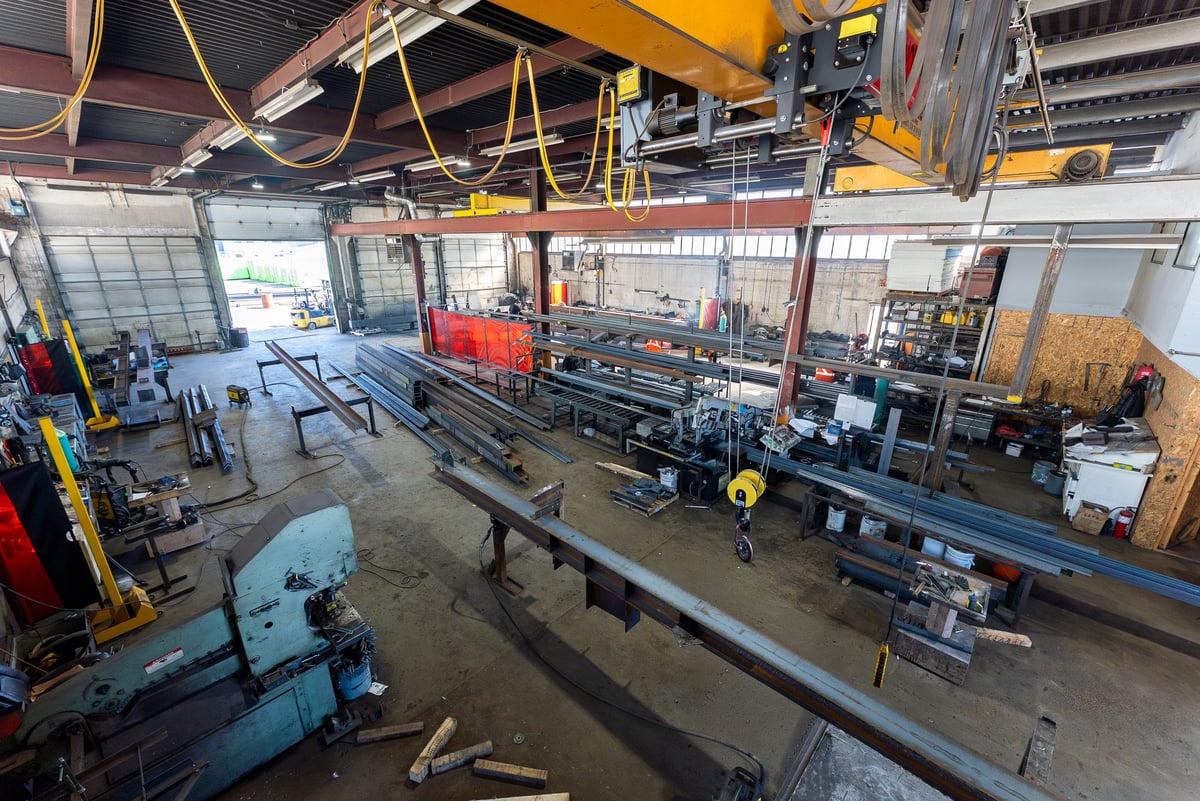 Preparation for fabrication and dispatch
- Match the material identification to the ordered designation and edition, Grade C, heat number, dimensions and delivery condition before the plate is cut — once it is processed, the identification is much harder to reconstruct.
- Keep the delivery condition and any impact or toughness requirement on separate lines of the order and of the certificate review, so acceptance is checked against the right figure on the right document.
- Match the chemical and mechanical evidence to the declared basis rather than to the standard's name, and raise any certificate type or additional test at enquiry stage rather than after delivery.
- Confirm any class approval, third-party inspection or project approval against the actual supply — they follow the order and the works, and are not implied by the grade designation on this page.
Certificates, class approvals and any additional tests are confirmed for the actual supply. Nothing on this page should be read as confirming them for a particular order.
Applications
Where a structural-quality plate is specified
Application fit depends on what the plate has to do in service and how it will be fabricated. The same grade designation can require different toughness, weldability and documentation controls from one duty to the next.
General fabrication and steelwork
Where the plate is bought to be cut, formed and welded into a general structural or fabricated item, and the governing document is the project's steelwork specification rather than a pressure-retaining standard.
View this applicationPressure-retaining service
Follow this path only where the duty genuinely applies. A pressure-retaining design normally calls for a pressure-vessel plate specification, so confirm the governing code before treating a structural-quality plate as in scope.
View this applicationMining and wear duty
Where abrasion and impact, not pressure, set the requirement. Wear duty usually resolves to a different specification and hardness route entirely — treat this as a comparison path, not a match.
View this applicationUse an application path only where the duty actually matches. Two of the paths above exist to help you check that the duty is not the one this specification covers — that check is worth making before the enquiry, not after delivery.
GCC Supply
Delivering into the Gulf
Keep the technical specification unchanged while the destination-specific import path, consignee requirements and shipment documents are checked for the actual order.
 Steel plate — United Arab Emirates
 Steel plate — Saudi Arabia
 Steel plate — Qatar
 Steel plate — Kuwait
 Steel plate — Bahrain
 Steel plate — Oman
Customs classification, conformity requirements and duty treatment follow from the actual goods and destination, and are confirmed for the specific shipment rather than quoted generally.
Technical Note
The purchasing sequence that avoids a costly re-quote
Identify the governing specification and service requirement first, then lock the designation and edition, the grade, the delivery condition, the dimensions, the testing and the documents.
Doing it in that order keeps offers comparable. Working the other way round — collecting quotes against a familiar grade name and trying to reconcile the specifications afterwards — is how two offers that both say “A283 Grade C” turn out to differ in edition, delivery condition, testing or acceptance basis.
Nothing on this page is a material property, a stock position or a certificate. It sets out what an enquiry for this grade has to contain so that what comes back can be checked against the project requirement rather than against a name.
Where a requirement is genuinely still open, leave it open on the enquiry rather than filling it with an assumption. A supplier who can see the gap can tell you what has to be resolved; a supplier given a guess has nothing to check against.
Selection context for this page draws on ASTM International — A283/A283M (information date 2026-10-06). The specification sets the scope for structural-quality carbon-steel plate, and the exact grade and order requirements govern acceptance. This source is used for selection context, not for supplier-specific claims.
- 01
Confirm the governing specification
Establish that the design names this structural-quality plate standard, and state the design duty. If the service is pressure-retaining, that is the point at which the specification is reconsidered.
- 02
Lock designation, edition and grade
Name the specification with its edition and Grade C explicitly, with any project addition the enquiry calls for.
- 03
Fix the delivery condition
State the condition the order is placed on — a separate input from any impact or toughness requirement.
- 04
Confirm dimensions and testing
Thickness, width, length, tolerance basis and unit system, plus whether an impact requirement applies, at what temperature and to which acceptance energy.
- 05
Add quantity, destination and documents
Quantity in plates and mass, delivery point, Incoterm and consignee, plus the certificate type and inspection records the project requires.
- 06
Review processing and commercial terms
Cutting, edge preparation and marking scope, then the commercial terms, before the order is confirmed.
FAQ
Grade C plate sourcing, answered directly
Each answer depends on the project specification and the actual order conditions. Where a requirement is order-specific, it is confirmed against the enquiry rather than assumed here.
Which standard, grade and edition should be stated on the enquiry?
State the specification the project actually names, with its edition where the design or the purchaser requires one, Grade C explicitly, and the product form. The standard on its own does not identify the grade, and the grade does not identify the edition. All three have to be named so the quotation and the mill test certificate can be matched against the plate actually shipped.
Does this grade suit pressure-retaining service?
That is a design-code decision, not a grade-name decision. This specification covers structural-quality carbon-steel plate, which is not the specification a pressure-retaining design normally calls for. If the intended service holds pressure or falls under a pressure equipment code, confirm the specified plate standard with the responsible engineer before the enquiry is placed rather than treating a structural-quality plate as interchangeable with a pressure-vessel plate.
When does toughness or impact testing matter?
These are two separate decisions and should be stated separately. The delivery or heat-treatment condition describes the condition the plate is ordered and supplied in; the impact or toughness requirement sets what the material must demonstrate, typically at a stated test temperature and to a stated acceptance energy. A project can call for one without the other. State both if both apply, and do not assume a named delivery condition implies an impact result.
Which dimensions and tolerances govern acceptance?
Give the required thickness, width and length, keep one coherent unit system, and state the tolerance basis the project uses rather than leaving the supplier to choose one. Plate tolerances are tied to the governing standard and can vary with thickness and product class. Where a fabrication has a critical fit, say so on the enquiry so the tolerance can be checked before quotation rather than discovered after delivery.
What inspection documents are required?
Provide, or ask for, the document set the project requires — typically the material test certificate carrying the chemical and mechanical evidence for the declared basis, heat and lot traceability, and any additional testing, inspection or third-party witness the purchaser specifies. Where a certificate type or an additional test is needed, state it at enquiry stage so it can be scheduled and costed. Nothing on this page should be read as confirming certification for a particular supply.
What destination details are needed for a firm commercial offer?
State the delivery point or port, the required delivery term and Incoterm with its named place, the consignee and any document set the destination requires. Customs classification, conformity requirements and duty treatment follow from the actual goods and the actual destination, so they are confirmed for the specific shipment rather than quoted generally. Availability, price and lead time are likewise confirmed against the live enquiry.
Request a Quote
Provide the standard and edition, Grade C, the intended service, the thickness, width and length, the required delivery condition, any toughness or impact-testing requirement, the quantity, the destination, the documents and any cutting, testing or inspection scope. Price is always on request.
If a requirement is still undecided, state it explicitly. The technical review can then identify what has to be resolved before a commercial offer is finalised.
Office 3303, Churchill Executive Tower, Business Bay, Dubai, United Arab Emirates
Monday – Saturday: 8.00 AM – 6.00 PM · Sunday: Closed
Prefer to send it straight to the steel plate desk?
The specification you enter above travels with your enquiry either way. You can also raise it on the steel plate page itself.