
Steel Sheet · Material Selection
Choose the material family before you name a grade
A sheet enquiry stalls when the substrate and the designation are decided in the same breath. Start with the exposure and the fabrication the sheet has to survive: that settles whether you are on a carbon, alloy or stainless route at all. The grade is then a choice within one family rather than a guess across four.
Send the exposure and the fabrication route — the family and the evidence it needs come back with the quotation. Pricing is on request.
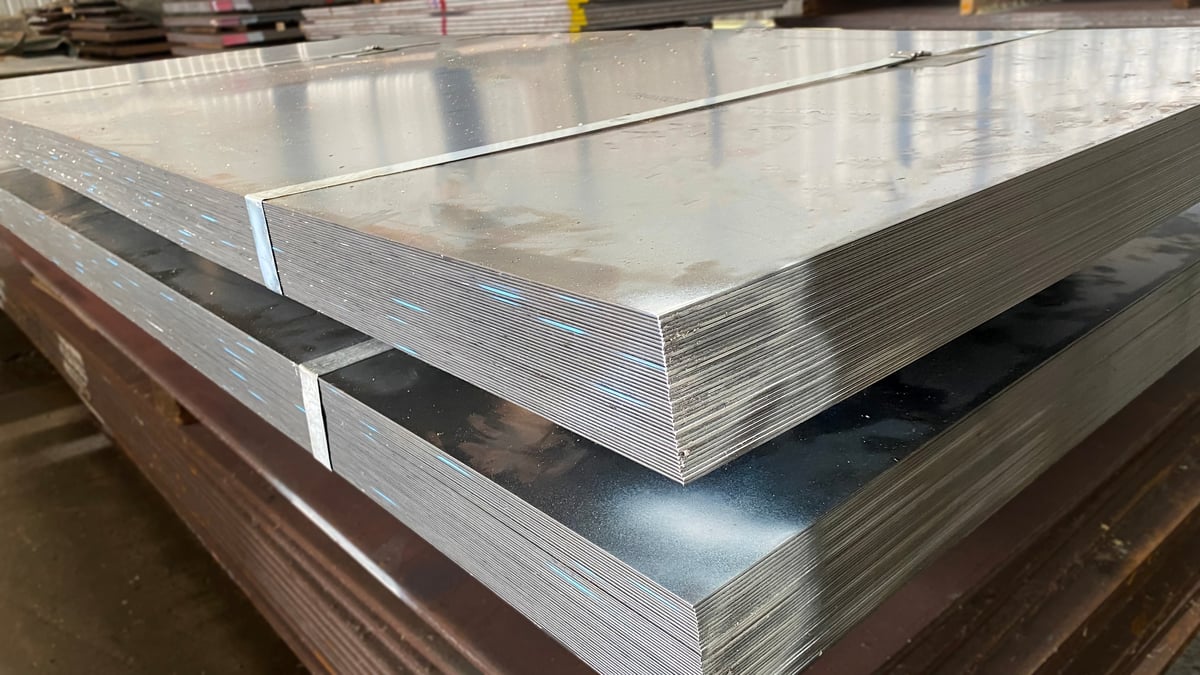
Family first
Then designation
Evidence per choice
Not implied
Material Family Matrix
Four families, four different first questions
Pick the family on the question that actually settles it — exposure, fabrication, or the service condition — then read what it commits you to. Each route carries a different evidence expectation, not just a different name.
Selected route
Carbon Steel Sheet
Whether a plain carbon substrate is sufficient for the duty, or whether the environment already rules it out.
- What it commits you to
- Rolling route and product standard become the first decisions, because the substrate itself is not a grade.
- Evidence this choice expects
- A product standard and a designation on the purchase order — the mill certificate can only be read against those.
| Decision axis | Carbon | Alloy | Stainless |
|---|---|---|---|
| Corrosion exposure | Bare substrate relies on a coating or a painted finish for protection. | Alloying changes the substrate itself; coating is a separate decision on top. | Corrosion resistance comes from the alloying basis, not a surface coating. |
| Strength and toughness | Meets the ordinary mechanical requirement the standard sets for that designation. | Selected where the service demands more than the standard carbon route provides. | Not the usual reason to choose it — the exposure normally settles this first. |
| Weldability | Routine welding with a procedure matched to thickness and designation. | Procedure and pre- or post-heat treatment can become part of the scope. | Weld procedure and post-weld finishing are process decisions, not afterthoughts. |
| Documents expected | Mill certificate read against the stated standard and designation. | Certificate plus the condition and any test requirement the service adds. | Grade and finish stated so the certificate and the surface agree. |
A comparison of what each family commits you to — not a statement that one substitutes for another. Confirm the exact standard, designation and condition before treating any row as interchangeable.
Request a Quote
Send the family, the standard and the dimensions together
These are the inputs that decide whether the offer and the mill certificate can be read against the same basis. Anything you leave open is shown as open rather than filled in.
Service environment
Indoor, sheltered external, coastal, or contact with a process medium.
Changes: Whether a coating or a change of substrate family is even on the table.
Forming and fabrication
Flat, folded, deep-drawn, or welded into an assembly.
Changes: How much forming margin the substrate needs and how the joint will be made.
Governing product standard
The standard and edition the drawing or contract names.
Changes: Which designations are permissible and what the certificate must be read against.
Delivery condition
As-rolled, annealed, normalised, or coated.
Changes: Whether the supplied condition is what the process downstream expects to receive.
Specification
The four inputs the family choice depends on
A material family is only defensible against stated inputs. Each of these changes what is permissible — leave one open and the offer will come back with an assumption in its place.
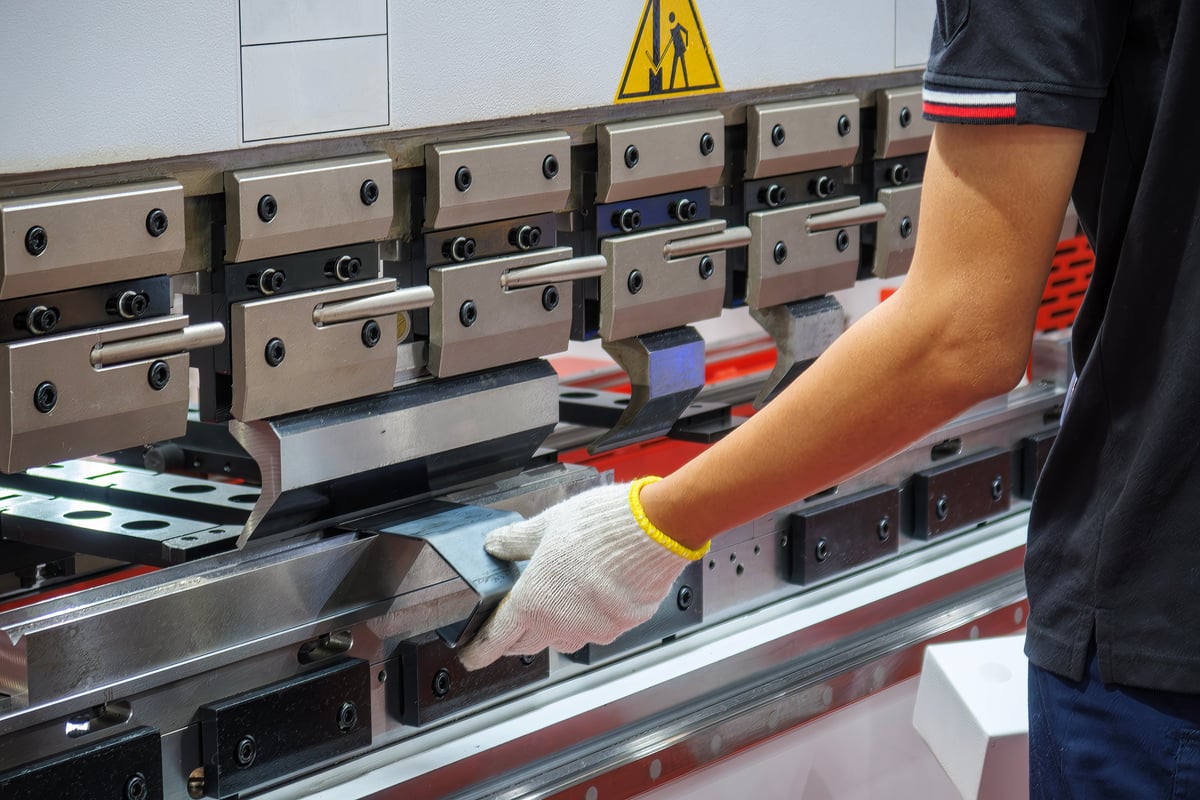
Forming and welding duty is one of the inputs that rules a family in or out.
- Service environment
Indoor, sheltered external, coastal, or contact with a process medium.
Whether a coating or a change of substrate family is even on the table.
- Forming and fabrication
Flat, folded, deep-drawn, or welded into an assembly.
How much forming margin the substrate needs and how the joint will be made.
- Governing product standard
The standard and edition the drawing or contract names.
Which designations are permissible and what the certificate must be read against.
- Delivery condition
As-rolled, annealed, normalised, or coated.
Whether the supplied condition is what the process downstream expects to receive.
Nominal dimensions are not tolerances. State the dimensions with their units and name the tolerance regime separately — a nominal size quoted without one cannot be accepted against a certificate.
Quality & Documents
What each choice has to be able to prove
Material selection is only complete when someone else can check it. The document set follows the family you chose — it is not a fixed bundle added at the end.
Carbon Steel Sheet
A product standard and a designation on the purchase order — the mill certificate can only be read against those.
Mild Steel Sheet
A stated fabricator requirement and a designation that the fabricator will accept without re-negotiating the drawing.
Alloy Steel Sheet
The specific alloying basis plus the condition stated separately from the material name.
Stainless Steel Sheet
A grade designation and a finish description agreed against the service environment, not the word 'stainless'.

A mill certificate tells you what the steel is. It does not tell you it is approved for a particular project — that is a separate question the project specification answers. Keep the two apart on the enquiry.
Why the order matters
A family name and a designation are two different kinds of statement
Steel sheet standards set out a scope and then a set of designations within it. The scope says which product the document covers — how it is made, and in what dimensions. The designation says what a particular order within that scope must satisfy. A purchase order that names only a family, such as "stainless sheet", has selected neither.
This is why the material family is the right first decision and a poor final one. It eliminates routes the service or the fabrication has already ruled out, and that elimination is genuinely useful — it stops time being spent comparing designations that were never in contention. It does not, on its own, fix a property, a condition or a document. Those come from the standard and the designation you name next.
Where the service condition determines the choice — an aggressive exposure, a weld that has to survive in a particular environment, a forming operation with little margin — the family may collapse to a single answer before any comparison begins. In that case the comparison below is not the task; confirming the exact designation is.
Applications
What the family choice is usually being made for
The decision is rarely made in the abstract — it is made against a downstream operation. These are the duties that most often settle the family before a designation is discussed.
Roofing & cladding
Exposure leads. The family choice is usually decided by whether a coating is acceptable, or whether the environment demands the substrate itself resist.
Formed & fabricated parts
The forming margin and the weld joint lead. A family that will not take the bend or the joint is not rescued by a different designation within it.
Process & hygiene surfaces
The service medium leads. Here the family narrows quickly, and the finish becomes as decisive as the grade.
GCC Supply
Plan the destination separately from the material
The material family answers what the sheet is. The consignee, the delivery point and the document set answer where it is going — and those are planned on their own route.






A country link is a destination-planning page. None of them implies a local office, warehouse or stock position, and none of them changes the steel specification.
Related Routes
Where the neighbouring decisions are answered
These pages resolve a specific adjacent question. Open one only when it settles the decision in front of you — an adjacency is not proof that two products are interchangeable.
How a Sheet Enquiry Moves
From a family choice to a comparable offer
Each step fixes something the next one depends on. Skipping a step does not save time — it moves the cost to the point where the consignment has already been arranged.
- 01
Fix the duty
State the exposure and the fabrication the sheet has to survive. This eliminates families before any comparison starts.
- 02
Name the family
Select the substrate route the duty leaves standing, and note what it commits you to.
- 03
Set the standard
Name the standard and edition the certificate will be read against, with the delivery condition stated separately.
- 04
Complete the order
Add dimensions with units, quantity basis, destination and the documents the consignment needs.
Availability, origin and delivery timing are confirmed against the live enquiry — never assumed from a selector or a published list.
Request a QuoteCommon Questions
Questions this decision usually raises
Can I choose the material family before I know the grade?
Yes — that is the usual order for a sheet enquiry. The material family narrows what is physically plausible for the exposure and how the part will be made; the grade then fixes the properties and the certificate. Deciding the family first stops you comparing grades from families that were never suitable.
Is 'carbon steel' a grade I can put on a purchase order?
No. Carbon steel describes a substrate family, not an orderable designation. Any order needs a product standard and a designation from within it, plus the dimensions, tolerances and delivery condition. A family name on its own cannot be read against a mill certificate.
When does a coating remove the need to change material family?
When the exposure is the only reason you were considering a different substrate. A coating protects a plain-carbon sheet at the surface; it does not change the steel underneath. If the requirement is strength, heat resistance or a weld that must survive in service, a coating does not answer it.
What evidence should accompany the material choice?
The document that lets someone else check the decision: the product standard and designation the certificate will be read against, the delivery condition stated separately, and the finish or coating where one applies. State these on the enquiry so the offer and the certificate can be compared on the same basis.
Send the duty, and we will confirm the family against it
State the exposure, the fabrication and the standard you are working to. The material family, the evidence it expects and the quotation come back on the same basis.
sales@noordeirasteel.ae · +971 56 398 0860 · Business Bay, Dubai