
Quantity & lengths
Designation, member length and piece count define the schedule — confirmed at RFQ.
Structural Steel · IPE Steel Beam
IPE beam procurement should use the exact IPE designation from the applicable dimensional table, then confirm material grade, delivery condition, length, quantity and certificates; HEA/HEB or other I-sections are comparison families, not automatic substitutes.
What to send now
IPE designation (for example IPE 200) · nominal depth and section · grade and standard · delivery condition · member length × piece count · inspection documents · destination.
Designation-fidelity review against the EN dimensional table before you commit to a section
Price always on request — confirmed against your specification and destination
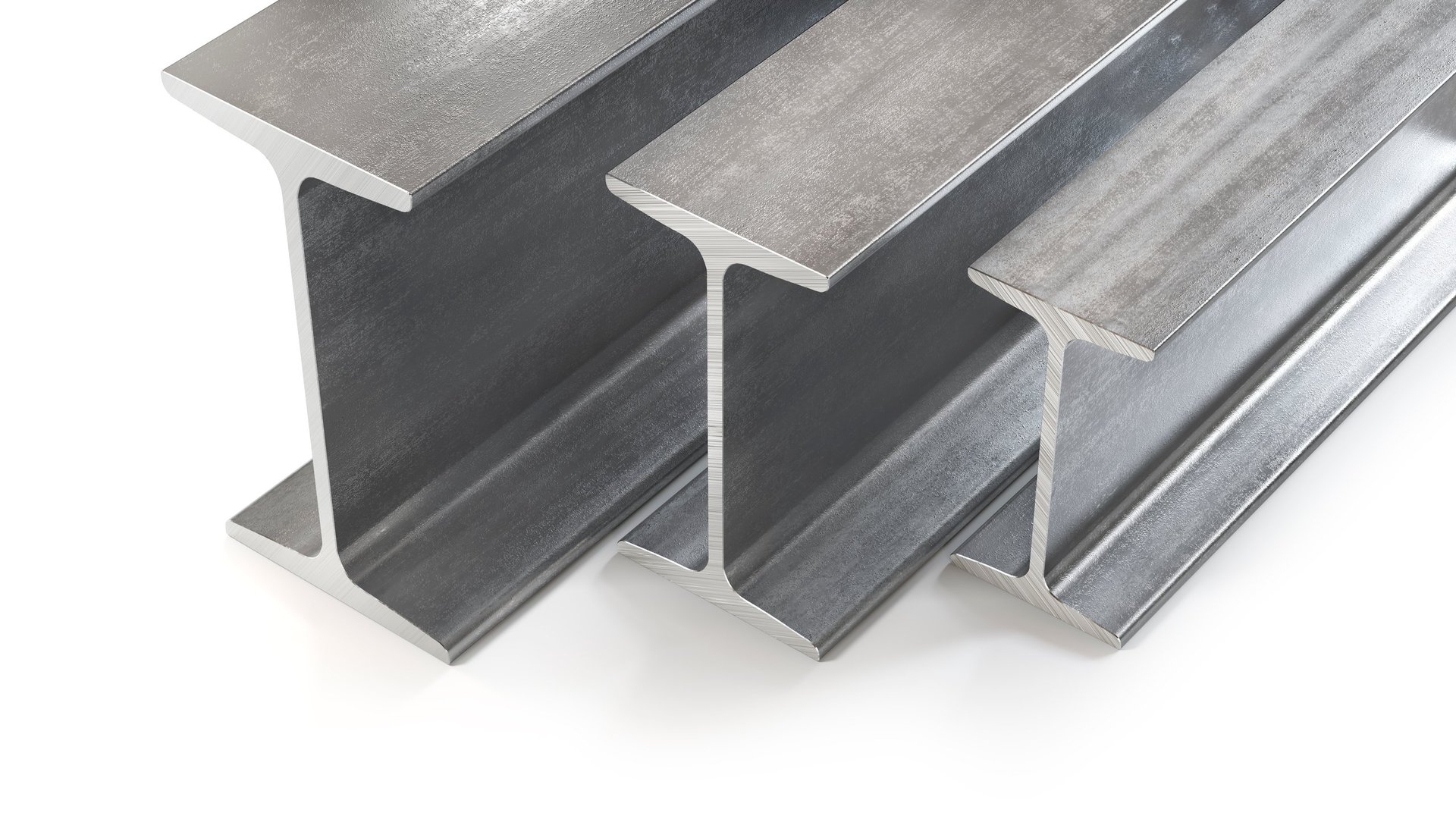 Designation check
Selecting an IPE Steel Beam
An IPE section is identified by its designation, sourced from the applicable EN dimensional table — the nominal depth alone does not fix the section. Fit is set by the exact IPE designation, then by material grade, dimensional standard, delivery condition, member length and documents.
IPE Designation Lookup
Use the EN-series IPE identifier as the lookup key, confirm the section against the applicable dimensional table, and build the row-by-row schedule. The lookup validates the designation format, flags any non-IPE section family and rejects implied HEA/HEB substitution unless the requirement is explicitly changed.
Designation basis
An IPE designation is the nominal depth in millimetres (for example IPE 200). The exact section geometry − web, flange and radius − is read from the applicable EN dimensional table and carried into the RFQ. A same-depth or similar-strength alternative in another family is not an equivalent; any cross-family change needs engineering approval.
No rows yet — add the first IPE designation row below.
Lookup result
Empty state — add a row to see the validated summary.
Method & assumptions: the lookup uses the EN 10365 series identifier as the key, validates the IPE designation format, and flags any non-IPE family. Geometry, mass and property values are read from the applicable dimensional table at reference time — they are never generated here. This tool performs procurement support only and does not grant structural, load-rating or substitution approval.
Specification
IPE designation fidelity under the EN dimensional table is the gate: the exact designation from the applicable table, the material grade, and the dimensional/product standard together define the section and the expected document. Values below require verified evidence — nothing is invented.
Grade & standard
Pair the material grade with its governing standard on the RFQ. Two typical IPE references:
Evidence: the exact grade, its reference standard edition and its tolerance are confirmed against the project and the material documentation — the supplier does not substitute a grade or standard the project has not approved.

Verification workflow
The section is confirmed against the published dimensional table — member schedule, caliper/tape reference and section sketch together fix the designation before the RFQ. No engineering approval or live stock is implied.
Decision matrix — IPE Steel Beam
Each attribute is a decision input. The value or range is confirmed against the applicable table and the project specification — it is never assumed here.
| Attribute | Applies to / limitation | Buyer implication | Evidence / source | RFQ field |
|---|---|---|---|---|
| Material grade | The grade the project specifies for the beam; governs the expected certificate. | State the grade + its standard edition on the RFQ. | Confirmed from project spec / mill certificate. | Grade/standard |
| Dimensional / product standard | The section dimensional table the IPE designation is read from. | Locks the designation source; no substitution. | EN 10365-series table / applicable standard. | Standard |
| Designation | IPE nominal depth in mm from the table. | Carry the exact sourced designation. | Published table / supplier documentation. | Designation |
| Dimensions, units, tolerances | Web, flange, radius and length + the unit system in force. | Confirm every value with the source; never infer a capacity. | Applicable table + units/conditions. | Dimensions/length |
| Service / delivery conditions | Delivery condition, fabrication and finish supplied by the project. | State what the project requires; confirm at RFQ. | Project specification. | Condition/fabrication |
Evidence warning: this page does not publish numeric chemistry, mechanical properties, tolerances, dimensions or section masses from memory. When a value is not already verified, it is blocked here and confirmed against the applicable dimensional table and the project specification at RFQ.
Quality & documentation
For an IPE beam buyer, the confirmable evidence is the document set tied to the actual supplied lot — not a quality claim asserted on the page. Every item below states what it proves, who verifies it, when it is required and what it affects in the RFQ.

Document-first quality
The beam's conformance is confirmed through the lot's own documentation — mill certificates, inspection records and traceability — not asserted on this page.
Document & inspection matrix
Confirm each item against the actual material certificate and inspection report at RFQ.
Evidence applied: this matrix states what the buyer should request and what it verifies. It does not assert a certificate the lot has not had verified, a test result or an approval — these are confirmed at RFQ.
Applications
The application tells you the operating and fabrication conditions the project must name — which in turn fix the grade, standard and designation the RFQ must carry. Each path maps the operating requirement to specification consequences.
Warehouse & logistics
Portal-frame and secondary framing — carry the exact IPE designation from the table so the section is not approximated by depth.
Warehouse structural steelBridge structures
Primary and secondary members where grade, standard and designation must be locked before any comparison is made.
Bridge structural steelOil & gas
Process and facility support steel — designation, grade and documented inspection confirmed against the project spec.
Structural steel for oil and gasGCC Markets
Destination, documents, port or delivery-location inputs, Incoterm and logistics are confirmed at RFQ — the supplier does not claim a live presence. Each card carries independent copy about the destination decision. No branch, store or guaranteed service presence is claimed for any country.

United Arab Emirates
Home market · structural steel supplier route for UAE — destination, documents, Incoterm and customs-verification inputs.

Oman
Oman structural steel supplier route — confirm port, importer/clearance input and Incoterm named place.

Qatar
Qatar structural steel supplier route — document question and delivery-point input for the beam schedule.

Saudi Arabia
Saudi structural steel supplier route — logistics, Incoterm and customs-verification inputs confirmed at RFQ.

Bahrain
Bahrain structural steel supplier route — delivery location and document inputs for the destination decision.

Kuwait
Kuwait structural steel supplier route — destination, Incoterm named place and customs-verification inputs.
Commercial
A beam quotation is built from the confirmed schedule, the applicable standard and the current market position. Pricing is provided on request. The inputs below are quotation-dependent and are confirmed at RFQ — no stock, price, lead time or origin is stated here.
Quantity & lengths
Designation, member length and piece count define the schedule — confirmed at RFQ.
Packaging & documents
Packing, inspection/document requirements and cut lengths — quoted, not assumed.
Destination & Incoterm
Destination, Incoterm named place and requested date drive the quote.
Freight & availability
Freight and availability are confirmed against current position at RFQ — no live stock or lead-time claim.
Reference library
When the IPE schedule moves past identification, these references carry the decision forward: the size and section confirmation charts, plus the parent hub for the whole structural steel family.
Sizes
The related structural steel sizes reference — section geometry for the decision.
Structural steel sizesBeam sizes
The related steel beam size chart — beam-specific size and section confirmation.
Steel beam sizesStructural steel hub
The full structural steel family — beams, columns, channels and angles in one place.
Structural Steel SupplierExpert Insight
Source-backed procurement decision note with a verify-first boundary. Read section dimensions and masses only from the cited authoritative dataset, preserve the source version and unit system, and never convert geometry into an unverified load-capacity statement.
Primary source
British Standards Institution — BS EN 10365:2026, Hot rolled steel channels, I and H sections — Dimensions and masses.
Primary source URL: BS EN 10365:2026 product page
Information date: 31 July 2026.
Method
Use only dimensions, masses and designation/property fields published in the cited authoritative section dataset or standard. Preserve the source version and unit system with each lookup, and do not convert geometry into an unverified load-capacity statement.
Scope
Dimensional and designation verification relevant to IPE Steel Beam. This is procurement support only — not structural design approval or substitution engineering.
Limitations & buyer implication
Evidence statement: this is an evidence-led procurement note grounded in the cited standard. No named expert is invented and no personal biography is presented; a named point of contact remains blocked unless an approved profile is supplied for this URL.
Buyer advantages
Each row maps a buyer concern to the evidence required to close it and the procurement outcome that follows. No unsupported superiority language is used.
| Buyer concern | Evidence required | Procurement outcome |
|---|---|---|
| Designation accuracy | Exact IPE designation read from the applicable dimensional table. | A section the RFQ cannot be mis-quoted around. |
| Grade traceability | Mill test certificate for the specific heat. | Grade conformance tied to the supplied lot. |
| Dimension verification | Dimensional inspection record, confirmed with units. | Designation fidelity held to the source standard. |
| Document completeness | Inspection and document requirements confirmed at RFQ. | Quote and handoff carry the full document set. |
| Destination readiness | Destination, Incoterm and named place confirmed at RFQ. | Logistics and clearance inputs settled in the quote. |
From enquiry to delivery
Each stage names the buyer input, the verification output, the risk if that input or evidence is missing, and the next action. Timing is never promised.
1
Enquiry
Input: IPE designation, grade, quantity
Output: Schedule captured
Risk: Vague designation risks a wrong-section quote.
Next: Send the schedule in full.
2
Technical clarification
Input: Standard, delivery condition, cut lengths
Output: Specification fixed
Risk: Missing standard leaves the section under-defined.
Next: Confirm grade & standard pair.
3
Evidence check
Input: Mill certificate, inspection needs
Output: Document set confirmed
Risk: No evidence means unverified conformance.
Next: List required documents.
4
Commercial review
Input: Destination, Incoterm, requested date
Output: Quote issued on request
Risk: Missing destination stalls the quote.
Next: Provide destination & Incoterm.
5
Order & handoff
Input: PO, documents, delivery
Output: Confirmed supply
Risk: Missing docs delay clearance.
Next: Confirm document handoff.
FAQ
Route-specific technical and commercial answers that preserve the verification boundary. Basic product definitions are not repeated here.
The IPE designation (nominal depth in mm) read from the applicable dimensional table, plus the material grade and the dimensional/product standard. Together they fix the section. A bare nominal depth or similar-strength claim in another family is not enough to establish an equivalent IPE.
The EN 10365-series dimensional table governs the IPE section designation. Carry the source version and unit system into the RFQ and confirm the exact edition against the project specification.
State the material grade and its reference standard edition together with the section standard, for example the grade and the applicable EN dimensional table. Do not name one without the other — the certificate and inspection are confirmed against the pairing.
No. A same-depth HEA/HEB or other I-section is a comparison family, not an automatic substitute. Any cross-series or cross-standard change requires engineering approval from the project, confirmed at RFQ.
Include the mill test certificate, dimensional inspection requirement, third-party inspection if required, and the exact member lengths and piece counts. State cut lengths and inspection/document needs explicitly so the quote carries the full set.
Get a quote
Send the exact designation from the dimensional table, the grade and standard, size, quantity, destination and the required delivery date. The commercial team confirms grade, standard, documentation and lead time before quoting — pricing is provided on request.
Include to keep the RFQ valid
Price on request · Grade, standard, documentation and lead time confirmed at RFQ · HEA/HEB are comparison families, never automatic substitutes