
Technical Resource · Structural Steel

Structural Steel Size Chart

A structural-steel size chart should first separate section families and dimensional standards, then expose only the published dimensions and mass identifiers needed to create an unambiguous purchase description; it must not turn geometry into an unsupported design recommendation.

A size chart is a verification and identification aid, not a design or capacity tool. Its job is to help you separate section families and the dimensional standards that govern them, then expose only the published dimensions and mass identifiers that belong in an unambiguous purchase description. All commercial terms — price, stock, origin, delivery and documentary requirements — remain Price on request until confirmed by the commercial department.

What to send now

  • Section family and exact designation
  • Governing material and dimensional standard
  • Dimensions, length and quantity
  • Fabrication or service conditions if project-specified
  • Required inspection documents
  • Destination and Incoterm inputs

Section Family Size Navigator

Navigate section families and standards without over-claiming

Pick the section family, then the governing dimensional standard, then the size inputs and fields you need. The navigator resolves an identity into a size-range lookup — it never turns geometry into an unsupported load-capacity or equivalence statement.

Fields to request / verify

Method & assumptions

The navigator switches the governing dataset only when the dimensional standard changes. Dimensions, mass and property fields are sourced from the cited authoritative section standard (currently BS EN 10365:2026) or confirmed against the project specification; nothing is auto-filled from memory. A bare nominal depth is treated as verify-first, not a ready profile. No load capacity, grade equivalence or substitution approval is implied by this tool.

Result

Add the family, standard and a size to begin

Empty stateGoverning dataset: not selected
  • –Provide section family, governing standard, series or exact designation, size / depth range.
  • –No row is selectable until the family and standard are chosen.
Transfer to RFQ

Buyer note: the fields and identity resolved here are carried into the RFQ shortlist. Any dimension, mass or property value not yet confirmed against the governing standard or project document is left as "unknown / verify" rather than assumed.

Method & Data Conditions

How the size lookup is sourced and bounded

Every row a structural-steel size chart exposes must carry its governing standard, edition, unit system and source so the buyer can carry an exact, provenanced designation forward — not a generic nominal size.

Lookup provenance

Structural-steel sections are defined by a section family(I/H, channel, angle, hollow) and a governing dimensional standard that publishes the dimensions and masses for each designation. The size navigator keeps these two axes separate and switches the governing dataset only when the standard changes. Each resolved row states its source and edition so the exact designation — not a bare nominal depth — is what reaches the RFQ.

Source hierarchy and currency

The current reference dataset for hot-rolled steel channels, I and H sections is BS EN 10365:2026 (dimensions and masses). Any other standard or national convention is treated as a dataset to be confirmed against the exact edition before it is used, and the project specification can override a published dataset where the engineer directs. Unit system, rounding and edition are preserved with every lookup.

What the method cannot establish

Published section dimensions do not by themselves establish structural capacity or project suitability. The tool does not perform structural design, load rating, or substitution approval, and it cannot confirm availability, mill tolerances, grade compatibility or accepted substitutions — those must be checked against the project specification and supplier documentation. A nominal size alone is never an unambiguous purchase description.

Rounding and exclusion boundaries

Dimension and mass values are presented in the unit system chosen by the buyer and keep the precision of the governing standard. Values not published by that standard are omitted or explicitly flagged, never inferred. If a requested row cannot be confirmed against the cited source, it is marked"unknown / verify" and added to the RFQ checklist rather than guessed.

Worked Examples

Two worked size-navigation cases

These show tool operation only — how to describe a section, what gets verified and what goes into the RFQ. They do not imply inventory, project approval, capacity or quoted commercial terms.

1

Channel section for a portal frame

Family
Channel (CC / U-section)
Standard
EN 10365
Input
CC 300 · clear depth range 290–310 mm

Method: the exact designationCC 300 is carried into the navigator with the EN 10365 standard selected; the depth range acts as a filter, not a guarantee.

Result & interpretation: the row is resolved for size-range lookup and the section mass, clear depth, flange and web dimensions are flagged for confirmation against EN 10365. No load capacity is implied.

Decision impact & verification step:confirm the designation and mass against the standard, then send the exact designation plus dimensions, length, grade and quantity to the RFQ.

2

A bare depth is a verify-first trap

Family
I-section (IPE / H / UB)
Standard
Other EN / national
Input
"200" — no series, no designation

Method: a bare numeric depth does not fix the family, flange, web or mass. The navigator classifies this asverify-first.

Result & interpretation: no row is selected. The buyer must name the series and exact designation (for example an IPE or UB series) before a size-range lookup is meaningful.

Decision impact & verification step:without the exact designation, a supplier cannot confirm dimensions, mass or grade. Add the series and designation, then verify mass against the governing standard before the RFQ.

Both examples use illustrative inputs to demonstrate tool behaviour. Deliverables, prices and availability remain Price on request.

Standards & Tolerance Context

Separate standard, grade and dimensions before you specify

Standard, grade, manufacturing route, dimensions, tolerance, coating and testing each change the result or its applicability. A size chart places the dimensional identity; the buyer must still fix the material grade and project conditions.

The governing dimensional standard (such as EN 10365 for hot-rolled steel channels, I and H sections) publishes the dimensions and masses that identify a section. It is not the same as the material grade standard that governs chemistry and mechanical properties — the buyer carries both into the RFQ. Grade, standard, manufacturing route, tolerance band, coating and any required testing are separate inputs; each can change the result or its applicability to the project. For the dimensional dataset behind this chart, see the related pageen 10365 steel sections.

Structural Steel Size Chart procurement verification workspace for buyer specification review.
Structural Steel Size Chart decision matrix separating material grade, dimensional and product standard, designation, units, tolerances and project conditions.
Dimension / inputWhat it fixesApplicability / limitationEvidence / sourceRFQ field / next action
Section familyShape class (I/H, channel, angle, hollow)Must be chosen first; family drives the applicable datasetSection standard datasetFamily field in RFQ
Dimensional standard + editionWhich published dimensions/masses governEN 10365:2026 reference; other editions confirmedCited standard versionStandard + version in RFQ
Exact designationUnambiguous section identityBare nominal depth is verify-firstStandard's designation listDesignation field in RFQ
Unit systemmm vs inch conventionPreserved per lookup, not mixedDataset unit conventionUnit field in RFQ
TolerancesAllowable dimensional variationFrom governing standard or project spec; not inferredStandard tolerance clauseConfirm with engineer, note in RFQ
Material gradeChemistry and mechanical propertiesSeparate from dimensional standardMaterial grade standardGrade field in RFQ
Project conditionsFabrication, coating, testing needsSupplied by the project, not the chartProject specificationConditions field in RFQ

Evidence warning: numeric dimensions, masses, tolerances and mechanical properties are not published from memory on this page. They are placed only against the cited authoritative standard or project document; otherwise they are markedverify-first and carried into the RFQ checklist. Nothing here implies structural capacity or a quoted commercial term.

Verification & Misuse Controls

Common input errors and how to verify the section

A structural-steel size chart is only useful when the right documents are requested for the right field. This matrix shows what each requested piece of evidence proves, who verifies it, when it is required and its limitation.

Verification matrix mapping requested document or evidence to what it proves, who verifies it, when it is required, its limitations and the RFQ field it affects.
Requested document / evidenceWhat it provesWho verifies / whenLimitationRFQ field affected
Exact matching section designationUnambiguous identity and dimensionsBuyer / supplier cross-checkBare nominal depth leaves it unverifiedDesignation field
Material test certificate (MTC)Chemistry and mechanical resultsIssuing mill; confirm availability at RFQHeat-lot scope varies; not fabricated hereInspection / document field
Dimensional check recordsDimensions and mass vs designationBuyer inspection or third partyScope per project; confirm critical dimsDimensions / inspection field
Grade / standard conformanceMaterial meets named grade/standardSupplier documentation + inspectionNot a capacity or equivalence approvalGrade / standard field
Destination / Incoterm documentsDelivery and customs readinessImporter / freight forwarderDestination-specific; not a stock claimDestination / Incoterm field
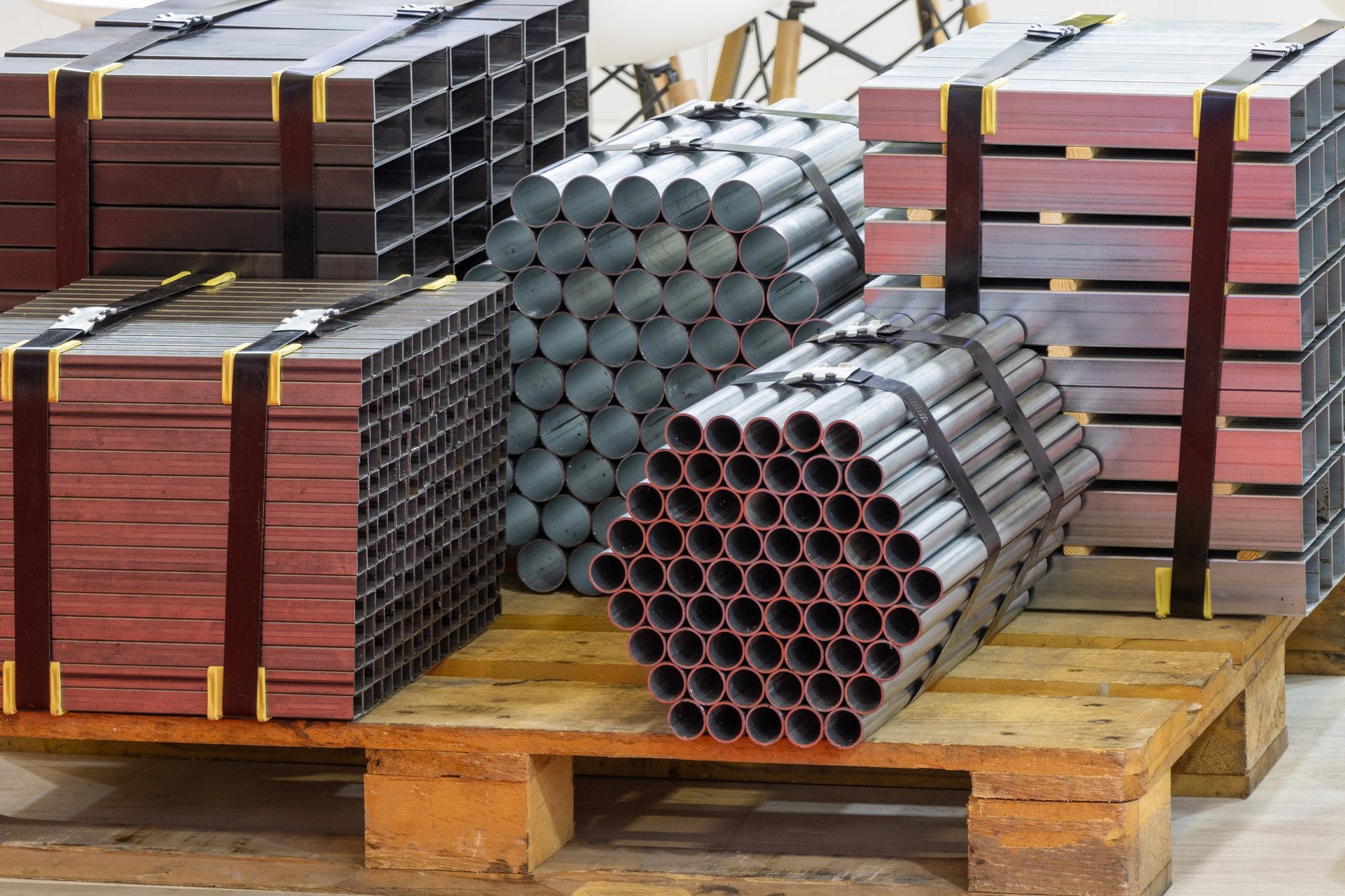
Structural Steel Size Chart packing and document handoff for buyer specification review.
Identification, lifting/packing context and document-check continue into the commercial handoff — a named facility, stock or freight commitment is not depicted here.

When engineering review is requiredAny cross-series or cross-standard substitution, or any use of a size chart to infer load capacity or project suitability, requires engineering approval under the project specification. This chart is procurement support only and does not grant such approval.

Product Decision Handoff

Put the resolved section into a spec-bound description

A size chart narrows the identity; the related structural-steel product, type and standard routes turn that identity into a quote-ready purchase description — always with an explicit comparison boundary. Dimensional similarity is not engineering equivalence.

Fit / not-fit / verify-first decision aid

  • Fit: the exact designation, family and standard are named and the mass/dimensions are confirmed against the governing standard or project document.
  • Verify-first: a nominal depth or a designation whose standard version is not yet fixed. Confirm before RFQ.
  • –Not-fit: a different family, grade, standard or design intent that the chart cannot place. Do not force it into this comparison.
Boundary on every comparison: similar nominal depth, shape appearance or strength does not establish inter-changeability. Any substitution must be approved against the project specification and governing standard.
Structural Steel Size Chart identification and dimension check for buyer specification review.

Connect the physical identifiers that must appear in the RFQ — family, designation, dimensions, mass, standard and version — to the listed structural-steel routes:

Related Tools & Routes

What to use next, by the decision you are making

Each route below supports a distinct next step after you resolve the section identity — not a generic list. Follow the route that matches the decision you are actually making.

Beam focus

Steel Beam Size Chart

If your identity is a beam section, use the beam-specific chart to narrow designation, dimensions and mass.

Hollow focus

Hollow Section Dimensions

For square, rectangular and circular hollow sections, the hollow-section routes handle the applicable outer-dimension and wall-thickness dataset.

Go to hollow-section dimensions

Knowledge base

Steel Size Charts

Compare size-chart practice across steel products when you want the broader knowledge-center view before finalising a purchase description.

Review steel size charts

GCC Product × Country

Destination routes for structural steel

Select the destination to handle delivery location, importer or clearance input, the document question and the Incoterm / named-place question for a structural steel purchase description. A listed route is not a branch, warehouse, stock or guaranteed-service claim.

Delivery location, documents, Incoterm/named-place and customs-verification inputs are handled without a generic markets fallback, and remainPrice on request until confirmed by the commercial department.

Expert Insight

Let the governing standard, not a chart's geometry, change the decision

The authoritative source below is the reference a buyer should carry into a structural steel size decision — it sets the boundary for what a size chart can and cannot prove.

Primary source

BS EN 10365:2026 — Hot rolled steel channels, I and H sections — Dimensions and masses

Open the standard on knowledge.bsigroup.com

Information date
31 July 2026
Type
Dimensional and designation dataset

Method, scope and limitations

Method: use only dimensions, masses and designation/property fields published in the cited authoritative section standard; preserve source version and unit system with each lookup and do not convert geometry into an unverified load-capacity statement.

Scope: dimensional and designation verification relevant to the structural steel size chart. Procurement support only — not structural design approval or substitution engineering.

Limitations: published section dimensions do not by themselves establish structural capacity or project suitability. Availability, mill tolerances, grade compatibility and accepted substitutions must be checked against the project specification and supplier documentation.

Buyer implication

Carry the exact sourced section designation into the RFQ and require engineering approval for any proposed cross-series or cross-standard substitution.

Evidence-led Advantages

Five concerns, the evidence they require, and the procurement outcome

Each row connects a buyer concern to the verifiable evidence or capability that addresses it, and then to a practical procurement outcome. No unsupported 'best' or 'premium' claims.

Buyer advantage matrix mapping concern, required evidence or capability and practical procurement outcome.
Buyer concernEvidence / capability requiredProcurement outcome
Designation accuracyExact family + designation + standard versionAn unambiguous, quote-ready section identity
Grade traceabilityNamed grade/standard + conformance documentationA predictable set of chemistry/mechanical inputs to request
Dimension verificationDimensional check records vs governing standardConfirmed dimensions and mass against the designation
Document completenessMTC / inspection / destination document listThe right documents requested for the right RFQ field
Destination readinessDestination / Incoterm + named place inputsA delivery-and-customs-aware purchase description

From Enquiry to Delivery

A route-aware workflow for a structural steel purchase

Each stage names the buyer input, the verification output, the risk if it is missing and the next action. No delivery timing is promised; the sequence keeps every step evidence-aware.

EEnquiry: Buyer

Buyer input: Section family, designation, grade/standard, size/length, quantity.

Verification output: A written purchase requirement.

Risk if missing: Ambiguous identity slows every later step.

Next action: State the exact designation or mark it verify-first.

TTechnical clarification: Buyer + supplier

Buyer input: Governing dimensional standard version, unit system, dimensions.

Verification output: An agreed, versioned section description.

Risk if missing: Mixed standards create a wrong order.

Next action: Confirm the exact standard and its edition.

EEvidence check: Supplier / mill / inspection

Buyer input: MTC, dimensional check records, grade conformance.

Verification output: Documents tied to the requested fields.

Risk if missing: Missing documents delay acceptance.

Next action: List required documents in the RFQ.

CCommercial review: Supplier commercial dept

Buyer input: Destination, Incoterm + named place, requested delivery date.

Verification output: Commercial terms, price on request.

Risk if missing: Unclear terms cause a mismatch.

Next action: Supply destination and Incoterm inputs.

OOrder / document handoff: Buyer + order desk

Buyer input: Final confirmed specification and documents.

Verification output: A quote-ready, verified purchase description.

Risk if missing: A skipped handoff loses the evidence trail.

Next action: Submit to the RFQ target for review.

Buyer FAQ

Structural Steel Size Chart questions, answered

Post-decision answers that preserve verification boundaries — aimed at the estimator, engineer or procurement specialist, not at re-defining the product.

What does this chart verify — and what does it not prove?

It helps you separate section families and dimensional standards and expose the published dimensions and mass identifiers that belong in an unambiguous purchase description. It does not prove structural capacity, project suitability, grade adequacy or any commercial term; those must come from the governing standard, project specification and supplier documentation.

Which source/version governs the displayed row?

The governing dataset is the dimensional standard you select, with the current reference for hot-rolled steel channels, I and H sections being BS EN 10365:2026. The standard and its edition are preserved with each lookup; a value is only treated as confirmed when that source or the project document supports it.

Can similar nominal depths across section families be substituted?

Not on the strength of a similar depth or shape appearance. A bare nominal depth does not fix the family, flange, web or mass. Any cross-family or cross-standard substitution requires engineering approval under the project specification.

How are theoretical mass values calculated or sourced?

Mass values are sourced from the published sections in the governing standard (for example BS EN 10365:2026), with the unit system preserved. They are not calculated from memory on this page; a value that cannot be confirmed against the source or project document is marked verify-first and added to the RFQ checklist.

How should a selected row be transferred into an RFQ?

Carry the exact sourced designation, family, standard + edition, dimensions, length, quantity, grade, destination and Incoterm into the RFQ shortlist. Fields left unknown or verify-first should be stated as such rather than assumed; the commercial department reviews against the confirmed specification — price remains on request.

Qualified RFQ

Need a verified structural steel specification?

Send grade, size, quantity and destination for technical RFQ support. Fill the fields below, copy the summary, and submit to the locked RFQ target.

RFQ fields

Section identity (from navigator)

Not yet selected

Add the required fields to complete the RFQ: section family, governing standard, grade / standard, dimensions/length & quantity, destination / delivery point.

Copyable RFQ summary

RFQ — Structural Steel Size Chart
• Product / form: to confirm
• Grade / standard: to confirm · Dimensional standard: to confirm
• Dimensions / length & quantity: to confirm
• Project / application reference: to confirm
• Fabrication / finish / toughness: to confirm
• Inspection / document requirements: to confirm
• Destination / delivery point: to confirm
• Incoterm + named place: to confirm
• Requested delivery date: to confirm
• Evidence status: Add the family, standard and at least one size or designation input to allow a size-range lookup.
• Price: on request — confirm with the commercial department

Price on request. Disclosure of a contact name, email or phone is not generated here; submit via the RFQ target or WhatsApp. Unknown or verify-first fields are preserved rather than assumed.

Reference · Method & Formula

The lookup provenance behind every row

A structural-steel size chart is only as decision-useful as the provenance behind each row. This section sets the method, the source hierarchy and the verification step you carry forward.

Method

Separate the section family, then the governing dimensional standard and its edition, then the exact designation. Each resolved row carries its source and unit system so the design identifier — not a nominal depth — is what moves forward.

Source hierarchy

The cited authoritative section standard (currently BS EN 10365:2026) governs dimensions and masses; the material grade standard governs chemistry and mechanical properties; the project specification can override either where the engineer directs.

Limitation & next action

Limitation: no numeric value is inferred; a row you cannot confirm is marked verify-first. Verification step: confirm family, designation and standard version, then next action carry them into the RFQ shortlist.

Reference · Worked Examples

How to read the example outputs

The two worked cases demonstrate tool operation, not company data. This reference restates the provenance and the bounded interpretation of each output.

Example 1 — Channel CC 300

Interpretation: CC 300 with the EN 10365 standard selected resolves to a size-range lookup; dimensions and mass are flagged for confirmation, never assumed. Output is procurement-usable, not a capacity statement.

Verification step / next action: Confirm mass and clear depth against EN 10365, then send the exact designation plus length, grade and quantity to the RFQ.

Example 2 — Bare depth '200'

Interpretation: A bare numeric depth triggers verify-first: no row is selected because the family, flange, web and mass are unfixed. The output is a warning to add series and designation.

Verification step / next action: Name the series and exact designation, then verify mass against the governing standard before the RFQ.

Limitation: illustrative inputs only. Neither example implies inventory, project approval, capacity, a quoted commercial term or any delivery commitment.

Reference · Related Products

Where the resolved section decision continues

Once the section identity is fixed, the related product, type and standard routes carry it into a specification or comparison. Each link explains why to follow it.

Steel channel supplier — Continue with a channel product page when the resolved identity is a channel section and you need the type-level specification or comparison.

Steel angle supplier — Continue with the angle product route when the resolved identity is an angle and you need the type-level specification or comparison.

Structural steel supplier — Move to the structural steel hub when the current chart route is too narrow and you need the broader hierarchy or the RFQ target.

EN 10365 steel sections — Go to the standard route to confirm the governing dimensional dataset and its version before finalising the description.

Reference · Downloadable Specimen

A copyable requirement sheet for the RFQ

Use this specimen as the working template for your structural steel purchase description. It is a plain-English checklist, not a substitute for engineering or commercial review.

Structural Steel — Requirement Sheet (specimen)
• Section family: ____________
• Exact designation: ____________
• Dimensional standard + edition: ____________ (ref BS EN 10365:2026)
• Material grade / standard: ____________
• Dimensions / length: ____________
• Quantity + unit: ____________
• Project / application: ____________
• Fabrication / finish / toughness (if specified): ____________
• Inspection / document requirements: ____________
• Destination / delivery point: ____________
• Incoterm + named place: ____________
• Requested delivery date: ____________
• Evidence status: verify-first fields listed separately
• Price: on request

Limitation: the specimen is a template only; it asserts no stock, price, lead time or grade availability. Verification step: confirm every field against the governing standard or project document; next action: copy it into the RFQ summary and submit to the technical review target.





