
Foundation Rebar
Rebar for
Foundations
Foundation rebar procurement should follow the approved foundation schedule: confirm grade/standard, diameters, lengths/shapes, lap or coupler requirements, exposure protection and delivery sequence before tonnage is quoted.
Specification-readiness
- The approved foundation schedule fixes grade/standard, diameters, lengths/shapes, laps and couplers before tonnage is quoted.
- Groundwater/soil exposure and cover requirements are tied to the specified bar/coating system and its evidence.
- Lot-specific MTC/test evidence is required before acceptance.
Information current as of
Return to the steel rebar product familyOperating Requirement & Failure-risk Map
Turn the foundation operating context into selection criteria
The foundation operating environment — load transfer, groundwater/soil exposure, cover/detailing, bar congestion, lap and coupler decisions, and the consequence of failure — translates into concrete procurement inputs. Design responsibility stays with the responsible design professional; this section maps what the procurement package must capture.
Load & detailing transfer
The approved foundation design and bar schedule fix grade/standard, diameters, lengths/shapes, laps, couplers and spacing. These are procurement inputs the RFQ must carry — they are not re-derived on this page.
Groundwater & soil exposure
The project's groundwater/soil exposure and cover requirement is tied to the specified bar/coating system and its evidence. It is captured as an explicit RFQ field, never invented from an exposure label.
Congestion, laps & couplers
Dense pile-cap or raft congestion, long lengths, laps and couplers are fabrication/procurement inputs that change size, form, scheduling and inspection — surfaced and specified separately from the base bar.
Compliance & documentation
The governing standard/edition, grade, size/form, required mill/test evidence and inspection hold points determine acceptance. A standard requirement is not supplied-lot evidence.
Failure consequence
Wrong grade, false equivalence, weight-estimate error, missing traceability and coating/exposure mismatch each carry procurement and acceptance consequences — mapped to evidence and RFQ fields below.
Acceptance & inspection
Design/project approval, material evidence, fabrication inspection and delivery documentation are separated; who verifies each and what blocks acceptance is named.
Requirement-to-product rule
Do not select Foundation Rebar by the strength label or application name alone. Follow the approved foundation schedule: confirm grade/standard, diameters, lengths/shapes, lap or coupler requirements, exposure protection and delivery sequence, then confirm the required per-lot mill/test evidence. Any grade, standard, diameter or length change is a design decision requiring project/engineer approval.
Foundation Rebar Procurement Handoff
Convert approved foundation design/bar-schedule information into a supplier-ready specification
Turn the approved drawing/spec reference, standard/grade, foundation bar schedule, fabrication/splice details, exposure-protection requirement, delivery sequence and documents into procurement readiness, missing design inputs, fabrication/logistics risks, an evidence checklist and a copyable RFQ — all without replacing the structural engineer's design role.
Procurement handoff inputs
Required fields marked *Use the approved foundation drawing and project purchase specification.
State the standard/edition the project or purchase specification requires.
Required evidence / documents
This tool does not design reinforcement and does not estimate weight. Unit mass, where a weight field is added, is buyer-entered or confirmed against the governing standard and the supplied MTC. It never treats a grade, standard or diameter as acceptance evidence without an approved design change.
Procurement readiness
State the governing standard/edition and grade first
Enter the approved foundation drawing/spec reference and confirm the governing standard/edition and grade so the required lot-specific evidence can be scoped. Start with the standard and grade the project design or purchase specification requires.
Fabrication / logistics risk checks
- Structural design stays with the licensed design professional — this page converts approved foundation drawings/specifications into procurement fields, it does not design reinforcement.
- A grade, diameter or length change is a design decision requiring project/engineer approval; never substitute diameter, grade, length or standard without an approved design change.
- Laps, couplers, bends, bar congestion and long lengths are fabrication/procurement inputs that must be surfaced and specified separately from the base bar.
- Groundwater/soil exposure and corrosion-protection requirements must be tied to the specified bar/coating system and its evidence, never invented from an exposure label.
- A standard requirement is not supplied-lot evidence — the MTC verifies the actual heat/bend/test results for the delivered lot.
Nothing is transmitted yet. When ready, send this summary to the commercial department at the RFQ page for a confirmed quotation.
Product, Type & Material Shortlist
Steel Rebar choices, fit and substitution boundary
Foundation Rebar is a specified product — the fit / not-fit / verify-first matrix below keeps each related alternative distinct, states the technical boundary that prevents automatic substitution, and requires project/engineer approval before any grade, standard, diameter or length change.
Deformed steel rebar
Current product formWhen it fits
When the governing standard/edition and the approved foundation design specify deformed reinforcing bar for the element.
Technical boundary
Base-standard and service-condition boundary applies; confirm the type against the governing standard and the approved foundation design before accepting.
View alternativeASTM A615 Grade 60 rebar
Grade alternativeWhen it fits
Only where the project authority explicitly approves the Grade 60 (420 MPa) grade/standard instead of the current requirement.
Technical boundary
Provides a bounded specification comparison to grade 60 rebar supplier; never present it as interchangeable with the current requirement unless the project authority explicitly approves the alternative.
View alternativeBS 4449 rebar
Standard alternativeWhen it fits
Only where the project specification names the BS 4449 standard for foundation reinforcement.
Technical boundary
Provides a bounded specification comparison to BS4449 rebar; never present it as interchangeable with the current requirement unless the project authority explicitly approves the alternative.
View alternative16 mm rebar
Size alternativeWhen it fits
Lets the buyer compare the 16mm rebar size route for schedule-driven quantity and weight planning in congested foundation elements.
Technical boundary
Do not substitute diameter without approved design changes; the size route is a planning aid, not permission to change the foundation design.
View alternative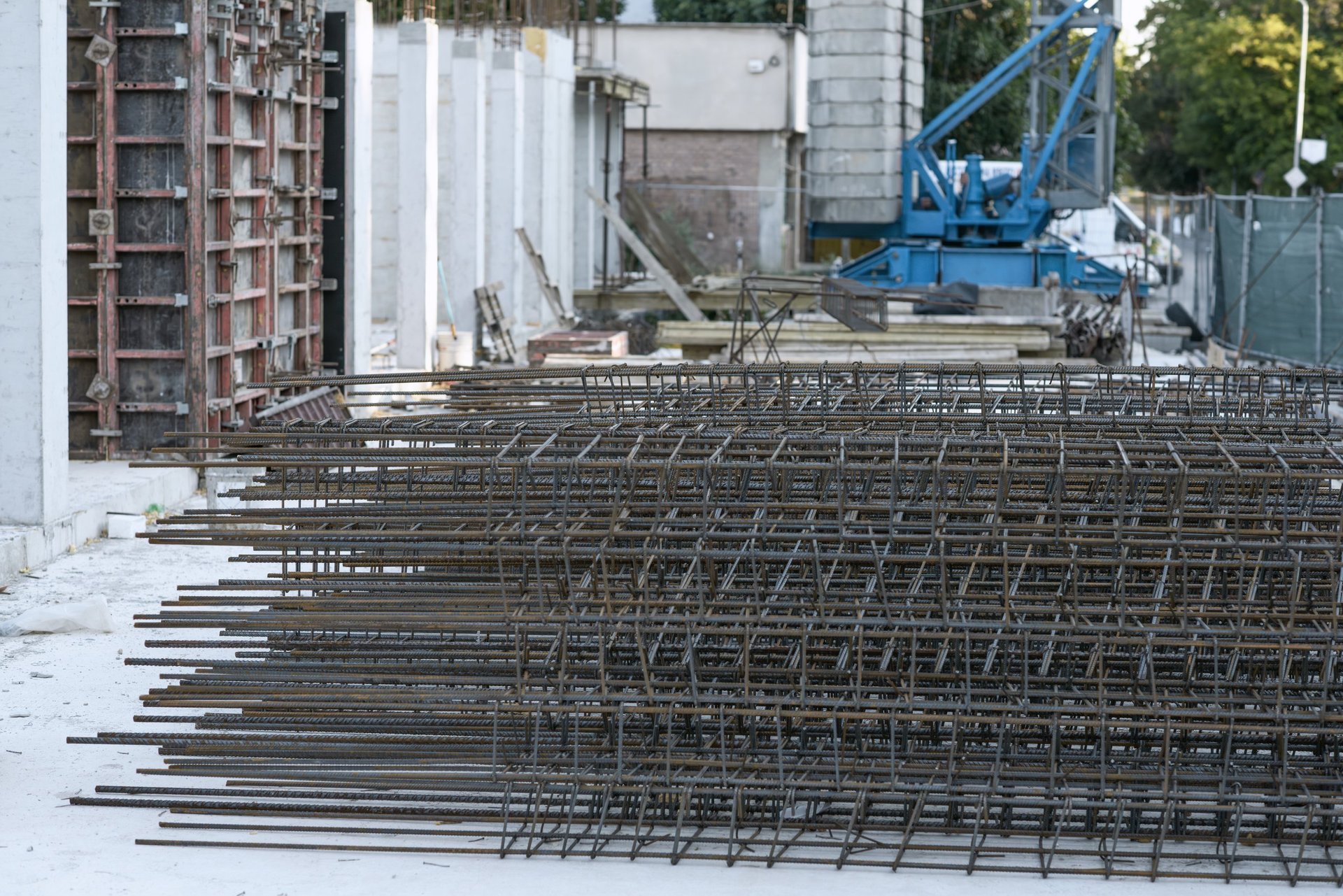
Substitution boundary
No related alternative is an automatic substitute
Every alternative is a decision aid with a stated boundary. The cage/formwork view here surfaces laps, couplers, bends and congestion as fabrication/procurement inputs — not as design changes and not as acceptance evidence.
Laps and couplers are procurement/fabrication inputs that must be specified separately from the base bar. Congestion in a dense pile cap or raft changes size, form and inspection requirements — include it in the RFQ so fabrication risk is carried, not hidden. No alternative is presented as interchangeable unless the project authority explicitly approves it.
Selection rule
Do not select or drop Foundation Rebar by the strength label or application name alone. Follow the approved foundation schedule: confirm grade/standard, diameters, lengths/shapes, lap or coupler requirements, exposure protection and delivery sequence, then confirm the required per-lot mill/test evidence. Any grade, standard, diameter or length change is a design decision requiring project/engineer approval.
Grade, Standard, Size & Testing Implications
Decision-grade reference for the Foundation Rebar specification
Values require authoritative evidence with stated units and conditions — no unsupported numbers are published on this page. The grade/standard is a project decision; the size, unit mass, bundle weight and evidence are confirmed from the approved foundation specification and the supplied lot.
Recommended grade / standard
Compare the grade, standard and size on the related pages
Each comparison route is a bounded reference — never interchangeable with the current requirement unless the project authority explicitly approves the alternative.
Grade 60 rebar
Compare specificationBS 4449 rebar
Compare specification16 mm size route
Compare specificationDeformed steel bar
Compare specificationComparison is bounded to the stated standard/grade/size basis. Do not upgrade a grade, substitute a diameter or length, or switch standard without an approved design change.
Dimensions & unit weight
Diameter, nominal mass and bundle weight are confirmed from your foundation specification
| Input | Applicability & limitation | Buyer decision implication | RFQ field / status |
|---|---|---|---|
| Diameter / bar size | Nominal size defined by the governing standard's size table in its native unit system (SI or inch-pound). | State the nominal sizes on the RFQ; confirm the dimensional limits against the governing standard — never re-engineer diameter without approved design change. | Size field — confirm per standard. |
| Nominal mass (kg/m) | Base-bar unit mass is defined by the governing standard's method or the supplied MTC; the unit system must be consistent. | Do not accept an unsupported weight figure — confirm kg/m against the standard or the supplied MTC, or provide it as buyer-entered input. | Nominal mass — confirm or supply. |
| Lengths / shapes / form | Mill lengths or cut-and-bent, with the foundation bar schedule fixing lengths and shapes for the element. | State the approved lengths/shapes/form; do not substitute length or form outside the approved schedule. | LENGTH/shape/form — fixed. |
| Bundle weight & handling marking | Bundled, strapped and tagged with bar size, grade and heat marking as required. | Confirm bundle weight, marking, traceability and weight handling for the order. | Bundle / marking — confirm. |
Numeric diameters, nominal mass and bundle weights are confirmed at quotation from the governing standard and the actual delivered specification, in the ordered unit system — no unsupported values are published here.
Chemical & mechanical properties
Yield, tensile, bend and chemistry are confirmed from the governing standard
| Property | Applicability & limitation | Buyer decision implication | RFQ field / status |
|---|---|---|---|
| Yield / tensile strength | Base-bar strength per the governing standard's tension test; values carry units and conditions. | State the required edition and grade; strength is read from the MTC, not assumed from the grade name. | Confirm edition + request MTC. |
| Elongation & ductility | Per the governing standard's test method and specimen in the ordered unit system. | Confirm the elongation/ductility class meets the project requirement for the grade. | Confirm property + MTC. |
| Bend / rebend results | Per the governing standard's bend and rebend acceptance tests applied to the lot. | Confirm the bend/rebend requirement is met on the actual lot; this is evidence, not implied by grade. | Request bend/rebend results. |
| Chemistry (for welding / fabrication) | Chemistry fields are checked against the MTC/standard when welding, grade identity or fabrication requires them. | Treat welding as a separate specification field; require the applicable procedure and material information. | State welding procedure + MTC. |
Chemical and mechanical values are governed by the standard and verified on the MTC. They are not published as fixed numbers here because the applicable standard, edition and grade must be known first.
Units
SI and inch-pound systems are kept separate
Metric route
Where the project route is metric, use SI as the page-default procurement display and preserve the governing standard's native unit system for acceptance values.
No mixed acceptance
Never mix inch-pound and SI acceptance values within one lot. Any conversion is labelled informational only.
Verification & Documentation Plan
What must be confirmed before quotation, order, inspection, shipment and use
Each required input is verified against the governing standard/edition, the approved foundation specification and the actual supplied lot, with the buyer/project owner and the status named. No unsupported certificate badge is rendered without evidence.
| Evidence / document | What it verifies | Buyer / project owner | Lot / project scope | Status | RFQ action |
|---|---|---|---|---|---|
| Approved foundation drawing / bar schedule | Grade/standard, diameters, lengths/shapes, laps, couplers and spacing for the element. | Design professional / buyer | Tied to the approved element/zone. | Required before any supplier decision | State drawing / schedule ref |
| Mill Test Certificate (MTC / EN 10204 3.1) | Identity, chemistry and mechanical properties of the underlying bar lot. | Buyer requests at RFQ; owner/project defines need. | Tied to the supplied heat/lot. | Required for project-certified orders | Request MTC at RFQ |
| Tensile & yield results | Yield/tensile performance of the lot per the standard test framework. | Buyer + inspector | Tied to the heat/lot. | Conditional on project requirement | Request results at RFQ |
| Bend / rebend results | Bend acceptance of the lot per the standard. | Buyer + inspector | Tied to the heat/lot. | Conditional on project requirement | Request results at RFQ |
| Coating / exposure evidence | The specified bar/coating system and its evidence, where a groundwater/soil corrosion-protection requirement applies. | Buyer + engineer | Tied to the specified system/lot. | Conditional on exposure requirement | Request evidence at RFQ |
| Bundle weight, size & traceability tags | Bundle weight, size/designation and heat/lot traceability tags arranged by element and pour zone. | Buyer + warehouse | Tied to the delivered order. | Required for schedule control | Confirm marking |
| Mill / origin / certification note | Origin, mill, stock position and any approval certificate. | Buyer + commercial | Quotation-dependent. | Quotation-dependent | Confirm at quotation |
Evidence gate
Certificates and test records are issued against the actual delivered lot, not claimed in advance.
No unsupported certificate
No mill, grade, edition or test claim is made without URL-specific approved evidence.
Standard vs supplied-lot
Standard requirements are separated from actual supplied-lot evidence; both must be confirmed where required.
Procurement & Delivery Inputs
The quotation inputs that connect technical scope to a confirmed offer
Availability, packaging, documents, Incoterm and delivery are agreed from your full foundation specification. Price is always on request — no live stock, lead time, origin or pricing claims are made before quotation.
| Quotation input | What it fixes | Status |
|---|---|---|
| Quantity & unit | Total tonnes or bar count for the foundation schedule. | Required for quotation. |
| Length / delivery form | Mill lengths or cut-and-bent from the approved schedule. | Required for scheduling and pricing. |
| Packing & bundle marking | Bundled, strapped, tagged with grade and heat marking. | Confirmed from the order. |
| Inspection & documents | MTC, tensile, bend, chemistry, coating and inspection evidence. | Fixed at quotation per standard/service. |
| Origin (when known) | Mill and origin of the offered bar. | Quotation-dependent unless verified. |
| Named place / port & Incoterm | Commercial and delivery basis. | Fixed with the destination. |
| Availability (stock / mill) | Availability is quotation-dependent. | Confirmed at quotation — never claimed in advance. |
| Requested date & delivery window | Delivery window for planning. | Confirmed against availability. |
Price, stock, lead time, mill/origin and routing are quotation-dependent unless current verified evidence is present.
Commercial department
The commercial desk checks each Foundation Rebar enquiry for standard/edition and grade consistency, diameters/lengths/shapes and schedule clarity, lap/coupler and exposure-protection requirements, required documents and delivery basis before quoting. Continue to the exporter route when packing, named place, Incoterm, export-document and shipment-planning fields are needed.
Steel rebar exporterOffice 3303, Churchill Executive Tower, Business Bay, Dubai, United Arab Emirates
Monday – Saturday: 8.00 AM – 6.00 PM · Sunday: Closed
Related Technical & Market Pages
Decide next — calculate, verify, apply and export
Continue the Foundation Rebar decision with related technical tools and routes, grouped by the next buyer task rather than a generic link list.
Calculate / verify
Rebar sizes
Reference the related size page for schedule-driven size and weight planning of the bar.
Open toolRebar weight chart
Reference the related weight chart for quantity and weight planning of the base bar.
Open toolRebar weight calculator
Calculate or verify a weight input for the current decision — a support tool, not permission to change the specification.
Open toolExport / destination
Steel rebar exporter
Continues to the exporter route when packing, named place, Incoterm, export-document and shipment-planning fields are needed.
Continue to exporterComparison note
Compare grades and standards on the related pages under the spec section. A related alternative is shown only when it solves the same buyer decision with the technical boundary stated — never automatic interchangeability, and the grade name never substitutes for per-lot evidence.
Expert Insight
Which authoritative requirement most changes the Foundation Rebar decision
A source-backed decision aid — not a biography or endorsement. The insight states its source, date, scope and limitations.
Decision question
What authoritative requirement most changes the buyer decision for Foundation Rebar on this page?
ACI CODE-318-25 identifies which reinforcement, detailing, durability, construction and inspection decisions belong to the licensed design professional. For foundation work specifically, bar congestion, development/splices, long lengths and groundwater/soil exposure can change the order before tonnage is quoted. Its direct implication: a supplier page must not perform structural design or override project drawings/specifications. Translate only the procurement-relevant outputs — grade/standard, diameters, lengths/shapes, lap or coupler requirements, exposure protection and delivery sequence — into explicit RFQ fields, and keep any missing lot, project, stock, price, lead-time or approval evidence blocked.
Primary source
American Concrete Institute — ACI CODE-318-25, Building Code Requirements for Structural Concrete — concrete.org — ACI CODE-318-25
2025 edition · checked
Method, scope & limitations
Method: use the current ACI code structure to identify which reinforcement, detailing, durability, construction and inspection decisions belong to the licensed design professional, then translate only procurement-relevant outputs into RFQ fields.
Scope: structural concrete materials, design, detailing, durability, construction and inspection requirements, including foundation elements.
Limitations: a supplier page must not perform structural design or override project drawings/specifications; jurisdictional adoption and project-specific amendments must be verified by the buyer/design team.
Buyer implication: use this source to verify the governing framework before accepting Foundation Rebar; convert the verified requirement into explicit RFQ fields and keep any missing lot, project, stock, price, lead-time or approval evidence blocked.
Evidence-led Buyer Advantages
Concerns, verifiable evidence, and the outcome you can rely on
Each risk is mapped to the evidence or capability this page actually provides, then to a practical procurement outcome. No unsupported superiority claims are made.
| Buyer concern | Evidence / capability | Procurement outcome |
|---|---|---|
| Wrong grade selected from a generic application label | The tool requires the approved foundation drawing/schedule reference and the governing standard/grade; it rejects a grade chosen without design support and surfaces the standard-mismatch state. | No unsupported grade selection silently ships in the RFQ. |
| False equivalence between standards, grades or diameters | The comparator and spec sections keep ASTM, BS 4449, deformed and 16 mm size distinct and require project/engineer approval for any substitution. | No automatic standard, grade or diameter substitution is presented as acceptance. |
| Weight-estimate error in the base bar | Unit mass is buyer-entered or confirmed against the governing standard and the supplied MTC — never guessed by the tool. | Weight figures in the RFQ are evidence-led rather than estimated. |
| Missing traceability and per-lot test evidence | The quality matrix requires the MTC plus project-required tensile, bend, chemistry, marking and inspection evidence tied to the heat/lot. | Lot-specific compliance is demonstrated, not assumed. |
| Coating/exposure mismatch and congestion or lap handling | The exposure-protection field is tied to the specified bar/coating system and its evidence, and lap/coupler/congestion constraints are carried as explicit fabrication inputs. | The durability, lap/coupler and congestion requirements are explicit RFQ fields, not assumptions. |
These are procurement safeguards the page enforces through evidence and RFQ fields — not claims of stock, capacity or approval.
From Enquiry to Delivery
A route-aware workflow for a Foundation Rebar order
Every stage states the buyer concern, the owner, the required input, the evidence or output, the risk, and the next action. No delivery timing is promised.
Fix the approved foundation schedule & spec
Detail: State the approved foundation drawing/spec reference and confirm the governing standard/edition and grade the design permits.
Owner: Buyer + engineer
Input: Drawing/spec, standard/edition, grade
Output: Grade identity and framework
Risk: Silent edition upgrade or grade swap
Next: Specify diameters, lengths & shapes
Specify diameters, lengths & shapes
Detail: Confirm the diameters, lengths/shapes, lap or coupler requirements and the schedule/quantity from the approved foundation bar schedule.
Owner: Buyer
Input: Sizes, lengths, lap/coupler, quantity
Output: Dimensional and quantity basis
Risk: Diameter or length substituted without design change
Next: Add exposure-protection & cover details
Add exposure-protection & cover details
Detail: Fold groundwater/soil exposure and cover requirements into the specified bar/coating system and its evidence, never inventing exposure classes.
Owner: Buyer + engineer
Input: Exposure/protection note
Output: Durability basis and evidence set
Risk: Coating/document mismatch
Next: Confirm congestion & delivery sequence
Confirm congestion & delivery sequence
Detail: Capture pile cap/raft congestion and pour sequencing, and the element/zone tagging and traceability needs for the package.
Owner: Buyer + inspector
Input: Congestion, sequence, tagging
Output: Fabrication/logistics risk checks
Risk: Congestion or sequence unstated
Next: Set commercial terms
Confirm destination, Incoterm & delivery
Detail: Fix destination, Incoterm rule, required date and delivery sequence.
Owner: Buyer + commercial
Input: Destination, Incoterm, date
Output: Commercial and logistics basis
Risk: Unstated Incoterm or port
Next: Send the qualified RFQ
Request the quote
Detail: Send the complete RFQ summary to the commercial department for availability and pricing confirmation.
Owner: Commercial department
Input: Qualified RFQ summary
Output: Confirmed availability and pricing
Risk: Unverified stock claim
Next: Technical review & delivery documents
FAQ
Foundation Rebar sourcing, answered directly
Post-decision technical and commercial questions for project engineers, contractors and fabricators — answered straight.
Does this page design reinforcement for Foundation Rebar?
No. Structural design remains with the responsible design professional. The page converts approved drawings/specifications into procurement fields.
Which rebar grade should be used?
Use the grade and standard specified for the project/element. Do not choose a grade from a generic application label.
What fabrication information should be included?
Include approved bar shapes/lengths, bend schedule, splice or coupler requirements, cage/prefabrication needs and any sequencing constraints relevant to the package.
How should durability requirements enter the RFQ?
State the project-specified coating/material or other corrosion-protection requirement and request the corresponding evidence; do not invent exposure classes.
How should deliveries be split?
Use the project's construction sequence, element/zone tagging and traceability needs. Availability and lead time remain quotation-dependent.
Qualified RFQ
Request a quote for Foundation Rebar
Copy the complete RFQ summary above, then hand it to the commercial department at the RFQ page. The RFQ is technically ready for review once the governing standard/edition, grade, size/form, quantity, destination, Incoterm, date and required evidence fields are complete.
Send to commercial departmentPrice, stock, origin and lead time remain quotation-dependent unless current verified evidence is present.
Office 3303, Churchill Executive Tower, Business Bay, Dubai, United Arab Emirates
Monday – Saturday: 8.00 AM – 6.00 PM · Sunday: Closed
Copyable RFQ summary
- Approved foundation drawing / schedule
- To be confirmed
- Standard / edition
- To be confirmed
- Grade
- To be confirmed
- Diameters / lengths / shapes
- To be confirmed
- Lap or coupler requirements
- Not stated
- Exposure / protection requirement
- Not stated
- Delivery sequence
- To be confirmed
- Quantity
- To be confirmed
- Destination / delivery location
- To be confirmed
Add the open verification notes — missing approved drawing reference, standard/edition, grade, size/form, lap/coupler, exposure-protection, delivery sequence, quantity, destination, Incoterm, date, inventory, price, origin, lead time or approval evidence — as explicit RFQ fields before sending.
Application & Industry Decision Paths
Map the operating requirement to the Foundation Rebar specification
Each application and industry route maps the operating condition, exposure and detailing to the grade, size, fabrication, documentation and delivery decision, with the fit limits and use conditions that change the specification.
Bridge rebar supplier
Specification driver
Bridge exposure, cover and detailing change the grade, size, exposure and documentation implications on top of the base requirement.
Fit limit
Use only when that operating/application context matches the project and the standard/grade is fixed.
View applicationRebar for road construction
Specification driver
Road and infrastructure exposure and detailing change the grade, size, fabrication and inspection requirements.
Fit limit
Use only when that operating/application context matches the project and the standard/grade is fixed.
View applicationRebar for infrastructure
Specification driver
Infrastructure exposure and documentation hold points change the evidence required with the grade.
Fit limit
Confirm the governing standard, grade, size and document set for the infrastructure scope.
View applicationRebar for precast concrete
Specification driver
Precast production changes grade, size, exposure and documentation decisions that shape the supplied-bar requirements.
Fit limit
Confirm the governing standard, grade, size and document set for the precast scope.
View applicationApplication fit is always confirmed against the governing standard, the grade/standard permitted by the project and the approved design. No generic or unsupported use claims are made.
Recommended Products
Related rebar routes that fit this application, with a verify-first boundary
Only related rebar type/grade/standard/size routes that fit Foundation Rebar are recommended, each with a short reason and a verify-first boundary tied to the approved foundation design.
Deformed steel rebar
The common reinforcing-bar form for foundation work; confirm the base standard/edition and service-condition boundary.
Verify fitGrade 60 rebar
A bounded grade comparison; only where the project authority approves the Grade 60 grade.
Verify fitBS 4449 rebar
A bounded standard comparison; only where the project specification names BS 4449.
Verify fit16 mm size route
Schedule-driven quantity and weight planning in congested foundation elements; never substitute diameter without approved design changes.
Verify fitEach recommendation is a decision aid tied to the approved foundation design. No related page is an automatic substitute; confirm the governing standard/edition, grade and required evidence before specifying.
Operating & Construction Conditions
How real foundation conditions change coating, bar shape, congestion, splash/coupler, inspection and delivery
The foundation's actual operating and construction conditions map to procurement consequences — specified explicitly, never invented.
Coating / exposure
Where the project specifies a coating/material or corrosion-protection system for groundwater/soil exposure, it becomes an explicit RFQ field tied to the system's evidence. Exposure classes are not invented on this page.
Bar shape & length
Laps, bends, couplers and prefabricated shapes are fabrication inputs that change size, form and scheduling. They are specified from the approved schedule, not re-derived.
Congestion & detailing
Dense pile caps or rafts change size, form and inspection requirements. Congestion risk is carried in the RFQ as a fabrication/logistics input, not hidden.
Lap / coupler
Development splices and coupler requirements are approved-design inputs; state them separately so fabrication risk is visible before quotation.
Inspection & delivery sequence
Element/zone tagging and pour-sequencing needs drive the delivery sequence and inspection hold points. Availability and lead time remain quotation-dependent.
Documentation hold points
Design/project approval, material evidence, fabrication inspection and delivery documentation are separated; who verifies each and what blocks acceptance is named.
These are procurement consequences of the foundation operating/construction context, tied to the approved specification — not claims of design, capacity or availability.
QA & Compliance
Separate approval, evidence, inspection and documentation
Design/project approval, material evidence, fabrication inspection and delivery documentation are kept separate — with who verifies each and what blocks acceptance named.
| Gate | Who verifies | What blocks acceptance | RFQ action |
|---|---|---|---|
| Design / project approval | Design professional / project authority | No approved foundation drawing/spec reference; grade/standard/diameter not permitted by the design. | State the approved drawing/spec reference and grade/standard. |
| Material evidence | Buyer + inspector | Missing or non-matching MTC/test records for the supplied heat/lot. | Request MTC + tensile/bend/chemistry records. |
| Fabrication inspection | Buyer + fabricator/inspector | Bends, laps, couplers, congestion or long lengths not addressed in the fabrication package. | Carry lap/coupler, exposure and sequencing details in the RFQ. |
| Delivery documentation | Buyer + commercial / warehouse | Bundle marking, traceability and document handoff incomplete. | Confirm bundle marking, traceability and export documents. |
No certificate badge is rendered without evidence. Each gate names who verifies it and what blocks acceptance, so the compliance basis is explicit rather than assumed.
Procurement Checklist
Copy this checklist into your RFQ or procurement package
An application-specific checklist covering the approved foundation drawing reference, bar schedule, evidence and delivery sequence — ready to copy into a request for quote or procurement package.
Specification & evidence
- Approved foundation drawing / schedule reference (element or zone)
- Governing standard / edition and grade
- Diameters / lengths / shapes and bar schedule
- Lap / coupler / fabrication details (splices, bends, couplers, cage/prefab)
- Exposure / protection requirement and corresponding evidence
Quantity, delivery & documents
- Quantity (tonnes / bar count)
- Delivery / pour sequence and element/zone tagging
- Destination / delivery location, Incoterm and required date
- Required mill/test and inspection evidence
- Bundle marking, packing and export documents
Price, stock, lead time, origin and approval evidence remain quotation- or project-dependent unless verified.
GCC Markets & Logistics
Plan the destination, documents and delivery basis for a Foundation Rebar order
For each GCC destination the specification, documents and Incoterm are aligned to the project basis at quotation. No served markets, local stock, local branches, customs clearance, project approval or delivery times are claimed in advance.

United Arab Emirates
Project specification and document review.
Add delivery location, importer/customs questions, Incoterm and document inputs before the Foundation Rebar RFQ.

Oman
Port-oriented project supply planning.
Confirm the destination, required documents and Incoterm so the quotation basis can be fixed for the Foundation Rebar.

Qatar
Infrastructure technical approval readiness.
Add the technical submittal and document set required for the Foundation Rebar requirement.

Saudi Arabia
EPC quantities and cross-border documentation.
Confirm the delivery location, importer inputs, Incoterm and documents for the Foundation Rebar RFQ.

Bahrain
Contractor procurement and industrial supply.
Provide destination, importer/customs inputs, Incoterm and documents before quotation of the Foundation Rebar.

Kuwait
Contractor and fabricator hand-off.
State delivery location, Incoterm, documents and the required date for the Foundation Rebar order.
For each destination, add the delivery location, importer/customs inputs, Incoterm, documents and requested date so the quotation basis can be fixed at review. Destination, documents, port or delivery line, Incoterm and the required delivery date are fixed at quotation from your specification — no served markets, local stock, local branches or delivery times are claimed in advance.