
Steel Coil for Automotive
Steel Coil for Automotive — sourcing qualified by the program
Automotive coil sourcing is not settled by choosing a grade. It is settled by the program's approval chain: the tier you supply, the acceptance stage the program has reached, and the lot traceability the customer's quality system treats as contractual. Get the material right and the evidence wrong, and the material cannot be used.
Automotive coil sourcing is decided by the program's approval chain, not by the material spec alone. The tier you supply, the acceptance stage the program is at, and the lot traceability the customer's quality system requires all have to be established before the coil specification means anything commercially.
Free, no-obligation sourcing requirement review
Information current as of
Who This Page Is For
For the sourcing and compliance manager, not the plant engineer
Use this page when the question is what your organisation has to demonstrate to the customer, across several part families and tiers. If the question is what a specific line can run, the automotive application page answers that instead.
The right fit if you
- Own sourcing across more than one part family and need one consistent method.
- Have to establish which evidence the program at its current stage actually requires.
- Need lot traceability designed into the supply, not added after a field question.
- Are onboarding a material into a program and want the gates identified up front.
Look elsewhere if you
- Are qualifying coil for a specific forming line — the automotive application page works at plant level.
- Are working out the material basis itself — the steel coil specification sets out the types, grades and standards.
- Need cut blanks rather than coiled material — that is the sheet route, a different purchasing form.
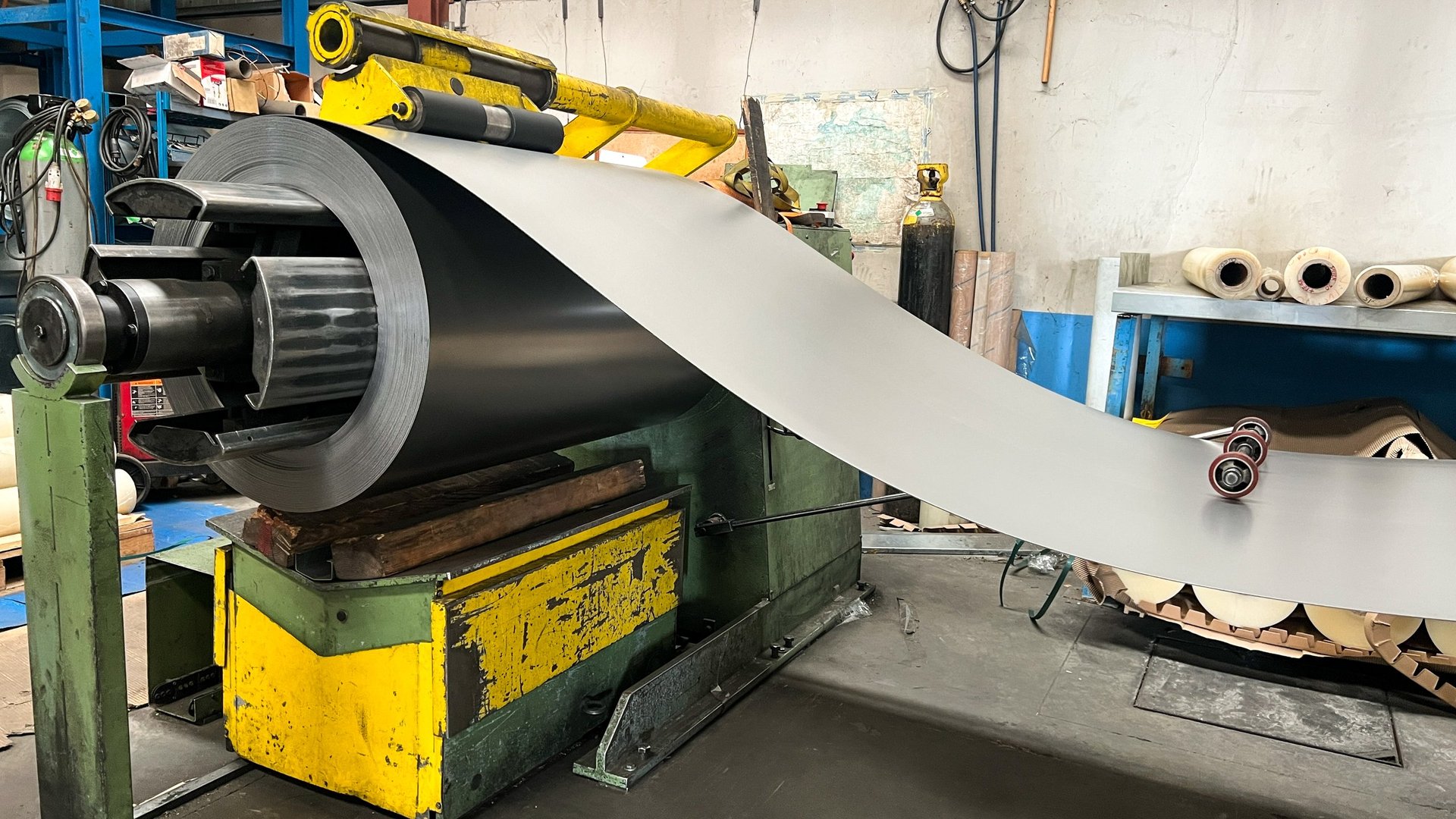
One material, several part families, several evidence obligations. The sourcing method has to hold across all of them without being re-invented per part.
Tier position
Where you sit in the chain decides which document you owe and to whom.
Program stage
Prototype, pre-launch and series demand different evidence for the same material.
Lot identity
Traceability is a design decision, not a filing task added at the end.
Automotive Sourcing Qualifier
Work out the requirement before the material is specified
Enter the part family, your tier, the program stage and the traceability the customer requires. The qualifier returns stage- and tier-specific guidance, derives the strip mass from your dimensions, and refuses to describe an evidence set until all four inputs are present.
Program inputs
Reference: steel coil thickness chart · steel coil weight calculator
Sourcing verdict
Automotive sourcing is qualified by the program, the tier and the evidence obligation — not by the material spec alone. Enter the part family, your tier, the program stage and the traceability the customer requires to see the sourcing guidance, the derived strip mass and a copyable requirement summary.
Derived check — strip mass
Enter the thickness and width to derive the strip's mass per running metre.
Copyable requirement summary
Automotive coil sourcing requirement — summary
Part family: —
Tier position: —
Program stage: —
Traceability requirement: —
Material basis / designation: —
Thickness (mm): —
Width (mm): —
Governing standard / edition: —
Annual volume (tonnes): —
Destination / plant: —
Evidence set required: —
This tool maps your requirement to the evidence category it implies. It does not confirm that any certificate, approval or audit record exists — that is verified only against the supplier's own current documents.
Part Family Requirement Matrix
The same mill coil, different obligations by part family
Route the requirement by the family the coil becomes. Read the row for the family you are sourcing: what drives the material choice, where the obligation sits, and which boundary makes the row stop applying.
| Part family | What drives the material | Where the obligation sits | Boundary / limitation | Evidence → RFQ field |
|---|---|---|---|---|
| Body & closure panels | Formability for deep drawing and surface quality after painting | Surface and forming consistency lot to lot | Appearance standards are set by the customer's paint line, not by the coil alone | formability / surface record |
| Structural & chassis | Strength and impact basis the program's structural analysis calls up | Mechanical conformance and change control | Strength requirement and forming route are qualified separately — a formable grade is not automatically a structural one | mechanical basis / change record |
| Interior & seat structures | Forming for complex geometry and, where specified, corrosion protection | Coating records where a protective system is ordered | Interior exposure does not justify an exterior coating specification by default | coating record / forming |
| Fasteners & small pressed parts | Consistency at high volume, where a small variation scales quickly | Tight lot control and repeatable dimensional conformance | Sheet or narrow strip may be the correct form at this scale — coil is not automatic | lot control / dimensional |
| Exhaust & heat-exposed | Temperature and corrosion duty, not formability alone | The specific material family the duty requires | Carbon steel coil does not substitute for a heat- or corrosion-duty material — the duty governs | duty material / standard |
The matrix states what each family requires of the sourcing decision and where the row stops applying. It does not publish numeric property limits — those carry the edition of the governing standard and the program's own specification.
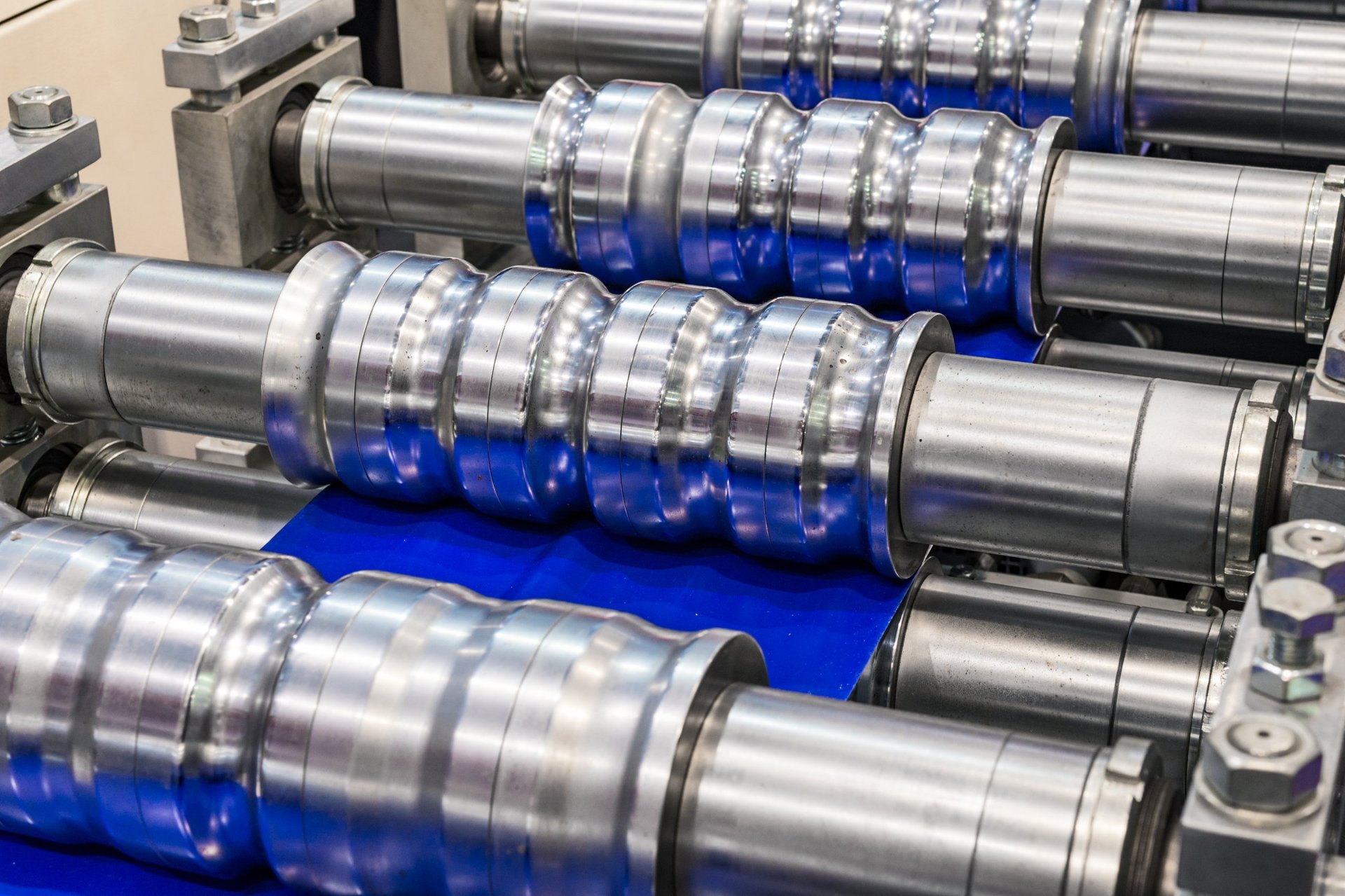
Different families on one program, drawing from the same material family — which is why the sourcing method has to hold across all of them rather than per part.
Choice Boundaries
Where an assumed approval becomes an unmanaged risk
The automotive sourcing failure that hurts most is not a wrong material — it is a right material whose evidence was assumed rather than verified. These are the boundaries where an assumption has to be replaced with a document.
A certificate is not a capability
Holding a quality-system certificate establishes that a system is maintained. It does not establish that the system covers the material you are buying, in the form you are buying it, at the stage your program needs it.
The MTC is not the traceability file
A test certificate states what was tested. Traceability links that result to the specific coil, heat and delivery, so a field question can be investigated. Passing one off as the other is a common and expensive confusion.
A substitution is a program event
Changing the material, the source or the processing of a qualified part is not a purchasing decision. It is a change to an approved program that has to be notified, assessed and re-accepted before the material enters the line.
Boundaries that rule an option out
- No approval may be implied by silence. A supplier's list of credentials is not evidence that a specific approval covers your material. Confirm the scope of every claim against the document itself.
- Prototype evidence does not carry to series. Records generated during a prototype build satisfy a prototype gate. Treating them as series evidence leaves the program approved on a basis it never held.
- Form and standard are not interchangeable. A specification written for coiled material does not automatically apply to the same steel supplied as cut sheet, and a coated variant is not the uncoated basis with a coating added.
- Delivery condition is not the service duty. How the coil is supplied — hot-rolled, pickled, coated — is a supply decision. What the finished part must survive is a program decision, and the two must not be swapped in the enquiry.
The one question that closes most gaps
For every claim in the sourcing file, ask: which document proves this, and who issued it? A claim that cannot name its document is not evidence — it is a hope carried forward until the first audit.
Evidence Gates & Verification
The records a program onboarding has to close
Treat each record as answering one question, and treat the sequence as a gate order — a program that closes a later gate before an earlier one is approved on an assumption it has to unwind.
| Record | Question it answers | Gate it belongs to | Verification route |
|---|---|---|---|
| Material identity record | Is the delivered coil the material the program qualified? | Material approval | Against the supplier's own test record |
| Dimensional conformance | Does it hold the thickness, width and flatness the process assumes? | Process approval | Against the program's stated basis |
| Surface / coating record | Is the surface the one the part's downstream process expects? | Process approval | Where a coating or finish is specified |
| Lot traceability file | Can this delivery be linked back to its heat and its results? | Series supply | Continuously, per delivery |
| Change notification | Has anything about the qualified material changed? | Series supply | Before the change reaches the line |
The table describes the category each record belongs to and how it is verified. It does not state that any record exists for any given order — the set is assembled against the actual quoted material, and the scope is agreed before the enquiry is priced.
Agree the level first
Decide which records the program actually files before the enquiry is priced. Over-specifying the evidence burden slows onboarding without reducing risk.
Match record to claim
A material record does not prove a process capability, and a system certificate does not prove a lot result. Ask for the record that establishes the specific claim.
Keep it live
Approval is a state, not an event. Traceability and change control have to keep holding after the program launches, or the approval quietly stops being true.
Commercial & Program Supply
The commercial inputs an automotive program adds
Program supply is planned against volumes and stages rather than a single purchase. The commercial terms, the release cadence and the change provisions are part of the sourcing decision, not paperwork after it.
Volume & cadence
State the annual volume and the call-off pattern. A program that consumes continuously needs a different supply basis from one that builds in batches.
Coil basis
Confirm the coil ID, weight and packing against the plant's handling and the blanking or forming line's intake — the physical basis is part of the qualification.
Release plan
Align releases with the build schedule and the lot sizes the traceability requirement implies — a lot that is too large to isolate weakens the record it was meant to give.
Availability & price
Confirmed against the complete sourcing requirement. Nothing is published in advance as fixed stock, a fixed price or a committed program date.
GCC Program Supply
Coil supply into each GCC automotive market
The qualified requirement travels with the material. What changes by market is the localisation gate, the receiving port and the document set the plant files — plan those alongside the technical basis.

United Arab Emirates
Tier coordination
UAE automotive and tier supply is coordinated from Dubai — establish the documentation level each customer in the chain requires and the consignment plan against their program stages.
View United Arab Emirates steel coil supply
Saudi Arabia
Localisation programs
Saudi vehicle and component programs are staged against localisation milestones — align the release plan and the document set with the program gates agreed at order.
View Saudi Arabia steel coil supply
Qatar
Documented consignments
Qatar supply favours tightly documented consignments — the traceability record and certificate set travel with the material so receiving can verify against the order.
View Qatar steel coil supply
Kuwait
Small-lot delivery
Kuwait component supply often runs in smaller lots — confirm the minimum handling basis and the packing that keeps each lot identifiable through to the line.
View Kuwait steel coil supply
Bahrain
Assembly-linked supply
Bahrain assembly-linked supply ties delivery to the build schedule — state the cadence so the release plan matches when the line actually consumes the material.
View Bahrain steel coil supply
Oman
Port-to-plant routing
Oman consignments route through Sohar or Salalah — align packing and lot identification with the receiving plant's intake and inspection procedure.
View Oman steel coil supplySupply planning is confirmed against the qualified requirement, the named plant and the commercial terms — never published in advance as a committed program or as company presence in every destination.
Procurement Path
Five decisions between the program and the qualified material
A program onboarding succeeds or fails on the decisions taken before the enquiry is priced. This path keeps the qualification ahead of the commercial commitment.
01
Place the tier
Establish where you sit in the chain and which document your customer actually files.
02
Read the stage
Match the evidence to the program stage — prototype, pre-launch, series or service.
03
Fix the material
Confirm the designation, the governing standard and the form — coil, strip or sheet.
04
Design the trace
Set the lot size, marking and records so a delivery can be linked to its heat later.
05
Agree the change rule
Settle how a material, source or process change is notified and re-accepted before it reaches the line.
Steps one to three are the fields in the sourcing qualifier above. Run it per part family, then send the summaries as one program enquiry.
Source-Backed Reference
Where a quality-system requirement comes from
A sourcing obligation is only enforceable if it is written against a published standard rather than described in words. Read the primary source yourself before the requirement goes into the enquiry.
The standard behind a quality-system obligation
A quality-management requirement placed on a supplier is commonly framed against ISO 9001:2015 — Quality management systems, Requirements. It sets out the process, record-control, traceability and continual-improvement requirements a management system has to satisfy and be audited against. Its scope is quality management systems generally — it is not an automotive sector scheme, and it does not by itself establish that a supplier's system covers a given material, process or program.
What the source does — and does not — settle
- It gives you the record-control and traceability language to write a requirement against.
- It frames what an audit examines, which is what makes a claim checkable.
- It does not confirm that any supplier holds a current certificate, or that the certificate's scope covers your material.
- It does not replace whatever sector or customer scheme your program actually names — confirm that scheme separately with the customer's own documents.
Reading the source in the right order
- 1Find the scheme and edition your program's customer actually names.
- 2Read its record-control and traceability clauses — that shapes the requirement.
- 3Match the tier obligation to what the clause actually requires of a supplier.
- 4Write the evidence requirement from that, then specify the material.
Information current as of . Verify the current edition and its scope with the publisher before relying on any clause.
FAQ
Questions an automotive sourcing manager asks
Direct answers on how an automotive coil requirement is qualified, documented and quoted — and where this page's scope ends.
Does this page confirm any quality-system approvals?
How does the tier I supply change what I have to provide?
What does lot traceability actually require?
Can you quote a price or confirm a supply program from this page?
Which pages should I use next?
Request a Quote
Send the sourcing requirement per part family and the commercial department responds with availability and pricing. Price is always on request.
Office 3303, Churchill Executive Tower, Business Bay, Dubai, United Arab Emirates
Monday – Saturday: 8.00 AM – 6.00 PM · Sunday: Closed
Not sure where to start?
Send one line per part family with your tier, the program stage and the traceability the customer requires. If a program stage is still open, say so — it is better declared than assumed.