
1.2 mm coil
Converts to ≈ 0.0472 in (exact 1.2 / 25.4). Applicability: nominal thickness reference. Evidence: none needed for conversion itself. Buyer action: send 1.2 mm × unit basis + governing standard; never send only a gauge label.
Technical Resource
There is no single universal “steel coil thickness chart” that overrides the product specification. Show nominal thickness and unit conversion separately from standard-specific tolerance; tolerance acceptance must be checked against the applicable product/general-requirements standard and ordered condition.
Use the thickness reference to convert nominal thickness between units and to see what still needs standard-specific verification before a tolerance can be quoted. Transfer the explicit value, unit system, standard and product route into the RFQ — never send only a gauge label.
No fabricated gauge table — unit conversion exact, tolerance requires standard verification
Information current as of
Thickness Reference & Tolerance Context Tool
Work from an explicit nominal thickness and unit to an exact conversion, then reveal the standard-context warning and build a copyable specification line. Unit conversion is exact; tolerance is never invented.
Result & tolerance context
Nominal thickness is the ordered/reference value; tolerance acceptance depends on the governing standard and ordered condition. Add a nominal thickness and input unit to see the exact conversion, then select a governing standard and product route to reveal the tolerance-context warning and a copyable specification line.
Copyable specification line
Nominal thickness: —
tolerance requires standard verification
The tool performs exact unit conversion only. It does not invent a gauge equivalence, a tolerance or an acceptance limit — those require the governing standard and ordered condition.
Method, Formula & Unit Basis
Nominal thickness converts between millimetres and inches by a fixed factor. What that value means for acceptance is a separate, standards-governed question.
| Conversion | Formula / factor | Assumption & limitation | Buyer implication → RFQ field |
|---|---|---|---|
| mm → in | 1 in = 25.4 mm (exact) | Unit conversion only; does not set an acceptance tolerance | thickness + unit |
| in → mm | 1 mm = 1/25.4 in (exact) | Keep the unit system explicit in the order — do not mix bases | thickness + unit |
| Gauge label | No universal gauge table | Identify any gauge convention and source separately; never infer it | thickness basis |
Every numeric value above carries units, conditions and its source basis. Unknown values are flagged as needing standard verification, never guessed.
Procurement-grade Worked Examples
Each example states the applicability, what it verifies, the buyer implication and the RFQ field it becomes — never a definition-only walkthrough.
Converts to ≈ 0.0472 in (exact 1.2 / 25.4). Applicability: nominal thickness reference. Evidence: none needed for conversion itself. Buyer action: send 1.2 mm × unit basis + governing standard; never send only a gauge label.
Converts to ≈ 0.610 mm (exact 0.024 × 25.4). Evidence: standard-specific tolerance still required. Buyer action: add governing standard/edition and ordered condition to unlock a quoted tolerance context.
The same nominal thickness across hot-rolled, cold-rolled and galvanized routes is a unit question, but each route carries a different standard and surface basis. Buyer action: compare route-specific standards, not just numbers.
Standards & Tolerance Context
Nominal thickness is the ordered value; acceptance is governed by the applicable standard/edition and ordered condition. Each row states its applicability boundary before any ordering basis.
| Requirement | Applicability / limitation | Evidence / verification | Buyer implication → RFQ field |
|---|---|---|---|
| Governing standard / edition | ASTM A568/A568M, ASTM A653/A653M, JIS G3302, EN 10346, or project specification | Verify the exact edition in the licensed standard — never infer | standard / edition |
| Nominal thickness vs. tolerance | Nominal is the ordered reference; tolerance is standard-and-condition-dependent | Check tolerance against the governing standard and ordered condition | thickness + tolerance basis |
| Manufacturing route | Hot-rolled, cold-rolled, galvanized or prepainted basis | Route changes the surface and standard scope — confirm both | product / material route |
| Coating / finish | Whether coating counts in thickness is set by the governing coated-sheet specification | Show the applicable standard note instead of assuming | coating / finish / surface |
| Grade / designation | DX51D, ASTM A653, JIS G3302 — each under its own standard | Verify designation and edition before treating as an ordering basis | grade / designation |
| Inspection / documents | MTC and analysis align to the actual quoted substrate and coating | Request only what the specification requires — do not treat certificates as interchangeable | required documents |

The manufacturing route and coating context are what change how a nominal thickness is treated under the governing standard.
A galvanized grade under another designation system — confirm the standard/edition before treating it as an ordering basis.
dx51d galvanized steel coil supplierA spangle/galvanized sheet standard — confirm steel and coating designation before treating as the ordering basis.
astm a653 steel coil supplierA hot-dip zinc-coated sheet basis — confirm scope and coating designation before treat as the ordering basis.
jis g3302 steel coil supplierVerification & Misuse Controls
A thickness chart is misused when unit and tolerance are conflated, or a standard is inferred. Control what must be verified before the chart result is quoted.

Verification turns a thickness value into an inspected, document-backed coil order — not a decorative number.
Sending only a gauge label omits the unit system and standard — the RFQ cannot be verified. Send an explicit mm/in value and the governing basis.
Nominal value is not the accepted measured value — tolerance is a standard-and-condition question, never a chart constant.
MTC, analysis and coating verification align to the actual quoted material — request only what the specification requires.
Where forming severity, load or acceptance is critical, an engineering or standards review is required before quotation.
Product Decision Handoff
Connect the thickness decision to the steel coil product, type, material, grade and standard pages — each states its applicability boundary and trade-off.
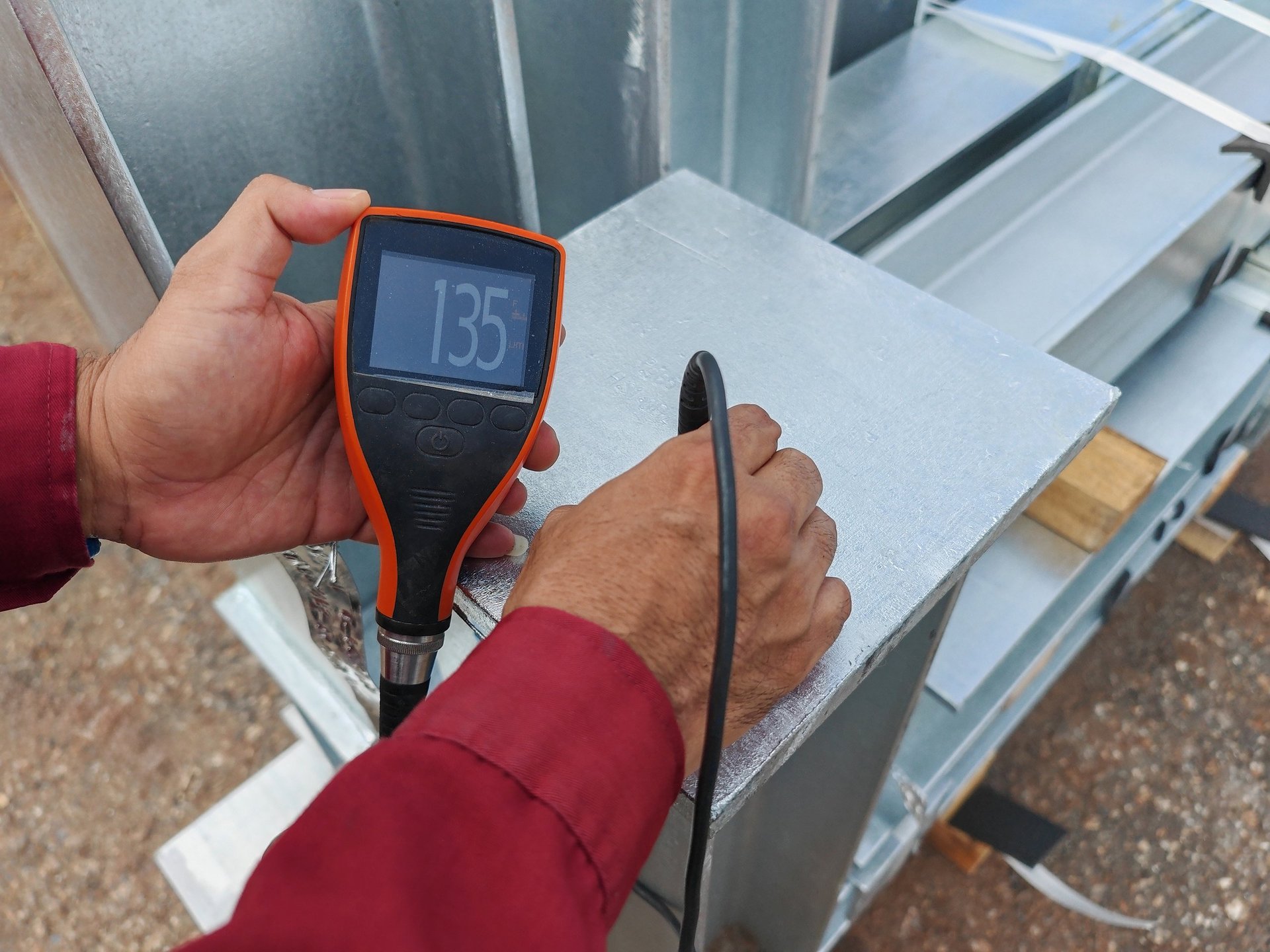
A route where the hot-rolled surface and tolerance basis fit the application — compare form, coating/material route and fabrication fit.
hot rolled steel coil supplierA tighter-gauge, better-surface route where a stricter tolerance matters — confirm the designation against the application.
cold rolled steel coil supplierThe base carbon route that becomes profile under the governing standard — confirm strength/formability and surface together.
carbon steel coil supplierCross-product view
This member decision connects to the cross-product reference for sizing across products: steel size charts.
Related Related Tools & Pages
Group the destinations that follow a resolved thickness decision — the export-enquiry workflow and the adjacent product form when coil is not the correct purchasing form.
Connects the thickness selection to an export-enquiry workflow where destination, Incoterm, packing and document inputs are qualified.
steel coil exporterOffered only as a bounded adjacent product-form comparison when coil is not the correct purchasing form for the thickness requirement.
steel sheet supplierGCC Product × Country Routes
Coil supply is coordinated from Dubai to each GCC market — unit system, thickness tolerance, ordered condition and the document set are aligned to the destination before shipment is planned.

Specification handoff
UAE procurement is coordinated from Dubai — nominal thickness, unit system, governing standard, tolerance/condition requirement and coil geometry are reconciled with the roll-forming or profile application before dispatch to profiler or press.
View United Arab Emirates steel coil supply
Profile & project volumes
Saudi profile and roll-forming projects take coil in project volumes — unit system, thickness tolerance and ordered condition are aligned to project hold points.
View Saudi Arabia steel coil supply
Submittal approval
Qatar infrastructure and profiler supply prioritises technical submittal approval — nominal thickness, tolerance and coil geometry are agreed before shipment is planned.
View Qatar steel coil supply
Contractor forming hand-off
Kuwait contractor supply links coil choice to the profiler or fabricator — thickness basis, unit system and tolerance are fixed early in the scope.
View Kuwait steel coil supply
Industrial coated-coil supply
Bahrain industrial and commercial supply depends on accurate documentation — the thickness and tolerance coil spec and document set are coordinated to delivery.
View Bahrain steel coil supply
Port-oriented supply
Oman projects route through port destinations — coil dimensions, thickness basis and surface protection are harmonised to the application.
View Oman steel coil supplyExpert Insight
Read the current primary-source scope and convert only its publicly verifiable ordering implications into this buyer checklist.
decisionQuestion
Nominal thickness is the ordered/reference value; whether it meets acceptance is a separate question governed by the applicable product/general-requirements standard and ordered condition. Conflating the two is the most common error in a thickness RFQ.
insightFormat
Primary source
General requirements for hot- and cold-rolled steel sheet and coil are governed by ASTM A568/A568M-25a — General Requirements for Hot-Rolled and Cold-Rolled Steel Sheet. Read the current standard to confirm the rolling, gauge, tolerances, testing and acceptance basis for the coil order.
Scope and limitation: This source does not establish Noor Deira Steel inventory, price, origin, lead time, certificates, market presence or project suitability. Exact acceptance values, editions, supplementary requirements, customs classifications or commercial outcomes must be verified against the buyer's governing documents and current transaction data. Information current as of 5 September 2026.
Evidence-led Buyer Advantages
Each advantage maps a real buyer concern to verifiable evidence or capability and then to a practical procurement outcome.
Nominal thickness is handled in an explicit mm/in value — reduced confusion on what is being quoted.
No fabricated tolerance — acceptance is tied to the governing standard and ordered condition.
MTC, analysis and coating verification align to the actual quoted material — not to a promise.
Dubai-based coordination aligns unit system, tolerance and documentation to each destination market.
From Enquiry to Delivery
A four-step commercial path that keeps the coil order aligned to the standard, the designation and the document set.
01
Send nominal thickness, unit, routing, governing standard, ordered condition and any documents.
02
Receive availability and pricing for the complete specification — always price on request.
03
Lock the document set and inspection terms to the order before dispatch.
04
Coordinate export, packaging and the agreed delivery to the GCC destination.
FAQ
Direct answers on how a steel coil thickness reference is used, quoted and documented.
Send a complete steel coil specification — nominal thickness, unit system, governing standard, product route and order condition — and the commercial department responds with availability and pricing. Price is always on request.
Office 3303, Churchill Executive Tower, Business Bay, Dubai, United Arab Emirates
Monday – Saturday: 8.00 AM – 6.00 PM · Sunday: Closed
Formula & Method
Unit conversion by the fixed 25.4 factor; everything a buyer needs to reproduce the result without inventing a limit.
Thickness in mm ÷ 25.4 = thickness in in. Exact factor; keep the unit basis explicit.
Thickness in in × 25.4 = thickness in mm. Exact factor; never mix unit bases in one order.
Tolerance acceptance is a standard-and-condition question — verified in the governing documents, never derived from the chart.
Worked Examples
Each example pairs a numeric conversion with its applicability, evidence and RFQ field — never just a number.
| Input | Converted value | Applicability / limitation | Buyer implication → RFQ field |
|---|---|---|---|
| 1.2 mm | ≈ 0.0472 in | Unit conversion only — tolerance gated on governing standard | thickness + unit + standard |
| 0.024 in | ≈ 0.610 mm | Exact factor — check coating/thickness definition in standard | thickness basis |
| 18 gauge (reference) | No universal value | Identify any gauge convention and source separately | thickness basis |
Related Products
Use only evidence-safe, route-specific paths a buyer can verify against a governing designation and forming severity before requesting a price.
A hot-rolled route where the surface and tolerance basis fit the application; confirm the designation against the project.
A tighter-gauge, better-surface route where a stricter tolerance matters; confirm the formability designation.
The base carbon route that becomes profile under the governing standard; confirm strength/formability and surface together.
Reference & Handoff
Save the resolved thickness decision as a copyable RFQ summary and hand it to the target.
Copy the specification line from the tool, add governing standard/edition and destination terms, and transfer it to the RFQ.
Return to the steel coil product family to progress the resolved thickness decision into a full procurement.
steel coil supplier