Flag of South Africa

Destination · South Africa

Steel Rebar Supply for South Africa

For South Africa, build the offer from the engineer’s project specification and current cited SANS requirements, then reconcile grade, dimensions, ordered mass, marking, testing and any third-party inspection scope.

Request standard and edition, grade, diameter, length, quantity, evidence, destination and Incoterm before any supply claim is made.

Build South Africa rebar RFQ

No stock, price, lead-time, office, certification or shipment-history claim is made on this page

The order of operations

  1. Engineer's specification first
  2. Current cited SANS verified for the exact product
  3. Evidence, marking and inspection scope named
  4. Destination, mass basis and Incoterm fixed

South Africa is a destination market served from Dubai. There is no local office, stockholding or local certification, and this page does not claim any.

Project-Spec / SANS Evidence Comparator

Put the engineer's requirement beside the offered evidence

Work down the left column with the tender or drawing in front of you. The right column is what has to be evidenced before a quotation can be written against it. Mismatches and unknowns are flagged — nothing is auto-equated.

Evidence gate

0 of 8 recorded

Requirement
The standard named on the drawings or tender
Evidence
The standard the offered lot is actually supplied against
Requirement
The edition year the project works to
Evidence
The edition the certificate actually references
Requirement
The grade designation on the drawings
Evidence
The grade the mill certificate states
Requirement
Every nominal size in the schedule
Evidence
The sizes the offered lot contains
Requirement
Whether the order is measured on theoretical or actual mass
Evidence
The mass and tolerance basis the offer is written on
Requirement
Which mechanical properties the project requires evidenced
Evidence
Yield, tensile and elongation values actually supplied
Requirement
What must be legible on the bar and the bundle tag
Evidence
What marking the offered lot actually carries
Requirement
Whether third-party inspection is required, and at what point
Evidence
Whether the requested scope can be accommodated

8 items must be confirmed

These are unresolved. Each one is carried into the RFQ as an explicit question rather than filled in with an assumption.

  • Standard
  • Edition
  • Grade
  • Diameter
  • Mass / tolerance basis
  • Test properties
  • Marking / bundle ID
  • Inspection scope

Why this comes first

Commercial terms on a rebar order are only meaningful once the technical basis is settled. A price quoted against the wrong grade, edition or mass basis is not a cheaper price — it is a different offer.

Engineer-Spec Comparison

Requested against offered, line by line

What the tender asks for, what the offer states, and who accepts it. Nothing in this table is pre-filled with a default, and no grade or standard is converted into another.

Engineer-spec comparison: aspect, requested value, offered value, and the party who accepts it
AspectRequestedOfferedAcceptance owner
StandardBuyer-statedConfirmed against the lotImporter / project engineer
EditionBuyer-statedConfirmed against the lotImporter / project engineer
GradeBuyer-statedConfirmed against the lotProject engineer
Yield / tensile / elongationRequested only if the project requires itStated only where suppliedProject quality function
Diameter / tolerance basisBuyer-stated from the scheduleConfirmed against the scheduleProject engineer
Bar marking / bundle IDBuyer-stated expectationConfirmed before dispatchReceiving point
MTC / inspection evidenceBuyer-requested scopeConfirmed for the offered lotBuyer / third-party inspector
Acceptance ownerNamed by the buyerStated in the offerBuyer / authority
StatusOpen until evidencedOpen until confirmedBuyer / authority

Mechanical properties — yield, tensile and elongation — are recorded only where the evidence is actually supplied for the offered lot. They are not inferred from a grade designation, and no overseas grade is presented as equivalent to another unless the buyer, engineer or authority has accepted that for the project.

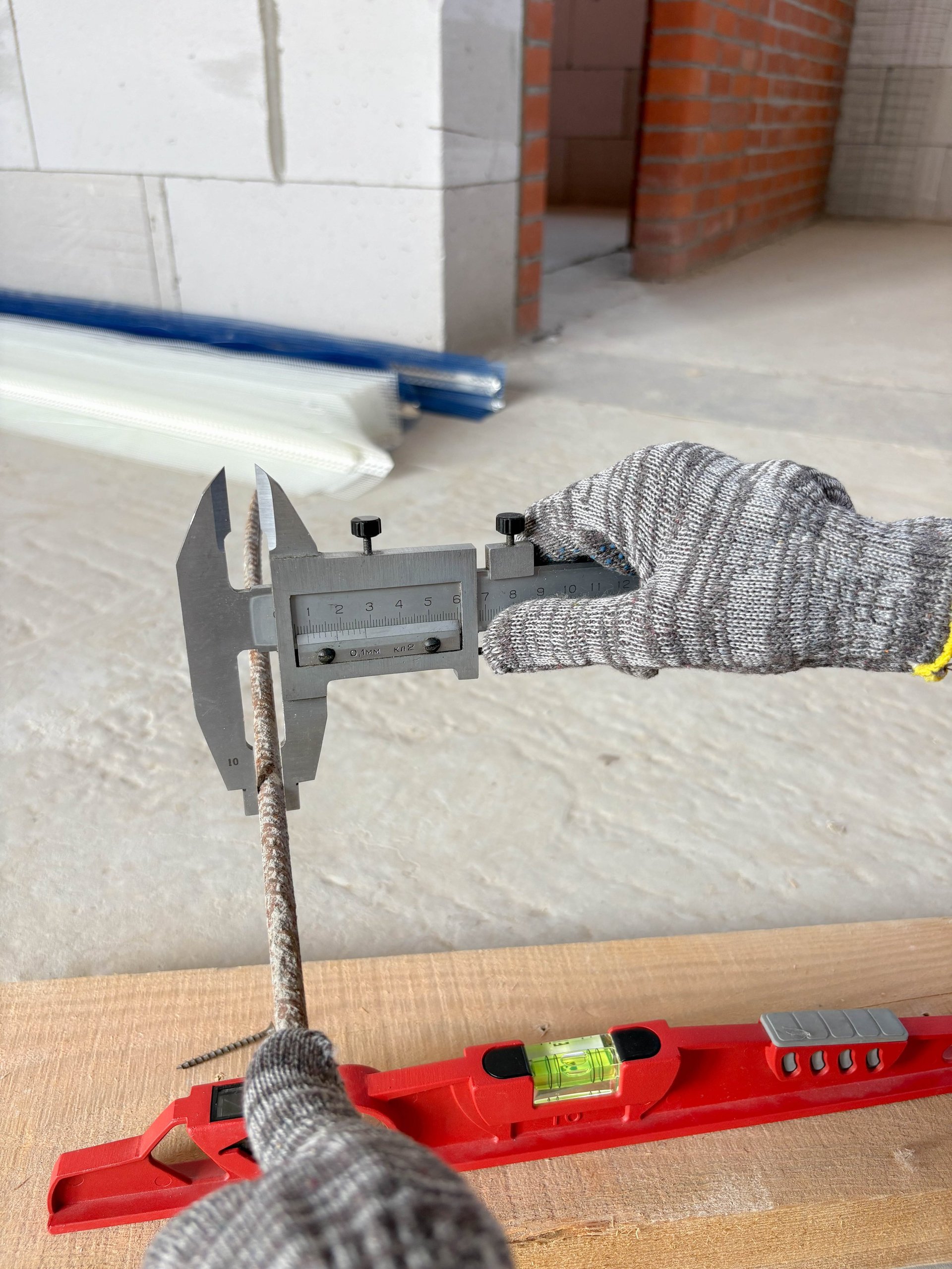
Steel bar identification beside a project schedule for South Africa rebar procurement
Bar identification

The bar has to identify itself

Rolling mark, bundle tag and heat identity are what connect the delivered steel back to the certificate describing it. Read them against the schedule before the consignment is accepted.

Editorial illustration of an industry practice. It does not depict Noor Deira Steel material, records or facilities.

Specification & Evidence

What must match before South Africa rebar is quote-ready

Four columns, and only the first one comes from you. Each row ends in an open question, because an unanswered question is what actually blocks a quotation.

Decision table: buyer or tender requirement, supplier offer, evidence to attach, and the open approval question for each item
ItemBuyer / tender requirementSupplier offerEvidence to attachOpen approval question
Standard and editionThe cited standard and edition year, as tender-statedThe standard and edition the lot is supplied againstCertificate referencing that standard and editionDoes the cited edition still apply for this project and product?
GradeThe grade designation on the drawingsThe grade the mill certificate statesMill test certificate showing the designationHas the engineer accepted this designation for this project?
DiameterEvery size the schedule calls forThe sizes present in the offered lotDimensional check record, or certificate dimensionsAre any scheduled sizes not present in the offer?
LengthRandom, stock or cut-to-length, with the cut lengthThe length basis the offer is written onPacking list stating lengthsDoes the length basis match the cutting plan?
Quantity and mass basisTonnage with the theoretical or actual basis namedThe quantity and basis quotedPacking list and weighbridge or mill mass recordWill invoice mass and receiving mass be measured the same way?
MarkingWhat must be legible on bar and bundle tagThe marking the lot actually carriesMarking photographs, bundle tagsDoes the marking satisfy the receiving point and the project?
Mill certificate / test recordsThe certificate scope the project will acceptWhat is available for the offered lotMill test certificate or test reportDoes the certificate scope cover the properties the design relies on?
InspectionWhether inspection is required, by whom and whenWhether the scope can be accommodatedInspection report or witness recordWho nominates, witnesses and accepts the inspection result?
DocumentsThe document set the importer requiresThe documents issued with the consignmentCommercial invoice, packing list, origin documentationWhich documents does the importer or clearing agent require?
DestinationThe port or inland location, with the IncotermThe named place the offer is built onBill of lading or waybill consistent with the offerIs the discharge point or inland delivery point confirmed?

Standard and edition

Buyer / tender requirement
The cited standard and edition year, as tender-stated
Supplier offer
The standard and edition the lot is supplied against
Evidence to attach
Certificate referencing that standard and edition
Open approval question
Does the cited edition still apply for this project and product?

Grade

Buyer / tender requirement
The grade designation on the drawings
Supplier offer
The grade the mill certificate states
Evidence to attach
Mill test certificate showing the designation
Open approval question
Has the engineer accepted this designation for this project?

Diameter

Buyer / tender requirement
Every size the schedule calls for
Supplier offer
The sizes present in the offered lot
Evidence to attach
Dimensional check record, or certificate dimensions
Open approval question
Are any scheduled sizes not present in the offer?

Length

Buyer / tender requirement
Random, stock or cut-to-length, with the cut length
Supplier offer
The length basis the offer is written on
Evidence to attach
Packing list stating lengths
Open approval question
Does the length basis match the cutting plan?

Quantity and mass basis

Buyer / tender requirement
Tonnage with the theoretical or actual basis named
Supplier offer
The quantity and basis quoted
Evidence to attach
Packing list and weighbridge or mill mass record
Open approval question
Will invoice mass and receiving mass be measured the same way?

Marking

Buyer / tender requirement
What must be legible on bar and bundle tag
Supplier offer
The marking the lot actually carries
Evidence to attach
Marking photographs, bundle tags
Open approval question
Does the marking satisfy the receiving point and the project?

Mill certificate / test records

Buyer / tender requirement
The certificate scope the project will accept
Supplier offer
What is available for the offered lot
Evidence to attach
Mill test certificate or test report
Open approval question
Does the certificate scope cover the properties the design relies on?

Inspection

Buyer / tender requirement
Whether inspection is required, by whom and when
Supplier offer
Whether the scope can be accommodated
Evidence to attach
Inspection report or witness record
Open approval question
Who nominates, witnesses and accepts the inspection result?

Documents

Buyer / tender requirement
The document set the importer requires
Supplier offer
The documents issued with the consignment
Evidence to attach
Commercial invoice, packing list, origin documentation
Open approval question
Which documents does the importer or clearing agent require?

Destination

Buyer / tender requirement
The port or inland location, with the Incoterm
Supplier offer
The named place the offer is built on
Evidence to attach
Bill of lading or waybill consistent with the offer
Open approval question
Is the discharge point or inland delivery point confirmed?

What actually blocks a quotation

A rebar quotation stalls on three things, and none of them is price. The first is an unstated edition: a standard named without its edition year cannot be checked against what the mill certificate will say, and the two documents end up referring to different documents. The second is an unstated mass basis — until the order names theoretical or actual mass and a tolerance, the invoice and the weighbridge are measuring two different things.

The third is an unresolved marking and inspection expectation. Marking is the only attribute an inspector can physically verify at the receiving point against the paperwork, and if what the bundle carries does not match what the project expects to see, the consignment can be held while the technical specification is entirely correct. That is why marking and inspection scope belong in the enquiry rather than in a post-arrival conversation.

Release is blocked by the same gaps at the other end of the process. A consignment does not move on an open approval question — whether that question sits with the project engineer, the importer, or the responsible authority. The rows above are arranged so that each open question has a named owner before it has an answer.

Three things that block release

  1. 01Unstated editionA standard without an edition cannot be reconciled with the certificate.
  2. 02Unstated mass basisInvoice mass and receiving mass end up measured differently.
  3. 03Unresolved marking or inspectionA correct specification can still be held at receiving.

Mass & Tolerance Reconciliation

Technical acceptance and commercial responsibility are not the same thing

Five checks, in order. The first three are technical and belong to the engineer. The last two decide who carries what once the steel is moving.

  1. 01Establish which mass the order is measured onTheoretical mass follows nominal dimensions and a unit-mass convention. Actual mass is what the weighbridge or the mill records. They differ, sometimes materially, and the order has to name one.
  2. 02Place the tolerance basis alongside itThe permissible variation on diameter, length and mass is part of the specification. A tolerance basis that is not stated cannot be checked, accepted or disputed.
  3. 03Reconcile the certificate against the ordered massThe certificate, the packing list and the quantity on the invoice should describe the same consignment. Where they were produced against different bases, say so before dispatch, not at receiving.
  4. 04Confirm bundle identity survives the journeyMarking and heat or lot identity have to remain legible and attached from the mill through loading, shipment and discharge. Bundle identity is what connects the delivered steel to the record describing it.
  5. 05Separate technical acceptance from commercial responsibilityTechnical acceptance is the engineer's, against the specification and the evidence. Freight, route, clearance and inland movement are commercial and importer-side. Conflating the two is how a shipment ends up technically accepted and commercially stuck.
Independent test-document comparison on a receiving desk for South Africa rebar procurement
Receiving desk

Compare the documents against each other, not in isolation

The certificate, the packing list and the arrival record are three descriptions of one consignment. The check is whether they agree, and whether they were all produced against the mass basis the order named.

Editorial illustration of an industry practice. It does not depict Noor Deira Steel records, facilities or a third-party inspection service.

Technical acceptance

  • EngineerAccepts the specification and the evidence against the design.
  • Project quality functionAccepts the test record and the property values it states.
  • Third-party inspectorVerifies what the requested inspection scope covers, and no more.

Commercial responsibility

  • ImporterFreight route, clearance and duties for the exact consignment.
  • BuyerThe named discharge point, the inland delivery point and the Incoterm.
  • SupplierThe offered lot, its marking, and the documents issued with it.

Route, customs and authority detail

Nothing on this page is proven for your shipment’s route, clearance or regulatory pathway. Treat each of these as a verification question for the importer and the responsible authority:

  • Has the engineer confirmed whether the order is measured on theoretical or actual mass, and what tolerance applies?
  • Will the weighbridge or mill mass record be issued against the same basis the invoice uses?
  • Does the marking scheme keep heat and bundle identity legible after shipment and discharge?
  • Which party accepts the mass and dimensional record on arrival, and against what document?

Expert Insight · Official-Source Method

Expert Insight: what to verify before the PO is released

A published-source review, written so you can check it yourself. It is not a supplier certificate and it does not establish compliance for your order.

Method
Opened the official SABS standards page directly on 2026-09-27 and read the Standards Division description and the search facility it provides. Cross-checked what the page actually establishes against what a rebar order needs, and converted the gap between them into buyer-side verification questions rather than an assumed applicability.
Information date
What this source supports
The Standards Division, acting under the Standards Act No. 8 of 2008, is mandated to develop, promote and maintain South African National Standards (SANS) in accordance with the SABS National Norm. The page provides a standards search facility. That supports a current-standard lookup step for your project.
What it does not support
It does not establish which SANS applies to a specific rebar order, nor which regulatory or import pathway applies to your shipment. The page contains no product-scope statement for rebar, reinforcement or steel.
Limits
  • This is a published-source review, not a supplier certificate.
  • It is not proof that a specific mill, grade or shipment is approved.
  • It is not a substitute for the current project documents or for confirmation from the importer and the responsible authority.
Buyer implication
Start from the engineer's project specification, then verify the current cited SANS and any separate regulatory or import obligation. Convert unresolved applicability into explicit RFQ questions. Do not display a compliance badge unless shipment-specific evidence has actually been reviewed by the responsible party.

A source-backed procurement note. It is not a named-person profile and not a quoted endorsement.

Official source reviewed

South African Bureau of Standards — Standards

The Standards Division, under the Standards Act No. 8 of 2008, is mandated to develop, promote and maintain South African National Standards, and the page provides a standards search facility.

The source page contains no product-scope statement for rebar, reinforcement or steel. Which SANS applies to your order is not something this page can answer — it is a question for your engineer and your importer.

No “compliant” badge is displayed anywhere on this page, because compliance depends on shipment-specific evidence reviewed by the responsible party — not on a document reference.

Quantity, Documents & Inspection

Quantity is three different questions, not one

What is being counted, how it is measured, and what evidence travels with it. Availability and document feasibility are confirmed during quotation — nothing here is promised on the page.

How is the quantity counted?

Ordered by theoretical mass

Priced and invoiced on nominal dimensions and a unit-mass convention.

Ordered by actual mill or weighbridge mass

Priced and invoiced on the mass actually recorded for the consignment.

Ordered by piece count

Counted as bars, with the mass basis stated separately if it matters to the contract.

No weight is calculated or invented on this page. If you are working from a bar schedule, state the quantities as the schedule gives them and the basis is reconciled during quotation.

Evidence options

Select what your project or importer requires. Each one is requested and confirmed against the offered lot — selecting it here is not a statement that it is already available.

  • Mill test certificate / test report
  • Heat / lot traceability
  • Bundle packing list
  • Marking photographs
  • Third-party inspection request
  • Certificate of origin
  • Other buyer-requested documents

Readiness panel

Ordered quantity
Entered by you, with the basis named
Evidence requested
Selected from the options
Marking requirement
Stated in the RFQ
Inspection request
Scope and timing stated
Feasibility
Confirmed during quotation

Planning reference

If you are checking a size or mass schedule before writing it into the enquiry, these routes cover the reference side of that work.

Third-Party Inspection Scope

Does the offered grade and testing record match the actual project specification — not a presumed national default?

That is the question this section exists to put in front of you. An inspection confirms what it was scoped to confirm, and nothing beyond it.

Reinforcement installation in an urban construction context for South Africa rebar procurement
On site

The specification is settled long before the bar is fixed

By the time reinforcement is being installed, the standard, grade, marking and evidence are already committed. Inspection verifies that commitment — it cannot create it retrospectively.

Editorial illustration of an industry practice. It does not depict a Noor Deira Steel project, client or site, and no supplied project is implied.

The route lens, applied

Start from the engineer’s project specification and its relevant SANS reference. Name the test evidence the project requires and the third-party inspection scope that witnesses it. Make ordered mass, tolerances and bundle identity explicit before the offer is written.

Scoped before it is booked

Inspection is nominated by the buyer with a defined scope, method and timing.

Witnessing, not certifying

An inspector records what was tested against what was specified. Confirmation of acceptance stays with the responsible party.

Evidence, not assurance

If a property was not tested, no inspection closes that gap after the fact.

No third-party inspection service is offered or implied by this page. Inspection scope is requested by the buyer and confirmed against the offered lot during quotation.

Decision summary

Three possible outcomes once the comparator and the RFQ are filled in. This is not a compliance score.

  • Ready for technical review

    Standard, edition, grade, dimensions, marking and the requested evidence are all stated, and the engineer has a package to assess.

  • Needs buyer / authority confirmation

    The project specification or the cited standard and edition has not been confirmed against the current requirement for the exact product.

  • Needs destination / commercial clarification

    The port or inland location, the Incoterm or the required date is unresolved, so the commercial basis cannot yet be assembled.

Destination-Aware RFQ

Complete the RFQ and review it before sending

Every value below comes from you. Anything left blank is shown as not specified rather than guessed, and the summary panel shows exactly what the quotation desk will receive.

Buyer details
Rebar specification
Destination & commercial basis

The requested date is your requirement. It is not a supplier commitment, and no delivery date is promised on this page.

Documents & inspection
Documents requested *
Requested, then confirmed against the offered lot during quotation.
Open the full RFQ route

Submissions reach our quotation desk. The full enquiry route is also available at /rfq on this same domain. No price, stock, lead time or clearance is confirmed until a person reviews the enquiry.

Your details are used to respond to this enquiry only. Nothing entered here is shared with third parties or used for analytics events.

RFQ review

Only what you have entered appears here. Anything blank reads as not specified — nothing is filled in for you.

Buyer
CompanyNot specified
Work emailNot specified
PhoneNot specified
Rebar Specification
Product / formDeformed reinforcing bar
StandardNot specified
EditionNot specified
GradeNot specified
DiameterNot specified
LengthNot specified
QuantityNot specified
Quantity basisTheoretical mass
Destination & Commercial Basis
Destination countrySouth Africa
Port or inland locationNot specified
IncotermNot specified
Requested dateNot specified
Evidence & Inspection
Documents requestedNot specified
Inspection requestNot specified
Marking requirementNot specified
Project / tender referenceNot specified
Evidence notesNot specified
Comparator — unresolved evidence
StandardNot specified
EditionNot specified
GradeNot specified
DiameterNot specified
Mass / tolerance basisNot specified
Test propertiesNot specified
Marking / bundle IDNot specified
Inspection scopeNot specified

If you would rather raise the enquiry directly, send this summary to sales@noordeirasteel.ae.