
Hot Finished Hollow Section · BS EN 10210 Series
Hot Finished Hollow Section
Hot finished and cold formed sections can share a size and a grade designation and still differ in how they are made, what residual stress they carry and which tolerance table applies. That makes the forming route a specification decision rather than a purchasing one: name the series and its edition, the delivery condition the engineer intends, the shape and dimensions with units, and the tests and documents the order requires.
Price on request · availability, origin and document package confirmed against the live enquiry
Choose the route that fits the requirement
Specify Hot Finished Hollow Section around the job
Hot Finished Hollow Section is only a useful purchase description when the governing requirement, dimensions, service conditions, testing and document expectations are stated with it. Treat nearby routes as comparisons, not automatic substitutes. Price, stock, origin, certification and delivery timing are confirmed only against the live enquiry. Start with the requirement that decides fit, then provide the missing order inputs.
Delivery condition — hot finished
Hot finished (hot-formed) is the delivery condition, not a grade or a nickname. It sits in the BS EN 10210 series; the cold-formed route sits in BS EN 10219 with its own tolerances and properties. State which one the governing document requires before anything else is quoted.
Governing standard & edition
The standard and its edition fix scope, grade range, tolerances, testing and ordering requirements. Name the edition so the mechanical, dimensional and document basis is auditable — never inferred from the product family name.
Grade, condition & service
Grade, delivery condition and service environment are separate decisions controlled by the governing standard. Low-temperature toughness, impact testing and any supplementary requirement are ordered only where the governing document calls for them.
Shape, dimensions & tolerance
Shape class (SHS, RHS or CHS), nominal dimensions with units, wall and the applicable tolerance regime fix the piece. A nominal chart value is not an acceptance tolerance unless the governing document says so.
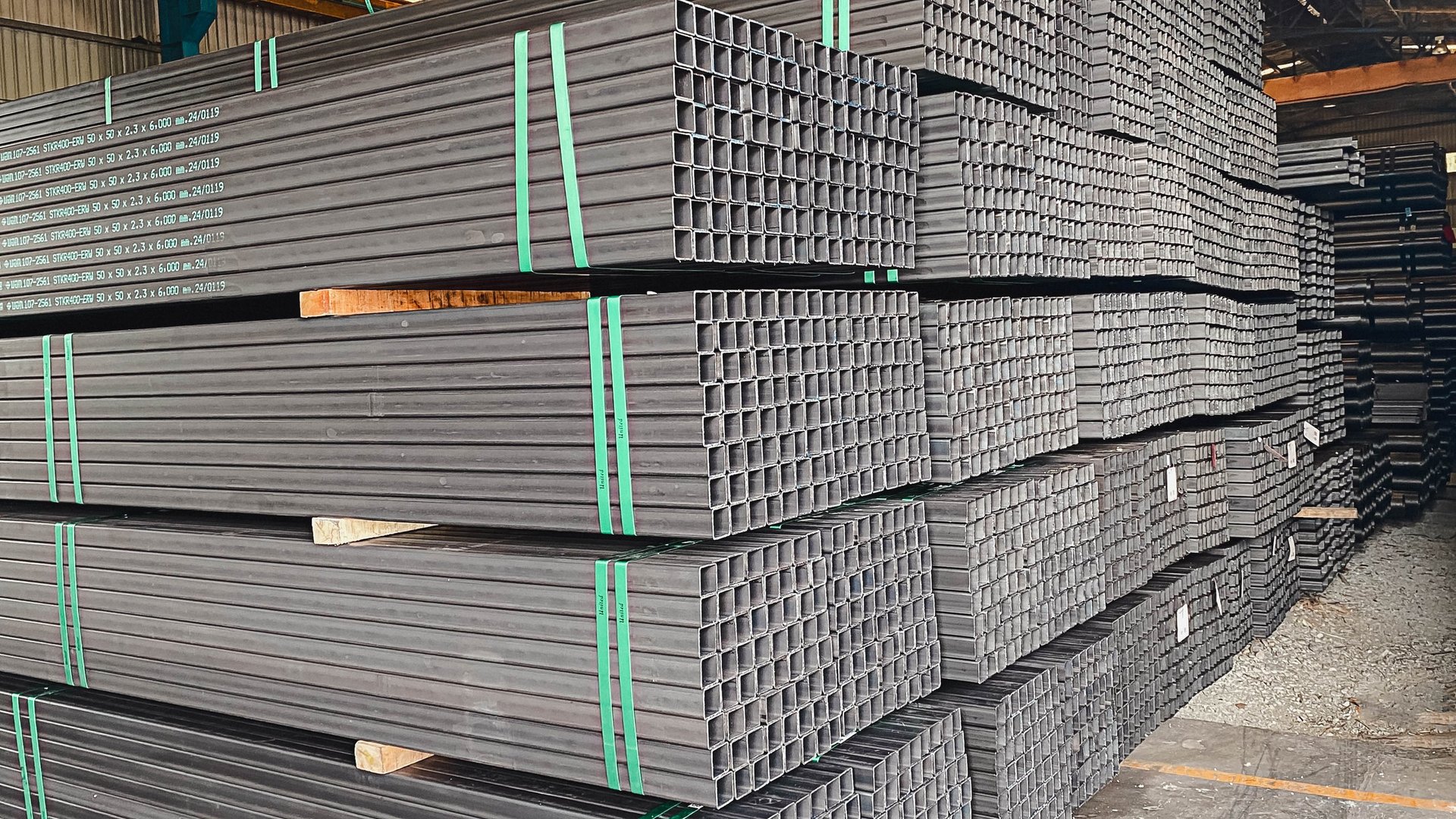
Check the forming route against the specification
Confirm the forming route the specification intends
Hot finished and cold formed sections can share a size and a grade designation while differing in how they are made, what residual stress they carry and which tolerance table applies to them. The forming route is therefore a specification decision, not a purchasing detail — it should be stated on the enquiry rather than inferred from whatever is available. Where the project cites a series, name it and its edition; where the engineer intends a particular delivery condition, say so, because that is what makes the offer comparable.
Specification gate
Build a checkable enquiry
The specification gate asks for governing standard and edition, grade or material route, section shape, dimensions with units, quantity and unit basis, service, fabrication/connection method, inspection needs, document list and destination. The summary separates confirmed inputs from open items so the RFQ never fills a missing value by assumption.
RFQ summary
Standards, grades, dimensions & condition
Write the specification so offers can be compared
Hot finished is a delivery condition as much as a product, so write it explicitly rather than leaving it to follow from the section name. State the standard and edition, the grade or class, the shape and nominal dimensions with units, the tolerance regime that governs acceptance, quantity and unit basis, the inspection and document scope, and the destination.
Standard, edition & delivery condition
The BS EN 10210 series covers hot-formed structural hollow sections; BS EN 10219 covers the cold-formed route with its own scope, tolerances and properties. Name the standard and edition, then confirm the delivery condition separately — hot finished is a condition, not a grade.
Dimensions, wall & tolerance regime
State the section family, nominal dimensions with units, wall, length or cut requirement and surface requirement together, and name the tolerance regime the governing document references. A nominal chart value is not an acceptance tolerance.
Grade & service environment
Grade or material route, service environment and any toughness or impact-testing requirement are decisions the governing standard controls. Order them only where the standard and the service actually call for them.
Reference before ordering
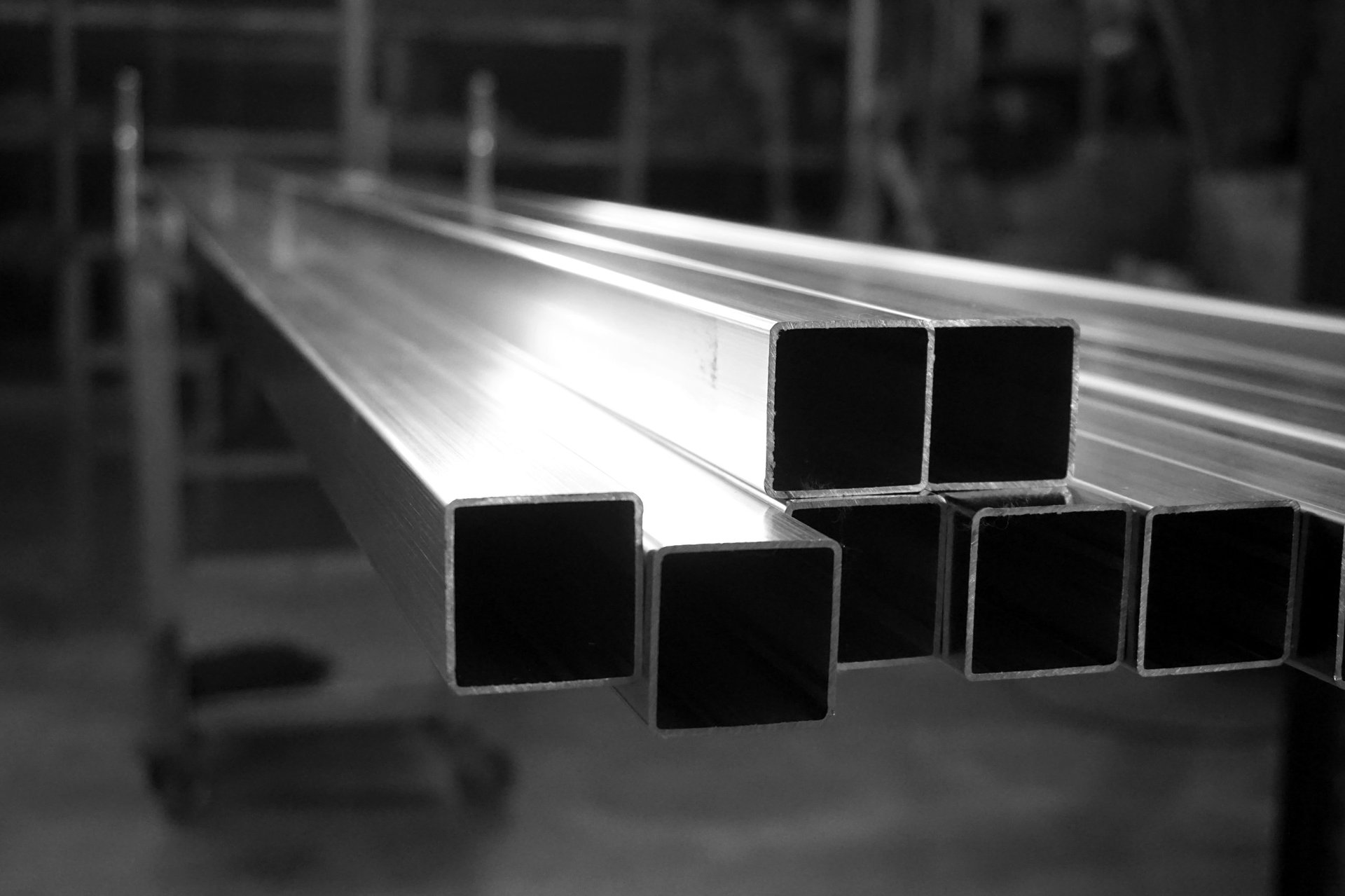
Confirm a dimension or size input before it reaches the RFQ
Use a reference to check scope and terminology, then compare that scope with the project requirement. A reference does not replace the contract documents for the actual order.
| Requirement context | Standard family | Applies to / limitation | Keep as a separate decision | RFQ field |
|---|---|---|---|---|
| Hot-formed structural hollow section | BS EN 10210 series | Applies where the governing document specifies a hot-formed section. Confirm the edition, grade range, tolerances, testing and ordering requirements against the project requirement. | Delivery condition, grade, tolerance regime, toughness / impact testing | Standard / edition + condition |
| Cold-formed structural hollow section | BS EN 10219 series | A different route with its own scope, tolerances and properties. It is a comparison path only until the governing requirement accepts it — never an automatic substitute. | Product form, grade, dimensions, fabrication implications | Standard / edition + dimensions |
| Project specification beyond the standard | Governing project specification / code | Where a project specification imposes requirements beyond the standard, those requirements are ordered explicitly and confirmed against the actual supply. | Supplementary requirements, inspection scope, documents | Supplementary requirements |
This table is a decision aid only. Technical choices are conditional on the selected standard and grade, and it carries no numerical technical value; every dimension, tolerance, condition or test figure is confirmed against the governing standard, edition and the material certificate before quotation. Price on request.
Documents & inspection
Match documents and inspection to the order
Because the forming route is part of the specification, the certificate has to show the route and series you ordered — not just a grade that can be produced both ways. Name the standard and edition the document should cite, say who will review it, and confirm whether the impact or dimensional records you want are part of the standard supply or a project addition.
- Material certification and traceability for the steel supplied, per consignment
- Chemistry and mechanical test record against the governing standard, edition and grade
- Impact / toughness test record only where the standard and order require it
- Dimensional and inspection records where the order requires them
- Condition and surface checks against the agreed route
- Heat / lot traceability to the shipped consignment
- Commercial invoice and packing list
- Shipment / origin documents only where applicable to the consignment
- Customs declaration inputs for the destination

What is evidenced, and what stays order-specific
- Material certification and traceability are requested for the steel supplied, against the governing standard, edition and grade — never an assumed certificate.
- Toughness and impact testing are ordered only where the governing standard and the service environment call for them, and the record is named in the enquiry.
- Availability of any certificate or approval is confirmed for the actual supply — not assumed from this page or from a nearby route.
Operating duty
Where operating duty changes the choice
Open an application page when the end use changes the forming route decision — a welded truss and an exposed architectural member can lead different ways. Where the use does not affect the route, stay on the type and standard pages. The forming route that suits one application may not suit another — the delivery condition interacts with how the member will be welded, exposed or inspected.
Machinery frames
Machinery frame service: confirm grade, mechanical evidence, tolerances, welding and stability inputs before the specification is frozen.
Explore Machinery framesHandrails & balustrades
Handrail and balustrade work: reconcile shape, nominal dimensions, surface requirement and any coating or finish condition before the enquiry is fixed.
Explore Handrails & balustradesArchitectural work
Architectural context: check whether appearance, finish, fabrication route or the project specification changes the order.
Explore Architectural workGCC markets & destination planning
Plan the GCC destination separately from the steel specification
Keep product compliance separate from destination planning. Confirm consignee/importer details, named port or inland delivery point, Incoterms rule and named place, shipment documents, any permit/conformity steps required for the actual goods, and the party responsible for each action. No country card implies a local office, warehouse or stock position.

United Arab Emirates
Destination & importer inputs
Move from Hot Finished Hollow Section selection to the exact UAE procurement route: carry the BS EN 10210 edition, grade, SHS/RHS/CHS shape, nominal dimensions, delivery condition, quantity and destination emirate so the quotation and document set match the import.
United Arab Emirates hollow-section procurement
Saudi Arabia
Project specification & import inputs
Confirm the standard and edition, grade, shape, nominal dimensions, tolerance regime, quantity and required-on-site date so the hot-formed hollow section estimate and logistics stay aligned to the governing project specification.
Saudi Arabia hollow-section procurement
Bahrain
Industrial supply inputs
Coordinate the standard edition, grade, impact-testing and inspection requirements, document list and delivery point to the Bahrain requirement so the section and its document set stay aligned.
Bahrain hollow-section procurement
Kuwait
Contractor procurement inputs
Link hot finished hollow section selection and any cutting or processing to the fabrication and inspection needs, with the delivery point and Incoterms named place agreed against the requirement.
Kuwait hollow-section procurement
Oman
Port-oriented supply inputs
Confirm the specification, nominal dimensions, quantity, document package, port and Incoterms rule so the Oman quotation and logistics stay aligned to the order.
Oman hollow-section procurement
Qatar
Specification & delivery inputs
State the standard and edition, grade, shape, nominal dimensions, delivery condition, documents and delivery location so the Qatar quotation is fixed on a verified basis.
Qatar hollow-section procurementCommercial inputs
Commercial inputs that remain quotation-dependent
The inputs that make this order quotable are the forming route and series, the edition, the grade, the shape and dimensions with units, the delivery condition, the end preparation the fabricator needs, the quantity and unit basis, the destination and the named Incoterms place. Processing, packing and timing are checked against the live shipment and stated on the quotation.
Packing
Sections bundled, strapped, tagged and marked by shape, nominal size, wall, grade, heat and lot, matched to the declared route. Packing expectations are confirmed in the enquiry.
Delivery point & schedule
Name the consignee or importer, the port or inland delivery point and the required-on-site date. Timing is checked for the live shipment and stated on the quotation.
Incoterms rule & named place
State the Incoterms rule and the named place so packing, transport and document obligations are explicit, and name the party responsible for each action.
Carry the enquiry into the commercial department
Turn the forming route and series, edition, grade, delivery condition, shape, dimensions, end preparation, documents, quantity, destination and Incoterms named place into one copyable summary. The commercial department checks that the route quoted is the route specified before anything is priced, because that is the difference between a comparable offer and a cheap one.
Price on request — freight, duty, availability and delivery timing are confirmed with your quotation.
Technical reference
Confirm the source scope, then compare it with the requirement
Use the series standard to confirm how the forming route is defined and which tolerance provisions attach to it, then compare that with the route your specification names. It does not establish that the route suits your duty — that is the engineer's call.
BSI — BS EN 10210 structural hollow sections series
Published standard scope · reviewed for scope and terminology
The BSI BS EN 10210 series is the reference for hot-formed structural hollow sections. Use it to confirm its own published scope and terminology — the section families it covers, the delivery condition it describes and the requirements it sets — then compare that scope with the project requirement for the actual order.
What this means for your order: the reference helps fix the questions that must be answered in the RFQ — the standard and edition, the grade, the section shape, the nominal dimensions with units and the tolerance regime. Conformity, certification and commercial outcomes remain separate, verification-dependent steps after the technical product description is complete.
What it does not cover: the reference does not prove Noor Deira Steel inventory, price, certification, local presence or project approval, and it does not replace the contract documents for the actual order. Verify the purchase order and the current licensed standard, because a project specification can impose requirements beyond it.
What a complete enquiry improves
A complete enquiry makes three things easier
Naming the forming route removes the ambiguity that makes two hot finished offers look different for no visible reason. It also gives the fabricator notice of the tolerance regime and delivery condition they will be working to, which is information they would otherwise have to request after the order is placed.
Buyer concern
Specification from a family nickname
Evidence-led answer
Every value is forced against the governing standard and edition, grade, shape, nominal dimensions, tolerance regime and condition — never assumed from the words "hot finished".
A hot finished hollow section whose basis is an auditable, order-driving input set.
Buyer concern
Automatic substitution between nearby routes
Evidence-led answer
The enquiry keeps the standard, grade, product form, delivery condition, dimensions and tolerance regime as separate decisions, so a nearby route is only a comparison until the governing requirement accepts it.
A section that matches the governing document rather than a similar-sounding catalogue line.
Buyer concern
Dimension and tolerance ambiguity
Evidence-led answer
Nominal dimensions with units, the tolerance regime referenced by the governing specification, and any length or cut requirement are carried together.
A section a fabricator can cut, weld and re-check against the governing document.
Buyer concern
Undocumented testing or traceability
Evidence-led answer
Testing, inspection and document needs are named explicitly, with the expected issuer, before any value is quoted.
An evidence set that matches the steel actually shipped, not an assumed certificate.
Buyer concern
Quotation gaps and destination surprises
Evidence-led answer
Processing, packing, destination, Incoterms named place, documents and required-on-site date are separate explicit fields, never buried in a price.
A quotation that states delivery and import expectations instead of hiding them.
From requirement to quotation
Every step names its owner, input and open item
Seven steps take a specified forming route to a delivered consignment. The route and its edition are named first so that what is quoted is the route that was specified, not the one that was available.
Requirement
Buyer
In: Governing standard and edition, grade or material route, shape, nominal dimensions with units, quantity and unit basis.
Out: Service and governing document defined; route identified.
No standard or edition named.
Next: Name the standard and edition.
Condition & tolerance
Buyer + technical
In: Delivery condition, tolerance regime, length or cut requirement, surface requirement.
Out: Condition and tolerance basis stated.
Condition left implicit.
Next: Fix condition and tolerance inputs.
Tests & documents
Technical / inspection
In: Testing and inspection scope, required document list with expected issuer.
Out: Evidence and document package named.
Documents assumed, not requested.
Next: Confirm the document checklist.
Destination & importer
Buyer + commercial
In: Consignee / importer details, port or inland delivery point, Incoterms rule and named place.
Out: Destination and clearance owner explicit.
Importer or named place not confirmed.
Next: Add importer and named place.
Quotation
Commercial
In: Quantity and unit basis, processing scope, packing, documents and required-on-site date.
Out: Availability, commercial terms and document package confirmed for the live enquiry.
Open items carried into the offer.
Next: Receive the confirmed offer.
Packing & shipping
Supplier / forwarder
In: Strapping, tagging, marking, Incoterms rule, port.
Out: Coordinated to the named delivery point.
Document delay.
Next: Track to the delivery point.
Delivery & follow-up
Commercial
In: Site handover, closed-out documents.
Out: Handed to site with the document set.
Open claims.
Next: Close out.
Review unresolved items before quotation
Standard and edition, grade, product form, dimensions, condition, testing and document inputs, quantity, destination and commercial terms enter the enquiry together so the specification, the evidence and the delivery terms stay aligned.
Request a QuoteRelated routes worth comparing
Open a related page to resolve one decision
This page covers the forming route itself. If the decision is about the grade, the governing standard or the tolerance regime, those are separate pages linked here; the structural steel family is offered for comparison and is not interchangeable with a hollow section.
Structural steel products
This page covers a forming route within hollow sections. If the forming decision is still open against an open profile, structural steel is the family to compare against — a different product with different connection and fabrication implications, not a swap for the route specified here.
Compare the structural steel formBuyer FAQ
Questions to settle before ordering
How the forming route changes an order, why it is not automatically the better choice, and what the fabricator needs to be told about tolerance and delivery condition.
How does the forming route change the order?
Is a hot finished section always the better choice?
What should the fabricator be told?
What belongs in the RFQ?
Qualified RFQ
Request a qualified Hot Finished Hollow Section quotation
Send the governing standard/edition, grade or material route, section shape and dimensions with units, quantity/unit basis, intended service, fabrication or connection notes, tests/inspection, required documents, destination and named delivery place. If an item is still undecided, mark it open rather than guessing. The quotation will confirm availability, commercial terms and the supply-specific document package.
Price on request · availability and commercial terms confirmed against the live enquiry