
Material · Stainless Steel Pipe
Stainless Steel Pipe Supplier
Stainless Steel Pipe should be selected from service conditions and the governing code/specification, then narrowed to an exact grade, process route and dimensions. Corrosion, temperature, equivalency, availability and certification claims remain evidence-controlled.
Price on request — availability and certification confirmed from your full specification
Fit & Selection Logic
When stainless steel pipe fits — and when it does not
Selection starts from service conditions and the governing standard, never from the material name. The decision inputs below are what separate a fitted specification from a family-level guess.
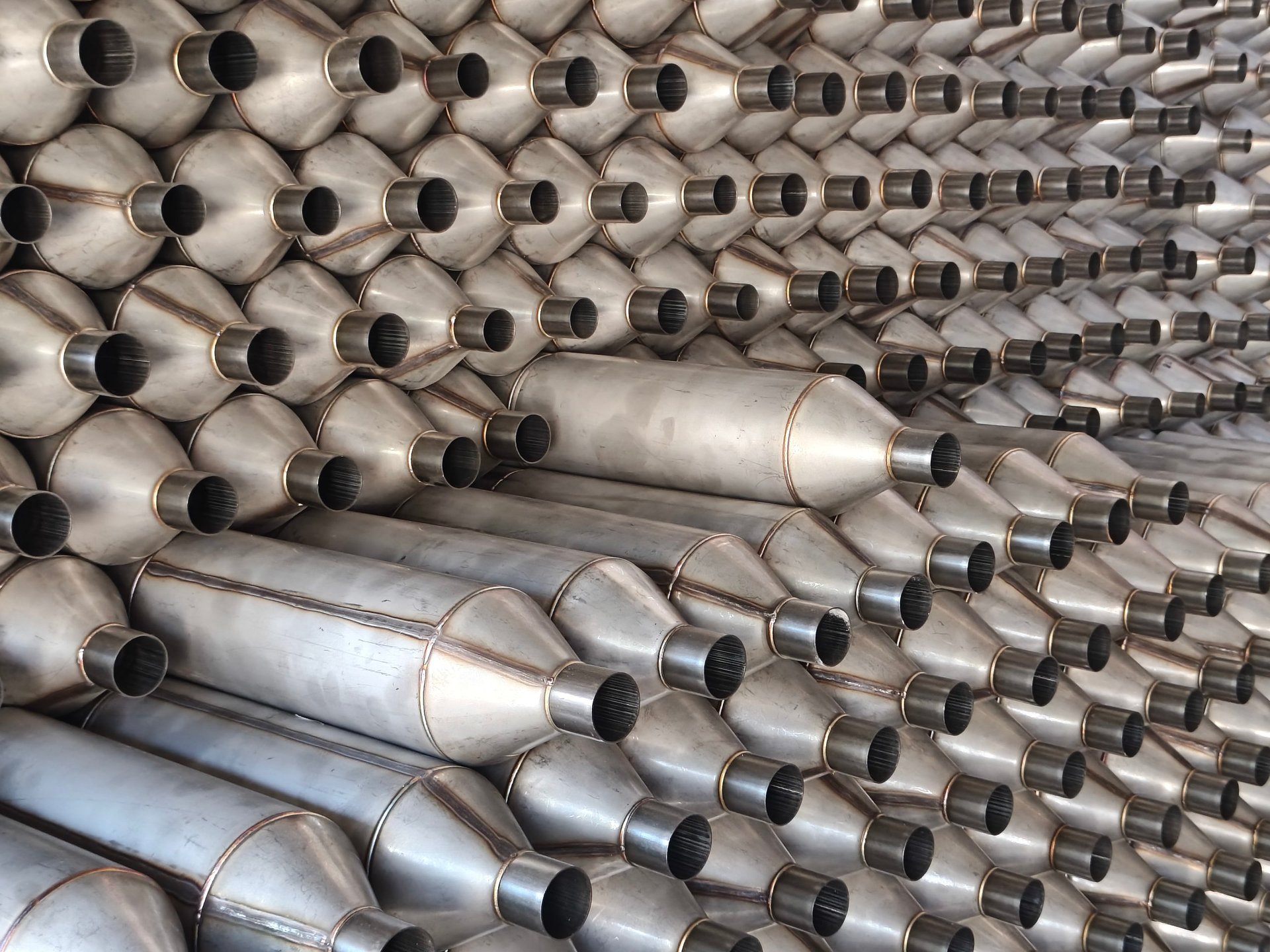 Selection basis
Service medium & environment
What the pipe carries — media, concentration, temperature, pressure and any corrosive constituents.
Temperature & design basis
Maximum metal temperature and the design code — these decide whether stainless fits or another family is safer.
Corrosion concern
Any chloride, acidic, oxidizing or other media-specific exposure. Corrosion resistance is condition-dependent — never assumed.
Governing standard
The code or project specification that fixes grade, route and test/document requirements.
Grade & manufacturing route
An exact austenitic stainless grade (with UNS) and, where permitted, the process route (seamless vs welded).
Dimensions & destination
NPS/OD, wall/schedule, surface finish, quantity, Incoterm and delivery date for the quotation.
Closest related alternatives
When a different governing standard or manufacturing route is the safer choice, compare against the related pages below rather than a generic claim.
Seamless Steel Pipe
The seamless route — no longitudinal weld seam; compare seam controls against the welded option.
CompareERW Steel Pipe
Electric-resistance-welded — a carbon steel route where the governing standard fixes seam control.
CompareLSAW Steel Pipe
Large-diameter longitudinal SAW-welded carbon steel pipe for large bore line-pipe service.
CompareLine Pipe
A carbon steel manufacturing-route choice for transmission and gathering line-pipe service.
CompareWelded Steel Pipe
A carbon steel welded construction route — compare seam controls when material-familing.
CompareStainless Steel Pipe Service-Fit Decision Guide
Map service to a fit state, then require standard and grade
Work through the service inputs to a defensible selection state. Missing environment data blocks any recommendation; chloride plus acidic service routes to engineering review; chloride service without temperature detail is left open; a standard and grade are required before RFQ transfer.
Fit result
Insufficient environment data
Service medium and temperature/design basis are required before any material recommendation. Stainless steel pipe cannot be selected from the material family alone — supply the service environment and the temperature or design basis first.
RFQ summary
liveProduct / entity: Stainless Steel Pipe Governing standard & edition: — Grade / material: — Type / manufacturing route: — Size / NPS (DN): — Schedule / wall: — Service / application: — Temp / design basis: — Surface / coating / finish: — Quantity & unit: — Destination: — Required delivery date: —
Specifications & Service Conditions
Standard, grade and dimensions — as a decision set, not a value dump
Each row ties a governing standard, austenitic grade or dimensional input to what it controls and the action a buyer takes. No numeric value is invented: figures are confirmed against the governing standard, the mill test certificate or the project specification before quotation.
Grade & standard decision table
| Item | What it controls | Who / what sets it | Verification | Buyer action |
|---|---|---|---|---|
| Governing standard & edition | Permitted grades, product form and heat-treatment route, test/document scope. | Project design code or contract specification. | Confirm standard and edition against the design basis. | State standard + edition in the RFQ. |
| Grade / material (austenitic, with UNS) | Minimum chemistry and mechanical values; corrosion-selection starting point. | The governing standard; values on the MTC. | Match grade/UNS to standard; confirm values on MTC. | Name exact grade/UNS (e.g. UNS S30400, S31600). |
| Diameter / NPS (DN) & wall / schedule | Dim the pipe to the service line size and pressure rating. | Piping design and the dimensional schedule. | OD, wall and schedule per the standard's tolerances. | State NPS/OD and schedule/wall. |
| Manufacturing route & heat treatment | Seam control and inspection requirements (seamless vs welded). | The governing standard's permitted routes. | Route and heat-treatment record per standard. | State route and any seam requirement. |
| Service conditions | Whether stainless is the right family and which grade to consider. | Medium, concentration, temperature and design basis. | Fit and corrosion exposure checked against conditions. | Provide medium, concentration, temperature, basis. |
Size range & service conditions
| Input | Decision relevance | Source / basis | Verification status | RFQ field / next action |
|---|---|---|---|---|
| Nominal diameter (NPS / DN) | Selects the line size and the dimensional schedule. | Piping design + dimensional schedule. | Confirm against design spec. | State NPS/DN or OD. |
| Wall thickness / schedule | Sets pressure rating and weight per length. | Design standard's schedule table. | Confirm tolerance per standard. | State schedule or wall. |
| Length & end finish | Affects bundling, beveling and shipping. | Purchase order requirement. | Buyer-defined. | State length and bevel. |
| Unit weight | Drives logistics and handling plan. | Computed from OD, wall, spec gravity per standard. | Derived — confirm from MTC/dim. | Request weight summary. |
Chemical & mechanical properties — how to confirm, not invent
| Property | Units / method | Source | Conditions / applicability | Value |
|---|---|---|---|---|
| Chemical composition | % per element (C, Cr, Ni, Mo, Mn, Si, P, S…) | Governing standard + heat MTC | Varies by austenitic grade and heat. | Confirm on MTC |
| Yield & tensile strength | MPa / ksi (test method per standard) | Governing standard | Grade- and route-specific minimums. | Confirm per standard |
| Elongation | % (tensile test) | Governing standard | Grade- and wall-dependent. | Confirm per standard |
| Corrosion / chloride resistance | Per media-specific test or study | Corrosion study, not this page | Condition-dependent — not a default property. | Confirm with evidence |
Quality, Testing & Documentation
Request the right document set, tied to what it verifies
Each certificate or test answers a specific buyer question. The matrix shows what to request, what it verifies and when it is required — the exact set is settled by the governing standard, the heat-treatment record and the shipment, not assumed.
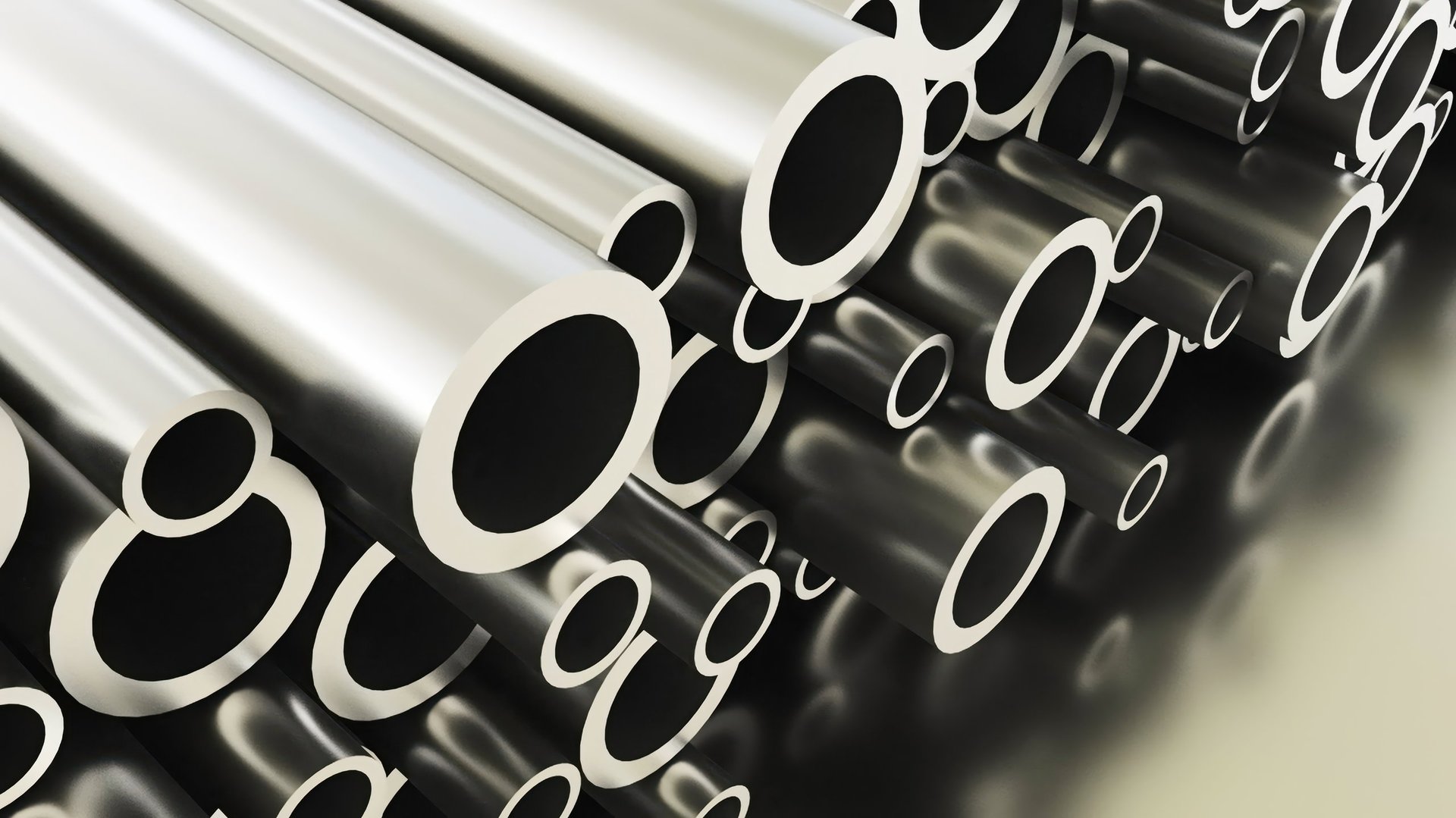 Pipe inspection & documentation
Mill test certificate (MTC)
Chemical and mechanical test values matched to the heat, grade, heat-treatment and size shipped.
Requested: Request with every consignment; values are shipment-specific.
Hydrostatic / pressure test
Test evidence confirming the pipe meets the standard's acceptance criteria.
Requested: Required where the governing standard or project spec mandates pressure testing.
NDE / NDT (seam or body)
Non-destructive examination for welded pipes where the standard or class requires it.
Requested: Set by PSL/class and design code — confirm at quotation, never assumed.
Heat-treatment / process record
The product form and heat-treatment route called out by the standard (seamless vs welded).
Requested: Confirm at order against the governing standard's permitted routes.
Dimensional & wall tolerance report
OD, wall and schedule controlled to the standard's tolerance limits.
Requested: Confirm at order against the standard's permitted tolerances.
Surface / finish & corrosion evidence
Surface finish (annealed, pickled, polished) and any coating — corrosion evidence only where conditions are stated.
Requested: No general corrosion or temperature claim is published — evidence is condition-specific.
No unsupported certificate is claimed. The exact test scope is confirmed at quotation against the governing standard, PSL/class and project design code — never assumed.
Application & Industry Decision Paths
Map the operating requirement to standard, grade and route
Each related application pages the operating condition to the standard-grade-route decision. Stainless is considered when the service demands corrosion resistance or specific process duty — chosen from the service and design basis, not from a generic use list.
Process & Chemical
Corrosion-resistant process duty where the media, concentration and temperature dominate grade choice.
PetrochemicalPower / Energy / Utilities
High-temperature, water-treatment or corrosive-circuit duty where austenitic grade selection matters.
EnergyWater & Infrastructure
Water and process lines where chloride or treatment chemistry drives the material decision.
InfrastructureMarine & Shipbuilding
Seawater and chloride exposure where austenitic grade and corrosion evidence are critical.
ShipbuildingFood & Pharmaceuticals
Processing lines where surface finish, hygiene and corrosion duty are specified.
ManufacturingOil & Gas / Process
Sour or chloride service where grade and corrosion review are mandatory.
Oil & GasGCC Markets & Destination Planning
Plan destination, documents and delivery per market
Stainless steel pipe supply across the GCC depends on the destination, document set, port or delivery location, Incoterm and RFQ inputs. Each market below ties those inputs to a quote — without claiming local presence, stock or guaranteed delivery.

United Arab Emirates
Domestic project coordination and documentation.
Reconcile pipe NPS, wall and standard against drawings and plan domestic delivery to site or fabricator.

Saudi Arabia
Project specification and import documentation.
State the governing standard, inspection scope and delivery base so quotation matches the requirement.

Qatar
Project specification and delivery.
Confirm standard, quantity and delivery window so documents and logistics stay aligned to the order.

Kuwait
Specification and import documentation.
Provide destination and Incoterm so the document and delivery plan can be aligned to the order.

Bahrain
Project-grade specification.
Confirm contract terms, certificates and delivery base before quotation.

Oman
Infrastructure and project supply.
Provide destination, required documents and delivery date so quotation can be fixed.
Destination scope: per-country permit, duty, HS classification, conformity or customs rules must be re-confirmed for the actual shipment before they are treated as definitive commercial advice.
Commercial, Logistics & Availability Inputs
What the quotation needs — and what stays on request
Pricing, stock, lead time, origin, port and delivery terms are not published. They are confirmed at quotation from a full specification.

Availability and pricing are confirmed from your specification
Stock, origin, mill, lead time and exact delivery are quotation-dependent — not marketing claims.
Finish & packing
Surface finish, end finish, bundling and tagging stated up front as part of the spec.
Document set
MTC, heat-treatment record and inspection reports matched to the shipment before loading.
Incoterm & port
Incoterm 2020 rule and named place, plus port or delivery location, agreed at quotation.
Delivery date
Required delivery or project need date set so logistics can be planned per order.
Quantity & unit
Quantity and unit settle the bundling, lashing and freight plan.
Evidence control
No price, stock, origin, lead time or acceptance figure is promised before the quotation.
Related Products & Technical Resources
Decision-useful routes, grouped by purpose
Only listed destinations appear — each extends the stainless-steel-pipe decision rather than repeating it.
Steel Pipes
The owning hub — every pipe route compared and supplied.
CompareSteel Pipe Dimensions Chart
A verification resource for dimensions, wall and weight.
CompareSeamless Steel Pipe
The seamless route — seam control for pressure-critical duty.
CompareERW Steel Pipe
Electric-resistance-welded route.
CompareWelded Steel Pipe
A welded construction route.
CompareLSAW Steel Pipe
Large-diameter SAW-welded pipe.
CompareExpert Insight
Narrow 'stainless steel pipe' before grade and standard
A compact, source-backed decision aid. This is not a supplier claim or a person's endorsement — it is a method grounded in a primary standard so the buyer knows how to narrow the family and what to ask for.
Primary source
ASTM A312/A312M-25
Seamless, Welded, and Heavily Cold Worked Austenitic Stainless Steel Pipes. A312/A312M is used here as one authoritative example showing that the material family alone is insufficient to select from — it separates grade, product form (seamless vs welded), heat-treatment/testing and dimensions from the generic material family, and requires the service/corrosion conditions to be stated. Austenitic stainless pipe within the A312 scope is for high-temperature and general corrosive service.
Method: treat the family as a starting set, then narrow by service/corrosion conditions, governing standard, product form and route before any grade or test value is fixed.
Information date: 2025 edition · checked active 2026-09-03.
Buyer implication
Ask first for service and the austenitic grade/UNS — then route, dimensions, tests and documents.
Do not quote against the words 'stainless steel pipe' alone. Each field below the service and grade/UNS refines the decision into a quotation-ready specification.
Evidence-led Buyer Advantages
Concern to verifiable outcome
Five real procurement concerns, mapped to how they are addressed and the practical outcome for the buyer — without unsupported superiority claims.
01
A material family is not a specification
The page and tool tie selection to the governing standard, austenitic grade/UNS, manufacturing route and service — the inputs that define real purchase decisions.
An RFQ that names service, standard, grade and route rather than the words 'stainless steel pipe'.
02
Assuming corrosion or temperature resistance
The service-fit guide flags chloride, acidic and oxidizing exposure, blocks unsupported corrosion and temperature claims, and routes conflicting conditions to review.
A material-family decision made only as far as condition-specific evidence allows.
03
Unsupported grade equivalency
The tool refuses an 'equivalent grade' output where no approved cross-standard equivalency exists.
No unsupported substitution carried into the quotation.
04
Requesting an incomplete document set
The document matrix ties each certificate to what it verifies, the heat-treatment record and when it is required.
A complete, shipment-specific test and document request.
05
Quoting against thin inputs
The tool requires service, temperature, standard, grade and route before transfer, with clear empty and conflict states.
A qualified RFQ with the missing fields made explicit before handoff.
From Enquiry to Delivery
A route-aware workflow with owner, input, risk and next action
Each stage fixes who owns it, what input is required, what evidence or output results, and what risk or next action remains — so nothing is hand-waved before the order reaches delivery.
Step 1 · Requirement
Owner: Buyer
Input: Service, medium, concentration, temperature, governing standard.
Output / evidence: Scope confirmed against the project basis.
Risk: Thin spec undefined.
Next: Define service and standard.
Step 2 · Specification review
Owner: Commercial + technical
Input: Grade/UNS, route, dimensions, wall, finish.
Output / evidence: Route and grade reconciled to the standard.
Risk: Wrong material family.
Next: Confirm fit in the tool.
Step 3 · Quotation
Owner: Commercial
Input: Quantity, Incoterm, destination, date.
Output / evidence: Availability and pricing on request.
Risk: Unknown lead time.
Next: Receive confirmed offer.
Step 4 · Order
Owner: Buyer
Input: Purchase order vs quotation.
Output / evidence: Order held to quoted spec.
Risk: Spec drift.
Next: Confirm order line.
Step 5 · Quality & documents
Owner: Technical / QA
Input: Required tests and documents.
Output / evidence: MTC, hydrostatic, NDE and finish verified.
Risk: Missing certs.
Next: Approve document set.
Step 6 · Finish / dressing
Owner: Supplier + buyer
Input: Surface finish, end finish, bundling.
Output / evidence: Product dressed to spec.
Risk: Finish mismatch.
Next: Confirm finish.
Step 7 · Packing
Owner: Supplier
Input: Bundling, tagging, lashing.
Output / evidence: Bundled and tagged by heat, grade, size.
Risk: Mixing heats.
Next: Verify tags.
Step 8 · Shipping
Owner: Supplier / forwarder
Input: Incoterm, port, documents.
Output / evidence: Coordinated to destination.
Risk: Document delay.
Next: Track to site.
Step 9 · Delivery & follow-up
Owner: Commercial
Input: Site handover, closed-out docs.
Output / evidence: Handed to site with documents.
Risk: Open claims.
Next: Close out.
Buyer FAQ
Stainless steel pipe sourcing, answered directly
Which service conditions should be stated before selecting Stainless Steel Pipe?
State the service medium and its concentration, the operating temperature or the project temperature design basis, any corrosive constituents (chloride, seawater, acid, oxidizing conditions), the governing code or project specification, the intended austenitic grade and manufacturing route, and the dimensions. These inputs decide whether the stainless family fits, how the grade is narrowed, and which documents are required — they are project- and standard-dependent rather than supplied by default.
How do standard and grade choices narrow the Stainless Steel Pipe material family?
The governing standard (for example ASTM A312/A312M for seamless, welded and heavily cold worked austenitic stainless steel pipes, or a project spec) fixes the permitted grades, the product form and heat-treatment route, and the test/document scope. Within the chosen standard, the exact austenitic grade — identified by its UNS designation — fixes minimum chemistry and mechanical values. Standard and grade must be stated together with the service so the selection is decision-grade rather than family-level.
What corrosion or temperature claims require project-specific evidence for Stainless Steel Pipe?
Any statement of corrosion resistance (including chloride pitting or stress-corrosion-cracking resistance) or a usable temperature limit is media-, concentration-, temperature-, standard- and design-basis-specific. No general or universal corrosion or temperature claim is published for this page; the service-fit guide flags chloride, acidic and oxidizing exposure and routes conflicting conditions to engineering review rather than asserting a limit. Corrosion allowance, design pressure and code compliance are project engineering decisions, not default supplier claims.
Which tests and material documents should be requested for Stainless Steel Pipe?
Request the mill test certificate (MTC), hydrostatic/pressure test evidence, non-destructive examination where the standard or class requires it, a heat-treatment/process record confirming the product form and route, dimensional and wall-tolerance confirmation, and a surface/finish statement. The exact test and document set is set by the governing standard, PSL/class and project design code, and is confirmed at quotation — it is shipment- and standard-dependent rather than a fixed default list.
When should the buyer consider another material family instead of Stainless Steel Pipe?
Consider another material family when the austenitic stainless route does not fit the service — for example where the chloride concentration or temperature requires a specific corrosion-resistant grade outside the listed scope, where a carbon steel route with an applied coating is the approved design basis, or where the project specification stipulates a different family. That decision is made from the service environment and design basis with engineering review — it is never inferred from the material name or from a general corrosion statement.
Request a Quote for Stainless Steel Pipe
Send the governing standard, austenitic grade, size, quantity, destination and required delivery date. Our commercial department responds with availability and pricing — always on request.
Office 3303, Churchill Executive Tower, Business Bay, Dubai, United Arab Emirates
Monday – Saturday: 8.00 AM – 6.00 PM · Sunday: Closed
Stainless Steel Pipe — RFQ
liveProduct / entity: Stainless Steel Pipe Governing standard & edition: — Grade / material: — Type / manufacturing route: — Size / NPS (DN): — Schedule / wall: — Service / application: — Temp / design basis: — Surface / coating / finish: — Quantity & unit: — Destination: — Required delivery date: —
Fields left as "—" are the inputs to supply before the RFQ is complete. Missing fields are marked so nothing is silently dropped.
Price on request · Mill Test Certificates supplied with each consignment · Availability, origin and lead time confirmed at quotation.